



You've found a moisturizer that feels rich and comforting, only to discover that your face looks greasy within an hour. Or perhaps lightweight gels feel pleasant at first, then leave your skin tight before the day is over. Choosing between hydration and comfort can be frustrating, especially when your skin reacts easily to heavily fragranced formulas.
Aloe vera skin creams offer a useful middle ground. They combine aloe's water-based hydration with a cream structure that helps the skin hold onto that moisture. But the ingredient list isn't the whole story. Freshness, processing speed, supporting ingredients, and formula design all shape how an aloe cream feels and performs.
Why Aloe Vera Skin Creams Transform Daily Hydration
A busy morning often exposes the weaknesses of a moisturizer. A heavy balm may sit on the surface while you're getting dressed, leaving a slick finish under sunscreen. A thin gel may disappear quickly, forcing you to reapply before lunch. For someone with sensitive, oily, or blemish-prone skin, the search can feel like choosing between congestion and dryness.
Aloe vera cream approaches hydration differently. Aloe vera is largely water-based, and its complex plant material contains polysaccharides and amino acids that support a hydrated surface. In a controlled formulation study, freeze-dried aloe extract at 0.25% and 0.50% w/w increased stratum corneum water content after one application, while 0.10% w/w produced the same hydration effect after two weeks. The study found no change in transepidermal water loss compared with the vehicle, which suggests aloe can improve surface hydration without behaving like a heavy, sealing ointment. Read the formulation study on aloe and skin hydration.
That distinction matters. Aloe can make skin feel softer and more comfortable, but a durable moisturizer usually needs more than a water-binding botanical. A cream can pair aloe with emollients and film-formers, creating a balanced texture that feels breathable rather than oily.
Why the texture feels different
Aloe vera skin creams are emulsions. They bring together a water phase and an oil phase, so the formula can spread smoothly while leaving behind a light conditioning layer. The result is different from a pure gel, which may offer quick surface comfort but little lasting cushion, and different from a dense occlusive, which may feel too substantial for daytime use.
Think of the difference between drinking water and applying a protective hand cream after washing dishes. Water addresses immediate thirst, while the cream helps comfort the surface for longer. Aloe contributes the water-loving side of that experience, and the cream base determines how long the feeling lasts.
Practical rule: If your skin feels comfortable immediately after application but tight again soon afterward, you may need aloe in a cream base rather than aloe gel alone.
This makes aloe cream especially appealing for everyday routines. It can give dry-feeling areas a softer finish without forcing the entire face into a thick, glossy layer. Still, “lightweight” doesn't mean every formula suits every person. Fragrance, alcohol, essential oils, and the overall oil phase can change tolerance, so the full ingredient list deserves attention.
Comparing Creams to Gels and Serums
Aloe gel, aloe serum, and aloe cream can all feel hydrating, but they don't perform the same job. The easiest way to understand the difference is to separate water delivery, targeted treatment, and moisture retention.
A gel is usually the most immediate and cooling format. It spreads quickly, feels fresh, and can work well when you dislike a noticeable residue. A serum is often thinner and designed to carry concentrated supporting ingredients. A cream has more structure, usually combining water, emollients, and stabilizing ingredients to provide a more lasting moisturizing experience.
| Format | Texture & Feel | Primary Function | Best For |
|---|---|---|---|
| Aloe gel | Clear or translucent, quick-drying, fresh | Immediate water-based hydration and a light skin feel | Oily-feeling skin, warm climates, layering |
| Aloe serum | Fluid, thin, fast-spreading | Delivering aloe with other focused skincare ingredients | People who prefer layered routines |
| Aloe cream | Soft emulsion, cushioned, more conditioning | Hydrating while helping reduce the feeling of moisture loss | Normal, dry-feeling, sensitive, or climate-stressed skin |
| Rich barrier cream | Dense, buttery, more occlusive | Providing substantial surface protection and comfort | Very dry-feeling skin or areas needing extra cushioning |
When a gel makes more sense
Choose a gel when you want minimal texture, fast absorption, or a simple layer beneath another moisturizer. A person with oily-feeling skin might apply aloe gel after cleansing, then use sunscreen in the morning. Someone in a humid environment may prefer that lighter finish.
The limitation is retention. Aloe's water content can feel refreshing, but a gel may not provide enough emollience for skin that becomes tight later. If you've tried gel repeatedly and still feel dry, adding a cream is more logical than applying increasingly thick layers of gel.
When a serum earns a place
A serum works well when your routine already includes several steps. You might apply a lightweight aloe serum to slightly damp skin, then follow with a cream. This pairing separates the roles cleanly. The serum supplies a thin hydrating layer, while the cream supplies the conditioning finish.
Creams also make sense when you want fewer steps. A well-designed aloe cream can combine the comfortable slip of an emulsion with the hydration benefits of aloe, making it practical for the face, neck, hands, or body.
The right choice depends on how your skin feels several hours after application, not only how the product feels during the first minute. A comfortable finish that lasts through your routine is usually more useful than an exciting initial sensation that disappears quickly.
The Critical Role of Harvest Freshness and Processing
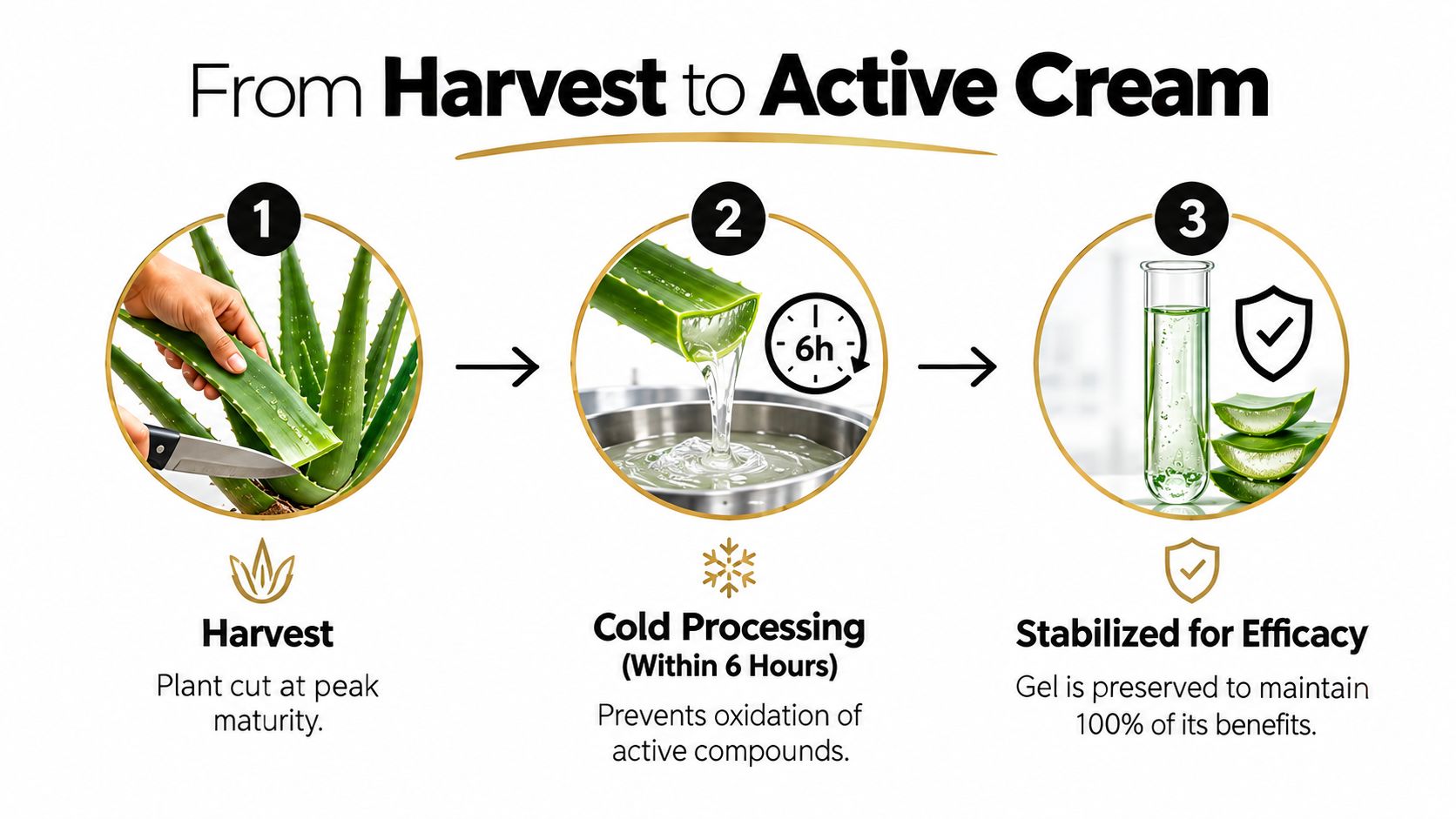
Aloe quality begins before the product reaches the mixing tank. Once a leaf is cut, handling speed becomes part of the formulation story. A peer-reviewed review reports that fresh aloe leaves can begin losing biological activity at about 6 hours after harvest at ambient temperature, and that many biological activities may be largely gone by 24 hours. The same review describes refrigeration within six hours or direct processing, with filleting completed within 36 hours to help preserve quality. Review the evidence on aloe processing and biological activity.
This doesn't mean every delayed aloe product is automatically useless. It means the original plant material can change before a manufacturer stabilizes it. Heat, air exposure, enzymatic activity, storage conditions, and transport all influence what remains available in the finished ingredient.
A separate processing review recommends completing leaf-gel filleting within 36 hours of harvest and describes refrigeration within 4 to 6 hours after picking in some processing systems. It also notes that homogenization should be completed within 20 minutes to limit enzymatic browning. See the aloe processing review.
Why supply chain transparency matters
A vertically integrated company controls more of this sequence. ALODERMA is a fully vertically integrated aloe vera company. It grows its own organic aloe vera, processes the aloe vera, and manufactures onsite within 12 hours of harvest. That farm-to-factory timing is intended to keep the primary aloe ingredient as fresh and bioactive as possible before it enters a cream, gel, or serum.
By contrast, a formula based on reconstituted powder begins with aloe that has already undergone processing and later requires rehydration. Powder can be practical for manufacturing, but it doesn't offer the same straightforward harvest-to-formulation story as fresh leaf material processed close to the growing site. Imported concentrates also pass through additional storage and transport stages, making transparency about sourcing and handling especially valuable.
When you evaluate a brand, ask practical questions:
- Where is the aloe grown? A clear answer is more useful than vague language about botanical ingredients.
- How soon is it processed? Look for a specific harvest-to-processing window.
- Is the aloe fresh, concentrated, or reconstituted? These terms describe different starting materials.
- Who controls manufacturing? Vertical integration can make quality oversight easier to follow.
For a practical guide to applying aloe products in a routine, see how to use aloe vera for skin. The central lesson is simple: ingredient freshness isn't a decorative brand story. It's part of the raw material's quality profile.
Key Ingredients and Certifications to Look For
A back label can look complicated, but you only need to answer a few useful questions. Start with the aloe source, then check whether the formula includes ingredients that improve texture, hydration, and stability.
A commercial aloe concentrate description says the inner leaf liquid contains more than 75 components, while related documentation lists aloe barbadensis leaf juice alongside preservatives such as potassium sorbate, sodium benzoate, and citric acid. Review the documented aloe cosmetic ingredient profile. Aloe isn't a single isolated molecule, so the supporting formula helps determine how the finished product behaves.
Read the first part of the ingredient list
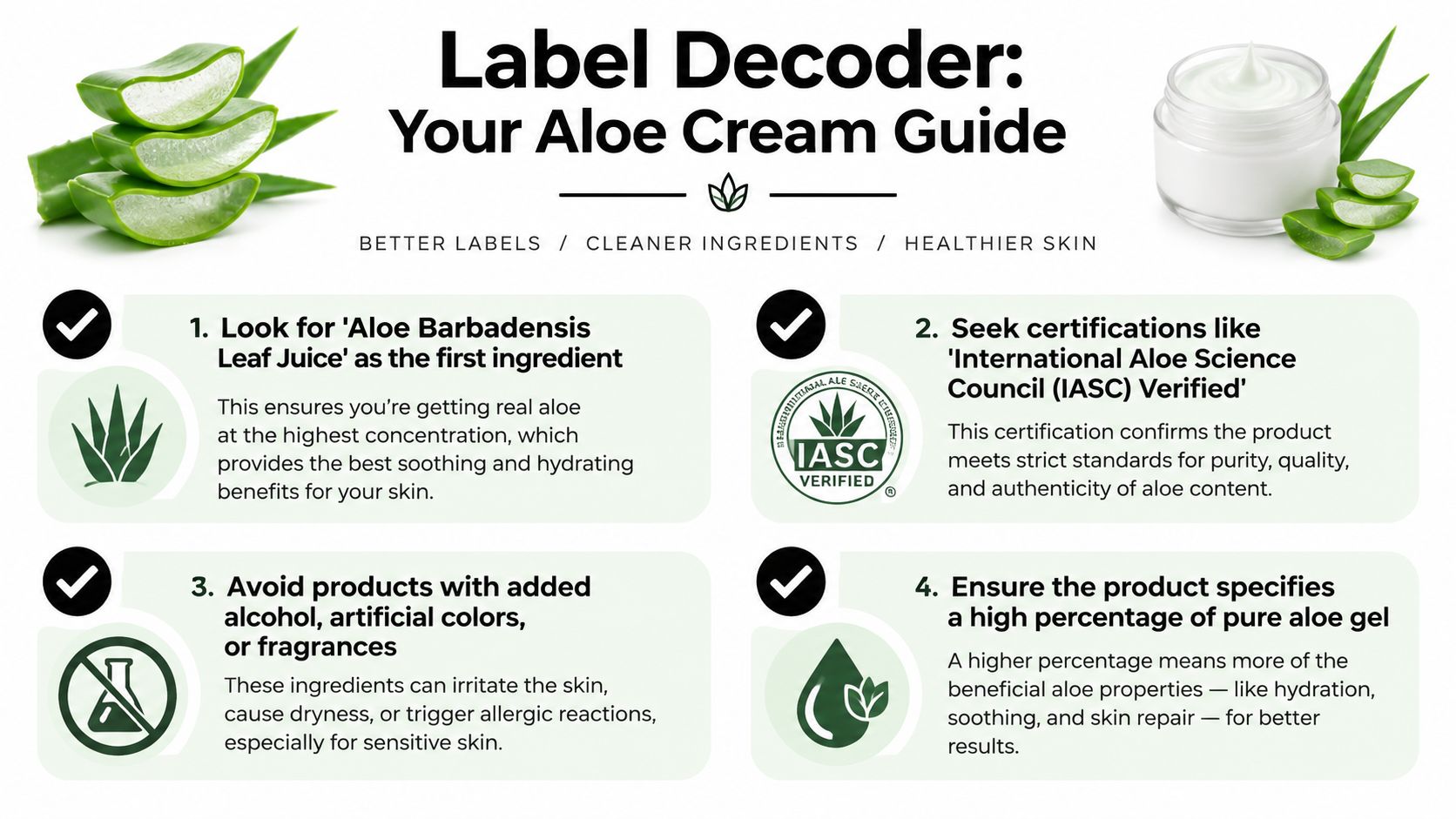
Look for Aloe Barbadensis Leaf Juice, the INCI name commonly used for aloe vera leaf juice. Its position can help you understand whether aloe is a prominent part of the water phase, although ingredient order alone doesn't reveal freshness or processing history.
Then look for complementary ingredients:
- Glycerin attracts water and helps create a smooth, hydrated skin feel.
- Stearic acid can contribute to the cream base and emulsion structure.
- Plant oils and butters add emollience and softness.
- Purified water forms the vehicle for water-based hydration.
- Preservatives help protect a water-containing formula from microbial spoilage.
Formulation literature describes aloe used at around 10 g per 100 g of formula, alongside glycerin, stearic acid, potassium hydroxide, and purified water in a practical cream system. See an example of aloe cream formulation. That example isn't a universal recipe. It shows why a cream needs a complete system rather than aloe alone.
Verify standards without overreading them
Certifications can add useful accountability, but each one applies to a defined standard. Look for recognizable marks such as ECOCERT, USDA Organic, EU Organic, or an International Aloe Science Council verification where applicable. These labels can support confidence in sourcing and production requirements, but they don't guarantee that a particular cream will suit your skin.
Read what USDA Organic means before treating the logo as a complete product review. You still need to check fragrance, essential oils, alcohol, texture, and the product's intended use.
A clean formula isn't automatically a gentle formula for every person. The best label combines transparent aloe sourcing with a sensible supporting base and clear directions.
Managing Expectations for Very Dry and Reactive Skin
Aloe is useful, but it isn't a universal answer to every dry-skin experience. Its strongest measurable role in the cosmetic hydration study was corneocyte hydration, while transepidermal water loss remained unchanged compared with the vehicle. In plain language, aloe helped increase water content at the surface, but it didn't act like a complete barrier-sealing ingredient. Read the study on aloe's hydration and water-loss effects.
That's why someone with very dry, rough, or cracking-prone skin may need more than aloe cream alone. A richer moisturizer with stronger emollient and occlusive properties can provide additional cushioning, while aloe supplies a lighter water-binding layer. You can also use aloe cream on comfortable areas and reserve a denser formula for spots that need extra protection.
A comparison involving chronic kidney disease-related xerosis found that a 30% aloe vera cream improved moisture but didn't outperform a 20% urea cream. Review the comparison of aloe and urea moisturizers. The takeaway isn't that aloe fails. It's that a familiar botanical ingredient isn't automatically superior to a well-established humectant for every type of dryness.
Tolerance depends on the whole formula
Reactive skin can respond to the finished product rather than aloe alone. Independent guidance identifies fragrance, alcohol, essential oils, and application to already damaged skin as factors that may increase irritation risk, and recommends patch testing for 24 to 48 hours for reactive users. Review practical aloe tolerance guidance.
Apply a small amount to a discreet area and observe how your skin feels during the testing period. If you notice persistent stinging, itching, or visible discomfort, wash the area and stop using the product.
Aloe can be soothing without being sufficient. Use it as one part of a routine, not as a reason to ignore what your skin is telling you.
For more sensitive areas of the body, product selection requires added care. Readers looking for broader, body-specific guidance may find this resource on expert advice for intimate dryness helpful. It's also wise to seek professional advice when dryness is persistent, painful, or connected to a broader health concern.
Building a Simple and Effective Daily Routine
A good aloe routine doesn't need many products. It needs compatible layers, a comfortable texture, and consistent application.
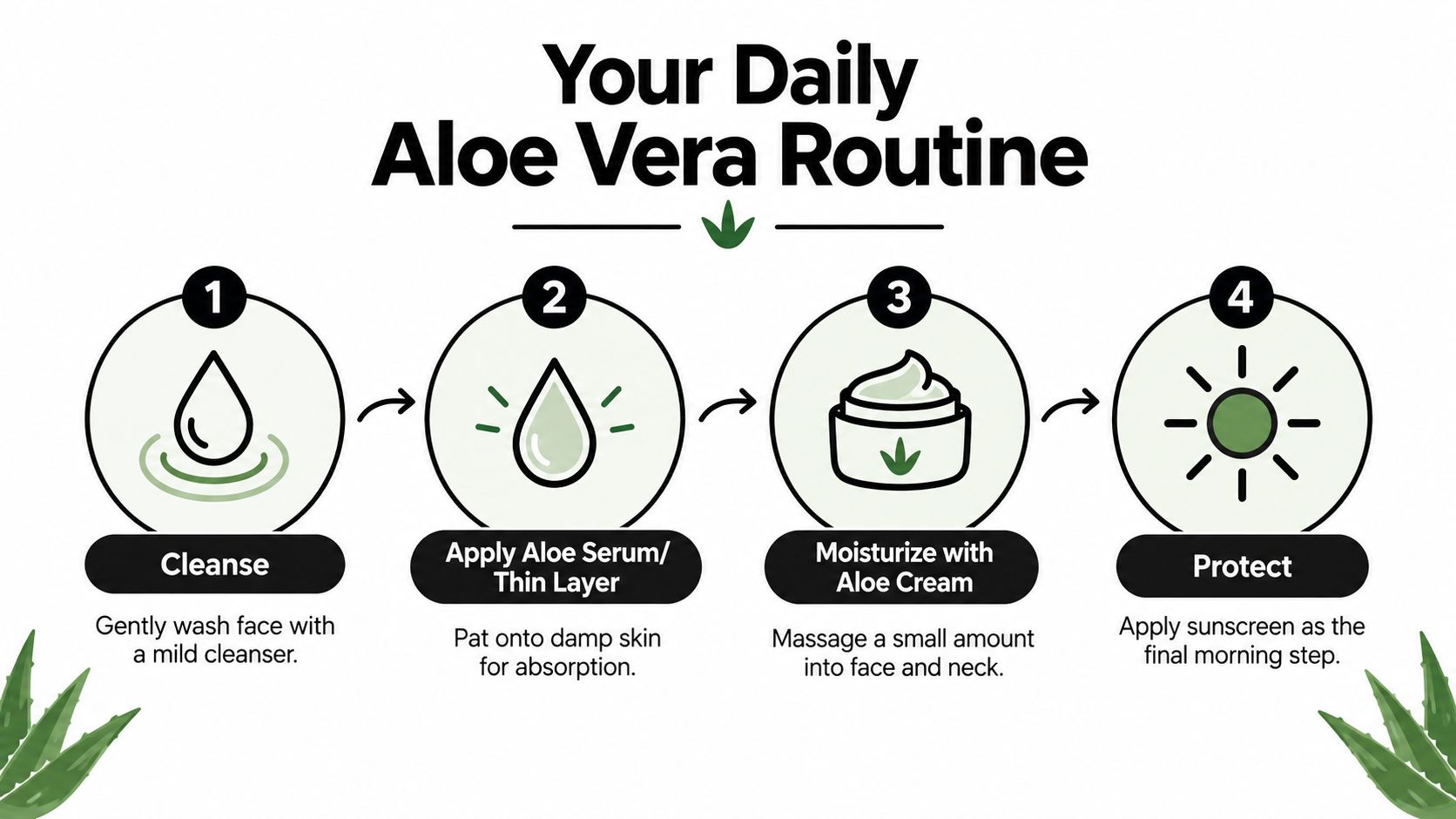
Start with a gentle cleanser. Rinse without scrubbing, then leave the skin slightly damp rather than completely dry. Damp skin gives your next hydrating layer a comfortable surface to spread across.
If you use an aloe serum or toner, apply a thin layer and pat it in. Follow with an aloe cream, using a small amount over the face and neck. The cream should feel comfortable, not tight or excessively greasy. In the morning, finish with sunscreen as the final skincare step.
A practical routine for different needs
- Light routine: Cleanser, aloe cream, sunscreen.
- Layered routine: Cleanser, aloe serum, aloe cream, sunscreen.
- Dry-feeling areas: Cleanser, aloe cream, then a richer moisturizer where extra cushioning is needed.
- Body care: Apply cream after bathing while the skin is still slightly damp.
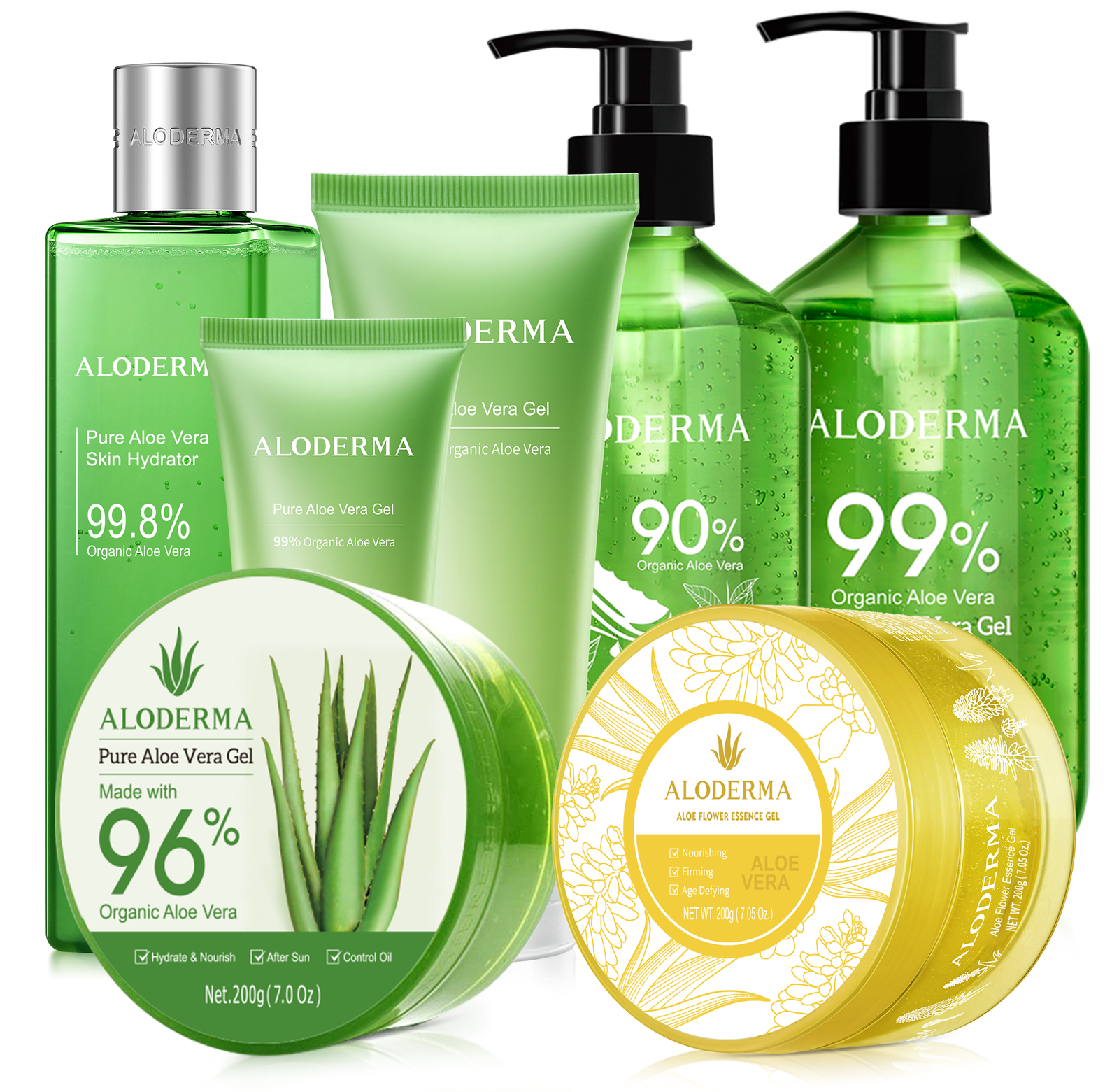
Aloe Hydrating Cream is one option for shoppers seeking a face-and-neck cream with over 65% organic Aloe Barbadensis Leaf Juice. Explore the wider ALODERMA aloe vera skincare range, then compare the texture and supporting ingredients with your own routine needs.
For additional context on building a skincare routine for adults, focus on consistency rather than collecting products. You can also use ALODERMA's skincare routine guide to organize your layers.
The most useful buying checklist is straightforward: prioritize clear sourcing, look for fast processing, check the supporting hydrators, verify relevant certifications, and patch test when your skin reacts easily. A thoughtfully made aloe cream can then become a comfortable daily foundation rather than another product that sits unused in your cabinet.
ALODERMA offers fresh aloe gels, hydrators, creams, serums, cleansers, masks, and body-care products made with aloe grown and processed through its vertically integrated farm-to-skin approach. Visit ALODERMA to compare aloe vera skin creams and build a simple routine around fresh, organic aloe.