



You stand in front of a shelf of face serums, pick up two bottles that both say natural, and still have no clear idea which one is more likely to feel good on your skin. One promises glow. Another promises balance. A third talks about botanicals and purity. None of that tells you whether the formula will stay potent after bottling, or whether it will sit well under your moisturizer.
That's the gap most roundups miss.
The best natural face serums aren't just about trendy ingredients. They're about three practical things: how the plants were sourced, how fast they were processed, and how the serum behaves once it touches your skin and mixes with the rest of your routine. If your skin often feels tight, shiny, overloaded, or oddly greasy after layering products, those details matter more than the front label.
Your Guide to Finding the Best Natural Face Serums
What does natural mean to you?
For some people, it means fewer synthetic additives. For others, it means plant-based ingredients, a gentle feel, or a formula that doesn't leave skin looking shiny by noon. The problem is that shoppers often use one word to describe several different expectations, and brands do too. That's why it's easy to buy a serum that sounds right but feels wrong.
A common example is the person who wants a simple, calming serum for everyday use. They pick a bottle with aloe, vitamin C, or hyaluronic acid on the front, expecting fresh hydration. Then a week later, their skin feels sticky under moisturizer, or the product seems less impressive than the marketing suggested. The issue often isn't that natural skincare doesn't work. It's that not all natural formulas are made, stored, or layered the same way.
Practical rule: Judge a serum by more than its ingredient list. Ask how those ingredients were processed, how stable they are, and whether the texture fits your routine.
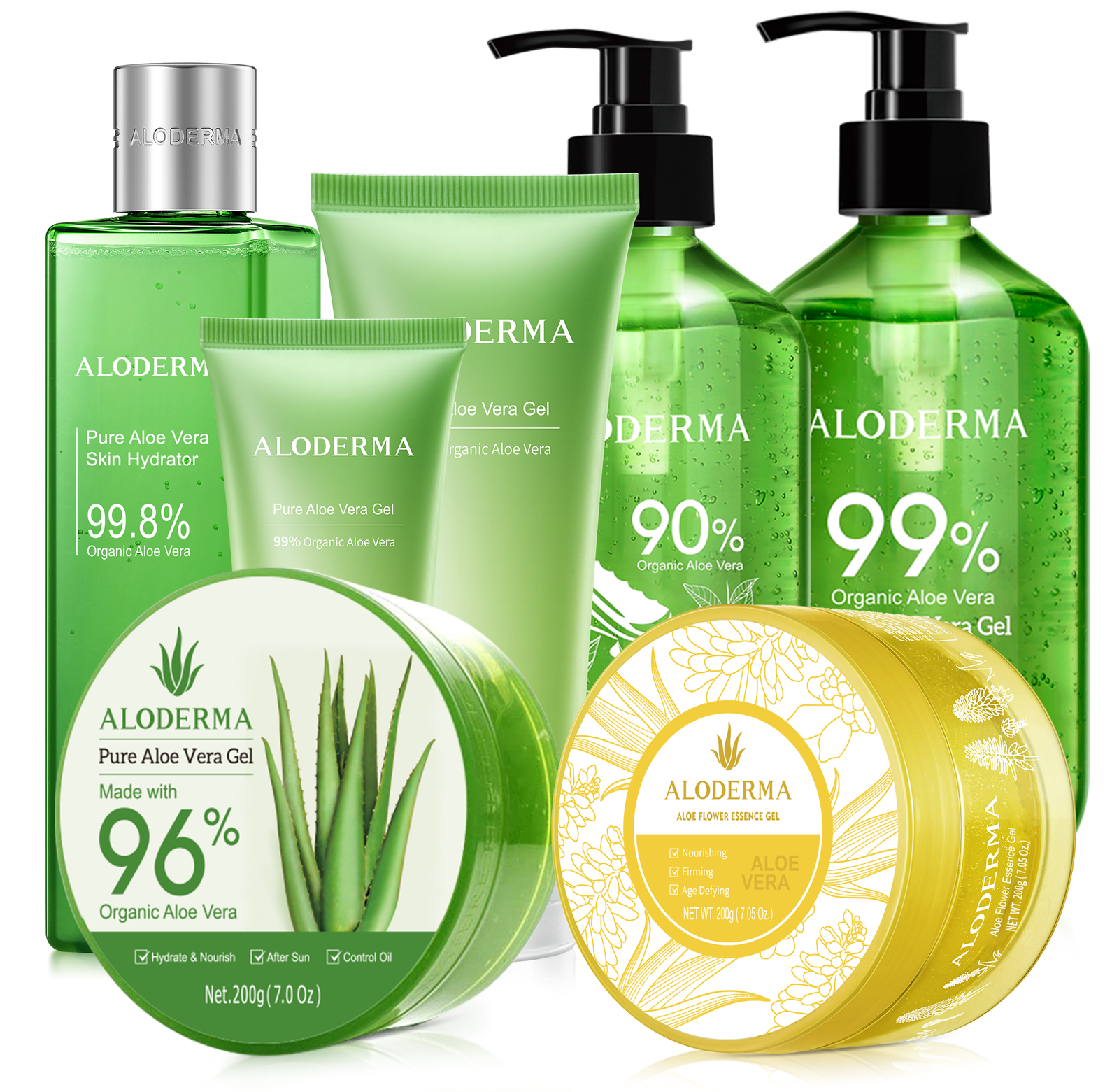
That matters even more with aloe-based skincare. Aloe can feel wonderfully light and water-like on the skin, but that fresh feel only tells part of the story. Processing and timing matter too. Aloderma is a fully vertically integrated aloe vera company. It grows all of its own organic aloe vera, then processes the aloe and manufactures onsite within 12 hours of harvest so the primary ingredient in every product is as bioactive and effective as possible.
If you're trying to sort through the best natural face serums, that's the lens to use. Not just “What's in it?” but also “How was it handled?” and “Will it work with the skin I have?”
What Natural and Organic Certifications Mean
The word natural can sound reassuring, but on its own it doesn't tell you much. A better approach is to look for certification standards and to understand what those standards are trying to protect.
Think of skincare labels like food labels
A food package can say “made with natural ingredients” and still leave plenty of unanswered questions. Skincare works the same way. A bottle may highlight plants on the front, while the true story sits in the fine print and in the certification marks.
That's why organic and clean skincare certifications are useful. They give you a more concrete standard for ingredient sourcing and formulation choices. In modern clean skincare, over 95% of naturally derived ingredients are required to meet USDA and EU Organic certification standards, helping keep bioactive plant extracts like aloe vera as the primary active component in serums and hydrators, as described by Aloderma's certification-focused product information.

What to check on the bottle
When you're comparing two serums, start with these checkpoints:
- Certification marks: Look for standards tied to organic or clean formulation practices rather than relying on “natural” printed in large type.
- Ingredient priority: Check whether plant ingredients are doing real work in the formula or just appearing as a small supporting detail.
- Manufacturing transparency: Brands that explain sourcing and processing usually make it easier for you to judge quality.
- Texture clues: Lightweight, water-based botanical serums often fit more easily into daily routines than richer formulas if your skin tends to feel crowded.
If you want a simple example of how certification language helps outside skincare too, this guide to choosing vegan organic supplements does a nice job showing why third-party standards matter when labels start sounding vague.
Certifications don't guarantee that a serum will suit your skin, but they do make it easier to filter out empty marketing language.
Why this matters for aloe-based serums
Aloe is often used because it feels gentle and hydrating, but certification standards add another layer of trust. They help you see whether the product is built around plant-derived material in a meaningful way, instead of using aloe as decoration. If you want a deeper look at what certified organic beauty standards signal, Aloderma's article on ECOCERT organic certification is a useful reference.
Powerful Botanical Ingredients to Look For
Ingredient lists can feel like another language. The simplest way to read them is to connect each standout ingredient to a skin feeling you already recognize.
Aloe vera for comfort and light hydration
Aloe vera has lasted in skincare for a reason. It doesn't just sound botanical. It has a long history of use and a texture that many people immediately understand once they try it.
Aloe vera has been used in traditional medicine for over 2,000 years and is rich in polysaccharides that help skin retain moisture and form a protective barrier, according to Formula Botanica's overview of key serum ingredients. In plain terms, that means aloe can help skin feel softer, less parched, and more settled without the heavy finish some creams leave behind.
If your face ever feels like it needs a cool drink of water after cleansing, aloe is the ingredient category to notice.
Hyaluronic acid for bounce
Hyaluronic acid isn't a plant extract, but it's one of the most useful ingredients to understand when you're shopping for natural-leaning hydration serums. Think of it as a moisture magnet.
Clinical research found that a topical hyaluronic acid serum produced an immediate hydration boost of 134%, and by week 6 it showed a 55% sustained increase in skin hydration, along with improvements in smoothness by 64%, plumping by 60%, hydration by 63%, fine lines by 31%, and wrinkles by 14%, as measured in the study published at PubMed Central.
That sounds technical, but the practical translation is simple. Skin often looks fuller, feels less papery, and takes on a springier surface when this ingredient is formulated well.
If aloe feels like a glass of water, hyaluronic acid often feels like the ingredient that helps the skin hold onto that drink longer.
Niacinamide and zinc PCA for an oily look that feels more balanced
When skin gets shiny quickly, many people reach for harsh products and end up with that stripped, squeaky feeling. A better approach is to look for balancing ingredients in lightweight formulas.
Niacinamide is often chosen because it pairs well with watery serum textures and tends to fit into both morning and evening routines. Zinc PCA is another useful ingredient to recognize when you want a fresher finish instead of a greasy one.
Vitamin C with a note of caution
Vitamin C gets attention for brightening, but not every natural-looking vitamin C serum will behave the same way over time. It can be a helpful ingredient, yet it's also one of the categories where stability matters a lot. If the formula isn't handled carefully, the user experience may not match the promise on the box.
That doesn't mean you should avoid it. It means you should pair ingredient excitement with a little skepticism about freshness, storage, and processing.
Quick ingredient matching
- For skin that feels thirsty: aloe vera, hyaluronic acid
- For a shiny T-zone: niacinamide, zinc PCA
- For a dull look: vitamin C in a well-handled formula
- For a simpler daily routine: lightweight aloe-based serum textures
Matching a Natural Serum to Your Skin's Story
What is your skin trying to tell you by lunchtime, bedtime, or the morning after a new serum? That question usually gives you better guidance than any front-label claim.
Skin has patterns. Some faces get shiny fast but still feel dehydrated underneath. Some react to long ingredient lists, heavy oils, or layered actives with redness, warmth, or that “too much” feeling. A good serum match starts with those patterns, then looks at two practical details many guides skip: whether the botanicals are processed fresh enough to stay useful, and whether the texture layers cleanly with the products you already use.
When skin feels easily overwhelmed
Sensitive-feeling skin often does better with fewer moving parts.
A short ingredient list, a watery or light gel texture, and soothing plant ingredients can reduce the chance of friction in your routine. Aloe-based formulas are often a good fit because they add water-based hydration without the dense finish that can make sensitive or combination skin feel crowded.
Freshness matters here too. Plant ingredients change after harvest, and aloe is a clear example. If you want context on how quickly that can happen, this guide on how long aloe vera lasts after processing explains why storage and timing affect what ends up on your skin.
A simple test helps. If a serum sits under moisturizer and sunscreen without pilling, stinging, or turning sticky, it is probably working with your routine instead of against it.
When skin gets shiny fast
Oily skin usually needs regulation, not punishment. Harsh products can strip the surface, then leave skin feeling tight and looking even shinier later.
Ingredients such as niacinamide and zinc PCA are often chosen for this skin pattern because they suit lightweight serum textures and support a more balanced finish over time. Curology's serum ingredient guidance also points to these ingredients as useful options for oilier skin. What matters in real life is how the formula behaves after application. Does it dry down comfortably? Does it layer well under sunscreen? Does your forehead look less slick by midday without feeling parched?
That layering piece matters more than many readers expect. A serum can contain good ingredients and still be a poor match if it pills with sunscreen or traps too much richness underneath. For oily and sensitive skin, compatibility is often the difference between a product you use consistently and one that gets pushed to the back of the shelf.
For readers also thinking beyond serums and wanting broader routine support, ProMD Health Ashburn's natural collagen tips offer practical habits that complement a gentle skincare approach.
When skin feels dry or looks less bouncy
Dry or mature-looking skin often responds well to a two-step approach. First, use a serum that draws water into the upper layers of skin. Then apply a moisturizer that helps slow that water loss.
A hydrating serum alone can feel great for 20 minutes and then seem to disappear if nothing seals it in. Aloe and hyaluronic acid are often paired for this reason. One brings a fresh, light hydration feel. The other helps hold onto that water closer to the skin's surface. The result should feel supple and comfortable, not gummy or coated.
If your skin feels softer but your makeup starts rolling, the issue may not be the ingredient itself. The issue may be the formula mix or the order of application.
Natural serum guide by skin concern
| Skin Concern | Look For These Ingredients | ALODERMA Suggestion |
|---|---|---|
| Sensitive-feeling skin | Aloe vera, simple hydrating botanicals, lightweight texture | Soothing Facial Serum |
| Oily or blemish-prone skin | Zinc PCA, niacinamide, watery or gel-serum base | A lightweight aloe-based serum format that layers cleanly |
| Dry or mature-looking skin | Hyaluronic acid, aloe vera, supportive humectants | A hydrating aloe-focused serum with a light, non-heavy finish |
| Dull-looking skin | Stable vitamin C approach, aloe vera, hydrating base | A brightening serum that uses vitamin C in a carefully handled formula |
The right serum should make your routine simpler. If you have to work around stickiness, pilling, heaviness, or irritation, the match is probably off.
The Secret to Efficacy Freshness and Bioactivity
A lot of skincare marketing leans on the word fresh. Fresh sounds wholesome, active, and alive. But with serums, freshness only matters if the formula keeps its useful properties long enough to reach your skin in good shape.
Fresh isn't the same as stable
Many shoppers are misled. A serum can start with good plant ingredients and still lose value if those ingredients aren't processed and stabilized properly.
According to industry analysis summarized by Organic Authority, 78% of “fresh” aloe or vitamin C serums sold in the US and EU lose 40% to 60% of their active potency within 30 days because of oxidation and enzymatic degradation, unless they're processed within 12 hours and stabilized. That's one of the most important facts to know if you're trying to separate a nice story from a solid formula.

Why the harvest-to-bottle window matters
Aloe is a good example because people often assume that “straight from nature” automatically means “works better.” It doesn't. Once a plant is harvested, time starts to matter.
That's why the 12-hour harvest-to-bottle window is such a useful filter when you're evaluating aloe serums. Aloderma is a fully vertically integrated aloe vera company. It grows all of its own organic aloe vera and processes the aloe and manufactures onsite within 12 hours of harvest to help preserve bioactivity in the formulas.
In practical terms, that means the brand controls farming, processing, and manufacturing rather than handing the ingredient off through a long chain where freshness becomes harder to protect.
What to ask before you buy
Use these questions when a serum claims to be fresh:
- Where is the aloe grown? A brand that controls its own supply can usually explain this clearly.
- How quickly is it processed? Fast handling matters for delicate plant materials.
- Does the brand explain stability? If not, “fresh” may be more of a mood than a standard.
- Is there proof of shelf-life thinking? Education around storage and handling is usually a good sign.
If you want a practical read on how aloe changes over time after harvest, this article on how long aloe vera lasts helps make the freshness question more concrete.
How to Layer Serums in Your Daily Routine
Even a thoughtfully chosen serum can feel wrong if you layer it badly. People often blame the product, but the actual issue is order, texture mismatch, or too many strong formulas stacked together.
The simple order that works for most people
Use your serum after cleansing and before moisturizer. In general, thinner products go on before thicker ones.
A basic routine often looks like this:
- Cleanse gently: Start with clean skin so the serum can sit directly on the surface.
- Apply your serum: Press or smooth a small amount over slightly damp skin if that feels comfortable.
- Buffer if needed: If your skin gets reactive with active products, add a simple hydrating layer or choose a gentler serum texture.
- Finish with moisturizer: This helps hold comfort in and reduces that evaporating, tight feeling.
The layering conflict people don't expect
Some users think a stronger serum must be better. But for sensitive or oily skin, concentration can create friction when it meets the rest of the routine.
Healthline's discussion of serum use references 2024 dermatological findings showing that 62% of sensitive or oily skin users report serum-induced barrier stress when using natural serums with high active concentrations without a buffering step. That helps explain a common complaint: “My serum feels fine at first, but once I add moisturizer, my skin feels tight, greasy, or off.”
A serum should disappear into your routine, not fight with it.
A practical buffering approach
If your skin gets uncomfortable when you layer products, try this:
- Choose a lightweight base: Watery or aloe-led serums are often easier to combine with cream.
- Avoid stacking too many actives: Especially if your skin already feels warm, shiny, or touchy after cleansing.
- Watch the finish, not the promise: A formula that feels breathable on day three is more useful than one that sounds impressive on day one.
If you want a brand-specific walkthrough of product order, Aloderma's guide on what order skincare products should be applied is a helpful companion.
Spotlight ALODERMA Farm-Fresh Aloe Seruma
What makes one natural serum feel calming and easy to layer, while another feels sticky, irritating, or underwhelming by day three?
A big part of the answer is not the front-label plant list. It is how quickly those plant ingredients are processed, how much of their useful compounds stay intact, and whether the formula plays well with the rest of your routine. That question matters even more for sensitive and oily skin, where texture, residue, and barrier comfort can make or break a product.
ALODERMA is a useful example because its aloe vera is grown on its own farms and processed onsite within 12 hours of harvest. That harvest-to-bottle window matters for the same reason fresh-cut fruit tastes different from fruit that has been sitting for days. Plant material changes after harvest. Enzymes, oxidation, heat, and long storage can reduce the lively feel people often expect from aloe-based skincare.
That does not mean every serum with aloe is equal, or that “natural” automatically means gentle. Formula design still decides how the serum feels on skin. In practice, readers comparing ALODERMA's serum options should focus on skin behavior, not just names on a label. A hydrating aloe serum usually makes the most sense for skin that feels tight, warm, or dehydration-prone after cleansing. A brightening aloe serum usually fits readers who want a more even-looking tone but still prefer a light base that does not feel heavy under moisturizer or sunscreen.
Texture matters here.
For oily or reactive skin, a serum should act like a thin first layer, not a second moisturizer competing with everything that comes after it. Farm-fresh aloe can help create that water-light slip, which is one reason aloe-led formulas are often easier to layer than richer botanical oils or heavily fragranced blends. If your skin gets shiny fast or stings easily, that compatibility can be more useful than an impressive-sounding ingredient deck.
For a closer look at the brand's farm-fresh approach, this video gives useful context.
The standard is simple. A natural serum earns trust when a brand can explain where the botanicals came from, how fast they were processed, and how the formula behaves once you layer it in real life. That is the kind of detail that helps readers choose with more confidence.