



You blot your forehead at 10 a.m., add a mattifying primer, and still see shine and texture by lunchtime. Then you wash again, reach for a stronger scrub, and wonder why your skin feels tight while your pores look just as noticeable. That cycle is exactly why so many oily-skin routines fail.
The best skin care for oily skin and large pores isn't the routine that removes the most oil. It's the one that distinguishes congestion from naturally visible pores, clears buildup without overworking the skin, and adds lightweight hydration so your face doesn't feel punished by its own routine.
| Skin concern | Best starting point | What to expect |
|---|---|---|
| Shine with tightness or stinging | Gentle cleanser, aloe-forward hydrator, sunscreen | More comfortable, balanced-looking skin |
| Tiny dots that refill quickly | Mild salicylic-acid cleanser or targeted BHA | Less visible congestion with consistent use |
| Rough texture and apparent pores | Niacinamide, hydration, daily sun protection | Gradual refinement in surface appearance |
| Naturally visible follicular openings | Barrier-first care and long-term consistency | Pores look less prominent, not permanently closed |
Why Oily Skin and Visible Pores Are Not the Same Problem
Shine on your nose and forehead does not automatically mean your pores are clogged. Sebum can make pore openings look more noticeable, especially when it mixes with keratin buildup inside the follicle. A stronger cleanser may remove surface oil for a few hours, but it will not change the follicle's structure.
Pore visibility also reflects follicular structure, sun history, age, and changes in firmness. The Cleveland Clinic explains that clogged pores and enlarged pores are related but different, and that several structural factors can affect how pores appear, not just surface oil (Cleveland Clinic on clogged pores).
Stop chasing permanent pore closure
No topical product permanently closes a pore. Set a more useful goal: cleaner follicles, more controlled shine, smoother-looking texture, and skin that remains comfortable.
A 2017 peer-reviewed review connected pore appearance with sebum output, but improvement from actives such as retinoids does not prove that those actives reduce sebum production (peer-reviewed review of oily-skin treatment evidence). You can improve the way pores look without changing their underlying anatomy.
Practical rule: If cleansing leaves your face squeaky, hot, tight, or persistently uncomfortable, the routine is too aggressive, even when shine remains.
The American Academy of Dermatology recommends washing twice daily, avoiding harsh scrubbing, choosing oil-free and non-comedogenic products, and moisturizing after washing. If dryness or irritation develops, it recommends alternating a salicylic-acid cleanser with a mild cleanser (AAD guidance for large pores).
Fresh aloe can fit this barrier-first approach when the formula is lightweight and comfortable. Use it as hydration support, not as a substitute for diagnosing congestion or visible pores.
Your job is to manage excess shine and buildup while protecting the barrier. Sebum belongs on the skin. Remove what is excessive, then stop before your routine makes the skin feel punished.
Are Your Pores Actually Clogged or Just Visible
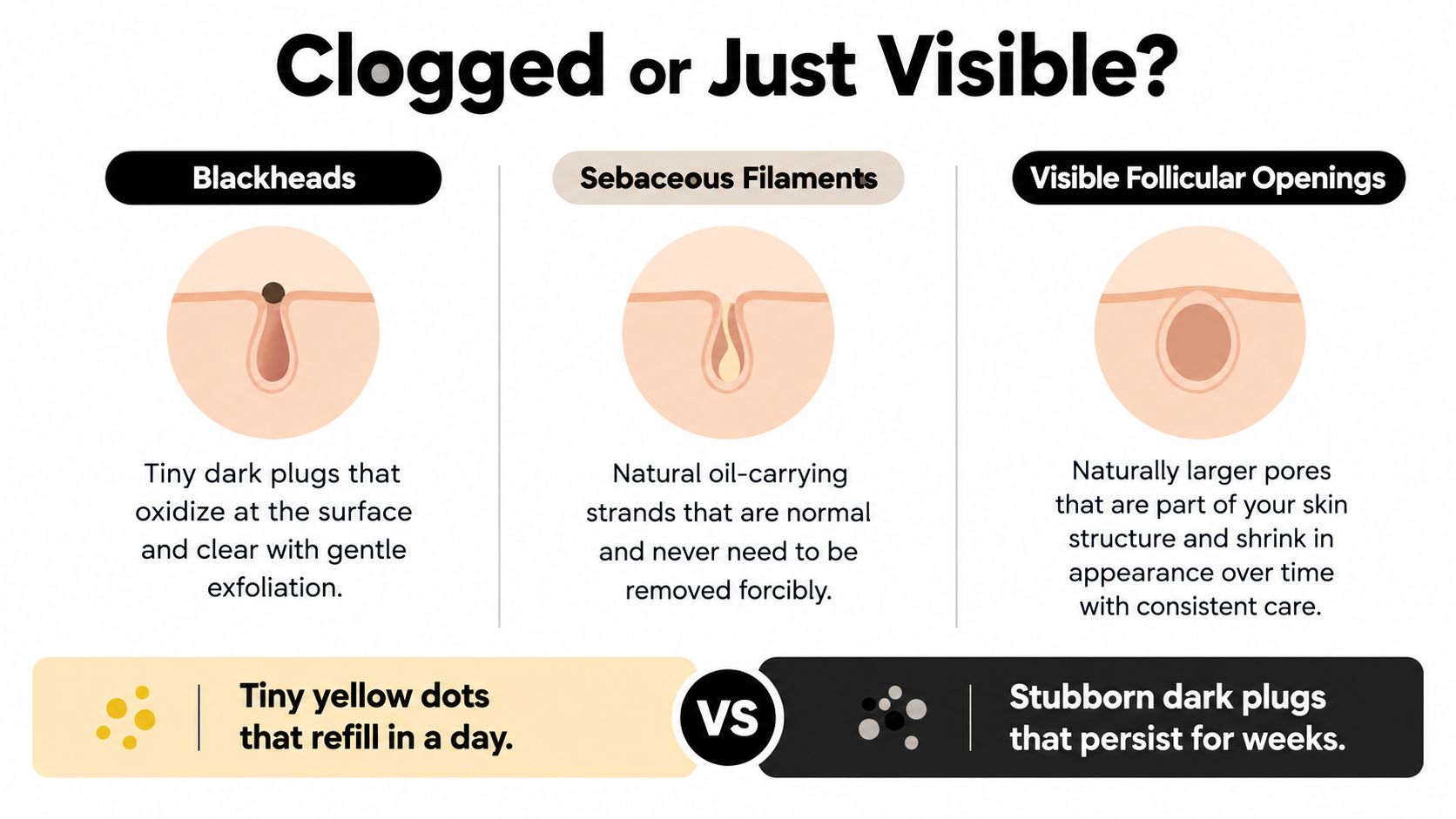
Look closely at the area around your nose before buying another exfoliant. Tiny yellow or gray dots that refill quickly often behave differently from one stubborn dark plug that lingers. The first pattern commonly matches sebaceous filaments, natural oil-carrying structures that become visible in many people. The second is more consistent with a blackhead.
Naturally visible follicular openings are different again. They may look like evenly spaced dots across the cheeks or nose, remain present even after cleansing, and show little lasting change after extraction. Scrubbing harder won't redesign the follicle.
Use a quick mirror test
Ask yourself three questions:
- Where does the texture appear? Concentration around the nose and forehead suggests oil and buildup may be contributing. Even texture across the cheeks may be more structural.
- Does it change during the day? If dots look more obvious as shine increases, sebum is amplifying their appearance.
- Does extraction make a lasting difference? If the same tiny dots return quickly, they may be sebaceous filaments rather than removable plugs.
This distinction prevents the most common mistake, stacking a scrub, acid, mask, and retinoid because the pores still look visible after a few days. Congestion may respond to gentle pore-clearing care, but baseline pore structure won't suddenly disappear. Aggressive exfoliation can also leave the surface tight and more reactive, which makes texture harder to ignore.
For readers considering professional options, it helps to understand the difference between home care and procedures such as collagen induction for smoother skin. A professional consultation can clarify whether the concern is mainly congestion, surface texture, or the appearance of follicular openings.
Before choosing an active, review the product categories and ingredients in what ingredients clog pores. Then choose one change, not five.
Hydration That Does Not Crimp Shine
Oily skin often needs hydration, but it rarely needs a heavy, waxy layer. The right texture should disappear into the routine, sit comfortably under sunscreen, and leave the surface flexible rather than slick.
| Hydrator type | Feel on a humid day | Best use |
|---|---|---|
| Pure aloe hydrogel | Cool, water-led, quick to layer | Shine-prone skin that feels tight after cleansing |
| Gel-cream | Slightly cushioned, more comforting | Oily skin with afternoon dryness |
| Oil-free lotion | More emollient but still light | Drier climates or skin that feels rough |
A pure aloe hydrogel is usually the easiest starting point in hot or humid weather. It gives the skin a water-led layer without asking you to tolerate a rich finish. A gel-cream makes more sense when your cheeks feel tight while your T-zone remains shiny. An oil-free lotion can work better in dry air, especially when sunscreen and cleansing leave the surface uncomfortable.
Freshness matters when aloe is the main ingredient
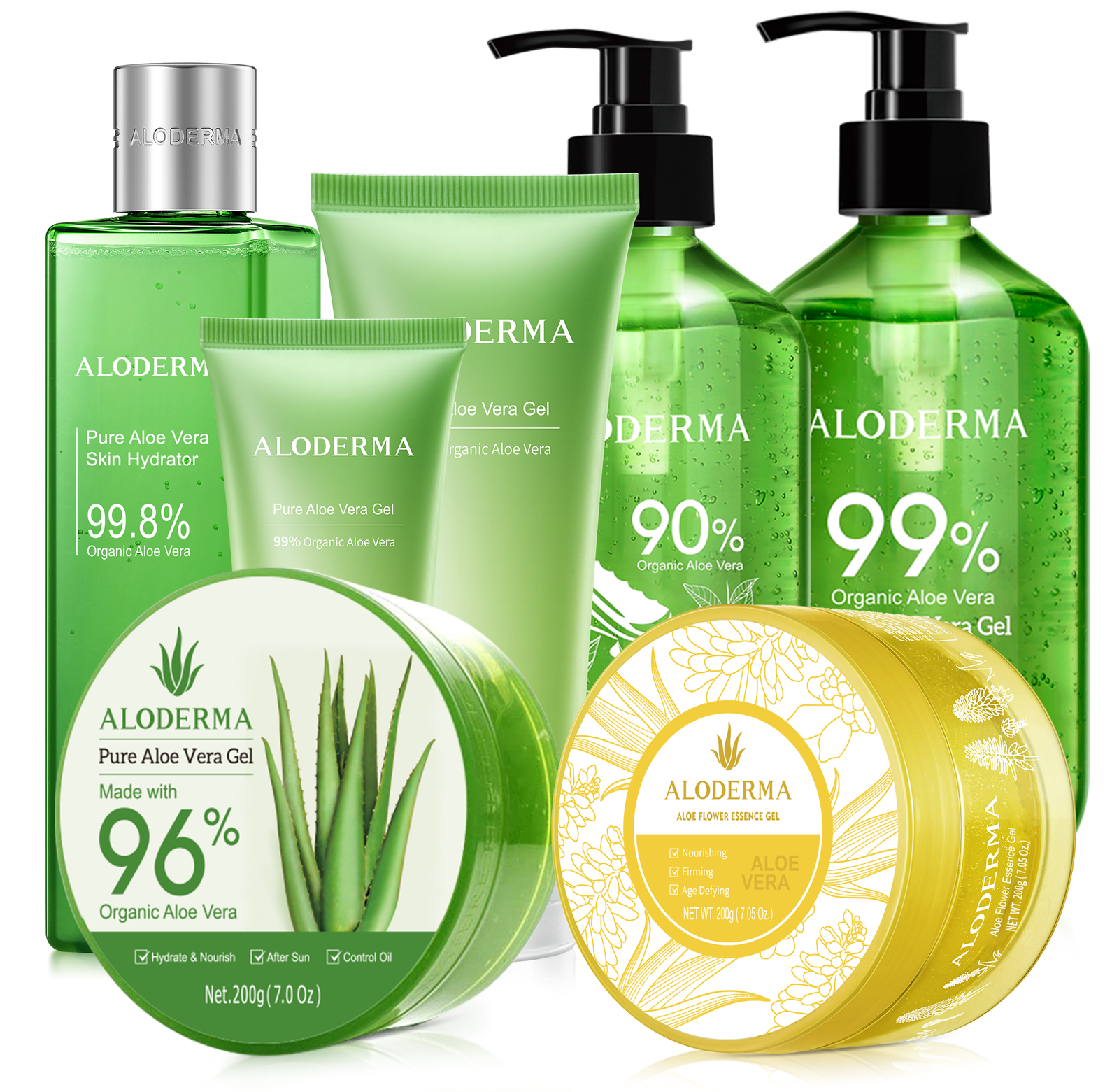
ALODERMA is a fully vertically integrated aloe vera company. It grows all of its own organic aloe vera, processes the aloe vera onsite, and manufactures onsite within 12 hours of harvest so the primary ingredient in every product is kept as bioactive and effective as possible. That farm-to-skin process gives shoppers a concrete freshness detail to investigate instead of treating “aloe” as a vague label claim.
Look for oil-free and non-comedogenic signals when comparing formulas, but don't treat either label as a guarantee that every product will suit you. Patch testing still matters, particularly if your skin reacts easily. “Natural” doesn't automatically mean gentle, and a product can feel lightweight while still containing an ingredient your skin dislikes.
A 2025 clinical trial of a salicylic-acid-containing gel reported 23.65% lower sebum, 40.5% higher hydration, and a 49.26% reduction in transepidermal water loss during the study (2025 salicylic-acid trial). The trial used a specific formulation and a relatively small participant group, so it isn't a promise for every salicylic-acid product. It does support a practical point: oil management and hydration can work together.
Hydration isn't a reward you earn after controlling shine. It helps determine whether your pore-clearing routine remains comfortable enough to use consistently.
If your face feels tight by mid-afternoon, choose a light gel or aloe layer. If sunscreen pills over your moisturizer, switch to a thinner hydrogel. If dry indoor air makes your cheeks rough, use a gel-cream at night. For more guidance on the oily-skin moisturizer question, see does oily skin need moisturizer.
Comparing BHA, Niacinamide, and Clay Masks
Oily skin does not need every oil-controlling ingredient. First decide whether pores are clogged or just easy to see. Then choose one treatment that matches the problem, while keeping hydration and barrier comfort in place. Using BHA, niacinamide, and clay together can leave skin tight, irritated, and even harder to manage.
Salicylic acid for clear congestion
Salicylic acid is oil-soluble, so it can work inside clogged pores rather than only polishing the surface. That makes it a sensible choice for blackheads, rough patches, and congestion. A salicylic-acid cleanser can help loosen pore buildup, but switch to a mild cleanser if dryness or stinging develops.
Start with a cleanser instead of stacking several leave-on acids. Use it a few evenings per week and reduce the frequency if your nose feels raw or your cheeks become tight. Add a thin aloe gel or another comfortable hydrating layer if treatment leaves skin feeling stripped.
Situational call: Choose BHA first when congestion is the main complaint and gentle cleansing has not done enough.
For a practical ingredient-focused explanation, see the ArtNaturals guide to clearer skin. Keep the rule simple: applying more product will not make it work better.
Niacinamide for a gentler entry point
Niacinamide is the better starting point when shine is persistent, texture looks rough, and exfoliating acids tend to cause discomfort. A clinical dermatology summary reports that topical niacinamide reduced surface sebum after about four weeks, alongside improvements in apparent pore size and rough texture (clinical dermatology summary of niacinamide evidence).
Introduce it by itself so you can judge the response clearly. A straightforward serum is easier to manage than a routine built around several rotating acids. Apply it after cleansing and pair it with fresh aloe hydration if your skin needs water without a heavy, greasy finish.
Situational call: Choose niacinamide first when shine is steady and your skin does not tolerate aggressive exfoliation well.
Clay masks for occasional oil absorption
Clay can absorb surface oil and make a slick T-zone feel fresher. It is not a daily pore-size treatment. Use a mask occasionally when the center of your face feels particularly oily, then rinse before it becomes uncomfortably dry or tight.
Clay supports a routine, but it should not carry it. Temporary oil absorption does not replace cleansing, hydration, or sunscreen. If the mask leaves your face squeaky, flaky, or tight, it is taking more comfort than it gives.
Situational call: Choose clay for an occasional reset, not as the answer to every pore concern.
Retinoids suit a longer-term texture plan and need a cautious introduction, ideally with professional guidance. A peer-reviewed review describes studies in which tazarotene and tretinoin were associated with reduced pore size after treatment lasting months, not overnight (review of retinoid and oily-skin evidence).
Do not begin salicylic acid, a retinoid, and a clay mask in the same week. Introduce one active, watch for tightness or stinging, and give your skin time to settle. For targeted congestion, the blackhead-dissolving gel guidance offers another way to consider focused care without turning the whole routine into an exfoliation experiment.
A Practical Morning and Evening Routine
A routine should be boring enough to repeat. If you need to negotiate with yourself every night, it has too many steps.
Morning
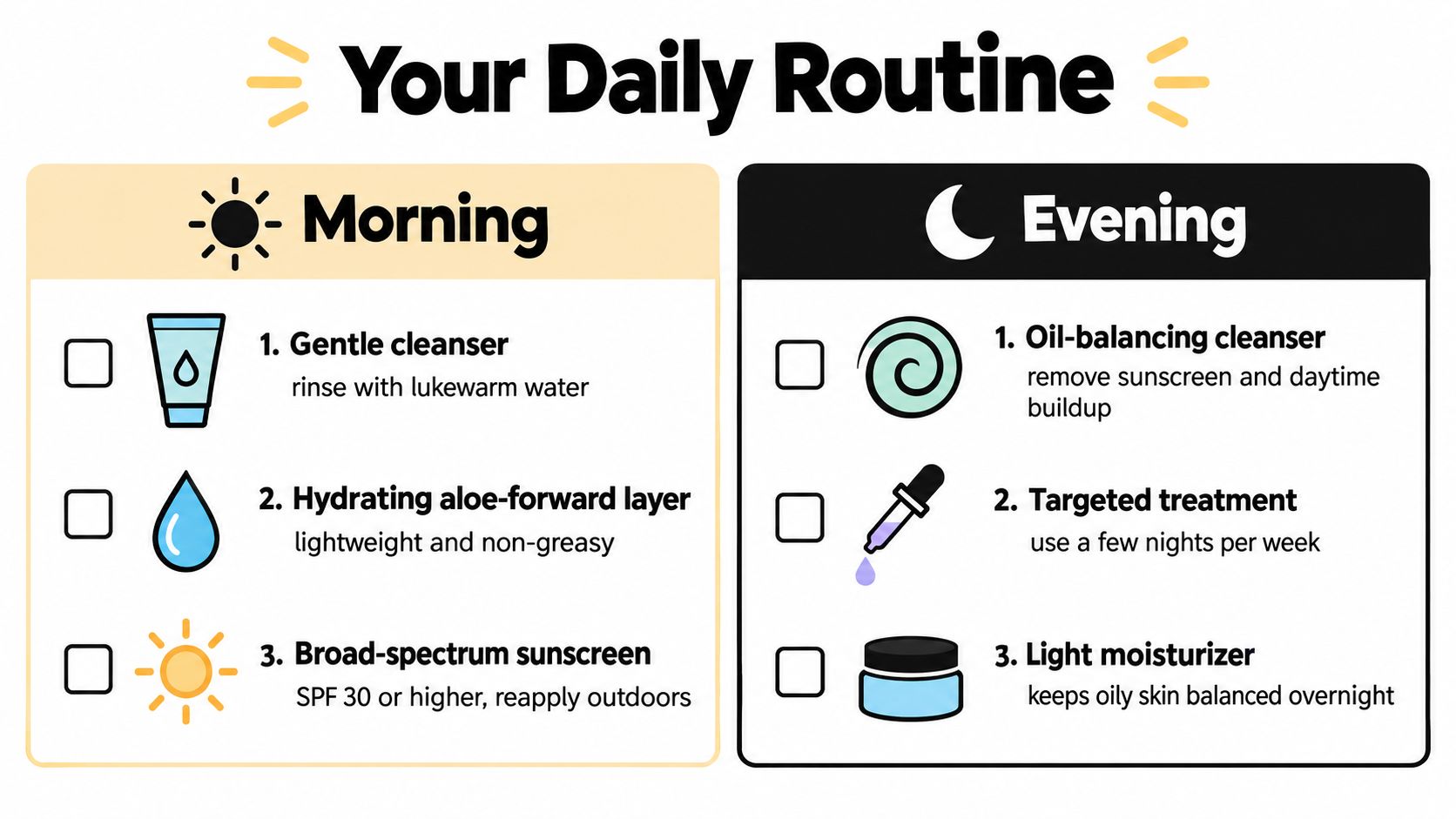
- Cleanse gently. Use a mild, non-comedogenic cleanser with lukewarm water. If your skin feels comfortable in the morning, a lighter rinse may be enough.
- Add a hydrating aloe-forward layer. Choose a thin gel or toner that leaves no greasy film.
- Apply broad-spectrum sunscreen. Use SPF 30 or higher and reapply when you'll remain outdoors. Skip the instinct to cover shine with increasingly heavy primer.
Evening
- Remove sunscreen and daytime buildup. Use a gentle cleanser. If you used a water-resistant product or makeup, cleanse thoroughly without scrubbing.
- Rotate your treatment cleanser. Use a salicylic-acid cleanser several evenings per week and a mild cleanser on the other evenings. Lower the frequency at the first sign of tightness or stinging.
- Moisturize lightly. Apply an aloe-forward gel, gel-cream, or oil-free lotion while the skin still feels comfortable.
The AAD recommends washing twice daily, alternating a salicylic-acid cleanser with a mild cleanser if irritation appears, and moisturizing even oily skin after washing (AAD routine guidance). That is a better baseline than washing repeatedly whenever the T-zone becomes shiny.
Start one active at a time: Use niacinamide by itself for a couple of weeks before considering a stronger active. Your skin's comfort is useful feedback, not an obstacle.
ALODERMA's aloe-forward textures can fit naturally into the hydrating step, but compare the full ingredient list and choose the finish that works with your sunscreen. In humid climates, use less product and thinner layers. In dry climates, keep the same simple structure and choose a more cushioning evening moisturizer.
Choosing the Right Starting Point for Your Skin
Choose based on what your skin has experienced recently, not just the label “oily.”
- If you've spent the last few months scrubbing, stinging, or feeling tight: Start with a barrier-first aloe-forward routine. Gentle cleansing, lightweight hydration, and sunscreen come before any pore-clearing active.
- If your main issue is steady shine and rough-looking texture: Start with niacinamide and give it several weeks of consistent use before adding anything stronger.
- If stubborn congestion remains despite gentle care: Start with a BHA cleanser a few nights per week, then adjust according to comfort.
Keep the useful label signals simple: oil-free and non-comedogenic are worth looking for, but patch test every formula, including natural ones. A skincare routine works because you can repeat it, so this practical explanation of why a skincare routine matters is relevant beyond any single ingredient.
ALODERMA's fully vertically integrated process grows organic aloe, processes it onsite, and manufactures onsite within 12 hours of harvest. Visit ALODERMA to compare fresh aloe gels, cleansers, toners, and lightweight hydrators, then choose the simplest routine that helps your skin feel comfortable while it manages shine.