







You’re standing in front of the mirror with two competing complaints. Your skin looks shiny by midday, but it still feels tight after cleansing. You want nourishment, but you don’t want a heavy film. You want a natural facial oil, but one search pulls up castor oil, another says jojoba oil, and suddenly a simple choice feels oddly stressful.
That’s a common place to get stuck.
A lot of people compare oils as if skincare has to be a winner-takes-all decision. Castor oil or jojoba oil. Rich or light. Dryness or breakouts. Real skin rarely works that neatly. Plenty of people have skin that’s both oily and dehydrated, reactive yet blemish-prone, or comfortable one week and moody the next.
If you’ve been browsing different facial oils and wondering why none of them seem to match every need at once, the missing idea is often blending. Castor oil and jojoba oil don’t have to compete. Used thoughtfully, they can support each other.
That matters even more when you care about ingredient quality, texture, and how your routine feels at 7 a.m. before work or at night when your skin is asking for comfort, not complexity.
The Search for the Perfect Skincare Oil
Natural oils attract people for good reason. They feel simple. They sound familiar. They promise softness without the long ingredient list. Then the confusion starts. One oil feels too rich. Another disappears too quickly. A third sounds ideal until someone online says it broke them out.
The problem usually isn’t that the oil is “bad.” It’s that each oil has a personality.
Castor oil is dense and cushioning. Jojoba oil is lighter and more adaptable. If you use only one, you may love half the result and dislike the other half. That’s why someone with an oily forehead and flaky cheeks can feel like every product was made for a different face.
Why one oil often isn’t enough
Think about a rainy-day outfit. A heavy wool coat protects you, but it may be too much for mild weather. A thin jacket feels easier to wear, but it may not give enough comfort when the air turns cold. Skin oils can work the same way.
Castor oil can feel like a comfort layer. Jojoba oil can feel like a daily, easygoing staple. Together, they can create a middle ground that’s more wearable.
Skin doesn’t ask for trends. It asks for balance.
This is especially helpful if your skin changes with the season, your cycle, travel, indoor heating, or over-cleansing. A blend gives you more control than a one-note oil ever could.
The real question
Instead of asking which oil is better, ask:
- What does my skin need today: a stronger moisture-sealing feel, a lighter balancing feel, or both?
- How do I want the product to wear: as a treatment, a massage oil, a cleansing step, or a light finishing layer?
- What am I pairing it with: a gel, toner, cream, or water-based hydrator?
Those questions lead to better results than chasing a single miracle oil.
Meet Castor Oil A Deeply Nurturing Protector
Castor oil has a reputation for being thick, glossy, and serious about moisture. If jojoba is the easy linen shirt of skincare, castor oil is the soft, substantial knit you reach for when your skin feels stressed and exposed.

What makes castor oil feel so different
Castor oil comes from Ricinus communis seeds and contains up to 90% ricinoleic acid, a distinctive fatty acid that gives it its dense texture and skin-coating feel, according to Formula Botanica’s overview of castor oil benefits. That same source notes a comedogenic rating of 1/5 and highlights its role in helping reduce transepidermal water loss, which is one reason it can support moisture without automatically meaning clogged pores.
In plain language, castor oil doesn’t just sit on skin in a random way. It forms a more deliberate cushion.
That’s why so many people describe it as protective. Not airy. Not silky-light. Protective.
How it behaves on skin
A useful way to think about castor oil is as a weighted blanket for dry-feeling areas. It’s not what everyone wants all over the face every morning. But for a compromised moisture barrier, rough patches, or skin that loses comfort quickly after washing, that “held in” feeling can be exactly the point.
It tends to suit people who want:
- A richer finish: helpful when lighter oils seem to vanish too fast
- Targeted support: around flaky spots, dry corners of the nose, or areas that feel tight
- A slower ritual: facial massage, overnight sealing, or cleansing blends
If you’re curious about sourcing and quality, ALODERMA has a practical explainer on hexane-free castor oil that helps decode what shoppers often see on labels.
Where readers get confused
People often hear “oil” and assume heavier means pore-clogging. That’s too simplistic. Texture and pore response aren’t the same thing. Castor oil feels heavy, yes. But a low comedogenic rating changes how you should think about that heaviness.
Another confusion point is hydration versus moisture. Castor oil is excellent at helping skin hold onto moisture, but oils don’t replace water-based hydration. That’s why castor oil works best when it’s part of a broader routine instead of the entire routine.
Practical rule: Use castor oil like a concentrator. A little can go a long way, especially on facial skin.
When castor oil makes the most sense
Use castor oil when your skin says, “I need more staying power.”
That might be after over-exfoliation, during cold weather, or when your cheeks feel dry even though your T-zone still gets shiny. It can also make sense as part of an evening blend, because nighttime is when many people tolerate richer textures better.
If you’ve ever applied a light oil and felt like your skin looked exactly the same ten minutes later, castor oil explains why some people crave a denser option.
Discover Jojoba Oil The Intuitive Skin Balancer
Jojoba oil feels easier to understand once you stop thinking of it as a typical oil. It’s technically a liquid wax ester, and that matters because it behaves in a way skin often recognizes well.
If castor oil is the rich protector, jojoba oil is the ingredient that seems to “get” your skin faster.
Why jojoba feels familiar to skin
Jojoba oil structurally mimics human sebum. That similarity helps it provide non-comedogenic occlusion and can signal sebaceous glands to slow excess oil production. Clinical trials have shown reduced excess oil after four weeks of use. That’s why jojoba keeps showing up in routines for oily and blemish-prone skin.
It doesn’t just moisturize. It helps skin feel more settled.
For readers who want a deeper ingredient background, ALODERMA’s article on organic jojoba oil gives a useful primer on why this ingredient works so well in lightweight skincare.
What it feels like in real life
Jojoba oil is the friendlier starting point for many people who say, “I hate greasy products.”
It tends to spread with less drag than castor oil. It doesn’t create the same thick cushion. Instead, it softens the surface and leaves skin feeling more composed. If your face gets slick in the afternoon but still feels stripped after cleansing, jojoba often makes immediate emotional sense because it doesn’t feel like punishment for having oily skin.
That lightness is why people often use it in:
- Morning routines: when makeup, sunscreen, or a fresh finish matter
- Combination skin care: where one area is dry and another is visibly oily
- Beginner-friendly oil routines: because the texture feels less intimidating
The balancing role
The phrase “balances skin” gets overused in beauty writing, but with jojoba, the logic is easier to follow. Since it resembles skin’s own sebum, it can feel less foreign on oily skin than richer plant oils do.
That’s the reason jojoba can suit people who usually avoid oils altogether.
Jojoba often works best for the person who wants nourishment without feeling coated.
Where expectations need adjustment
Jojoba isn’t the answer to every kind of dryness. If your skin feels severely depleted, jojoba alone may feel elegant but not quite enough. That’s not a flaw. It’s just a clue about its role.
It’s also why people who love jojoba sometimes still reach for a richer partner at night or during colder months. Jojoba shines when you want flexibility, daily comfort, and a skin-like finish. It’s less about wrapping the skin and more about helping it find its rhythm.
Castor Oil vs Jojoba Oil A Side-By-Side Look
Sometimes the fastest way to understand ingredients is to put them next to each other. Not to crown one as better, but to see what each one does well.

Castor oil vs. jojoba oil at a glance
| Property | Castor Oil | Jojoba Oil |
|---|---|---|
| Texture | Thick and dense | Lightweight and smooth |
| Skin feel | Cushioning, protective | Soft, balanced, less greasy |
| Absorption style | Tends to stay present on skin longer | Feels more quickly wearable |
| Comedogenic rating | 1 | 2 |
| Main strength | Helps seal in moisture | Helps oily skin feel more regulated |
| Best fit when used alone | Dry-feeling spots, evening use, massage | Oily, combination, or daily facial use |
If you used only castor oil
Castor oil makes sense when your skin wants a stronger seal. It’s the one you notice. The one you feel. The one that can turn a quick routine into something more treatment-like.
That can be excellent for cheeks that lose comfort fast, dry patches around the mouth, or a nighttime routine where texture doesn’t need to disappear instantly.
The trade-off is feel. Some people love the richness. Others can’t get past it.
If you used only jojoba oil
Jojoba fits modern routines more easily. It layers better. It’s easier to spread. It generally feels less dramatic.
That makes it appealing if you’re applying sunscreen after, if you don’t want shine, or if your skin is oily enough that anything too rich feels like overkill. The trade-off is depth. On its own, it may not deliver enough comfort for skin that feels rough, tight, or seasonally depleted.
The decision framework
Use this quick guide if you’re choosing based on a specific need:
- Choose castor oil alone if your priority is a more substantial moisture-sealing finish.
- Choose jojoba oil alone if your priority is a lighter, more skin-like daily oil.
- Choose castor oil and jojoba oil together if your skin has mixed needs and you want a middle texture.
That last category describes a lot more people than you might think.
What this comparison misses on purpose
A side-by-side chart is useful, but real skin isn’t a chart. The cheek that needs comfort may live next to a nose that gets shiny by lunch. The product that feels perfect in January may feel wrong in July.
That’s why “versus” is helpful for clarity, but not always for routine-building. The better question is how these two ingredients can cooperate.
Better Together Why Blending Oils Unlocks New Benefits
The most useful shift is this one. Stop treating castor oil and jojoba oil like rivals.
A blend often gives you the part you want from each without locking you into the downside of either one.

Why the blend works
Castor oil brings depth and staying power. Jojoba brings slip and a more adaptable finish. Mixed together, jojoba can thin castor’s heavy feel while castor gives jojoba more substance.
That’s why this pairing can feel more elegant on skin than castor oil alone and more comforting than jojoba oil alone.
A commonly used DIY ratio is 1:3 castor-to-jojoba, which helps lighten castor oil’s viscosity while keeping its rich, hydrating character, as discussed in HBNO’s castor oil vs jojoba oil guide.
What the blend feels like on different skin moods
A castor and jojoba blend is especially useful when your skin sends mixed signals.
- Oily but tight after cleansing: jojoba keeps the finish from feeling too dense, while castor adds a more comforting seal.
- Blemish-prone and easily dehydrated: both oils have low comedogenic ratings, so the blend can feel gentler than heavier botanical oils.
- Seasonally confused skin: the blend gives you a flexible base you can use more lightly or more generously depending on weather and routine.
A good blend doesn’t feel like compromise. It feels like your skin finally stopped arguing with itself.
Starter ratios that make sense
The 1:3 castor-to-jojoba ratio is the easiest place to begin for facial use. It usually feels balanced enough for people who find pure castor oil too intense.
You can then adjust by feel:
- For a richer evening blend: tilt a little closer toward castor oil
- For a lighter daytime blend: tilt more toward jojoba oil
- For oil cleansing: keep the texture comfortable enough to massage without too much drag
This visual can help if you like seeing texture and application in motion.
How to test a blend without overthinking it
Start small. Mix only what you’ll use over a short period. Apply it to one area first, especially if your skin reacts easily. Notice not just whether you break out, but also how the finish feels after twenty minutes, under sunscreen, or the next morning.
That’s where individuals learn the truth. Not from the first drop, but from wear.
A blend succeeds when it gives you enough comfort to keep using it consistently.
The Ultimate Trio Adding Fresh Aloe for Perfect Harmony
You wash your face, apply a few drops of oil, and still end up with skin that feels shiny yet strangely tight by midday. That mismatch usually means your routine has enough oil but not enough water. Aloe helps close that gap.
Castor oil and jojoba oil already make a smart pair. One brings cushion and staying power. The other brings a texture that often feels more familiar to skin. Fresh aloe adds the missing water-based step, so the blend feels balanced instead of overly rich.

Why aloe completes the oil blend
Oils are excellent at softening skin and slowing water loss. They do not replace hydration. Skin needs both. A water-based product gives the skin that first drink, and the oil blend helps keep that comfort around longer.
This matters for skin that feels oily on the surface but dehydrated underneath. In that situation, applying oil alone can feel like putting a lid on an empty pot. Aloe gives the skin a light layer of hydration first, then castor and jojoba help hold it in place.
For readers learning the logic of layering aloe vera with other products, that order matters more than many people realize.
Fresh aloe fits ALODERMA's philosophy
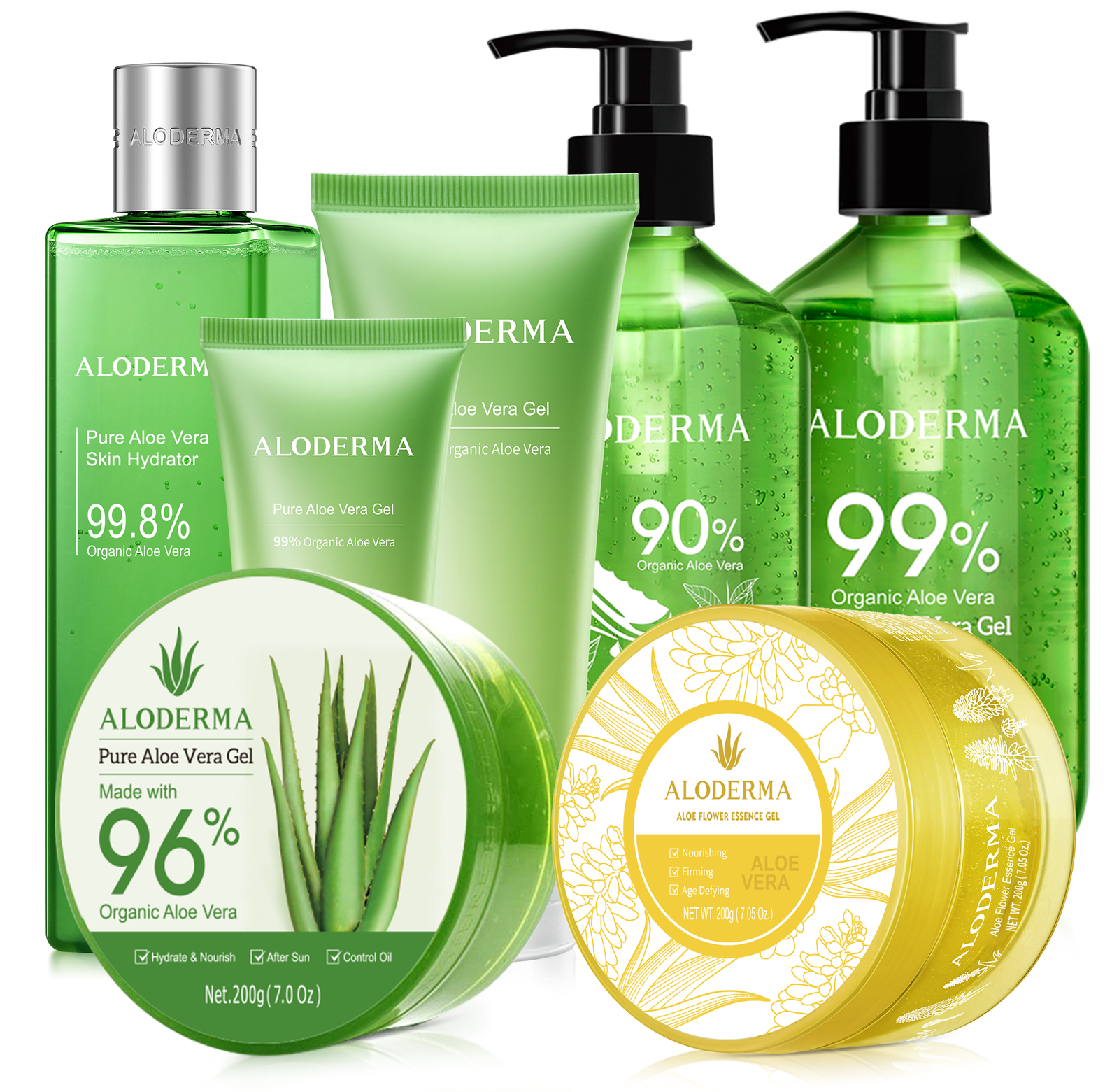
Aloe is not just an ingredient name on a label. How it is grown and processed shapes the final formula. ALODERMA is a fully vertically integrated aloe vera company. It grows its own organic aloe vera, processes it on-site, and manufactures within 12 hours of harvest, so the aloe used as the primary ingredient remains as bioactive and effective as possible.
That freshness-first approach pairs naturally with facial oils. Castor oil and jojoba oil support the skin's surface. Fresh aloe brings the cooling, water-based side of care that oils cannot provide by themselves.
If you want more context on why fresh aloe works so well in facial care, ALODERMA's guide to fresh aloe vera for face explains the basics clearly.
How to use the trio without making it complicated
Apply the trio in a simple order on clean skin:
-
Start with aloe on slightly damp skin
This gives your skin a light, water-based layer to absorb first. -
Press your castor and jojoba blend on top
A small amount is usually enough. Focus on areas that lose comfort quickly, such as the cheeks or around the mouth. -
Adjust by zone
You do not need the same amount everywhere. Use less on areas that get shiny and more where skin feels dry or exposed.
That sequence often helps the blend feel lighter, more flexible, and easier to wear.
Why this trio works especially well for easily upset skin
Sensitive or blemish-prone skin often does better with routines where each product has a clear role. Aloe hydrates without a heavy finish. Jojoba keeps the oil step closer to the feel of skin's own natural oils. Castor adds richness where the skin barrier feels worn down.
Together, they do different jobs that support one another. That is the advantage here. The goal is not choosing a winner between castor oil and jojoba oil. The goal is building a blend, then improving it with fresh aloe so your skin gets softness, hydration, and a more even feel at the same time.
Use aloe first, then seal in that hydration with your oil blend. The routine usually feels calmer, lighter, and more complete.
Your Skincare Ritual Putting Your Blends to Work
Knowing the ingredients is one thing. Using them in a way that fits real life is what changes your skin routine.
The good news is that castor oil and jojoba oil don’t need a complicated system. A few drops, the right order, and a little consistency usually matter more than a ten-step routine.
Morning ritual for oily or combination skin
If your face gets shiny quickly but still feels tight after washing, keep the morning routine light.
- Cleanse gently: don’t scrub your skin into feeling “squeaky”
- Apply a layer of aloe-based hydration: on slightly damp skin
- Press in a small amount of your blend: lean more jojoba-heavy for daytime
- Finish with sunscreen: let the oil settle first so the final layers sit better
This kind of routine works well when your goal is comfort without a glossy finish. The skin should feel supple, not coated.
Evening ritual for skin that feels depleted
Night is a good time for a slightly richer feel because you’re not trying to layer makeup or rush out the door.
Try this order:
-
Cleanse without overdoing it
If you wear sunscreen or makeup, massage your oil blend onto dry skin first, then follow with a gentle cleanser. -
Apply your hydrating step
A gel, mist, or toner helps create the damp base that oils can support. -
Use your castor oil and jojoba oil blend
Press it into the cheeks, around the mouth, and any area that feels exposed. -
Pause and assess
If your skin still feels comfortable after a minute, stop there. Don’t keep layering out of habit.
Spot use instead of all-over use
A lot of people do better when they stop applying oils evenly across the whole face.
Try using more blend on:
- Cheeks that get tight
- The area around the nose if it flakes
- Post-cleansing dry patches
Use less on:
- The center of the forehead
- The sides of the nose if they get slick
- Any area where heavy texture bothers you
That kind of placement feels more intuitive and often more successful than a blanket application.
Your skin doesn’t need equal treatment everywhere. It needs responsive treatment.
Beyond the face
This blend isn’t limited to facial care.
You can use it as a softening step on dry cuticles, on rough elbows, or as a pre-shampoo treatment on dry lengths. Some people also like a tiny amount on brows. Just keep the amount small and be careful near the eyes.
If your skin feels vulnerable after hair removal, routines that focus on gentleness matter. Resources on essential after waxing care products can help you think through what a calmer post-wax routine should look like.
A routine that feels doable
The best ritual is the one you’ll repeat when you’re tired, rushed, or not in the mood for skincare homework. That means keeping the blend accessible, using it in tiny amounts, and letting texture guide adjustments.
If the skin feels greasy, lighten the blend with more jojoba or use less. If it still feels tight, use a touch more castor or make sure you’re applying over a damp, hydrating layer.
Small changes beat dramatic ones.
Quick Answers to Your Oil Blending Questions
Can I use castor oil and jojoba oil for oil cleansing
Yes, many people do. The blend can give enough slip for massage while still feeling more elegant than castor oil on its own. If you’re trying this for the first time, keep the blend light and follow with a gentle cleanser if your skin prefers a cleaner finish.
Is the blend okay for blemish-prone skin
It can be, especially because both oils are considered low on the comedogenic scale. Still, “blemish-prone” doesn’t mean everyone reacts the same way. Start with a small amount and test one area first.
Can I use it on eyebrows or lashes
People commonly use small amounts on brows. Around lashes, caution matters more. Keep products out of the eyes and use a very small amount if you try it near that area.
How should I store a DIY oil blend
Store it in a clean, tightly closed container away from heat and direct light. Small batches are usually easier to manage because you can pay attention to freshness, texture, and how your skin responds.
Does cold-pressed or organic matter
Many ingredient-conscious shoppers prefer oils that are minimally processed and clearly labeled. That doesn’t guarantee your skin will love a product, but it can make the ingredient story easier to trust and understand.
What if the blend feels too heavy
Change the ratio before you abandon the idea. More jojoba usually creates a lighter finish. You can also use fewer drops or reserve the blend for night.
What if it doesn’t feel moisturizing enough
That usually means your skin needs a water-based layer underneath. Oils help hold moisture in, but they don’t replace a hydrating base.
How do I patch test without making it complicated
Apply a small amount to a discreet area and give it time. Watch for how your skin feels, not just whether you see an immediate reaction. Texture, comfort, and next-day wear all matter.
Can I mix the oils in my palm each time instead of pre-mixing
Absolutely. In fact, that’s a smart way to learn your ideal ratio. Some days your skin may want a lighter jojoba-leaning mix. Other days it may want a little more castor.
If you want a routine built around fresh aloe as the foundation, ALODERMA offers aloe-focused skincare made from organic aloe vera grown on its own farms and processed on-site within 12 hours of harvest. That kind of fresh-aloe base can pair naturally with a simple castor oil and jojoba oil ritual when your goal is lightweight comfort with a more thoughtful ingredient story.