



You're standing in front of the bathroom mirror, turning a skincare bottle around for the third time. The front says “natural,” “organic,” and “fresh,” but the ingredient list doesn't tell you where the main botanical was grown, how long it traveled, or what happened after harvest. You want a gentler routine, yet you also want more than a pleasant story printed on a label.
That's the appeal of farm to face skincare. It connects the plant, the processor, and the finished formula closely enough that you can ask practical questions about freshness and handling. Aloe vera makes an especially useful example because the quality of its gel depends on what happens soon after the leaf leaves the plant.
Why Your Bathroom Shelf Looks the Way It Does
A crowded shelf often reflects good intentions. One bottle promises botanical hydration, another offers a “clean” formula, and a third highlights a rare plant extract. You may have chosen each product because it sounded transparent, but “natural” doesn't automatically tell you whether the hero ingredient came from a brand-owned farm or a large bulk supplier.
That distinction matters most when a plant is delicate after harvest. Aloe vera leaves contain a water-rich gel with polysaccharides, enzymes, amino acids, and other compounds used in cosmetic formulas. The finished product depends not only on the plant variety, but also on how quickly the gel is separated, stabilized, and incorporated into a formula.
The question behind the label
A shopper comparing two aloe products could reasonably ask:
- Where was the aloe grown?
- Who harvested and processed it?
- How long did the leaf wait before stabilization?
- Does the brand explain its method clearly?
Those questions turn farm to face from a lifestyle phrase into a supply-chain question. A product can contain a plant-derived ingredient without being farm-to-face in the meaningful sense. The stronger version involves traceable cultivation, close processing, and a brand willing to explain the route from field to bottle.
The broader clean beauty category, where farm-to-face products commonly sit, was estimated at USD 10.49 billion in 2025 and is projected to reach USD 35.30 billion by 2033, with a projected 16.8% CAGR from 2026 to 2033, according to Grand View Research's clean beauty market report. That scale shows why shoppers are asking sharper questions. They're no longer satisfied with a green package and a plant illustration.
The practical question: Does ingredient freshness change what reaches your skin, and can the brand prove how it handled the plant?
The rest of this guide uses aloe vera to answer that question without treating “fresh” as a vague sensory promise. You'll learn what farm-to-face production means, which claims deserve scrutiny, and how to build a simple routine around transparent sourcing.
What Farm to Face Skincare Actually Means
Farm to face skincare is a sourcing and production model. A brand grows or directly manages a key botanical, harvests it, processes it near the growing site, and uses the resulting ingredient in its own formulas or manufacturing process. The model shortens the distance between cultivation and finished skincare, which gives the brand more control over handling.
Three features help separate the idea from ordinary botanical marketing.
Traceable cultivation
The first question is whether the brand can identify the origin of its hero ingredient. “Contains aloe vera” tells you what is in the product. It doesn't tell you whether the aloe came from the brand's own plantation, a contracted farm, or a bulk ingredient distributor.
Traceability can include the growing location, cultivation method, harvest practices, and ownership relationship. It doesn't require every ingredient in a formula to come from one farm. A cleanser may still need water, emulsifiers, preservatives, and other components from specialized suppliers.
Processing close to harvest
A farm-to-face brand processes the important botanical close to where it was grown. For aloe, that can mean washing the leaf, removing unwanted material, separating the gel, and stabilizing it before prolonged transport or storage.
The phrase vertical integration describes a brand controlling several links in the chain, from planting and harvesting through processing and manufacturing. A fully vertically integrated aloe company can make decisions about harvest timing and stabilization without waiting for a distant supplier's production schedule.
A documented freshness window
Freshness becomes meaningful when a brand explains the time between harvest and processing. A statement such as “processed within hours” is more useful than “fresh” alone because it gives shoppers a way to understand the process.
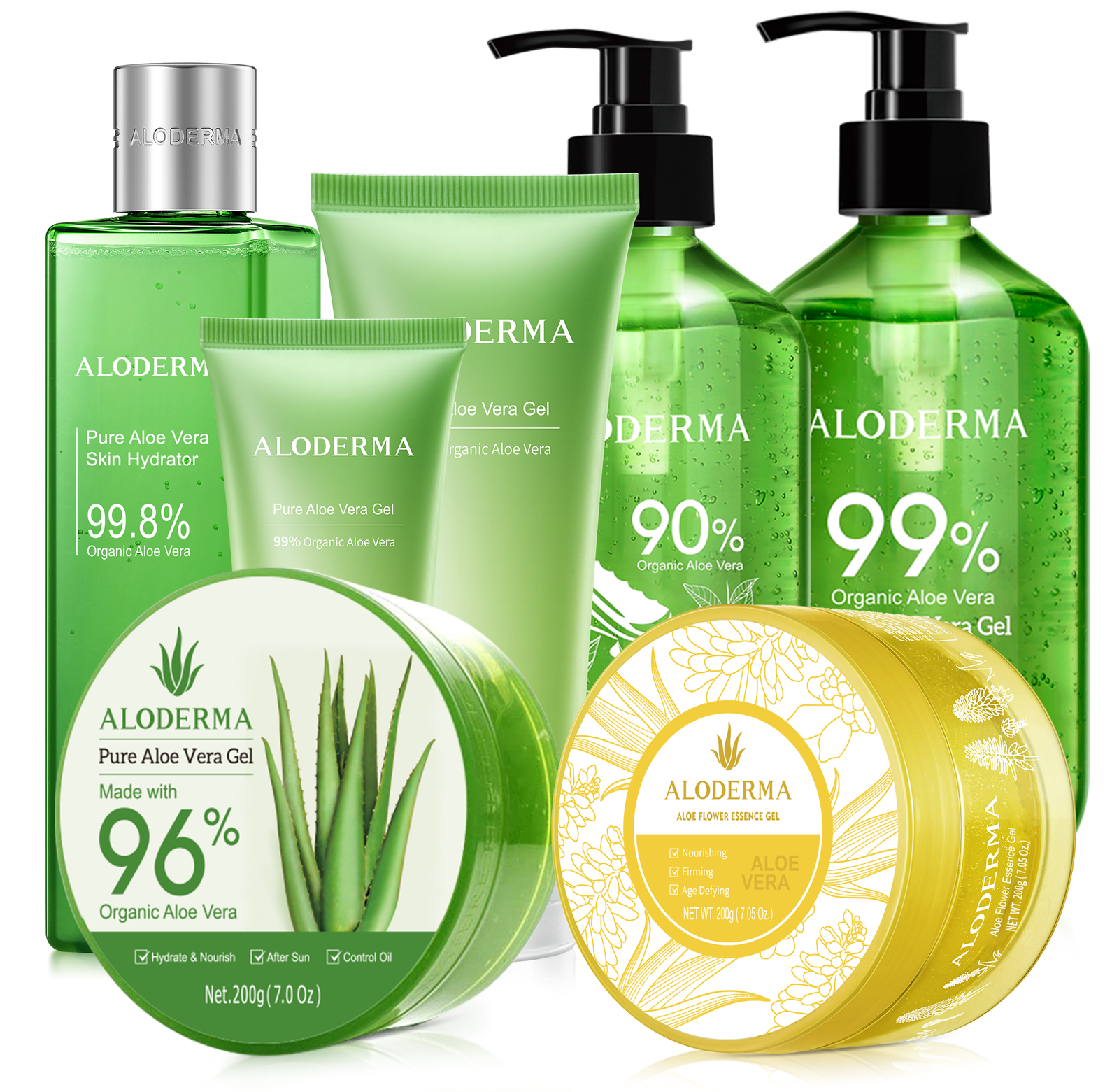
ALODERMA is a fully vertically integrated aloe vera company that grows its own organic aloe vera and processes the aloe vera and manufactures onsite within 12 hours of harvest. The brand's stated purpose is to make the primary ingredient in every product as bioactive and effective as possible.
That doesn't mean every farm-to-face product has the same method. It means you can evaluate the claim by asking what the brand controls, how quickly it works, and which certification or quality documents support the story.
Why Freshness Changes What the Ingredient Can Do
“Fresh” isn't only a pleasant word. For aloe vera, it describes a time-sensitive processing decision.
Once an aloe leaf is cut, its gel is exposed to changes involving time, heat, oxygen, and microbial handling. Aloe processing literature advises working with the leaf within the first 36 hours after harvest where possible, because decomposition can reduce biological activity. The aloe processing review in Applied Sciences and Biotechnology also discusses methods designed to protect acemannan, a major aloe polysaccharide.
Polysaccharides in plain language
Polysaccharides are long chains of sugars. In aloe, they help give the gel its characteristic texture and are part of the ingredient's functional profile. Acemannan is one of the best-known examples, and processing choices can affect how much of the original structure remains usable in the finished ingredient.
Low-heat and low-oxygen handling aims to reduce unnecessary breakdown. Technical processing information notes that biological activity can remain intact with brief heat exposure at 65°C for under 15 minutes, followed by flash cooling to 5°C or below within 15 seconds. Refrigerated aloe gel can remain stable for up to 5 days without significant changes in pH and viscosity under the conditions described in the technical literature.
ALODERMA's stated onsite processing window, within 12 hours of harvest, compresses the period between cutting and stabilization. That's the practical meaning behind a claim about bioactive aloe. The brand isn't saying the plant is fresh at the farm. It's describing a controlled effort to move the ingredient into processing before unnecessary delay.
For a shopper, the useful test is simple:
- Ask about the harvest-to-processing window.
- Look for an explanation of heat, cooling, oxygen, or stabilization.
- Check whether the aloe is a central ingredient or a token extract.
You can also explore how long aloe vera lasts after processing to understand why storage and preservation matter after the initial harvest window.
Decoding the Claims on the Front of the Bottle
Front-label language can point you in the right direction, but each phrase has limits. Treat claims as questions to investigate, not as proof by themselves.
“Organic”
Organic describes a cultivation or ingredient standard when a recognized certification body verifies it. It doesn't automatically tell you how soon the ingredient was processed after harvest, and an organic botanical can still be transported or stored for a long period.
“Cold-processed”
This phrase may suggest gentle handling, but it needs a method behind it. Ask whether the brand explains the temperature range, stabilization step, and reason for using the process. Without that detail, “cold-processed” can function more as a mood than a technical description.
“Fresh harvested”
This is meaningful only when paired with timing. A credible claim explains whether “fresh” means harvested seasonally, processed soon after cutting, or sourced from a plant-based supplier.
“Raw” and “small batch”
“Raw” may describe limited heating, but it doesn't guarantee stability or preservation of the desired compounds. “Small batch” may indicate closer production control, yet it says nothing by itself about where the botanical was grown.
“From our own farm”
This is one of the more useful claims because it identifies a relationship between the brand and the growing site. Still, check whether the brand owns or directly manages the farm, whether the hero ingredient is grown there, and whether processing also happens nearby.
A quick label audit can reveal whether the wording has substance:
- Ingredient position: Is the hero botanical near the beginning of the ingredient list?
- Harvest detail: Does the brand explain when and where processing occurs?
- Formula simplicity: Does the product rely on a focused set of ingredients or a crowded botanical blend?
- Certification identity: Can you identify the certifying organization and its standard?
- Product purpose: Does the formula match your skin's tolerance, rather than sounding pure?
A useful distinction: Farm-sourced describes origin. Gentle describes formulation. Fresh describes handling. They're related, but they aren't interchangeable.
Certifications and Trust Signals Worth Knowing
Certifications give shoppers an external reference point, but no single seal answers every question. One may verify organic cultivation, another may address natural-origin content, and another may focus on animal testing policies.
For natural and organic cosmetics, COSMOS Natural requires at least 95% of a product's ingredients to be of natural origin. COSMOS Organic requires at least 95% of physically processed agro-ingredients to be organic and at least 20% of the total product to be organic, while rinse-off products have an organic minimum of 10%, according to ADEME's explanation of ECOCERT COSMOS standards.
ECOCERT's definition of a natural ingredient centers on plant, animal, or mineral material obtained directly through agriculture, harvesting, or working, with no processing or only physical processing. That distinction helps separate a farm-derived input from a heavily transformed ingredient marketed with natural language. The ECOCERT natural and organic cosmetics standard provides the relevant framework.
Common Farm-to-Face Certifications at a Glance
| Certification | What It Verifies | Best Signal For |
|---|---|---|
| ECOCERT and COSMOS Natural | Natural-origin requirements and permitted processing practices | Shoppers comparing natural cosmetic standards |
| COSMOS Organic | Organic content requirements for relevant ingredients and the finished product | Buyers seeking a structured organic benchmark |
| USDA Organic | Compliance with applicable USDA organic requirements for certified ingredients or products | Verifying a USDA organic claim |
| EU Organic | Compliance with applicable European organic rules | Checking European organic certification claims |
| Leaping Bunny | A cruelty-free framework focused on animal testing policies | Shoppers avoiding animal testing |
| PETA cruelty-free or vegan marks | Participation in PETA's stated cruelty-free or vegan programs | Additional animal welfare or vegan screening |
Certification doesn't replace a harvest timeline. A seal can tell you about standards, while the brand's sourcing page can tell you whether its aloe moves quickly from farm to factory. ALODERMA's explanation of ECOCERT organic certification is useful for understanding how certification fits into a broader farm-to-skin story.
ECOCERT-related guidance says certified products average about 99% ingredients of natural origin, which places many certified formulas near the upper end of the natural-origin scale. Use that as context, not as a guarantee that every product will feel light or suit every person.
When Natural Is Not Automatically Gentler
A plant can be naturally occurring and still be wrong for your personal tolerance. Farm-to-face sourcing tells you where an ingredient came from and how it was handled. It doesn't guarantee that a formula will feel comfortable on every complexion.
Essential oils are the clearest example. A strongly fragranced botanical formula may contain beautiful plant materials, yet fragrance compounds can bother reactive users. A product with many extracts also creates more variables. If your skin reacts, it becomes harder to identify which ingredient caused the problem.
Three checks before you commit
Read beyond the hero ingredient. Aloe, rose, lavender, citrus, and other botanicals can appear in the same formula. Look for familiar personal triggers, especially fragrance components you already know you don't tolerate.
Prefer a clear purpose. A formula built around aloe and a small group of supporting ingredients is easier to understand than one that combines a long list of extracts, essential oils, and aromatic waters. Simple doesn't mean ineffective. It means you can make a clearer connection between the label and your experience.
Patch-test deliberately. Apply a small amount to a limited area according to the product's directions, then observe how your skin responds before adding it to your full routine. This is especially sensible when you're changing several products or trying a formula with unfamiliar botanicals.
Aloe-forward products can be a practical choice for people who prefer lightweight hydration, particularly when the formula avoids a heavy fragrance load and keeps the ingredient list focused. But “aloe” alone isn't enough. Check the full formula, texture, preservation system, and your own history with plant ingredients.
Natural is an origin claim, not a universal tolerance claim.
The same standard should apply to sustainability language. A product may be responsibly grown yet still not suit your routine. The strongest buying decision combines traceable sourcing with a formula that your skin can comfortably use.
Building a Simple Routine with Farm to Skin Products
A practical routine doesn't need a crowded shelf. Start with one product at a time and build around your skin's basic needs.
A four-step starting point
- Cleanse gently. Choose a cleanser that removes daily residue without leaving your skin tight. An aloe-forward cleanser can fit a routine focused on a comfortable, non-stripped finish.
- Add water-based hydration. A toner or mist can make the routine feel less dry and prepare the skin for the next layer. Keep the formula simple if you're easily bothered by fragrance.
- Use the hero ingredient directly. A pure aloe gel or aloe-focused serum gives you the clearest way to test how fresh aloe feels in your routine. The guide to using aloe vera for skin can help you think through placement and application.
- Seal with a lightweight moisturizer. Choose a gel-cream or lotion according to how your skin feels after hydration. Oily or blemish-prone users may prefer a lighter finish, while drier skin may want a more cushioning cream.
ALODERMA works as a practical example because it grows its own organic aloe vera, processes the aloe, and manufactures onsite within 12 hours of harvest. Its range includes pure aloe gels and hydrators, toners, serums, creams, sheet masks, cleansers, and bath and shower care. You can also use the brand's ingredient dictionary and skincare quiz when narrowing down products.
The short video below offers another way to see how aloe-focused care fits into a daily routine.
Shop direct from the brand site or Amazon, and look for seasonal sets if you're trying several compatible steps. For brands offering recurring essentials, a guide to run a skincare subscription with RecurX can also help explain how subscription purchasing works. Start with a cleanser, hydrator, or aloe gel rather than replacing everything at once.
Smart Ways to Verify a Brand's Farm to Face Story
A trustworthy farm-to-face claim should survive specific questions. Start with the hero ingredient, not the packaging.
Ask about ownership and timing
Find the brand's sourcing or company information page and look for direct answers:
- Growing site: Where is the aloe or botanical cultivated?
- Farm relationship: Does the company own, manage, or directly partner with the farm?
- Processing location: Is the raw plant processed near the growing site?
- Harvest window: How quickly does processing begin after harvest?
- Manufacturing control: Does the same company make the finished product?
- Independent verification: Which certification body checks the relevant claims?
A brand that publishes an ingredient dictionary gives you another useful signal. It shows whether the company is prepared to explain ingredients in plain language rather than relying only on front-label adjectives. A quiz can help with product navigation, but it shouldn't replace reading the actual ingredient list.
Look at the hero ingredient's position. If aloe appears near the beginning, it may play a meaningful role in the formula. If it appears near the end among many extracts, the product may still be pleasant, but the farm-to-face story is less central to the formula.
Use certification as a cross-check
Natural-origin content gives you a benchmark, but it isn't the complete story. ECOCERT guidance says certified products average about 99% ingredients of natural origin, while COSMOS standards establish specific minimums for natural and organic content. Compare those standards with the brand's own claims, and be wary of unknown seals that don't explain what they verify.
A vertical-integrated model should also be visible in the company's language. Look for a coherent chain from plantation to harvest, processing, manufacturing, and finished product. If a brand talks extensively about the farm but says little about stabilization or factory control, you still have an unanswered question.
A final buying checklist
Before purchasing, confirm that:
- The hero botanical has a named origin.
- The harvest-to-processing timing is clear.
- The brand explains stabilization in understandable terms.
- The ingredient list supports the front-label story.
- The formula fits your tolerance for fragrance and botanical complexity.
- Certification names are specific and verifiable.
- You can start with one product instead of changing your entire routine.
The most useful conclusion is also the simplest. Freshness, transparency, and formula simplicity work together. Fresh processing can protect the character of a delicate botanical, transparency lets you judge whether the claim is credible, and a focused formula makes it easier to decide whether the product suits you.
Frequently asked questions
How can I tell whether a product is genuinely farm-sourced?
Look for a named growing location, a direct farm relationship, a processing site, and a clear harvest-to-processing window. “Botanical” or “plant-based” describes the ingredient category, not necessarily the supply chain.
Is aloe-forward farm-to-face skincare suitable for sensitive or blemish-prone skin?
It can be a reasonable option when the formula is lightweight, simple, and not heavily fragranced. Sourcing doesn't determine tolerability by itself, so review the complete ingredient list and patch-test new products.
What should I look for beyond certification?
Check where the hero ingredient appears in the ingredient list, whether the brand explains processing, and whether the formula contains a large blend of aromatic botanicals. A certification paired with clear sourcing information is more informative than either one alone.
How should I start switching routines?
Replace one product first, such as a cleanser or aloe gel. Give yourself time to understand the texture and feel before adding another step. This keeps the experiment manageable and makes it easier to identify what works for you.
Does every ingredient need to come from the farm?
No. Farm-to-face generally centers on the hero botanical and the brand's control over its cultivation and processing. Other formula components may come from specialized suppliers, so the brand should describe the scope of its farm-to-face approach accurately.
ALODERMA offers aloe-forward gels, hydrators, toners, serums, creams, masks, cleansers, and bath care built around organic aloe grown and processed through its vertically integrated model. Visit ALODERMA to explore the range, review ingredient information, and choose a simple farm-to-face routine that fits your skin and shopping priorities.