





Aloe vera on its own is not a cleanser. An aloe-based cleanser can cleanse when its formula contains proper cleansing agents, and the comparison table below shows where pure gel stops and a real wash begins.
You are probably standing at the sink with a bottle that says aloe, wondering whether that green gel can stand in for face wash tonight. Maybe sunscreen is still sitting on your jaw, or a light moisturizer is all you wore and you just want something that will not leave your cheeks tight. The label percentage will not answer that. The full formula will.
Aloe Vera Alone Versus a Cleanser That Contains It
Maya comes home from a beach day with sunscreen on her face. She rinses with a bottle of pure aloe gel, pats dry, and still feels a film along her jawline. That leftover slip is the whole lesson. Aloe gel alone is not a cleanser, because it has no cleansing agents to lift oil, sunscreen, and makeup so they can rinse away.
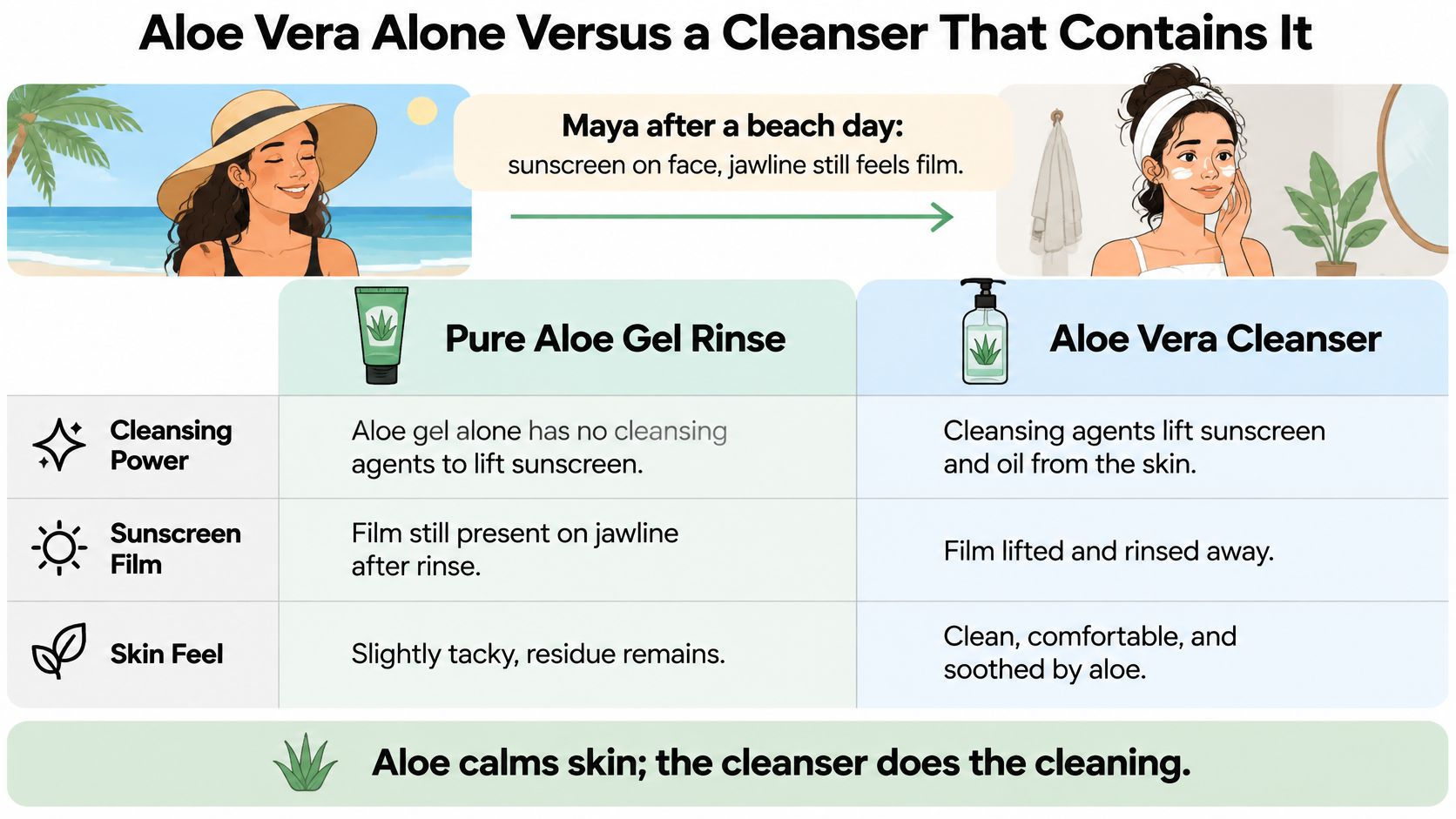
An aloe-based cleanser only performs well when its base includes surfactants. The aloe is there for comfort. The wash base does the lifting. A conventional gel cleanser can remove the same film without any aloe at all, though the after-feel may be less cushioned.
| Product type | Removes oil and sunscreen | Hydrates and soothes | Works as a rinse-off wash |
|---|---|---|---|
| Pure aloe gel on its own | Poor, lacks cleansing agents | Yes, primary strength | Not designed as a wash |
| Aloe-based cleanser with surfactant base | Yes, when the formula includes cleansing agents | Yes, from aloe and humectants | Yes, rinses clean |
| Conventional gel cleanser without aloe | Yes | Only if humectants are added | Yes, rinses clean |
Pure aloe gel can feel cooling, yet it leaves sunscreen where it sat. An aloe-based cleanser rinses that film away because glucosides, amino-acid surfactants, or betaines are in the bottle, not because the plant magically became soap. A conventional gel cleanser can do the same cleaning job and may feel tighter afterward if nothing humectant is there to soften the rinse.
Practical rule: Ask what the whole formula does, not what percent of aloe is printed on the front.
Reading a skincare front label is a lot like understanding CBD skincare labels. The hero ingredient gets the spotlight, and the working ingredients sit in smaller type. If you are also unsure where cleansing ends and the next step starts, the difference between a cleanser and a toner is the next place to look. Aloe still earns its spot for comfort after the wash, which is a different job from cleaning.
What Aloe Brings to a Formula Besides Cleaning
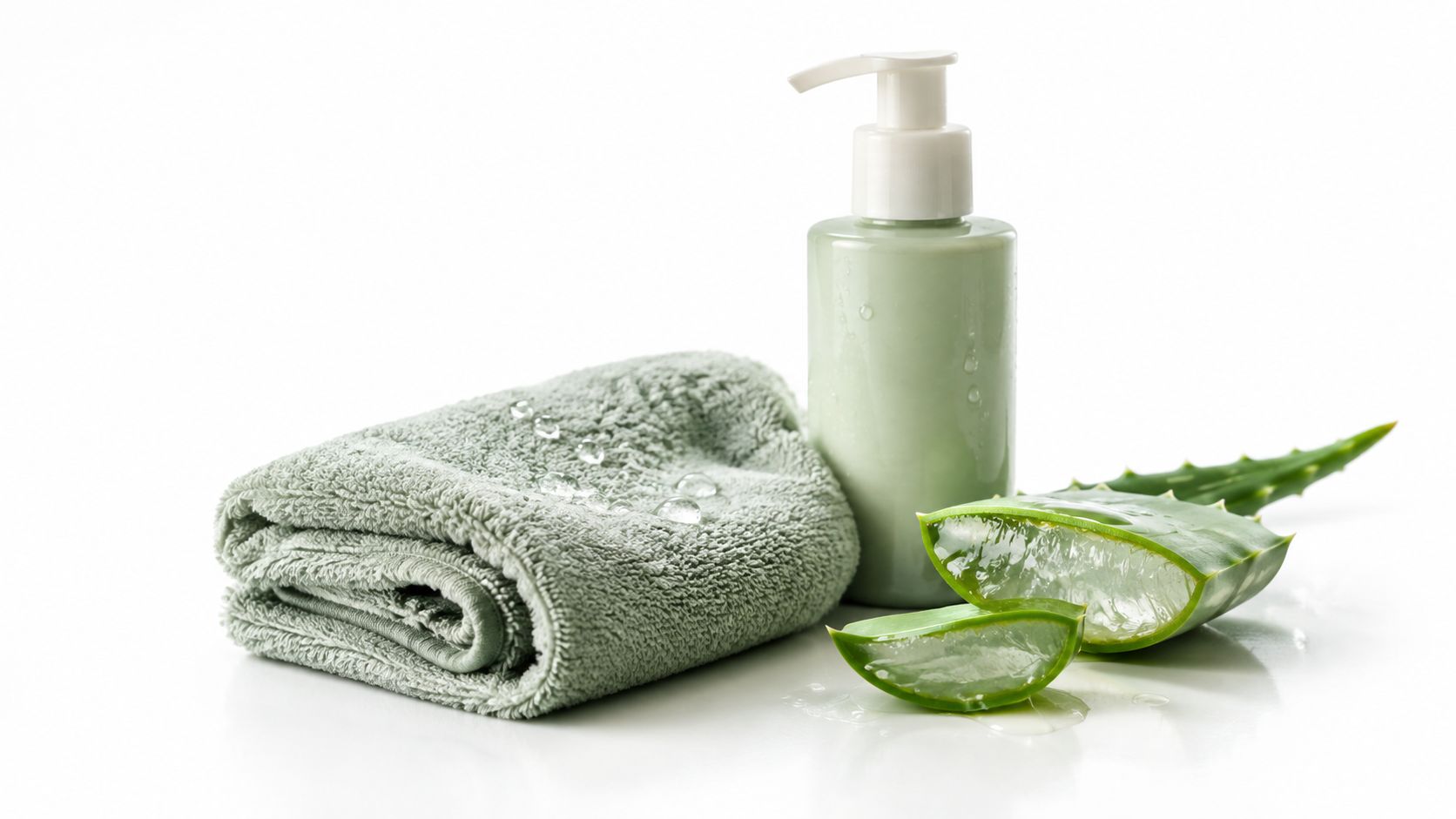
Think of aloe as the damp, cool cloth you press on your face after the soap has done its work, not as the soap itself. The cloth refreshes. It does not lift a water-resistant film.
Hydration you can feel after the rinse
A peer-reviewed formulation review describes raw aloe gel as approximately 98.5% water, with mucilage about 99.5% water. The small solid portion includes polysaccharides, phenolic compounds, organic acids, enzymes, vitamins, and minerals. Those pieces help skin feel supple once the suds are gone. Say you washed with a stripping foam and your cheeks feel papery. A gel rich in that water and those polysaccharides can take the edge off the tightness. It still is not a substitute for the wash that removed the oil.
Comfort, then a light mix, not a deep clean
Polysaccharides, plant compounds, and enzymes are why people reach for aloe when skin feels fussy after cleansing. A published facial-wash study in that same review identified saponins in aloe extract and produced a formulated gel at pH 5. Saponins can make a light foam or help ingredients blend. That is a formulation detail, not proof that unmodified gel matches a real cleanser. The gel also lacks the amphiphilic surfactant structure needed to emulsify sebum, sunscreen, and oil-soluble soil.
At the sink, pure gel can refresh and soften a harsh wash. It should not replace a rinse-off cleanser built with mild surfactants, a controlled pH, and a preservative. If you want the comfort side spelled out on its own, the aloe vera skincare benefits sit in hydration and a calmer after-feel, separate from cleaning power.
When an Aloe Cleanser Is Enough and When It Is Not
Picture two evenings. A home cook with dry, tight skin uses a light moisturizer and no makeup. A gentle aloe wash fits that face. A commuter with oily skin wears heavy sunscreen and long-wear foundation. That face needs a stronger first step, or the sunscreen film stays put.
| Situation | Aloe-based gentle cleanser | Stronger cleanser or second cleanse |
|---|---|---|
| Dry or tight skin with light makeup | Good fit | Not needed |
| Sensitive skin wanting a calm after-feel | Good fit after a patch test | Not needed |
| Oily skin with heavy sebum buildup | Insufficient alone unless formula has strong surfactants | Oil-focused or foaming cleanser |
| Waterproof sunscreen or long-wear makeup | Partial, rarely removes all residue | Oil or micellar first cleanse, then aloe cleanser |
| Sweat after a workout or sauna | Good for refreshing | Water rinse first, then gentle cleanse |
| Skin that reacts easily to new products | Good fit with a short ingredient list | Keep routine simple and patch test first |
Light days versus heavy layers
On a low-makeup morning, one mild aloe wash is enough. You are lifting light oil and the day's dust, then leaving moisture behind. Sensitive skin that wants a calm finish can use the same style of wash, after a patch test, when the ingredient list stays short.
Heavy sebum is a different load. Unless the bottle lists a real surfactant system that can handle oil, a soft gel will not clear the shine by evening. Switch to an oil-focused or foaming cleanser on those days.
Sunscreen, sweat, and fussy skin
Waterproof sunscreen and long-wear makeup rarely leave with one water-based pass. Do an oil or micellar first cleanse, then the aloe wash. After a workout or sauna, rinse sweat with water first so salt is not rubbed around, then use the gentle cleanser. If new products make your skin complain, keep the routine short and test before you cover your whole face.
Aloe-based cleansers suit everyday, low-residue cleansing best. A double cleanse is the usual answer for heavy makeup and sunscreen.
How to Read an Aloe Cleanser Label Before You Buy
The front of the bottle is the sales pitch. The back label is the evidence. Shop the way you would check a clinic-style routine before you buy, the same careful pass described when you build a medical grade skincare routine.
- Find the surfactants. Glucosides, amino-acid surfactants, or betaines in the first half of the list do the cleansing. If they are missing, you are holding a leave-on gel.
- See where aloe sits. A high spot means aloe is a major part of the mix. It does not prove the bottle can remove sunscreen.
- Read the aloe wording. Aloe vera gel, aloe juice, and aloe extract are not the same material. Gel and juice are watery bases. Extract is usually a smaller, more concentrated add-in.
- Check the preservative. Water-rich aloe needs protection or the bottle will not stay stable on a bathroom shelf.
- Look for pH. Mild face washes usually sit in a range skin tolerates. If the brand prints a number, compare it with how your face feels after rinsing, not with a slogan.
- Note fragrance and essential oils. They shape the scent and they are a common reason sensitive skin protests a "gentle" wash.
- Find the rinse-off line and any tolerance note. Directions should say to rinse. A claim of performance or tolerance testing is more useful than a leaf illustration.
The 100% gel trap
A shelf-stable bottle labeled 100% pure aloe gel deserves a closer look. A true water gel needs a preservative to stay safe for months, so "100%" on a store bottle often hides a processing story. Before you buy, open the ingredient dictionary on aloderma.com and match each name to a job: cleanser, water phase, preservative, or scent.
If you cannot point to a surfactant, do not expect the bottle to replace face wash.
How to Build a Gentle Routine with ALODERMA Aloe
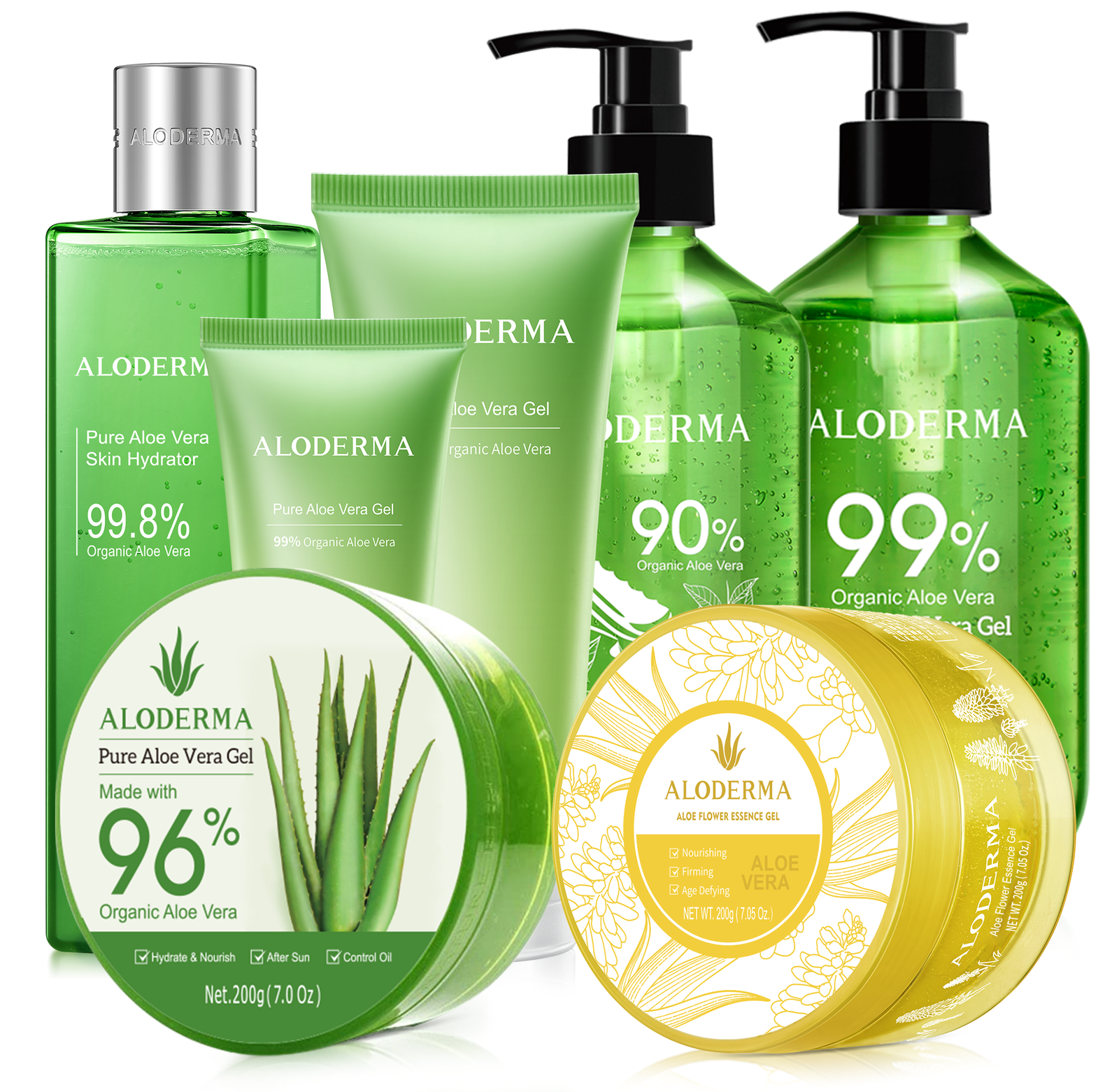
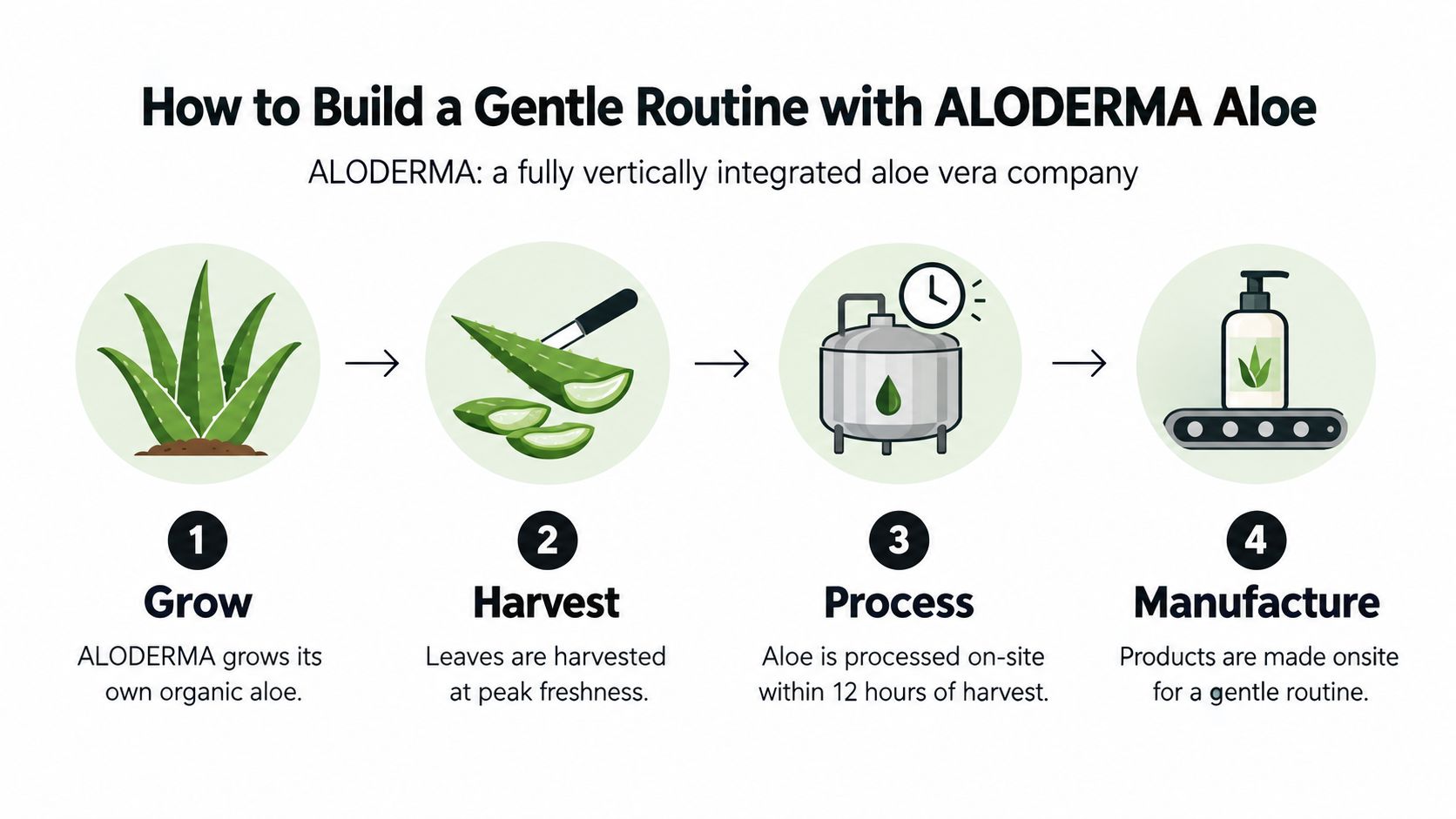
ALODERMA grows organic aloe on its own plantations and processes it on-site within 12 hours of harvest. Its formulas use aloe as a primary ingredient and contain at least 95% naturally derived ingredients. The brand's farm-to-skin approach is supported by ECOCERT, USDA, and EU Organic certifications.
Maya's beach-day evening
After a sunscreen-heavy day, Maya uses an oil or micellar step first, then washes with a gentle cleanser. On a lighter day, she skips the first step. Aloe can add hydration and comfort, but the cleanser's base still needs to lift away what is on the skin.
- Wet the face with lukewarm water so the cleanser spreads easily.
- Massage a small amount of a gentle cleanser from ALODERMA's range over the face for about 30 seconds. Match the cleanser to your skin's needs, such as dryness, a shinier T-zone, or a day with sunscreen. The aloe can contribute hydration, while the cleansing base does the washing.
- Rinse thoroughly until the slippery feel is gone. A cleanser left on the skin can contribute to discomfort.
- Pat dry, leaving the skin slightly damp.
- Press on a pure aloe gel or hydrator while the skin is still damp to add hydration.
- Seal with a light moisturizer or cream to complete the routine.
A seasonal set can pair a cleanser with a gel, making it easier to choose the next step. ALODERMA also offers a skin care quiz to help you pick a routine step. Choose the cleanser for what your skin needs removed, then use a gel or hydrator if your skin needs added comfort. Judge the full formula, not just the aloe on the label.
Patch Test, Watch for Reactions and Decide Tonight
Put a small amount of the cleanser behind your ear or along the inner forearm. Leave it at least 24 hours and watch that spot before it goes on your face. Aloe is often well tolerated, yet tolerance hangs on the whole formula, how often you use it, fragrance or essential oils, and your own skin. People who react to plants in the same family can react here too. Do not treat aloe as automatically calming. The National Center for Complementary and Integrative Health notes that topical aloe gel is generally well tolerated, with occasional burning, itching, and rash. A fuller walk-through sits in this patch test guide.
What the sign is telling you
| What you notice | Likely source | Next step |
|---|---|---|
| Burning or stinging during rinse | Formula strength or fragrance | Rinse with lukewarm water and stop using the product |
| Itching or redness that grows over days | Ingredient sensitivity, possibly aloe or a related plant | Stop use and switch to a simpler formula |
| Unusual tightness after each use | Surfactant strength or low moisture | Use once daily and add a hydrator |
| Reaction after switching to a new aloe product | New preservative, fragrance, or essential oil | Patch test the new product before full use |
Stopping is the safest first move. Skip scrubs while the skin settles. Tightness after every wash is a moisture problem more often than a plant problem, so slow to once a day and add the hydrator before you throw the bottle out.
Choose tonight, then give it a week
Pick an aloe-based gentle cleanser if your skin is dry, tight, or easily bothered and your makeup or sunscreen is light. Pick a stronger wash, or a two-step cleanse, if you wear heavy sunscreen, long-wear makeup, or feel greasy by evening.
- Day one: Patch test only.
- Days two to four: Use it once, in the evening.
- Day five: Check tightness, comfort, and the table above.
- Days six and seven: Keep it, add a hydrator, or switch.
Use the skin care quiz or the ingredient dictionary to confirm surfactants, aloe wording, and scent before you commit. Aloe supports comfort and hydration. The cleansing agents do the cleaning.
ALODERMA grows, processes, and bottles its own organic aloe so a gentle wash can pair real cleansing agents with a fresh aloe base. If you are ready to match a hydrating, oil-controlling, or brightening cleanser to the film on your skin tonight, visit ALODERMA and use the quiz to pick the bottle that rinses clean without leaving you tight.