







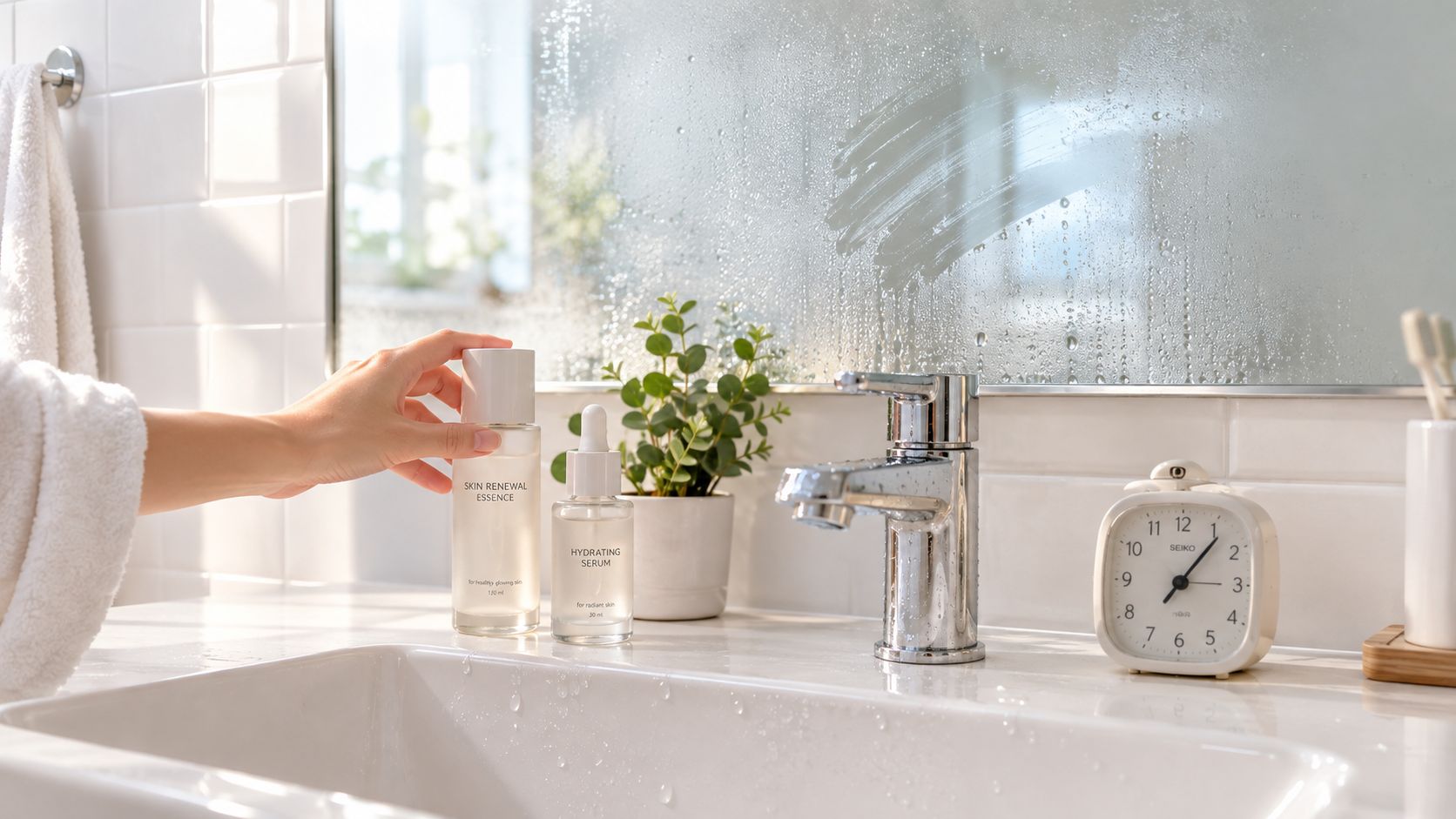
The alarm is blaring, the bathroom mirror is fogged, and you've got roughly three minutes before you need to leave. You reach for whichever bottle is closest, smooth it over half-awake skin, and hope your sunscreen, makeup, and face can somehow cooperate. By midmorning, your cheeks feel tight, your forehead looks greasy, and the products you applied have gathered in little rolls.
A better morning skin care routine doesn't need to be long. It needs a clear order, lightweight textures, and products that give your skin a comfortable starting point instead of creating another problem to solve. Morning routines have become a genuine daily ritual, but they're often still brief. A 2023 survey summarized by Drive Research's skincare statistics found that the average morning routine takes 12.5 minutes, while 65% of respondents finish within 10 minutes or less.
My recommendation is simple: build five purposeful steps, then remove anything that makes the routine slower, stickier, or harder to repeat.
The Calm Before the Coffee
At 7:12 a.m., you don't need a complicated beauty project. You need a sequence your hands can follow before your brain has fully joined the day. Start with a gentle cleanse, add comfortable hydration, finish with protection, and let the routine create a small pocket of calm before emails, traffic, and coffee take over.
Morning face washing is also more than a beauty trend. Public-health research has found that washing the face in the morning and evening is a common hygiene practice among both boys and girls, while a survey from Senegal found that 1,610 of 1,613 children had their faces washed after getting up each morning. Those findings appear in this PMC study on everyday hygiene practices. The habit is familiar because it works as a simple reset, but the cleanser still has to suit your skin.
Why shorter routines win
A frantic ten-step routine usually fails for a predictable reason. You apply one product before the previous layer has settled, rub too aggressively, use rich textures where you need breathable ones, then blame your skin when everything feels patchy. A shorter routine gives each layer a job and gives you enough time to notice whether your face feels comfortable.
If your skin is dry when you wake, water or a very gentle cleanser may be enough. If you sweat at night, use rich evening products, or wake with visible oil, cleansing becomes more useful. Dermatologists don't agree that every person needs a full morning cleanse, and The Guardian's dermatologist discussion of common skincare questions reflects that skin type and overnight habits should guide the decision.
Practical rule: Your morning routine should leave skin clean, flexible, and ready for sunscreen, never squeaky, hot, or coated.
Fresh aloe fits this quieter approach because the ingredient has a naturally light, cooling feel. A peer-reviewed review of aloe processing explains that rapid handling matters because enzymatic degradation and oxidation can reduce desirable polysaccharides and other active compounds after harvest. That's why I pay attention not only to the ingredient list, but also to how the aloe was handled before it reached the bottle.
The Five-Step Morning Skin Care Sequence
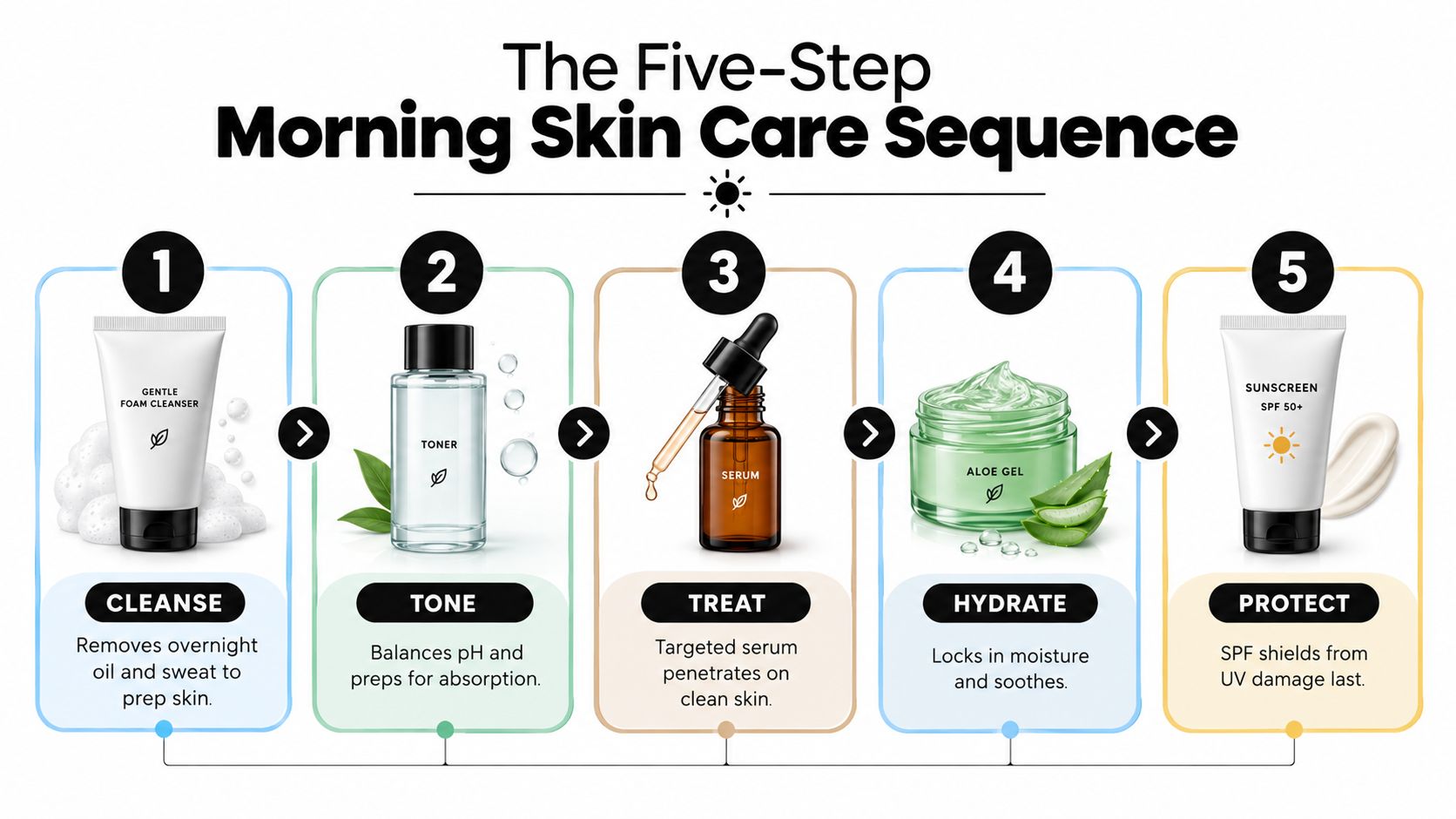
The order is cleanse, tone, treat, hydrate, protect. That sequence moves from the thinnest layer to the thickest and keeps sunscreen on top, where it can form an even protective film. Cleveland Clinic describes a simpler minimum of cleansing, moisturizing, and sunscreen, with sunscreen last, so toner and treatment are useful additions rather than mandatory obstacles. You can compare the logic in this guide to skincare product order.
1. Cleanse
Use a low-foam or gentle gel cleanser and rinse until skin feels fresh, not stripped. Your face should feel smooth and awake, without that tight, squeaky sensation that makes you want to immediately apply a thick cream.
If your skin feels clean when you wake, rinse with water or use damp hands instead. If you notice overnight sweat, oil, or a heavy layer from the previous evening, a proper cleanse earns its place.
2. Tone
A toner or essence should add a thin slip of hydration, not leave a wet film. Press it into the skin with your palms rather than soaking a cotton pad, especially if you want to keep the routine quick.
This is the easiest step to skip when time is short. It's also the step that can make aloe-forward routines feel more comfortable, because the next serum spreads more evenly over lightly hydrated skin.
3. Treat
Choose one targeted serum, not a shelf of competing actives. A lightweight antioxidant formula can suit a dull-looking complexion, while a simple calming serum may be a better choice when your skin feels easily overwhelmed.
Wait until the serum has lost its wet slip before moving on. If the layer still feels slippery, adding moisturizer immediately can encourage pilling.
4. Hydrate
Use a gel moisturizer or fresh aloe gel that cushions the skin without heaviness. The finish should feel supple, not greasy, and your face shouldn't feel as if it has been wrapped in a waxy layer.
ALODERMA is a fully vertically integrated aloe vera company. It grows its own organic aloe vera, processes the aloe vera, and manufactures onsite within 12 hours of harvest so the primary ingredient in its products is handled while it remains as bioactive as possible.
5. Protect
Finish with a broad-spectrum SPF 30 or higher. Cleveland Clinic recommends at least SPF 30, and Health.com's morning skincare guidance advises applying about a nickel-sized amount across the face, neck, chest, and ears, followed by reapplication every two hours.
The amount matters as much as the label. A commonly used technical benchmark is about 2 mg of sunscreen per cm² of skin, yet one adherence survey found only 4.4% of adults fully followed all sunscreen advice, and only 20.4% reapplied after the recommended two hours, according to this dermatology review.
For a practical, non-skincare reset while you wait between layers, Cartograph Coffee's sugar scrub guide offers a useful reminder that simple preparation can turn an everyday ritual into something you look forward to. Just keep facial exfoliation separate from a rushed morning routine.
Lightweight Textures That Disappear Under Sunscreen
Morning skin care should feel different from evening care. At night, a richer balm or occlusive cream can be pleasant because you aren't asking it to sit under sunscreen, makeup, a collar, and a full day of movement. In the morning, every layer has to cooperate.
| Texture Type | Best For Morning | Best For Evening | Absorption Time |
|---|---|---|---|
| Watery essence | Quick hydration before serum | A first hydrating layer | Seconds |
| Aloe-forward serum | Lightweight targeted care | A simple treatment layer | Seconds |
| Gel-cream | Comfortable hydration under SPF | Hydration without a heavy finish | Brief pause |
| Rich cream | Use sparingly on very dry areas | Deeper-feeling overnight comfort | Longer pause |
| Balm or occlusive cream | Usually too heavy under makeup | Dry-feeling evening routines | Longest pause |
The ideal morning texture gives you a cool slip when you apply it, loses its tackiness within about a minute, and leaves a soft, healthy finish rather than obvious shine. Gel-creams, watery essences, and aloe-forward serums usually make that easier than dense balms.
Freshness is part of the texture story. Aloe gel quality depends on rapid processing, and delayed handling can reduce desirable polysaccharides and other active components through enzymatic change and oxidation, as described in this review of aloe processing and gel quality. A lightweight aloe formula is not automatically better, but fresh processing gives the formula a meaningful reason to feel cool, fluid, and easy to spread.
The under-sunscreen test
Apply your moisturizer to one cheek and a richer cream to the other. Give both sides a brief pause, then apply sunscreen evenly. The better morning product is the one that lets sunscreen glide without dragging, rolling, or separating.
If your sunscreen pills, don't immediately add another serum. First reduce the amount of moisturizer, allow more settling time, and check whether the layers are compatible. For a focused look at choosing a lighter daytime hydrator, use this guide to lightweight face moisturizer.
The routine you enjoy is the routine you repeat. If a product feels sticky every morning, you'll eventually skip it, no matter how appealing its ingredient list looks.
Morning Routines for Sensitive and Oily Skin
Sensitive and oily skin need different textures, but they share the same basic demand: less friction and fewer unnecessary layers. Start with a gentle cleanse, add lightweight hydration, use one purposeful serum, moisturize as needed, and finish with sunscreen.
Don't treat a skin label as a permanent rule. A humid morning can make oily skin want less moisturizer, while a cold or dry morning can make sensitive skin appreciate an extra hydrating layer.
| Step | Sensitive Skin | Oily Skin |
|---|---|---|
| Cleanse | Fragrance-free, low-pH gel cleanser | Foaming or salicylic cleanser |
| Tone | Hydrating aloe mist or essence | Light aloe toner |
| Treat | Centella, oat, or simple calming serum | Niacinamide or lightweight aloe serum |
| Hydrate | Plain aloe gel or light gel moisturizer | Oil-free gel moisturizer |
| Protect | Mineral SPF with zinc alone | Fluid or mattifying broad-spectrum SPF |
For sensitive skin, keep the cleanser low-foam and fragrance-free. Follow with a hydrating aloe mist or essence, then choose a centella or oat serum if you already know your skin accepts it. A simple aloe gel can replace a heavier cream on warm mornings, and a mineral sunscreen with zinc alone keeps the final layer straightforward.
Avoid scrubbing, strong fragrance, and a long stack of active ingredients. If your face feels warm, tight, or uncomfortable after cleansing, the cleanser is too aggressive for that morning, even if the bottle says “gentle.”
Oily skin can handle a more thorough cleanse when overnight oil is obvious. A foaming or salicylic cleanser may feel more satisfying, followed by niacinamide or a light aloe serum, an oil-free gel moisturizer, and a fluid or mattifying sunscreen. Skip heavy balms, but don't skip hydration automatically. Dehydrated skin may produce more oil, which can make shine and congestion feel worse.
Listen to the finish: If skin looks slick within minutes, reduce richness. If it feels tight before sunscreen, add hydration rather than increasing cleanser strength.
For more guidance on keeping the routine comfortable and pared back, see ALODERMA's sensitive skin care routine. Adjust one product at a time so you can tell which change helped or caused discomfort.
Time-Saving Tips for Busy Mornings
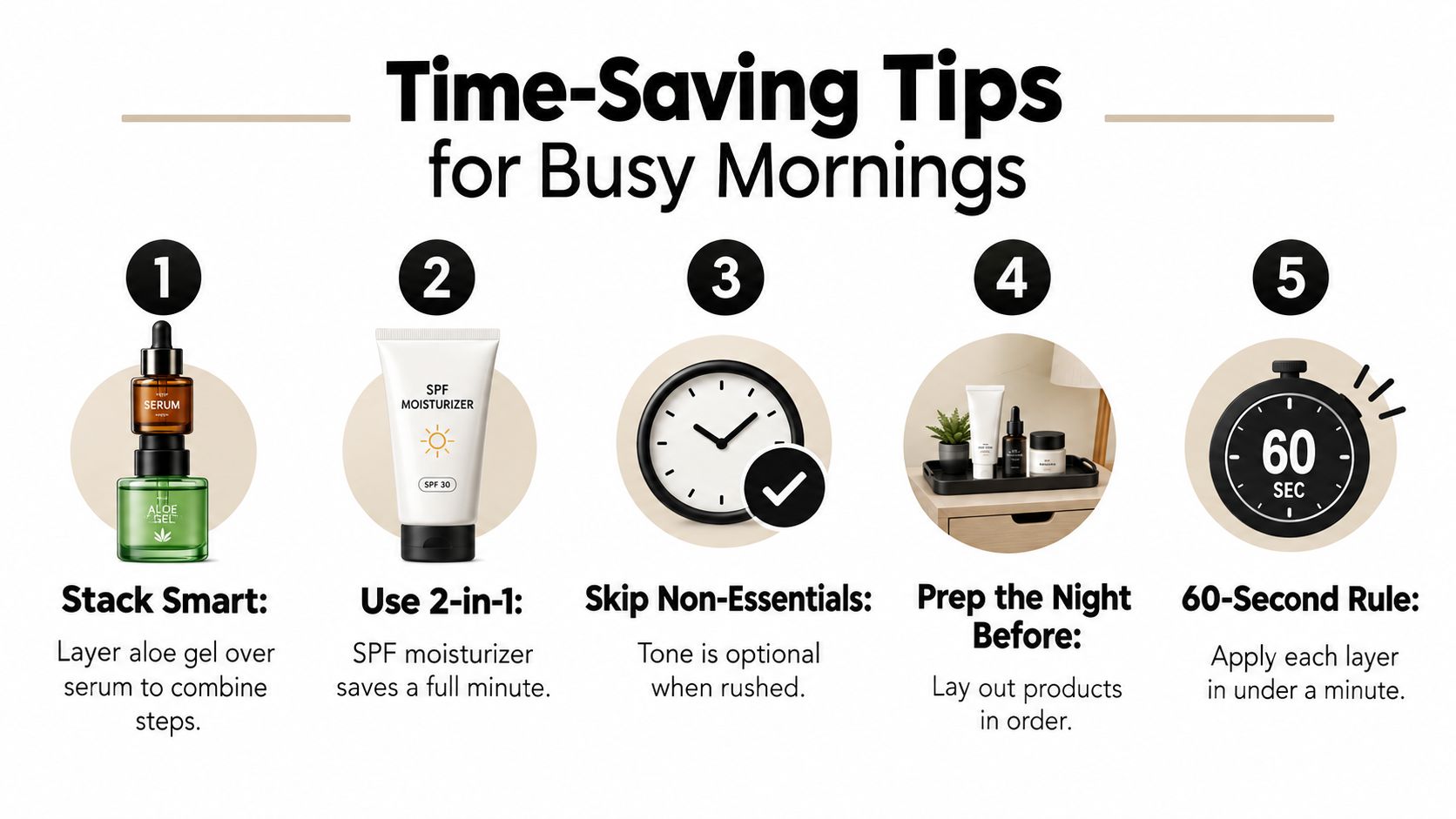
A rushed morning doesn't require abandoning your routine. It requires removing decisions. Put the products in order, keep the textures compatible, and reserve your attention for the step that protects your skin during the day.
Shortcuts that keep the routine useful
- Stack smart: Apply a thin aloe gel over your serum when both formulas are compatible. This can combine hydration and treatment without adding another heavy layer.
- Use a two-in-one: On low-maintenance mornings, choose a moisturizer with SPF, then still check that the coverage suits your face, neck, ears, and exposed chest.
- Skip non-essentials: Toner is optional when you're rushing. On a work-from-home day, you can also omit the treatment or moisturizer if your skin feels comfortable, but don't omit sunscreen when you'll be exposed to daylight.
- Prep at night: Line the bottles up in order, pre-dampen a face cloth, and choose tomorrow's outfit before bed. Fewer morning decisions make the routine easier to repeat.
- Keep a travel kit: Store small versions of your cleanser, aloe hydrator, moisturizer, and sunscreen together so travel doesn't turn skin care into a scavenger hunt.
Use damp hands or a konjac sponge for a lighter cleanse when your skin feels clean. Don't press hard, and don't turn the sponge into an everyday scrubbing tool. The point is to reduce water, product, and time, not to create extra friction.
While one layer settles, brush your teeth, pack your bag, or queue the coffee. You don't need to stand motionless in front of the mirror waiting for every product to vanish.
If habit-building is your weak spot, a digital checklist can help. A roundup of free routine planner apps may be useful for pairing morning skin care with another daily habit, such as brushing your teeth or making coffee.
Never cut sunscreen time, even by a minute. It's the layer that deserves careful, even application.
Sample Two-Week Plan and Final Takeaways
Don't introduce every product at once. Your skin and your schedule both need time to settle, and a gradual plan makes it easier to identify the layer that improves the experience or the one that adds work.
Week one
For days one through three, use cleanser, aloe gel for hydration, and sunscreen. Keep the routine deliberately plain. Notice how your skin feels after cleansing, how sunscreen sits, and whether the aloe layer leaves comfort or tackiness.
On days four and five, add one serum after hydration or before moisturizer, depending on its texture. Use the same amount and application method each day so you can judge the serum rather than changing several variables together.
On days six and seven, add a lightweight moisturizer if your skin still wants more cushion. If the aloe gel already feels sufficient, you don't need to force another cream into the routine.
Week two
Run the full five-step sequence daily, but keep your notes practical. Check your skin at midday and again at night, then remove any step that adds time without a visible or sensory benefit.
Use these three checks:
- Makeup test: Does makeup sit smoothly, without rolling or separating?
- Comfort test: Is there no midday tightness or sudden shine spike?
- Outdoor test: Does skin feel calm after sun exposure, with sunscreen applied consistently?
The purpose isn't to build the most impressive shelf. It's to build a morning skin care habit that survives busy days, travel, tired mornings, and the temptation to grab the nearest bottle.
Four or five repeatable steps beat ten perfect steps you abandon after four days.
A fresh aloe-forward formula can make that repetition easier because the sensory payoff is immediate: cool application, light hydration, and a finish that works beneath sunscreen. Keep the serum targeted, keep the moisturizer breathable, and give your sunscreen enough attention to form an even layer.
ALODERMA offers fresh aloe vera cleansers, toners, gels, serums, and moisturizers for a lightweight morning skin care routine, with its own organic aloe processed and manufactured onsite within 12 hours of harvest. Visit ALODERMA to explore aloe-forward formulas and choose the few layers you'll enjoy using every morning.