







Natural essential oils are concentrated plant extracts that can add sensory and functional value to skincare, but they aren't always gentle. They require careful formulation and exposure control, particularly for sensitive or blemish-prone skin.
You may be standing in a bathroom right now, holding a botanical face oil because the label promises something pure, calming, and close to nature. The scent is appealing, and the ingredient list looks reassuring. Yet “plant-based” describes where an ingredient comes from, not how every person's skin will respond.
The most useful question isn't whether natural essential oils are good or bad. It's whether a particular oil, concentration, formula, storage history, and application method suit your skin. Laboratory results can help us understand what an oil might do, but they don't automatically predict what will happen after you apply a finished product to human skin.
Understanding What Natural Essential Oils Really Are
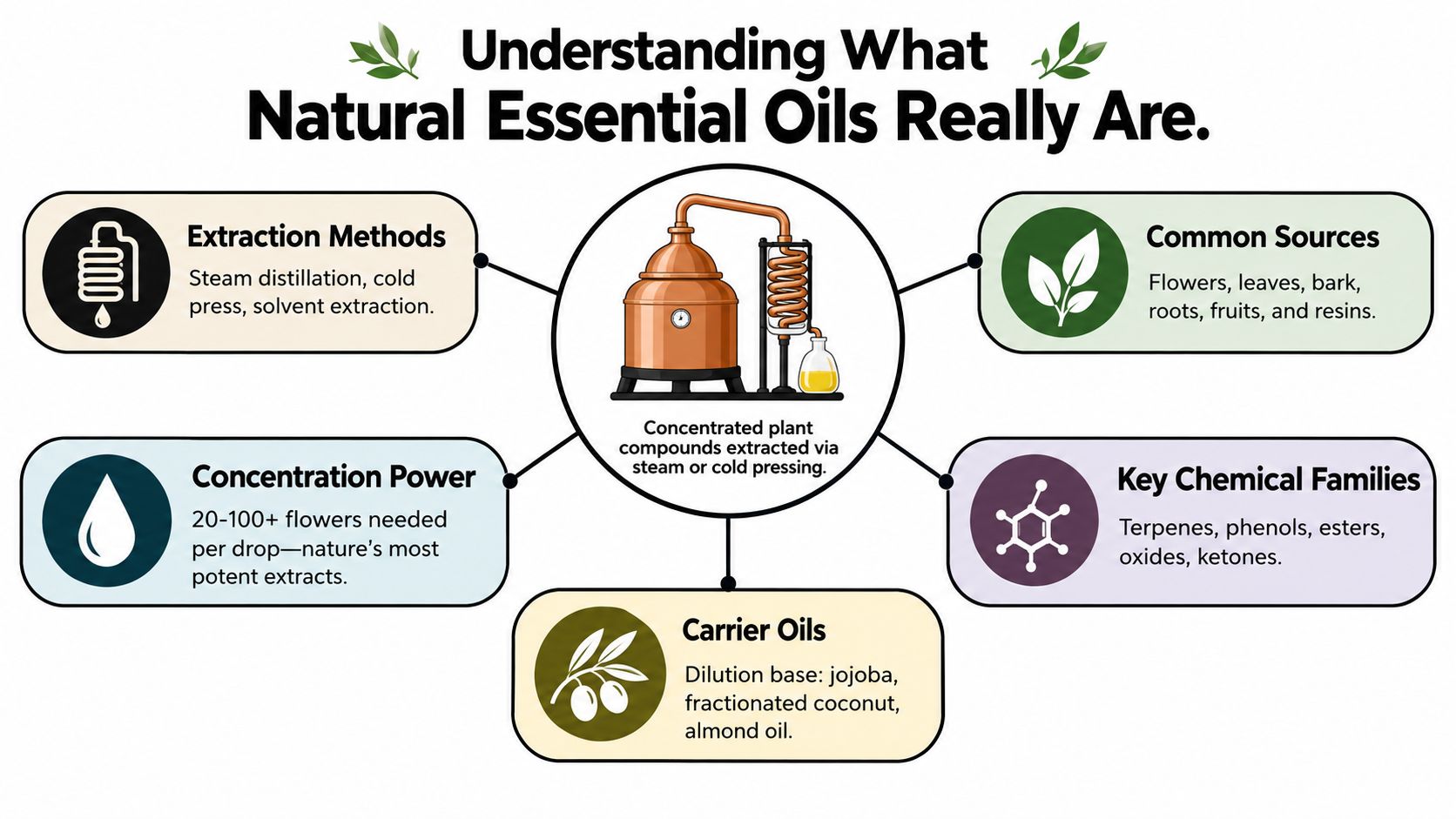
A shopper might see “lavender oil” or “mandarin oil” on a label and imagine a gentle version of the plant. In reality, an essential oil is a concentrated mixture of volatile plant compounds, not the same thing as rubbing a flower, leaf, or piece of fruit on your skin. Producers commonly obtain these extracts through methods such as steam distillation or cold pressing, depending on the plant material.
That distinction matters because concentration changes the experience. A few drops of an aromatic extract can create a strong scent, while the original plant contains many other components, including water, fibers, sugars, and nonvolatile compounds. A carrier oil, gel, cleanser, or cream gives the essential oil a controlled delivery system. Applying a neat oil skips that control.
The plant name doesn't tell the whole story
Two batches from the same plant species can have different chemical profiles. Chemotype, geography, cultivation conditions, harvest stage, and extraction method can all influence the relative amounts of volatile constituents. That means “lavender” isn't a complete quality specification, and aroma alone can't authenticate a batch.
A useful professional approach combines verified botanical identity with batch-specific analysis. Research on gas chromatography and essential-oil composition describes the role of GC–MS in identifying constituents and GC–FID in quantitative profiling. Retention indices should be considered alongside mass spectra because a library match alone doesn't provide absolute proof of identity.
Practical rule: A transparent supplier should be able to discuss the botanical source, extraction method, major constituent ranges, adulteration screening, storage conditions, and relevant batch records.
Availability also affects traceability
Natural essential oils belong to a globally distributed agricultural and trade sector, not a tiny specialty niche. The Food and Agriculture Organization identifies Brazil, China, the United States, Egypt, India, Mexico, Guatemala, Morocco, and Indonesia as major producers, and estimates that approximately 65% of global production originates in developing countries. Consumption is concentrated in the United States, Western Europe, and Japan, which account for about 40%, 30%, and 7% respectively. These figures are reported in FAO trade data on essential oils.
Citrus and mint oils can be sourced at industrial scale, while rare floral extracts may be far more constrained. The FAO material notes that roughly 200 essential oils are produced and traded internationally, with orange oil reaching 20,000–30,000 tonnes while some specialized flower extracts trade below 100 kilograms. Reporting is difficult because countries use different systems and product definitions, so a “natural” claim doesn't guarantee uniform supply or easy traceability.
For a clear explanation of how aromatic compounds differ from whole essential oils, what sets terpenes apart from essential oils is a useful companion resource. If you're evaluating aloe-centered formulas, ALODERMA's guide to organic certified essential oils can also help you think about sourcing and ingredient language more carefully.
Common Essential Oils Used in Skincare and Their Proven Benefits
Lavender, peppermint, tea tree, bergamot, mandarin, cedarwood, and other aromatic oils appear frequently in skincare. Their popularity comes partly from their distinctive scents and partly from laboratory research on isolated compounds or oil samples.
The important distinction is this: a laboratory result is evidence of potential activity under test conditions, not proof of a visible or reliable result on human skin. An oil may affect microorganisms in a dish, yet behave differently in a cream, gel, cleanser, or mist. The concentration, contact time, delivery system, skin condition, and person using it all matter.
A 2025 review describes potential cosmetic and dermatological applications while emphasizing that long-term clinical trials are still needed to establish efficacy and safety. It also reports dermatitis particularly with lavender, peppermint, and tea tree oils. You can read the review in Frontiers in Medicine's discussion of essential oils.
What the evidence can and can't tell you
Laboratory antimicrobial findings may help formulators investigate an ingredient, but they don't prove that an essential oil will improve the appearance of blemish-prone skin. Similarly, a pleasant aroma may support a comfortable skincare ritual, but scent isn't the same as hydration or barrier support.
An aloe gel containing a small amount of aromatic oil may feel fresh and enjoyable. That doesn't mean the oil is responsible for the formula's moisturizing performance. Humectants, emollients, film-formers, the gel base, and the amount of water may contribute more directly to how skin feels.
The same caution applies to claims about soothing or skin clarity. Evidence may concern a different oil, concentration, delivery system, or use pattern than the product in front of you. Clinical guidance warns against swallowing essential oils or applying them undiluted, and notes that citrus oils can increase sun sensitivity. Inhalation may also trouble people with breathing sensitivities.
A better way to read an oil claim
Ask four questions before treating a marketing statement as a proven benefit:
- What was tested? A whole essential oil, an isolated compound, or a finished cosmetic?
- Where was it tested? In a laboratory model, on manufactured skin, or on human volunteers?
- At what concentration? A laboratory dose may not match a comfortable cosmetic level.
- What outcome was measured? Scent preference, microbial activity, skin hydration, and visible appearance are different outcomes.
For readers considering lavender specifically, ALODERMA's information on pure lavender essential oil offers a starting point for ingredient-focused research. Treat that information as part of your evaluation, not as a reason to bypass dilution or patch testing.
Safe Dilution Methods and Practical Application Guidelines
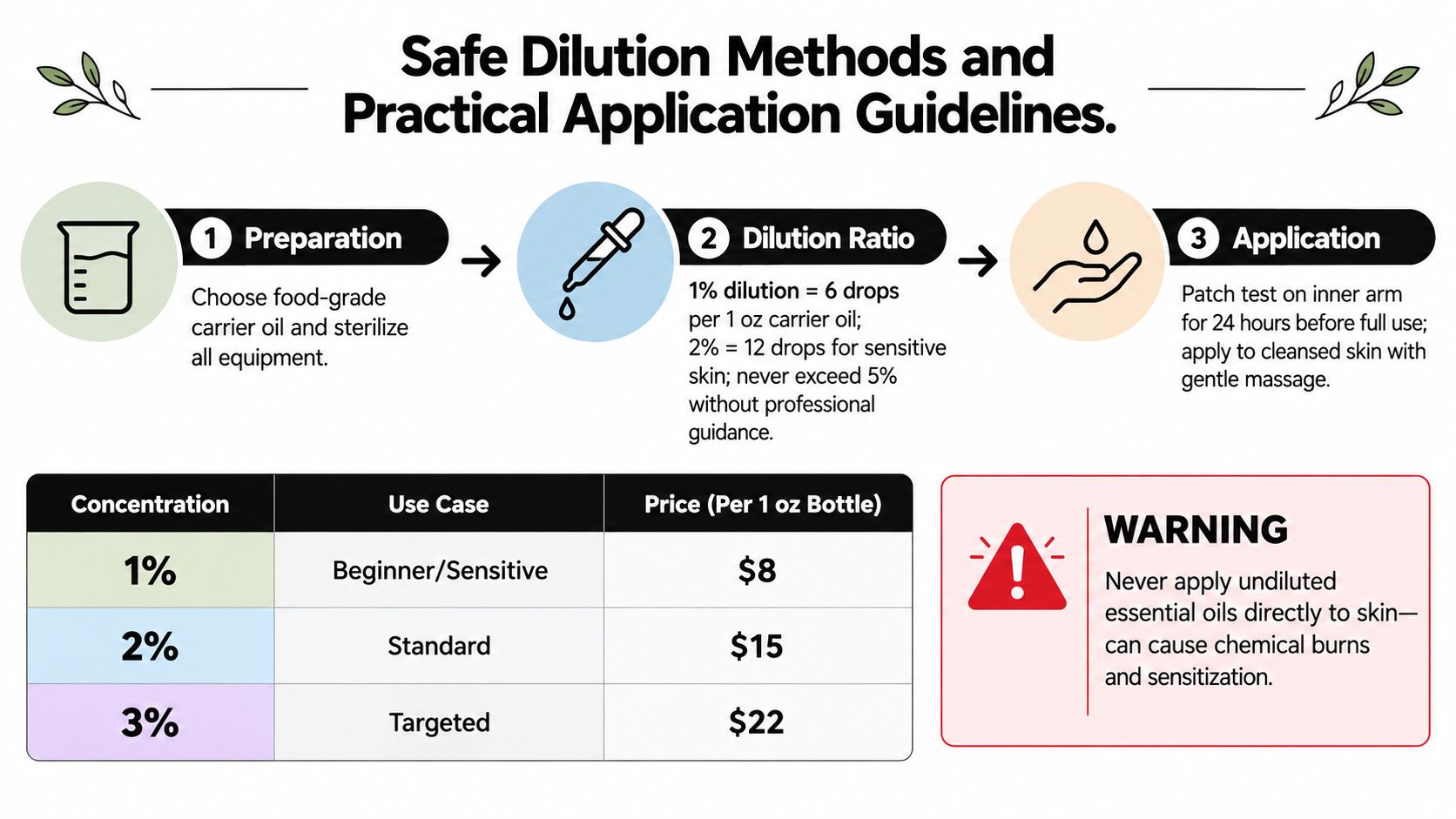
Dilution is the main practical difference between a controlled cosmetic formula and a bottle of concentrated oil used casually. A carrier such as jojoba, fractionated coconut, or almond oil disperses the aromatic material and reduces the amount reaching any single area of skin.
The correct level depends on the finished product, target population, oil composition, exposure route, and intended use. A facial leave-on product deserves a more conservative approach than a brief body application, and sensitive skin deserves more caution than a person who has already tolerated a particular formula.
Use a controlled finished product when possible
Home mixing can create uneven distribution, contamination, inaccurate measurement, and poor preservation. If you do blend an oil into a carrier, measure carefully, use clean equipment, label the mixture, and avoid adding essential oils directly to water because they don't dissolve evenly without an appropriate solubilizing system.
For facial use, many people benefit from choosing a professionally formulated, fragrance-free or lightly scented product instead of making a concentrated blend. The product should have documented stability, compatibility, preservation, and human usage-safety assessment. Guidance on essential-oil safety in cosmetics emphasizes concentration and exposure control, especially for leave-on products.
Storage changes the risk profile
Oxygen, light, and heat can react with volatile constituents and create secondary compounds that may be more sensitizing than the original oil. A bottle left half full on a sunny windowsill isn't equivalent to a tightly closed, light-protective container stored in a stable environment.
Use these habits:
- Limit headspace: Keep the container closed and avoid storing a nearly empty bottle for long periods.
- Reduce light exposure: Choose opaque or dark packaging and store it away from direct sunlight.
- Track opening dates: Write the date on the bottle so you can judge storage history.
- Follow the product directions: Don't increase use because a little scent seems ineffective.
- Watch the skin: Stop if you notice persistent stinging, redness, itching, or discomfort.
A conservative leave-on facial formula uses a well-characterized oil at the lowest technically effective concentration, or leaves volatile fragrance materials out altogether. ALODERMA's information on pure peppermint oil is a useful reminder that a recognizable botanical ingredient still needs careful use.
How Essential Oils Interact With Sensitive and Blemish-Prone Skin
Sensitive skin often behaves less like a predictable fabric and more like a smoke alarm with a low trigger point. A product that feels refreshing to one person can feel hot, tight, or itchy to another, especially when the skin barrier is already stressed by weather, over-cleansing, friction, or several new products.
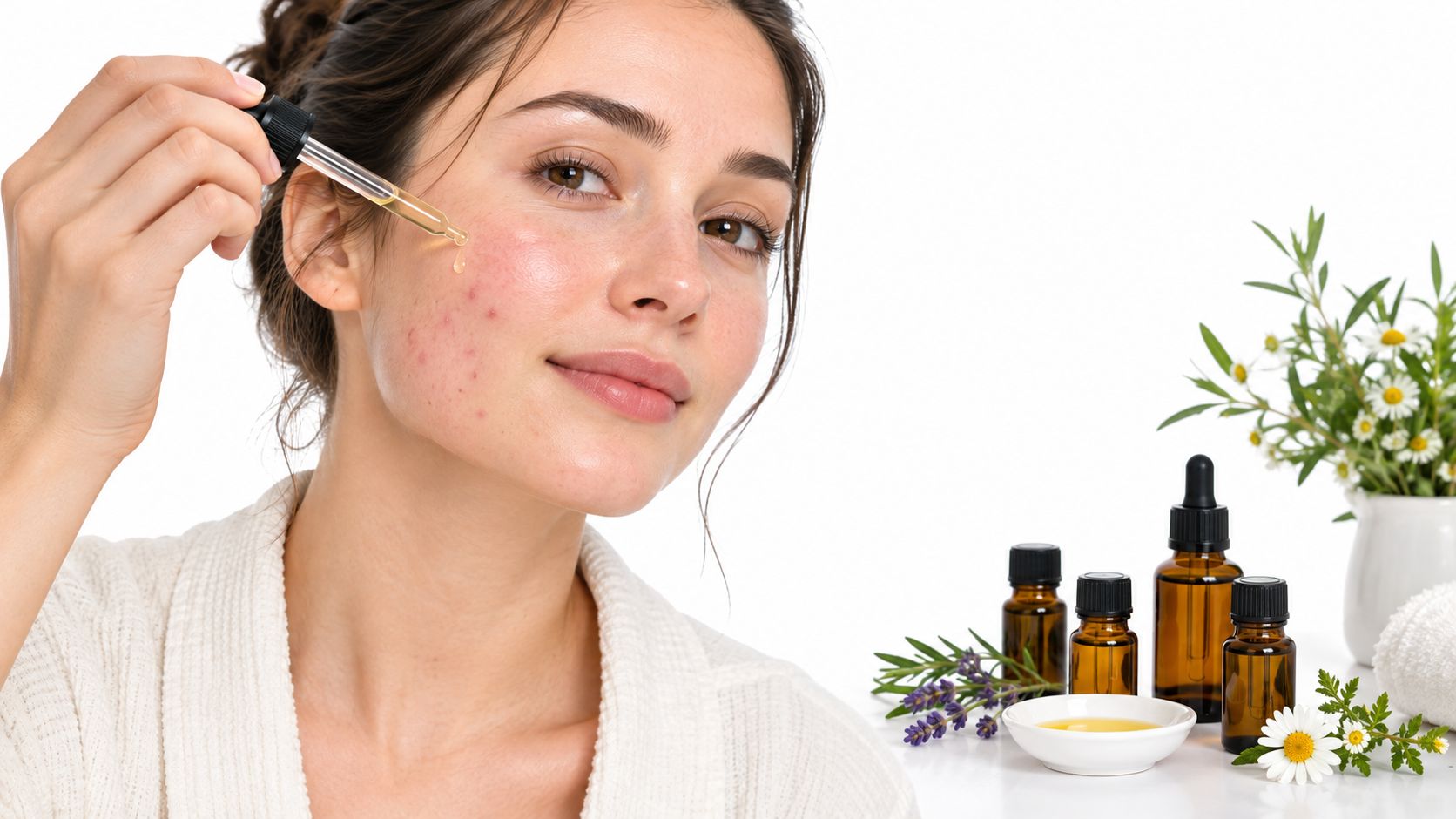
Essential oils can cause irritation, allergic contact dermatitis, or photoallergy, and these reactions aren't interchangeable. Irritation can appear quickly after exposure. Allergy may develop after prior sensitization and can be delayed. Photoallergy involves a reaction associated with light exposure and a relevant substance.
What delayed reactions teach you
Essential oils can trigger delayed hypersensitivity reactions appearing 24–72 hours after exposure, according to DermNet's overview of allergic contact dermatitis from essential oils. The same review reports that approximately 80 essential oils have been associated with contact allergy. Positive patch-test relevance has reached 69% for lavender, 20–56% for tea tree, and 36–39% for peppermint in the cited evidence.
Those figures don't mean every person will react, and they don't establish that a particular finished product will cause a problem. They do show why “natural,” “fresh,” and “organic” can't replace allergen disclosure, stable packaging, and careful introduction.
A practical patch-test routine
Patch testing a finished product is more useful than placing neat essential oil on your skin. Try this process:
- Apply a small amount of the product to a limited area, such as the inner forearm, following the product's normal instructions.
- Leave the area alone and observe it immediately, later that day, and over the next few days.
- Don't test several new products at once, because you won't know which one caused a response.
- If persistent itching, burning, swelling, or visible irritation develops, stop using the product and seek professional dermatological advice.
- Don't apply the test product to the face just because the forearm tolerated it. Facial skin may respond differently.
A brief cooling sensation isn't a reliable sign that an ingredient is working. Tingling, heat, itch, or increasing discomfort is a reason to pause, not a challenge to endure. People with repeated reactions should ask a qualified professional about formal patch testing rather than repeatedly experimenting at home.
Evidence-Backed Uses Versus Common Myths About Essential Oils
The most persistent myth is simple: natural means gentle. A plant can be natural and still contain volatile compounds that irritate skin, provoke allergy, affect the eyes, or increase sensitivity to sunlight. Safety comes from identity, concentration, formulation, packaging, labeling, and appropriate use.
A second myth confuses a promising laboratory result with a guaranteed cosmetic outcome. If tea tree oil shows activity against a microorganism in a controlled test, that doesn't mean a tea tree cleanser will produce the same result on every person's skin. A rinse-off product has limited contact time, and the rest of its formula changes how the oil behaves.
What “evidence-backed” should mean
Use an evidence ladder when reading claims:
- Human clinical evidence: The most relevant level for a finished skincare claim, though study quality and product details still matter.
- Small pilot evidence: Useful for generating questions, but not enough for broad promises.
- Laboratory evidence: Helps explore mechanisms and potential activity, but doesn't predict every human response.
- Traditional use: Valuable cultural context, not a substitute for modern safety and efficacy evaluation.
- Marketing language: A prompt to investigate, not evidence by itself.
This framework helps separate sensory benefits from skin-function claims. A natural aroma may make a cleanser more pleasant to use. That doesn't prove it improves hydration, texture, or the appearance of blemishes.
Labels provide useful clues
In the United States, “essential oil” has no dedicated regulatory definition. The U.S. Food and Drug Administration's guidance on fragrances in cosmetics explains that plant-derived ingredients follow the same safety standard as ingredients from other sources, and that a cosmetic must be safe when used according to its label or customary use.
Fragrance mixtures may generally appear collectively as “Fragrance” on a U.S. ingredient list. That makes the rest of the declaration important. Compare the first ingredients, note the product type, follow the directions, and don't assume a botanical scent can be used without limits.
If you're also evaluating oils for personal-care use beyond facial skincare, Momotaro Apotheca's vaginal wellness resource provides a useful reminder that sensitive areas require product-specific guidance rather than general “natural” assumptions.
Building a Simple Essential Oil Skincare Routine That Works
A workable routine starts with your skin's tolerance, not with the longest list of botanical ingredients. If your skin is easily unsettled, begin with a simple cleanser, a straightforward hydrator, and daily sun protection. Add a scented product only after the basics feel comfortable.
Choose by formula, not fragrance intensity
Read the INCI list and identify whether the essential oil appears in a leave-on product or a rinse-off cleanser. Look for clear directions, suitable packaging, and information about the intended use. If the formula contains “Fragrance,” remember that the term may represent a mixture rather than a single disclosed aromatic ingredient.
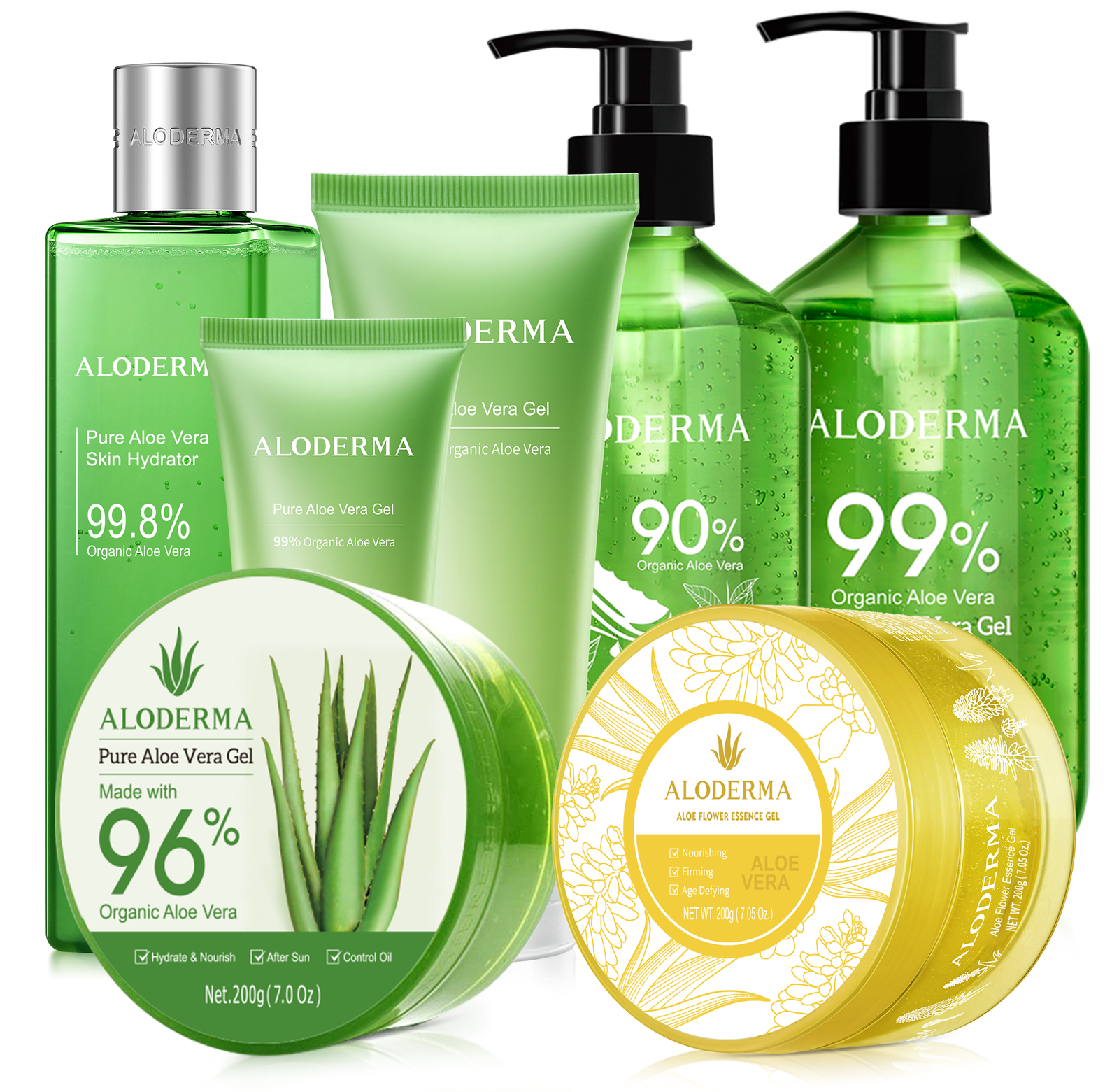
ALODERMA is a fully vertically integrated aloe vera company. It grows all of its own organic aloe vera, processes the aloe, and manufactures onsite within 12 hours of harvest so the primary ingredient in its products remains as bioactive and effective as possible. You can review ingredient and product information directly on ALODERMA's skincare collection.
A simple introduction looks like this:
- Start with one product: Don't introduce a new cleanser, mist, serum, and mask together.
- Patch test first: Use a small area and observe for delayed changes.
- Apply as directed: More product or more frequent use doesn't guarantee better results.
- Keep notes: Record the product, date, scent, and any skin response.
- Stop early when skin objects: Persistent discomfort is useful information, not something to push through.
Use this video to see how a fresh-aloe skincare approach can fit into a daily routine.
Natural essential oils can have a place in skincare, especially when their role is modest and clearly defined. They may contribute aroma or a carefully considered formula experience, but they aren't replacements for humectants, emollients, barrier-supporting ingredients, or sunscreen. For sensitive or blemish-prone skin, a fragrance-free option may be the more comfortable choice.
ALODERMA offers fresh-aloe cleansers, gels, hydrators, toners, creams, masks, and bath products with ingredient information available online, making it easier to compare formulas before you buy. Visit ALODERMA to review the product ingredients, choose a routine that matches your skin's tolerance, and introduce any naturally scented formula gradually with patch testing.