



By the time you search for a natural face moisturizer for oily skin, you're usually tired of guessing. One product feels slick by noon. Another says “natural” on the front, then leaves your face tight, shiny, or uncomfortable. You might even be wondering whether moisturizer is the problem.
It usually isn't. The problem is choosing a formula that hydrates without smothering, and understanding that with aloe-based skincare, freshness matters almost as much as the ingredient list.
Many oily skin routines fail because they focus only on stripping away shine. Real balance comes from using light hydration, paying attention to texture, and looking past pretty packaging to how a product is grown, processed, and made. Fresh, farm-to-skin aloe is a big part of that conversation, especially when you want a natural option that feels clean, simple, and easy to live with.
The Oily Skin Moisturizer Paradox
If your forehead gets shiny before lunch, moisturizer can feel like the last thing you need. A lot of people with oily skin wash their face, skip moisturizer, and hope less product will mean less grease. Then a few hours later, the shine is back.
That cycle is frustrating because it feels logical, but it often backfires. According to the American Academy of Dermatology, people with oily skin should still apply moisturizer after cleansing because skipping daily moisturization can increase the skin's own oil production and make oily skin worse, as summarized in this AAD-based guidance on moisturizer for oily skin.

Why oily skin still needs moisture
Oil and water aren't the same thing. Your skin can produce a lot of oil and still lack the water it needs to feel comfortable and stay balanced. When you use harsh cleansers or skip moisturizer, your skin may respond by producing even more oil.
That's why the goal isn't “dry out the face.” The goal is give skin enough hydration without adding heaviness.
A simple real-life example helps here. If you wash your face with a foaming cleanser, your skin feels squeaky clean, and an hour later your nose looks shinier than before, that's often a sign your routine is too aggressive, not that your skin needs less care.
Practical rule: If your skin feels tight right after cleansing, your routine is probably pushing too hard.
What to look for instead
For oily skin, the safest starting point is a moisturizer that feels light, sinks in quickly, and doesn't leave a coated finish. Labels like oil-free and noncomedogenic can help narrow the field, but texture matters too. Gel creams, fluid lotions, and water-based formulas usually feel more comfortable than dense creams.
A better oily-skin routine often looks like this:
- Cleanse gently: Wash up to twice daily and after sweating.
- Moisturize right away: Apply while skin is still slightly damp.
- Keep it light: Choose products that feel breathable, not waxy.
- Watch your skin, not hype: If your face feels calmer and less greasy through the day, you're moving in the right direction.
The biggest mindset shift is this. Moisturizer isn't the enemy of oily skin. The wrong moisturizer is.
Decoding Natural Skincare for Oily Skin
“Natural” sounds reassuring, but on skincare packaging it can mean very different things. One jar may use botanical extracts in small amounts. Another may rely heavily on plant-derived ingredients. For oily skin, that distinction matters because a product can sound clean and still feel heavy.

What natural and organic actually mean
“Natural” is often used loosely in beauty marketing. It usually suggests ingredients from nature, but it doesn't automatically tell you how much of the formula is plant-based, how the ingredients were processed, or whether the final texture suits oily skin.
Organic is more concrete. USDA Organic regulations say products labeled “organic” must contain at least 95 percent organic ingredients, excluding water and salt, while products labeled “100 percent organic” must use exclusively organically produced ingredients to qualify for the USDA Organic Seal, as explained in Healthline's overview of healthy facial moisturizers.
That's useful because it gives you a measurable standard. It also reminds you that “natural” and “organic” are not interchangeable.
Why labels alone don't solve oily skin
Even a formula with botanical ingredients can still be too rich for your face. A moisturizer with aloe, green tea, or plant oils may sound ideal, but oily skin usually does better with lighter textures and simpler finishes.
That's where ingredient reading becomes practical. Look at the first several ingredients, not just the words highlighted on the front of the box. If a product advertises aloe but the formula feels thick and waxy, your skin will care more about the finish than the marketing.
For readers trying to understand where green tea fits into an oily skin routine, Pep Tea's organic green tea guide is a helpful companion resource because it explains why people often look for green tea in face products aimed at shine and comfort.
A quick video can also help make label-reading less confusing:
A simple shopping filter
Use this quick mental checklist when you're considering a natural face moisturizer for oily skin:
- Check certification language: “Organic” has a defined standard. “Natural” may not.
- Look at the top of the ingredient list: The first ingredients shape the product's feel.
- Think about texture first: A plant-based cream can still be too rich.
- Stay skeptical of buzzwords: A pretty label doesn't tell you whether the formula will sit well on oily skin.
Natural skincare can be genuinely useful for oily skin, but only when the formula is built for oily skin, not just decorated with botanical names.
Essential Ingredients and Ideal Textures
A good natural face moisturizer for oily skin should feel like it disappears after application. You should notice comfort, not coating. That usually comes down to two things: the ingredients chosen and the texture those ingredients create.
What oily skin usually prefers
For oily and blemish-prone skin, lightweight gel or emulsion textures are the better starting point. Formulators recommend lightweight gel or emulsion textures, non-comedogenic humectants like squalane, and sebum-regulating ingredients like niacinamide, while excluding heavy occlusives such as coconut oil, which has a comedogenic rating of 4, according to this formulator guide on moisturizer ingredients for different skin types.
That sounds technical, but the day-to-day meaning is simple. Oily skin usually likes moisture that is thin, fast-absorbing, and clean-feeling.
Ingredients that make sense and ingredients that don't
Some ingredients support that lighter feel better than others. The table below gives you a practical filter for shopping.
| Natural Moisturizer Ingredients for Oily Skin | |
|---|---|
| Ingredients to Seek | Ingredients to Avoid |
| Aloe vera juice or gel for lightweight hydration | Heavy occlusives that leave a thick film |
| Glycerin for water-binding moisture | Coconut oil in facial moisturizers for oily skin |
| Hyaluronic acid for a light, fresh feel | Very rich butter-heavy formulas |
| Niacinamide for shine control support | Dense oil-based creams that sit on the skin |
| Squalane when the formula feels weightless | Strong alcohol-heavy products that feel stripping |
| Green tea extract in balanced formulas | Overly fragranced products that feel harsh |
Texture matters more than many people think
A moisturizer can contain good ingredients and still fail if the texture is wrong. People often get confused by this. They see aloe, green tea, or niacinamide on the ingredient list and assume the product must be a fit. Then they apply it and their face looks slick within minutes.
That usually points to the vehicle, not the hero ingredient.
Here's a simple comparison:
- Gel textures often suit very oily skin because they spread thinly and absorb fast.
- Light emulsions work well for combination skin that gets shiny in the T-zone but still wants more cushion.
- Heavy creams are usually more comfortable for skin that feels dry rather than oily.
If a moisturizer leaves a visible film after a minute or two, oily skin often reads that as “too much.”
A quick label-reading habit
When you're comparing products, ask three questions:
- Does the formula sound water-based or cream-heavy?
- Are the standout ingredients supportive for shine-prone skin?
- Can I imagine wearing this under sunscreen or makeup without feeling coated?
If you want a broader ingredient checklist for shine-prone skin, Aloderma's guide to the best ingredients for oily skin is a useful place to keep reading.
The most practical takeaway is this. For oily skin, “moisturizing” should feel closer to a refreshing drink of water than a blanket.
The Aloderma Difference Farm to Face Freshness
Aloe vera shows up in countless skincare products, but not all aloe is handled the same way. That matters because aloe gel is delicate. Once harvested, it doesn't just wait around unchanged.
Aloe vera gel is highly vulnerable to degradation from air, heat, and handling delays, which is why high-quality processing has to happen in a narrow post-harvest window, according to this aloe harvesting and processing overview.
Why freshness changes the conversation
A lot of “natural” skincare focuses on what ingredient is listed, but oily skin often benefits from asking a second question. How fresh is that ingredient by the time it reaches the bottle?
Fresh aloe has a different story from aloe that has been heavily handled, diluted, or turned into a generic add-on. When the processing chain is long, the appeal of a botanical formula can become more about branding than about the original plant material.
That's why farm-to-skin production is such a meaningful distinction for aloe-based skincare. If the plant is the star ingredient, preserving its original character isn't a small detail. It's the whole point.
What vertical integration means in practice
Aloderma is a fully vertically integrated aloe vera company. It grows all of its own organic aloe vera and processes the aloe and manufactures onsite within 12 hours of harvest so the primary ingredient in every product is as bioactive and effective as possible.
For oily skin, that matters in a practical way. Freshly processed aloe fits the kind of hydration oily skin often wants: lighter, cleaner-feeling, and less likely to feel greasy than rich, oil-heavy formulas. It also helps explain why two products with “aloe” on the label can feel completely different on your face.
Fresh aloe isn't just an ingredient choice. It's a processing choice.
Why many natural products still disappoint oily skin
A label can say “botanical,” “green,” or “aloe-infused” and still miss what oily skin needs. Sometimes the aloe content is secondary. Sometimes the formula is weighed down by richer materials. Sometimes the plant ingredients were never the focus to begin with.
Farm-to-face manufacturing solves a different problem than marketing language solves. It starts with control. The same company grows the aloe, harvests it, processes it, and turns it into finished skincare onsite. That shorter path helps preserve what makes aloe appealing in the first place.
If you've tried natural moisturizers before and wondered why they still felt sticky, dense, or underwhelming, freshness may be part of the answer.
Featured Moisturizers for Oily Skin
Once you know what oily skin usually wants, lightweight texture, breathable hydration, and fresh aloe, specific product types become easier to sort. The most useful options are usually the ones that match your daily reality, not an idealized routine.
If your skin gets shiny fast
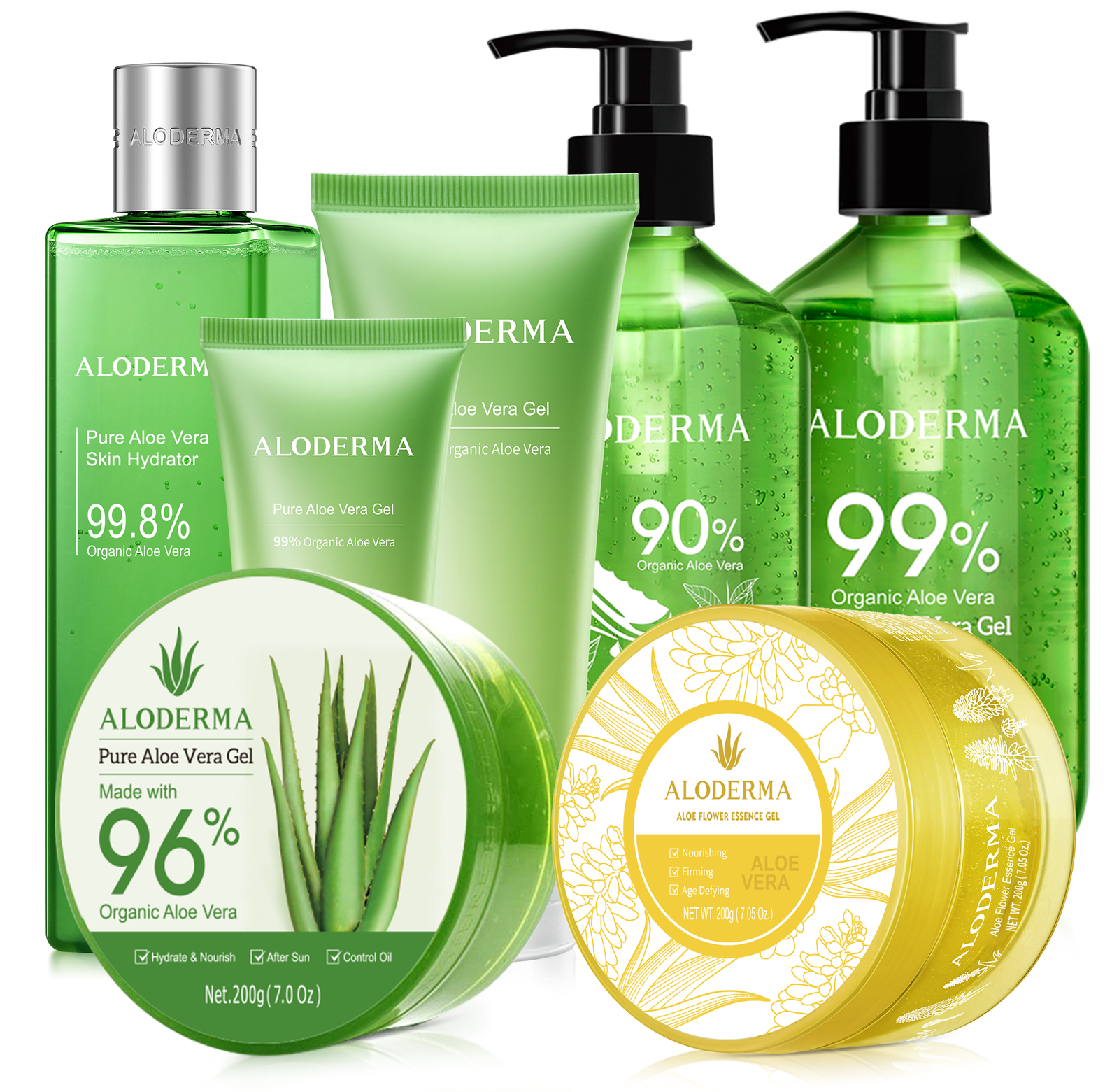
A true gel moisturizer is often the easiest place to start. ALODERMA Pure Aloe Vera Gel has the kind of texture many oily skin users prefer because it feels light, spreads easily, and doesn't mimic the finish of a heavy cream.
This kind of product makes sense if your skin feels greasy quickly, if you dislike residue, or if you want a simple layer under sunscreen. It can also work well in warm weather when richer textures feel like too much.
If your skin is oily but not uniformly oily
Some people have a shiny forehead and nose, but their cheeks still want a bit more comfort. In that case, a fluid lotion is often easier to live with than a straight gel.
If you want more cushion without a greasy after-feel
There are also days when oily skin wants a little more softness. Travel, indoor air, over-cleansing, or seasonal shifts can all make your face feel less comfortable even if you still produce visible oil.
A lotion-style hydrator such as Aloderma Hydrating Face Moisturizer can make sense when you want a more flexible daily moisturizer that still stays on the lighter side. The key is using a small amount and paying attention to how it sits after a minute or two.
How to choose among them
Use your skin's behavior to decide:
- Choose a gel: If you want the lightest finish possible.
- Choose an oil-free lotion: If your skin is combination or shifts during the day.
- Choose a hydrating lotion: If oil and surface dryness seem to show up together.
The product name matters less than your experience after application. If your skin feels refreshed, balanced, and comfortable instead of coated, you're close to the right fit.
Your Daily Routine for Balanced Skin
A good moisturizer works better when the rest of the routine isn't fighting it. Oily skin usually does best with fewer steps, lighter layers, and a steady rhythm morning and night.
Morning routine that stays simple
Start with a gentle cleanse. You want your skin clean, not stripped. If your face already feels comfortable in the morning, some people prefer a very light cleanse instead of an aggressive wash.
Then apply your moisturizer while skin is still slightly damp. Use a small amount. Spread it thinly over the face, then press it in with your fingertips rather than rubbing hard.
A useful final check is how your skin feels after a couple of minutes. If it still feels slippery, you probably used too much.
Try a pea-sized amount first. Oily skin often needs less product than you think.
Evening routine that supports balance
At night, remove the day gently and repeat the same basic logic. Cleanse, then moisturize. Consistency usually helps more than adding a shelf full of products.
One detail that often gets overlooked is pH. A 2025 esthetician-led review found that 57% of commercial “natural” moisturizers for oily skin had acidic pH below 5.0, which can disrupt the skin's acid mantle and worsen oiliness, while formulas with Kapha-rebalancing ingredients like aloe vera helped restore barrier integrity, according to this esthetician guide to moisturizers for oily skin.
That helps explain why a product can sound gentle and still not feel right. If your skin seems shiny and unsettled after switching to a “natural” cream, the issue may be the formula balance, not your commitment to moisturizing.
Small habits that make a big difference
- Apply on damp skin: This helps light moisturizers spread more evenly.
- Wait before layering: Give your moisturizer a moment before sunscreen or makeup.
- Keep the routine steady: Constant product switching makes it harder to tell what works.
- Avoid over-correcting: Extra cleansing often creates more frustration, not less.
If you want more routine ideas built around a gentler approach, Aloderma's article on how to reduce oily skin naturally adds helpful day-to-day tips.
Troubleshooting Common Moisturizer Issues
Even the right texture can take a little adjusting. Most problems come down to amount, formula fit, or layering too much too quickly.
Why does my face feel greasy after moisturizing
You're probably using more than you need, or the formula is richer than your skin likes. Start with a smaller amount and apply only a thin layer. If it still feels slick after a few tries, the texture may be too heavy for you.
Why does a natural moisturizer still feel wrong on oily skin
Because “natural” doesn't automatically mean light. Some botanical formulas are packed with richer oils or leave a film behind. Ingredient style and finish matter more than the front label.
How long should I give a new moisturizer
Give it enough time to judge comfort, shine, and day-to-day wear, but pay attention from the start to obvious mismatch signs like heaviness or clogged-feeling skin. If a product consistently feels suffocating, you don't need to force it.
How do I figure out what might be clogging my skin
Look at the formula, then simplify your routine so you can spot patterns. Aloderma's guide to ingredients that clog pores can help you identify common texture-related troublemakers.
What if my skin is oily and dehydrated at the same time
That's more common than people think. In that case, focus on lighter hydration, not heavier coverage. A gel or fluid lotion often works better than trying to “fix” the problem with a thick cream.
If you're looking for a fresh aloe-centered routine that keeps oily skin comfortable without a heavy finish, explore the full range at ALODERMA. Its farm-to-skin approach starts with organic aloe grown on its own plantations and processed onsite within 12 hours of harvest, which makes it a useful place to compare lightweight gels, oil-free hydrators, and everyday moisturizers built around fresh aloe rather than aloe as an afterthought.