



You're standing at the bathroom mirror with one hand on an almost-empty serum bottle and the other on your phone, trying to decode a label that sounds simple until you read it. One bottle says pure hyaluronic acid serum, another says multi-weight, another hides the percentage in tiny print, and the reviews all seem to disagree. The useful question isn't which product has the loudest claim, it's which formulation architecture will leave your skin feeling comfortable, not sticky or confused.
Hydration serums are easy to market and surprisingly easy to misunderstand. A calm way to judge them is to separate what HA is, what “pure” means, and how the serum is built to sit on skin. That framing matters whether you're comparing a pharmacy staple, a luxury bottle, or a routine built around a more minimal ingredient profile, including options people often pair with other skincare goals like estrogen cream for wrinkles.
Standing in the Skincare Aisle Wondering What You Actually Need
The confusion starts in the aisle because every bottle is trying to win the same argument in a different way. One promises plumper skin, another promises more hydration, and a third leans on the word pure as if that alone settles the question. It doesn't. The task is to figure out whether the formula is built for quick comfort, better layering, or deeper support over time.
Start with the simplest mental model
A pure hyaluronic acid serum is usually a lightweight, water-based product where hyaluronic acid is the headline humectant. That means it's designed to attract water and help skin feel less tight after cleansing, not to act like a rich cream or an exfoliating treatment. Harvard Health notes that hyaluronic acid can bind over 1,000 times its weight in water, which is why a small amount can change how dry skin feels so quickly. Harvard Health
That's why the label can't be read like a slogan. A serum can be “pure” in the sense that HA is the main feature, but it can still include other helpful humectants, and it still needs a smart routine around it. If you've ever had a product feel great for ten minutes and then oddly tight later, the issue may not be the ingredient itself. It's often the format.
Practical rule: If your skin feels dry before moisturizer goes on, treat HA as a water-binding step, not the whole routine.
Think about the bottle as a system, not a promise
The most helpful way to shop is to ask three questions. Is the serum water-light? Does it include ingredients that help hold moisture? And do you know how you'll seal it in afterward? Those questions usually tell you more than a front label ever will.
That mindset also helps when you compare hydration products with other wrinkle-focused routines, because not every concern needs the same type of serum. For example, a product meant to cushion and support dry skin works differently from something aimed at texture change or hormone-related skin shifts, which is why shoppers often read ingredient guides before buying a new moisturizer or serum.

What a Pure Hyaluronic Acid Serum Is
Hyaluronic acid is a naturally occurring humectant found in skin, joints, and connective tissue. In plain language, it pulls water toward itself. That is why people reach for it when skin feels dehydrated after cleansing, travel, or long stretches in dry indoor air. The ingredient itself is not exotic. The value comes from how it behaves on the skin surface and how the formula around it supports that behavior.
A simple way to understand the ingredient
A dry sponge dropped into a shallow dish of water swells, softens, and becomes more flexible. Hyaluronic acid behaves in a similar way for skin that feels thirsty, because it attracts and holds water instead of sitting there as a heavy film.
That is also why pure does not mean “only one ingredient and nothing else.” In formulation language, it usually means the serum is built around HA as the main hydrator, with a light texture and a support cast that may include ingredients like glycerin or aloe-based moisture systems. The goal is water delivery and water retention, not oiliness, fragrance, or a crowded actives list that competes for attention.
A serum is usually the most efficient format for this job because it spreads easily, absorbs quickly, and layers under moisturizer without friction. A moisturizer, by contrast, often adds more occlusion and emollience. An essence tends to be lighter and more fluid. The serum sits in the middle, which is why it often works well for people who want hydration without a greasy finish.
What you should expect from the word pure
“Pure” should make you think simple hydration architecture, not miracle claims. A serious HA serum should feel light, spread well, and help skin look more comfortable soon after application. It should not need to masquerade as a treatment for every possible skin concern.

Molecular Weight and Concentration Explained
The two numbers that matter most in an HA serum are not usually on the front of the bottle. They are molecular weight and concentration architecture, and they determine whether the serum only sounds good or fits your skin's needs. “Pure” starts to mean something more precise instead of vague marketing language.
Why one HA isn't the same as another
Low-molecular-weight HA, a form of sodium hyaluronate, used in a sodium hyaluronate explanation, is often chosen for faster-feeling smoothing because it sits closer to the skin's surface and moves more readily through a formula. High-molecular-weight HA stays more on top, where it forms a breathable film that helps limit water loss during the day. One gives a quicker surface feel, the other helps hold moisture in place.
That is why stronger formulas often combine multiple weights instead of relying on a single type. A major-market example uses 1% low-molecular-weight HA plus 0.5% high-molecular-weight HA for 1.5% total HA, alongside glycerin for extra moisture retention. That structure matters more than a louder purity claim, because each weight does a different job. L'Oréal Paris Revitalift Derm Intensives Pure Hyaluronic Acid Serum
A label that shows a moisture strategy is more useful than one that only repeats an ingredient name.
Concentration isn't a simple more-is-better game
Mainstream guidance often points shoppers toward 1% to 2% as a useful working range, but the more important idea is balance. A higher concentration does not automatically mean better skin feel, especially if the formula lacks the right mix of weights or leaves out support ingredients. That is where some people run into stickiness, pilling, or a dry, tighter finish than they expected.
A single-ingredient approach can be elegant, but elegance is not the same as performance. A pure single-weight serum may suit some routines, yet a multi-weight formula often does a better job of covering both immediate comfort and daytime moisture support. The right pick depends on whether your skin wants a simple humectant layer or a more complete hydration system.
What that means on your face
If the formula is built well, you will feel less after-cleanse tightness and see a softer surface under moisturizer. If it is not, you may notice tackiness, rolling under sunscreen, or a finish that seems busy rather than clean. The difference usually comes down to architecture, not branding.
What the Research Says About Hydration Results
Clinical data matters here because hydration is easy to claim and harder to measure. One peer-reviewed study found that a topical hyaluronic acid serum produced an immediate 134% increase in skin hydration after application, with a still-significant 55% increase at week 6. The same study reported week-six improvements in smoothness (64%), plumping (60%), hydration (63%), fine lines (31%), wrinkles (14%), and overall global assessment (43%), with excellent tolerability across skin types. Peer-reviewed study
What those numbers feel like in real life
Immediate hydration gains usually show up first as comfort. Skin feels less taut after cleansing, makeup sits more evenly, and the face looks a little less creased from dryness. That doesn't mean the serum is magically changing skin overnight, but it does mean the formula is doing the job it was designed to do.
The week-six numbers are more useful for setting expectations. They suggest that consistent use can improve how skin looks and feels over time, especially in texture and suppleness. For someone who's tired of tight cheeks by midday or that papery feeling after a long shower, this is the kind of change that matters.

Who tends to like HA most
Hydration-focused serums are especially useful for normal, dry, combination, and blemish-prone skin that wants moisture without a heavy finish. Oily skin can benefit too, precisely because HA is lightweight and water-based. That makes it easier to hydrate without piling on emollients that some faces don't want.
The right mindset is simple. A pure hyaluronic acid serum is a hydration tool, not a resurfacing tool and not a brightening shortcut. Its job is to make skin more comfortable so the rest of the routine works better, whether that means moisturizer, sunscreen, or a more active nighttime plan.
How to Apply and Layer a Hyaluronic Acid Serum
Application is where a lot of people blame the ingredient for a routine mistake. HA is a humectant, so it needs water nearby to bind to. The simplest and most reliable approach is to apply it to damp skin, then follow with moisturizer. MDPen gives the same guidance in a straightforward ingredient note. MDPen hyaluronic acid guide
A sensible routine
Start with cleanser, then leave a trace of moisture on the skin instead of rubbing your face bone dry. Apply a small amount of serum, press it in gently, and finish with a cream or lotion that slows evaporation. That sequence gives the humectant something to grab and gives your skin a cap over the top.
A practical morning routine looks like this, cleanse, pat so skin is still slightly moist, apply serum, then moisturizer and sunscreen. At night, the order stays nearly the same, though the question of hyaluronic acid or retinol first depends on your specific products. If your treatment step needs direct skin contact, place it first and let the HA follow. For shoppers sorting out routine order, the step-by-step guide from ALODERMA on the order skincare products should be applied is a useful reference.
Practical rule: If the room is dry, don't treat HA like a stand-alone finish. Seal it in.
When the environment changes the result
Low-humidity rooms, heated apartments, and winter air can make a water-binding serum feel less forgiving if you don't follow it with moisturizer. That isn't a flaw in the ingredient. It is a clue that the serum works best as part of a layered routine rather than as the only hydrating step.
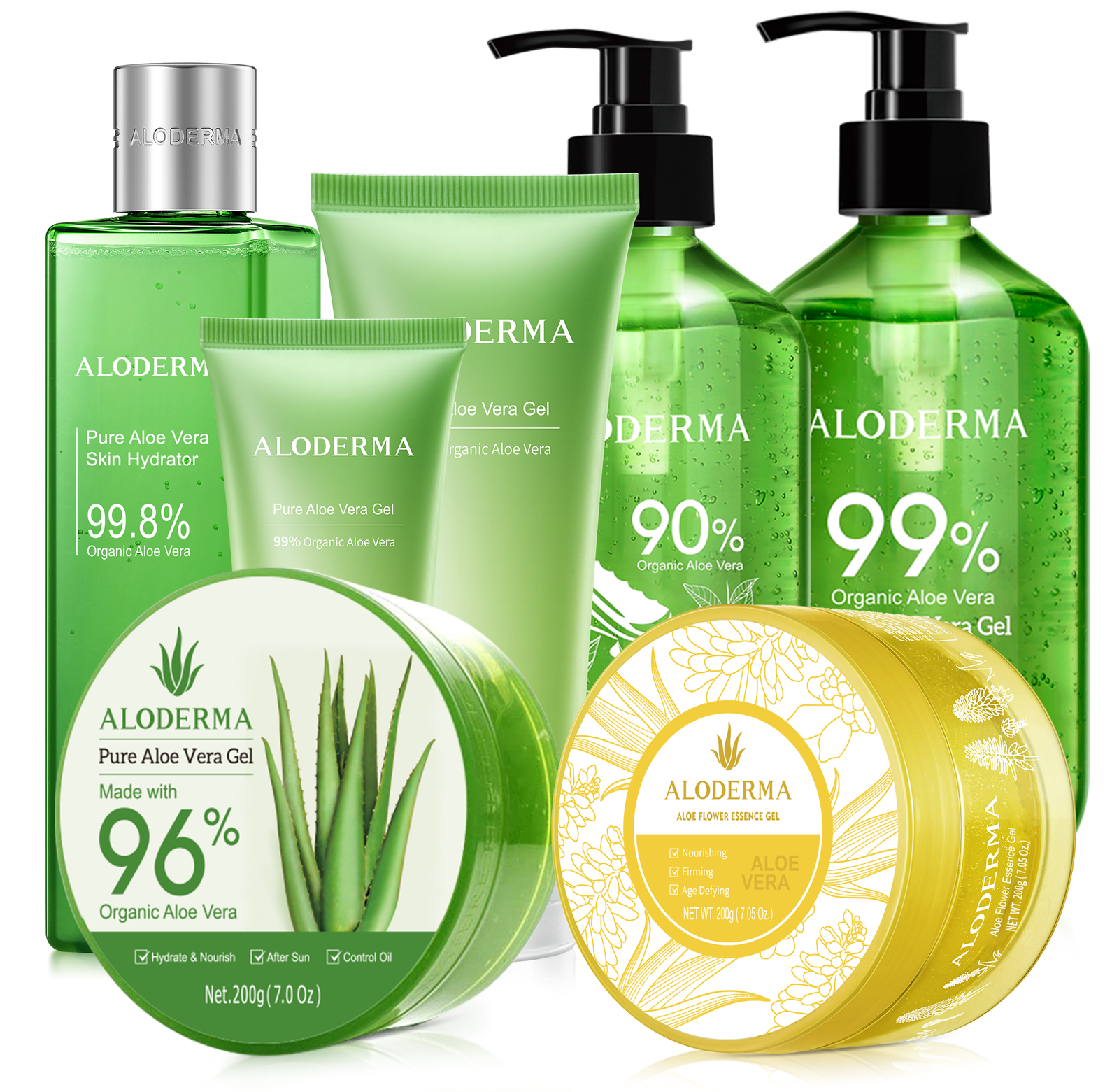
A lightweight aloe-based hydrator can be a helpful companion in a simple routine. ALODERMA, a fully vertically integrated aloe vera company, grows its own organic aloe vera and processes and manufactures onsite within 12 hours of harvest to keep the primary ingredient as bioactive as possible. In practice, that kind of aloe-forward layer can sit naturally beside HA when skin wants comfort without heaviness.
A short worked example
Cleanse in the morning, leave skin slightly damp, apply a few drops of HA, then use moisturizer and SPF. At night, cleanse, apply HA the same way, then finish with a barrier-supporting cream. That sequence is simple enough to repeat, which is usually what makes it effective.
Common Myths About Pure Hyaluronic Acid Serums
The biggest myths around HA all come from the same mistake, treating a moisture ingredient like a scorecard. More percent, more purity, more hype, none of those automatically translate to better skin feel. The better question is whether the formula fits the way your skin behaves.
Myth one, more HA percent is always better
Higher concentration can sound impressive, but skin doesn't reward volume in a straight line. Too much HA, or the wrong balance of weights, can leave a serum sticky or oddly tight on some faces. That's especially true if the formula doesn't have the right moisture context around it.
Myth two, pure means more effective
A single-weight formula can be neat and minimalist, but it isn't automatically superior to a multi-weight one. Multi-weight HA can do more than one job at once, surface comfort from one fraction and moisture support from another. That's why “pure” is a marketing word you should translate, not obey.
Myth three, sensitive or blemish-prone skin should avoid HA
HA itself is a humectant, not a harsh active. Many people with sensitive or blemish-prone skin like it because it adds hydration without the feel of heavy oils. The bigger issue is usually the rest of the formula, fragrance, texture agents, or layering mistakes, not the HA molecule.
The goal isn't purity as a badge. The goal is fit, weight profile, concentration, and a routine that doesn't fight itself.
How to Read a Label and Choose a Serum Worth Buying
A useful HA label can be read in under a minute once you know where to look. Start with the INCI list, because it shows how the formula is built, not just how the front label markets it. Then ask a simpler question, does the ingredient structure support hydration, or is “pure” doing most of the talking?
What to look for on the ingredient list
If hyaluronic acid or sodium hyaluronate appears near the top of the formula, that usually signals that hydration is a real part of the serum's design. Supporting humectants like glycerin, aloe vera, panthenol, or betaine can make the texture feel more balanced and less one-note. Those ingredients do not contradict purity, they often make a serum easier to wear and more comfortable in a routine.
It also helps to notice what else is in the bottle. Fragrance high on the list, drying alcohols, or a formula crowded with extras can make a hydration product feel less refined than it should. Certifications can still be useful, but they should sit beside the ingredient list, not replace it. A badge can tell you something about standards, but it cannot explain how the serum is put together.
A quick reading table
| Label Signal | What It Means | What to Look For |
|---|---|---|
| HA or sodium hyaluronate near the top | The serum is built around hydration | Clear placement in the INCI list |
| Multiple humectants | The formula supports water binding in more than one way | Glycerin, aloe vera, panthenol, betaine |
| Light, water-based texture | It should layer easily under moisturizer | No greasy or overly heavy finish |
| Minimal fragrance load | Lower risk of unnecessary complexity | Fragrance lower on the list or absent |
| Transparent format claims | The brand is explaining, not just advertising | Specific ingredient architecture |
If you want a clean example of an aloe-led brand that fits this hydration-first logic, ALODERMA is built around fresh organic aloe and keeps its formulas lightweight, with at least 95% naturally derived ingredients and ECOCERT, USDA, and EU Organic certifications. Its educational guide on how to choose skincare products is useful if you like checking labels before you buy. ALODERMA also offers aloe-based serums that include hyaluronic acid, including the Aloe Firming Face Serum and Aloe Brightening Serum, which can matter if you want a softer, more layered hydration routine rather than a single-ingredient approach.
The final label test
If the bottle tells you what the serum is built to do, you are probably looking at a serious product. If it only tells you it is pure, advanced, or ultra, keep reading. That kind of wording can signal confidence, but it does not tell you whether the formula has the right weight profile, supporting humectants, or a texture that will fit the rest of your routine.