







You buy one new product because your skin feels tight, looks uneven, or seems to react to everything. For a few days, it feels promising. Then something stings, your cheeks look flushed, or your skin suddenly feels dry and shiny at the same time. So you try another product, then another, and your bathroom shelf starts to look like a chemistry experiment you never meant to run.
That cycle is exhausting. It also makes sensitive skin feel more mysterious than it really is.
Most sensitive skin doesn't need more guesswork. It needs fewer variables, gentler layering, and ingredients that support comfort instead of pushing your skin too hard. If you've been searching for a sensitive skin care set, the goal isn't to own more bottles. It's to build a routine that feels steady, simple, and easy to trust every morning and night.
Why Your Sensitive Skin Needs a System Not Just a Product
A lot of people with sensitive skin make the same mistake first. They shop for a hero item. Maybe a cleanser that promises softness, a serum that says it will smooth everything out, or a cream that sounds rich enough to fix the problem overnight.
The problem is that skin doesn't experience products one at a time. It experiences your whole routine. A gentle serum can still feel like too much if it follows a stripping cleanser. A nourishing cream can still disappoint if the layer underneath leaves skin off balance.
That matters because you're far from alone. Sensitive skin affects an estimated 50 to 71% of people globally, and it is reported more often among females at about 60% compared with 40% in males, according to Grand View Research's sensitive skin care products market report.
Why a set feels easier on the skin
A set works better than random singles because each step has a job.
- The cleanser starts gently: It removes sunscreen, makeup, and the day without leaving your face feeling squeaky.
- The next layers add support: A toner or essence can help skin feel hydrated instead of exposed.
- The finishing step seals comfort in: A good moisturizer helps the whole routine feel complete, not interrupted.
When these steps are chosen to work together, your routine stops feeling like a daily test. It starts feeling predictable.
Practical rule: If your skin changes mood every time you try something new, simplify before you intensify.
A routine should calm your decision fatigue
Sensitive skin isn't only physical. It can wear you down emotionally. You start reading every label twice. You hesitate before testing anything. You wonder whether your skin is dry, oily, or just confused.
A thoughtful sensitive skin care set removes that pressure. Instead of asking, "What random product should I add next?" you can ask a better question. "Does this routine leave my skin feeling comfortable from start to finish?" That shift is where progress usually starts.
The 5 Core Essentials in a Sensitive Skin Care Set
A good sensitive skin care set isn't complicated. It usually comes down to five essentials that support each other in the right order. That simple approach matches where the category is heading. The global sensitive skin care products market was valued at USD 44.60 billion in 2023 and is projected to reach USD 80.97 billion by 2030, with growth driven by the 71% of adults who report having sensitive skin, based on sensitive skin care market trends reported by Trilogy Laboratories.

Gentle cleanser
At this stage, the whole routine succeeds or fails.
If your cleanser leaves your face feeling overly tight, every product after it has to work harder. A gentle cleanser should remove buildup while helping skin feel soft, not stripped. It's akin to washing a silk blouse. You want it clean, but you don't scrub it aggressively.
For someone with sensitive skin, morning cleansing may be as simple as a light cleanse or rinse, while evening cleansing usually needs to remove the day's sunscreen and debris carefully.
Hydrating toner
People often skip toner because they remember old formulas that felt sharp or drying. A hydrating toner does the opposite. It gives skin a first layer of water-based comfort and helps the next step spread more evenly.
If your skin often feels dry right after washing, toner can bridge that uncomfortable gap between cleansing and moisturizing. It can also help your routine feel smoother and less heavy because skin is already lightly hydrated before serum or cream goes on.
Calming serum
A serum is the focused step in the routine. It should bring in a targeted ingredient that supports calm, hydration, or barrier comfort without overwhelming the skin.
Many people overdo it. They stack too many actives because they want fast results. Sensitive skin usually responds better to one thoughtful serum than to three trendy ones layered together.
When skin is reactive, fewer well-chosen steps often do more than a long routine.
Moisturizer
Moisturizer is the step that helps all the earlier work stay in place. Without it, skin can still feel unsettled even if the serum underneath is excellent.
A good moisturizer for sensitive skin should feel protective but not suffocating. In real life, that means your face should feel comfortable an hour later, not greasy on the surface and thirsty underneath. That's the difference between surface softness and real support.
Daily SPF
A lot of routines feel "good" at night and then unravel during the day because this final step is missing. Skin that already feels reactive usually doesn't appreciate extra daily stress.
A sensitive skin care set works best when daytime care includes a sunscreen you can wear consistently. If one formula pills, stings, or feels too heavy, you probably won't keep using it.
How the five steps work together
Here's the easiest way to think about the system:
- Cleanser clears the canvas
- Toner adds light hydration
- Serum addresses your main concern
- Moisturizer locks in comfort
- SPF protects your progress
If you want another outside perspective on what often works well in gentle routines, these skincare recommendations from Skinsation Aesthetics are a useful read because they focus on practical product selection, not hype.
The Ingredient Compass Navigating Labels for Calm Skin
Reading ingredient lists can feel intimidating at first, especially when every label uses a different marketing story. The easiest way to make sense of it is to stop asking, "Is this product popular?" and start asking, "What is this formula trying to do to my skin?"
For sensitive skin, the answer should usually be simple. Hydrate. support the skin barrier. Keep the formula clean and steady. Avoid unnecessary extras that make your skin work harder.
What to welcome and what to skip
One of the most useful ingredients to know is niacinamide. At a 3 to 5% concentration, niacinamide has been shown to reduce redness and excess sebum by 20 to 35% within 4 to 8 weeks, and it supports the skin's natural production of ceramides, according to this guide to ingredients for sensitive skin. In plain language, that means it can help skin look calmer while also helping it feel stronger over time.
Fresh aloe vera also belongs in the welcome category, especially when you're trying to keep a routine lightweight and comforting. Ceramides, glycerin, and hyaluronic acid are also common signs that a formula is trying to support skin instead of challenge it.
| Ingredient Guide for Sensitive Skin | |
|---|---|
| Do Welcome These | Don't Use These |
| Fresh aloe vera for lightweight hydration and comfort | Strong synthetic fragrance if your skin tends to react to scent |
| Niacinamide in a moderate range | Harsh alcohol-heavy formulas that can leave skin feeling stripped |
| Ceramides for barrier support | Cleansers that make skin feel squeaky or tight |
| Glycerin and hyaluronic acid for hydration | Overly complicated routines with too many active layers |
| Oat, allantoin, and similarly gentle support ingredients | Products chosen only for trends instead of tolerance |
A practical label-reading habit
When you pick up a product, don't get distracted by the front of the bottle. Turn it over and ask:
- What is the hydration story: Does the formula include aloe, glycerin, hyaluronic acid, or other water-binding ingredients?
- What is the barrier story: Does it use ceramides or supportive ingredients that help skin stay comfortable?
- What is the risk story: Is there added fragrance or a long list of extras you don't need?
If you want help identifying common formula troublemakers, this guide to ingredients to avoid in skincare is a practical place to start.
Real-world example of choosing better
Say you're deciding between two serums.
One promises dramatic overnight results and includes a long list of trendy actives. The other focuses on aloe, niacinamide, and hydration. If your skin is already unpredictable, the second formula is often the more sensible choice. It doesn't ask your skin to "perform." It asks your skin to settle.
That same principle can matter even more for people going through times when their skin feels unusually delicate. Resources about protecting your skin during cancer therapy can be helpful for understanding how much gentleness, simplicity, and comfort matter when skin needs extra care.
Your skin rarely rewards bravado. It usually rewards consistency.
A product worth keeping usually makes your routine feel quieter after a week or two. Less guessing. Less chasing. Less second-guessing every ingredient list.
The ALODERMA Difference Why Fresh Aloe is a Game Changer
Your skin can tell the difference between a formula built around fresh aloe and one that adds aloe somewhere down the ingredient list.

Many brands use aloe as a familiar calming ingredient. ALODERMA takes a more controlled approach. Its aloe is grown on its own organic farms, then processed and made into finished skincare on site within 12 hours of harvest. For sensitive skin, that timeline matters because aloe is not just a label ingredient here. It is the heart of the formula.
Freshness matters in skincare for the same reason it matters in food. The closer an ingredient stays to its original state, the more it tends to keep the qualities that made it useful in the first place. With aloe, those qualities are its light water content, its soothing feel, and the comfortable hydration it gives skin that is quick to react.
That is the practical value of a vertically integrated farm-to-skin model. The same company grows the aloe, handles the processing, and manufactures the formulas, so there is less distance between harvest and the bottle you open at home. For reactive skin, that can mean a product that feels cleaner, calmer, and less weighed down by the dullness that often comes with heavily handled ingredients.
You can often feel this difference in texture. Fresh aloe-based toner should land like a cool layer of hydration. A gel should absorb without leaving a tacky film. A moisturizer should soften and cushion skin without making it feel sealed under a heavy coat. Sensitive skin usually responds well to that kind of light, quiet support.
If you want a clearer explanation of why aloe is such a trusted ingredient for easily irritated skin, this guide to aloe vera for sensitive skin is a helpful place to start.
A short look at the growing and processing story makes the farm-to-skin difference easier to see.
One set option to consider
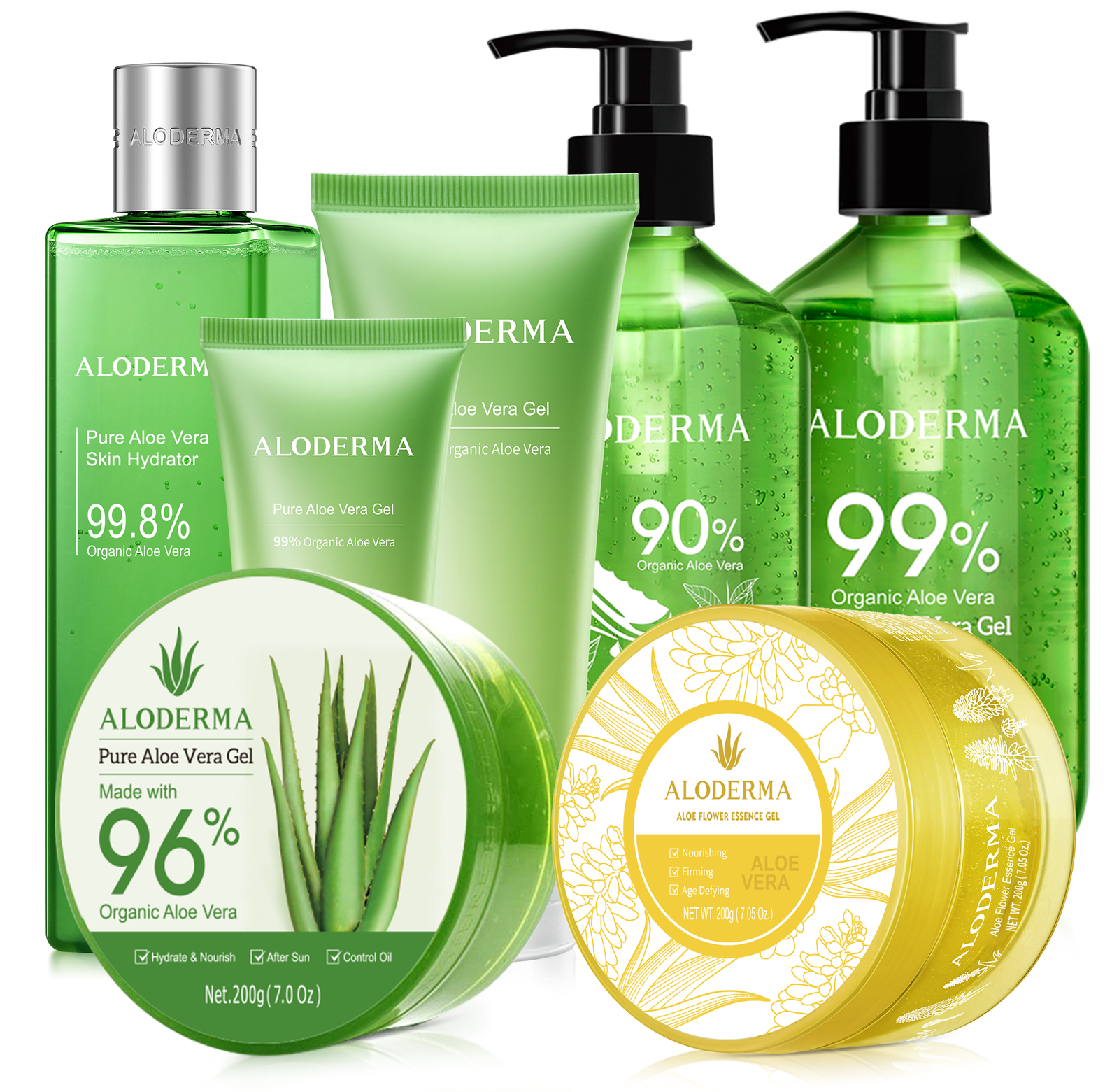
ALODERMA offers sensitive-skin-focused sets built around fresh organic aloe, including products such as toner, gel, serum, and moisturizer for a simple routine. What stands out is not flashy positioning. It is the fact that the aloe comes from a traceable source and is processed quickly after harvest, which helps preserve the soothing, hydrating character that sensitive skin often prefers.
Freshness is not just part of the brand story. It is part of why the formulas can feel so comforting, light, and consistent on reactive skin.
How to Use Your New Set A Simple Ritual for Happy Skin
A new routine works best when you don't rush it. Sensitive skin usually prefers a steady rhythm over a dramatic reset. If you've just opened a new sensitive skin care set, keep the first week boring on purpose. That's a good thing.
Your morning routine
In the morning, think light layers and protection.
- Cleanse gently: Use a mild cleanser, or if your skin feels comfortable upon waking, keep cleansing very light.
- Apply toner: Pat on a hydrating toner to take away that just-washed feeling.
- Use serum: Add a small amount of serum and press it in instead of rubbing aggressively.
- Finish with moisturizer: Seal in the earlier layers with a comfortable cream or gel-cream.
- Apply sunscreen: This is your final daytime step.
The reason this order works is simple. Thinner layers go first, thicker layers go last. Each product has a better chance to sit where it belongs.
Your evening routine
Night care can be a little more comforting.
- Start with a thorough but gentle cleanse: Remove sunscreen, makeup, and the day without over-washing.
- Follow with toner: This gives your skin water-based hydration right away.
- Apply serum next: The serum allows your calming or hydrating active to do its work.
- Use moisturizer as the final seal: Night is when a supportive cream can help skin stay comfortable until morning.
If you want a broader walkthrough on building a simple regimen, this guide on how to build a skincare routine lays out the basics clearly.
Why ceramides matter at night
One ingredient worth watching for in your moisturizer is ceramides. They make up 50% of the skin's barrier, and using a moisturizer with ceramides can reduce water loss by up to 30% within four weeks, according to LearnSkin's overview of safe ingredients for sensitive skin.
That sounds technical, but the everyday meaning is easy to understand. Your skin loses less moisture overnight, so you wake up feeling less tight and less unsettled.
A few habits that make a difference
- Start slow: If the set includes several products, introduce them thoughtfully instead of trying extras from other brands at the same time.
- Use less than you think: Sensitive skin often prefers thin layers over heavy application.
- Watch for comfort, not perfection: A good routine should make skin feel more stable before it makes skin look dramatically different.
- Keep your ritual consistent: Morning and night consistency usually beats occasional bursts of enthusiasm.
A routine like this can become a small reset in your day. Two quiet minutes in the morning. Three unhurried minutes at night. That rhythm often helps your skin and your mind at the same time.
Common Questions About Sensitive Skin Care Sets
How long does it take to notice a difference
It's common to first notice texture and comfort changes before visible glow becomes apparent. Skin may start to feel less tight and less fussy relatively early, while the fuller benefits of a routine take more patience. The key is consistency. If you switch products every few days, it's hard to know what's helping.
Can I add other products into my new set
You can, but it's smarter to wait.
If you start a sensitive skin care set and add exfoliants, masks, and strong serums from three other brands right away, you lose the clarity that a set is supposed to give you. Let the routine stand on its own first. Once your skin feels steady, you can decide whether anything is missing.
A calm routine is easier to evaluate than a crowded one.
What makes a sensitive skin care set a good gift
It feels thoughtful because it solves a real problem. Instead of giving one random product and hoping it fits, you're giving someone a complete routine with a clear order and purpose. That's especially meaningful for a friend who feels overwhelmed by shopping for skin care on their own.
Should I choose a larger set or a simpler starter set
If your skin reacts easily, start small. A shorter routine is easier to track, easier to tolerate, and easier to stick with. Once you know your skin likes the cleanser, toner, serum, or moisturizer, then you can expand.
What should a set feel like when it's working
It should feel uneventful in the best possible way. Less stinging. Less tightness after cleansing. Less urge to keep searching for the next fix. Good skin care often feels less dramatic than marketing makes it sound.
If you're looking for a sensitive skin care set built around fresh organic aloe, ALODERMA is worth exploring. Its farm-to-skin approach, vertically integrated aloe cultivation, and onsite processing within 12 hours of harvest make freshness central to the routine, which is especially appealing when your skin needs gentle, lightweight hydration and a simpler path to daily comfort.