







Those searching for a sensitive skin moisturizer with SPF are often stuck in the same loop. You try one formula and it pills under makeup. Another feels greasy by noon. A third looks promising until your skin starts to sting around your nose, cheeks, or eyes. After a while, it's easy to assume your skin is the problem.
Usually, it isn't.
Sensitive skin often reacts not only to sun filters, but to the full formula around them. Texture, fragrance, alcohol content, the ingredient load, and the base of the moisturizer all affect whether daily SPF feels comfortable enough to wear every morning. That's why choosing a sensitive skin moisturizer with SPF isn't just about picking the highest number on the label. It's about finding a formula your skin will accept, day after day.
Why Finding a Daily SPF for Sensitive Skin Feels Impossible
You buy a face product that promises hydration and sun protection in one step. On paper, it sounds perfect. In real life, it might leave your skin shiny, make your eyes water, or feel fine for ten minutes and then suddenly uncomfortable.
That pattern is common, especially if your skin is reactive, oily, or prone to clogged pores. Many people are told to “just wear sunscreen daily,” but they aren't told why some formulas feel easy and others feel impossible.
It's not only the SPF number
The biggest point of confusion is this. People often blame the SPF itself, when the issue may be the entire product system. Guidance for sensitive skin often emphasizes fragrance-free, hypoallergenic, and non-comedogenic formulas, and it also notes that sunscreen filters and additives can be common triggers. It also points out that a moisturizer with SPF isn't automatically gentler than using a separate moisturizer and sunscreen, which is why filter choice and the rest of the formula matter so much for oily or blemish-prone sensitive skin, as discussed in Business Insider's guide to moisturizers for sensitive skin.
A simple way to think about it is to compare sunscreen to coffee. Two cups can contain coffee, but one is smooth and the other upsets your stomach because the roast, additives, and preparation are different. SPF works the same way. The UV protection matters, but so does the vehicle carrying it.
Your skin doesn't wear an ingredient list one line at a time. It experiences the whole formula at once.
What readers usually get stuck on
A lot of frustration comes from trying to solve the wrong question. Instead of asking only, “What SPF should I buy?” it often helps to ask:
- What textures can I tolerate? A richer cream and a lightweight lotion can behave very differently on reactive skin.
- What tends to bother me? Fragrance, alcohol-heavy formulas, or certain filters can all be part of the issue.
- Will I wear this daily? The best product is the one you can use consistently without dreading it.
If you want a broader roundup while you compare options, BotoxBarb's sunscreen recommendations are a useful place to scan different sensitive-skin-friendly styles and textures.
Understanding SPF Broad Spectrum and PA Ratings
A sunscreen label can feel like a wall of shorthand when your skin is already hard to please. The good news is that three terms do most of the work: SPF, broad spectrum, and PA.

What SPF actually tells you
SPF stands for sun protection factor. It refers to protection against UVB rays, the rays most closely linked with sunburn.
SPF works like a timer with limits. It tells you how well a product helps reduce UVB exposure when you apply enough of it. It does not promise all-day protection from a small dab rubbed in like a regular face cream.
For daily use, SPF 30 or higher is a practical target. Sensitive skin often does better when you judge the formula as a whole, not the number alone. A high SPF in a base that stings, pills, or feels greasy is hard to use consistently. A well-made moisturizer with SPF 30 in a calm, skin-friendly base often serves reactive skin better because you will wear it as directed. If you want help comparing daily-use formulas, this guide to face lotion with SPF breaks down what to look for.
Why broad spectrum matters
Broad spectrum means the product protects against UVA as well as UVB.
That distinction matters. UVB is the ray type people tend to notice because burning gets attention fast. UVA is quieter. It reaches deeper, shows up day after day, and contributes to the kind of exposure that sensitive skin may not appreciate even when you do not see immediate redness.
A simple way to sort it out is this: SPF tells you about burn protection, while broad spectrum tells you the product is covering the full daily picture more responsibly.
Where PA ratings fit in
Some products also list PA+, PA++, PA+++, or PA++++. That rating gives you another clue about UVA protection and appears often on products influenced by Asian sunscreen labeling.
Here is the short version:
- PA+ means some UVA protection
- PA++ means a higher level
- PA+++ means strong UVA protection
- PA++++ means very high UVA protection
PA ratings are helpful, but they are still only part of the story.
For sensitive skin, the base formula decides whether those protections feel wearable. Two moisturizers can both say SPF 30 and broad spectrum, yet one leaves your face calm and the other leaves it hot, itchy, or tight. That difference usually comes from the rest of the formula: the filters, the preservatives, the fragrance level, and the quality of the moisturizing base. A fresh, soothing foundation matters here. Brands that focus on ingredient purity, including a farm-to-face aloe base processed quickly after harvest, can make daily SPF feel far more comfortable on reactive skin.
A good label gives you the protection signals. A good formula gives you a reason to keep using it every morning.
Choosing Your Shield Mineral or Chemical Sunscreens
One of the biggest choices in a sensitive skin moisturizer with SPF is the filter type. This element often allows many people to finally understand why one product feels calm and another feels wrong within minutes.
The simple difference
Mineral sunscreens typically use filters like zinc oxide or titanium dioxide. These are often favored by people who want a straightforward filter system and are commonly suggested for sensitive skin.
Chemical sunscreens use organic filters that absorb UV energy. These formulas often feel lighter, blend more easily, and leave less visible residue. For some people, that makes daily wear much easier. For others, certain filters can feel uncomfortable.
Neither category is automatically perfect. The right choice depends on what your skin tolerates and what finish you'll wear.
Mineral vs. Chemical Sunscreen at a Glance
| Feature | Mineral Sunscreen | Chemical Sunscreen |
|---|---|---|
| Typical filters | Zinc oxide, titanium dioxide | Organic UV filters |
| Texture | Can feel thicker or more noticeable | Often lighter and more fluid |
| White cast risk | More likely, depending on formula | Usually lower |
| Sensitive skin appeal | Often preferred by very reactive users | Can work well if your skin tolerates the filters |
| Makeup compatibility | Depends on the base and finish | Often easier under makeup |
| Comfort trade-off | May feel heavier | May sting for some users |
A real product example helps
A useful example of a hybrid formula is Olay Complete All Day Moisturizer SPF 30 for Sensitive Skin, which is positioned as fragrance-free and lightweight. Its active filters include zinc oxide 6.9%, octinoxate 7.5%, octisalate 2.5%, and octocrylene 2.5%, while the inactive ingredients include glycerin, niacinamide, panthenol, green tea extract, vitamin E, and aloe leaf extract, as listed on this product page. That example shows a common trade-off. You can get the broad support of a mixed filter system and a lightweight feel, but chemical filters may still be a sticking point for very reactive skin.
How to decide without overthinking it
A practical approach looks like this:
- Choose mineral-first if your skin often reacts quickly, especially around the eyes.
- Choose hybrid or chemical if heavy textures make you skip sunscreen.
- Watch the base as closely as the filters. A beautiful filter system inside a harsh base still won't feel good.
- Patch test new formulas before using them all over your face.
If you want more context on how daily lotion-SPF hybrids fit into a routine, ALODERMA's article on face lotion with SPF gives a useful overview of that product category.
What Your Sensitive Skin Actually Wants in a Moisturizer
Once you've thought about filters, the next question is the base. This part gets overlooked all the time, but it's often what decides whether your skin feels comfortable at noon or irritated before breakfast.
Look for less noise in the formula
Independent guidance for sensitive-skin moisturizers recommends avoiding fragrances, alcohols, and sulfates, while prioritizing ingredients like hyaluronic acid, ceramides, and aloe vera. That same guidance notes that shorter ingredient lists are often better tolerated because every added component creates another chance for a sensitization issue, according to Healthline's overview of moisturizers for sensitive skin.
That advice is practical, not fussy. Sensitive skin usually wants fewer surprises.
Think of your moisturizer base like the mattress under a fitted sheet. The top layer matters, but if the foundation underneath is rough, you feel it all night. In skincare, sun filters are the top layer. The moisturizer base is the mattress.
What to avoid and what to favor
Here's a simple screening method when you pick up a bottle:
- Skip obvious irritants like strong fragrance, alcohol-heavy formulas, and sulfate-based products if your skin already reacts easily.
- Favor support ingredients such as hyaluronic acid, ceramides, aloe vera, glycerin, and similar moisture-binding or comfort-focused ingredients.
- Pay attention to feel because lightweight doesn't always mean gentle, and rich doesn't always mean nourishing.
- Be suspicious of long, crowded formulas if you already know your skin is picky.
For readers who are exploring more advanced routines or professional-grade options, ProMD Health Ashburn's skin treatments can help you understand how clinicians often think about gentle support products and targeted care.
Not all aloe is the same
Ingredient quality matters. “Contains aloe” on a label doesn't tell you whether the aloe is central to the formula, how it was handled, or whether it's there in a meaningful way.
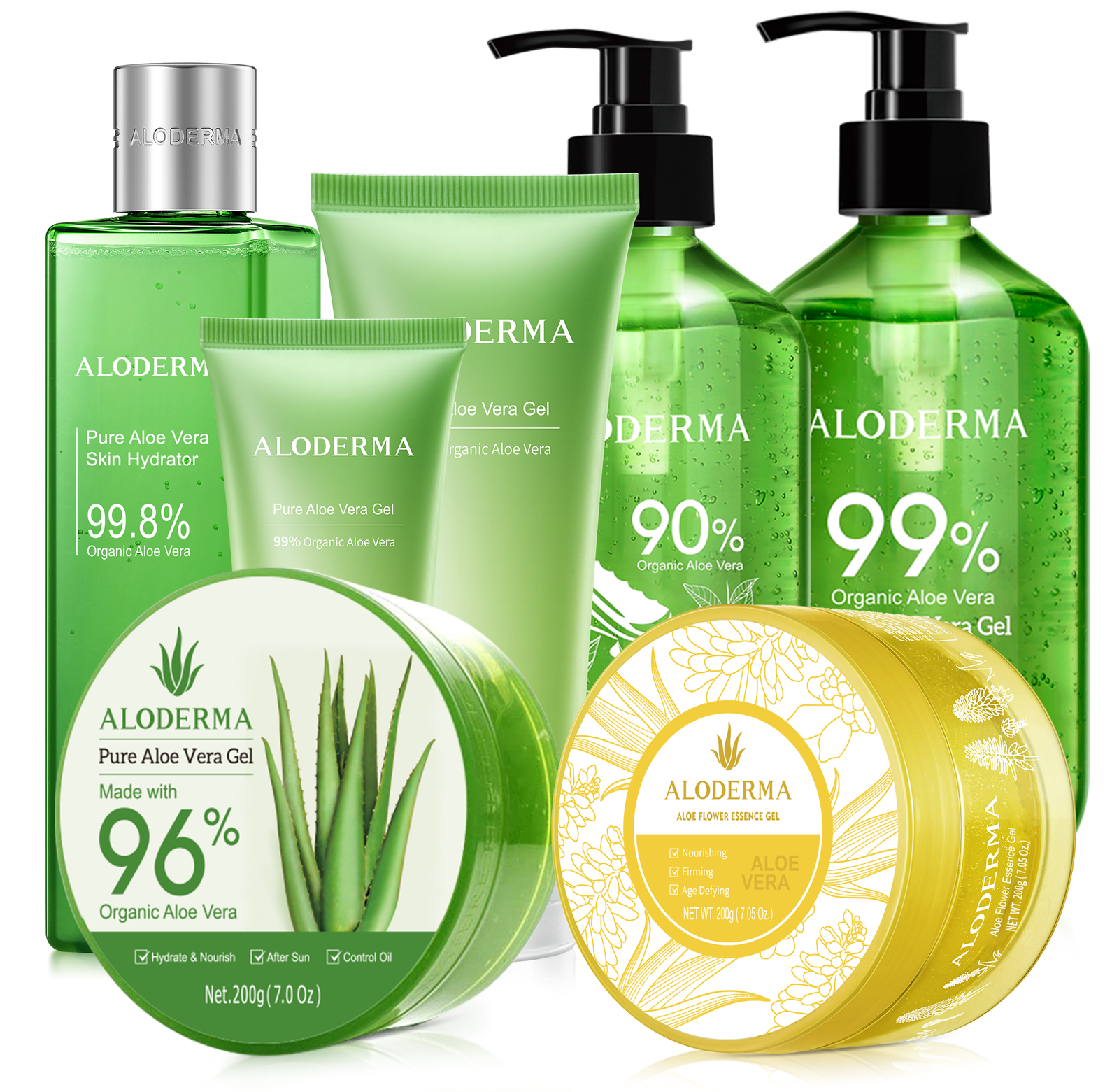
ALODERMA is a fully vertically integrated aloe vera company. It grows its own organic aloe vera and processes its aloe and manufactures onsite within 12 hours of harvest, which is how it aims to keep the aloe in its formulas as fresh and bioactive as possible. That matters for people who want a calming base rather than a token botanical added for label appeal.
If you want to compare that kind of base-first approach with other sensitive-skin moisturizer guidance, ALODERMA's article on the best face moisturizer for sensitive skin is a useful companion read.
A short explainer on ingredient quality can help make that clearer:
A soothing ingredient only helps if the formula gives it room to matter.
Getting the Most Protection From Your Daily SPF
You smooth on your morning moisturizer, your skin feels comfortable, and you head out the door assuming you are covered. For sensitive skin, that routine only works if the product goes on in the amount used during sunscreen testing. A light swipe may feel right, but it usually does not give the level of protection printed on the label.
The easiest way to picture it is this: SPF is less like a vitamin and more like a coat of paint. Too little leaves gaps.
Use enough to reach the labeled protection
A daily SPF moisturizer needs to be broad-spectrum, at least SPF 30, and applied generously across the face and neck. For many adults, that means about a nickel-sized amount total for both areas, not the small dab often used for regular face cream.
Reapplication matters too. If you are outdoors for extended periods, sweating, or toweling off, put it on again every two hours. A moisturizer with SPF can be a practical morning step, but its protection still depends on quantity and consistency.
This is often where sensitive skin runs into trouble. If a formula stings, pills, smells strong, or feels heavy, you naturally use less of it. That is why the base matters so much. A calming formula gives you a better chance of applying the full amount your skin needs.
If your skin reacts easily, learning how aloe vera helps support sensitive skin can make this easier to understand. A soothing base does not replace sun filters, but it can make daily wear far more tolerable.
Simple ways to make full application feel easier
If the recommended amount sounds excessive, the problem is often the feel of the product, not your discipline.
Try these habits:
- Apply in two thin layers instead of one large blob. This helps many people spread the product more evenly.
- Include the neck automatically so it becomes part of the same step, not an afterthought.
- Keep a reapplication product nearby if you will be outside. Convenience supports follow-through.
- Test the finish under makeup before relying on it for busy mornings. A formula that sits well on the skin is more likely to be used correctly.
Common habits that quietly reduce protection
A few mistakes show up again and again:
- Using moisturizer amounts instead of sunscreen amounts
- Applying once and expecting all-day outdoor coverage
- Checking the SPF number but overlooking broad-spectrum protection
- Choosing a formula so uncomfortable that you under-apply it
Daily sun protection works best when your skin can tolerate the formula well enough to use the right amount, every day.
Why a Fresh Aloe Base Matters for Daily Sun Protection
The most useful insight for sensitive skin is this. A comfortable SPF often depends less on the number alone and more on the quality of the formula carrying that protection.
Why the base changes the experience
Sensitive skin usually doesn't object in abstract terms. It responds to what it feels. A heavy, perfumed, crowded formula can make daily SPF feel like a chore. A clean, hydrating base can make the same habit feel easy.
That's why a fresh aloe foundation deserves more attention. Aloe can help create a cushiony, water-light feel that makes a protective product more wearable, especially for people who dislike thick sunscreen textures. But freshness and sourcing matter. An aloe powder added low on an ingredient list doesn't tell the same story as a formula built around fresh aloe juice.
One example of that approach
ALODERMA's broader brand approach matters here too. The company is fully vertically integrated, grows its own organic aloe vera, and processes and manufactures onsite within 12 hours of harvest.
What this means for your routine
If your skin is reactive, oily, or blemish-prone, the ideal morning product often checks four boxes at once:
- Protective enough for daily wear
- Light enough that you won't dread it
- Simple enough that your skin doesn't push back
- Hydrating enough that you don't need layers of extra product
Fresh aloe can help bridge those needs because it supports slip, comfort, and hydration in a way that often feels less suffocating than a dense cream base. If you want to understand why aloe is so often discussed in gentle routines, ALODERMA's article on aloe vera for sensitive skin adds helpful context.
Your Journey to Confident Comfortable Sun Protection
Finding a sensitive skin moisturizer with SPF can feel discouraging until you realize what to measure. You're not only evaluating an SPF number. You're evaluating filters, texture, ingredient load, and whether the base feels calm enough to use every single day.
A good checklist is simple:
- Pick broad-spectrum SPF 30 or higher
- Decide whether mineral, hybrid, or chemical filters suit you better
- Favor fragrance-free, simpler formulas with supportive ingredients
- Apply enough product and reapply when you need to
Comfortable protection is possible. In a 21-day study involving sensitive, rosacea-prone skin, a moisturizer with SPF 50+ was reported to be very well tolerated by 98% of subjects, and participants described it as not stinging or burning, quick to absorb, and non-greasy, according to the published study in PMC. That matters because it shows the right formula can protect skin without making daily wear feel like a battle.
A thoughtful routine also goes beyond one bottle. Sleep, habits, and everyday care affect how your skin looks and feels, which is why some readers also appreciate broader wellness resources like Lifeworks Integrative Health's guide to supporting healthy skin and eyes naturally.
You don't need a complicated shelf to get this right. You need a product you trust, a label you can understand, and a formula your skin doesn't argue with.
If you want to explore aloe-based daily care built around fresh, organic aloe vera, visit ALODERMA. Their farm-to-face approach centers on aloe they grow themselves and process onsite within 12 hours of harvest, which can be especially appealing if you prefer lightweight, comfort-focused skincare for everyday use.