



You catch your reflection between meetings and notice the familiar signs: skin that looks dull, feels tight around the cheeks, and seems to have lost its comfortable, rested finish. You reach for a sheet mask pack hoping for a quick reset, but the underlying question is what makes one mask feel noticeably better than another. The answer isn't only the fabric. It also depends on how well the mask holds serum against your skin and how fresh the key ingredients were when the formula was made.
The Science Behind a Hydrating Sheet Mask Pack
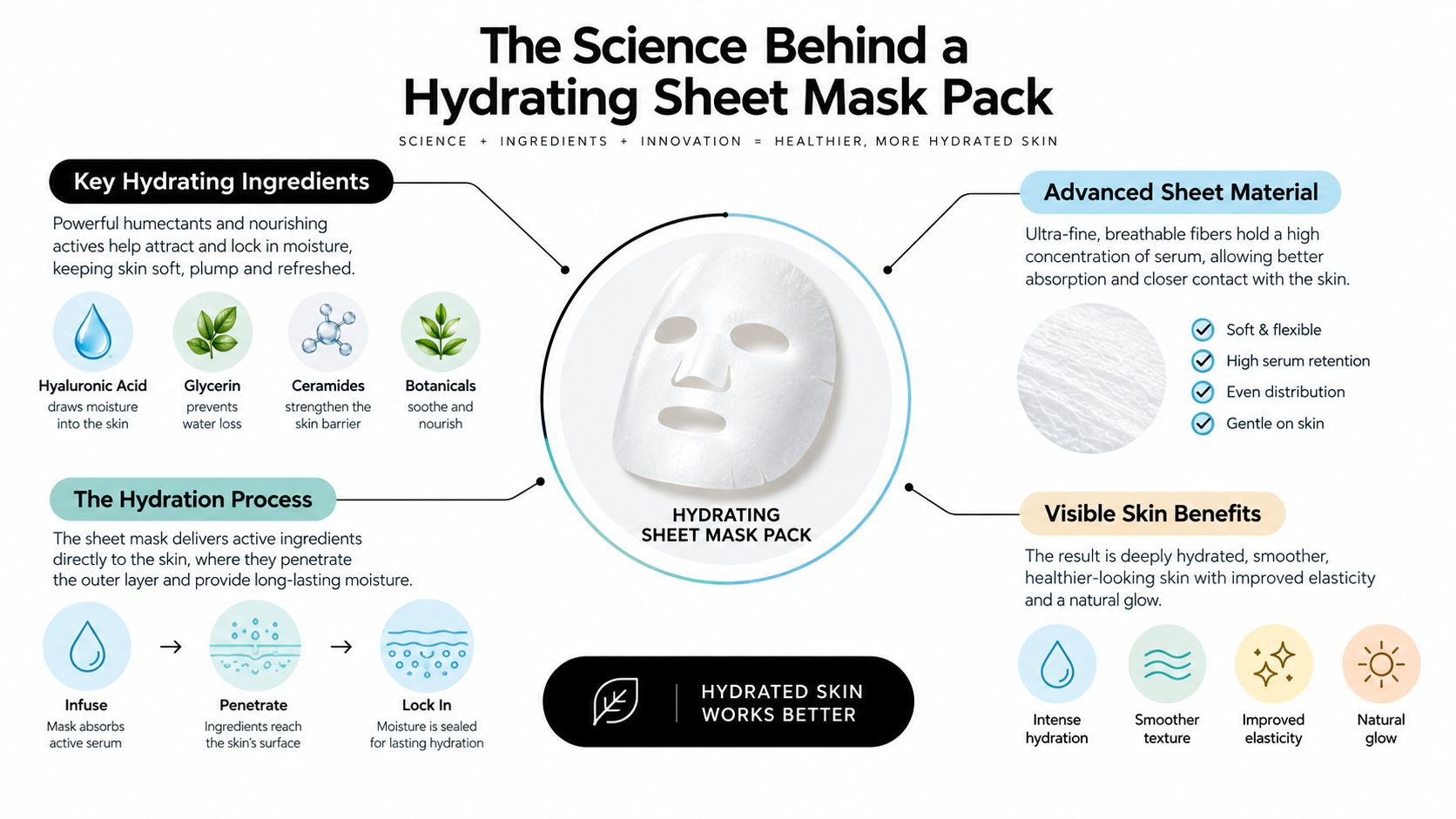
A sheet mask pack works through a simple physical effect called short-term occlusion. The serum-soaked sheet rests directly on the face, creating a humid layer between the material and the skin. That environment helps reduce transepidermal water loss, so water remains near the surface instead of evaporating as quickly.
Think of the mask as a small greenhouse. The sheet doesn't force moisture permanently into the skin, but it temporarily changes the conditions at the surface. The uppermost skin layer, the stratum corneum, becomes more hydrated and slightly swells. During this contact time, water-soluble ingredients can move more readily into the upper layers than they might from a cream spread thinly over exposed skin.
A clinical study of a native collagen sheet mask involving 20 participants recorded periorbital hydration increases of about 59% at 20 minutes, 53% at 40 minutes, and 37% at 120 minutes versus baseline. The results, reported by Global Formulation's explanation of sheet-mask technology, illustrate an important point: the visible plumping effect is measurable, but it changes with time and isn't permanent.
Practical rule: Use a sheet mask for the contact time recommended on its packaging. Leaving it until the sheet dries can work against the comfortable, hydrated feel you're trying to create.
That short-lived boost explains why a mask can make tired skin look smoother before dinner or a special event. For a broader look at how this format fits into a routine, Aloderma's guide to sheet mask benefits offers useful context. You can also compare the practical hydration and comfort considerations in this mask benefits guide from Skinsation Aesthetics Inc..
Comparing Mask Materials and Serum Delivery
A sheet mask has two essential parts: the carrier sheet and the serum that saturates it. Cotton, standard non-woven fibers, bio-cellulose, and hydrogel can all hold a liquid formula against the face, but they don't create the same fit or sensory experience.
A basic cotton or non-woven sheet may be affordable and easy to fold into a packet. Its performance depends heavily on how evenly it absorbs essence and whether its edges stay in contact with the face. Gaps around the nose, jaw, or cheeks reduce the humid seal, which can limit uniform delivery.
Bio-cellulose and hydrogel usually conform more closely to facial contours. Their snug adherence can improve serum transfer while reducing movement and friction. That matters if your skin feels dry or easily uncomfortable, because a mask that stays evenly wet is less likely to pull across the face as you adjust it.
| Material Type | Fit and Adherence | Best For |
|---|---|---|
| Cotton | Soft, familiar, and moderately absorbent, but fit varies | Everyday hydration and budget-friendly routines |
| Standard non-woven fiber | Lightweight and widely used, with variable edge contact | Simple serum delivery and convenient single-use care |
| Bio-cellulose | Close facial conformity and even contact | Dry or sensitive-feeling skin that benefits from gentle coverage |
| Hydrogel | Snug adherence, cooling feel, and strong serum contact | Targeted hydration when comfort and minimal slippage matter |
A high-quality mask isn't automatically the one with the most impressive material name. Look for a sheet that stays in place, covers the areas that feel dry, and doesn't leave large dry edges while you wear it. Aloderma's pullulan ingredient guide is also helpful for understanding how film-forming ingredients can contribute to a comfortable skincare texture.
The carrier is only half the experience. The serum's humectants, botanical extracts, and supporting ingredients determine what the skin receives during that brief, humid window.
Why Fresh Aloe Vera Outperforms Standard Ingredients
Aloe vera isn't one isolated ingredient. Reviews describe the plant as containing more than 75 bioactive compounds, including polysaccharides, phenolics, and phytosterols, while other chemical groups include amino acids, lignins, sugars, enzymes, minerals, vitamins, salicylic acid, saponins, and sterols. This complexity is one reason fresh aloe gel behaves differently from a simple water-based formula with a single synthetic humectant.
The key distinction is processing. Aloe leaves are living plant material, and time matters after harvest. One review recommends completing filleting within 36 hours of harvest to help avoid loss of biological activity, while some operations process the harvested leaves within 12 hours or less, according to the review on aloe vera processing and composition.
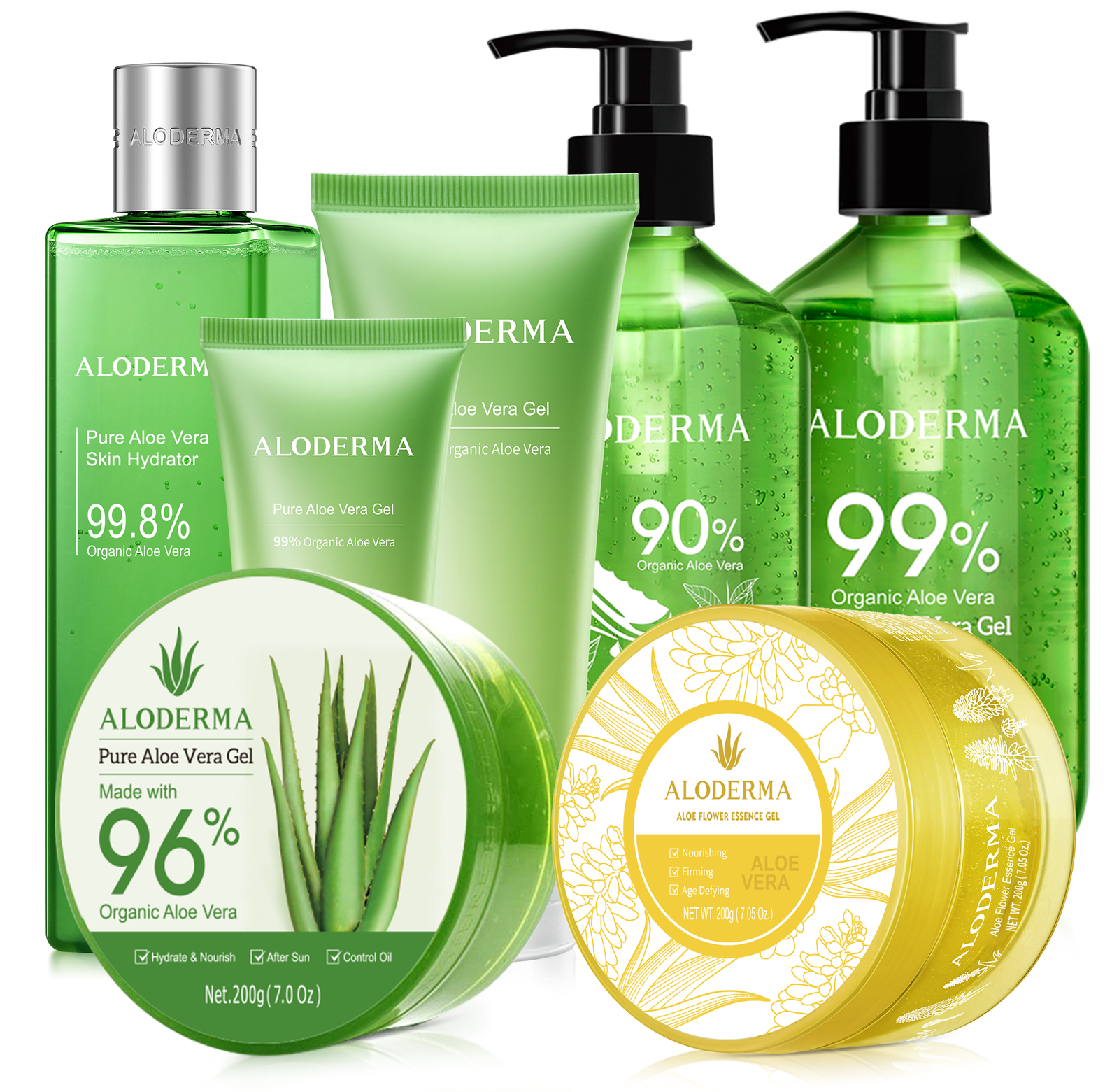
ALODERMA is a fully vertically integrated aloe vera company. It grows its own organic aloe vera, processes the plant onsite within 12 hours of harvest, and manufactures onsite so the primary ingredient in every product can remain as bioactive and effective as possible. This farm-to-skin workflow gives the company direct control over the path from leaf to finished formula, rather than relying on a long chain of outside suppliers.
Fresh gel versus reconstituted powder
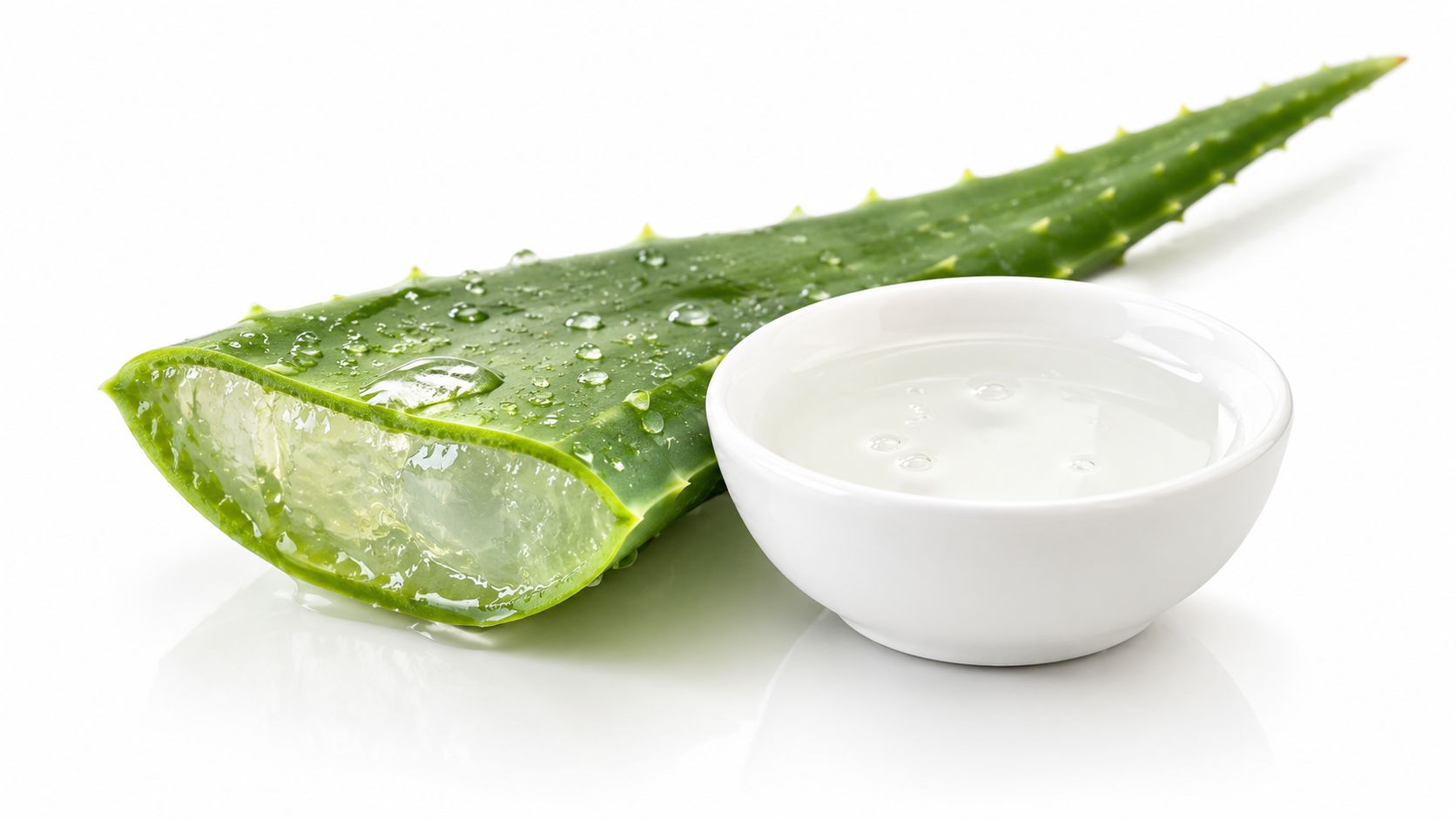
Aloe can be prepared from inner-leaf gel or freeze-dried powder. The GDCh aloe vera reference notes that cosmetic powders are often concentrated at about 200:1. Concentration can make an ingredient efficient to transport and formulate, but it doesn't by itself tell you how gently the original plant material was handled or how much of its broader character remains in the finished product.
Aloe's value in a sheet mask comes from more than a label claim. The serum should feel fresh, spread evenly, and support comfortable hydration without making the skin feel coated or heavy. For a useful explanation of what to look for in pure aloe preparations, read this evidence-backed aloe gel guide from Monopack ltd..
ALODERMA's aloe-forward options include its hydrating sheet face mask 5-pack, formulated with organic aloe vera, hyaluronic acid, and bergamot oil, and its firming sheet mask 5-pack, which combines organic aloe vera, hyaluronic acid, and arginine.
Choosing the Right Pack for Your Skin Type
Start with the sensation your skin is asking for, then inspect the formula. A tight, rough-feeling face usually needs a water-rich serum and ingredients that help hold moisture. Skin that becomes shiny quickly may prefer a lighter, oil-free texture rather than a rich residue.
Match the serum to the experience you want
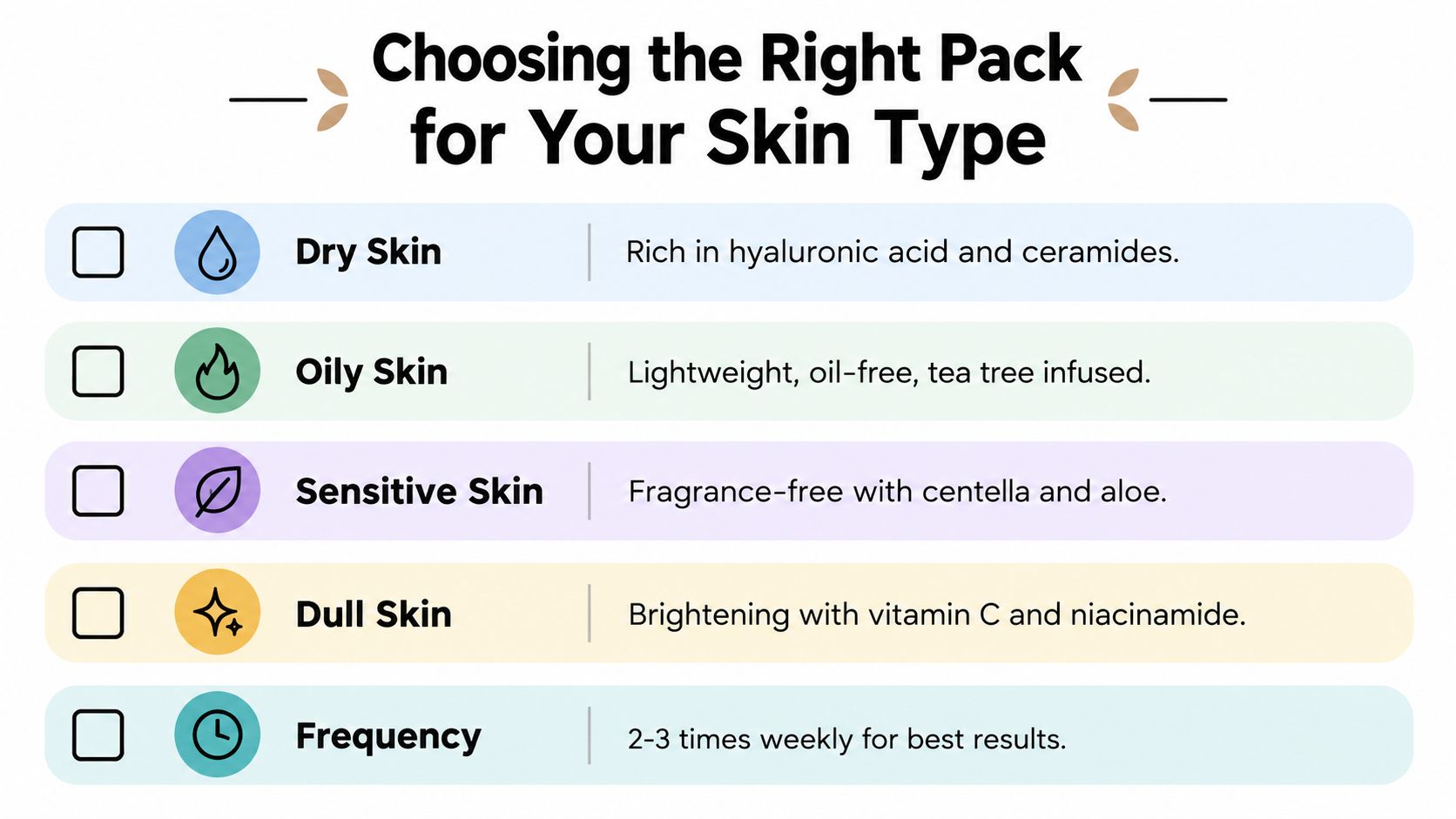
- Dry-feeling skin: Look for hydrating ingredients such as hyaluronic acid and ceramides. A snug bio-cellulose or hydrogel sheet can help keep the serum evenly distributed across cheeks and around the mouth.
- Oily-feeling skin: Choose a lightweight, water-based serum that absorbs without a greasy finish. Hydration still matters, but a dense, oily formula may feel uncomfortable.
- Sensitive-feeling skin: Keep the ingredient list straightforward. Fragrance-free and paraben-free options may be easier to incorporate when your skin reacts to strongly scented products. Fresh aloe can provide a gentle botanical focus.
- Dull-looking skin: Consider formulas featuring ingredients such as vitamin C, niacinamide, antioxidants, or pearl extract. Keep expectations realistic. A mask can create a fresher temporary appearance, but it won't replace consistent daily care.
- Routine planning: A practical starting point is two to three uses weekly, provided your skin remains comfortable and the product directions support that frequency.
Apply the mask without wasting the serum
- Cleanse first. Remove sunscreen, makeup, and surface residue so the serum can contact clean skin.
- Use a gentle toner if you like one. A light, non-drying layer can make the face feel ready for the mask, but it isn't mandatory.
- Smooth the sheet into place. Align the eye and mouth openings, then press from the center outward. If the mask slips, lie back or reduce excess movement while it sits.
- Follow the packet directions. Don't wait for the sheet to become dry. The useful contact window is the time when the mask remains comfortably moist.
- Massage leftover serum into the neck and décolletage. These areas often receive less attention but can benefit from the same lightweight hydration.
- Seal with moisturizer. A thin cream or lotion helps reduce immediate moisture loss after removal.
Minor tingling isn't something to ignore, especially if it grows stronger or becomes uncomfortable. Remove the mask, rinse if needed, and simplify the rest of your routine until your skin feels settled. Patch testing a new formula before a full-face application is a sensible way to learn how your skin responds.
For a more focused selection guide, Aloderma's recommendations for sheet masks for dry skin can help you compare hydration priorities with sheet-mask format.
Navigating Sustainability and Clean Packaging
A single-use mask creates a packaging question, but “single-use” doesn't tell you the entire environmental story. A more useful evaluation looks at three connected parts: the sheet substrate, the serum formula, and the pouch or outer packaging.
The substrate may be cotton, synthetic non-woven fiber, bio-cellulose, lyocell, or bamboo. Natural or plant-derived fibers can offer a different end-of-life profile from conventional synthetics, but a material name alone isn't proof of responsible disposal. Check whether the product gives clear information about biodegradability, certifications, and local waste guidance.
Market coverage points to a shift in this direction. One report says more than 70% of new launches in 2024 used biodegradable or recyclable packaging, while 58% used natural fibers such as lyocell or bamboo. The same source reports that 82% of surveyed consumers preferred paraben-free and sulfate-free masks. These figures come from Industry Research Biz's sheet face mask market coverage, so treat them as reported market findings rather than a universal test of every product.
Sustainability is a product-system question, not a single front-label adjective.
A clean formula also deserves scrutiny. Look for transparent ingredient lists, clear preservative practices, and packaging that protects a high-water-content serum safely during storage. A botanical formula still requires responsible preservation because the essence remains in close contact with a moist fibrous substrate inside a sealed pouch.
ALODERMA describes its formulas as using at least 95% naturally derived ingredients, with ECOCERT, USDA, and EU Organic certifications across its farm-to-skin approach. Its product overview also describes natural, plant-based essential oils and cruelty-free standards. Those details can help ingredient-conscious shoppers compare a brand's broader practices, while the practical choice still comes down to the specific product's material, formula, pouch, and disposal instructions.
Building a Consistent Hydration Routine
A sheet mask pack works best as a supporting treatment, not as the whole routine. The aim is to create a repeatable evening pattern that cleans the skin, adds a comfortable serum layer, and finishes with moisturizer.
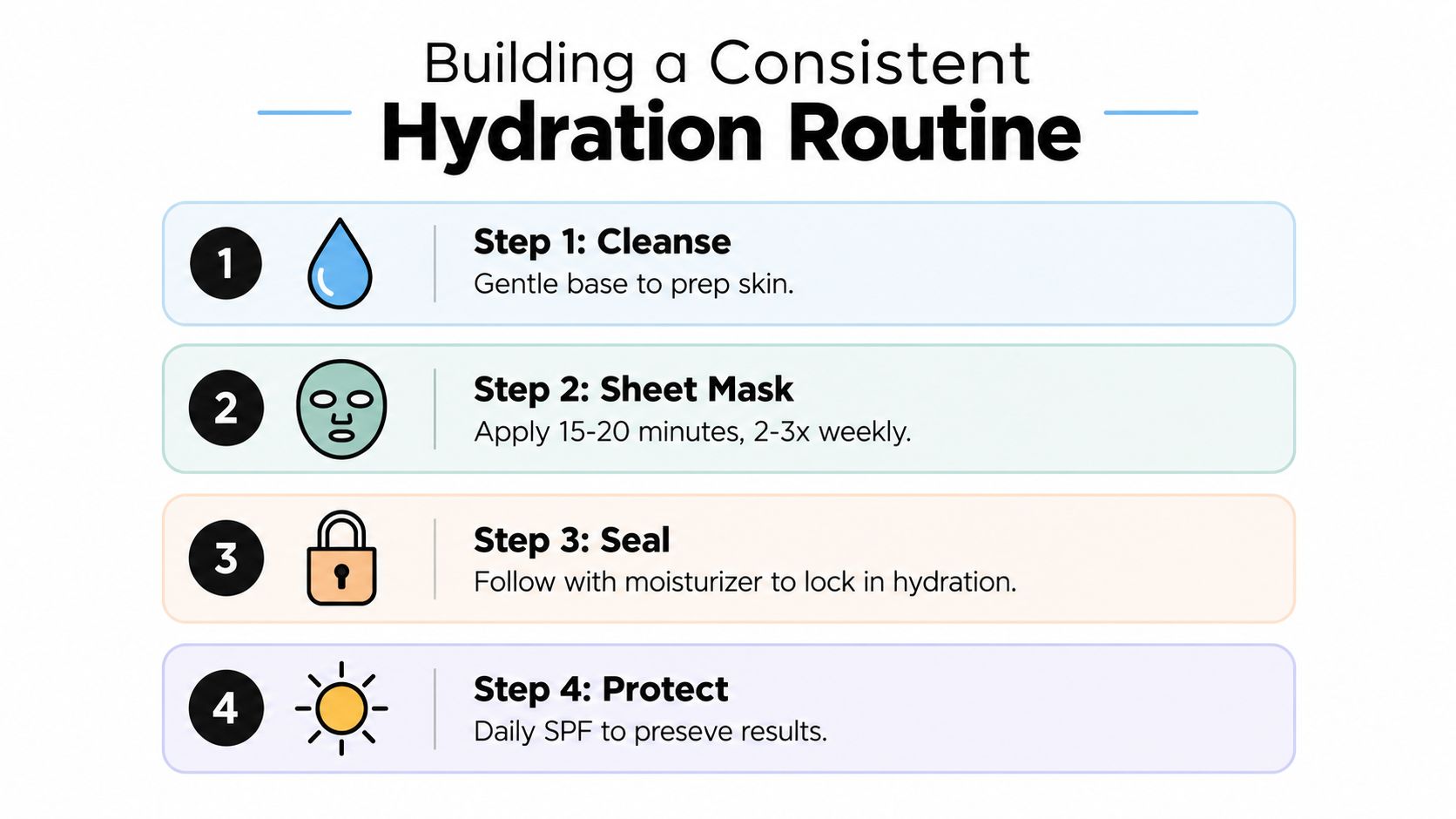
Try this simple checklist:
- Cleanse: Use a gentle cleanser as the base.
- Sheet mask: Apply for the time stated on the packet, around 15 to 20 minutes, and use it two to three times weekly if your skin stays comfortable.
- Seal: Press in the remaining essence, then apply a lightweight moisturizer.
- Protect: Use daily SPF to help preserve the look and comfort your routine supports.
Freshness should guide your product choices. A vertically integrated aloe company can control harvesting, processing, and manufacturing more closely than a formula assembled from ingredients that have traveled through several unrelated supply chains. For readers exploring different botanical approaches, this overview of CBD skincare from Hemp Well Ireland offers another perspective on ingredient-focused routines.
The most satisfying result often comes from consistency: skin that feels less tight after cleansing, serum that spreads without drag, and a few quiet minutes that turn a rushed evening into care you can maintain.
ALODERMA offers aloe-focused sheet mask packs, pure aloe gels, hydrators, and everyday skincare made with organically grown aloe processed onsite within 12 hours of harvest. Visit ALODERMA to compare the hydrating and firming mask packs, review their ingredient lists, and choose a fresh aloe routine that fits your skin.