







You've just patted your face dry and run a fingertip along your cheek. You want it to feel even, look calm in daylight, and still feel comfortable when you sit down to dinner. Instead, you're deciding whether that slight drag needs more moisturizer or whether another layer will leave you shiny. Sleek and smooth skin starts with that distinction, not with adding more products.
What Sleek and Smooth Skin Should Feel Like
For facial skin, sleek and smooth means comfortable hydration with less noticeable roughness. It doesn't mean a glassy coating, a perfectly texture-free cheek, or the squeaky feeling you might get after an overly thorough wash. Your skin should still feel like skin.
Start with a light touch after cleansing. Glide your fingertips over your cheek without pressing or repeatedly rubbing the same spot. Notice whether you feel flakes, uneven drag, comfortable softness, or a slippery residue.
Use comfort alongside touch
There are several ways a product can make skin feel smoother. It might improve hydration, soften flaky areas, or leave a film that helps your fingers slide. Those outcomes aren't interchangeable.
A 2025 comparison published in Skin Research and Technology assessed smoothness alongside hydration, gloss, sebum, elasticity, pores, and water loss in sensitive and non-sensitive skin. That's a useful reminder that a glowing photograph can't tell you everything about comfort or texture.
Use the table to choose a starting point, rather than buying for the finish you admire on someone else.
Which sleek and smooth target fits your skin today
| Skin feel today | Sleek means | Product weight | Two-week check |
|---|---|---|---|
| Dry or tight after cleansing | Soft comfort without a heavy coat | Lightweight gel or mist, then a thin cream | Less flake, soft rather than tight |
| Oily by midday | Smooth look without grease | Gel hydrator, skip heavy cream | Satin finish, no rebound tightness |
| Combination | Even feel, cream only where dry | Mist all over, cream on dry cheeks | Cheeks soft, T-zone not slick |
| Humid weather | Light layers that do not feel sticky | Gel or mist, cream only if needed | Comfortable, not coated |
| Dry heated indoor air | Extra water-binding comfort | Mist plus cream morning and night | Stays comfortable into the evening |
Treat the final column as a personal check-in, not a promised result. Choose the row that matches how your skin feels today, even if you usually describe yourself differently.
Practical rule: Aim for skin you can comfortably forget about, not a finish you need to keep correcting.
Our cleanser is used morning and night: work it into a lather, massage onto damp face and neck, then rinse with warm water. If your skin feels tight afterward, don't assume that feeling means it's especially clean. Comfortable skin is a better starting point for lightweight layers.
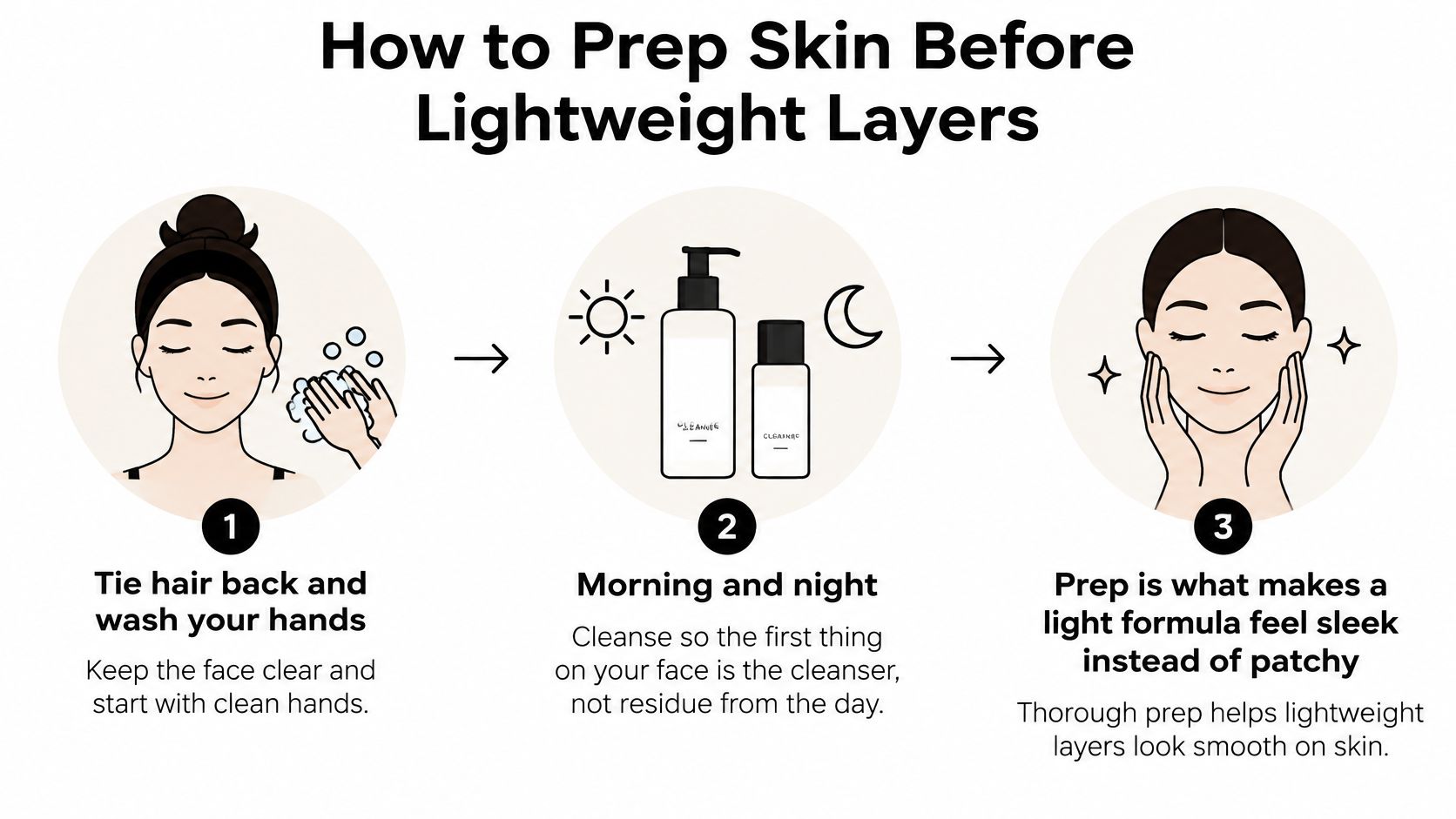
How to Prep Skin Before Lightweight Layers
Prep makes the difference between a light formula spreading evenly and catching on dry patches. The aim isn't to polish your face until every bit of texture disappears. It's to remove residue gently and leave a comfortable surface.
A gentle cleansing sequence
- Tie your hair back and wash your hands. Keep hair products away from your cheeks and remove hand cream or residue before touching your face. Otherwise, you may spread those products around while trying to cleanse.
- Use warm water and a gentle cleanser. Work the cleanser into a lather before massaging it over your damp face and neck. Keep your fingertips relaxed, and rinse around the hairline and jaw rather than increasing pressure wherever skin feels rough.
- Pat with a clean towel. Leave your skin slightly damp rather than rubbing until it feels completely dry. Think of a soft press and lift, not a polishing motion.
The sequence below keeps the preparation simple.
- Pause and name the feeling. Is your face tight, oily in places, or fairly even? Use that observation to choose your product weight. Don't keep touching your cheeks until friction makes them feel uncomfortable.
- Leave rough patches alone when skin feels easily upset. Skip gritty scrubs and strong leave-on acids that day. A soft, wet cloth can lift loose flakes with a gentle pass, but leave attached flakes alone instead of trying to remove them all.
- Remove the day without scrubbing harder. At night, pay attention to makeup and sunscreen around the nose, brows, and hairline. If your cleanser leaves visible makeup behind, use a suitable makeup remover first rather than repeating an increasingly forceful wash.
Adjust the cleanup, not the pressure
After a workout or dusty commute, rinse away sweat and grit before cleansing. After a flight, resist treating every rough-feeling patch as something that needs exfoliation. Travel can leave you wanting a fresh start, but that doesn't mean your face needs an intensive reset.
A common mistake is chasing a squeak around the nose while the cheeks are already uncomfortable. Cleanliness doesn't require the same friction everywhere.
You're ready for your next layer when there's no obvious cleanser residue, your skin is slightly damp, and water hasn't left it stinging. If even a gentle rinse feels uncomfortable, pause the extras rather than testing several new formulas that evening.
How to Apply Gels Serums and Creams
On a warm, humid morning, a gel may be enough; in dry indoor air, your skin may feel more comfortable with cream on top. Start with the lightest useful layer and add only what leaves your face feeling hydrated, not coated. The amounts below are starting points, since formulas spread differently.
Use a gentle pressing motion rather than repeatedly rubbing the same area.
Follow a light-to-cushioned order
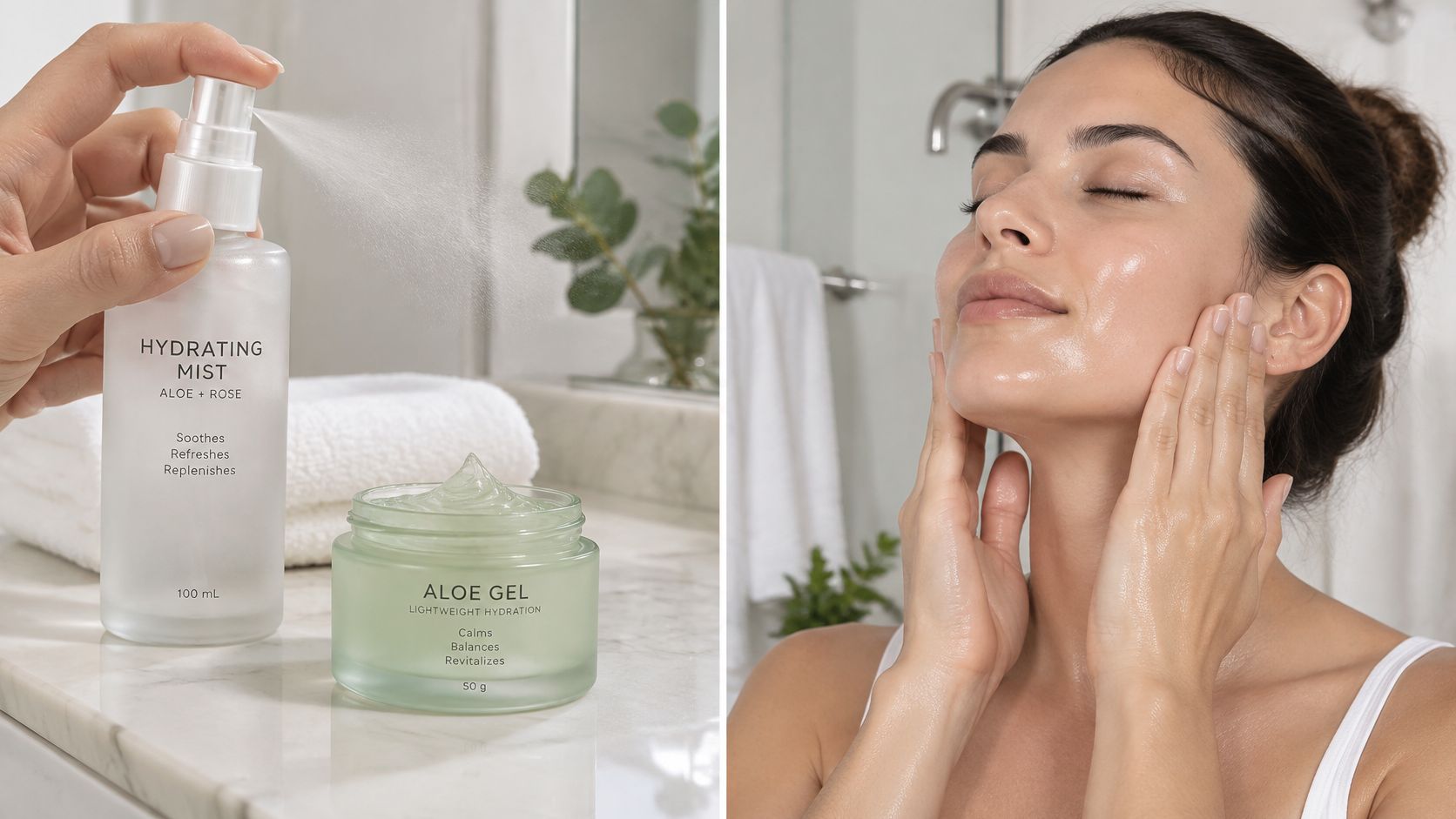
- Start with mist or gel. Try two or three sprays of mist, avoiding your eyes, or a nickel-size amount of lightweight gel for face and neck. Spread it gently. If it starts to roll into little bits, ease up on rubbing or use less.
- Add serum only for a clear purpose. A pea-size amount or one to two drops may be enough for a formula that spreads readily. A serum is optional; the order of products alone isn't a reason to add another layer.
- Apply cream where it helps. If your cheeks feel dry but your forehead is oily, try a pea-size amount on the dry patches. When extra hydration or dry environmental conditions call for it, apply cream over your face and neck morning and night.
- Let each layer settle. Pause for about a minute before applying another product. If your skin still feels very slippery, you may not need the next layer.
- Finish the morning routine with sunscreen. Follow its directions. If the routine feels too heavy, reduce an optional layer underneath rather than using less sunscreen.
Read beyond the aloe name
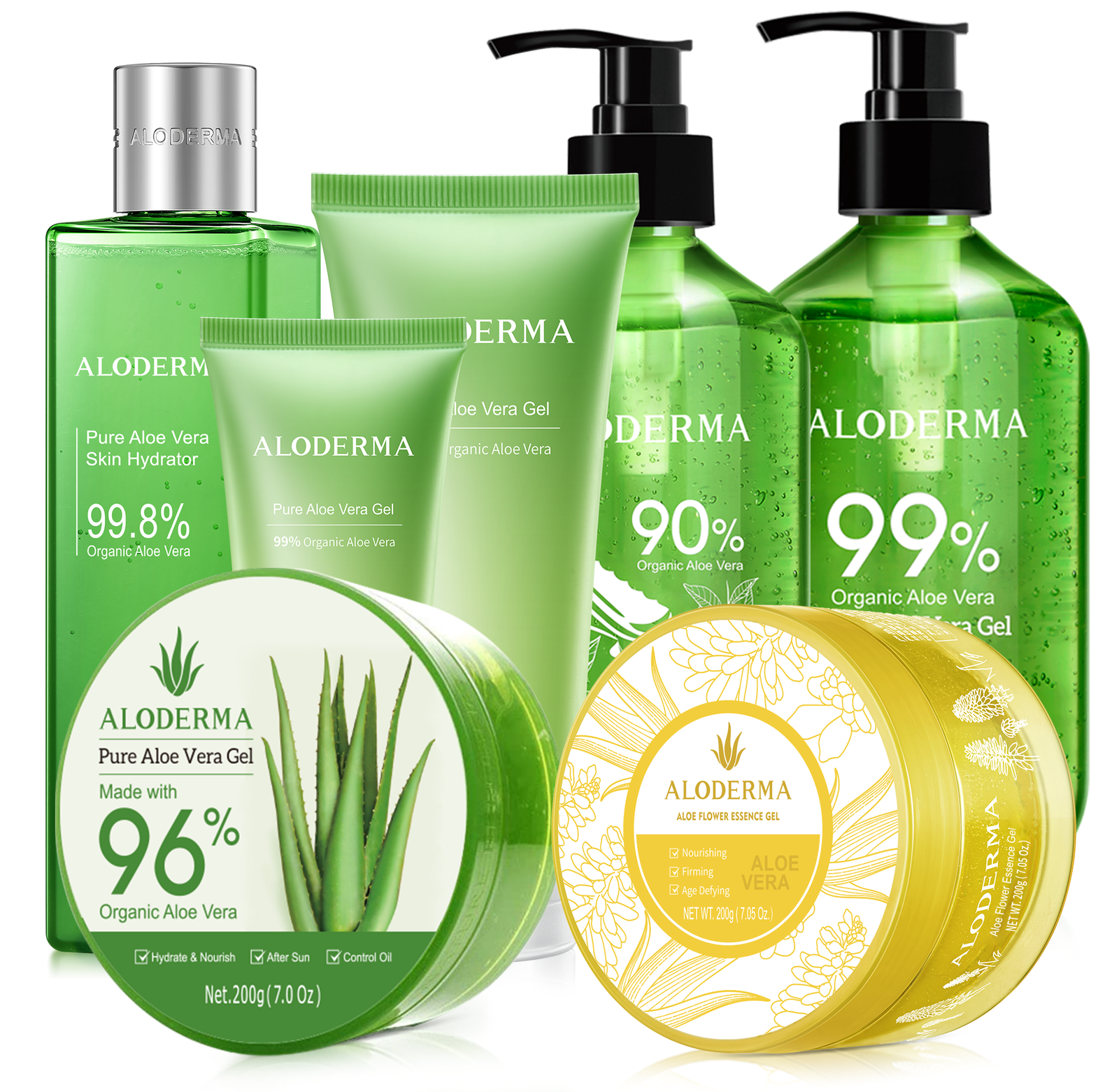
ALODERMA formulas use aloe as their primary ingredient. Before buying the Aloe Botanical Hydrating Mist, check its full ingredient list, especially if you already know which ingredients your skin doesn't enjoy.
At a desk, a light mist can refresh your skin without automatically adding cream. Use a light hand, and avoid rubbing over makeup or sunscreen.
For water-gel comparisons, Hydro Boost dupes from Finding Favourites can serve as a shopping reference. Treat comparisons as a shortlist, since another person's favorite may not suit your skin.
For a clearer guide to product order, see how to apply skincare products in the right sequence.
Keep the application unhurried while watching the accompanying video.
Keeping That Finish Through Weather and the Week
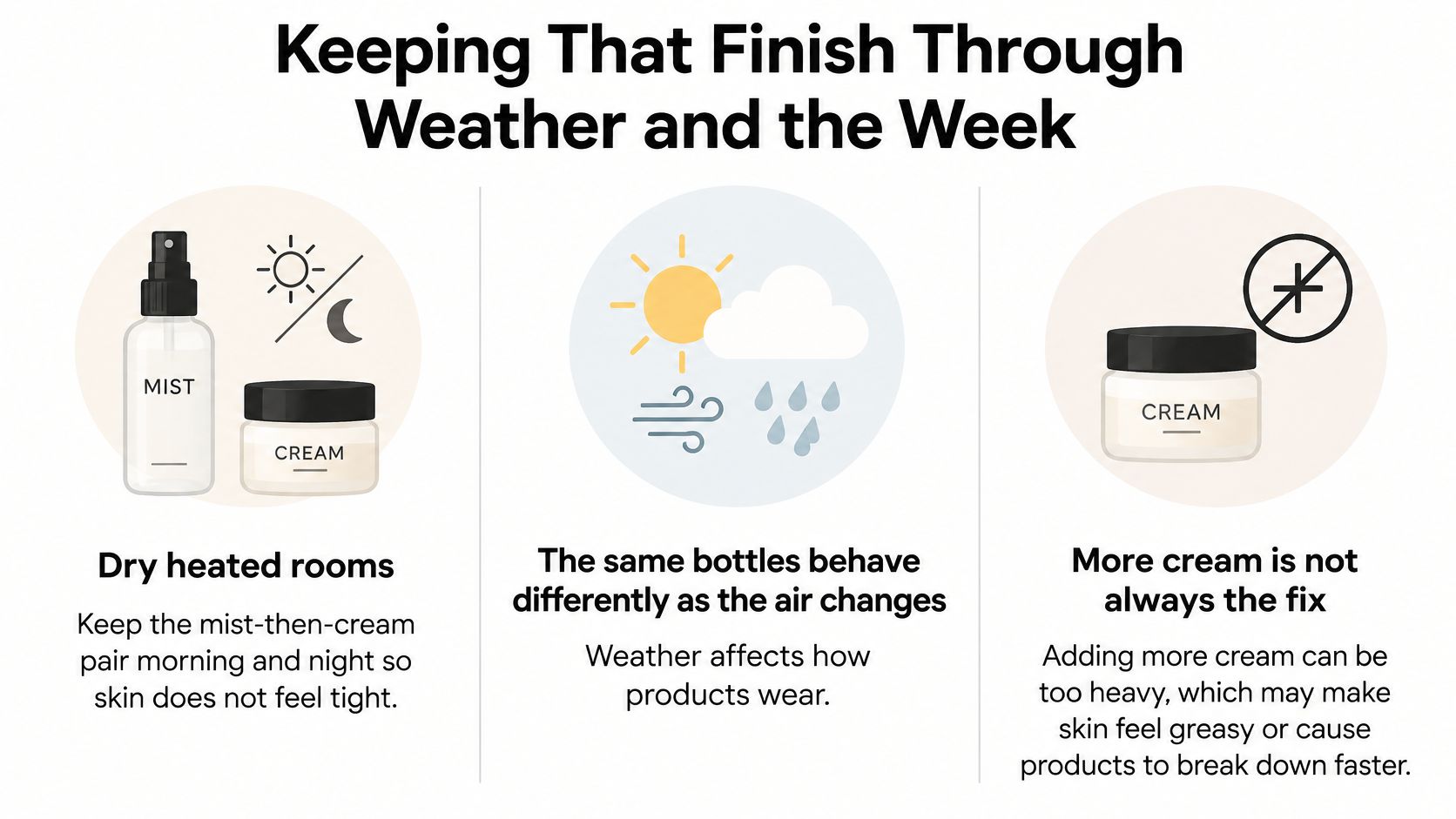
Dry indoor air and humid outdoor air call for different decisions. In a heated room, a mist followed by cream may feel comfortable long after a gel alone would leave you wanting more. In humid weather, that same combination may feel unnecessarily slick.
The important question is how the routine wears, not how rich or refreshing it feels when you first apply it. Say you leave a cool office for a sticky commute. Your cheeks might still appreciate some cream, while your forehead feels better without it.
Separate hydration from a heavier finish
Hair advice often uses sleekness to describe control over frizz, but facial skin needs a different test. Croda Beauty's climate-adaptive beauty analysis discusses how humidity, UV exposure, and pollution affect hair performance. The useful takeaway for skincare isn't to borrow heavier hair-smoothing habits. It's to assess how your own formulas behave in your surroundings.
In dry heated rooms, keep a cushioning layer where skin becomes uncomfortable. In humidity, try fewer layers before switching your entire routine. Our guide to choosing a lightweight moisturizer for oily skin offers another way to think about product weight.
Use these environmental cues rather than adding cream automatically.
Small habits that keep the routine wearable
- Refresh fabrics. Change your face towel and pillowcase regularly, especially when they carry makeup, hair products, or sweat. Don't use yesterday's damp towel to polish today's clean cheeks.
- Troubleshoot pilling gently. Try less cream underneath sunscreen, allow more settling time, and avoid prolonged rubbing. Pilling can also reflect formulas that don't layer well together.
- Blot localized shine. Press a tissue lightly over the nose rather than washing your whole face at your desk. Don't scrub away sunscreen to restore a matte finish.
- Cleanse after the day is done. Remove sunscreen and city residue at night without adding an extra exfoliating session.
More slip at application isn't necessarily more comfort by evening.
Judge the week by how often you feel tight, coated, or tempted to keep adjusting your face. A wearable routine should make those interruptions less frequent, not create another task every afternoon.
Telling Real Smoothness From a Temporary Film
Check your cheek before applying products, then notice how it feels again in the evening. Use clean fingers, light pressure, and roughly the same time of day. A consistent personal check is more useful than comparing a freshly moisturized cheek with yesterday's bare skin.
In the morning, glide your fingers from cheekbone toward jaw and notice flake, drag, or an even slide. At night, ask whether your face stayed comfortable or became tight, greasy, or itchy. Neither check measures skin scientifically, but together they can help you make calmer decisions.
Keep a simple texture log
For a practical trial, make a note at the start, after a week, and after a fortnight. Continue longer if you're still unsure, without introducing several new products during the comparison.
- Soft means clean skin feels comfortable without needing an immediate slippery coating.
- Coated suggests reducing an optional layer or the amount of cream.
- Tight calls for reviewing cleansing, water temperature, and the amount of cushioning your environment requires.
Don't assume every tight feeling has the same cause. Adding more product won't help if the new formula itself is uncomfortable.
What a home check can and can't prove
In a human moisturizing-lotion study published in Skin Research and Technology, 20 participants were assessed using methods including optical coherence tomography and confocal Raman spectroscopy, with reduced roughness observed on the treated arm and hydration changes assessed after two weeks. The investigators described the smoothing as potentially temporary and linked it to swelling in a lower epidermal compartment.
That distinction matters: even an instrument-measured improvement isn't automatically permanent remodeling. Immediate silkiness can be pleasant and useful, but it doesn't establish a lasting change.
Look for comfortable bare skin, not just a satisfying first swipe.
Keep photographs secondary because lighting, angle, and surface shine can alter what you see. Your touch check is a practical habit, not a substitute for controlled measurements.
Before applying a new product everywhere, try a small jawline area morning and night over several days. Stop if it stings or feels hot; a quiet small-area trial still can't guarantee full-face tolerance.
Botanical ingredients aren't automatically suitable for everyone. Return to a previously comfortable routine if something feels wrong, and use our guide to understanding real aloe gel to make ingredient comparisons without relying on packaging alone.
Start With a Light Aloderma Routine
Choose the smallest routine that suits how your skin feels today. A gentle cleanse and a lightweight aloe hydration step may be enough. Add cream when your skin needs more comfort, rather than adding another layer.
Match the collection to the task
ALODERMA's collections include Brightening, Firming & Rejuvenating, Hydrating, and Oil Controlling Cleansers. Hydrating may be a helpful place to start when dry air leaves your skin feeling uncomfortable. Oil Controlling offers another option if you prefer fewer layers when your skin feels shiny.
The Aloe Soothing Cream is enriched with Shea Butter and natural Beta-Glucan. Its richer feel may suit times when you want extra cushioning. If your skin already feels oily, use it only where you need that added comfort.
Know where the aloe begins
As described in our aloe and dry-skin guide, ALODERMA sources aloe vera from its own plantations and processes it on-site within 12 hours of harvest. ECOCERT, USDA, and EU Organic certifications support its farm-to-skin approach. Freshness and sourcing are useful details when comparing products, while the feel of a formula on your skin is still personal.
ALODERMA applies its parent company's patented SATT process to its skin care products. Processing uses no harsh chemicals, high temperature treatment, or charcoal filtering. Those details can help you understand how the products are made, alongside the ingredients and texture that suit your routine.
Start with one hydration step, then add cream only if your skin still feels dry or tight.
ALODERMA offers fresh-aloe skin care, from lightweight hydration to cushioning creams. Visit ALODERMA, compare ingredient lists, and choose the amount of moisture that feels comfortable without leaving a heavy film.