







You're standing at the airport security line with a packed carry-on, a toiletry pouch that barely closes, and skin already feeling tight from dry cabin air. Then you remember yesterday's beach afternoon, the rushed hotel shave, and the small patch of irritated skin that needs something simple. A travel size aloe vera gel can earn its place in that bag, but only if you choose the right volume, formula, container, and storage method.
The decision isn't just about buying the smallest bottle on the shelf. Aloe gel is treated as a gel at airport security, its formula needs protection from contamination and heat, and a convenient package can still be frustrating if it leaks or dispenses too much. The guide below connects carry-on compliance, packaging, ingredient labels, freshness, and real-trip use so you can pack with fewer surprises.
Why Travel Size Aloe Vera Gel Has Become a Trip Essential
The appeal becomes clear during an ordinary trip. After a long flight, your face may feel dry and uncomfortable. After a sunny afternoon, you may want a light gel rather than a rich cream. Later, a rushed shave at the hotel can leave the neck or legs feeling sensitive, while a change from a cool home climate to a hot destination can make familiar products feel too heavy.
One small aloe product can fit several of those moments without taking up the space of separate face, body, and after-sun products. Travelers who prefer minimalist toiletry kits often look for products that can be used on more than one area, especially when they're traveling with a personal item or sharing limited bathroom space.
Packing principle: A compact product earns its place when it solves several routine problems without creating a new one at security, in your bag, or on your skin.
Why size matters beyond convenience
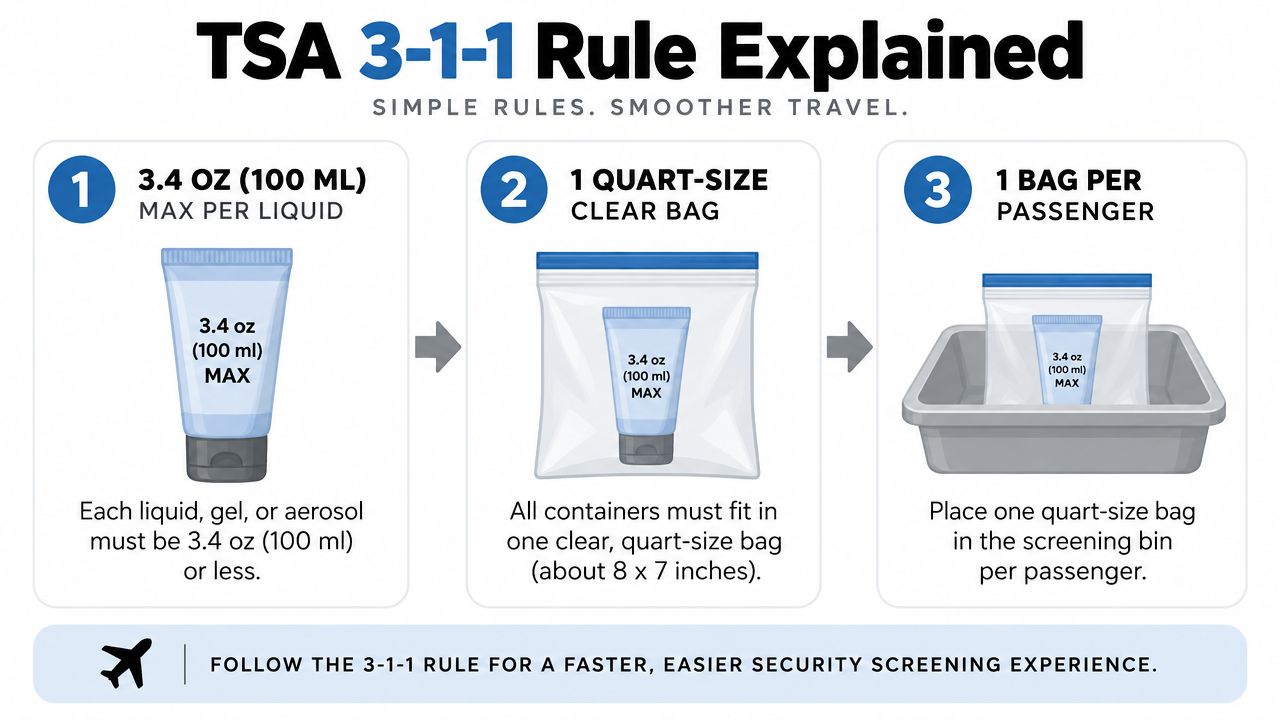
Airport security rules helped define the modern portable aloe category. Under the TSA's long-standing 3-1-1 rule, liquids and gels in cabin baggage must be in containers of 3.4 ounces or 100 milliliters or less, and the containers must fit inside a single quart-size bag, as explained in this overview of products restricted by TSA. A partially filled larger bottle still doesn't qualify if the container itself exceeds the limit.
That restriction encouraged brands to offer compact formats such as 1.5-ounce, 2-ounce, and 8-milliliter packs, sizes that fit purses, backpacks, and toiletry kits. Similar 100-milliliter limits are used in many international aviation markets, so the threshold has relevance well beyond U.S. departures.
A small product with a larger category behind it
Portable aloe products also reflect the commercial scale of aloe skincare. One market report valued the global Aloe Vera Gel Products market at USD 1.2 billion in 2025 and projected it to reach USD 2.5 billion by 2034, with an 8.5% CAGR from 2026 to 2034 (market methodology and projections). The same source reported that North America's aloe vera market was valued at USD 882 million in 2024 and forecast to reach USD 1.52 billion by 2033, with a 6.24% CAGR.
Those figures don't tell you which bottle to buy, but they help explain why travel formats are widely available. The practical question is whether the product is easy to screen, easy to use, and gentle enough for the situations you're likely to encounter.
How TSA and Global Liquid Rules Shape Travel Size
Aloe vera gel belongs in the same security category as other gels, not in a special “skincare exception” category. The TSA states that carry-on liquids, aerosols, gels, creams, and pastes must be in containers of 3.4 ounces, or 100 milliliters, or less, and travelers generally place them in a single transparent, resealable 1-liter bag (TSA liquids, aerosols, and gels guidance).
Read the container, not the amount inside
The most common mistake is looking only at how much gel remains. A half-full bottle marked above the permitted capacity can still be refused in carry-on baggage because the container capacity exceeds the limit. For example, a 150-milliliter bottle with only a small amount left isn't equivalent to a compliant 100-milliliter tube.
Most portable aloe products are engineered below that ceiling. You'll see formats around 30 milliliters, 50 milliliters, or 90 milliliters, as well as products labeled at 1.5 ounces or 2 ounces. Check both units on the packaging, and use the milliliter figure when comparing products because it provides the clearest reference against the airport limit.
To understand the same practical issue with another everyday toiletry, you can review this guide to TSA approved toothpaste size. Toothpaste and aloe gel may feel different during a morning routine, but security staff assess their carry-on format under the same broad liquids-and-gels framework.
Plan for international departures
A product that meets the TSA limit will usually fit the comparable carry-on approach used in many international aviation markets. Still, screening procedures can vary, and some airports may apply their own instructions about bag presentation or the number of containers. Keep your clear liquids pouch accessible rather than burying it under clothing.
If you're moving aloe into a smaller container, a purpose-built 1 oz dropper bottle may be useful for certain liquid skincare products, but a dropper isn't automatically the best choice for a thicker gel. The final container must be clearly labeled, tightly sealed, and compatible with the formula.
Comparing Tubes, Pumps, Sachets, and Solid Formats
A container changes how aloe gel behaves in real life. The best format depends on whether you'll apply it to your face in a hotel mirror, use it after a beach day, carry it on a hike, or open it repeatedly in a shared gym bag.
| Format | Typical Volume | Leak Risk | Best For |
|---|---|---|---|
| Squeeze tube | Small portable sizes, including 45g and 1.5 oz formats | Low to moderate, depending on cap | Face, neck, and general daily use |
| Mini pump | Small travel bottles | Moderate if the pump is unlocked or clogged | Controlled body or hand application |
| Sachet | Single-use portions | Low before opening | One-day trips, samples, and gym sessions |
| Small jar | Compact skincare sizes | Moderate to high if the lid loosens | Thick formulas and bedside use |
| Solid-to-gel stick | Solid format, volume varies by product | Very low | Hiking, hot climates, and spill-sensitive bags |
Squeeze tubes offer the most balanced routine
A soft tube is usually the easiest all-rounder. You can control the amount, direct the gel onto your fingertips, and squeeze out product near the end rather than leaving it trapped around a pump mechanism. A flip-top can be faster for a tired traveler, while a screw cap may provide a more secure closure if it's tightened carefully.
The trade-off is pressure. A tube packed beneath shoes or compressed by a full bag can force gel toward the cap. A zip pouch adds a simple second barrier.
Pumps and sachets solve different problems
A mini pump gives controlled portions, which helps when you're applying a thin layer to your hands or face on a flight. It can become inconvenient if the nozzle clogs, if the pump locks accidentally, or if the bottle leaves product behind where the mechanism can't reach it.
Sachets are excellent for a short outing, a gym visit, or a backup tucked into a day bag. They flatten almost completely, but they're less practical for a multi-day routine because opening one creates a single-use package and makes clean resealing difficult.
Jars and solid formats
Small jars can feel pleasant with a dense gel, but the wide opening exposes more formula each time you use it. They're better kept upright in a toiletry pouch than tossed loose into checked luggage.
Solid-to-gel sticks avoid the conventional liquid cap. They melt or soften on contact with skin, which makes them useful for hikes and hot destinations where a leaking bottle could damage clothing or electronics.
For many travelers, a sensible combination is a 50-milliliter tube for daily face use, a few sachets for emergencies, and a solid stick for outdoor activities or very warm conditions.
Choosing a Gentle Formula for Sensitive and Blemish-Prone Skin
A bottle can satisfy liquid rules and still leave your skin uncomfortable after a flight or outdoor day. Treat the label like a travel itinerary: check each detail, not only the prominent aloe percentage.
That percentage may describe aloe vera juice or inner-leaf gel. It helps compare products, but it does not by itself confirm freshness or performance. Processing, preservation, pH control, and certification also shape the formula. Technical guidance on aloe formulations highlights gelling agents, preservatives, and pH adjustment, with skin-compatible targets commonly around pH 5.5 to 6.5 (technical aloe formulation reference).
What to scan on the ingredient list
Read the complete INCI list instead of relying on “aloe” in the product name. Ingredients generally appear in descending concentration through the main part of the list. Their order helps you judge whether aloe is a primary component or a smaller supporting ingredient.
| Ingredient Category | Why It Matters | Look For vs. Avoid |
|---|---|---|
| Aloe vera juice or inner-leaf gel | Indicates the central botanical component | Clearly identified aloe source and percentage where available |
| Humectants | Help the skin hold onto water | Glycerin and other lightweight hydrators |
| Texture agents | Create a usable, stable gel | A smooth, slightly viscous texture |
| Soothing support ingredients | Can improve the feel of a simple formula | Allantoin or similarly gentle supporting ingredients |
| Fragrance components | May be uncomfortable for reactive skin | Fragrance-conscious or fragrance-free options |
| Drying solvents and aromatic oils | Can make travel-stressed skin feel more sensitive | Avoid denatured alcohol and essential oils such as lavender or citrus if they bother you |
| Preservative system | Helps protect a high-water product after opening | A clearly declared, skin-compatible preservation system |
A watery gel is not automatically poor, and thickness is not proof of quality. Texture offers one clue, while the full label and your own tolerance provide a more useful guide. A short, uncomplicated ingredient list can also be easier to manage when your routine, climate, and water source change during a trip.
Keep your personal tolerance in charge
Patch-test the product before departure instead of trying it for the first time after a long flight. For reactive skin, see our guide to aloe vera for sensitive skin for patch-testing and fragrance considerations. If stinging continues, stop using the product, as independent sensitive-skin guidance advises (aloe guidance for sensitive skin). Keep any new formula away from broken or unusually reactive areas.
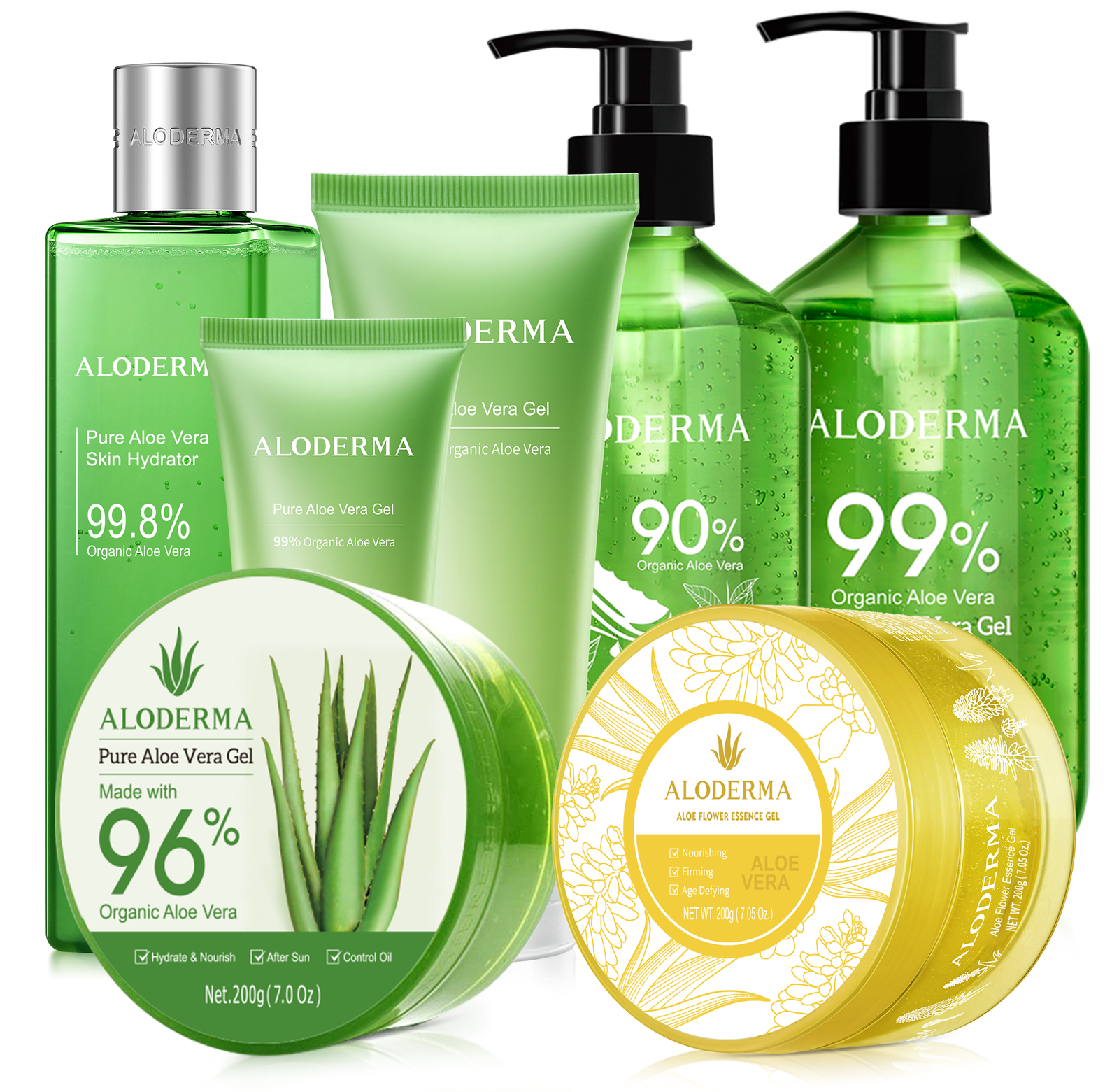
For shoppers comparing travel-size gel with a cleanser, Aloderma's Aloe Hydrating Cleanser lists fresh, organic aloe vera and includes surfactants and conditioning agents. The comparison shows why the ingredient list matters. Two aloe products may have different textures, purposes, and packing value even when aloe appears prominently on both labels. A compliant container gets through screening; a suitable, well-preserved formula is what makes the space in your bag worthwhile.
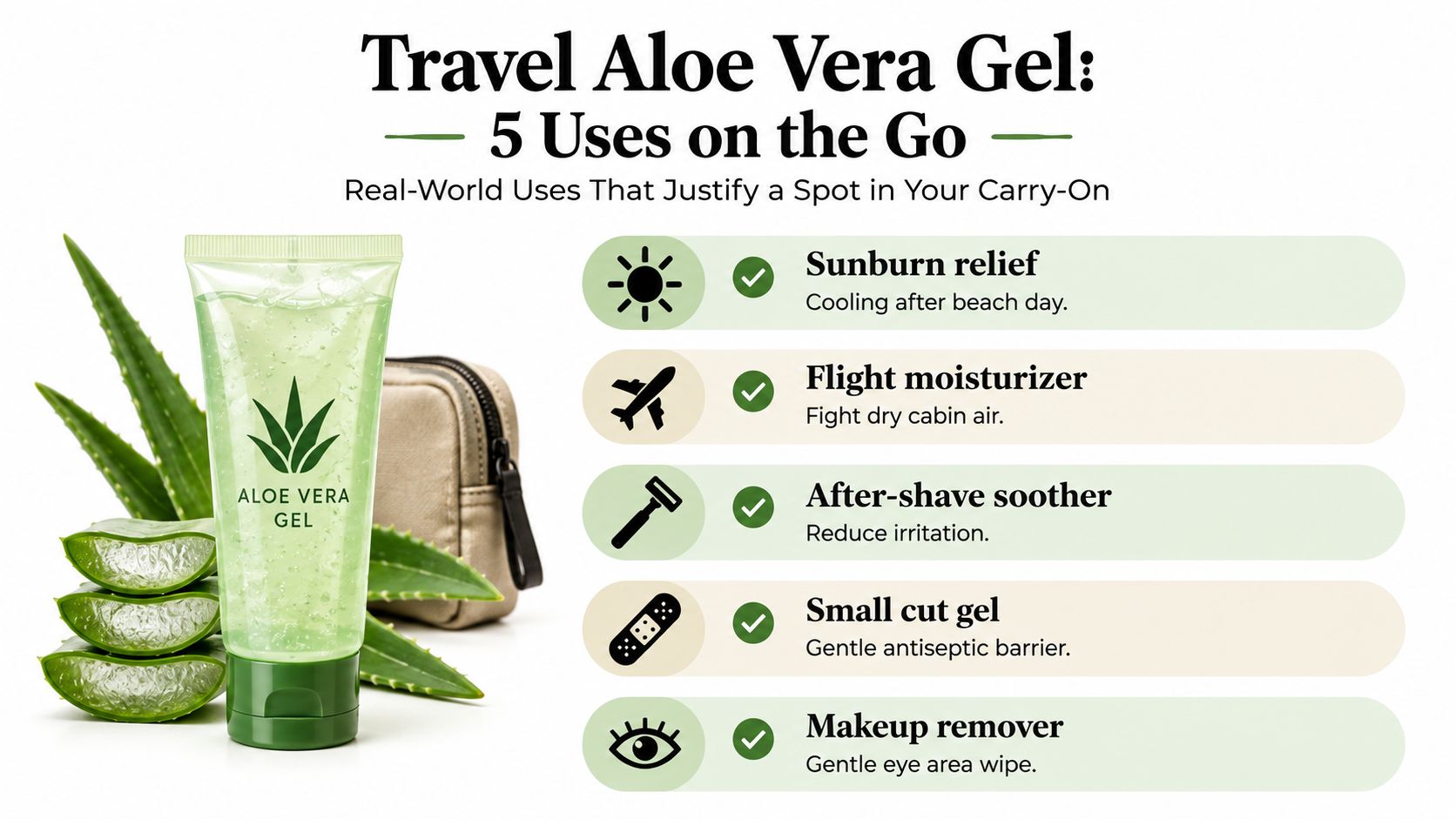
Real-World Uses That Justify a Spot in Your Carry-On
The right travel gel becomes more useful when you match the format to the moment. A traveler leaving a beach hotel might reach for a tube after showering, while someone heading straight from the airport to a hiking trail needs something that won't open inside a backpack.
After a sunny pool afternoon, a mini tube or sachet is easy to use on shoulders, arms, or the chest. Apply a modest amount to clean skin and let it settle before dressing. The format works because you can carry it from the beach bag to the hotel bathroom without bringing a full-size bottle.
Match the package to the routine
On a long flight, a pump dispenser can help you release a controlled amount onto clean fingertips, then apply a thin layer to dry-feeling areas. A tube is equally practical if you prefer to avoid pump hardware or want to use the product on your neck and hands without touching the opening to your skin.
A small jar suits a quiet evening routine. You can keep it upright on a bedside table and use a clean fingertip to apply a little around dry-feeling areas. It's less suitable for a crowded daypack, where the lid may loosen and the opening can collect dust.
For a day hike, a solid-to-gel stick offers a different kind of reassurance. It won't behave like a liquid bottle if your backpack tips over, and it's simple to swipe onto a small area before continuing along the trail.
The most useful travel product is the one you can reach for without unpacking your entire life.
After a rushed shave, a small amount of a familiar, gentle gel can make a compact routine feel more comfortable. That doesn't make aloe a substitute for every skincare product, but it does explain why a small, multi-use format can replace several bulky “just in case” items.
Packing and Storage Tips to Keep Aloe Fresh on the Move
A good formula can still cause trouble in transit if its closure is exposed. Before leaving, inspect the cap and seal. For a twist-top, place a small piece of tape across the closed seam, then put the container in a sealed pouch. The pouch is a second line of defense, like a rain cover over a packed bag.
Keep the product in your cabin bag whenever possible. You can reach it during the journey, and a leak stays away from clothing in your checked luggage. A zip pouch also shields electronics, passports, and fabric if pressure changes loosen the lid.
Reduce heat, light, and water exposure
Aloe gel contains a high proportion of water, so keep the container tightly sealed and limit heat and air exposure after opening. Frequent contact with air, moisture, and changing temperatures can raise the risk of contamination or product breakdown. A reliable preservative system and a secure container matter even more when a small package is opened repeatedly.
Choose opaque or UV-protective packaging when available. Do not leave the tube on a sunny windowsill or inside a hot vehicle. At your hotel, use a drawer or dry vanity area instead of a steamy bathroom shelf.
Transferring gel requires more care than matching container sizes. Confirm that the new container suits the formula, closes firmly, and is clean and dry. Random plastics may not suit botanical products, while a weak seal can admit air or moisture. If the color changes, the smell becomes unusual, or separation remains after gentle mixing, replace the product before the next outing.
Outdoor plans add another packing test. The Captain Cook snorkel packing guide offers a useful reminder to secure toiletries against movement, water, and heat. The same approach works for a small aloe tube on a boat, at the beach, or in a gym locker.
For fresh-product handling, how to store fresh aloe vera provides practical guidance on limiting exposure after opening. Aloderma says it grows organic aloe vera and processes and manufactures it on-site within 12 hours of harvest, an approach described as supporting ingredient freshness and function (Aloderma's freshness approach).
A Simple Checklist Before You Zip Your Toiletry Bag Shut
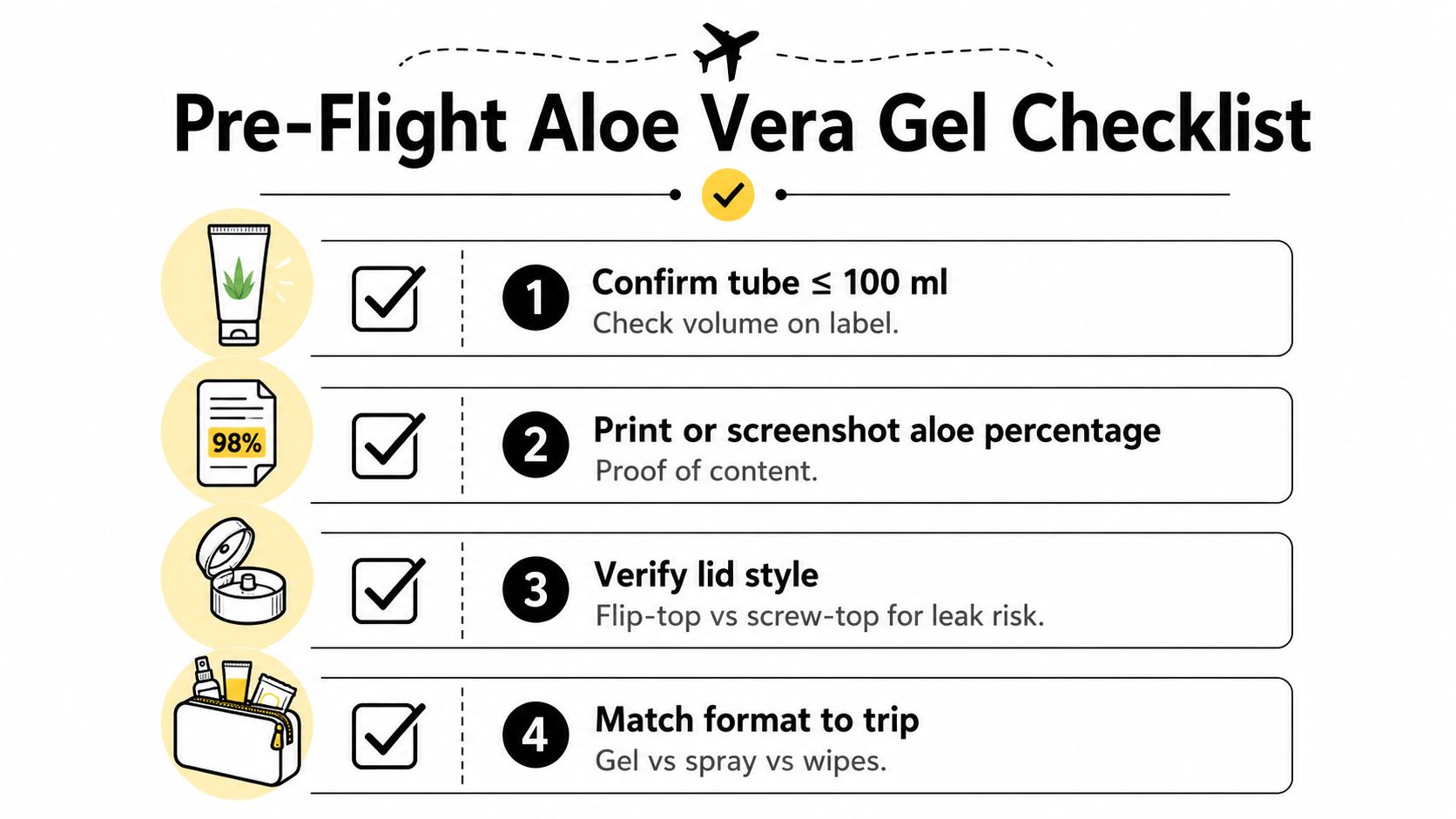
At the hotel door, your toiletry bag is almost closed, but the aloe gel still needs one last review. A small bottle may fit neatly beside your toothbrush and still fail a liquid rule, leak in transit, or suit your skin poorly. Use this checklist to connect airport compliance with formula quality and practical use.
Four checks for the airport pouch
- Confirm the volume. Check the container's printed capacity, which must be at or below 100 milliliters, or 3.4 ounces. Do not estimate from the amount remaining. Place it where you can reach the clear, resealable liquids bag during screening.
- Record the aloe content. Photograph or save a screenshot of the label, including the aloe percentage and main ingredients. This record lets you compare the travel gel with your home routine if the packaging is discarded, scuffed, or difficult to read.
- Inspect the closure. A flip-top tube is convenient for repeated use, while a tightened screw-top can seal securely. A pump should lock and have a clean nozzle. Put any format inside a leak-resistant pouch, even if the cap appears firm.
- Match the format to the trip. Select a tube for regular face and body applications, sachets for a short outing, a pump for measured doses, or a solid format when spills would be especially troublesome.
Check freshness before departure
Open the container and check its smell, color, and texture. The gel should match what you normally expect from the product. Heat, sunlight, unexpected separation, discoloration, or an unusual odor are reasons to leave it behind.
A product page can clarify details that a quick store inspection misses. Compare Aloderma's Pure Aloe Vera Gel with your at-home cleanser to confirm that the texture and purpose suit the routine you plan to follow. A public retailer listing describes the gel as containing 99% fresh organic aloe vera and being bottled within 12 hours of harvest. The same retailer product listing also describes a 96% USDA-certified organic formula. Check the current product page for the exact ingredients, format, and availability before departure.
Aloderma lists a 1.5-ounce travel-size aloe vera gel, while retail listings show a 45-gram travel format. Confirm the label and container volume on the product you have, then place it in your clear liquids pouch.
ALODERMA offers fresh organic aloe-based gels and cleansers, including portable formats for face and body routines while traveling. Visit ALODERMA to review current ingredient details and select a travel-size aloe vera gel that matches your route, packing method, and skincare needs.