







You bought a moisturizer labeled “gentle.” It went on fine, then your face started to sting. Ten minutes later, your cheeks looked hot, the skin around your nose felt tight, and by midafternoon you were wondering why a basic cream somehow made everything worse.
That cycle is common. Sensitive skin is common at a population level, not a niche problem. A review in The Prevalence of Sensitive Skin reported that about 60 to 70% of women and 50 to 60% of men say they have some degree of sensitive skin, while about 46% report only “moderate” or “very” sensitive skin. The same review also cited a multicountry survey of 10,743 people in which 48.2% self-reported sensitive skin, which tells you why brands keep promising “gentle” formulas in the first place (review data on sensitive skin prevalence).
The problem is that “gentle” on a label usually isn't specific enough for someone with very reactive skin. If you need a very sensitive skin moisturizer, you need more than a fragrance-free sticker and a soft beige jar. You need to know which ingredients help, which “natural” ones still cause trouble, and how the base of the formula changes how it feels on your face every day.
What Very Sensitive Skin Actually Feels Like
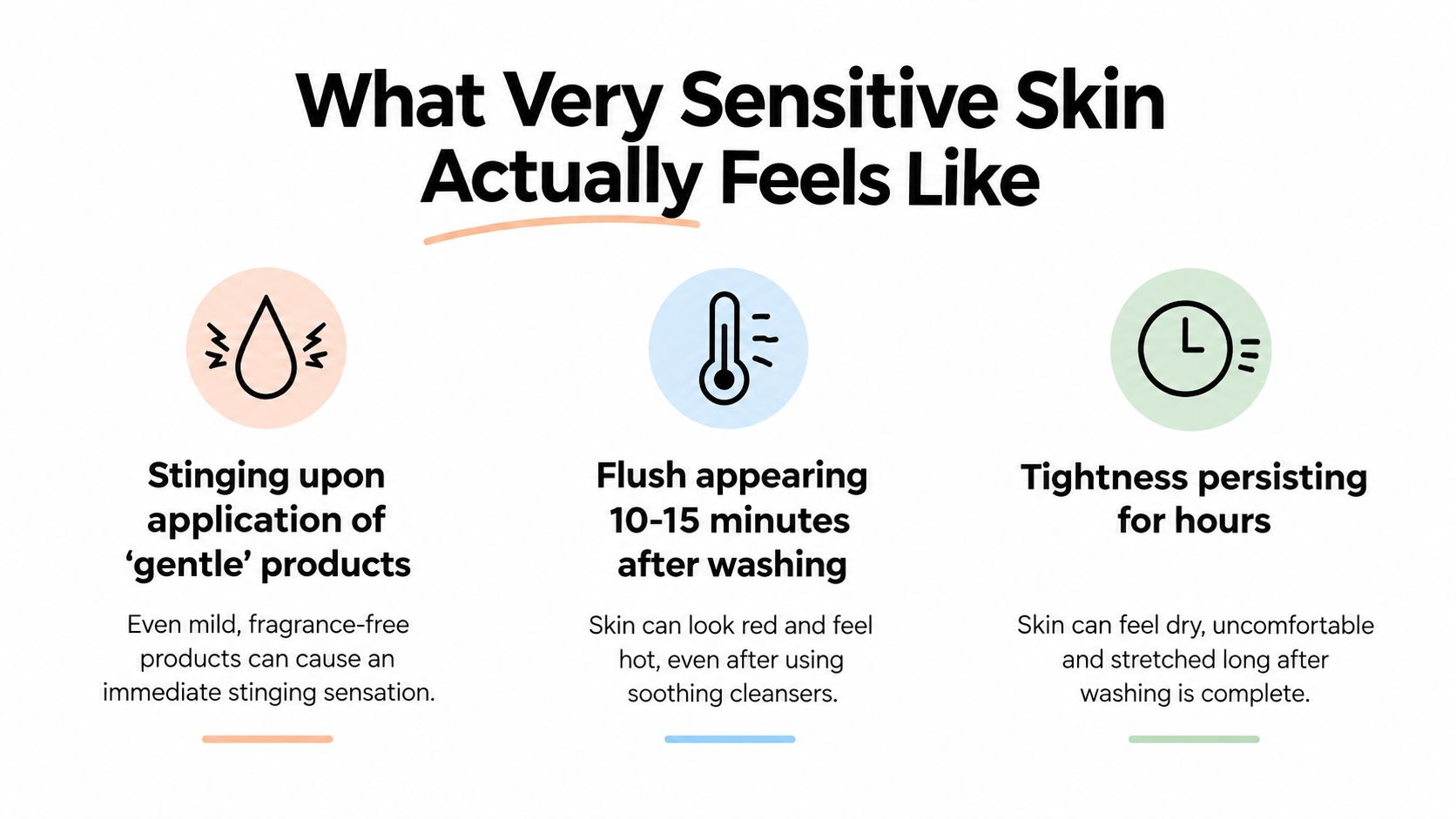
Very sensitive skin has a pattern. You wash with lukewarm water, pat dry, and your face already feels a little too exposed. You apply moisturizer and get that sharp, quick sting. Then the flush shows up later, not always immediately. By lunchtime, the skin around your chin or nose feels papery again, even though you moisturized.
That doesn't mean your skin is “random.” It usually means your outer barrier isn't doing its job well enough, so ordinary products feel louder than they should.
What's happening under the surface
The simplest explanation is this. Very sensitive skin often has a weaker barrier lipid structure, loses water faster, and reacts more strongly to ingredients and weather shifts. That's why a cleanser feels harsher on you than it does on your friend, and why a perfectly average moisturizer can feel hot, prickly, or tight.
A lot of readers recognize these signs right away:
- Burning on contact when you apply a cream that claims to be calming
- Redness after washing even when the cleanser seems mild
- Peeling around the nose and chin that keeps coming back
- Heat or flushing after sun, a drink, or a warm room
- Products that seem fine for a week and then suddenly start causing trouble
What it is and what it isn't
Sensitivity is not always the same thing as an allergy. It also isn't the same as every long-running skin issue people discuss online. If a product feels sharp, drying, or too active, that often points to a barrier problem. If you get a clear rash pattern or repeated strong reactions to one ingredient family, that's a different conversation.
Practical rule: If your skin reacts to “gentle” basics, stop assuming you need stronger products. You usually need fewer variables, less fragrance, and a better barrier-focused formula.
For a plain-language breakdown of reactive skin patterns, Aloderma's guide to what sensitive skin is is a useful starting point.
The Real Triggers Behind Daily Reactions
Most “bad skin days” aren't caused by one dramatic mistake. They usually come from stacked triggers. A rough towel, cold wind, a new detergent, poor sleep, and one over-fragranced product can easily add up to a face that feels raw by evening.
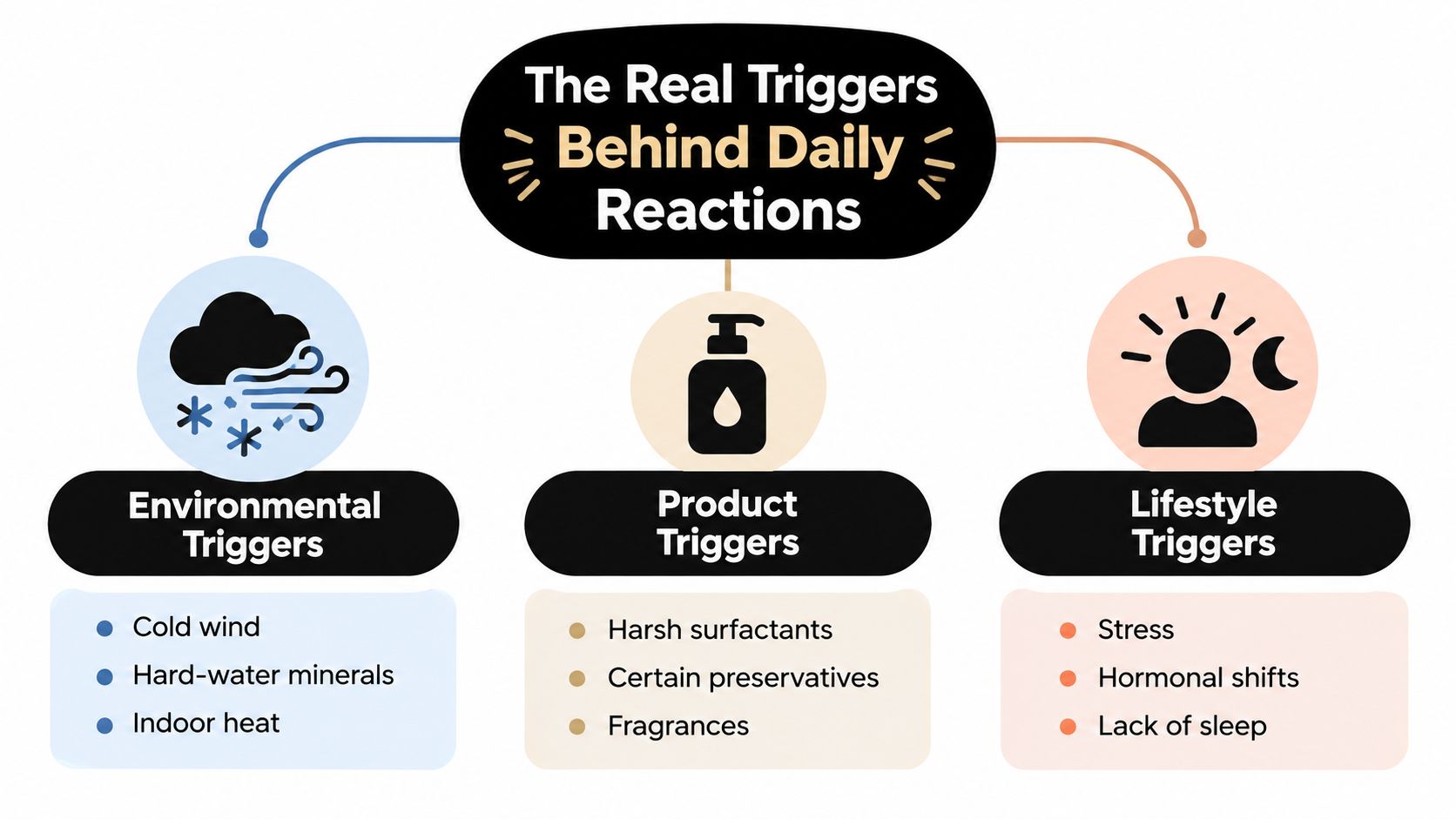
Start by sorting your triggers into three buckets. That's the fastest way to see patterns.
Environmental triggers
Cold wind, indoor heating, hard water, long hot showers, and too much sun can leave your skin feeling stripped before you apply a single product. Pollution can also sit on an already stressed barrier and make cleansing feel trickier at night.
One practical example. If your skin is fine at home but tight at work, your office air may be part of the problem. If your face gets worse after sleeping with heat blasting, that matters too.
Product triggers
They waste money by repeatedly swapping one “gentle” moisturizer for another without reading the full ingredient list.
A lot of common triggers are hiding in plain sight. Fragrance is the obvious one, but not the only one. A review of commercial moisturizers found that only 46 of 276 products, or 17%, were both absolutely fragrance free and safe for fragrance-allergic users (review of fragrance-free moisturizer safety). That tells you how often “fragrance-free” is more slippery than shoppers expect.
Other common trigger categories include:
- Harsh surfactants like sodium lauryl sulfate
- Essential oils in “clean” formulas
- Drying alcohols
- Formaldehyde-releasing preservatives
- High-strength actives that overwhelm a fragile barrier
If scent in indoor products sets you off, this plain-language piece on Purified Air Duct Cleaning fragrances is worth reading because it connects airborne fragrance exposure to the daily environment people often overlook.
After that, this short video is a useful reset if your routine keeps backfiring:
Lifestyle triggers
Stress, poor sleep, spicy meals, alcohol, and cycle-related hormonal shifts can all make your skin more reactive. So can using too many treatment products too often.
A “random” reaction usually isn't random. It's often three smaller triggers landing on the same day.
When you start logging reactions, don't just write down the moisturizer. Write down the weather, laundry detergent change, sleep, and whether you used an active the night before.
Reading an Ingredient List Like a Formulator
A very sensitive skin moisturizer should do four jobs well. It should pull water in, smooth roughness, hold moisture in place, and support the barrier without loading the formula with obvious troublemakers. If it only does one of those jobs, you'll feel it.
The four jobs inside a moisturizer
Here's the easiest way to read a label without getting lost in marketing language.
| Function | Look for on the label | What it does |
|---|---|---|
| Humectant | Glycerin, hyaluronic acid, panthenol, aloe vera | Pulls water toward the skin and helps relieve surface tightness |
| Emollient | Squalane, shea butter, jojoba esters, dimethicone | Softens rough texture and fills gaps between surface cells |
| Occlusive | Petrolatum, mineral oil, beeswax, plant waxes | Reduces water loss by forming a protective seal |
| Barrier lipid support | Ceramide NP, ceramide AP, ceramide EOP, cholesterol, fatty acids like linoleic or stearic acid | Helps rebuild a more resilient barrier structure |
What matters more than the front label
For very sensitive skin, I care less about “soothing botanical complex” and more about whether the formula has a real barrier-lipid system. Ceramides matter, but they work better with cholesterol and free fatty acids. Expert guidance on barrier repair makes that point clearly: ceramides alone don't rebuild lamellar bilayers or reduce water loss as effectively as the full trio, so scan for named ceramide subtypes plus cholesterol and fatty acids rather than trusting a vague “with ceramides” claim (barrier-lipid guidance for sensitive skin moisturizers).
That's the difference between a label-friendly formula and a structurally useful one.
A quick way to judge a formula fast
Use this method when you're standing in an aisle or clicking between product pages:
- Top of the list should show useful water-binding ingredients like glycerin, aloe, or panthenol.
- Middle of the list should contain emollients that improve feel and reduce drag.
- Somewhere in the deck you want to see the barrier trio if the product claims repair.
- Absent or minimal is what you want for fragrance, essential oils, and drying alcohol.
A few extra notes matter. Glycerin, hyaluronic acid, and panthenol are useful low-irritancy humectants, and niacinamide can help some people with redness and barrier support, especially in lighter textures. But that doesn't make every niacinamide product safe for every reactive face, so don't treat one “good” ingredient as a free pass for the whole formula. Aloderma's guide to ingredients to avoid in skincare is handy if you want a refresher before your next product search.
Ignore buzzwords. Read for function. If you can't identify how the formula hydrates, softens, seals, and supports the barrier, move on.
Why Natural and Gentle Are Not the Same Thing
A natural formula can still be a terrible choice for ultra-reactive skin. A lot of shoppers get trapped. They've been burned by mainstream products, so they swing hard toward “clean,” “green,” or “botanical,” then end up using concentrated fragrant plant extracts that are even harder for their skin to tolerate.
The marketing trap
You don't need to fear every plant ingredient. You do need to stop assuming plant-derived means low-risk.
Independent evidence on moisturizer allergens and sensitive-skin triggers points to a long list of common troublemakers, including fragrances, essential oils, vitamin E, lanolin, benzyl alcohol, propylene glycol, formaldehyde-releasing preservatives, benzoic acid, cinnamic acid, nonionic emulsifiers, sodium lauryl sulfate, bronopol, lactic acid, urea, and sorbic acid (review of moisturizer allergens and trigger ingredients). That's why “natural moisturizer” tells me almost nothing on its own.
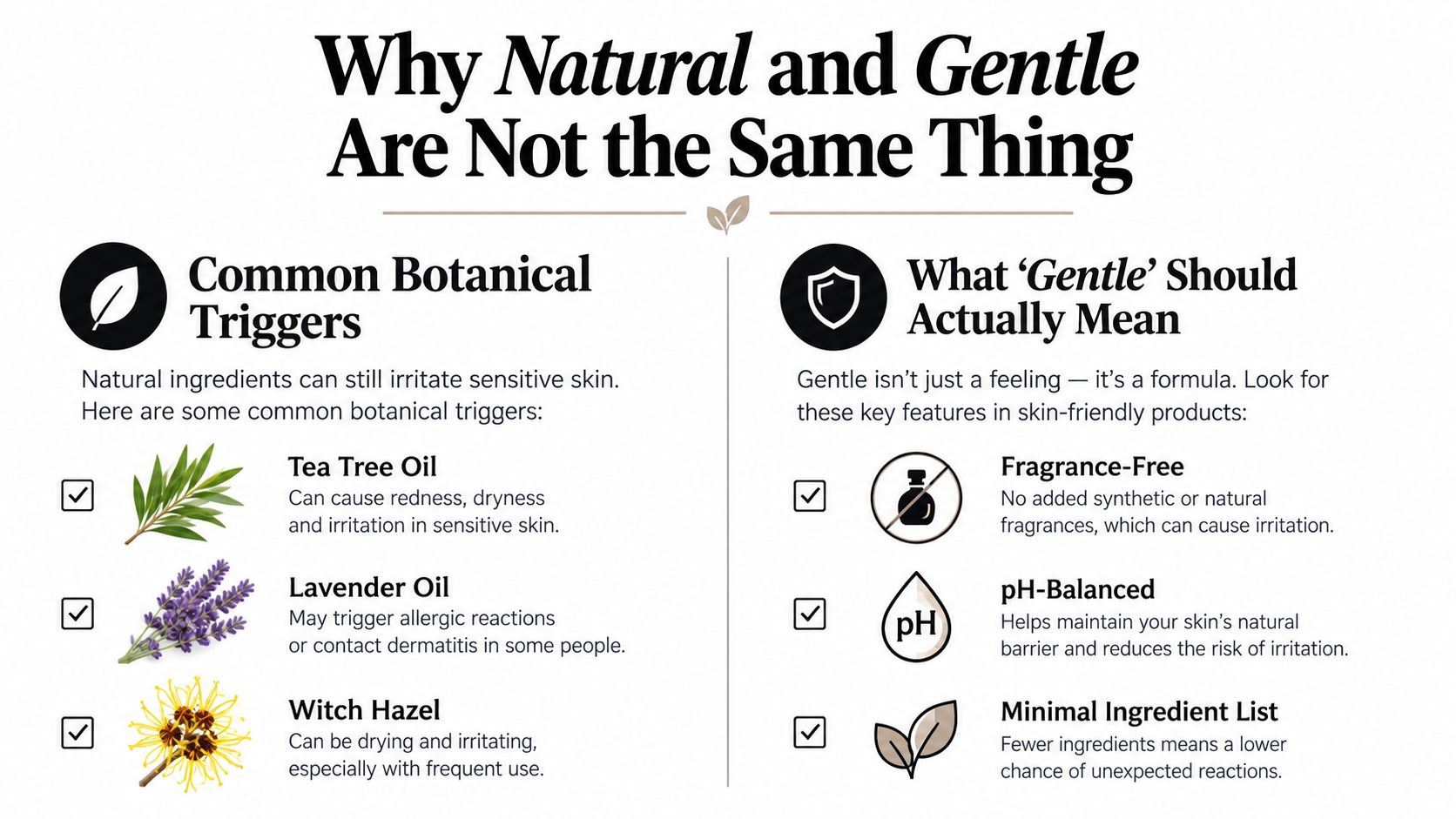
In real life, the usual botanical suspects include citrus oils, lavender oil, tea tree oil, peppermint-heavy formulas, eucalyptus, cinnamon and clove extracts, and heavily perfumed floral oils. They may smell fresh. They may look clean. Your skin does not care.
What gentle should actually mean
For a reactive person, “gentle” should mean:
- Fragrance-free, not merely unscented
- Short ingredient list when possible
- Low-risk preservation system
- No essential oil perfume cloud
- Barrier-supportive structure, not just watery hydration
A good comparison comes from baby-care shopping. Parents quickly learn that cute branding doesn't matter if a product keeps causing problems, which is why practical guides like these product tips for diaper rash prevention focus on reducing friction, moisture stress, and trigger ingredients instead of chasing trendy claims. Sensitive-face shopping needs the same level of realism.
If “natural” is printed in large type but the ingredient list reads like a perfume strip, put it back.
Choosing Between Gels, Creams, and Ointments
Texture matters more than people think. The wrong texture can make a decent formula feel useless. The right one can turn a basic routine into something your skin can live with.
How the textures compare
| Texture | Feel on Skin | Best Climate | Occlusive Strength | Best Use |
|---|---|---|---|---|
| Gel | Light, quick, barely-there | Humid weather | Low | Oily reactive skin, daytime layering |
| Lotion | Fluid, easy-spread, light | Mild to warm climates | Light to moderate | Under sunscreen or makeup |
| Cream | Cushioned, balanced, more comforting | Most climates | Moderate | Default choice for very sensitive skin |
| Ointment | Dense, glossy, sealing | Cold or very dry conditions | High | Overnight recovery or dry patches |
| Balm | Thick but often targeted | Cold weather or spot use | Moderate to high | Corners of nose, chin, wind-burned areas |
| Gel-cream | Fresh feel with a bit more cushion | Warm climates or combo skin | Light to moderate | People who hate heavy residue |
The simplest decision rule
If your skin feels hot and greasy by noon, start lighter. If it feels tight again an hour after moisturizing, go richer.
Creams are the safest middle ground for those looking for a very sensitive skin moisturizer. Gels can be great in humidity or on oily skin, but many aren't enough on their own in dry air. Ointments are useful rescue products, not always daily face products.
One mistake I see all the time is using a gel in winter, then deciding “nothing works.” The product may not be bad. The texture may just be wrong for your weather and barrier state.
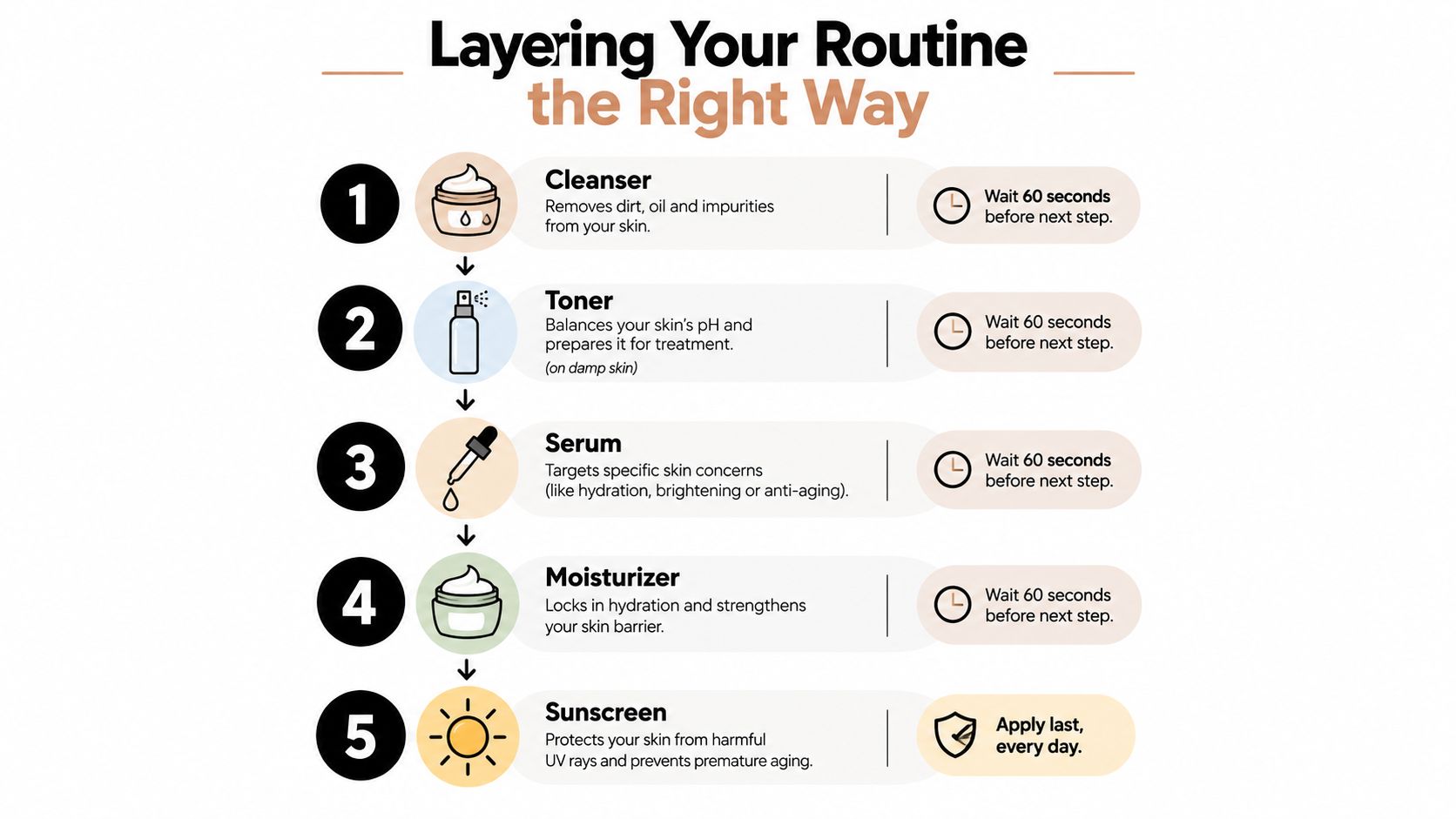
Layering Your Routine the Right Way
Even a good moisturizer can fail if the routine around it is messy. Reactive skin usually does better with a boring routine applied in the right order than an elaborate routine applied badly.
Morning order that usually works
Use this sequence:
- Gentle cleanse with a cream, milk, or non-stripping gel cleanser
- Hydrating step on slightly damp skin if you use one
- Serum only if it's simple and already proven safe for you
- Moisturizer to lock in hydration
- Sunscreen as the final morning layer
Wait about 30 to 60 seconds between layers. Not because your skin needs a ritual. Because piling everything on at once causes pilling, uneven spread, and that sticky trapped feeling reactive skin hates.
Mistakes that ruin a calm routine
The most common mistakes are practical:
- Applying moisturizer to bone-dry skin when your formula needs a little surface dampness
- Layering too many humectants under a rich cream, which can feel hot and sticky
- Using an occlusive too early over a serum that hasn't settled
- Mixing too many actives and then blaming the moisturizer
- Skipping sunscreen because the moisturizer feels protective enough
The evening reset
Night is where you can go slightly richer, especially if your skin gets tight after cleansing or reacts to indoor heat. If your skin is in a rough patch, cut the routine down to two products: a gentle cleanser and a moisturizer that you already trust.
A calm routine is repeatable. If your skin dreads it, it's too complicated.
Introduce one new product at a time. Give it a fair trial. If three things change at once, you won't know what caused the reaction.
How Fresh Aloe Fits a Reactive Skin Routine
Aloe gets marketed badly. That's the truth. Too many aloe products are mostly water, a little aloe somewhere in the formula, and enough extras to ruin the whole point. For reactive skin, the base matters just as much as the headline ingredient.
Why the aloe source changes the experience
Independent aloe-processing literature notes that biological activity can begin dropping quickly after harvest and that delays can reduce usable quality. That's why processing speed matters, especially in products meant to feel simple and dependable on stressed skin. Aloderma's farms-and-factory model is designed to move aloe from harvest to finished product within 12 hours, and the brand states that it grows all of its own organic aloe vera, manufactures onsite within that same 12-hour window, and makes products with at least 65% fresh organic aloe vera juice, never from concentrate or powder, with no added water (aloe processing and freshness context; Aloderma's published aloe preparation details).
That's a concrete supply-chain difference. It means the aloe isn't just decorative.
Where it fits in a routine
If you want a fresh-feeling base in a reactive routine, use aloe in a practical way:
- Morning cleanser if your skin hates squeaky-clean formulas
- Light daytime hydrator when creams feel too heavy
- Cooling evening layer under a richer cream when your skin feels hot and overworked
One product worth looking at is ALODERMA Aloe Hydrating Moisturizer. It fits this conversation because it's positioned for sensitive skin and gives you a straightforward way to test whether an aloe-forward moisturizer texture works better for your daily comfort. If you want to understand why fresh aloe behaves differently in skincare, Aloderma's article on fresh aloe vera for face care adds helpful background.
The bigger point is simple. A fresh aloe base can make a moisturizer feel cleaner, lighter, and less fussy on the skin. For a lot of reactive users, that daily experience matters as much as the ingredient theory.
Patch Testing, Troubleshooting, and Shopping Checklist
You don't need a dramatic full-face experiment every time you buy a moisturizer. Patch testing saves skin and money.
A patch test that's actually useful
Do this instead of guessing:
- Apply a pea-sized amount behind the ear or on the inner arm.
- Repeat twice daily for 48 hours.
- If that goes well, move to a three-day half-face trial.
- Only then use it full face.
This method won't catch every possible issue, but it catches a lot of obvious failures before your whole face pays for them.
What your reaction is trying to tell you
| Reaction | Likely Culprit | Next Step |
|---|---|---|
| Immediate stinging | Humectant-heavy formula, drying alcohol, or a compromised barrier meeting too many actives | Stop, simplify, and retry only after barrier comfort returns |
| Delayed redness | Fragrance, essential oil, or another botanical trigger | Check for parfum, natural fragrance, and aromatic extracts |
| Clogged feel or bumps | Heavy occlusives or richer fatty systems | Switch to a lighter cream or gel-cream |
| Tightness after absorption | Not enough barrier support or seal | Choose a cream with a fuller barrier-lipid structure |
A useful nuance matters here. Recent 2025 clinical evidence suggests moisturizers can improve hydration, transepidermal water loss, itch, erythema, and quality-of-life measures in sensitive skin, but the benefits depend heavily on formula design and safety profile. The same body of expert and review commentary also notes that some ingredients marketed as helpful can still be a problem for a subset of ultra-reactive users, including niacinamide in some flush-prone people and certain humectant or fatty-alcohol systems in highly reactive skin (2025 clinical review on moisturizers for sensitive skin). That's why troubleshooting has to stay personal.
Your aisle checklist
Scan for these before you buy:
- Fragrance or parfum
- Essential oils
- Denatured alcohol
- Propylene glycol
- Linalool
- Citronellol
- Geraniol
- Undisclosed natural fragrance
- Strong exfoliating acids in a daily moisturizer
- Overly long “botanical blend” sections
Two rules make shopping easier. First, if the brand hides behind proprietary blends, skip it unless you can get full disclosure. Second, if the formula sounds exciting, it's probably not ideal for your most reactive days. Very sensitive skin usually likes dull products and consistent routines.
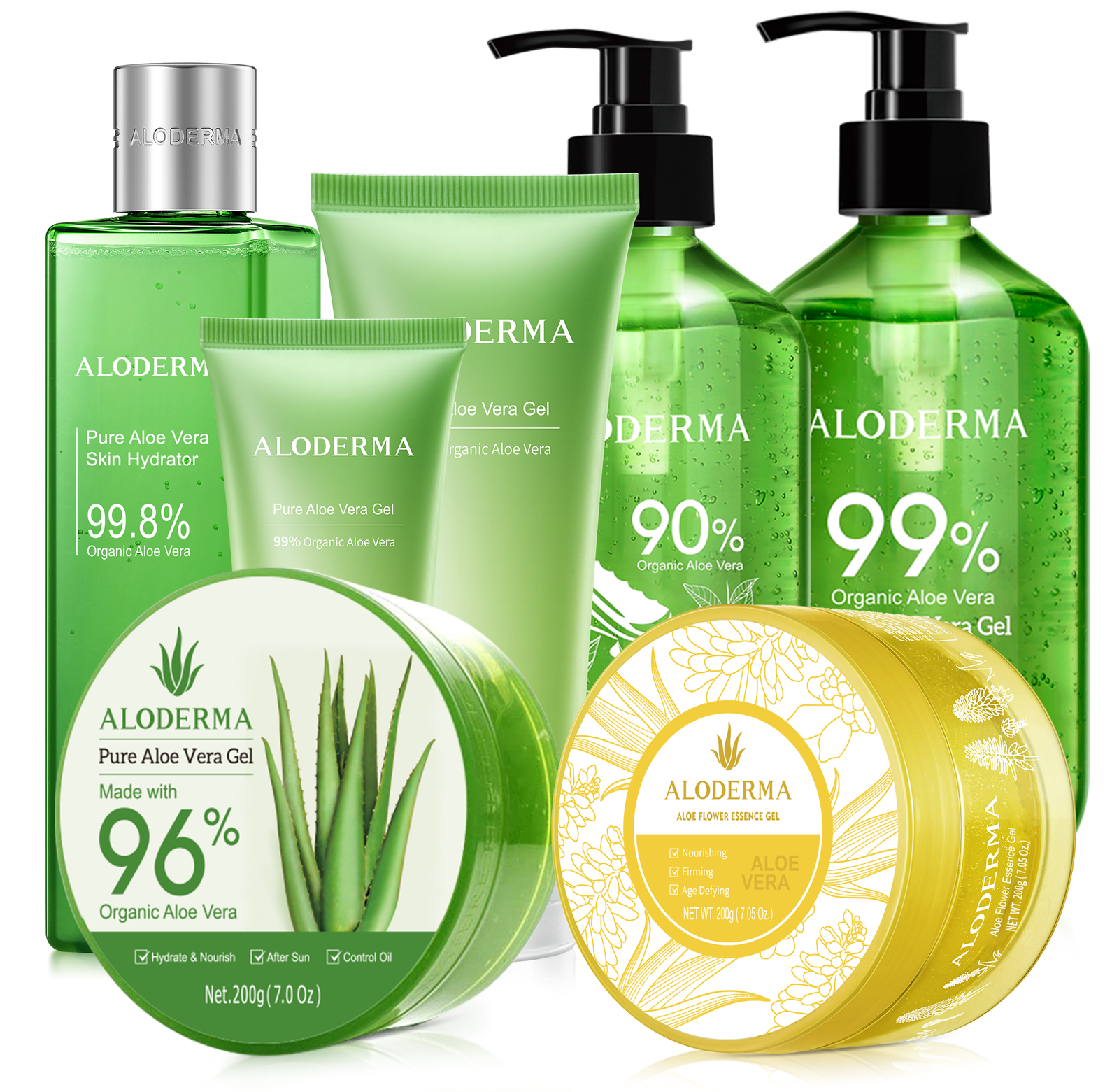
If your skin keeps rejecting “gentle” creams, ALODERMA offers aloe-forward cleansers, gels, and moisturizers built around fresh organic aloe vera that the company grows itself and processes onsite within 12 hours of harvest. That kind of vertically integrated, fresh-base approach makes sense for anyone trying to keep a routine simple, comfortable, and lower risk. Browse ALODERMA if you want to compare texture, ingredient lists, and everyday options for a calmer very sensitive skin moisturizer routine.