



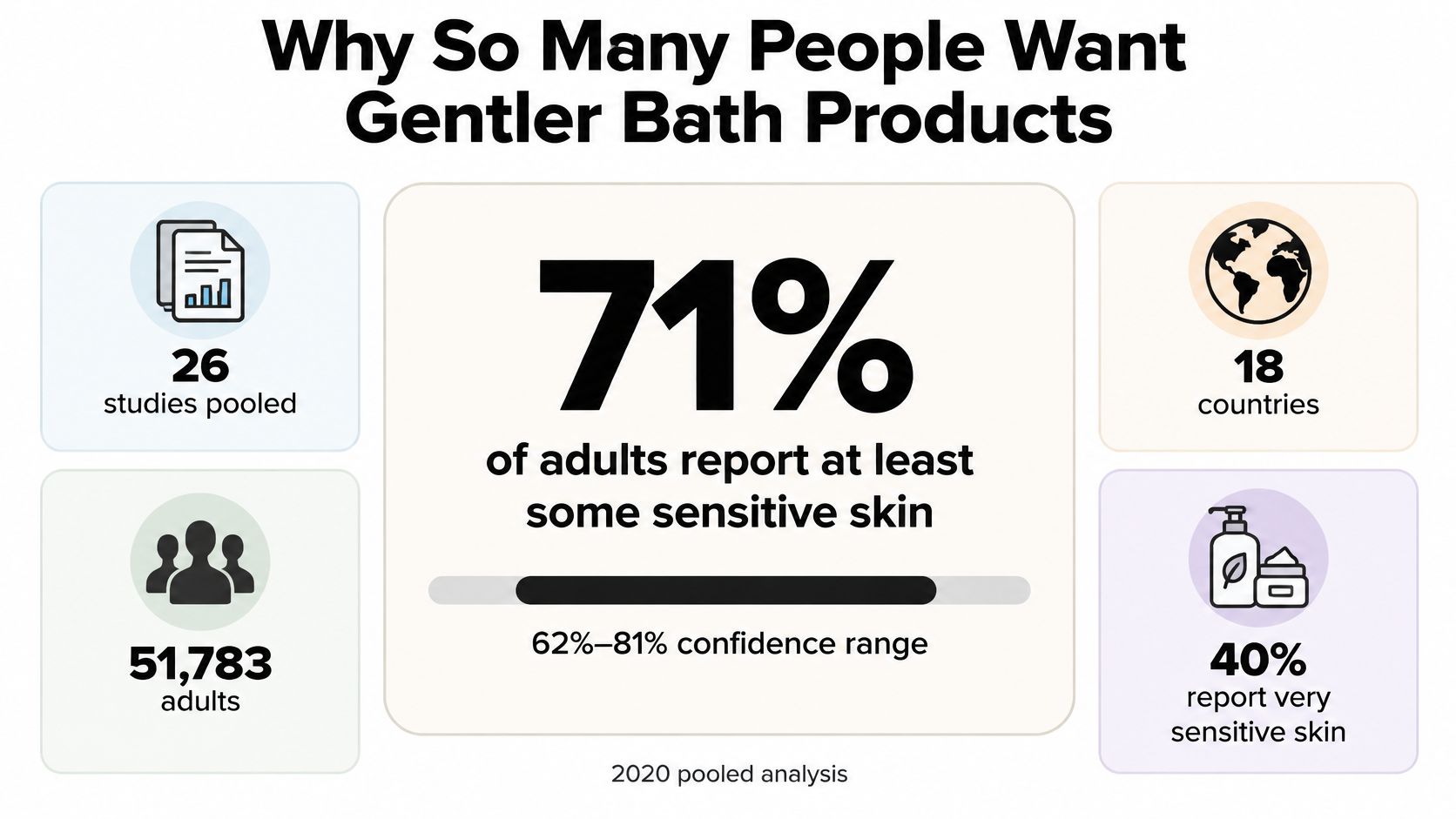
71% of adults reported at least some degree of sensitive skin in a 2020 systematic review and meta-analysis pooling 26 studies covering 51,783 people in 18 countries, with a 95% confidence interval of 62%–81%. That makes choosing bath products for sensitive skin an everyday comfort question for many people, not a concern reserved for a small group.
Why So Many People Want Gentler Bath Products
After a long day, you turn the shower hotter, reach for a sweet-smelling wash, and work up a generous lather. The warmth feels lovely until you step out. By the time the towel reaches your legs, your skin feels tight instead of refreshed.
That experience can make shopping frustrating. You want to feel clean, but you don't want washing to leave you counting the minutes until you can apply moisturizer.
What the sensitive-skin figure actually means
The pooled analysis also found that 40% described their skin as moderately or very sensitive, with a 95% confidence interval of 32%–47%. These were self-described experiences, not proof that everyone shared the same underlying reason for discomfort.
Questionnaires can overestimate how many people have sensitive skin, and there's no universally accepted test that captures everyone's experience. Still, your own observations matter: a wash that repeatedly leaves your skin uncomfortable deserves another look.
Think beyond the bottle
A body wash may cover much more skin than a face cream. It also meets warm water, repeated rinsing, and sometimes a rough washcloth, so something that seems fine during a quick handwash can feel different from shoulders to calves.
That doesn't mean you need a shelf full of specialized products. It means judging the formula and the way you use it together, rather than asking a gentle-looking label to do all the work.
Comfort check: Clean skin shouldn't have to feel squeaky, stretched, or scrubbed raw.
A useful shopping path starts with the cleanser base, continues through scent wording and washing habits, and finishes with checking whether aloe is the main ingredient. The aim is simple: skin that feels soft and comfortable after bathing, without a routine that turns an ordinary shower into a complicated project.
What to Check Before You Buy Bath Products
Label checks for gentler bath and shower products
| Check | Look for | Leave on the shelf | Why it matters |
|---|---|---|---|
| Cleanser base | Soap-free, low-to-neutral wash | Traditional alkaline soap | Soap can leave skin less comfortable than a mild cleanser |
| pH | Near the skin range of about 4.0 to 5.5 | High-alkaline bars | A large shift away from the skin's usual range can contribute to tightness |
| Surfactant | Mild cleanser without sodium lauryl sulfate | Sodium lauryl sulfate if you're choosing to avoid stronger cleansing agents | The whole cleansing system affects the after-wash feel |
| Drying alcohol | No SD alcohol | SD alcohol high on the list | This is a useful exclusion when you're trying to avoid a drying finish |
| Color | Dye-free | Added dyes | Color doesn't clean skin |
| Aloe placement | Aloe Barbadensis Leaf Juice first, or a stated high percentage | Aloe near the end of a long list when you're seeking an aloe-led formula | Ingredient order helps show whether aloe is central |
| How you'll use it | Lukewarm water, followed by moisturizer on damp skin | A routine built around hot water and delayed moisturizing | Even a mild wash needs a gentle routine |
Start with the cleansing base
Healthy skin typically measures approximately pH 4.0–5.5, while most traditional soaps are alkaline, according to these clinical skin-care guidelines. Soap can interact with the proteins and lipids in the skin's outer layer, which helps explain why an aggressively clean feeling isn't necessarily a comfortable one.
A soap-free cleanser is a practical starting point. A bar isn't automatically harsh, and a liquid isn't automatically mild, so judge the cleansing system rather than the container.
You probably won't find a pH number printed on every bottle. Look for clear soap-free wording and a complete ingredient list; if the manufacturer doesn't publish the pH, don't assume the ingredient list lets you calculate it.
Read the ingredient list with a purpose
A surfactant is a cleansing ingredient that helps lift away oil and dirt. You need effective cleansing, but you don't need the strongest possible lather to wash away an ordinary day's sweat.
For a conservative shopping shortlist, you can choose formulas without sodium lauryl sulfate, SD alcohol, parabens, or phthalates. Treat those as selection preferences, not proof that every product containing them will bother everyone. Our guide to ingredients to avoid in skincare provides additional context for reading those names.
Don't confuse SD alcohol with every ingredient containing the word alcohol. Reading the full ingredient name is more useful than rejecting a bottle because one familiar word appears.
Check whether aloe leads or decorates the formula
Cosmetic ingredients are generally listed from higher to lower concentration, although ingredient order doesn't reveal every percentage. Aloe Barbadensis Leaf Juice in the leading position is more meaningful than a large aloe illustration on the front.
A published aloe percentage gives you another way to compare formulas. “Contains aloe” tells you much less about how central it is, as illustrated by ALODERMA's explanation of aloe-forward formulation.
A long parade of botanical ingredients isn't automatically an advantage, either. Hold this table beside the back label, and choose a wash whose base, cleansing ingredients, and aloe placement match what you're looking for.
Fragrance-Free Versus Unscented on the Label
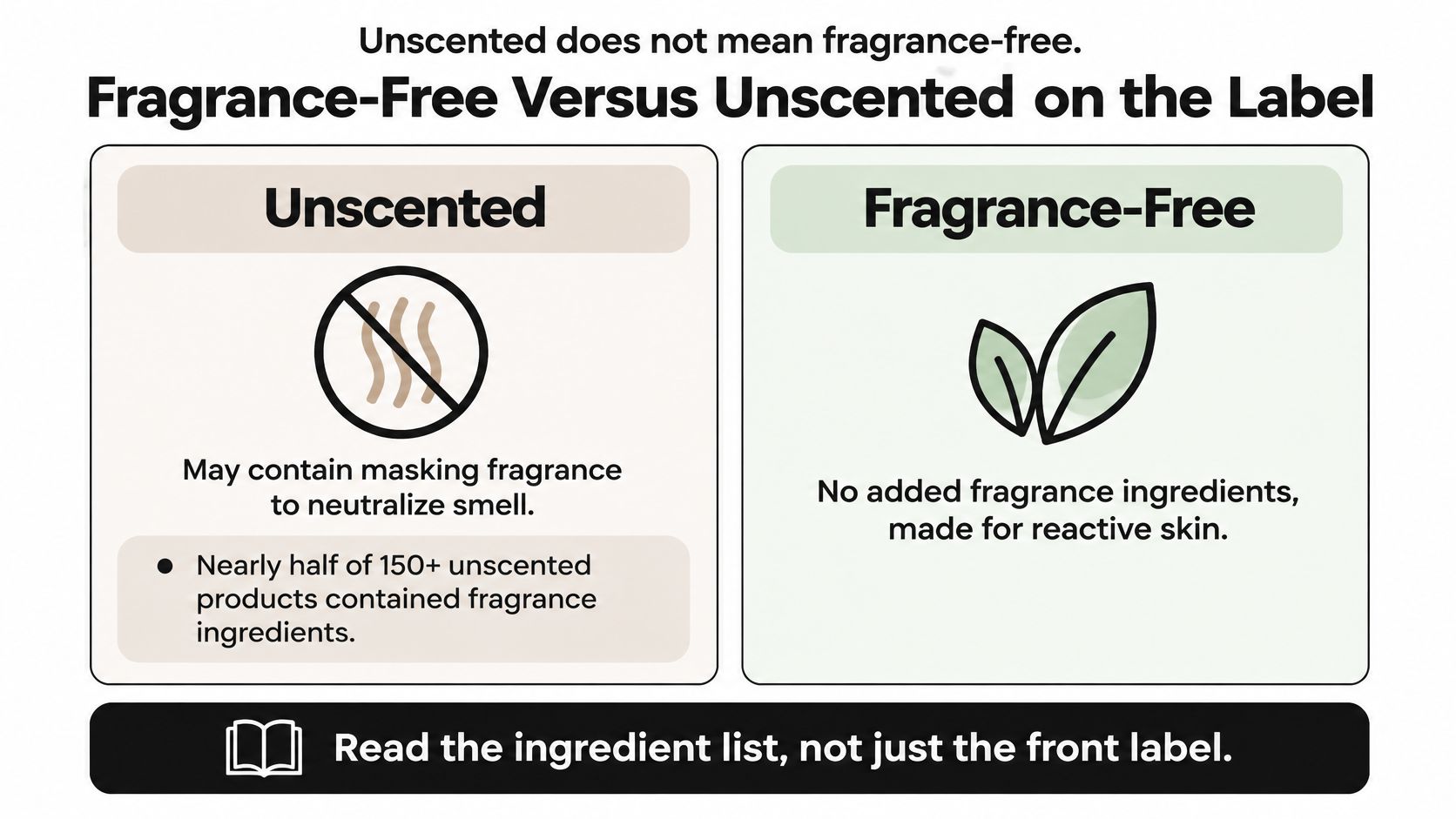
Unscented doesn't mean fragrance-free. An analysis of more than 150 products summarized in this professional skin-care guide found that nearly half of products labeled unscented still contained a scent or fragrance allergen.
That distinction matters when you've chosen a bottle because you don't want perfume. A product can have no obvious smell and still contain ingredients used to mask the smell of its raw materials. Tomorrow, before you step into the shower, read the front label and the ingredient list side by side. The front says what the maker wants you to notice. The back says what is in the bottle.
What scent wording usually means
| Label wording | What it usually means | What to do |
|---|---|---|
| Fragrance-free | No ingredient added to give a scent | Prefer this when skin reacts easily, then verify the list |
| Unscented | No obvious smell; a masking scent may still be present | Read the full list before trusting the front |
| Parfum or fragrance | A scent blend, often not itemized | Skip if scent has bothered you before |
| Essential oils | Plant scent such as lavender, citrus, or tea tree | Treat as a possible trigger and introduce cautiously |
| Botanical extract | A plant material that may or may not be there for scent | Check whether fragrance or oils also appear |
No noticeable smell isn't the same as no added scent
A masking fragrance works like spraying air freshener near a strongly smelling pot instead of removing the source. Your nose notices something different, but you've still added another scented material.
For label-reading practice, Loyaltie's listing for a fragrance-free tallow cleansing bar shows why scent wording and cleanser base need separate checks. A fragrance-free claim doesn't establish that a bar is soap-free or right for your skin. The same caution applies to how the product fits your shower routine.
Plant scent still counts as scent
Natural, plant-based, and lightly scented aren't substitutes for checking ingredients. Lavender, citrus, peppermint, and tea tree oils can smell appealing while still being uncomfortable for an individual user; a review of cosmetic ingredient reactions reinforces the need to assess fragrances and essential oils carefully.
Some botanical ingredients aren't included for scent at all, so read the complete formula rather than treating every plant name as either reassuring or troubling. Plant scent is not automatically kinder than no scent; it is another set of ingredients to check.
Bath oils, salts, and soaks are optional purchases, so put your budget toward a gentle wash and a leave-on moisturizer first. The shower habit matters too: a short, lukewarm wash and a quick moisturizer after toweling off keep the routine simple.
If unscented is the bottle's only reassurance, turn it over. Check for fragrance, parfum, or an essential oil, and remember that the cleanser base and the freshness behind the main ingredient matter as much as the front-label claim.
What Fresh Organic Aloe Adds to the Formula
Once you've checked what you want to avoid, consider the ingredient that makes up the foundation of the formula. With aloe, that means asking more than whether a green leaf appears on the packaging.
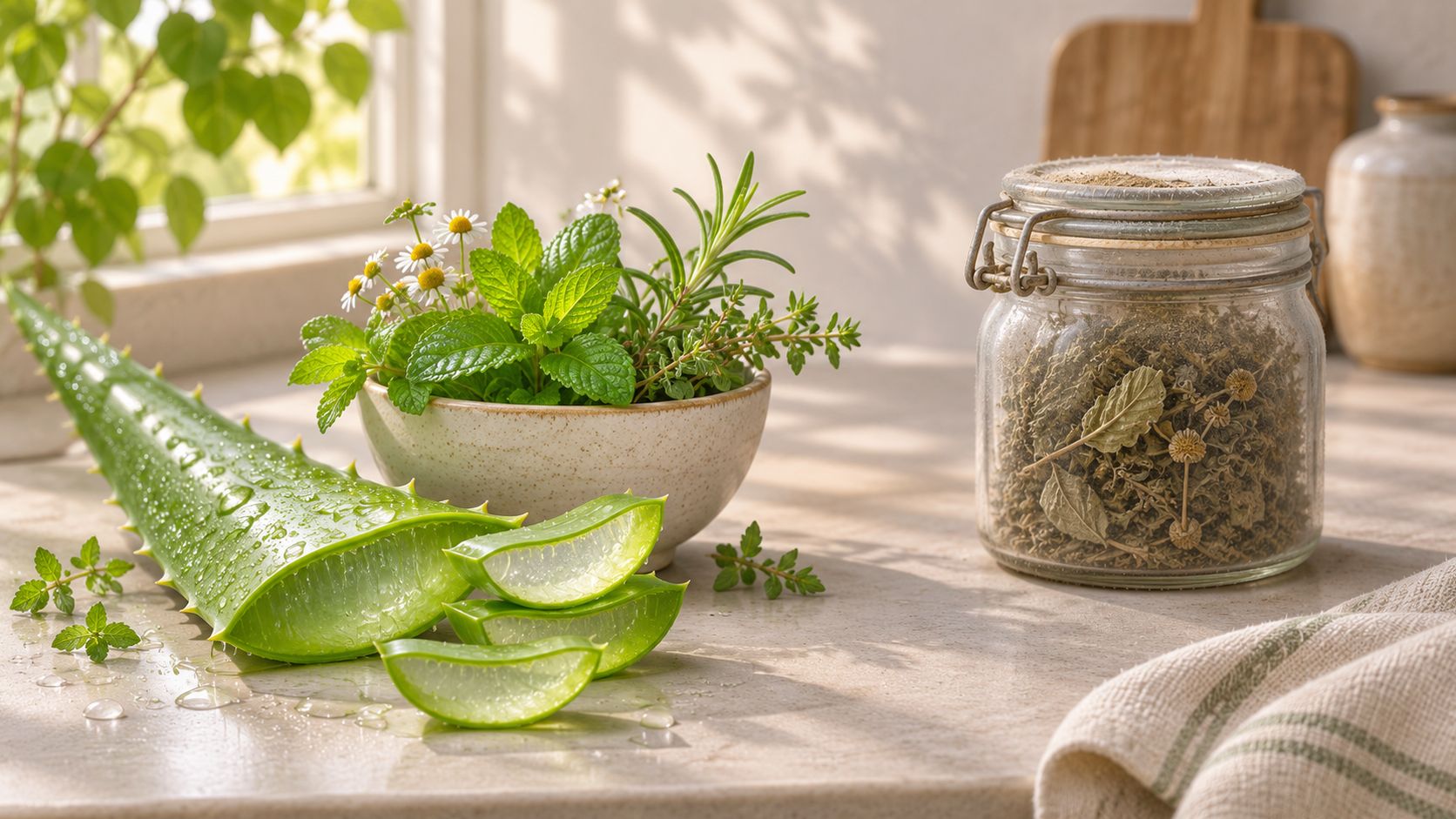
Fresh herbs offer a useful kitchen analogy: knowing when they were picked and how they were handled tells you something a picture on a jar can't. Aloe sourcing deserves similarly concrete questions, although an analogy alone doesn't prove that one finished formula performs better than another.
Our freshness benchmark: ALODERMA is a fully vertically integrated aloe vera company. We grow all of our own organic aloe vera, process our aloe vera, and manufacture onsite within 12 hours of harvest, with the aim of ensuring the primary ingredient in every product is the most bioactive and effective aloe vera possible, as described in our organic aloe sourcing story.
What the process tells you
That description is more specific than a natural or organic badge. It identifies who grows the aloe, where processing happens, and the maximum harvest-to-manufacturing window.
It also gives you a useful transparency standard. You don't have to accept a vague freshness promise when a company can explain its cultivation and manufacturing process in plain language.
Freshness isn't a guarantee that every finished formula will suit every person. The other ingredients, your skin's current comfort, and the product's intended use still matter.
Turn a sourcing story into a shopping check
On a product page, look for a complete ingredient declaration rather than relying on the collection description. Check whether the formula is designed to rinse off or stay on, and make sure the published ingredients correspond to the bottle you're buying.
Use these questions before adding an aloe-based wash or hydrator to your cart:
- Main ingredient: Does the list clearly identify aloe juice as the formula's foundation?
- Processing detail: Does the company explain how it handles the harvested leaves?
- Finished formula: Are the cleansing ingredients, scent materials, and intended use clear?
- After-bath role: Is the product a lightweight hydrator, a moisturizer, or something else?
A light aloe hydrator can be part of an after-bath routine, but don't assume every gel replaces a moisturizer when your skin needs a richer finish. Choose by the finished product's directions and how your skin feels.
At the end of a tiring day, it's reasonable to want your shower to feel comforting. Transparent sourcing gives you something practical to judge, rather than another comforting word on the front label.
How to Test a New Wash on a Small Patch
You don't need a lab coat to check a new body wash. You need one small area of skin, a few minutes, and the patience to look again the next day. A patch check works like a smoke alarm: it won't predict every problem, but it sounds early when something is wrong.
A home patch test is a screen for obvious discomfort, not a promise that a product can never cause a reaction. That matters when you have switched products before and could not tell which one left your skin unhappy.
Match the test to the product's real use
Choose a discreet, comfortable spot, usually the inner forearm. Wash and dry it, then apply a small amount, enough to try the formula without coating a wide area.
For a rinse-off wash, wet the area, use the product the way the bottle directs, then rinse. Leave-on rules do not apply here, so don't trap a body wash under a bandage or wear it overnight like a cream. A cleanser and a moisturizer ask different things of your skin, so follow the directions printed on that bottle.
Watch the spot over the following day or two for delayed stinging, itching, or redness. If discomfort persists or worsens, rinse away any remaining product and set the bottle aside.
A rinse-off product should be tested as a rinse-off product, not turned into a leave-on experiment.
Test the bottle, not just its headline ingredient
Aloe on the front label does not tell you how a finished wash behaves in the shower. Scent materials, essential oils, and applying anything to already irritated skin can change the experience. A plant-derived fragrance is not automatically gentler than an unfragranced formula, so judge the bottle you hold.
Keep the rest of your routine familiar while you test. Starting a new wash and a new leave-on cream the same evening makes a reaction harder to explain.
- Keep the variable clear: introduce one new product at a time.
- Respect discomfort: if the spot doesn't stay calm, stop using the wash.
- Expand gradually: when the spot stays comfortable, use the wash in your usual short, lukewarm shower.
Our guide to how to patch test skincare shows how to turn this into a repeatable habit. Tonight, before you step in, read the back of the bottle: does it say rinse off or leave on? That one line tells you how to run the test.
How to Wash Without Leaving Skin Tight
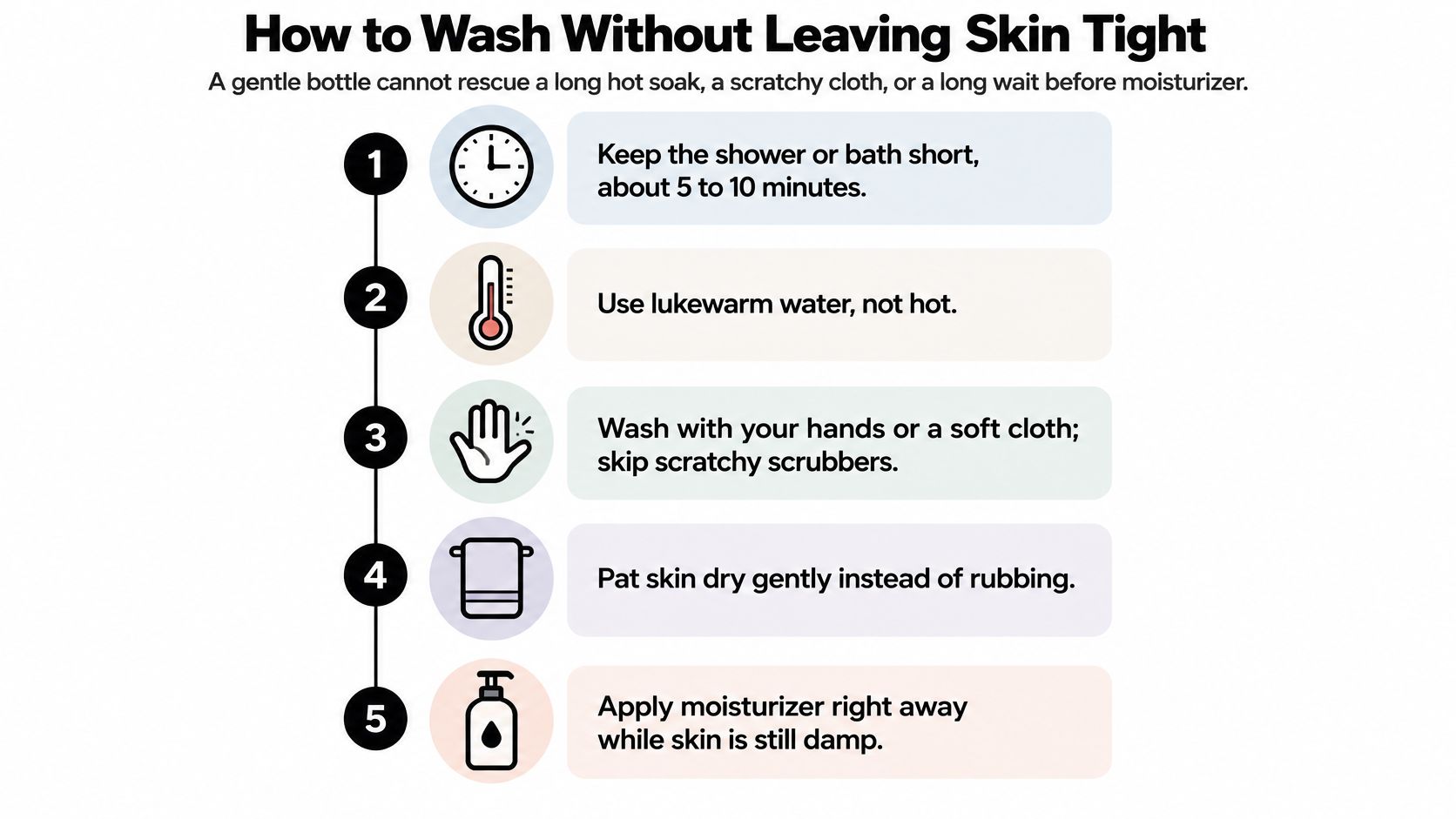
A gentle bottle can't compensate for a long hot soak, a scratchy cloth, or a long wait before moisturizer. The National Eczema Association's bathing guidance recommends short, lukewarm bathing, gentle drying, and prompt moisturizing, with bathing kept to about 5 to 10 minutes and moisturizer applied within about three minutes.
Those aren't targets to pursue with a stopwatch in one hand and a towel in the other. They're useful boundaries that keep a relaxing shower from becoming prolonged hot-water exposure.
A gentler shower in practical steps
- Keep the water lukewarm and the shower brief. Water should feel comfortably warm, not intensely hot; reduce the temperature before you step in rather than waiting until your skin feels overheated.
- Wet your skin before applying cleanser. This lets you spread the wash gently instead of rubbing concentrated product across dry skin.
- Cleanse the areas that need it. Give attention to underarms, feet, and visibly dirty or sweaty areas, while letting water rinse the rest when that's enough.
- Use your hands instead of scrubbers. Skip loofahs, rough washcloths, and grainy body scrubs, especially when your skin already feels unsettled.
- Rinse thoroughly. Check folds and creases where wash can remain, and rinse away the slippery residue without repeated scrubbing.
- Pat dry with a soft towel. Press and lift rather than rubbing back and forth; leave a little dampness instead of trying to remove every trace of water.
- Apply a plain moisturizer promptly. Have it ready before you shower so you can smooth it over slightly damp skin without searching through a cupboard.
Adjust the cleansing, not the scrubbing
A daily shower can feel comfortable when it's short and mild. A prolonged hot shower can leave you tight even when the cleanser is expensive, beautifully packaged, or labeled gentle.
On a low-sweat day, plain water may be enough for much of your body. After exercise, cleanse the sweaty areas while keeping the same moderate water temperature and light touch.
For example, after a desk day, your calves probably don't need the same attention as your underarms. After a muddy walk, wash the dirt away where it is rather than automatically scrubbing every surface with equal force.
Judge the result after you towel off
Comfort matters more than the amount of foam you produce. If a wash stings or increases itching, it's not the right match for that use, regardless of its gentle claim.
Tonight, change the routine before buying several replacements. Time your shower, notice whether the water feels hot rather than warm, and have moisturizer within reach; then see whether the usual tightness feels different afterward.
Build Your Gentle Bath Routine from Here
Keep your decision simple: choose a soap-free wash used with lukewarm water, a fragrance-free or carefully tested formula, and a moisturizer you can apply while your skin is still damp. You don't need a fragranced soak or an elaborate set of bath accessories to make those choices work.
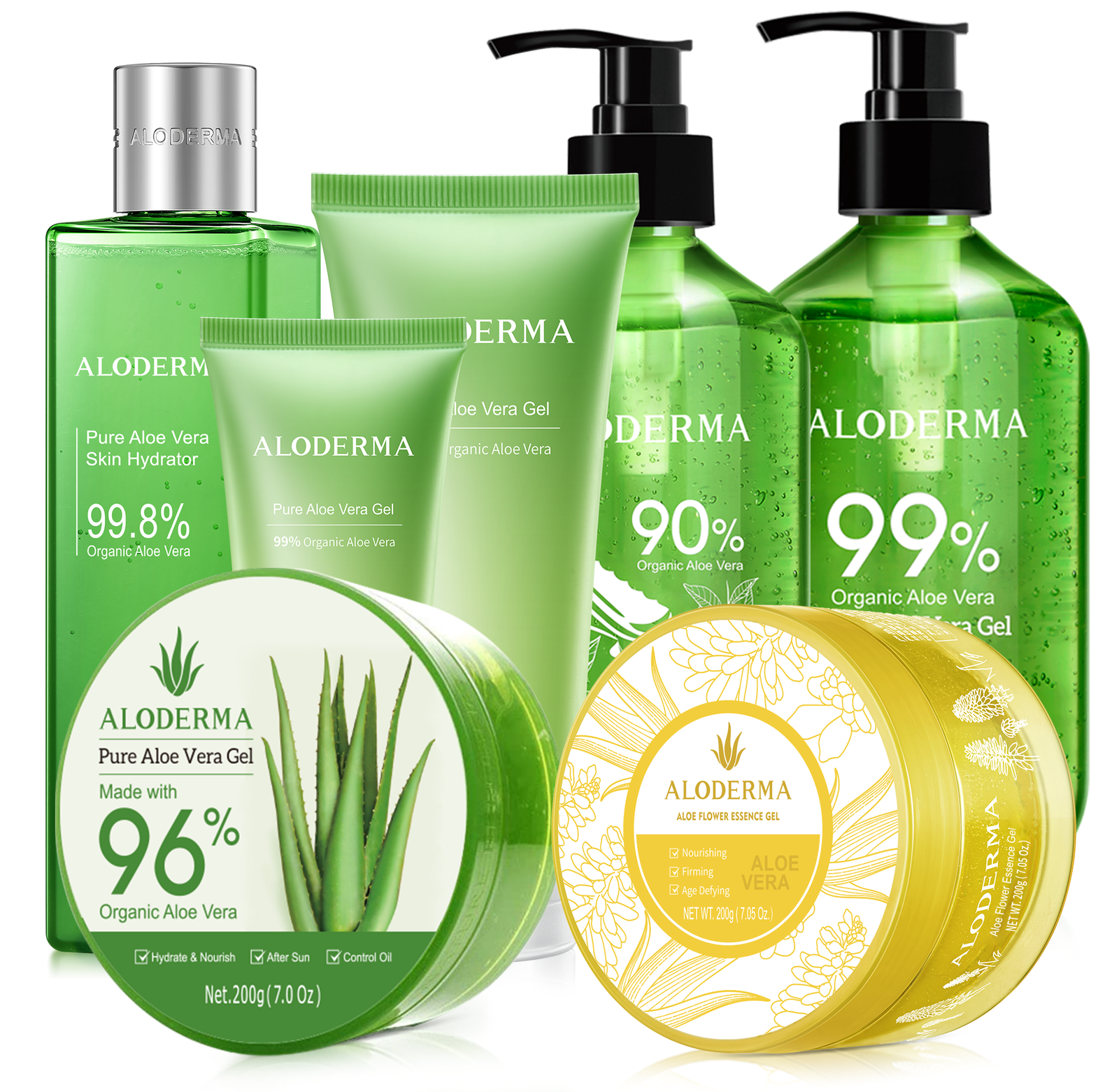
Our Bath & Shower range includes Aloe Nourishing Body Wash at $19.99 USD, a concrete starting point to consider alongside a light aloe hydrator after pat-drying. We don't use SD alcohol, aloe powders, parabens, phthalates, or sodium lauryl sulfate; we're also removing artificial fragrance and will only use natural plant-based essential oils, so scent-sensitive shoppers should still test cautiously rather than assuming plant scent won't affect them.
Make the purchase fit your skin
Before buying the body wash, open its current listing on our website and confirm the full ingredient list, especially the cleansing base and scent materials. Don't assume that a range-level description tells you everything about an individual bottle.
Our Skin Care Questionnaire offers personalized recommendations for your specific skin type. You can pair that starting point with our body skin-care guide to keep your routine manageable rather than adding products without a clear purpose.
Buy for the shower you'll actually take, not for an ideal routine you won't follow.
If a product feels different than expected or your skin reacts, contact our customer service team rather than pushing through. We'll work with you on a return or a suitable alternative.
Tonight's next step doesn't require a purchase: time a lukewarm shower and read the back label of the wash already in your bathroom against the checklist.
At ALODERMA, we offer fresh organic aloe-based bath care and hydrators to help you build a straightforward shower-to-moisturizer routine. Explore the current formulas, read their ingredient lists, and use our Skin Care Questionnaire to choose a starting point that fits your skin.