







You step out of a warm office into cold air, and your face feels tight before you reach the car. Makeup sits oddly, the cheeks look shiny by lunch, and another serum starts to look like the fix. It usually isn't. A dehydrated skin routine is a water-retention problem, so the order of a few products matters more than a longer shelf. I would start with the cheapest fix, a short five-step order you can run tonight, instead of buying a sixth bottle.
The Dehydrated Skin Routine at a Glance
You wake after an overheated office week with a tight face and hover over a new serum. Skip the extra bottle. A dehydrated skin routine of five steps, morning and night, covers most of that tightness. The list stays short because the job is to hold water, not to stack actives.
| Step | Product type | When | What it does |
|---|---|---|---|
| 1. Cleanse | Mild, non-soap cleanser | Morning and night | Removes oil and sweat without stripping water |
| 2. Hydrate | Fresh aloe gel or lightweight hydrator | Onto damp skin after cleansing | Adds water the skin can hold |
| 3. Moisturize | Cream or moisturizer | Within minutes of step 2, while still damp | Seals water in and slows evaporation |
| 4. Reapply | Same moisturizer | After handwashing or when tightness returns | Restores the seal during the day |
| 5. Protect | Daytime sunscreen | Every morning | Protects skin whose barrier is already stressed |
Keep each step to one product. A mild cleanser such as a fresh-aloe wash starts the sequence, a lightweight gel sits on damp skin, and a cream finishes the seal. Daytime sunscreen is the morning closer, not a night step.
Practical rule: If the face feels comfortable thirty minutes after moisturizing and doesn't tighten by midday, the order is working. If it tightens again, reapply the same cream instead of adding a serum.
Why Tight Skin Needs Water and a Barrier
Tightness after cleansing or a shower often points to water escaping from the skin's outer layer. That layer helps limit transepidermal water loss (TEWL), the movement of water from the skin into the air. When water escapes faster than the surface can retain it, skin may feel tight, rough, flaky, or reactive, even if it becomes oily later in the day. Read more about how transepidermal water loss affects skin.
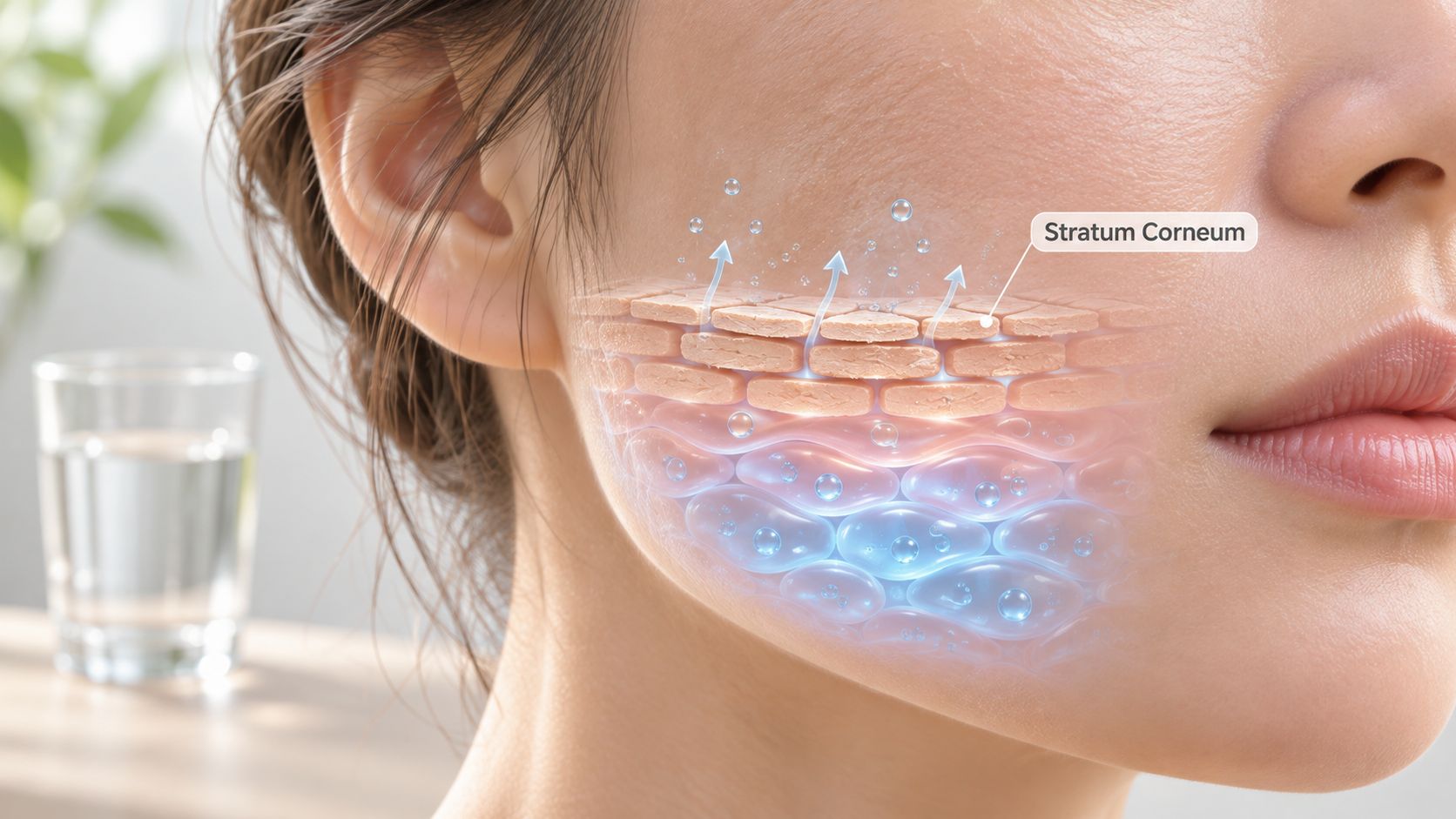
Water on the skin's surface is temporary. A humectant helps draw water toward the outer layer, while a moisturizer helps slow its escape. Drinking water supports the body, but it does not replace that surface barrier.
For example, after a late shower, cheeks may feel tight by morning if moisturizer was delayed until bedtime. Apply hydration and moisturizer while the skin is still slightly damp, rather than waiting for it to dry completely. The same practical approach can support rebuilding a damaged skin barrier.
Choosing a Hydrator Your Skin Will Use
A gel and a cream do different jobs. Humectants draw water toward the skin's surface, emollients smooth it, and occlusives help slow water loss. For tight skin, match the product to its role rather than relying on “hydrating” on the front label.
| Check | What to confirm |
|---|---|
| Aloe form | Look for fresh organic aloe juice in the ingredient list. |
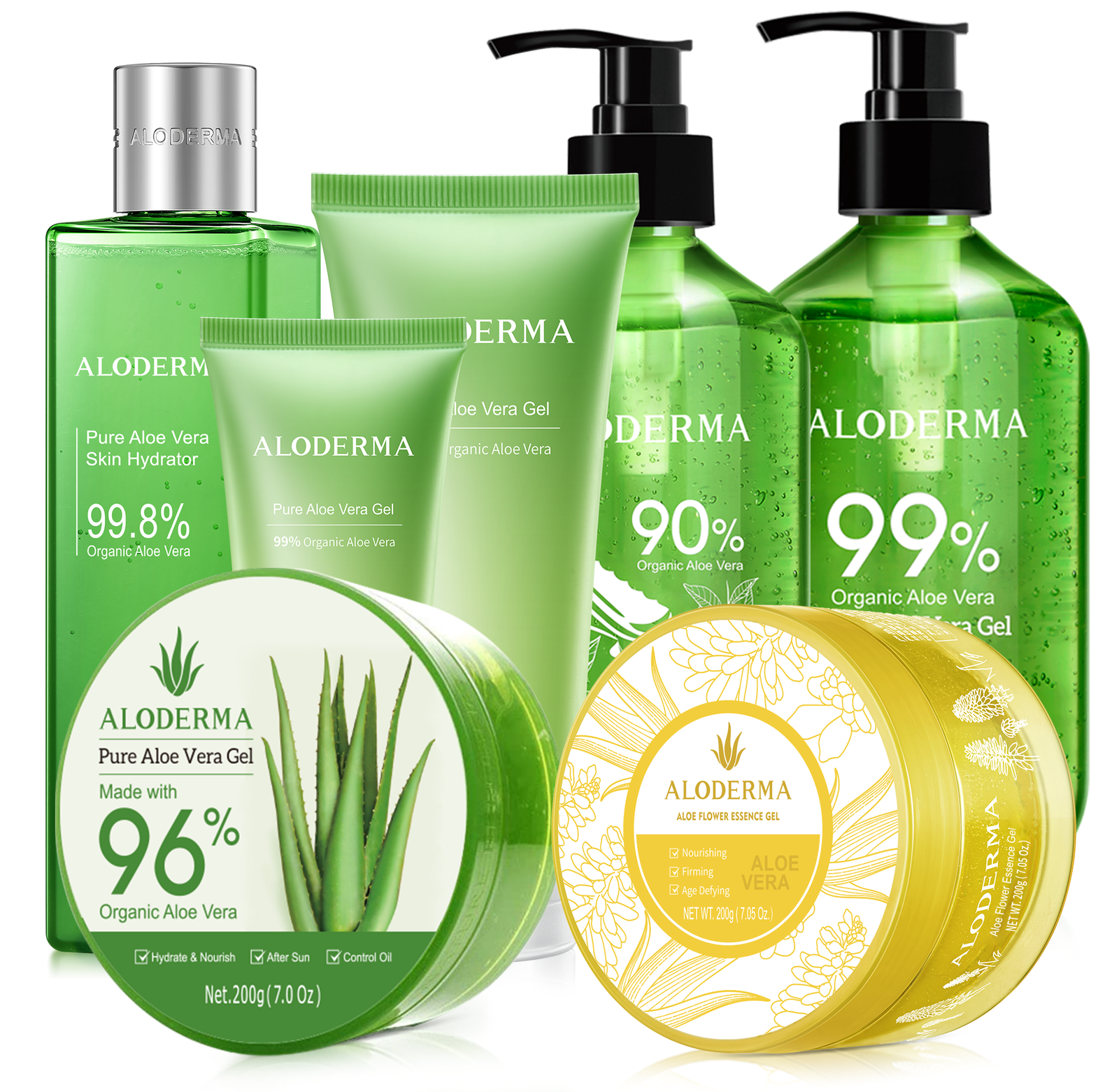
| Freshness | ALODERMA sources aloe from its own plantations and processes it on-site within 12 hours of harvest. |
| Fragrance | Check the ingredient list. Some formulas contain natural essential oils. |
Choose a lightweight gel or hydrator for the water-focused layer, then use a cream when your skin needs more comfort and moisture retention. A gel alone may not slow water loss enough; a rich cream alone may feel heavier than you need. If a formula leaves skin tight or uncomfortable, simplify the layers and reassess the texture.
Evening Steps From Cleanse to Seal
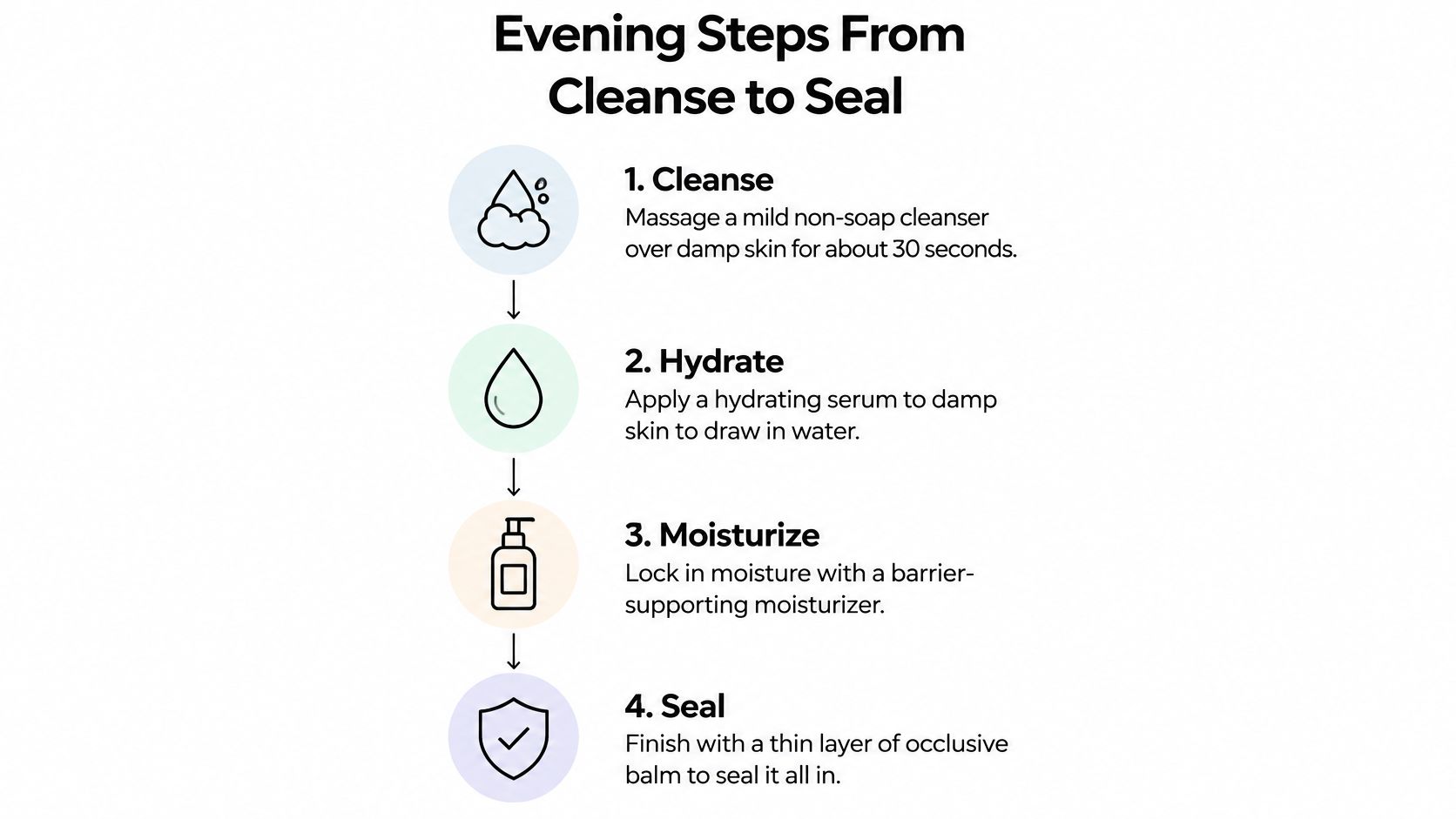
It's 9 p.m., the office heat is still on your face, and the skin feels tight before you've washed it. Run the glance order as technique, not as a second shopping list. The American Academy of Dermatology dry-skin guidance is the backbone here. Use a mild, non-soap cleanser, keep the wash or shower to 5–10 minutes of lukewarm water, pat rather than rub, and put a fragrance-free moisturizer on while the skin is still slightly damp.
The wash and the pat
Massage the cleanser over damp skin for about 30 seconds, then rinse. Hot water and a long shower strip the surface you're about to try to refill. A squeaky finish means you went too far. Pat with a soft towel until the face is slightly damp, not dry. Rubbing pulls off the water the next layers need.
Gel, then cream
While that water is still there, apply a fragrance-free aloe gel or lightweight hydrator. It should sink in within about a minute. Seal with moisturizer within a few minutes. On very dry cheeks or around the mouth, choose a cream rather than a lotion, because creams and ointments generally give stronger occlusion. The cream should feel comfortable, not heavy. If it pills or sits greasy, you used too much, not the wrong order.
Our natural routine notes match that sequence. Moisturize a clean, damp face when it feels dry, tight, or exposed. We grow all of our own organic aloe vera and manufacture onsite within 12 hours of harvest so the aloe in that hydrator stays bioactive. A simple night looks like this. Cleanse, pat until damp, apply the aloe hydrator, then follow with cream if the skin still feels uncomfortable. If you want a seal that also supports the surface, start with a barrier-minded moisturizer and keep the amount thin.
After a workout wash, don't reach for a new serum. Reapply the same moisturizer. Keep the full routine to morning and night, and aim for moisturizer at least 2–3 times daily while tightness persists, including that midday reapply. Fragrance, an abrasive towel, and a humectant with no seal are the usual slips. By the next afternoon the face should feel steady, not greasy.
A short walk-through of damp-skin layering makes the timing easier to picture before you try it at the sink.
When Extra Layers Make Tight Skin Worse
A tight, flaky, or rough face can still look oily by midday. The water is leaving the outer layer. You don't have an empty shelf to fill. Mist plus a humectant alone adds water that can disappear within hours unless a moisturizer slows that loss. A longer routine is not a better one.
A 2025 clinical-measurement review notes that too much soap can disrupt the barrier and raise water loss, names sodium lauryl sulfate as a recognized irritant, and points out that moisturizers and glycerin can reduce that loss. Use that before you buy another bottle.
- If a new layer stings or flakes, stop that product. Covering it with another layer keeps the problem in place.
- If you already cleanse, hydrate on damp skin, and seal, don't add a third hydrator or a weekly scrub because the face feels tight at night.
- After exercise, reapply the same moisturizer rather than a new serum.
- Keep that shorter routine for two weeks before you change it.
A product can feel soft for an hour and still fail the afternoon. Judge the day, not the first minute after application.
Success looks like less midday tightness and fewer flakes, not a promised percent gain. A lower water-loss reading and higher outer-layer water are related, but they are not the same result, so steady care beats chasing a number. If mature skin is part of the picture, the Beverly Hills guide to aging skin is a calm place to compare lighter versus richer textures without adding steps.
How to Tell Whether the Routine Works
Judge the routine over weeks, not by how soft the skin feels in the first minute. In a 2023 randomized clinical trial, three moisturizer types were applied twice daily for 8 weeks to people with dry, aging skin, and stratum corneum water content was significantly higher in two moisturizer groups than in conventional care (p = 0.01 and p = 0.047). The same body of work found tested formulas raised skin moisture at 8 weeks versus baseline, with barrier-related gains at several checkpoints, including 3 days after treatment ended. A separate 2024 comparison of 43 healthy women found no baseline difference in outer-layer hydration or water loss between higher and lower daily water intake, so extra glasses aren't a stand-in for the cream.
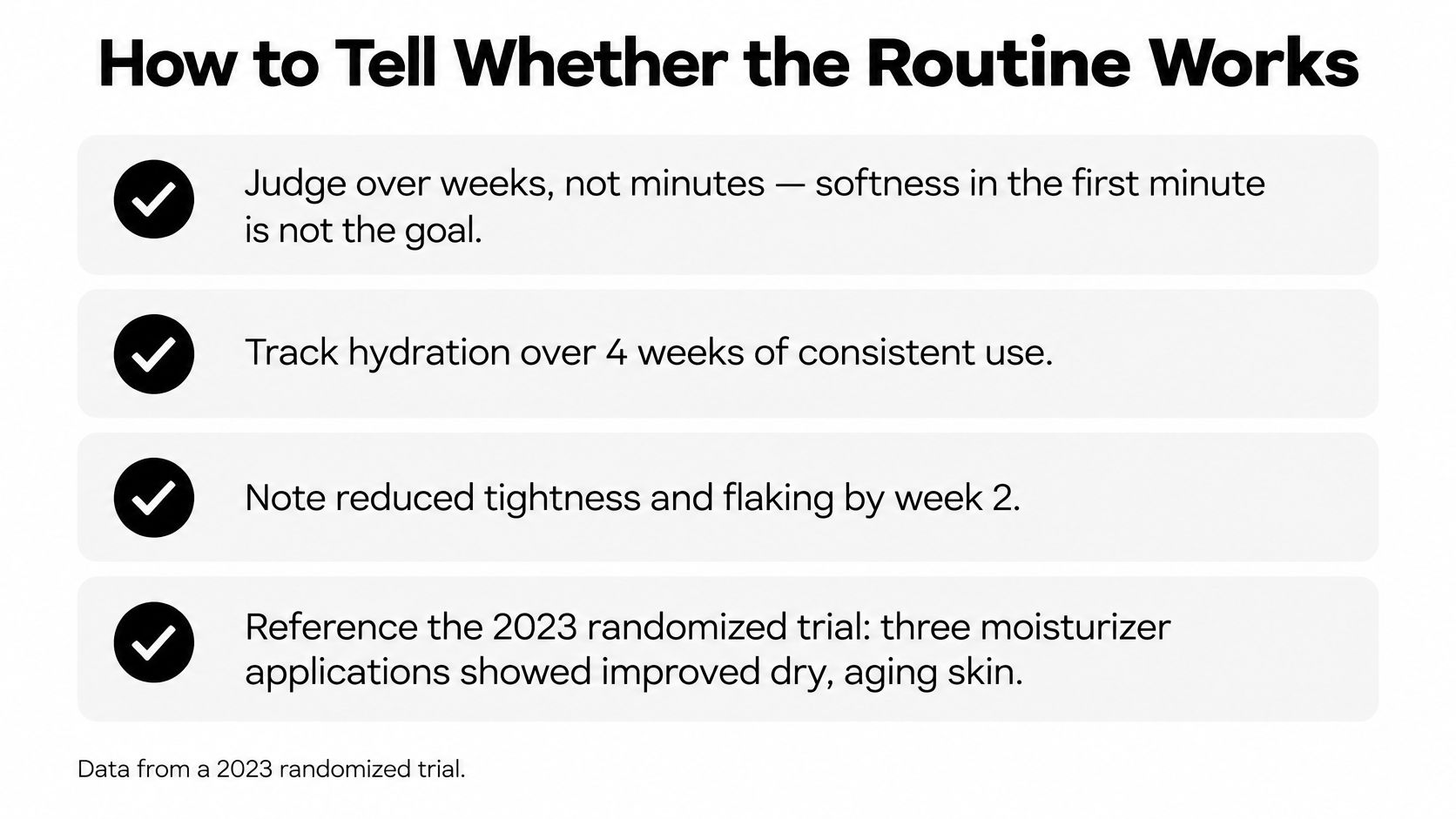
Run a two-week trial, change one thing at a time, and keep four checks in a phone note.
| Check | How to test | Sign it works | Sign to pause |
|---|---|---|---|
| Comfort after moisturizing | Note tightness 30 minutes after step 3 | Tightness fades within an hour | Tightness returns within minutes every day |
| Surface texture | Compare flakiness in daylight once a week | Fewer flakes by week two | Flakes spread or cracks appear |
| Product load | Count the steps used each day | Five steps or fewer and no new irritation | More layers added with no improvement |
| Stinging or redness | Check after each new product | Calm within a day | Persistent stinging: pause all new products and seek professional advice |
If stinging, redness, or cracking continues or worsens, pause every new product and get professional advice. Don't answer that with another layer.
Start the Routine Tonight
Tonight, pick one mild non-soap cleanser, one fresh-aloe hydrator, and one fragrance-free moisturizer, then run the five-step order once before bed. Skip the extra serum. On ALODERMA, open the hydrator and moisturizer pages, read each ingredient list, and compare the stated aloe share with our reported 64% to 99.8% organic fresh aloe and our standard of at least 65% fresh organic aloe juice, with no added water and no concentrate or powder.
We are a fully vertically integrated aloe vera company. We grow all of our own organic aloe vera, and we process and manufacture onsite within 12 hours of harvest so the primary ingredient is as bioactive as possible. The Aloe Hydrating Cleanser, a fresh aloe gel, and the Aloe Hydrating Cream fit cleanse, hydrate, and seal. Our hydrating facial sheet mask is designed to restore the skin's protective barrier and reduce trans-epidermal water loss, and it can sit in as an occasional hydrate step, not a nightly extra. Typically, a cleanser lasts about 8 weeks, and other skin care products last about 3–5 months.
For 14 days, keep those three products, record the four checks each night, and add nothing unless stinging or redness means you should pause and ask a professional. Start the log tonight.
ALODERMA builds simple fresh-aloe care for a dehydrated skin routine, from a lightweight hydrator you apply on damp skin to a cream that seals water in. Our formulas start with organic aloe we grow and finish onsite, so the hydrate step stays light enough to use morning and night. Visit ALODERMA to compare the cleanser, gel, and cream, then begin the 14-day log with the three you choose.