





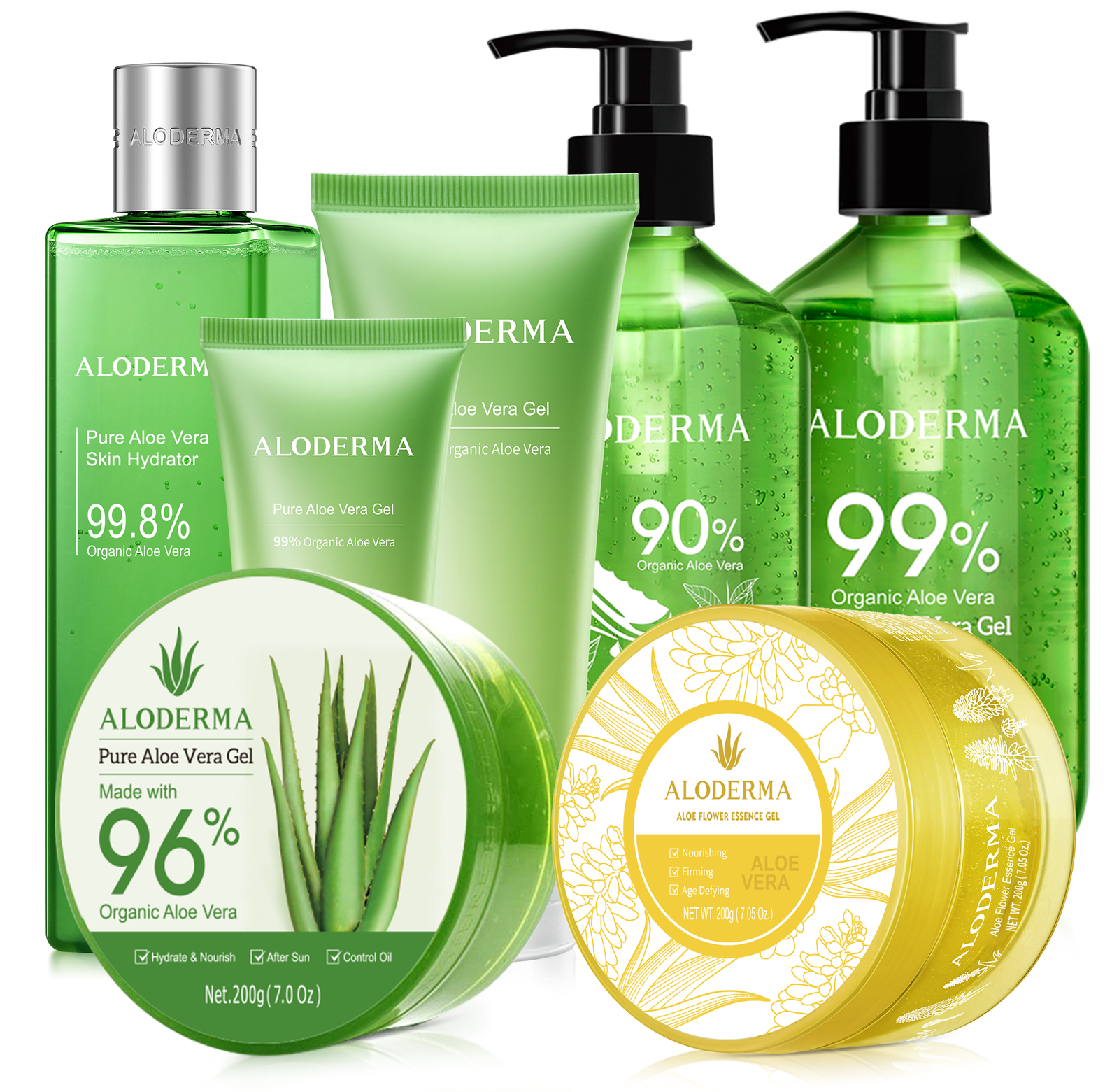


The most popular natural-skincare advice is backwards. A crowded shelf of botanical oils, floral waters, masks, scrubs, and essential-oil blends doesn't make a routine gentler. It makes it harder to know what your skin tolerates, what each product contributes, and which step caused trouble.
A better skin care routine natural way is smaller and more deliberate: cleanse gently, add lightweight aloe hydration, moisturize on damp skin, and protect exposed skin from ultraviolet light. Freshness, preservation, ingredient order, and consistency matter more than collecting every plant extract with a green label.
Why Most Natural Routines Overcomplicate Things
You know the scene. The bathroom shelf is full of amber bottles and green tubes, each promising purity, balance, radiance, or a return to “simple” beauty. Yet the routine takes so long that you skip it when you're tired, and your skin reacts just often enough to make every new product feel suspicious.
More natural ingredients don't automatically create better skin. A formula can contain plant-derived ingredients and still include fragrance compounds or essential oils that some people don't tolerate. A Stanford Medicine review of products marketed as natural found that more than 94% contained at least one recognized contact allergen, while 90% included an ingredient among the 100 most clinically prevalent allergens. See the Stanford Medicine review of natural skincare allergens for the underlying analysis.
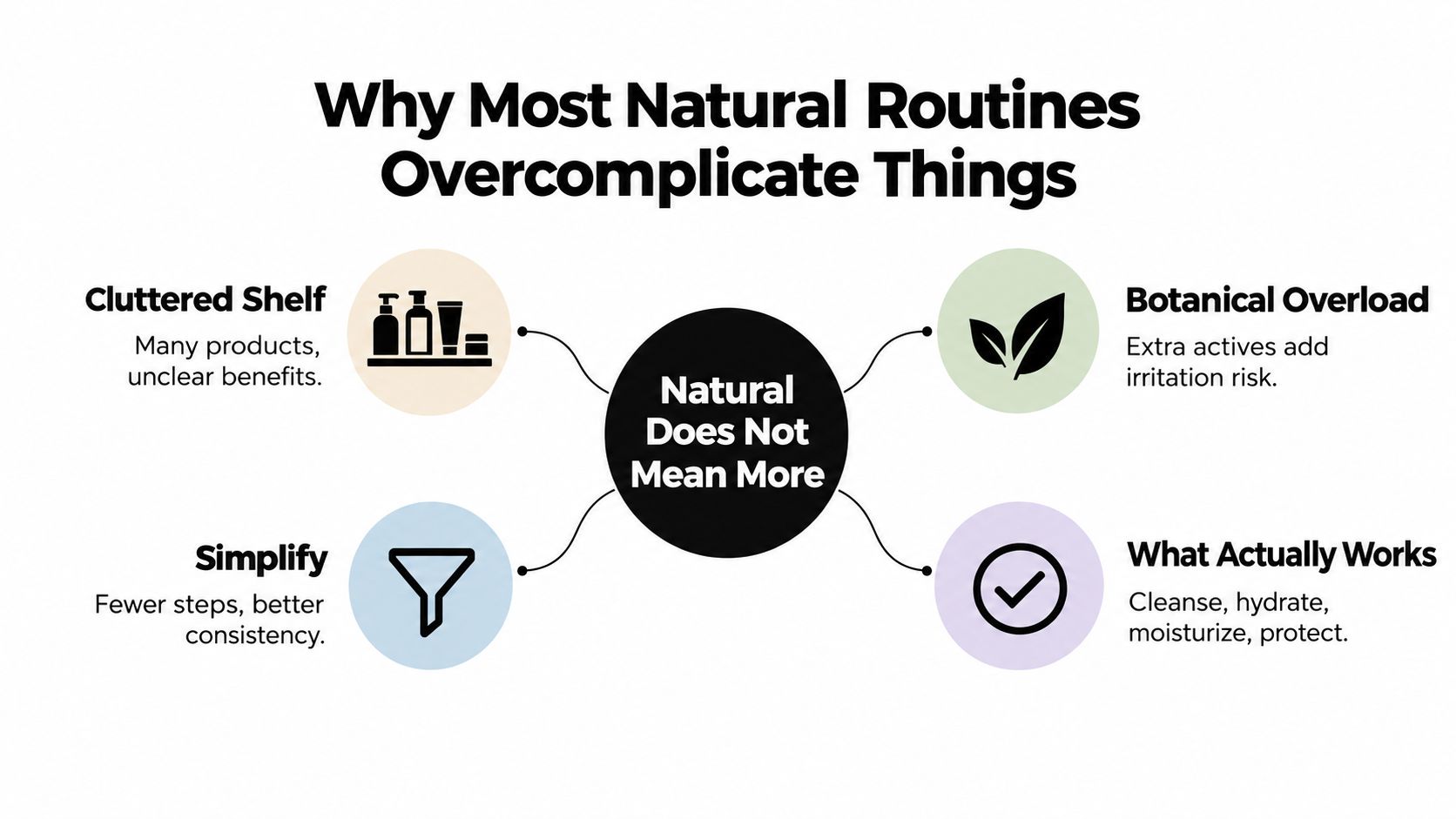
Natural means intentional, not overloaded
A long botanical lineup creates three practical problems:
- You can't isolate variables. Add rose water, lavender oil, a new cleanser, and a facial balm together, and you won't know which product your skin dislikes.
- You can over-cleanse or over-exfoliate. “Squeaky clean” often feels satisfying, but repeated stripping can leave the surface tight and uncomfortable.
- You lose the habit. A routine with too many steps becomes an occasional project instead of something you can maintain every morning and night.
The smarter framework is fresh aloe plus a short, well-preserved formula. Aloe can provide a lightweight, water-binding layer after cleansing, but it shouldn't replace moisturizer or sunscreen. A natural ingredient still needs sensible formulation, appropriate frequency, and a place in the correct order.
The kitchen-counter rule: If you can't explain what a product does, why it comes next, and how you'll stop using it if your skin protests, it doesn't belong in the routine yet.
The point isn't to reject botanicals. It's to stop treating quantity as proof of care. A simple routine gives you a clear baseline, makes changes easier to judge, and leaves room for your skin to feel comfortable rather than constantly stimulated.
The Core Daily Sequence Anyone Can Start Tonight
Start with four steps and keep their order consistent. Freshness, short ingredient lists, and clear sourcing matter more than collecting every botanical on the shelf. Check the label for a recent-looking product, a concise ingredient panel, and a farm-to-bottle story you can verify.
Morning begins with a clean, damp surface
Step one, cleanse gently. Use a mild cleanser in the morning if you wake up oily or applied products overnight. At night, wash before bed to remove dirt, oil, sunscreen, and residue. The American Academy of Dermatology guidance on basic skin care supports gentle cleansing and applying moisturizer while skin remains damp, which helps retain water.
Choose lukewarm water, massage with your fingertips, and pat dry. A gentle aloe cleanser can handle this step. A pure aloe gel works better as the hydrating layer that follows.
Step two, hydrate with aloe. Smooth a thin layer of well-preserved aloe gel or an aloe-containing hydrator over slightly damp skin. Let it settle before adding the next product. The finish should feel comfortable and light, without stickiness or tightness.
Step three, moisturize. Apply a fragrance-free moisturizer when your face feels dry, tight, or exposed. Damp skin gives the moisturizer water to hold, and oily skin can still benefit from hydration. Pick a light lotion if rich creams leave a coated finish.
Step four, protect. Finish the morning with broad-spectrum sunscreen every single day. The AAD recommends SPF 30 or higher on exposed skin, with reapplication every two hours and after swimming or sweating.
For a practical product pairing, compare a gentle cleanser, an aloe hydrator, and a moisturizer in the brand's range, then check the individual ingredient panels before buying. Read the label for preservation details, ingredient order, and sourcing language you can verify. Formulas and availability can change, so confirm current details on the product page.
At night, cleanse first, apply a thin aloe layer, and finish with moisturizer if your skin needs it. Clean bedding can support a sleep-friendly setup, and these SouthShore Fine Linens bedding tips provide useful context beyond the bathroom counter.
Two Routines for Oilier or Blemish-Prone Skin
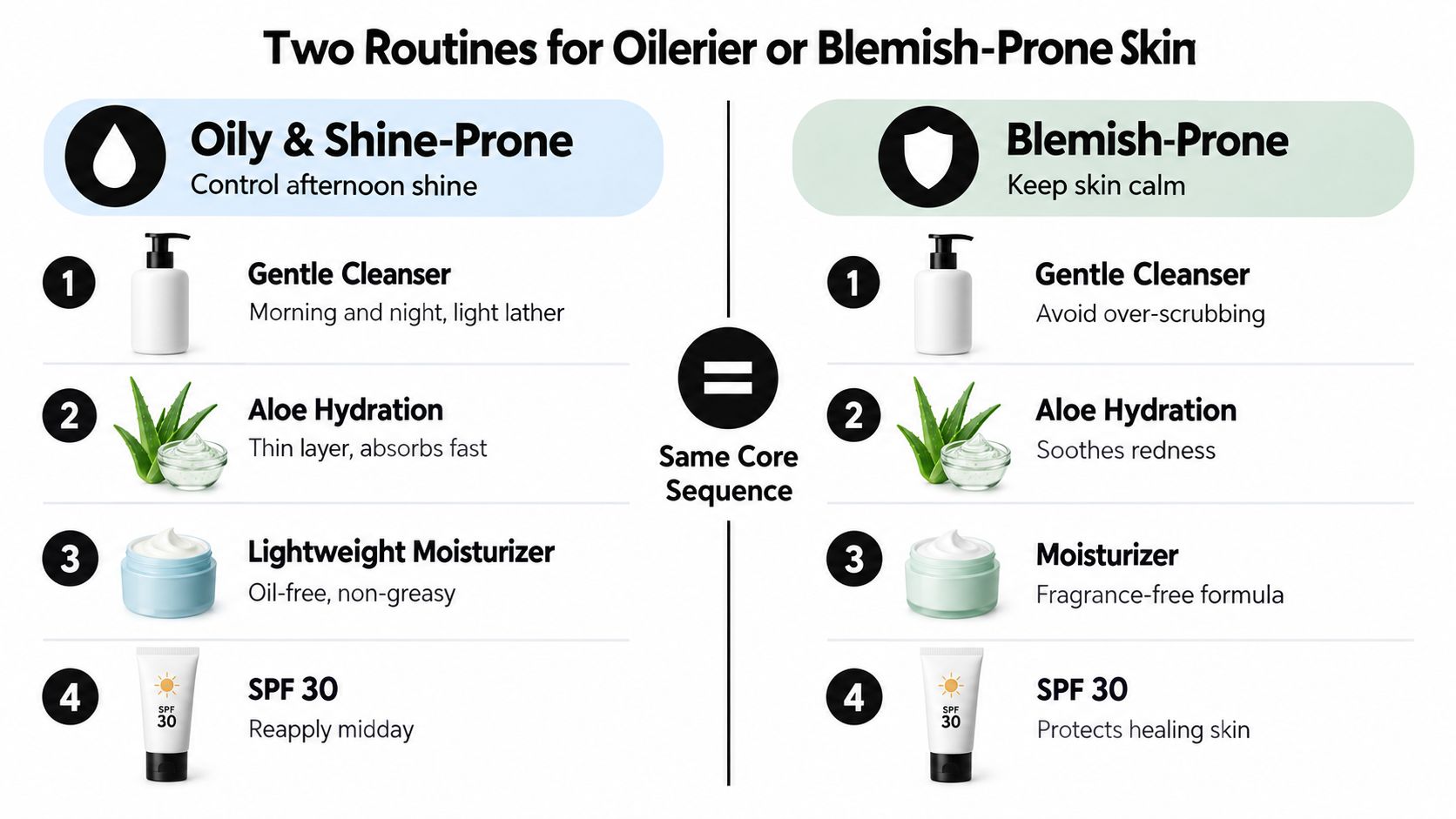
Oily skin and blemish-prone skin aren't the same problem, so don't force them into the same texture. Both routines use the same backbone, but the supporting choices should feel different.
If shine is your main complaint
Choose a gentle cleanser that removes surface oil without leaving your face tight. In the morning, use a thin aloe layer and let it absorb before applying an oil-free, lightweight moisturizer. A non-greasy finish matters more than adding astringent toners or repeatedly washing your face.
At midday, blot excess shine rather than washing again and again. Finish the morning with broad-spectrum SPF 30 or higher, and reapply according to the AAD sunscreen and moisturizer guidance for exposed skin, particularly after sweating or swimming.
Your evening sequence stays simple:
- Cleanse lightly. Remove sunscreen and daily residue without scrubbing.
- Hydrate sparingly. Use a thin layer of aloe rather than several layered serums.
- Moisturize selectively. Apply a lightweight formula where skin feels dry, not automatically in a heavy coat across the entire face.
The ALODERMA routine for oily skin provides a useful product-focused starting point, but read the current labels and choose textures you can use consistently.
If blemishes and sensitivity tend to arrive together
Keep the cleanser gentle and avoid rough cloths, abrasive scrubs, and aggressive rubbing. Apply aloe hydration in a thin layer, then choose a fragrance-free, non-comedogenic moisturizer where possible. Don't assume that a stronger sensation means a better result.
Aloe is best treated here as a soothing hydration step, not as a guaranteed solution for blemishes. The National Center for Complementary and Integrative Health overview of aloe vera notes that evidence varies by use, so everyday cosmetic hydration shouldn't be presented as a substitute for professional care.
Choose your lane: If your face feels shiny but comfortable, prioritize light textures. If it feels reactive as well as shiny, remove extras first.
If you're unsure which routine fits, start with the blemish-prone version for a short period: fewer products, no fragrance-heavy additions, and no new exfoliating blend. You can add richness later, but undoing irritation is rarely as quick as creating it.
Why Freshness Changes How Aloe Feels on Your Skin
Aloe products aren't interchangeable just because they show an aloe leaf on the label. The useful question is what happened between harvest and the finished bottle. Was the plant grown by the brand, processed promptly, and handled through a controlled manufacturing process, or was the ingredient transported through several unrelated steps before formulation?
Freshness matters because aloe is a plant ingredient, not a decorative marketing symbol. Processing, preservation, concentration, and storage all shape the final texture and experience. A short ingredient list can still be poorly made, while a well-formulated product can contain supporting ingredients that keep aloe stable and comfortable to use.
Turn a brand story into a buying question
ALODERMA is a fully vertically integrated aloe vera company. The company states that it grows its own organic aloe vera, processes the aloe, and manufactures onsite within 12 hours of harvest to keep the primary aloe ingredient as fresh and bioactive as possible. That is a specific sourcing model, not a general assumption you should apply to every aloe product.
When you evaluate an aloe gel, cleanser, toner, or cream, ask:
- Where was the aloe grown? Look for a clear answer rather than a vague “botanical blend” statement.
- How quickly was it processed? A harvest-to-processing window gives the sourcing story a practical detail.
- Who controlled the steps? Vertical integration can make the chain easier to understand, though you should still inspect the finished formula.
- What's in the bottle? Open the current fresh aloe face-care range from ALODERMA and check each product's ingredient list before choosing.
A one-minute freshness check won't prove that a product suits your face. It will, however, separate a specific farm-to-bottle claim from a front-label leaf illustration. That's the standard natural skincare deserves.
How to Keep a Natural Routine Actually Gentle
Natural isn't a synonym for hypoallergenic. Essential oils, fragrance compounds, and multiple botanical extracts can all complicate a routine, especially when you introduce them together.
The Stanford review cited earlier found recognized allergens in products marketed as natural. That finding changes the practical advice: don't patch-test only synthetic formulas. Patch-test botanical formulas too, particularly if your skin has reacted to “clean” products before.
Use a 48-hour introduction method
Apply a small amount of the new product to a discreet area, such as the inner arm or behind the ear. Leave the area alone and observe it for 48 hours before applying the product to your face. A delayed itchy rash can appear a day or two after exposure, so an immediate “no reaction” isn't enough.
Introduce only one new product at a time. If you add a cleanser, aloe gel, toner, and moisturizer on the same day, you lose the ability to identify the cause of a reaction.
- Start with a short formula. Fewer supporting ingredients make the routine easier to evaluate.
- Skip fragrance-heavy blends. A beautiful scent isn't a skin-care benefit.
- Be cautious with essential oils. Don't apply concentrated or fragranced blends to compromised, freshly exfoliated, or otherwise uncomfortable skin.
- Use finished products for water-based formulas. Homemade fresh aloe lacks standardized preservation and can become contaminated.
- Stop when symptoms develop. Don't push through persistent itching, burning, or a new rash to “let your skin adjust.”
A natural routine should lower decision fatigue, not increase it.
The ALODERMA guide to natural skincare for sensitive skin can help you think through simpler product choices. Keep the principle sharper than the marketing: a short, well-preserved routine is often a more sensible starting point than a DIY mixture containing several untested extracts.
Adjusting the Routine Through the Seasons
Your face doesn't need a completely new identity every season. It needs small texture changes while the basic order stays recognizable.
Hot and humid weather
Use a lighter cleanser if your face feels comfortable after washing, then apply a thin aloe layer. Choose a lightweight moisturizer and avoid piling on oils just because the product is labeled natural. Keep sunscreen in the morning, especially when more skin is exposed.
If sweat makes you want to cleanse repeatedly, resist the urge. Excessive washing can leave the surface uncomfortable, so remove sweat after activity without turning every warm afternoon into a full reset.
Cold and dry weather
Cold air, indoor heating, and harsher water can make the same cleanser feel more drying. Keep the cleanse gentle, apply aloe to damp skin, and switch to a richer moisturizer if tightness persists. Don't add several new botanical products at once just because your cheeks feel different in January.
Skin generally favors a pH around 4.5–5.5, while more alkaline conditions may disrupt microbial balance, according to this review of skin pH and microbiome-related cosmetic research. That helps explain why water sources, climate, and cleansing habits can change how a familiar routine feels.
Travel days
Pack the smallest complete routine: gentle cleanser, aloe hydrator, moisturizer, and sunscreen. Skip experimental masks, decanted homemade mixtures, and fragranced extras until you're back in a familiar environment.
Keep patch-testing new products separate from travel whenever possible. A climate change already gives you enough variables without adding a new formula to the mix.
Building a Routine You Will Actually Stick With
A natural routine does not need a crowded shelf. Start with cleanse gently, moisturize damp skin, and use sunscreen in the morning. Add aloe when you want lightweight hydration, but drop any toner, mask, or oil that makes the routine harder to repeat.
Use that simple structure for a full week before judging it. In the morning, cleanse, hydrate with aloe, moisturize, and apply SPF. In the evening, cleanse, add aloe hydration, and moisturize if your skin needs it. A consistent baseline makes it easier to identify what helps and what irritates.
Use this product check before adding anything
- Purpose: What single job does this product perform?
- Order: Does it go after cleansing, before moisturizer, or only in the morning?
- Formula: Have you read the current ingredient list instead of trusting “natural” or “clean” wording?
- Tolerance: Did you patch-test it for 48 hours?
- Consistency: Will you use it on an ordinary, tired morning?
DIY belongs in the routine only when you understand preservation, sanitation, stability, and ingredient compatibility. Fresh kitchen aloe may sound appealing, but it lacks the standardized preservation of a finished cosmetic formula. For daily facial care, choose clear labeling and controlled manufacturing when reliability matters.
Freshness and sourcing deserve the same scrutiny as the ingredient count. Look for a short, readable formula, a clear aloe source, and packaging that explains where the ingredient comes from and how the product is made. A convincing farm-to-bottle story should appear on the label or brand information, not exist only as a vague marketing promise.
Organic claims require a close read. Under USDA guidance, a cosmetic labeled “organic” must contain at least 95% organically produced ingredients, excluding water and salt, as explained by the FDA guidance on organic cosmetic claims. Check the complete ingredient panel instead of treating one front-label word as proof that every ingredient is organic.
Your routine is working when you can repeat it without negotiating with yourself.
Pick one product to evaluate, patch-test it for 48 hours, and begin tomorrow. For fresh, organic aloe-centered cleansers, hydrators, gels, moisturizers, and other everyday formulas, visit ALODERMA to review current ingredients and build a shorter farm-to-skin routine you can maintain.