



The big question—"how long does aloe vera last?"—really depends on what kind of aloe you’re talking about. Imagine you just picked a fresh, juicy tomato from the garden. You know it will be delicious right away, but it won't last long on your counter. Fresh aloe gel scooped right from a leaf is just like that—incredibly vibrant but delicate. It’s only good for a day or two at room temperature before its benefits start to fade.
Think of it like this: that garden tomato versus a jar of pasta sauce. One is bursting with immediate, sun-ripened goodness but spoils fast, while the other is carefully prepared to last in your pantry.
Understanding the Lifespan of Aloe Vera
Ever cut an aloe leaf, excited to use the fresh gel for soothing relief after a long day, only to find it looking a little sad and discolored the next day? You’re not alone. The moment that precious gel hits the air, its powerful, skin-loving compounds begin to break down. This is where the difference between fresh-cut, homemade, and professionally formulated aloe vera becomes crystal clear.
The journey from a living plant to a soothing gel on your skin is a race against time. Let's break down the lifespan of every type of aloe, so you can see why this freshness is so critical for getting the comforting results your skin craves.
From Farm to Shelf: The Race for Potency
Fresh aloe vera gel, straight from the leaf, has an incredibly short lifespan if you don't add preservatives. It lasts just 1-2 days at room temperature before natural enzymes and bacteria cause it to degrade. It’s like leaving a fresh smoothie out on the counter; you know you need to enjoy it right away.
Popping it in the fridge can stretch this to about 5-7 days, slowing everything down and keeping those vital compounds intact for a bit longer. If you want to store it for the long haul, freezing can preserve it for up to six months. You can find more great preservation tips at mindbodygreen.com.
This chart really puts into perspective how much storage methods matter for fresh, raw aloe vera.
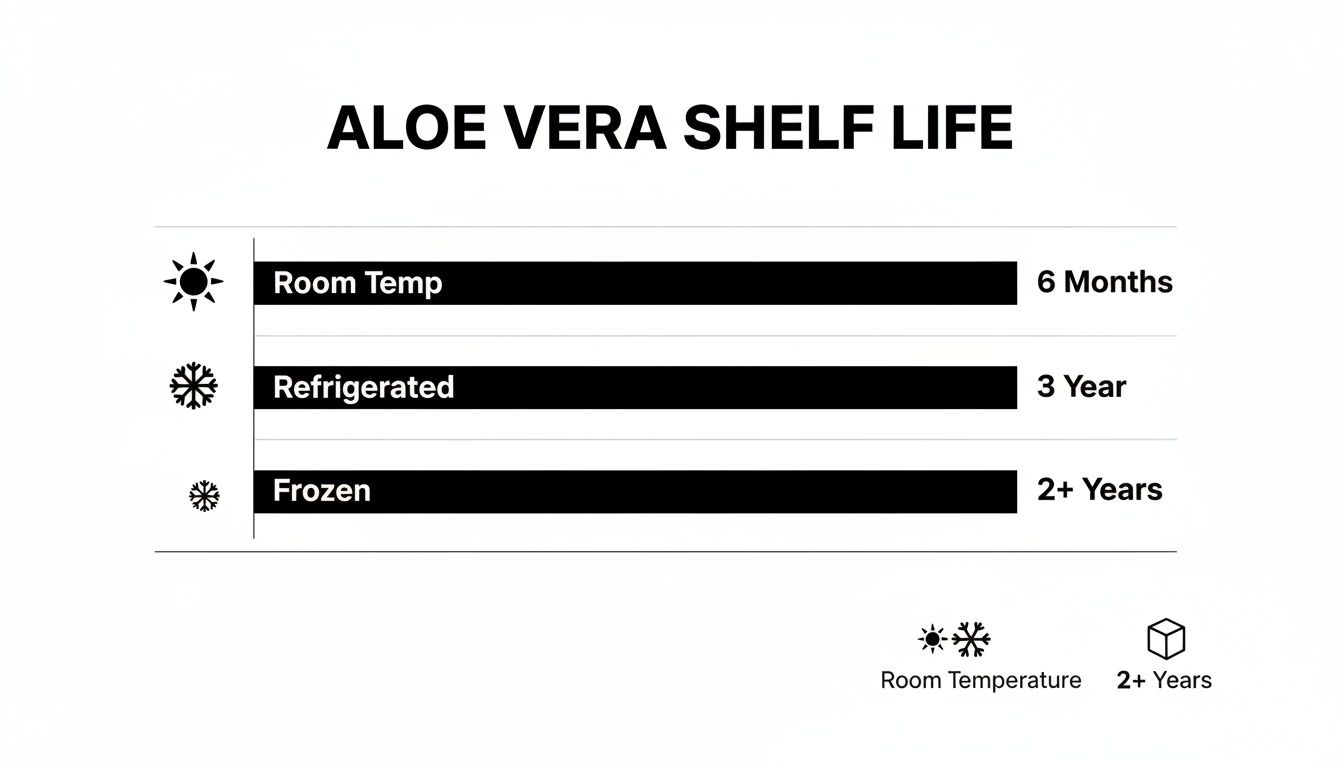
As you can see, temperature is the single biggest factor in protecting the delicate compounds in unprocessed aloe gel.
This is exactly why our approach at Aloderma is so different. As a fully vertically integrated company, we control everything—we grow all of our own organic aloe vera and we process our aloe vera and manufacture onsite within 12 hours of harvest.
This commitment isn't just about speed; it's about capturing aloe at its peak potency. By minimizing the time from field to bottle, we ensure the primary ingredient found in every one of our products is the most bioactive and effective aloe vera possible, so your skin gets the full benefit.
This farm-to-skin philosophy means you can trust that the aloe in products like our Pure Aloe Vera Gel, made with 96% fresh organic aloe, delivers the fresh, soothing benefits your skin deserves, every single time.
The Lifespan of Different Aloe Forms
Figuring out how long aloe vera lasts is a lot like understanding the difference between fresh herbs from the garden, dried spices from the pantry, and a perfectly preserved sauce. They all come from the same plant, but how they're prepared and stored makes a world of difference in their freshness and lifespan. From a tough, whole leaf to a delicate homemade gel or a shelf-stable commercial product, each has its own unique timeline.
Let's break down the three most common forms of aloe vera you'll find and see why their shelf lives are so dramatically different.
The Whole Aloe Vera Leaf
Think of an uncut aloe leaf as nature's perfect container. Its thick, waxy green rind is a protective shield, sealing the precious gel inside away from air, light, and bacteria. It's surprisingly resilient.
Kept in a cool, dry spot away from direct sunlight, a whole, undamaged aloe leaf can stay fresh for two to three weeks. Pop it in the crisper drawer of your fridge, and you might even get a full month out of it. This makes keeping a whole leaf on hand a fantastic way to have pure, fresh aloe ready whenever you need it.
But the moment you slice through that rind, the clock starts ticking. Fast. The inner gel, now exposed to oxygen and microbes, begins to degrade almost immediately. That’s the trade-off for getting the absolute freshest gel—its powerful benefits are fleeting.
Homemade Aloe Vera Gel
Scooping the clear gel out of a leaf and blending it into a smooth liquid is a popular DIY project. What you get is raw, pure aloe, with zero additives. But that purity comes with a major catch: an incredibly short shelf life.
Without any preservatives, homemade gel is a sitting duck for oxidation and bacterial growth. It's just like a cut apple left on the counter; it starts turning brown and losing its vitality in no time. The same thing happens to your DIY gel.
-
At Room Temperature: You're looking at just a few hours before it begins to discolor and lose its potency.
-
In the Refrigerator: Tucked away in an airtight container, you can stretch its life to about 5-7 days.
While making it yourself is satisfying, the reality is that homemade gel is a perishable product. You have to use it right away or refrigerate it carefully for a very limited time.
At Aloderma, we live in that delicate balance between purity and stability. As a fully vertically integrated company, our entire mission is to capture that just-picked freshness and deliver it in a form that is both safe and effective for your skin, bridging the gap between fleeting DIY gel and long-lasting skincare.
Commercial Aloe Vera Products
This is where nature and science come together to create something special. Commercial products like gels, creams, and lotions are formulated to stay stable and effective for a much, much longer time. A typical unopened product can last for two to three years, all thanks to carefully chosen preservatives that protect the aloe's active compounds.
Once you open it, the countdown begins, but it’s a slow one. Most products have a "period after opening" (PAO) symbol on the packaging—that little open jar icon—which usually indicates a shelf life of 6 to 12 months.
Here is where Aloderma's unique approach truly shines. We are a fully vertically integrated aloe vera company, which means we control every single step. We grow all of our own organic aloe on our ECOCERT-certified farms. Then, we process that fresh aloe and manufacture our skincare right there, all within 12 hours of harvest.
This "farm-to-skin" promise isn't just a catchy phrase; it's our quality-control standard for ensuring the primary ingredient found in every one of our products is the most bioactive and effective aloe vera possible. By processing it so quickly, we lock in all the goodness that nature intended. To really see how fresh gel stacks up, you can learn more about the differences between dried aloe vs. natural aloe gel in our detailed article.
When you use our Pure Aloe Vera Gel, you’re getting the best of both worlds—the purity of fresh aloe captured in a stable, skin-loving formula that delivers consistent results from the first pump to the last.
The Science Behind Why Freshness Fades
Ever sliced an apple and watched it turn an unappetizing brown just a few minutes later? That’s oxidation in action, and it’s the perfect way to understand what happens to fresh aloe vera once it’s cut.
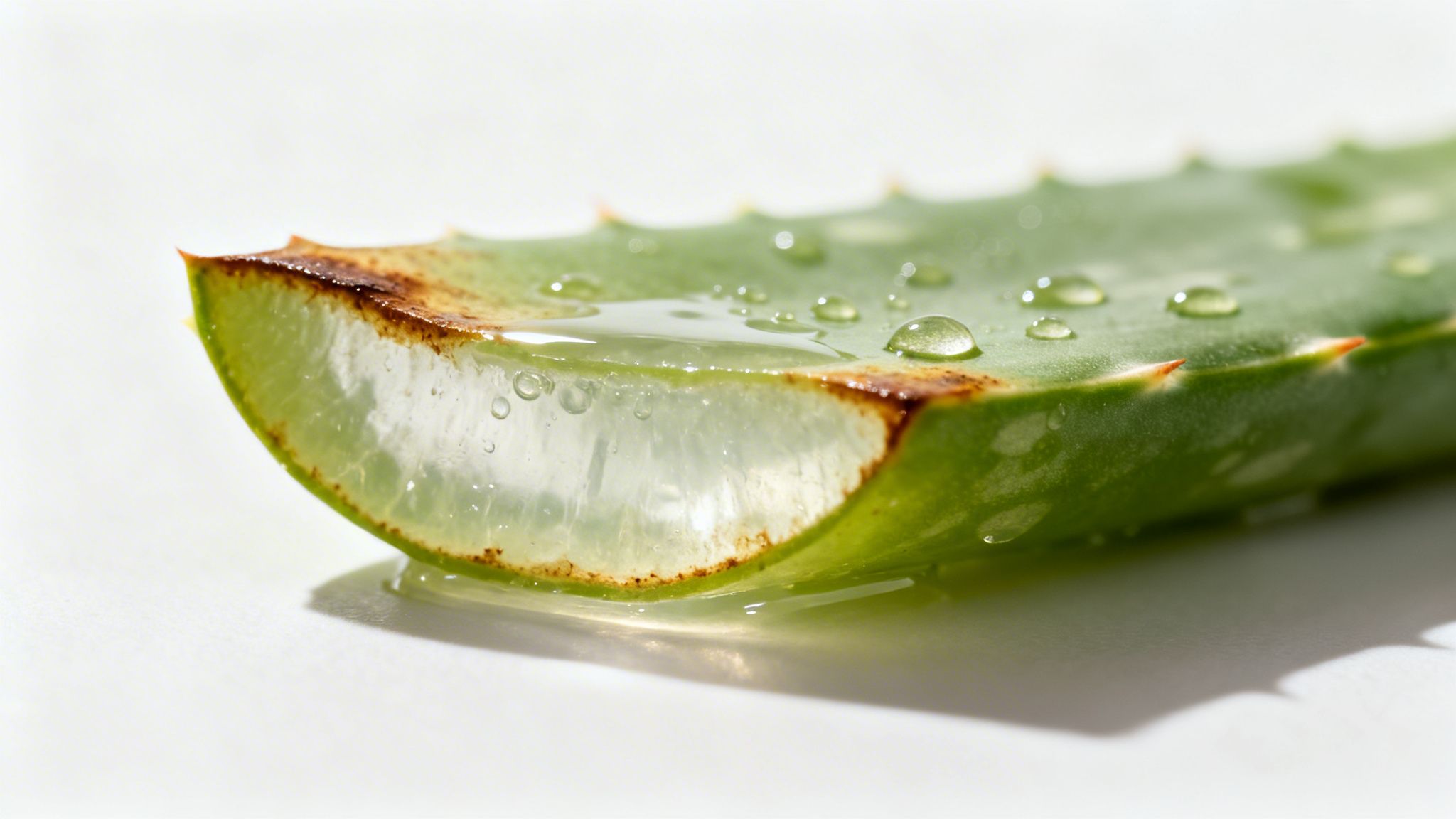
Just like that apple, the moment you slice through an aloe leaf’s protective green rind, the inner gel is exposed to oxygen. This kicks off a race against the clock as natural enzymes begin breaking down the gel's complex structure. All the good stuff that makes aloe so soothing and hydrating for your skin—the vitamins, minerals, and powerful polysaccharides—starts to degrade. This isn’t just a cosmetic change; it's a real loss of potency. The longer the gel sits out, the less effective it becomes.
The Role of Air and Microbes
But oxygen isn't the only thing you're fighting. The air is full of invisible bacteria and mold spores, and to them, fresh aloe gel is a five-star buffet. It’s the perfect environment for them to multiply.
Without preservatives, these tiny invaders quickly contaminate the gel, causing it to spoil. This is why homemade aloe gel starts to get a weird smell or a cloudy look after only a few days, even if you keep it in the fridge. That’s a clear signal that the natural goodness is being overtaken by unwanted microbial growth.
This whole process shows just how challenging it is to capture aloe’s benefits in a bottle. It’s not about just stopping it from looking bad; it’s about protecting its bioactive power so it can actually work wonders for your skin. It's a challenge we’ve built our entire company around solving.
As a fully vertically integrated aloe vera company, we've built our entire process around defeating this ticking clock. We grow all of our own organic aloe vera, and we process our aloe vera and manufacture our products onsite within 12 hours of harvest. This rapid timeline is our secret to locking in the freshness.
By keeping the gel’s exposure to air and contaminants to an absolute minimum, we make sure the primary ingredient in every single one of our products is the most bioactive and effective aloe vera possible.
Harnessing Aloe’s Protective Power
What’s fascinating is that the very same properties that make aloe so fragile also give it incredible protective abilities when it's processed correctly. The gel contains natural compounds that can form a barrier against both oxygen and microbes.
This has even been tested in food preservation. One study showed that a thin coating of aloe vera gel helped papayas last 15 days at room temperature—while untreated papayas were completely decayed after just 12 days.
This natural protective power is exactly what we aim to bottle. But creating a stable, skin-safe product that lasts requires way more precision than a simple DIY recipe. It’s a delicate balancing act between purity and preservation, a topic we dive into deeper in our guide to understanding aloe vera gel purity.
Ultimately, the science is clear: fresh aloe is incredibly powerful but also incredibly fragile. Capturing its benefits at their peak requires a deep understanding of its biology and an unwavering commitment to preserving it from the second it’s harvested.
Practical Tips for Storing Your Aloe
Knowing the shelf life of different aloe vera forms is one thing, but actually making them last is where the real magic happens. With just a few simple storage habits, you can dramatically extend the life of your fresh leaves, homemade gels, and even your favorite skincare products.
This is about more than just keeping things from going bad. It's about preserving the potent, active compounds that make aloe so incredible for your skin. Let's walk through how to keep each type of aloe fresh, powerful, and ready to work its wonders.
Storing a Fresh Aloe Leaf
An uncut aloe leaf is nature's own perfect, sealed container. But once you bring it home, you can keep it vibrant and fresh much longer with one simple move: put it in the fridge.
-
Wrap It Up: Gently wrap the entire leaf, or just the cut end of a partial one, in plastic wrap or a beeswax wrap. This creates a barrier against airborne bacteria and stops the precious gel inside from drying out.
-
Keep It Cold: Pop the wrapped leaf into the crisper drawer of your refrigerator. The cool, steady temperature slows down the natural breakdown process, keeping it fresh for up to three or four weeks.
This little routine means you'll always have the freshest possible aloe on hand whenever your skin needs a quick, soothing fix.
Preserving Your Homemade Aloe Gel
That pure, beautiful gel you just blended is incredibly delicate. Its benefits are fleeting, so you need to protect it right away. Your main enemies are air and bacteria.
An airtight container in the fridge is a must, but if you want a brilliant long-term solution, your ice cube tray is about to become your new best friend.
Pro Tip: Pour your freshly blended aloe gel into an ice cube tray and pop it in the freezer. Once the cubes are solid, transfer them to a labeled freezer bag. This creates perfect, single-use portions that can last for up to six months. Imagine grabbing one for instant, cooling relief after a day in the sun.
This trick not only stretches the life of your gel but also makes it unbelievably convenient. If you're curious about the best way to get from leaf to gel, you can learn how to prepare aloe vera in our detailed guide.
Caring for Your ALODERMA Products
Here at Aloderma, we’ve already handled the hardest part for you. Because we're a fully vertically integrated company, we grow all of our own organic aloe vera and process it into skincare right on our farms—all within 12 hours of harvest. This unique process ensures the primary ingredient found in every one of our products is the most bioactive and effective aloe vera possible.
Your job is simply to maintain that farm-fresh purity. Here’s how:
-
Find a Cool, Dark Place: Store your Aloderma products, like our soothing Aloe Firming Cream with Carnosine and Jojoba Oil, in a cabinet or drawer away from direct sunlight and heat. The steam and fluctuating temperatures in a bathroom can degrade active ingredients over time.
-
Keep It Clean: Always use clean hands or a little cosmetic spatula to get product out of jars. This is a crucial habit to prevent introducing bacteria and compromising the formula.
-
Tighten the Lid: After every use, make sure you screw the caps and lids on tightly. It’s a simple step that minimizes air exposure, which helps preserve the stability and effectiveness of products like our Aloe Hydrating Toner.
Following these easy tips ensures that every single drop delivers the fresh, potent, and soothing power we work so hard to capture for your skin.
The ALODERMA Difference: Freshness You Can Feel
When you’re talking about how long aloe vera lasts, the conversation usually jumps straight to preservatives and shelf life. But what if the real secret isn't just about preservation, but about capturing peak freshness from the very beginning—right from the moment the leaf is picked?
At Aloderma, we believe the key to effective, long-lasting aloe skincare starts on our farms.
Picture our lush, organic aloe farms, where every leaf is harvested by hand. Just a stone's throw away, our processing facilities are waiting. That close proximity is the heart of our entire philosophy. The journey from a living plant to a stabilized product happens in under 12 hours.
This isn't just about moving fast. It’s a deliberate, scientifically-backed method for locking in the aloe plant's living essence when its bioactive compounds are at their absolute strongest. It means the pure aloe vera in our products—which is always the number one ingredient—delivers more potent soothing properties and more powerful hydration for your skin.
Farm To Skin in 12 Hours
Being a fully vertically integrated aloe vera company is what makes this critical 12-hour window possible. We have complete control over the entire process.
We don’t buy aloe powder or gel from outside suppliers who might take days, or even weeks, to process their harvest. We grow all of our own organic aloe vera. This guarantees that from the second a leaf is selected, its precious inner gel is protected from the rapid degradation that starts with exposure to air and light.
This commitment makes a difference you can actually feel on your skin. When you use Aloderma, you're experiencing a farm-to-skin philosophy that translates to real, visible results. It’s the difference between a product that simply has "aloe vera" on the label and one that is built entirely around its fresh, living power.
Capturing Bioactive Potency
The skincare world is always evolving, and advanced processing technology now plays a huge role in extending the life of natural ingredients. Recent innovations have truly changed the game for aloe's longevity, boosting the shelf-life of some gels by up to 40% through methods like cold-pressed extraction.
These techniques are critical for preserving the delicate bioactive compounds that make aloe so beneficial. At Aloderma, we use this same kind of advanced thinking right at the source, combining our 12-hour harvest-to-process promise with state-of-the-art methods. This ensures the 95%+ natural ingredients in our toners and creams stay potent and effective long after they leave our farm. You can discover more about these market insights on haleynutrition.com.
Our process ensures the compounds responsible for hydrating and calming your skin are captured at their absolute peak. Every bottle contains aloe that is as close to its natural, living state as possible.
When you smooth on our Aloe Hydrating Moisturizer or apply an Aloe Hydrating Sheet Mask, you’re not just using skincare. You are experiencing the result of a process obsessed with delivering unparalleled freshness and efficacy.
This dedication is why aloe vera is always the first and most abundant ingredient in our formulas, never an afterthought. We don’t just use aloe; we are aloe. It’s a standard of quality that begins in our soil and ends with your beautiful, healthy-looking skin. This is the freshness you can truly feel.
Frequently Asked Questions About Aloe Vera
Diving into the world of aloe vera often brings up a few questions, especially around keeping it fresh and getting the most out of every drop. Whether you're a DIY enthusiast with your own plants or a dedicated skincare fan, you want to be sure the aloe you're using is safe, potent, and effective. We've gathered some of the most common questions to give you clear, straightforward answers.
How Can I Tell if My Aloe Vera Has Gone Bad?
Honestly, the best way to know if your aloe vera has spoiled is to just trust your senses—they won’t steer you wrong. Fresh, healthy aloe vera gel should be clear or have a very light green tint, with a subtle, almost neutral smell. When it starts to turn, the signs are usually pretty obvious.
Keep an eye out for these key indicators of spoilage:
-
A Change in Color: If your gel, whether it's homemade or a commercial product, starts to look brownish, pinkish, or unusually cloudy, that's a definite red flag.
-
An Unpleasant Odor: Spoiled aloe will develop a sour, moldy, or generally "off" smell that is a world away from its fresh state.
-
A Shift in Texture: If the gel feels overly slimy, watery, or has any clumps, its internal structure has started to break down.
Using aloe vera past this point can lead to skin irritation and certainly won’t provide any of the soothing benefits you’re looking for. This is precisely why Aloderma's commitment to stable, expertly crafted formulas is so important. Our protective packaging and quality ingredients safeguard the product’s purity from the very first use to the last, so you never have to guess if it's still good.
Can Adding Vitamin C or E Extend My Homemade Gel's Life?
Yes, adding natural antioxidants like vitamin C powder or vitamin E oil is a popular DIY trick, and it can help your homemade aloe gel last a little longer. These ingredients work by slowing down oxidation—the very process that causes the gel to turn brown when it's exposed to air. This might buy you a few extra days in the refrigerator.
However, it's crucial to understand their limitations. While they fight browning, vitamins C and E are not preservatives. They have zero power to stop the growth of bacteria, mold, or yeast. Your homemade gel will still be highly perishable and a prime target for microbial contamination.
Making your own gel is a fun project, but it just can't match the safety and reliability of a professionally formulated product. For dependable purity without the guesswork, Aloderma's Pure Aloe Vera Gel is expertly stabilized to deliver fresh, potent benefits every single time you use it.
Is It Safe to Use an Expired Aloe Vera Product?
We strongly advise against using any skincare product after its expiration date. That date isn't just a suggestion; it’s a real guide to the product's safety and effectiveness. Once a product expires, the preservatives in the formula may no longer be strong enough to protect it from bacterial and fungal growth.
Beyond the safety risk, the active ingredients—like our precious bioactive aloe—will have lost their potency. This means the product simply won't deliver the soothing and hydrating results you expect. To protect your skin and get the best results, always use products within their stated shelf life. All Aloderma products feature a clear "period-after-opening" symbol (it looks like a little open jar) to show you exactly how long it remains effective after you first use it.
Why Does ALODERMA Emphasize 12 Hours From Harvest?
That 12-hour window is the very heart of our brand and the secret to our products' effectiveness. The moment an aloe leaf is cut from the plant, its powerful, beneficial compounds begin to degrade. It's a race against time to capture that peak potency before it's lost.
As a fully vertically integrated aloe vera company, we control the entire process from start to finish. We grow all of our own organic aloe vera, and our processing and manufacturing facilities are located right on our farms. This unique setup allows us to take a freshly harvested leaf and turn it into a stabilized skincare ingredient in under 12 hours.
This "Farm to Skin" commitment ensures that the aloe vera—always the primary ingredient in every Aloderma product—is as potent and bioactive as scientifically possible. It’s the difference between biting into a berry you just picked and eating one that’s been sitting on a truck for days. The freshness you can feel on your skin translates directly to better, more visible results.
Beyond the specifics of aloe vera, understanding the general resilience of plants, such as how long plants can go without water, can provide broader insights into plant care and longevity. This same principle of preserving a plant's vitality is what drives our mission to deliver the freshest aloe possible.
Experience the farm-fresh difference for yourself. At Aloderma, we capture the living essence of aloe within 12 hours of harvest to bring you skincare that is pure, potent, and incredibly effective. Discover our full range of aloe-based products and feel the power of nature on your skin.
Shop Now at aloderma.com