







A familiar cleanser suddenly stings, your cheeks feel tight after washing, and dry flakes show beneath your makeup by lunchtime. It's tempting to replace the cleanser, then the moisturizer, then anything else that touches your face. But before you switch products again, look at the routine as a whole and track what your skin does.
If you're wondering how to tell if your skin barrier is damaged, start with warning signs, not a diagnosis. A home check can help you spot patterns and simplify your routine, but it can't prove what's happening beneath the skin's surface.
Signs Your Skin Barrier Is Damaged Right Now
Tightness, stinging, roughness, and flaking can show up together when your skin isn't holding moisture comfortably. One sign on its own doesn't prove barrier damage. A familiar product suddenly stinging is a particularly useful clue that your tolerance has changed, especially when dryness or flaking appears at the same time.
| Sign | What You Notice | When It Usually Shows Up | Strength as a Clue |
|---|---|---|---|
| Tightness after washing | Face feels pulled even with clean water | Within minutes of cleansing | Moderate alone, strong if it repeats after every cleanse |
| Stinging on application | Burning when a familiar product goes on | Right after applying a product | Strong, because tolerance has changed |
| Flaking or scaling | Dry flakes that show under makeup | Through the day, worse after washing | Moderate, stronger with tightness |
| Rough texture | Bumpy feel even after moisturizing | Mornings or after exfoliating | Moderate, check it over several days |
| Sudden reactivity | Products used for months now sting | Over days to weeks | Strong when several signs appear together |
| Fine surface cracks | Tiny lines in stretched or dry areas | Later, often in cold or dry weather | Strong, and a reason to book a clinician if it persists |
| Lingering redness | Pink tone that stays after 30 minutes of rest | Persists after cleansing or product use | Get professional review if it spreads or burns |
Read the pattern, not one moment
Say Maya's cheeks burn under a cleanser she's used for years, and her T-zone flakes beneath foundation by lunchtime. Those signs appearing together deserve more attention than either would alone. Now compare that with tightness on one cold, dry morning that fades within an hour. If the tightness returns after every cleanse, that's a stronger signal that the routine may be part of the problem.
A heated room, wind, a long hot shower, or a newly added product can also leave skin feeling tight or stingy. Ask yourself: Does the tightness return after every cleanse, or only on dry, windy days? That distinction can help separate a routine pattern from a temporary response to the environment.
The outer skin layer helps limit water loss and keep irritants out. When its structure is disrupted, moisture escapes more readily and skin can become more reactive. A clinical review of the skin barrier and water loss describes transepidermal water loss, or TEWL, as water vapor escaping through the skin. Researchers can measure TEWL with specialized equipment, but readings vary with the body site, temperature, humidity, age, and testing method. It's useful as a research or clinical measure, not a number to chase at home.
As a practical rule, three or more signs that stay together for two weeks make the routine worth reviewing. Spreading redness, pain, oozing, or cracks that don't close call for a clinician rather than a home checklist.
Why Tight, Stinging Skin Happens
Think of the skin's outer layer as a brick wall. Skin cells form the bricks, while a layer of lipids acts as mortar, helping hold water in. A review describes this lipid mixture as approximately 50% ceramides, 25% cholesterol, and 15% fatty acids in the brick-and-mortar structure of the skin barrier.
When that mortar is depleted or disorganized, water escapes more easily. The outer layer dries, which can feel tight and look flaky. Gaps in the structure can also make skin more reactive to products that once felt comfortable.
How a routine can add up
Maya's cleanser didn't change. Her routine did: she began washing twice daily with hot water, then layered a toner, a serum, and a spot gel. Within a week, her cheeks stung. That sequence doesn't prove which step caused the change, but it gives her a useful starting point: simplify the routine before replacing every product.
Harsh cleansing, friction, and layering several strong products can challenge the barrier's lipid structure. If you want a practical guide to choosing a gentler wash, how to choose a gentle cleanser can help you think beyond how much foam a product makes.
Oily skin can feel tight, too. A shiny T-zone doesn't rule out a dry or weakened outer layer, and trying to strip away shine with harsh products can leave skin feeling more uncomfortable. Test the routine before blaming one product. Start by reducing the steps that may be adding stress, then pay attention to whether comfort changes.
How to Run a Two-Week Home Check
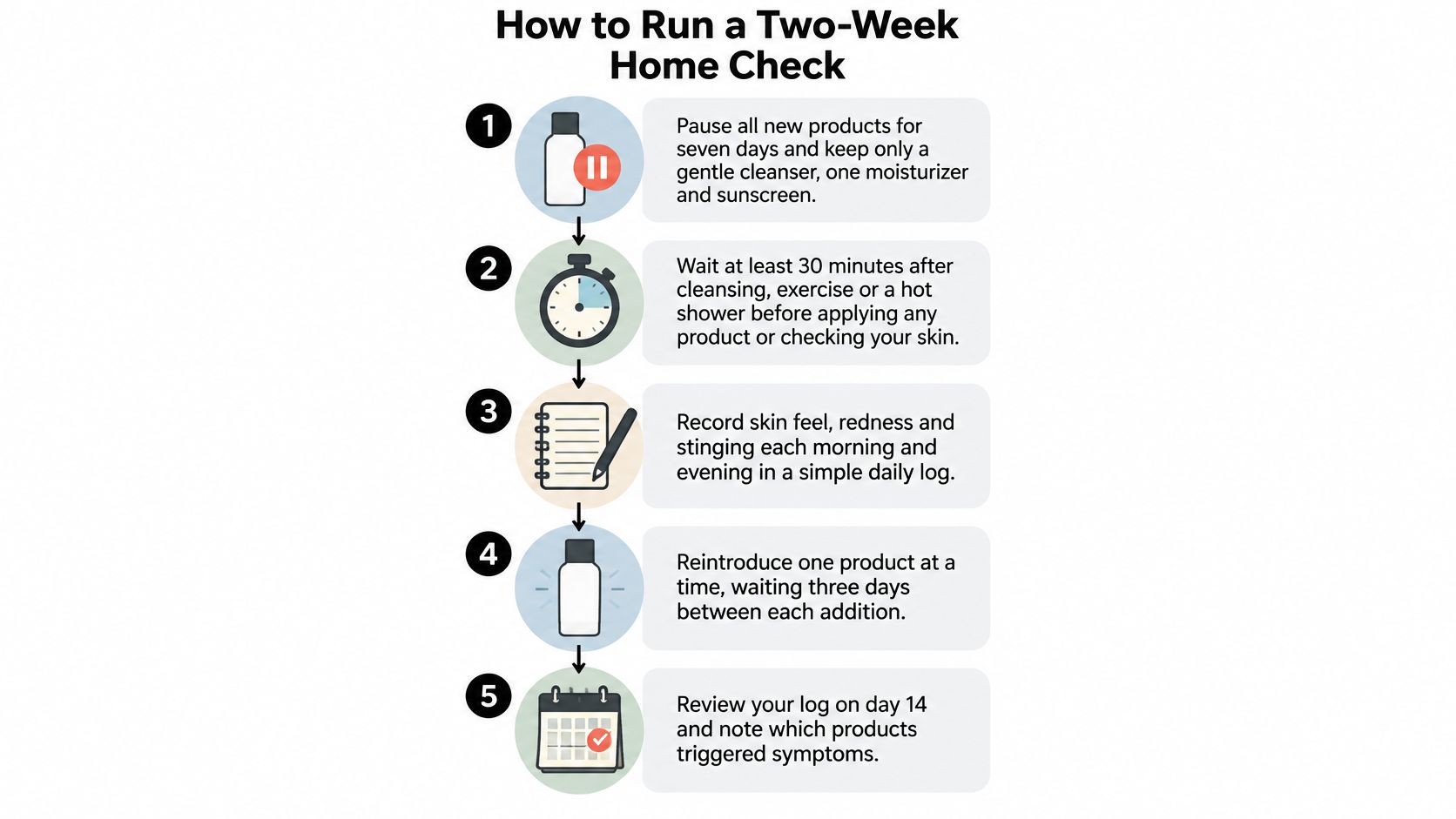
A useful home check is a simple, consistent log. It can help you see whether symptoms ease when you pause new additions and make the routine gentler. It can't confirm barrier damage, but it may show you which habits deserve a closer look.
Keep the check consistent
- Pause new products for the first week. Use only a gentle cleanser, one moisturizer, and sunscreen so you can observe your skin without adding new variables.
- Wait before checking your skin. After cleansing, exercise, a hot shower, or product application, give your face at least 30 minutes to settle. Check the same area each time, such as your left cheek.
- Note how water feels. Rinse with plain lukewarm water and record whether stinging begins within a minute. Don't repeat the test if it causes marked discomfort.
- Make an evening log. At the same time each day, rate tightness, flaking, redness, and stinging from 0 to 3. Add a brief note if wind, a heated room, or a long shower might have affected how your skin felt.
- Keep conditions steady. Try to check in a familiar indoor setting rather than right after coming in from a windy day or turning up the heat. Changes in temperature, humidity, sweating, or friction can affect what you notice.
- Compare your entries. On day 8, compare the log with day 1. If the stinging fades and tightness eases after you simplify, the routine may have been contributing.
- Wait for a calm log before testing additions. Once your skin feels settled, introduce products one at a time and keep recording what changes.
Know what a home check can't tell you
A phone camera or home gadget can't reliably measure TEWL. Clinical testing uses a standardized probe, and a clinical screening method for skin-barrier assessment describes allowing the probe to stabilize for 40 seconds before averaging the final 10 seconds of a reading. A measurement taken straight after washing or rubbing isn't comparable. Readings also depend on the body site and testing conditions, so one isolated number wouldn't settle the question.
Don't try tape stripping or deliberately irritating your face to create a test result. A clinician can use standardized, non-invasive assessment if persistent symptoms need a closer look.
Maya used her notes rather than guessing at her product shelf. After dropping the toner and spot gel, she rated her tightness 3 on day 1 and 1 by day 8. That change didn't identify the exact cause, but it gave her a clearer next step: keep the simpler routine while her skin stayed comfortable.
Patch Testing Timeline for New Products
A patch test lets you try a new formula on a discreet area before applying it to your face. Follow the timeline and note what happens, rather than testing several products at once and trying to guess which one bothered your skin.
| Day | What to Do | Stop If You See |
|---|---|---|
| Day 0 | Apply a pea-sized amount to a discreet spot, such as behind the ear or along the jawline, and photograph it as a baseline | Nothing yet; this is your baseline |
| Day 1 | Apply once to the same spot; check it after 15 minutes, 24 hours, and 72 hours | Immediate burning, itching, or redness |
| Day 2 | Apply once daily and add no other new product | Redness or tightness spreading beyond the test spot |
| Day 3 | Apply once to the same spot and make your 72-hour check | Persistent itching, new bumps, or spreading redness |
| Days 4–7 | If the spot stays quiet, use on the full face at night only | Stinging on the face, flaking, or tightness that grows through the week |
Stop using the product if you notice immediate burning, itching, spreading redness, new bumps, or tightness that extends beyond the test spot. If the area becomes increasingly uncomfortable, rinse the product off gently rather than adding other new products to counteract the reaction.
A front label can't predict exactly how your skin will respond. Fragrance components, preservatives, surfactants, and botanical extracts can bother some people, and words like “natural” or “gentle” don't guarantee that a formula will suit you. Check the full ingredient list, and consider your own history with ingredients that have caused a reaction before.
Test one product at a time. Don't add an essential oil or exfoliant during the testing week, and record the product, date, application, and result. For a fuller walk-through, how to patch test skincare offers another reference point.
Jonah tried three new products in one week. When his skin stung, he couldn't tell which product was responsible, so he began testing one product per fortnight instead. A patch test is a comparison tool, not a guarantee that a product will suit your face.
Do's, Don'ts and Gentle Recovery Routine by Skin Type
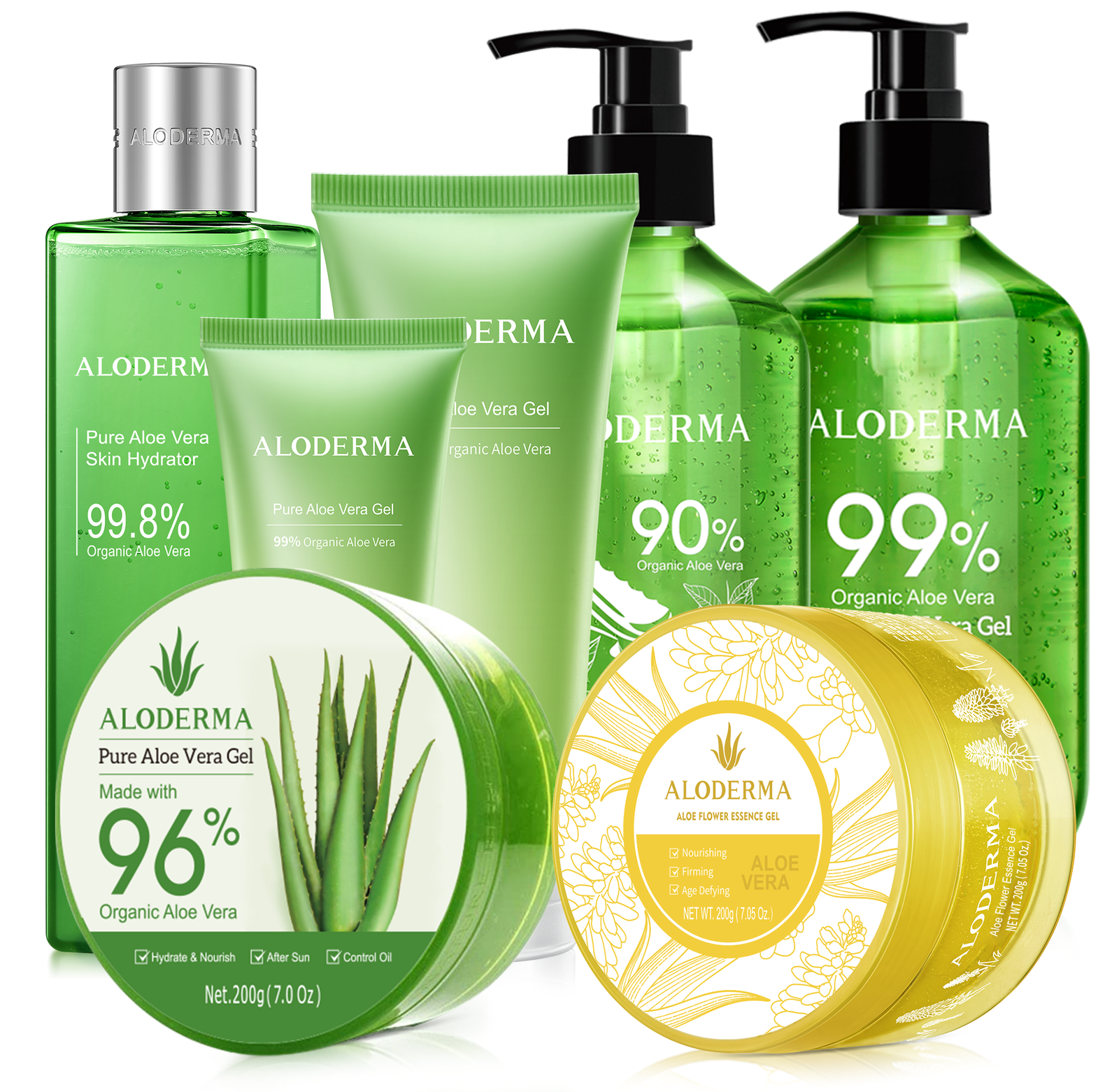
If your face feels tight after washing, the first suspect may be the routine, not a single product. Scrubbing flakes or adding another treatment can make it harder to tell what your skin tolerates. ALODERMA grows organic aloe vera and processes it on-site within 12 hours of harvest, as described in its overview of fresh aloe and product formulas.
Choose comfort over scrubbing
- Rinse with lukewarm water. Hot water can leave skin feeling drier.
- Cleanse gently. Wash without scrubbing or using a rough cloth.
- Pat dry. Rubbing with a towel adds friction.
- Moisturize damp skin. Apply moisturizer soon after washing.
- Keep the routine short. Use only a few steps rather than layering treatments.
- Protect in the morning. Wear sunscreen daily.
- Change your pillowcase regularly. A clean surface means less buildup against your face.
Skip scrubbing flakes, picking at peeling skin, very hot showers, and using strong acids, scrubs, and drying spot treatments on the same night. During a flare, don't judge a new product after one day. Skin may already be more reactive than usual.
For oily or blemish-prone skin, cleanse gently in the morning and at night. Avoid alcohol-heavy toners, and use spot treatments on a different night from exfoliants. A squeaky-clean feeling is not the goal; comfort after washing is a more useful guide.
Adjust the routine to your skin
| Skin Type | Cleanse | Moisturize | Pause for Two Weeks | Typical Improvement |
|---|---|---|---|---|
| Sensitive | Lukewarm water or gentle non-foaming cleanser | Pure Aloe Vera Gel on damp skin, then a lightweight moisturizer | Fragrance, essential oils, scrubs | Less stinging and a more comfortable feel if those steps were contributing |
| Oily | Gel cleanser morning and night | Light gel hydrator, without heavy layers | Alcohol toners, strong exfoliants | Steadier shine and less tightness as the routine becomes gentler |
| Blemish-prone | Mild cleanser that does not leave skin feeling squeaky | Lightweight hydrator over the whole face | Stacked spot treatments, picking at spots | Fewer episodes of tightness as the routine becomes gentler |
To choose a moisturizer, compare the full ingredient lists on the Aloe Hydrating Moisturizer product page and the gel product page. Formulas across the range differ, so check the list for the specific product rather than assuming two products have the same ingredients. Apply a small amount to clean, slightly damp skin, then observe how it feels. Avoid adding several products at once, since that makes the result harder to interpret.
Keep the test simple: notice whether tightness after washing eases when you cleanse more gently and moisturize promptly. Visible roughness and flaking can be useful signs to track, but they cannot measure water loss through the skin. The overview of skin-barrier texture changes and water loss explains why that measurement requires an instrument. For practical guidance on a simpler routine, read how to improve skin barrier comfort.
If a change makes your skin feel worse, return to the last routine that felt comfortable and wait 48 hours before trying anything else. Aloe may be a comfort step, not a cure for a damaged barrier.
Decide Whether to Repair at Home or Call a Professional
Use your log to choose your next step, rather than switching products every few days.
- If the signs ease: If your log shows fewer symptoms after a few weeks of a simplified routine, keep the routine steady. Add products back one at a time so you can notice what changes.
- If nothing changes: If your skin feels much the same after four weeks, or a new product brings facial stinging within a week, stop that product and continue with the simpler routine for another two weeks.
- If symptoms are concerning: Contact a clinician if you see spreading redness, pain, oozing, cracks that don't close, burning that lasts well after washing, or another change that goes beyond ordinary dryness.
Seeing a clinician isn't a failure of your home check. A professional can assess your skin and, when appropriate, use standardized measurement that a home routine can't provide.
Today, start a two-week log and choose the simplest routine that suits your skin. If you want one product to consider testing first, Pure Aloe Vera Gel has its ingredient list available on aloderma.com. Maya's notes, not a guess about her cleanser or the products on her shelf, helped her decide what to try next.
If you're simplifying your routine, explore ALODERMA for aloe-based gels, moisturizers, and other skincare options, and check each formula's ingredient list before choosing. Start with one product, patch-test it, and let your skin's response guide what you add next.