







By midday, your forehead looks shiny, but your cheeks still feel tight. You try a richer moisturizer and your skin feels coated. You switch to something lighter and the dry areas start begging for help again. That push-pull is what makes combination skin so frustrating.
A good hydrating serum for combination skin can help because it gives you water-based hydration where you need it most, without making your T-zone feel heavier than it already does. If you've ever felt like your face needs two different routines at once, you're not imagining it.
The Combination Skin Conundrum
Combination skin rarely behaves the same way from one area of the face to the next. Your nose and forehead may look polished by lunch, while the sides of your face feel dull, tight, or rough after cleansing. Makeup often makes the problem more obvious. Foundation can slide off the center of the face and cling around the cheeks.
That mismatch is why so many people feel stuck. A product that feels comforting on dry patches can seem too rich on the T-zone. A lightweight gel that feels refreshing on the forehead may not be enough for the areas that need more water.

What combination skin usually feels like in real life
You might recognize yourself in one or more of these moments:
- Morning cleanse, instant tightness: Your skin feels clean, but your cheeks start feeling uncomfortable within minutes.
- Shine without comfort: Your forehead looks oily, yet your skin still doesn't feel balanced.
- Makeup mismatch: Products separate around the nose but catch on dry texture near the jaw or cheeks.
- Seasonal confusion: In warm weather your T-zone gets slick faster, while colder air makes dry spots more noticeable.
Combination skin doesn't need more of everything. It needs the right amount in the right places.
This is also why generic advice often falls short. "Just moisturize more" isn't helpful if more moisture means a greasy finish. "Use oil-control products" isn't helpful if they leave half your face feeling stripped.
Why the goal is hydration without heaviness
For combination skin, the main challenge isn't just adding moisture. It's adding lightweight hydration that supports dry zones without overwhelming oilier ones. That's where serums earn their place. They tend to feel lighter than creams and can be applied more precisely.
If you're still figuring out what combination skin needs day to day, this guide to products for combination skin gives a helpful overview of the category.
A hydrating serum works well here because it can act like a flexible layer. You can use a little on the T-zone, a bit more on the cheeks, and then decide how much moisturizer each area needs.
Why a Dedicated Hydrating Serum Is Your Secret Weapon
A moisturizer and a serum don't do the exact same job, even when both are meant to hydrate. The easiest way to think about it is this. Your moisturizer is the comfort layer that helps seal things in. Your serum is the lighter, more targeted layer that goes on first and delivers hydration where skin needs support.
That difference matters when your face has mixed needs. If your cheeks need more water but your forehead hates heavy textures, a hydrating serum for combination skin gives you more control than relying on one cream alone.
Serum first, moisturizer second
Serums are usually lighter in texture than creams. That makes them useful when you're trying to add hydration without adding a thick finish. On combination skin, that can mean a fresher feel overall and less temptation to over-apply moisturizer in places that don't need it.
It is like dressing for changing weather:
- Serum is the breathable base layer: It adds lightweight comfort close to the skin.
- Moisturizer is the outer layer: It helps hold that hydration in and smooth the surface.
- Using both gives you flexibility: You can keep the base light and adjust the top layer depending on the zone.
What the clinical evidence supports
This isn't just a texture preference. In a 2-week randomized study of a hydrating serum used with moisturizer, participants using the serum-plus-moisturizer routine showed statistically significant improvements in facial dryness and skin softness compared with moisturizer alone, and the serum was described as very well tolerated with no adverse events reported.
For someone with combination skin, that's reassuring for a practical reason. You don't want a hydrating step that helps the dry areas but creates a new problem elsewhere. A lightweight serum layered under moisturizer can improve comfort and softness while still fitting into a balanced routine.
Practical rule: If your cheeks feel dry but your T-zone gets shiny fast, add a hydrating serum before you add a heavier cream.
Why this helps emotionally, not just technically
A lot of people with combination skin become hesitant about hydration. They've had the experience of putting on something "nourishing" and then spending the next few hours blotting their forehead. So they start under-moisturizing, which often leaves the drier areas looking flat and feeling uncomfortable.
A dedicated serum helps break that cycle. Instead of forcing one product to do everything, you give your skin a lighter hydration step that can be adjusted more easily. That's often the missing piece between "too much" and "not enough."
Decoding Ingredients for Balanced Hydration
When you're shopping for a hydrating serum for combination skin, the ingredient list matters. But for this skin type, texture and ingredient role matter just as much. You want ingredients that pull water into the skin and help it feel comfortable, without creating a heavy film.
Fresh aloe vera deserves a special place in that conversation. Aloe has a naturally light, watery feel, which makes it a strong foundation for combination skin. It gives hydration in a way that feels calm and breathable rather than rich and coating.

Why fresh aloe works so well as a base
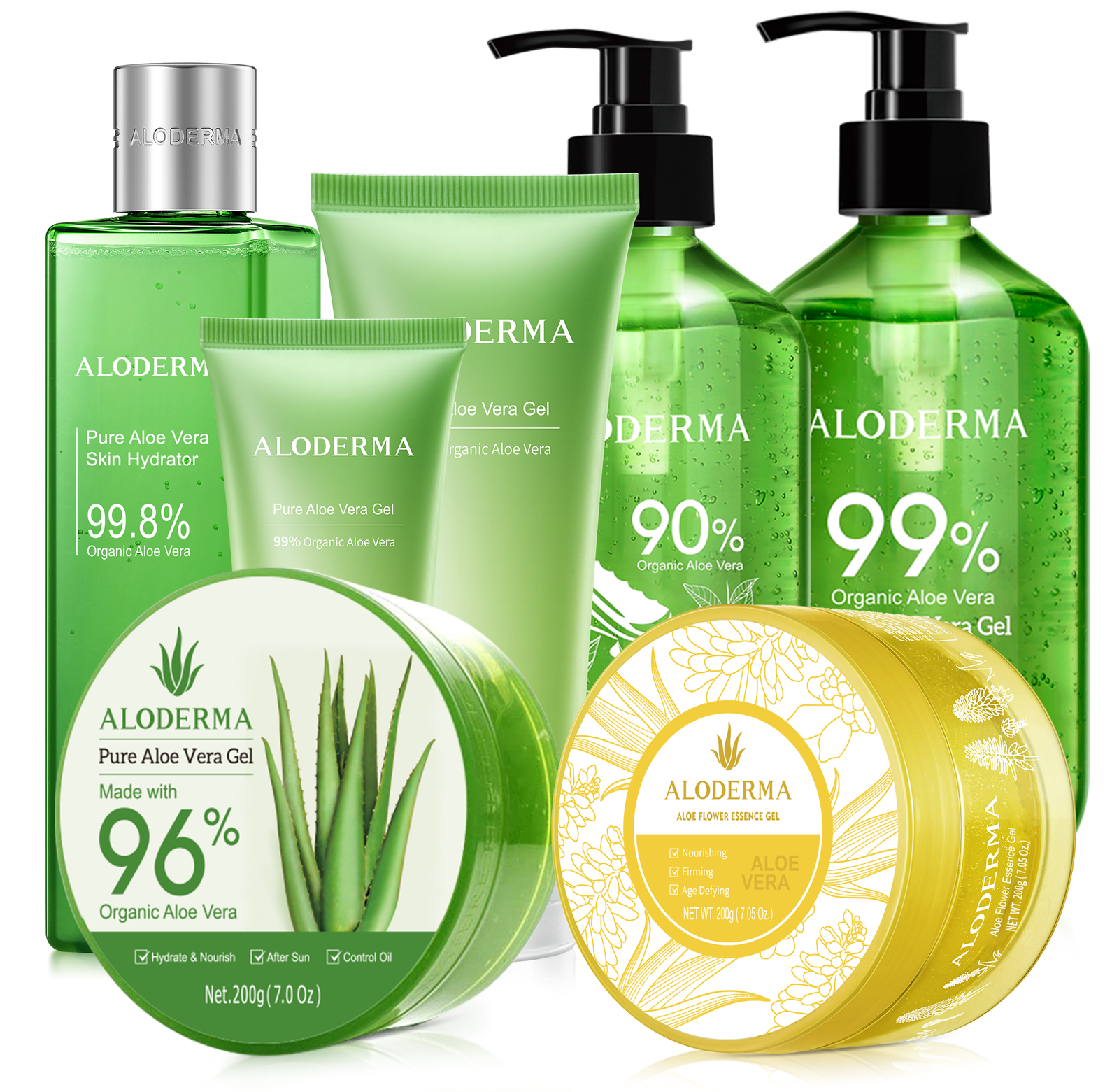
Not all aloe is handled the same way. For ingredient-conscious shoppers, freshness matters because aloe is often used as the primary feel-good, water-light component in a formula. ALODERMA's brand approach centers on being a fully vertically integrated aloe vera company that grows its own organic aloe vera and processes and manufactures onsite within 12 hours of harvest. That farm-to-skin process is meant to keep the aloe as bioactive and effective as possible.
For combination skin, that matters because aloe fits the exact problem you're trying to solve. It feels light. It layers easily. It supports hydration without the rich finish that can make the center of the face feel overloaded.
The supporting ingredients that make a serum more useful
Aloe can be the soothing, lightweight base. Then the formula gets stronger when it's paired with the right support ingredients.
According to clinical and dermatology guidance on hydrating serums for combination skin, effective formulas pair humectants like hyaluronic acid and glycerin, which draw water into the skin, with balancing ingredients like niacinamide to help manage excess sebum appearance. That combination can lower the chance that hydration feels too rich compared with heavier creams.
Here's how those ingredients work in plain language:
- Hyaluronic acid: Helps bind water at the skin's surface, which can make skin feel fresher and look smoother.
- Glycerin: Another dependable humectant. It draws water in and usually feels comfortable even in lightweight formulas.
- Niacinamide: Useful when you want hydration but also want the skin to look more balanced through the T-zone.
- Panthenol: Often included to support a comfortable, soft skin feel.
If a serum says "hydrating" but feels like a layer you can't wait to wash off, the formula probably isn't right for combination skin.
What to look for on the label
The ideal ingredient mix usually looks something like this:
| What to look for | Why it helps combination skin |
|---|---|
| A water-based or aloe-based formula | Feels lighter and easier to layer |
| Humectants such as glycerin or hyaluronic acid | Adds water-focused hydration without extra heaviness |
| Balancing support like niacinamide | Helps the skin look more even through oily areas |
| A non-heavy finish | Reduces the chance that the T-zone feels coated |
If you want to understand how hyaluronic acid fits into a routine with aloe and other lightweight hydrators, this overview of hyaluronic acid lotion is a useful companion read.
Finding Your Perfect Match Serum Textures Explained
Two serums can have similar ingredient lists and still behave very differently on the skin. That's why texture deserves its own discussion. For combination skin, the wrong texture can make a good formula feel wrong by noon.
The main categories you'll run into are watery serums, gel serums, and milky serums. All can hydrate. They just don't all suit the same face equally well.
A side-by-side texture comparison
| Texture | How it usually feels | Where it works well | Potential drawback for combination skin |
|---|---|---|---|
| Watery serum | Thin, quick-spreading, almost essence-like | Good for people who dislike feeling product on skin | Can feel too light for drier patches unless layered |
| Gel serum | Cushiony, fresh, fast-absorbing | Strong fit for mixed skin zones | Some formulas may pill if over-applied |
| Milky serum | Soft, lotion-like, slightly richer | Better when cheeks need more comfort | Can feel too creamy on the T-zone |
Why gel usually wins
For many people, a lightweight gel serum is the sweet spot. It gives that immediate quenched feeling but doesn't sit on the skin like a cream. That's important if your forehead already produces enough shine on its own.
Gel textures also make zonal application easier. You can press a thin layer over the nose and forehead, then add a touch more over the cheeks without creating that slippery, over-moisturized feel.
Richer doesn't always mean more hydrating. On combination skin, richer often just means more noticeable.
How to choose based on your daily reality
Pick your texture based on how your skin behaves after cleansing and throughout the day.
- Choose watery if you hate any residue and like to layer products.
- Choose gel if you want one texture that works across most of your face.
- Choose milky only if your dry areas are the main issue and your T-zone can tolerate a little more cushion.
If you're often nervous that "hydrating" will turn into "greasy," start with gel. It's usually the easiest category for combination skin to trust.
Mastering Application How to Layer Your Serum for Best Results
Even a well-formulated serum can disappoint if you apply it the same way all over the face without thinking about your skin zones. Combination skin responds better when you treat it like a map instead of one flat surface.
A simple change in application often makes the biggest difference.

The basic layering order
Use your serum after cleansing, and after toner if you use one, but before moisturizer. Apply it while skin is still slightly damp, not dripping wet. That little bit of surface moisture can help a humectant-rich formula spread more evenly.
A simple order looks like this:
- Cleanse gently: Remove oil, sunscreen, and buildup without leaving skin feeling stripped.
- Apply serum to damp skin: Press it in instead of rubbing aggressively.
- Moisturize based on zone: Use less on the T-zone, more where skin feels thirsty.
- Finish morning skin care with sunscreen: Keep the finish light and even.
Try zonal application
This technique is especially helpful if your face never seems to agree with itself.
- On cheeks or drier outer areas: Apply a slightly fuller layer.
- On forehead, nose, and chin: Use a thinner layer.
- Around areas where makeup slips: Let the serum settle before applying the next step.
That approach gives you hydration where you need it without making the center of the face feel overloaded.
A hydrating serum for combination skin works better when you adjust the amount by area, not just by product label.
Consistency matters too. In a 2021 facial study of a topical hyaluronic acid serum, skin hydration increased 134% immediately after application and stayed 55% higher at week 6, with additional improvements reported in smoothness and plumping. For readers, the practical takeaway is simple. You may feel a quick boost right away, but the more noticeable payoff comes from regular use.
For a visual walkthrough, this application video is helpful:
Common mistakes that make a good serum feel disappointing
A few habits can throw off results:
- Using too much product: More serum doesn't always mean better hydration. It can leave extra slip on the T-zone.
- Skipping moisturizer completely: If your skin needs a sealing step, serum alone may not feel like enough on dry areas.
- Applying on very dry skin: The formula may not spread as comfortably.
- Changing products every few days: Your skin needs consistency before you can judge the texture and finish fairly.
Your ALODERMA Combination Skin Routine Examples
A routine for combination skin should feel flexible, not rigid. You want enough structure to stay consistent, but enough room to adjust based on weather, makeup, and how your skin feels that day.
The easiest approach is to keep your routine light at the base and customize the final layer.
A simple morning routine
Morning is usually about balancing comfort with a clean finish under sunscreen or makeup.
- Cleanser: Start with a gentle aloe-based cleanser that removes overnight oil without leaving cheeks feeling tight.
- Toner or mist: Optional, but helpful if you like applying serum to slightly damp skin.
- Serum: Use ALODERMA Aloe Hydrating Serum in a thin layer on the T-zone and a fuller layer on drier areas.
- Moisturizer: Choose a lightweight cream or gel-cream and keep the amount modest through the center of the face.
- Sunscreen: Finish with a comfortable daily sunscreen.
A calmer evening routine
At night, focus on replenishing water and smoothing the skin's feel after cleansing.
- Cleanse thoroughly: Especially if you've worn sunscreen or makeup.
- Apply your hydrating serum with intention: Press it in, then give it a moment to settle.
- Add extra moisturizer only where needed: Cheeks and outer face often need more than the nose or forehead.
- Keep the routine simple: Too many layers can make it harder to tell what's helping.
What makes the aloe-centered approach appealing
Fresh aloe fits combination skin because it supports the exact middle ground many people are trying to find. It doesn't have to feel rich to feel hydrating. It doesn't have to leave a glossy finish to help dry areas feel more comfortable.
That idea becomes more meaningful when the aloe is central to how the product is made, not just added as a minor ingredient. ALODERMA's fully vertically integrated model, organic aloe cultivation, and onsite processing within 12 hours of harvest are part of why an aloe-first routine can appeal to shoppers who care about freshness, ingredient transparency, and a lighter skin feel.
When your skin seems to ask for opposite things at once, a fresh aloe-based routine often feels easier to live with day after day.
If your skin feels shiny and thirsty at the same time, a lighter routine built around fresh aloe may be the reset you need. Explore ALODERMA to find aloe-based hydrators, serums, and daily essentials designed for comfortable, balanced hydration.