





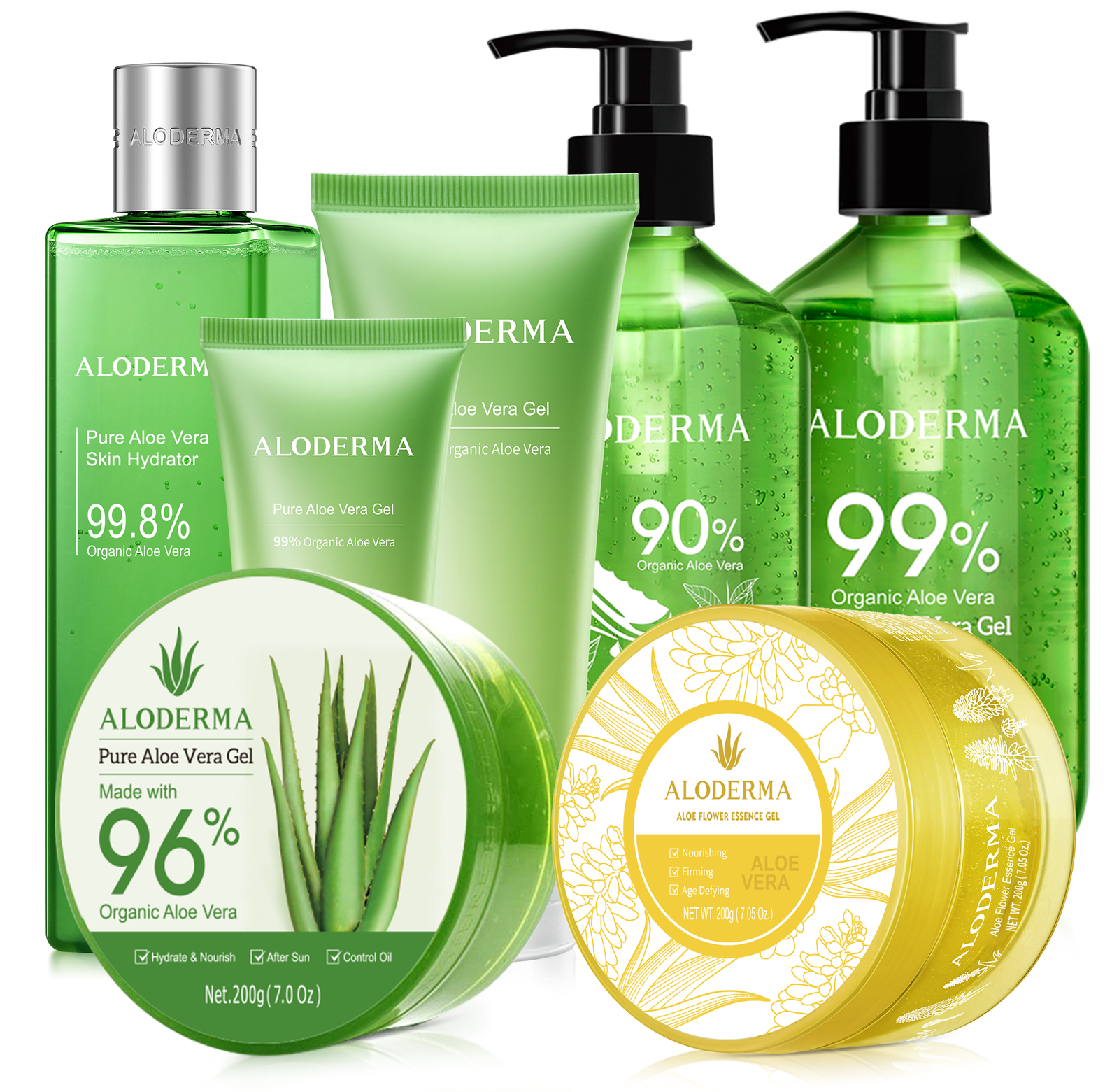


Many assume that any toner with aloe vera will automatically feel gentle, cooling, and hydrating. That advice is too broad. A toner can feature aloe prominently on the front label while containing only a small amount of the botanical, poorly purified plant material, or a formula whose alcohol, fragrance, pH, or preservation system makes the finished product uncomfortable.
A luxe aloe vera toner deserves a more useful definition. Luxury isn't the bottle, the scent, or the price. It's the combination of fresh botanical handling, measurable hydration, careful purification, transparent ingredients, and a formula that respects the skin's comfort. Once you understand that distinction, choosing a toner becomes less about trusting a green leaf on the packaging and more about following the ingredient from harvest to bottle.
Redefining the Luxe Aloe Vera Toner Experience
Aloe-based skincare has become a substantial beauty category rather than a specialist niche. One recent market estimate valued the aloe-vera-based skin and hair products market at USD 3.21 billion in 2024 and projects it to reach USD 6.64 billion by 2032, with a 9.5% CAGR. Those projections are reported in the aloe vera based skin and hair products market analysis, but market size alone doesn't tell you whether a particular toner is well made.
The more important question is what happens before aloe reaches the bottle. Fresh leaves contain delicate plant components that can lose quality through delays, heat, exposure, and repeated processing. A premium formula should therefore give you more than an aloe claim. It should offer a clear explanation of where the aloe comes from, how quickly it is processed, how impurities are controlled, and what else is included in the formula.
What luxury means in a toner
A basic toner may add a watery layer after cleansing. A thoughtfully developed toner treats that layer as a carefully balanced delivery system. It may combine aloe with other humectants, use a skin-compatible pH, and preserve the water-rich formula without relying on a harsh sensory effect.
Look for these signs of quality:
- Ingredient identity: The label should identify the aloe material clearly, such as leaf juice or a standardized extract, rather than relying only on front-label language.
- Freshness story: A farm-to-finish process is more meaningful when the brand explains harvest handling and processing times.
- Purification controls: Inner-leaf and decolorized aloe can help reduce unwanted plant compounds associated with poorly processed whole-leaf material.
- Formula transparency: A pleasant texture should come from a coherent ingredient system, not from undisclosed fragrance or an aggressively drying after-feel.
Aloe content can vary widely between cosmetic products, so a beautiful package can't tell you whether the botanical is present at a meaningful level. The same principle applies to the rest of your routine. If you're comparing a toner with an organic cleanser, this guide to organic face cleansers offers useful context on evaluating botanical formulas by their complete ingredient lists rather than by one headline ingredient.
Practical rule: Treat “with aloe” as an invitation to investigate, not proof that the product is premium.
The best luxe aloe vera toner should leave skin feeling comfortably hydrated and ready for the next step, not tight, perfumed, or coated. That experience begins with the plant's integrity, but formulation chemistry determines whether the integrity survives in daily use.
The Formulation Science Behind Premium Hydration
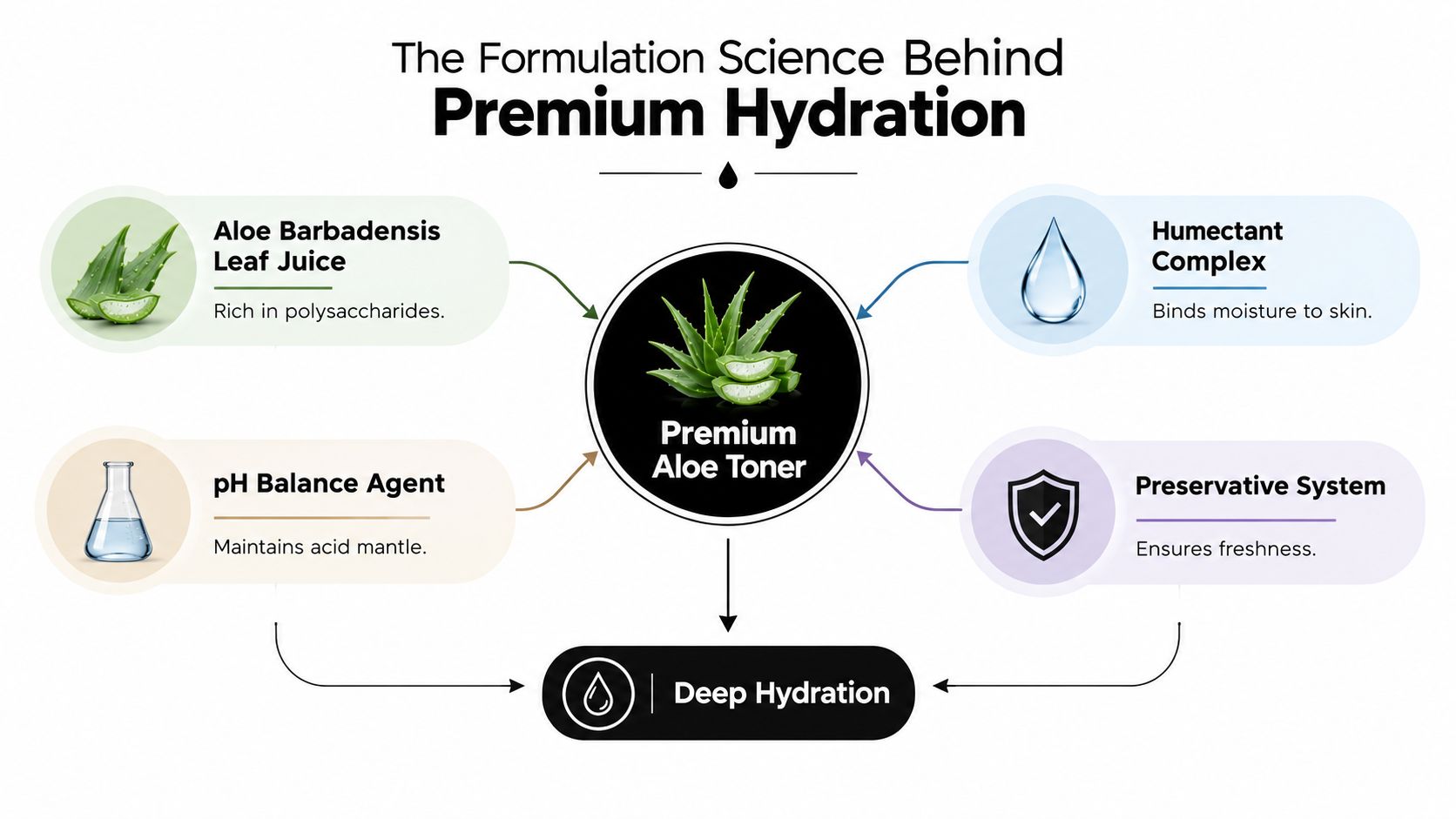
A toner is a water-based cosmetic, so its performance depends on architecture. Aloe alone can't compensate for an unsuitable pH, a weak preservation system, or a formula that evaporates before it can support comfortable hydration.
A helpful analogy is to think of humectants as sponges. They attract and hold water near the outer layers of the skin. Aloe can play that role, but it isn't the same as an occlusive ingredient, which acts more like a lid and slows water loss. A toner can add water and humectant support without creating the protective finish supplied by a moisturizer.
Why aloe needs supporting ingredients
Clinical data from a controlled human study found that formulas containing freeze-dried Aloe vera extract at 0.25% and 0.50% w/w increased stratum corneum water content after a single application. The same study found that a 0.10% w/w formula matched the vehicle after 2 weeks, while transepidermal water loss didn't change. This means aloe can provide measurable hydration support, but it shouldn't be expected to replace every other moisturizing category. Read the controlled Aloe vera hydration study for the full research context.
A well-built formula may pair aloe with humectants such as glycerin or other water-binding ingredients, then rely on a moisturizer to provide a more lasting finish. If your skin feels comfortable for a moment and then unusually tight, the toner may be adding a temporary watery layer without enough support around it.
The ingredient story also matters. A reader comparing botanical routines may find the best Japanese skincare picks useful because it encourages comparison across complete routines, not just individual hero ingredients. For more detail on the plant itself, see Aloe vera barbadensis and its cosmetic role.
pH and preservation work together
Water-based formulas need more than aloe and purified water. They need a preservative system, a pH adjuster, and a stable environment that protects the product during normal use. Independent formulation guidance notes that phenoxyethanol works best around pH 4 to 7, benzoic acid below pH 5, and potassium sorbate up to about pH 6.5. These ranges are documented in this cosmetic toner formulation guide.
That chemistry matters because a preservative can lose effectiveness when the formula moves outside its useful range. A toner with a high water content also needs protection from contamination introduced during repeated opening and application. The ideal sensory result is gentle and fresh, but that result depends on invisible technical decisions made in the laboratory.
A premium aloe vera toner isn't necessarily the one with the longest ingredient list. It's the one where the ingredients work together, the aloe remains usable in the finished formula, and the product stays comfortable throughout its intended life.
The 12-Hour Harvest Window and Bioactive Freshness
Aloe quality begins in the field. A leaf isn't a static container of ingredients that can wait indefinitely for processing. After harvest, handling decisions affect how much of the plant's original character can carry into a skincare formula.
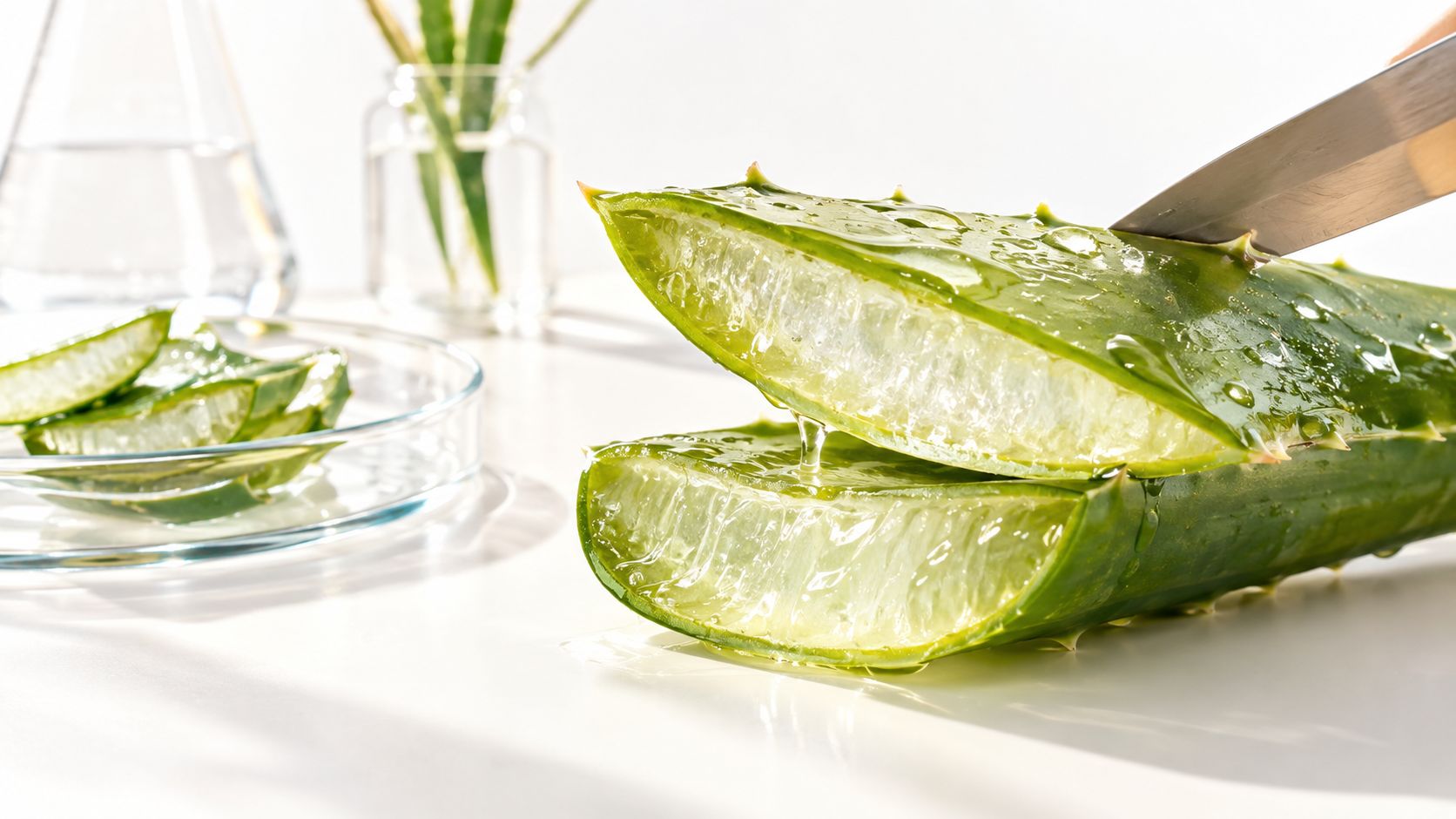
The company behind this freshness-first approach is fully vertically integrated. It grows all of its own organic aloe vera, processes the aloe vera onsite, and manufactures onsite within 12 hours of harvest. Its Fresh Aloe Skin Care process explains that this farm-to-finish control is intended to preserve freshness and active components, while keeping the primary ingredient in its products as bioactive and effective as possible.
That level of control changes the relationship between a skincare brand and its raw material. Instead of buying an ingredient after multiple stages of outside handling, the company manages cultivation, harvest, processing, and manufacturing as one connected operation. The result is a clearer chain of responsibility. If the formula is designed around fresh aloe, the path from leaf to finished toner becomes part of the product's identity.
Why the clock matters
Independent industry coverage describes processing within 24 hours as a recognized freshness benchmark for maximizing polysaccharide content, while reporting a company process in which harvested aloe is handled within 12 hours. A scientific review also notes that freshly removed leaves may be refrigerated within 6 hours or sent directly to an on-farm processing facility, with filleting completed within 36 hours to help avoid loss of biological activity. These details appear in the fresh aloe processing standards discussion and this scientific review of aloe processing.
For a shopper, the practical example is simple. A leaf cut in the morning and processed onsite the same day has a different supply-chain story from an ingredient that has passed through distant storage, transport, and later reconstitution. Both may appear as “aloe” on a label, but the handling history is not interchangeable.
This guide to storing fresh aloe vera provides helpful background on why handling conditions matter even before a plant ingredient becomes part of a finished cosmetic.
Freshness doesn't eliminate the need for preservation or formulation testing. It does give the formulator a stronger starting material and gives the customer a concrete quality point to evaluate. In a luxe toner, freshness is not a decorative story. It is an operational choice that supports ingredient integrity from the first cut to the final application.
Tailoring Aloe Hydration to Your Unique Skin Profile
Aloe is often described as universally gentle, but skin responds to the whole formula, not to one botanical in isolation. A person with oily skin may appreciate a light, water-based layer, while someone with dry-feeling skin may need a moisturizer immediately afterward. Someone with reactive skin may tolerate purified aloe well but react to fragrance or poorly processed plant material.
Independent dermatology information notes that aloe is usually well tolerated, yet burning, itching, rash, eczema, and allergic contact dermatitis can occur. The same source identifies greater concern with whole-leaf or poorly processed aloe containing anthraquinones such as aloin and barbaloin. The dermatology overview of aloe vera explains why “natural” isn't automatically the same as low risk.
A practical way to introduce a toner
Start with a patch test on a small area and observe how your skin feels over time. If the product causes persistent stinging, itching, or discomfort, stop using it rather than trying to push through the reaction.
Apply the toner after cleansing, preferably while skin is still slightly damp. Use your hands if you want to reduce cotton-pad friction, or follow the product's directions if it is designed for pad application. Press the layer in gently, then follow with a moisturizer that suits your skin.
For different profiles, the routine can stay simple:
- Sensitive skin: Choose inner-leaf-only, decolorized aloe where the brand provides that information. Avoid assuming that alcohol-free means irritation-free, and introduce one new product at a time.
- Oily skin: Use a light layer rather than repeatedly misting throughout the day. Follow with a non-heavy moisturizer so the toner isn't asked to provide the entire moisturizing step.
- Dry-feeling skin: Apply to damp skin and seal the hydration with a cream or lotion. Aloe can support water content, but its humectant action doesn't create the same finish as an occlusive moisturizer.
- Blemish-prone skin: Keep the rest of the routine uncomplicated. A toner should feel comfortable and breathable, not leave a heavy film that encourages you to add more products.
Listen to the finish: Comfortable softness is useful feedback. Tightness, stinging, or a sudden urge to apply several extra layers suggests the formula or routine needs reconsideration.
Avoid applying a new toner to visibly broken or highly uncomfortable skin. If your routine already contains several strong or drying products, simplifying first may tell you more than adding another active step.
Evaluating Clean Credentials and Market Realities
A “clean” label can make a toner look trustworthy before you have examined the formula. Terms such as “natural,” “organic,” “fresh,” and “aloe” describe different things, so each needs context. A product may feature a compelling botanical story while still containing fragrance, denatured alcohol, or a preservation system that does not suit your skin.
Read past the front label
Aloe is not legally regulated as an active cosmetic ingredient in the EU or U.S. with a required minimum concentration for products such as toners.
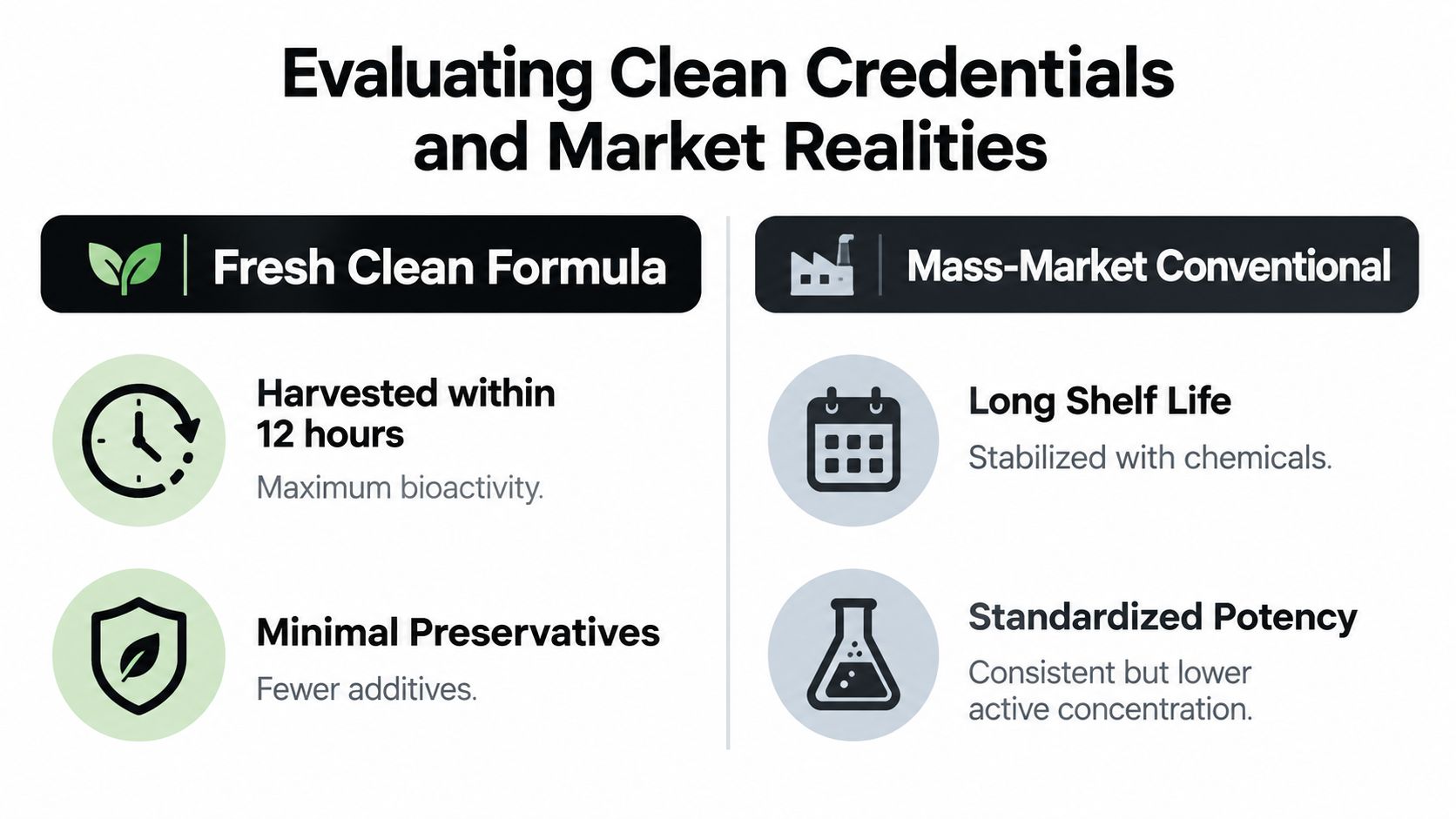
That broad range explains why the word aloe cannot establish a product's value. A luxe aloe vera toner deserves closer questions about the plant material, harvest timing, processing, purification, concentration, and supporting ingredients. The comparison of fresh clean formulas and mass-market conventional products can help frame those differences, though the ingredient list remains the more useful reference.
Vertical integration can strengthen a freshness story when one company controls more of the path from cultivation through processing and filling. Shorter handoffs may make harvest-to-bottle handling easier to explain and monitor. The claim still needs support: look for clear information about sourcing, inner-leaf processing, decolorization, aloin control, and preservation.
Compare the trade-offs honestly
A conventional formula may prioritize long shelf stability, consistent texture, and efficient distribution. Those choices can be practical, although they may produce a less direct freshness story or require more stabilizing and sensory ingredients.
A freshness-first formula may focus on rapid processing, fewer unnecessary additions, and a transparent route between farm and factory. Natural aromatic ingredients can still feel intense, and a short ingredient list still needs preservation that controls microbial growth.
Use this checklist before buying:
- Find the aloe form: Look for a clearly named aloe ingredient instead of relying on a front-label percentage.
- Check impurity controls: See whether the company explains inner-leaf processing, decolorization, or aloin control.
- Review the full INCI: Look for fragrance, alcohol, and ingredients your skin already struggles with.
- Assess the certification story: ECOCERT, USDA, and EU Organic credentials may help verify stated production standards when they apply to the product.
- Judge the sensory result: A luxe formula should feel comfortable after application, rather than leave only brief tightness or a strongly perfumed sensation.
“Clean” has meaning when it describes a verifiable process and a readable formula. It should support informed questions, not replace them.
Building a Sustainable and Effective Daily Routine
A toner earns its place by making the routine easier, not longer. The most sustainable approach is to choose a product with a clear ingredient story, use a modest amount, and give it a supporting moisturizer when your skin needs one.
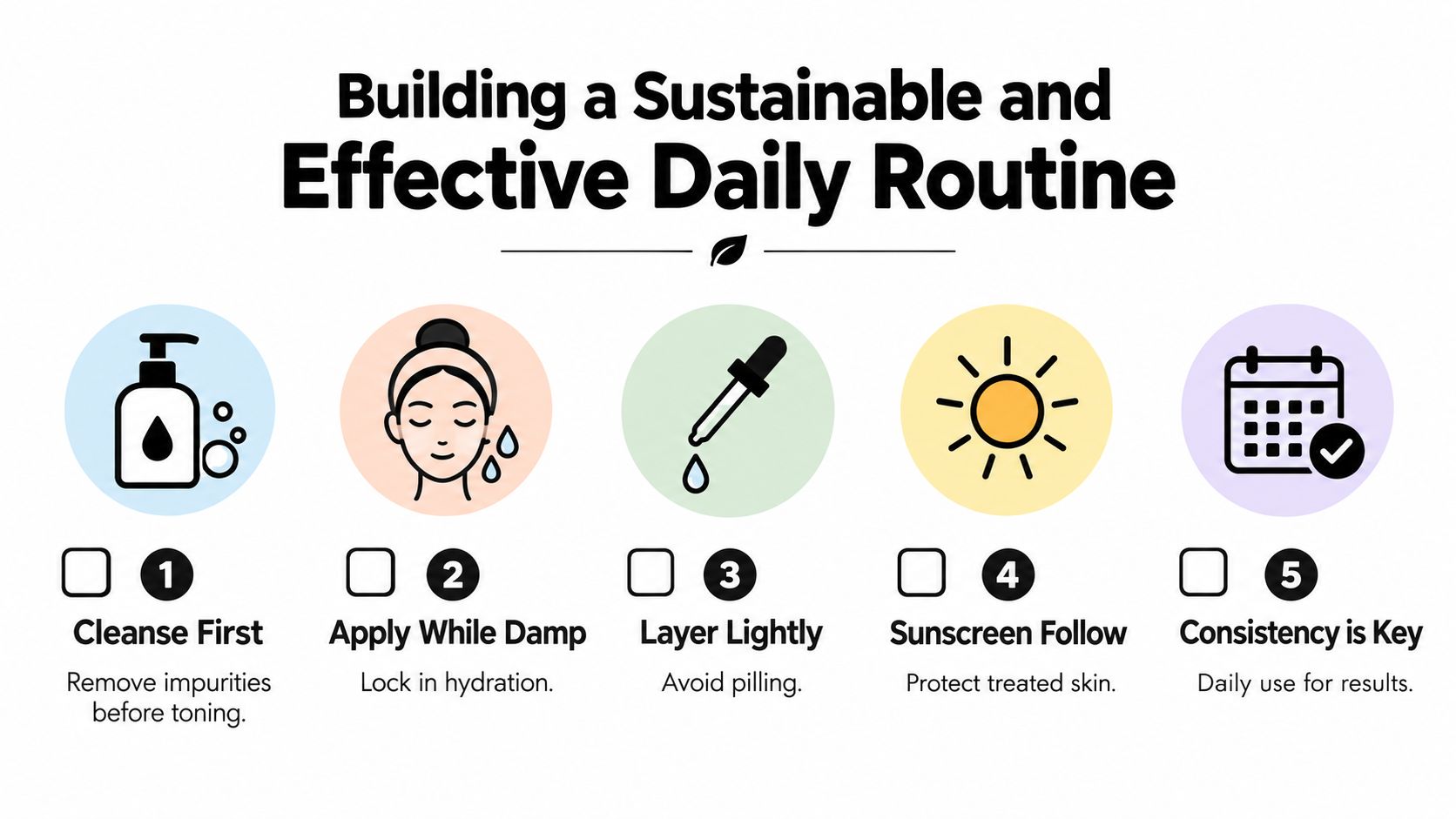
Use this sequence as a practical baseline:
- Cleanse first: Remove daily residue with a cleanser that leaves skin comfortable rather than squeaky.
- Apply while damp: Press the toner onto slightly damp skin so the humectant layer has water available to hold.
- Layer lightly: Give the toner a moment to settle, then add a compatible serum or moisturizer. Excess layers can pill and make it difficult to identify which product is causing discomfort.
- Follow with sunscreen in the daytime: Keep sun protection as the final daytime skincare step when your routine calls for it.
- Keep the habit consistent: A simple routine used regularly is easier to evaluate than a crowded routine changed every few days.
The guide to using aloe vera toner can help you adapt application to the product's directions. A toner may be useful after cleansing in the morning, evening, or both, but your skin doesn't need a step just because a trend says it does.
Make buying part of the routine
Choose brands that explain their farming, processing, ingredient standards, and cruelty-free commitments. Educational tools such as an ingredient dictionary, a skincare quiz, and product-specific usage guidance can help you build a routine based on your actual preferences rather than buying disconnected “hero” products.
Aloe Hydrating Toner, Aloe Brightening Toner, and Aloe Firming Toner represent different positioning choices within an aloe-focused toner collection. Compare their ingredient lists and intended use before selecting one. The right choice is the formula that matches your skin's current needs and your willingness to layer afterward.
A sustainable routine has a stopping point. If your cleanser, toner, moisturizer, and daytime sunscreen already leave your skin comfortable, adding more isn't automatically an upgrade.
Common Questions About Fresh Aloe Skincare
Can an aloe toner replace moisturizer?
Usually, no. Aloe supports hydration as a humectant, drawing water toward the skin, but it does not provide the same sealing layer as a moisturizer. The controlled study discussed earlier found no change in transepidermal water loss, so aloe is better understood as hydration support rather than a complete barrier product.
In humid weather, a light lotion may be enough after toner. In dry conditions, or whenever your skin feels tight, choose a more substantial moisturizer to reduce water loss and improve comfort.
How can I tell whether aloe is functional or decorative?
Read the INCI list before trusting the front label. Check where aloe appears, identify its form, and look for an explanation of harvesting, processing, purification, and preservation. Aloe juice, gel, powder, and extracts are not interchangeable, because each reflects a different manufacturing path and may contain different portions of the original plant material.
A brand that controls cultivation, harvesting, processing, and filling can explain the journey from leaf to bottle more clearly. That transparency matters for fresh botanicals, whose value depends on protecting useful compounds rather than just displaying aloe on the package.
Should I use it every day?
Use the toner as often as your skin remains comfortable and the directions support. Begin with a modest application, particularly after changing several products. Tightness, dryness, or stinging means you should reduce frequency or pause the toner and return to a simpler cleanser-and-moisturizer routine.
Can I combine it with other serums?
Aloe toner usually works well as a light hydrating layer before compatible serums and moisturizer. Add active products one at a time, so irritation has a clearer cause. If a serum already contains exfoliating or drying ingredients, fewer layers may produce a better result.
How should I store it?
Follow the storage instructions and close the container after each use. Water-based botanical formulas need protection from contamination, heat, and unnecessary exposure. Fresh processing helps, but careful storage at home still protects the formula.
A luxe aloe vera toner combines fresh sourcing, controlled purification, purposeful humectant support, suitable pH, reliable preservation, and comfortable daily use.
Explore the fresh aloe skincare range from ALODERMA, including aloe toner options for lightweight hydration. Choose according to your skin profile and ingredient transparency.