







You're probably seeing “pure aloe vera water” on labels and wondering whether it's a thoughtful skincare ingredient or just dressed-up water with a plant story attached. That confusion is fair. In skincare, aloe gets used to describe thick gels, watery toners, drinks, soothing mists, after-sun products, and formulas that contain only a trace amount of the plant.
The difference that matters most isn't the word pure by itself. It's what part of the leaf was used, how it was handled, and how fresh that aloe was when it went into the formula. Those details decide whether aloe feels flat and filler-like, or whether it leaves skin feeling comfortable, quenched, and easy in its own surface again.
The Secret Hydrator Hiding on the Skincare Shelf
A shopper picks up two bottles. Both say aloe. One feels sticky and heavy. The other looks like clean water with a short ingredient list. Both promise hydration. Only one may fit skin that feels tight after cleansing, shiny by lunch, or reactive to overloaded formulas.
That's where pure aloe vera water becomes useful. In practical skincare terms, it's the light, watery side of aloe that gives you slip, freshness, and a quick layer of hydration without the dense finish of a gel cream. For many people, that's the format that fits real life. You can pat it on after washing, press it under serum, or mist it on when your skin starts feeling warm, dry, or overworked.
A lot of the confusion comes from labels. “Aloe,” “aloe juice,” “aloe water,” and “aloe gel” often get used as if they mean the same thing. They don't. If you're still building confidence in reading formulas, this guide to understanding skincare products is a helpful outside resource because it teaches the bigger habit behind better product choices, which is checking what a product is made to do instead of relying on front-label language alone.
Why skin responds so differently
Fresh aloe behaves differently from stale aloe. That's the point most brands skip.
When aloe sits too long before processing, or when a formula leans more on diluted bases than on quality plant material, the experience changes. The skin may still get a wet feeling on application, but not the same soft, replenished finish people usually hope for.
Pure aloe vera water makes the most sense when your skin needs hydration that disappears into the skin quickly, not a heavy coating that lingers on top.
What I look for first
When I assess an aloe-based product, I don't start with marketing language. I start with practical questions:
- How fresh is the aloe used in the formula?
- Is the ingredient there in a meaningful role, or is it just a label decoration?
- What skin moment is it solving such as post-cleanse tightness, midday dryness, or layering under moisturizer?
- Does the finish suit daily use for oily, sensitive, or combination skin?
The most useful pure aloe vera water products answer those questions clearly. They don't try to be everything. They give skin a clean, light layer of hydration, and they do it in a way that feels easy to return to every day.
What Makes Aloe Vera Water Truly Pure and Potent
If you strip away the marketing, pure aloe vera water is about the inner part of the aloe leaf and the condition it's in when it's processed. The inner fillet holds the clear material people associate with aloe's fresh, dewy feel. That's very different from using the entire leaf without careful separation.
Reputable nutrition references describe aloe as being about 96% to 98.5% water while still containing more than 75 active ingredients, including vitamins, minerals, enzymes, and amino acids, which explains why it feels so lightweight while still being functionally interesting in formulations (Holland & Barrett on aloe vera juice benefits).
Purity starts with the leaf, not the bottle
Aloe quality is decided early. Once a leaf is cut, the clock starts.
For skincare, the goal is to capture the useful inner gel quickly, keep unwanted leaf components out, and move into processing without unnecessary delay. Consider fresh-pressed produce. The closer you stay to harvest, the better your chance of preserving the character people want from the plant.

Why freshness changes performance
The term bioactive gets tossed around loosely, but the core idea is simple. Fresh aloe contains delicate plant compounds that don't benefit from rough handling or long gaps between harvest and processing.
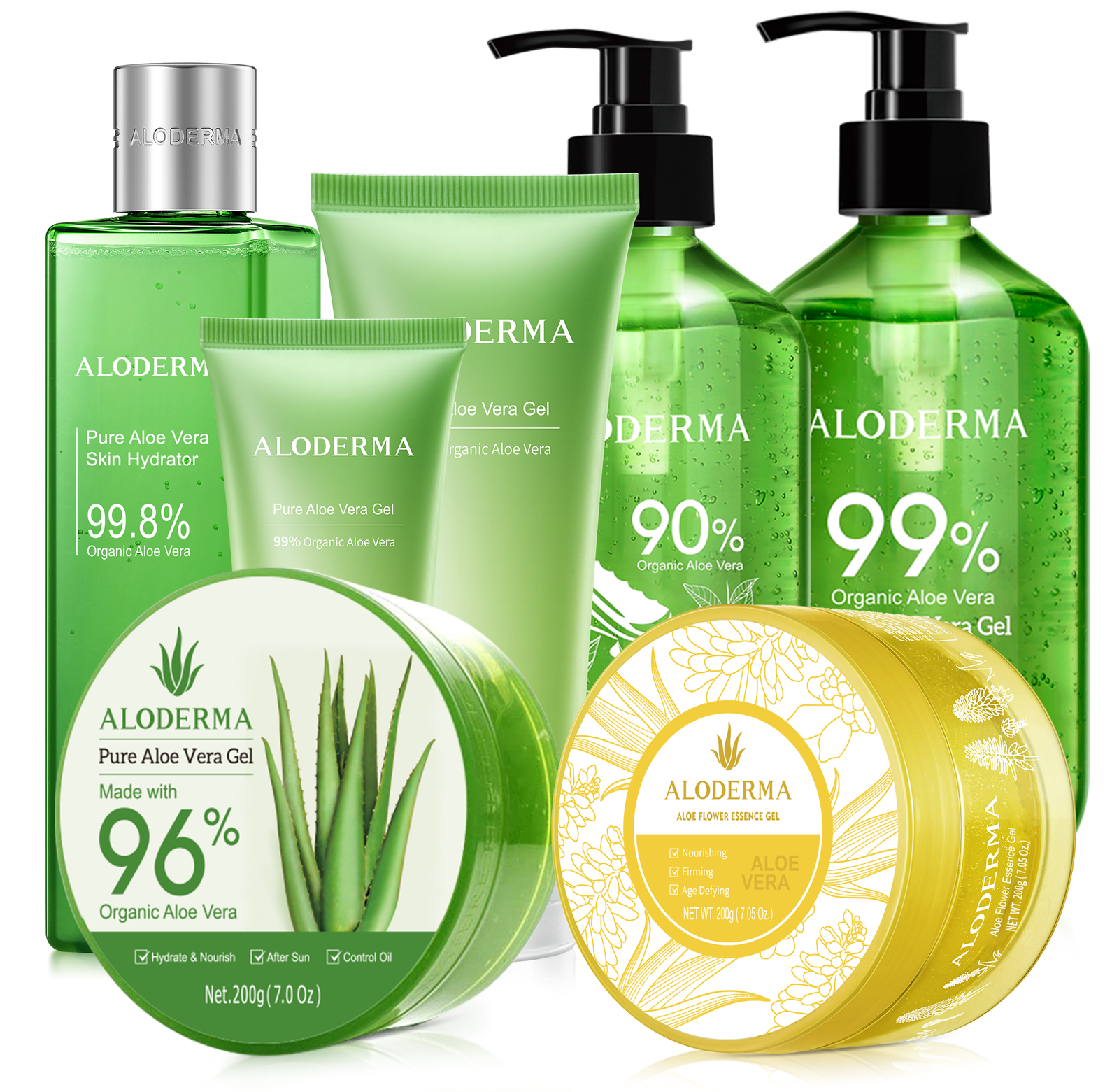
That's why vertical integration matters. When one company grows, processes, and manufactures on site, it can control leaf maturity, timing, handling, and formulation consistency far more tightly than a brand that buys stabilized aloe from a distant supplier. ALODERMA follows that farm-to-skin model, growing its own organic aloe and processing it onsite within 12 hours of harvest so the aloe used as the primary ingredient stays as fresh and functional as possible.
What a careful process looks like
A high-quality aloe water pipeline usually comes down to a few essential factors:
-
Mature leaf selection
Young leaves don't give the same yield or consistency. Well-grown mature leaves are the starting point. -
Filleting and washing
The inner material needs to be separated cleanly from the outer rind and latex-heavy parts of the leaf. -
Gentle extraction
Heat-heavy handling can change the feel and character of the raw material. Careful extraction preserves a cleaner profile. -
Filtration and testing
This helps improve clarity, consistency, and overall formula quality.
Formulator's view: “Pure” is only useful when it also means carefully handled, properly separated, and processed while the plant material is still fresh.
If you want a deeper read on how aloe purity claims work in finished skincare, Aloderma's article on 100% pure aloe vera gel and what purity really means is worth reviewing because it gets into the difference between a simple claim and a meaningful formulation standard.
Aloe Water vs Gel Juice and Hydrosols
The easiest way to choose the right aloe product is to stop treating all aloe formats as interchangeable. They serve different jobs. Some are better for layering. Some are better for direct soothing. Some are intended for drinking and need very different safety controls.
Aloe Vera Product Comparison
| Product Type | Texture | Primary Use | Key Characteristic |
|---|---|---|---|
| Aloe vera water | Thin and watery | Lightweight topical hydration | Fast-absorbing, easy to layer |
| Aloe vera gel | Cushiony to viscous | Spot use or direct moisture support on skin | More body and more slip |
| Aloe vera juice | Liquid | Oral use | Requires careful processing for ingestible safety |
| Aloe hydrosol | Very light mist | Refreshing facial or body spritz | Often more about sensory use than aloe substance |
Where people mix them up
Aloe water is usually the best fit when you want a fresh, non-heavy step after cleansing or before moisturizer.
Aloe gel gives more surface cushion. It's useful when skin wants a more noticeable layer, but some people find gels too filmy for daytime or under makeup.
Aloe juice belongs in a different conversation because it's intended for oral use. For oral aloe products, quality control matters around aloin, and the International Aloe Science Council advises keeping it under 10 parts per million because aloin from the latex portion is associated with laxative effects. That's why proper separation of the inner gel from the rind matters so much in drinkable aloe processing (Health.com on aloe vera juice benefits and aloin control).
The practical skincare takeaway
If your goal is skin comfort and daily hydration, aloe water usually wins on usability. It's the format people keep reaching for because it layers without fuss.
If you want to compare textures before choosing, you can also check out Aloderma's Pure Aloe Vera Gel as an example of a more gel-led aloe format and contrast that experience with a lighter aloe water product. That kind of side-by-side testing helps you notice whether your skin prefers a mist-like layer or a fuller gel feel.
A label can say aloe and still lead to a very different skin experience. Texture tells you a lot about the role that product is trying to play.
For another useful distinction, Aloderma's piece on dried aloe versus natural aloe gel is a strong reference when you want to understand why fresh-feeling aloe and reconstituted aloe don't perform the same way on skin.
Unlocking Your Skin's Natural Radiance
Pure aloe vera water earns its place in skincare when you use it for what it does well. It gives skin a light, breathable layer of hydration. It can help the surface feel calmer, less tight, and more balanced. What it doesn't do is replace your whole routine.
A fair way to frame it is this. Aloe water is a supportive hydrator, and it can soothe the feel of skin, but it shouldn't be sold as a stand-alone answer for every popular skin claim. The evidence behind those bigger promises is still limited, and it works best when it's part of a steady routine (video explainer on realistic aloe water expectations).

For oily and shiny skin
Aloe water often surprises people because oily skin still needs hydration. It just doesn't want thick, greasy products sitting on top.
A watery aloe layer can help skin feel refreshed without adding the coated finish that often makes oilier skin types back away from moisturizers altogether. Used under a light cream or gel, it can make the whole routine feel more balanced and less crowded.
For easily overwhelmed skin
Some skin doesn't need more “actives.” It needs less friction.
Aloe water is useful after cleansing, after a long day in dry indoor air, or when your skin has that warm, unsettled feeling that makes you want to rinse your face again. A simple, fresh-feeling aloe step can take the edge off that discomfort and help your routine feel gentler.
For dry and dehydrated skin
Dry skin often benefits from layering. A water-light first step can make a richer serum or cream spread better and feel more comfortable.
Think of aloe water as the first drink, not the whole meal. It softens the surface and helps the rest of your routine apply more evenly.
- After cleansing: Press it into slightly damp skin for a softer start.
- Before serum: Use it to reduce that dry, draggy feeling some serums can create.
- Under cream: It can make a moisturizer feel less heavy while still helping skin feel replenished.
If you like treatment-based skincare and want to compare how professionals talk about hydrated, luminous skin goals, our glass skin treatment from YOUTHFUL REVIVAL is a useful example of how glow is usually built through layering and consistency, not one miracle product.
Integrating Aloe Vera Water Into Your Daily Ritual
The best aloe products are the ones you'll use. Pure aloe vera water fits easily into a routine because it doesn't ask for a complicated technique. You apply it where skin needs a quick water-light reset, then move on.
A useful way to think about it is to borrow a clue from the drink category. Aloe vera juice for drinking is often described as a low-calorie beverage with about 40 calories per cup and about 10% of the Daily Value for vitamin C, which mirrors why topical aloe water feels so light on the skin. It gives a fresh, low-weight experience rather than a dense, sugary one (GoodRx on aloe vera juice benefits).
Use it as your post-cleanse reset
This is the most natural place for pure aloe vera water.
After cleansing, skin often loses that comfortable middle ground. It's not exactly dry, but it doesn't feel settled either. A thin aloe layer helps take away that stripped sensation before you move to serum or moisturizer.
Try this routine:
- Cleanse gently and leave skin slightly damp.
- Apply aloe water with clean hands or a cotton pad.
- Press, don't scrub so you don't create extra friction.
- Seal it in with the next step while skin still feels fresh.
Turn it into a midday mist
Decanting aloe water into a mist bottle is one of the easiest uses. This works well at a desk, after commuting, or any time your skin starts feeling stale from indoor air.
A mist shouldn't leave your face tacky. If it does, the formula may be too heavy for repeat daytime use. Good aloe water leaves a quick veil of hydration and then settles.
Daily habit: Keep a small mist bottle where dryness usually hits you, on your desk, in your bag, or near your sink. Consistency matters more than complexity.
Mix it with masks and powders
Aloe water is also a smart mixing liquid when you want a mask to feel less chalky.
- With clay masks: It helps reduce that over-dry, cracking feel.
- With powdered treatments: It adds slip and makes mixing easier.
- For body care: Pat it on after showering before lotion to help dry areas feel less thirsty.
A short how-to video can help if you want to see aloe layering in action:
Choose one ready-made option and use it consistently
If you don't want to DIY this step, a prepared formula is usually easier to keep stable and pleasant to use. One relevant option is the ALODERMA Aloe Hydrating Toner, which the brand presents as a ready-to-use aloe-based hydrating step in a broader routine built around fresh organic aloe processed onsite soon after harvest. That's the kind of product that makes sense if you want a direct, uncomplicated way to test where aloe water fits in your day.
For more routine ideas, Aloderma's guide on how to use aloe vera for skin offers practical application methods that pair well with a toner or aloe-water step.
Frequently Asked Questions About Aloe Vera Water
Can I make pure aloe vera water at home
You can, but it's harder than often realized. The challenge isn't blending the leaf. The challenge is separating the useful inner portion cleanly and avoiding the yellow latex-rich parts that need careful handling.
For oral aloe guidance, some consumer resources suggest starting with 1 to 2 ounces daily and treating about 8 ounces as an upper daily limit because excess intake can have laxative effects (SingleCare guidance on aloe vera juice dosing). That same caution is a good reminder that aloe isn't a casual DIY ingredient when safety and clean processing matter.
Is pure aloe vera water sticky
A well-made one usually isn't very sticky. It should feel watery first, then leave a soft finish that fades quickly. If it stays tacky, the formula may include extra humectants, thickeners, or a heavier base than you wanted.
Where does it fit in a routine
Use it after cleansing and before thicker products. If your routine is simple, aloe water can be your first hydration step followed by moisturizer. If your routine is fuller, place it before serums.
Can I use it on hair and body
Yes, especially when you want a lightweight moisture step. On the body, it works well right after bathing. On hair, it can help lightly dampen and smooth dry-looking lengths or refresh the scalp area without the weight of a cream.
How should I store it
Follow the product label. In general, aloe-based products do best when kept tightly closed, away from direct heat and sunlight, and handled with clean hands. Fresh-feeling formulas reward basic storage discipline.
If you want to explore fresh aloe skincare built around farm-to-skin processing, browse ALODERMA. The brand grows its own organic aloe, processes it onsite within 12 hours of harvest, and builds everyday formulas around aloe as the primary ingredient rather than a token addition.