





Yes, daily sheet masking can be safe with a gentle, non-acidic formula worn for about 10–20 minutes, but ingredients and skin type matter more than frequency alone. A mask that feels soothing in the evening can become uncomfortable if it stays on too long or combines with an already active routine.
You've probably had this moment: the day is finally quiet, your cleanser is rinsed away, and a cool, serum-soaked sheet mask feels like an easy act of care. After a few nights, though, you may wonder whether this relaxing ritual is helping your skin or quietly asking too much of it. The useful question isn't “Can I use a sheet mask every day?” It's how long should I wear it, what's inside it, and how does my skin respond?
Sheet masks work through hydration and temporary occlusion, meaning they hold moisture against the skin instead of letting it evaporate immediately. That can make the surface feel softer and more comfortable, but the same sealed environment can be unhelpful when the formula is highly active, heavily fragranced, or left on until dry. This guide turns the popular sheet mask everyday habit into a practical routine you can adjust without overcomplicating your skincare.
The Everyday Sheet Mask Moment
At the end of a long day, Maya places a sheet mask over freshly cleansed skin while answering a few messages from the sofa. The first few minutes feel refreshing. Her skin looks dewy when she removes it, and the ritual gives her a quiet pause before bed. After several evenings, she notices a little tightness and starts asking the question many sheet-mask users ask: is daily use still a good idea when the skin doesn't feel consistently comfortable?
The answer depends on three controls: formula, wear time, and skin type. Daily use may suit healthy skin when the mask is gentle and non-acidic, but it should stay on for roughly 10–20 minutes, not until the sheet dries. A dermatologist-cited guidance source also recommends keeping acne-prone skin to about once-weekly use because repeated occlusion may aggravate sebum retention and breakouts (Watsons dermatologist guidance).

The category's popularity explains why this question keeps appearing. A consumer study reported that 83% of buyers use sheet masks regularly, while 65% purchase or use them more than they did two years earlier and 54% expect usage to increase over the next two years (consumer study details). The format has moved from a niche K-beauty novelty into a familiar at-home ritual, including in mass and prestige retail.
If you're choosing a mask as a present or building a beginner routine, a practical Gift Me Japan gift guide can help explain how sheet masks fit alongside other Japanese skincare formats. For your own routine, however, the deciding detail remains simple: a daily mask should support the rest of your products, not compete with them.
What a Sheet Mask Actually Does to Your Skin
Think of a sheet mask as a damp cloth placed over a sponge. The fabric carries a pool of essence, then keeps that essence in close contact with the skin instead of allowing it to run away or evaporate quickly. The uppermost skin layers can take up water from that moist surface, so the face often feels temporarily plumper and smoother.
The process has three connected parts:
- The saturated fabric holds the serum against the face.
- The occlusive layer slows evaporation and creates a humid surface environment.
- The skin barrier receives water and formula ingredients during the contact period.

Occlusion is similar to sealing a damp envelope. If you leave the envelope open, moisture escapes quickly. If you close it, the inside stays humid for longer. On skin, this temporary seal can reduce transepidermal water loss and increase stratum corneum permeability, which helps explain the immediate hydration effect. It can also improve contact between the skin and ingredients such as humectants or botanical extracts.
That delivery effect is why the mask material matters as much as the liquid inside it. Technical testing comparing sheet fabrics found that acetate-fermented bio-cellulose had 500–1,000 times greater moisture- and oil-holding capacity than other sheet types, linked to its networked microstructure observed at over 5,000× magnification (sheet-material study). Researchers commonly assess absorption by weighing the sheet after 10 minutes of soaking, which shows how much solution the substrate can retain.
The benefit has a boundary. A sealed, humid environment can feel comforting for a short period, but prolonged contact may disturb the skin's balance, especially when the serum is thick, pore-clogging, or highly active. That's why a sheet mask isn't automatically gentle just because it feels wet and cooling.
Ingredients That Are Safe for Daily Sheet Masks
A daily sheet mask should resemble a simple glass of water for the skin, not a concentrated treatment that tries to do everything at once. Look for ingredients that bind water, support comfort, and leave the routine uncomplicated.
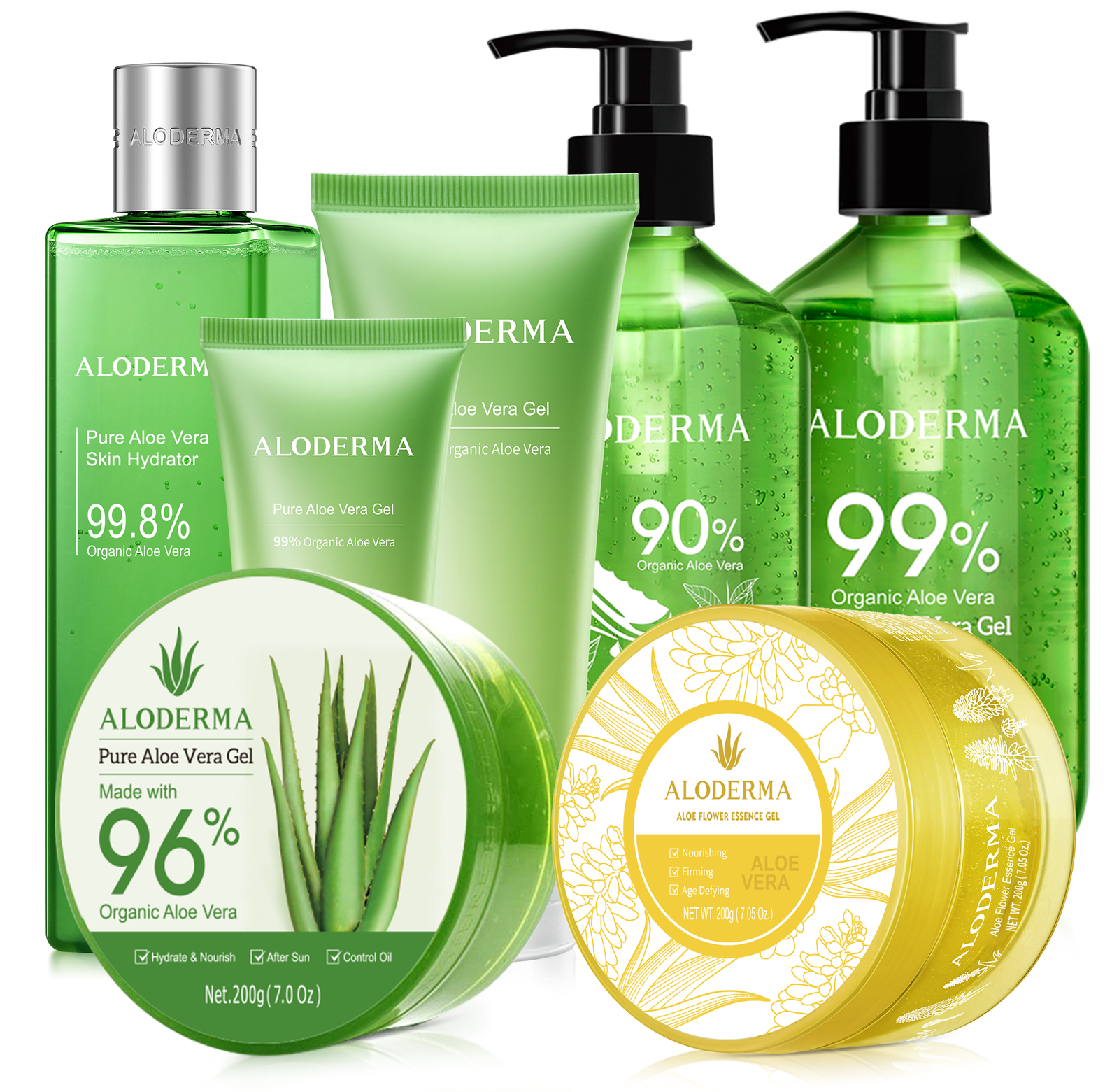
Aloe vera is a natural anchor for this type of formula. ALODERMA is a fully vertically integrated aloe vera company. It grows its own organic aloe vera, processes it, and manufactures onsite within 12 hours of harvest so the primary ingredient in every product is fresh, bioactive aloe vera. That farm-to-skin approach suits readers who want a lightweight, aloe-forward step rather than a heavy, complicated treatment.
Humectants such as glycerin and hyaluronic acid, also listed as sodium hyaluronate, help attract and hold water at the skin surface. Panthenol offers a supportive, conditioning role, while allantoin and centella asiatica are commonly chosen for a comfortable, calming feel. Green tea and chamomile can add mild botanical support, provided the overall formula remains low-fragrance and comfortable for the individual user.
| Ingredient | What It Does | Why It's Daily-Safe |
|---|---|---|
| Aloe vera | Adds lightweight hydration and comfort | A simple, low-friction botanical base |
| Glycerin | Binds water at the surface | Familiar humectant with a light texture |
| Hyaluronic acid | Helps attract and retain moisture | Useful for hydration-focused formulas |
| Panthenol | Conditions and supports the feel of the barrier | Generally gentle in basic hydrators |
| Allantoin | Helps the skin feel more comfortable | Suitable for uncomplicated soothing formulas |
| Centella asiatica | Provides botanical comfort | Works well in fragrance-light formulas |
| Squalane | Supplies lightweight emollience | Helps reduce a dry, tight after-feel |
| Ceramides | Support the skin's lipid structure | Useful after mask removal to seal hydration |
A daily baseline should be low-fragrance, alcohol-free, and low-acid. “Natural” doesn't automatically mean suitable for every face, so read the full ingredient list and pay attention to how your skin reacts after repeated use. COSMOS Organic certification gives shoppers a more precise benchmark: at least 95% of the plants in a certified product must be organic, and at least 20% of the total formula must be organic ingredients, or 10% for rinse-off products (COSMOS Organic standards).
Ingredients to Avoid in a Daily Sheet Mask
Daily masking becomes harder to tolerate when the sheet delivers repeated exposure to ingredients designed for occasional treatment. The mask's occlusive layer can increase contact, so a formula that feels manageable in a quick application may feel too intense when used every night.
High-strength exfoliants
Scan for glycolic acid, lactic acid, and salicylic acid. The planning thresholds often used for a cautious daily-use discussion are glycolic or other strong acids, salicylic acid above 1%, and lactic acid above 5%. These ingredients can be useful in a targeted routine, but repeated exposure under a damp sheet may bring irritation, dryness, or heightened sensitivity.
Retinoids and retinol derivatives
Look for retinol, retinal, retinyl palmitate, adapalene, or other retinoid terms. A sheet mask can increase contact with a leave-on active, so combining it with a retinoid may make the routine feel stronger than expected. Keep retinoid nights separate unless the product label specifically establishes that use pattern.
Essential oils and sensitizers
Check for lavender oil, citrus peel oils, limonene, linalool, witch hazel distillate, and alcohol denat. Strong fragrance and volatile oils may be uncomfortable for sensitive users, while high-alcohol formulas can leave the face feeling dry or tight. The ingredient list matters more than the marketing phrase on the front of the package.
Heavy or fragrance-rich blends
A thick, oil-heavy essence may create a congested feel, particularly for oily or blemish-prone skin. Scan for a long fragrance blend, rich plant oils, or ingredients you already know your skin doesn't tolerate. For a broader label-reading reference, use ALODERMA's guide to ingredients to avoid in skincare.
Aloe provides the gentler counter-example: a low-acid, fragrance-light, lightweight base that can fit a daily routine when the rest of the formula is equally restrained. The goal isn't to remove every active from skincare. It's to avoid stacking several high-contact ingredients inside one short, occlusive step.
Fitting a Daily Sheet Mask into Your AM and PM Routine
A sheet mask works best when it has a clear place in the routine. Use the thin-to-thick rule: water-based products come before richer creams and oils.
Morning flow
Start with a gentle, low-pH cleanser, then apply an alcohol-free hydrating toner if you use one. Place the mask for 10–15 minutes, remove it before the sheet starts drying, and pat the remaining serum into the skin. Finish with a light moisturizer and broad-spectrum SPF 30 or higher before makeup.
Evening flow
If you wore sunscreen or makeup, begin with an oil or balm cleanser, then follow with a second gentle cleanse. Skip strong actives on a mask night, apply the sheet for 15–20 minutes, and finish with a peptide or ceramide moisturizer. Save heavier oils or retinol for nights when you aren't adding the extra occlusive step.
Timing rule: A sheet mask is a timed treatment, not a sleep mask. Don't fall asleep wearing it, and don't reuse a single-use sheet.
Store unopened masks flat, and refrigerating them can make the application feel pleasantly cool. Remove the mask while it's still moist, then press in leftover essence rather than rubbing. A hydrogel listing for Lancôme's Advanced Génifique mask directs users to leave it on for 20 minutes, illustrating the short, timed format (Lancôme hydrogel mask directions).
For product-specific application guidance, follow ALODERMA's instructions on how to use sheet masks. If the mask pills under makeup, feels sticky, or leaves your face tight, reduce the serum amount afterward or move the ritual to the evening.
Sheet Mask Recommendations by Skin Type
The idea that more masking always produces more hydration sounds logical, but skin doesn't work like a plant that improves every time you add water. A mask's fit depends on how readily your skin tolerates occlusion, how rich the essence feels, and what else is already in your routine.
| Skin Type | Best Mask Ingredients | Wear Time | Frequency |
|---|---|---|---|
| Sensitive or reactive | Aloe, centella asiatica, glycerin, fragrance-free formulas | 10 minutes | Begin occasionally, then adjust only if skin stays comfortable |
| Oily or combination | Watery essence, glycerin, light humectants, niacinamide | 10–15 minutes | Use selectively or on drier areas |
| Blemish-prone | Lightweight aloe or simple hydrating formulas | 10 minutes | Once weekly may be more suitable than daily use |
| Normal or dehydrated | Aloe, hyaluronic acid, glycerin, ceramides | Up to 20 minutes | Daily use can suit some users when the formula remains gentle |
Sensitive or reactive skin
Choose fragrance-free, alcohol-free, low-acid formulas with aloe or centella. Start with a short session and avoid testing a new mask on the same night as another unfamiliar product. ALODERMA's aloe sheet mask fits the aloe-forward profile described for a simple hydration step, but your own response still determines whether it belongs in a daily routine.
Oily or combination skin
A watery essence usually feels better than a dense, oil-rich serum. Look for non-comedogenic positioning where available, and be cautious with heavy butylene glycol blends or coconut-oil-soaked sheets. You might mask only the dry cheek area rather than covering the whole face every night.
Blemish-prone skin
A dermatologist-cited source notes that once-weekly use may suit acne-prone skin better than daily masking because repeated occlusion can worsen sebum retention (Watsons usage guidance). Choose a simple aloe or lightweight hydrating formula, avoid rich oils, and let mask-free nights keep the rest of your routine calm.
Normal or dehydrated skin
A gentle hydration-focused mask can be used more often if there's no persistent tightness, stinging, or new roughness. Follow it with a ceramide moisturizer, and take a mask-free day whenever your skin starts feeling overloaded.
When Daily Sheet Masking Can Backfire
Over-occlusion is the main reason a pleasant ritual can become counterproductive. Keeping a damp sheet on the face for too long creates a humid microenvironment. That can temporarily improve water content, but repeated or prolonged exposure may disturb the barrier and increase water loss over time, especially for sensitive users.
Wear time matters because exposure accumulates. A 2022 exposure assessment found that preservative exposure rose sharply when wear time reached 25 minutes or longer, and concluded that application should stay below 20 minutes (2022 exposure assessment). The practical lesson is straightforward: removing a mask on time is part of using it correctly.
Watch for changes that suggest the routine is too demanding:
- Persistent redness: The skin remains visibly flushed after removal.
- Tightness: The face feels less comfortable, not more comfortable, once the essence dries.
- Small bumps: New texture appears along areas that receive repeated occlusion.
- Lingering stinging: Familiar products suddenly feel uncomfortable.
- Roughness or dryness: The surface becomes less smooth over successive uses.
Don't wear a mask until it dries, reuse the sheet, or place it over an exfoliating toner. If any of the warning signs appear, pause the mask and simplify the routine to gentle cleansing, basic moisturizer, and daytime sun protection. A useful resource for adjusting your routine is this guide to find facial mask usage schedule from Skin Perfection.
Fresh processing also gives aloe-based formulas a clear place in an everyday discussion. ALODERMA states that its products contain at least 64% fresh organic aloe vera and that the aloe is processed from field to finished product within 12 hours of harvest (ALODERMA fresh aloe process). That doesn't make every product suitable for every person, but it supports a low-friction, farm-to-skin approach focused on lightweight hydration. Before choosing any mask, use the ingredient list and product directions, including ALODERMA's information on what ingredients clog pores.
Your Everyday Sheet Mask Decision Framework
Use this checklist whenever you reach for a mask, especially when daily use starts to feel automatic.
- Is the formula free from acids, retinoids, and strong fragrance? If not, treat it as an occasional active step rather than a daily hydrator.
- Is the main hydrator gentle? Aloe, hyaluronic acid, and glycerin are familiar choices for a simple moisture-focused formula.
- Does my skin feel calm today? If it's already tight, stinging, rough, or unusually reactive, skip the mask.
- Will I remove it within 10–20 minutes? Set a timer if you tend to fall asleep during evening skincare.
- Do I have a barrier-supporting moisturizer ready? A ceramide, peptide, or otherwise comfortable moisturizer helps complete the routine.
The framework works because it checks the variables that matter most. Frequency alone doesn't determine whether a sheet mask suits you. The formula, the contact time, your existing products, and your skin's current condition all shape the result.
A practical default: If you can't answer one of the five questions confidently, choose a mask-free night.
ALODERMA's aloe-based, fresh-processed approach fits the kind of low-acid, lightweight option that can pass this checklist when the specific product label and your skin's response support it. Treat the sheet mask as a small supportive step, not the main event. A sustainable routine should leave your skin feeling comfortable after removal and the next morning, not dependent on a dramatic, temporary finish.
ALODERMA offers aloe-focused sheet masks, hydrators, cleansers, toners, serums, and moisturizers designed to fit simple AM and PM routines. Visit ALODERMA to explore fresh organic aloe formulas and choose a timed, gentle mask that matches your skin type.