





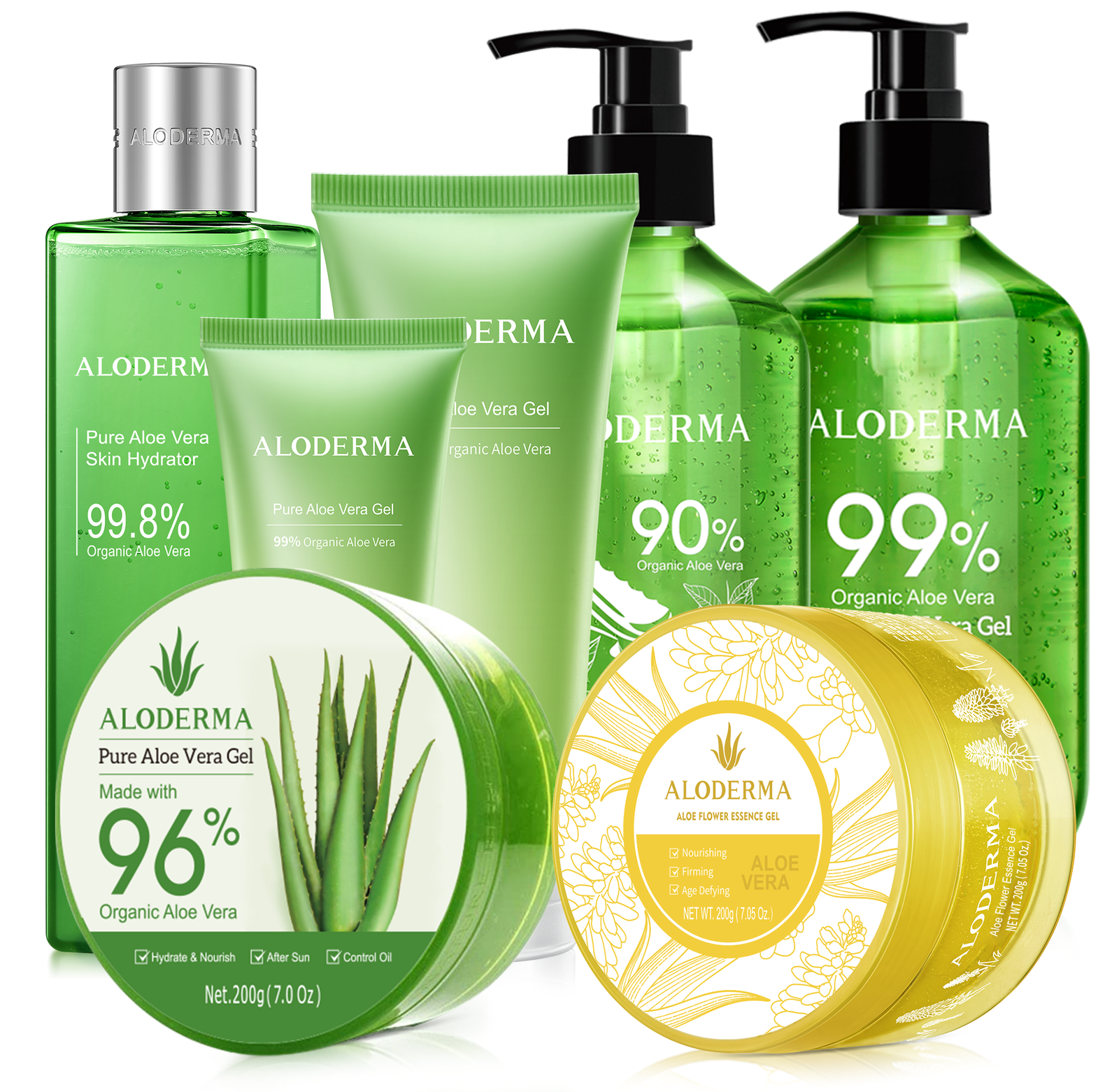


The default skincare routine order is cleanser, toner or aloe hydrator, serum or treatment, moisturizer, then sunscreen last in the morning, using broad-spectrum SPF 30 or higher. The sunscreen-last rule means sunscreen is your final skincare layer before makeup.
You're standing at the sink with a gel, a serum, and a cream, wondering whether you've already put something on backward. The answer usually isn't another product. It's a shorter routine you can repeat comfortably, enough sunscreen to cover evenly, and a plan to refresh that protection during the day.
The Correct Skincare Routine Order for Morning and Night
Morning: cleanse, hydrate if needed, apply serum, moisturize, protect, then apply makeup. Night: cleanse, hydrate if appropriate, apply your evening treatment, and finish with moisturizer.
These are placement options, not a shopping list. You don't need a toner, gel, and serum just because each has a slot.
Skincare routine order, morning and night
| Order | Morning | Night | Why it sits here |
|---|---|---|---|
| 1 | Cleanser | Cleanser | Clears oil and debris before leave-on products |
| 2 | Toner or aloe hydrator | Toner or aloe hydrator | Adds a light, watery layer while skin is still damp |
| 3 | Serum | Treatment such as a retinoid or exfoliant, on separate nights | Places targeted actives beneath heavier layers |
| 4 | Moisturizer or aloe cream | Moisturizer or aloe cream | Helps retain water and supports the skin barrier |
| 5 | Broad-spectrum sunscreen | Not needed | Forms the final daytime protective layer |
| 6 | Makeup, if worn | Not needed | Goes on after sunscreen has set |
The American Academy of Dermatology's application guide places treatment immediately after cleansing, followed by moisturizer and/or sunscreen, then makeup; it recommends broad-spectrum, water-resistant SPF 30 or higher applied about 15 minutes before going outdoors.
That treatment priority matters. If a targeted product requires clean, dry skin, use it before your optional hydrating layers rather than automatically following the table. Product-specific directions outrank the thinnest-to-thickest shortcut.
A watery toner or gel-based aloe hydrator fits naturally between cleansing and cream when you're using it for everyday hydration. But texture alone doesn't tell you whether something is an exfoliant, a moisturizer, or a targeted treatment. Read what the formula does.
Keep the essentials separate from the extras
Sunscreen isn't another moisturizer. It needs an even outer layer, so don't follow it with aloe gel or facial cream.
Say your face feels comfortable after a lightweight moisturizer. Adding toner and serum may make the routine longer without solving a problem. Leave those slots empty until you have a reason to fill them.
Remember the endpoints: cleanser first in both routines, sunscreen last in the morning.
How to Build a Morning Routine Step by Step
A useful morning routine should survive a rushed weekday. Put the products you use beside the sink, in application order, rather than making yourself choose from a crowded shelf.
This visual shows the broad sequence. Add moisturizer before sunscreen when your skin needs it.
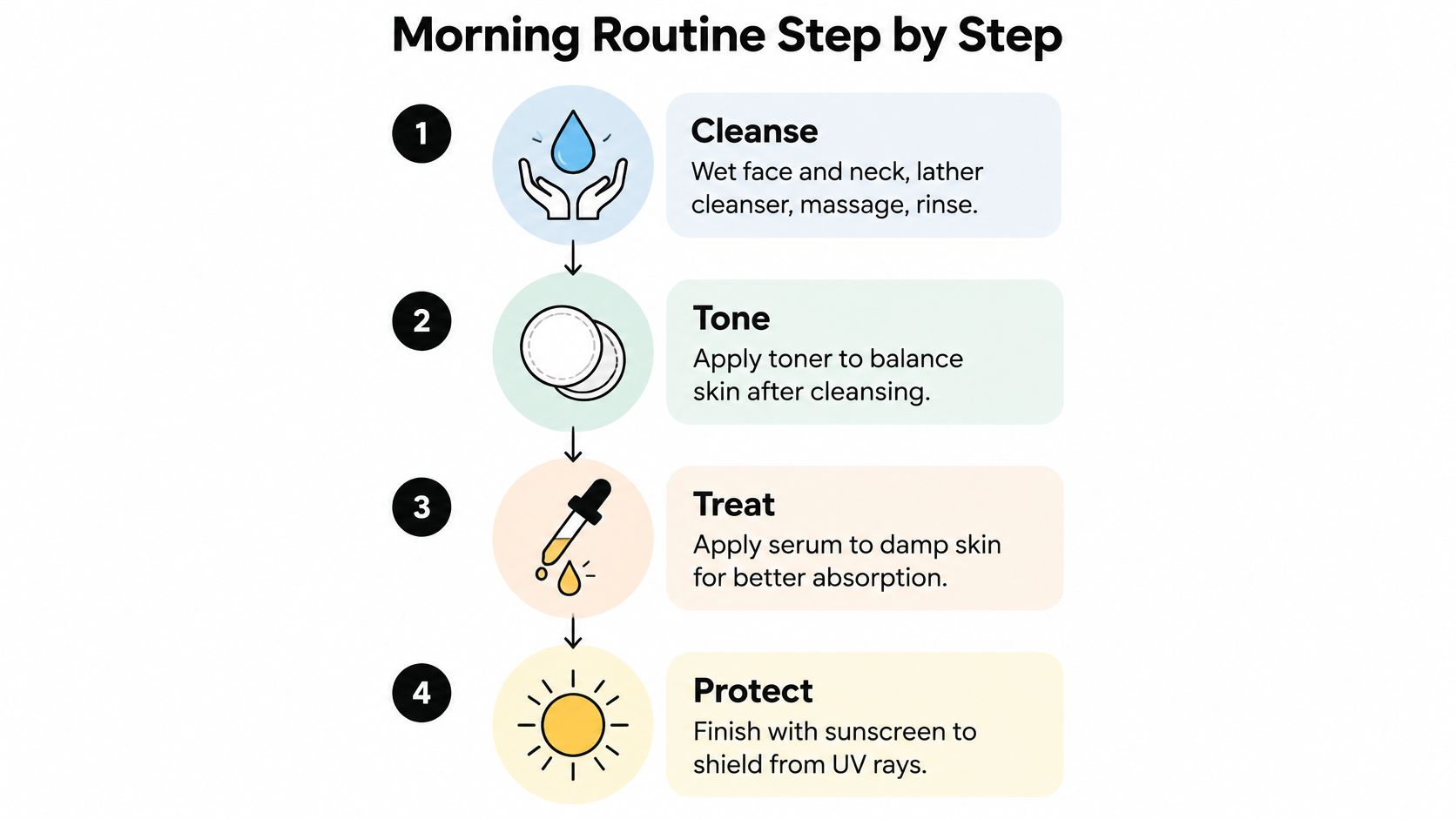
Apply light layers without rushing the protective layer
- Cleanse gently. Wet your face and neck, work a lathering cleanser into a lather, massage it over damp skin, and rinse with warm water. You're removing overnight oil, not trying to scrub your skin squeaky clean, so skip very hot water and forceful rubbing.
- Pat away excess water. Leave skin slightly damp rather than dripping. The American Academy of Dermatology's basic skincare guidance recommends applying moisturizer to damp skin to help trap water and limiting face washing to twice daily, plus after sweating.
- Apply an optional toner or aloe hydrator. Spread a light layer with clean hands. If it pools, drips, or stays slippery, use less next time; a thick wet layer makes everything afterward harder to spread.
- Add serum only if it has a job. Gently distribute enough to cover the intended area, following that formula's directions. Pressing is fine, but it isn't a special absorption technique, and prolonged rubbing won't make the product more effective.
- Apply moisturizer over the face and neck. Use a light, even coat that leaves skin comfortable rather than coated. If sunscreen slides around afterward, reduce the richness or amount of moisturizer, not the sunscreen.
- Finish with sunscreen. Spread it evenly across exposed skin, including the face, neck, and ears. The FDA sunscreen testing document specifies an application density of 2 mg/cm² and a minimum 15-minute wait before UV exposure, which is why a barely visible dab isn't a reliable dosing strategy.
- Let the sunscreen settle before makeup. Avoid dragging a brush or sponge repeatedly over the same area. If you're leaving soon, do your skincare before breakfast or getting dressed so the protective layer isn't your last rushed task.
Don't dilute the step that matters most
Never mix sunscreen into moisturizer. Apply them separately so you can distribute the sunscreen evenly without diluting it or leaving gaps.
A comfortable morning finish doesn't have to look perfectly matte. Aim for skin that feels settled, sunscreen that doesn't roll into crumbs, and makeup that can be applied without moving the skincare underneath.
If something pills, simplify the layers beneath sunscreen first. Keeping an optional serum is less important than being able to apply your protective layer properly.
Reapplying Sunscreen Through the Day
Say Maya applies moisturizer and sunscreen at 7:45 a.m. for an 8:00 a.m. commute. That hypothetical schedule allows the 15-minute lead time recommended by the American Academy of Dermatology's daytime skincare guidance, which also advises reapplying every two hours, or immediately after swimming or sweating.
Her morning application isn't an all-day pass. If she plans an outdoor lunch or an afternoon walk, she needs sunscreen available when she's away from her bathroom shelf.
Make protection portable
- Look at your outdoor plans. Include the commute, lunch break, school pickup, and exercise, not just a day at the beach.
- Set a reapplication reminder. Use the interval above when you're spending time outdoors rather than relying on memory.
- Refresh after water, sweat, or towel drying. Don't assume the earlier layer remains intact.
- Choose a format you can apply adequately. A stick may be convenient over makeup, but it still needs thorough, even coverage. Don't assume a light dusting of SPF powder replaces a full sunscreen application.
- Keep it where you'll use it. A bag or desk drawer is more useful than a bottle left at home.
Cloudy weather isn't a reason to skip protection. Makeup also doesn't excuse leaving exposed areas uncovered.
Plan sunscreen around your day, not just around your bathroom routine.
If you're deciding between separate products and a combined formula, our guide to face lotion with SPF helps clarify the choice. Whichever format you choose, reapplication should restore even coverage, not add a token swipe.
How to Build an Evening Routine With Aloe Hydrators
At night, remove the day's residue and leave your skin comfortable enough that you aren't tempted to keep adding products. A long routine is especially easy to abandon when you're tired.
Keep the cleansing stage gentle rather than turning it into a deep-scrubbing session.
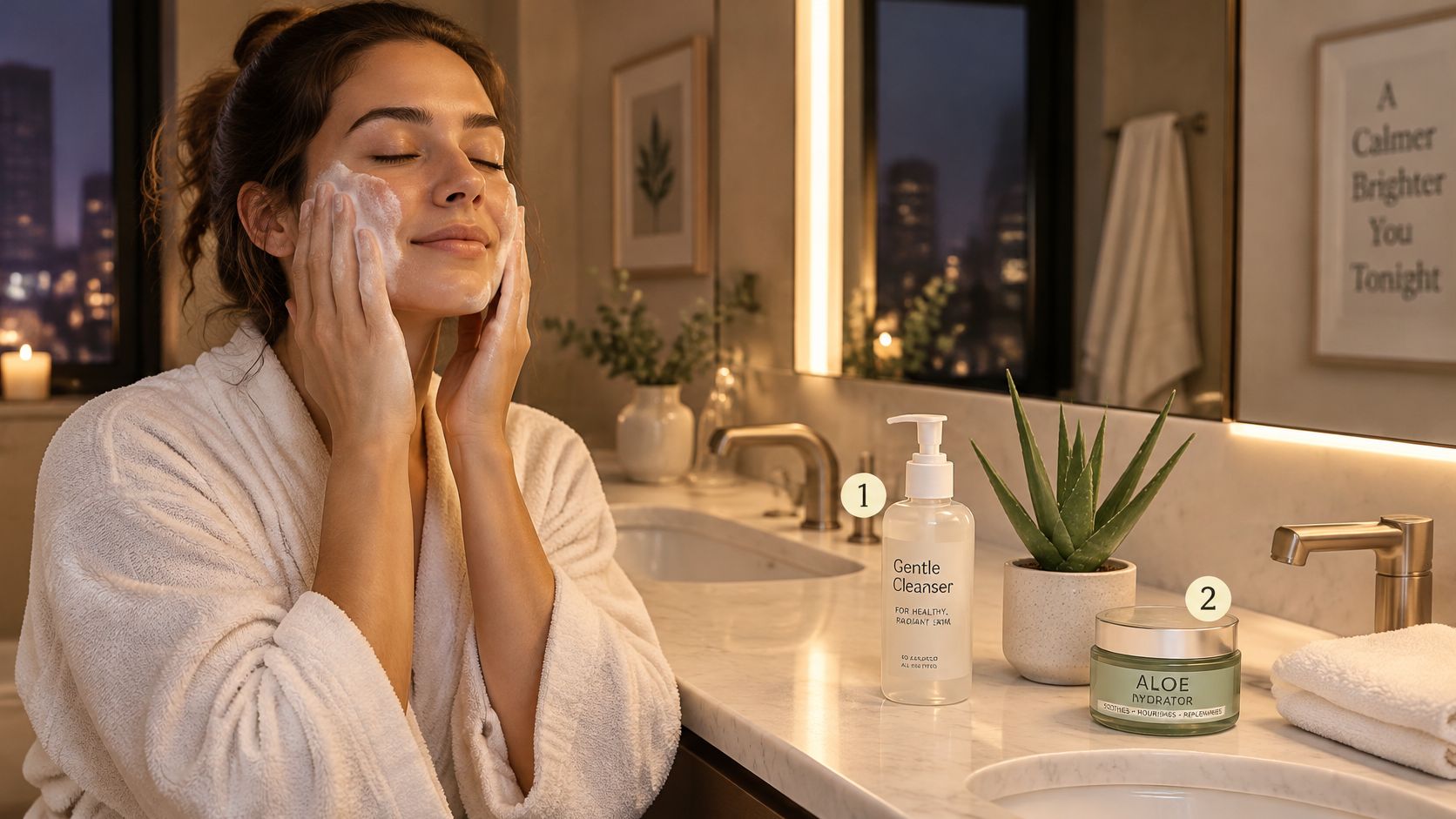
Build around comfort before bed
- Cleanse away sunscreen and daily grime. Massage gently and rinse thoroughly, especially around the hairline and jaw. If makeup remains, use a suitable remover rather than repeatedly scrubbing with cleanser.
- Add a light hydrating layer if needed. A watery toner or aloe gel can go on while skin remains slightly damp. Skip this before a treatment that specifically calls for dry skin.
- Use your evening serum or treatment. Keep retinoids in the evening routine and avoid treating every night as an opportunity to use every active you own. On a simple hydration night, this step can be omitted.
- Finish with moisturizer over the face and neck. Choose a cream when lighter hydration leaves you uncomfortable, particularly in dry surroundings. A thicker coat isn't automatically better; aim for softness without a heavy residue.
The moisturizing guidance summarized by CeraVe places lightweight products before heavier formulas and recommends moisturizing without waiting for skin to become fully dry. The practical exception is a treatment whose application directions require otherwise.
What aloe sourcing tells you
Aloderma is a fully vertically integrated aloe vera company. We grow all of our own organic aloe vera, process it, and manufacture onsite within 12 hours of harvest to ensure the primary ingredient in every one of our products is the most bioactive and effective aloe vera possible.
That explains our sourcing and manufacturing approach, but your choice should still account for the complete formula. Check the ingredient list for fragrance, essential oils, and other ingredients you prefer to avoid rather than assuming every aloe-based product will feel identical.
For a closer look at leaving a hydrating layer on before bed, read our guide to aloe vera on the face overnight.
Use this accompanying video alongside the application steps.
Judge the routine by how your skin feels when you wake up. Comfortable skin is a better target than an elaborate bedtime ritual followed by tightness.
Mixing Actives, Skin Types and Fixing Common Problems
Compatibility and scheduling matter more than perfect layer order. Putting every product in the correct position won't rescue a routine that combines more exfoliation or stronger treatment than your skin tolerates.
The American Academy of Dermatology's treatment-order guidance recommends retinoids at night and, when they cause dryness, applying moisturizer after cleansing and waiting 20–30 minutes before the retinoid. That's a useful exception to the usual treatment-before-cream sequence.
Routine adjustments by skin type
| Skin type | Core routine | Add first | Avoid stacking |
|---|---|---|---|
| Sensitive | Cleanser, aloe gel, moisturizer, SPF | One gentle serum after the basic routine feels consistently comfortable | Retinoid and exfoliant on the same night |
| Oily | Cleanser, optional toner or serum, lightweight moisturizer, SPF | Niacinamide serum in the morning or a retinoid at night | Multiple exfoliants in one routine |
| Blemish-prone | Cleanser, aloe gel, gel moisturizer, SPF | One targeted treatment at a time | Heavy creams over several unfamiliar actives |
| Dry | Cleanser, aloe cream or moisturizer, SPF | Hydrating serum with sodium hyaluronate | Retinoid on damp skin without considering a moisturizer buffer |
These are starting points, not ingredient prescriptions. Oily skin doesn't require an exfoliating toner, and dry skin doesn't automatically need both an aloe cream and another moisturizer.
Give each active a clear place in the week. For example, use vitamin C in the morning and reserve an exfoliant for a separate evening instead of applying both just because their textures layer neatly.
Before adding an unfamiliar formula to your whole face, follow our guide to how to patch test skincare. Keep the rest of the routine stable so you have a reasonable chance of identifying what caused any discomfort.
Troubleshoot the symptom, not just the sequence
Stinging after a new serum: Stop using the new product rather than trying to push through. Check whether you've also introduced hot water, a stronger cleanser, or more frequent exfoliation, and return to a comfortable basic routine.
A greasy film beneath sunscreen: Your moisturizing layers may be too rich or too generous. Try a lighter texture underneath while keeping the sunscreen application adequate.
Pilling: This can happen when you apply too much, rub repeatedly, or layer formulas that don't sit well together. Let the previous layer settle, use less of the optional products, and test the sunscreen over moisturizer alone.
Tightness or flaking after a retinoid: Reduce frequency and use the buffering approach above. Don't add an exfoliant to remove the flakes while continuing the same uncomfortable routine.
Change one variable at a time. Otherwise, you won't know whether the improvement came from adding something or taking something away.
You don't need to endure discomfort to prove a product is working. If a simple routine still leaves your skin persistently uncomfortable, get individualized advice before adding another active.
Confirm Your Order and Pick Your Starter Products
By now the order itself should feel simple: cleanser first, sunscreen last in the morning. What decides whether the routine holds up is repetition, not extra steps.
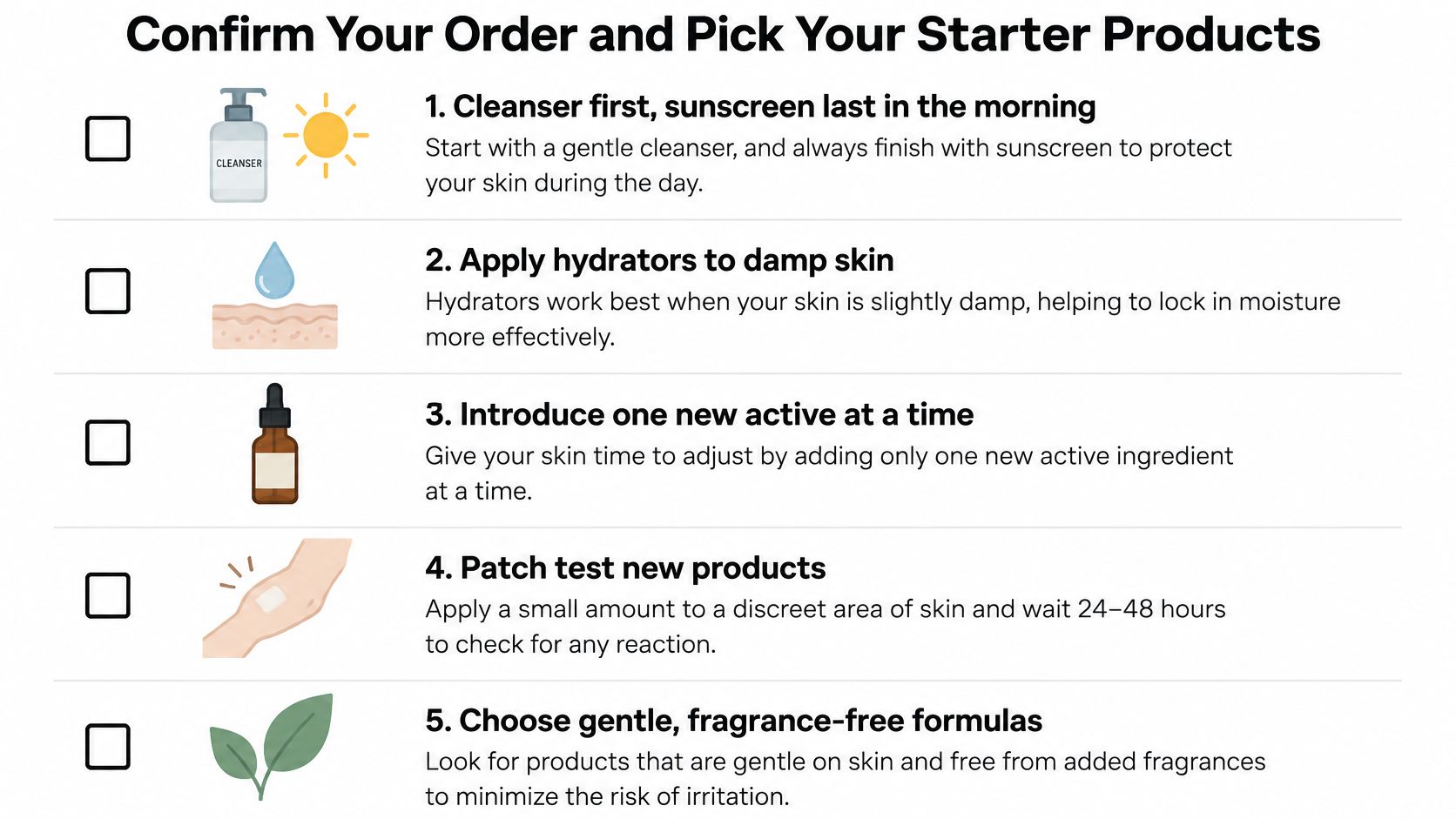
Use this checklist to keep the steps visible.
- Confirm the endpoints. Cleanse first and finish daytime skincare with sunscreen.
- Match application to the formula. Hydrate damp skin, but respect dry-skin treatment directions.
- Change one thing. Keep familiar products steady while testing an addition.
- Choose repeatability. A routine you can maintain beats an elaborate one you regularly skip.
Plan your reorder schedule before you run out. Used morning and night, a cleanser lasts about 8 weeks, while other skincare products last about 3-5 months depending on use, so the cleanser is the bottle you will replace most often.
One starting option is Pure Aloe Vera Gel + Tea Tree Oil, an all-over facial moisturizer used twice a day. Review its complete ingredient list before choosing it, especially if you already know certain ingredients do not suit you.
Write your morning and evening order on a card, follow it consistently, and change only one thing at a time.
Visit ALODERMA to review ingredients and take the Skin Care Questionnaire, which gives personalized recommendations for your specific skin type so you can pick the products that fit your morning and evening order without filling every optional step.