





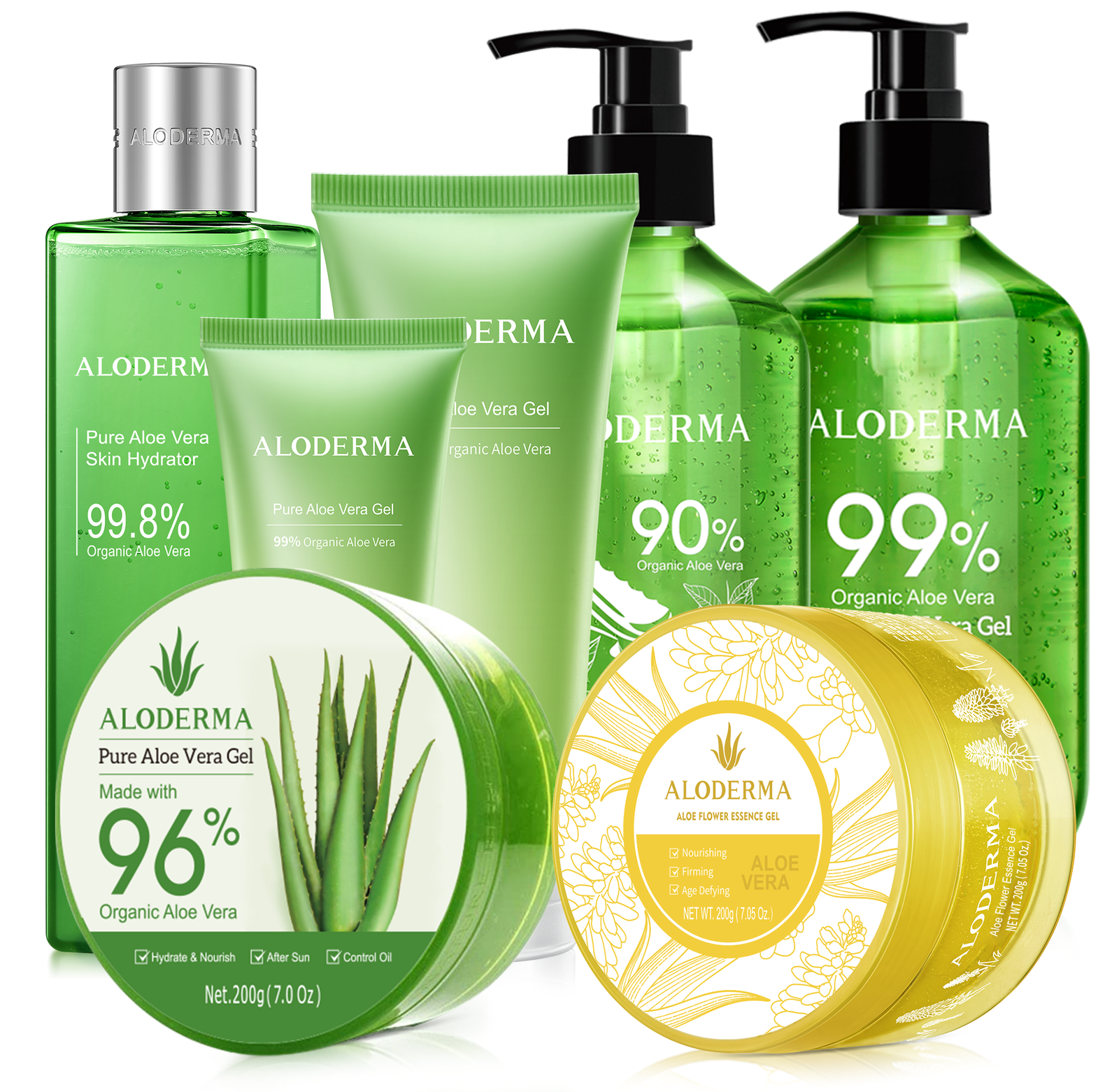


A pale-yellow bottle sits on the bathroom shelf beside your cleanser. A friend said tea tree oil might help with a stubborn, shiny T-zone, and now you're wondering whether to put a drop straight on your skin or add it to a diffuser. The practical answer depends less on the word “natural” than on how concentrated the oil is, how long you're exposed to it, and how it's been stored.
Tea tree oil can fit into a home fragrance or skincare routine, but it's a concentrated ingredient, not a casual add-on. A measured approach helps you enjoy its fresh, sharp scent without guessing at dilution or treating a home mix like a finished product.
What Tea Tree Oil Is and How Aromatherapy Uses It
Tea tree oil is steam-distilled from the leaves of Melaleuca alternifolia, a shrub native to eastern Australia. It is similar to espresso: a few drops are a concentrated shot of the leaf, containing far more of its aromatic compounds than a whole cup of tea.
The oil is a chemically variable mixture of more than 60 monoterpenes, small aromatic molecules. For quality control, terpinen-4-ol is the main marker and typically makes up 35–48% of the oil. Another constituent, 1,8-cineole, may increase irritation potential when present in high amounts, so two bottles bearing the same general name may not behave exactly alike. The review of tea tree oil composition and use explains why checking the oil's profile matters.
Read the bottle, not just the front label
Before buying, look for the botanical name, a stated terpinen-4-ol range, a batch or harvest date, and a dark-glass bottle. These details help you assess what's inside and how well it's protected from light. If you're comparing products, this 100% tea tree essential oil from Wallaby Wellness is one example of a listing to evaluate using that checklist.
Aromatherapy is the use of aromatic plant compounds, mainly through diffusion and diluted topical use, to support mood and daily routines. That doesn't make it a treatment. Evidence for tea tree oil on oily or blemish-prone skin remains modest and mixed, so it's better thought of as a supporting ingredient than a stand-alone solution.
The market's size reflects consumer interest, not proof of benefit. Grand View Research valued the global tea tree oil market at USD 49.3 million in 2025 in its tea tree oil market report.
This guide focuses on three useful decisions: how much to use, how to diffuse it, and who should skip it or check first.
Safe Dilution Levels for Every Use
Never swallow tea tree oil, and never apply it undiluted to skin. A neat oil can be much more concentrated than a finished skincare product, and “just one drop” doesn't make direct application a controlled dose.
| Use | Level or amount | Drops in 30 mL carrier | Practical note |
|---|---|---|---|
| Diffuser in a small room | 3 drops in about 100 mL water | Not applicable | Follow the device label and ventilate |
| Topical spot use in carrier | 0.5–1.0% | 3–6 drops | Start at the low end for a first use |
| Rinse-off face wash or shower gel | Up to 1.0% | Up to 6 drops | Ceiling set for finished products only |
| Rinse-off shampoo | Up to 2.0% | Up to 12 drops | Rinse thoroughly after use |
| Leave-on face cream | Up to 0.1% | Under 1 drop | Use a finished product, not a home mix |
| Undiluted oil | 100% | Never | Never swallow or apply to skin |
The table's facial-product ceilings come from the European Scientific Committee on Consumer Safety's opinion on tea tree oil. It gives defended maximum concentrations of 2.0% in shampoo, 1.0% in shower gel and face wash, and 0.1% in face cream, as described in the committee's tea tree oil opinion. Those are limits for formulated products, not a recipe for adding oil to a container at home.
Do the drop math carefully
For a simple working calculation, 30 mL of carrier is about six teaspoons. In that amount, 0.5% is about 3 drops, 1% about 6 drops, and 2% about 12 drops. Drop size varies by dropper and oil, so treat these as practical estimates, not laboratory measurements.
Leave-on products need more caution than rinse-off products because they stay on the skin for hours. At 0.1%, the amount in 30 mL works out to less than one drop, which is why a face cream at that level should be made and measured by a manufacturer rather than mixed by eye at home.
A jar-size example makes the issue clear. Six drops in a 30 mL jar of aloe gel gives about 1%; put the same six drops into a 100 mL moisturizer and the concentration falls to roughly 0.3%. The number of drops alone doesn't tell you the percentage. The volume of the whole mixture matters.
Practical rule: Write the percentage and the date on any home-mixed jar, and don't make a large batch you'll use over a long period.
For a first topical use, begin at 0.5%. Move to 1% only after a patch test has been clear. If you'd like a plain-language overview of plant oils in personal care, ALODERMA's guide to natural essential oils is another resource to consult.
Who Should Avoid Tea Tree Oil and When to Stop
A parent is setting up a diffuser in a nursery, while a cat slips out of the living room as soon as the scent starts. It's tempting to assume a plant-derived oil is harmless, but natural doesn't mean risk-free. Air exposure can irritate, and individual reactions aren't always predictable.
| Situation | Guidance | Why |
|---|---|---|
| Children and infants | Keep oil and diffusers out of reach and skip diffusing around babies | Skin and airways can react more strongly |
| Pregnant or breastfeeding | Speak with a healthcare professional before any use | Safety information for this group is limited |
| Cats and small pets | Keep them out of diffused rooms and away from undiluted oil | Pets process essential oils differently |
| Breathing sensitivities | Skip diffusion or keep sessions brief and well ventilated | Inhalation effects aren't well understood |
| Known fragrance sensitivity | Patch test first and stop if any reaction appears | Sensitivity can increase with repeated exposure |
| Old or undiluted oil | Replace the bottle and never apply it undiluted | Oxidized oil has greater sensitizing potential |
| Eyes, nose and mouth | Never apply or swallow it; rinse with water if oil gets in | Concentrated oil is a strong irritant |
Stop using the oil or leave the room if you notice:
- Coughing or wheezing
- Headache
- Burning or watery eyes
- Redness that spreads beyond the test area
Tea tree oil isn't for use in the mouth, eyes, or ears, and prolonged inhalation without supervision isn't a sensible home routine. Health Canada's 2025 assessment of tea tree oil notes that it can irritate the skin and eyes and that inhalation may irritate the respiratory tract. The safety of inhaled use over time remains poorly understood, so don't assume that continuous diffusion is a better version of a brief, ventilated session.
Keep the bottle fresh
Heat, light, air, and repeated opening can break oil down. Over time, oxidation products can form and increase the chance of skin sensitization. Keep the bottle tightly capped in dark glass, in a cool cabinet, and follow its stated shelf life. Replace it if its smell has changed sharply or it looks darker than when you opened it.
If you're pregnant, breastfeeding, sensitive to fragrances, or unsure, ask a qualified healthcare professional before using it. Aromatherapy is a personal choice; feeling comfortable with the routine matters more than using a particular oil. For topical products, the ALODERMA patch-test guide offers a practical starting point.
How to Diffuse Tea Tree Oil at Home Safely
You've blocked out time to work in a home office and want a fresh scent in the room, not an overpowering cloud. Keep the session modest and follow the instructions for your own device. Tea tree oil is concentrated, so a few carefully measured drops are enough to start.
- Read the diffuser label. Check the maximum oil amount and water level before you begin. Many ultrasonic models use about 100 mL of water, but your device's instructions take priority.
- Choose a stable location. Keep the diffuser away from children, pets, and open flames, and place it where it can't be knocked over.
- Fill with cool water. Stop at the marked line rather than filling past the reservoir's limit.
- Add 3 drops to start. Use no more than the amount permitted by the device label.
- Run a short session. Try 30 to 60 minutes, then switch the unit off for an equal break.
- Keep air moving. Crack a window or leave the door open so the room isn't sealed around the scent.
- Step out if you feel irritation. Stop the diffuser and move to fresh air if you notice coughing, headache, watery eyes, or a scratchy throat.
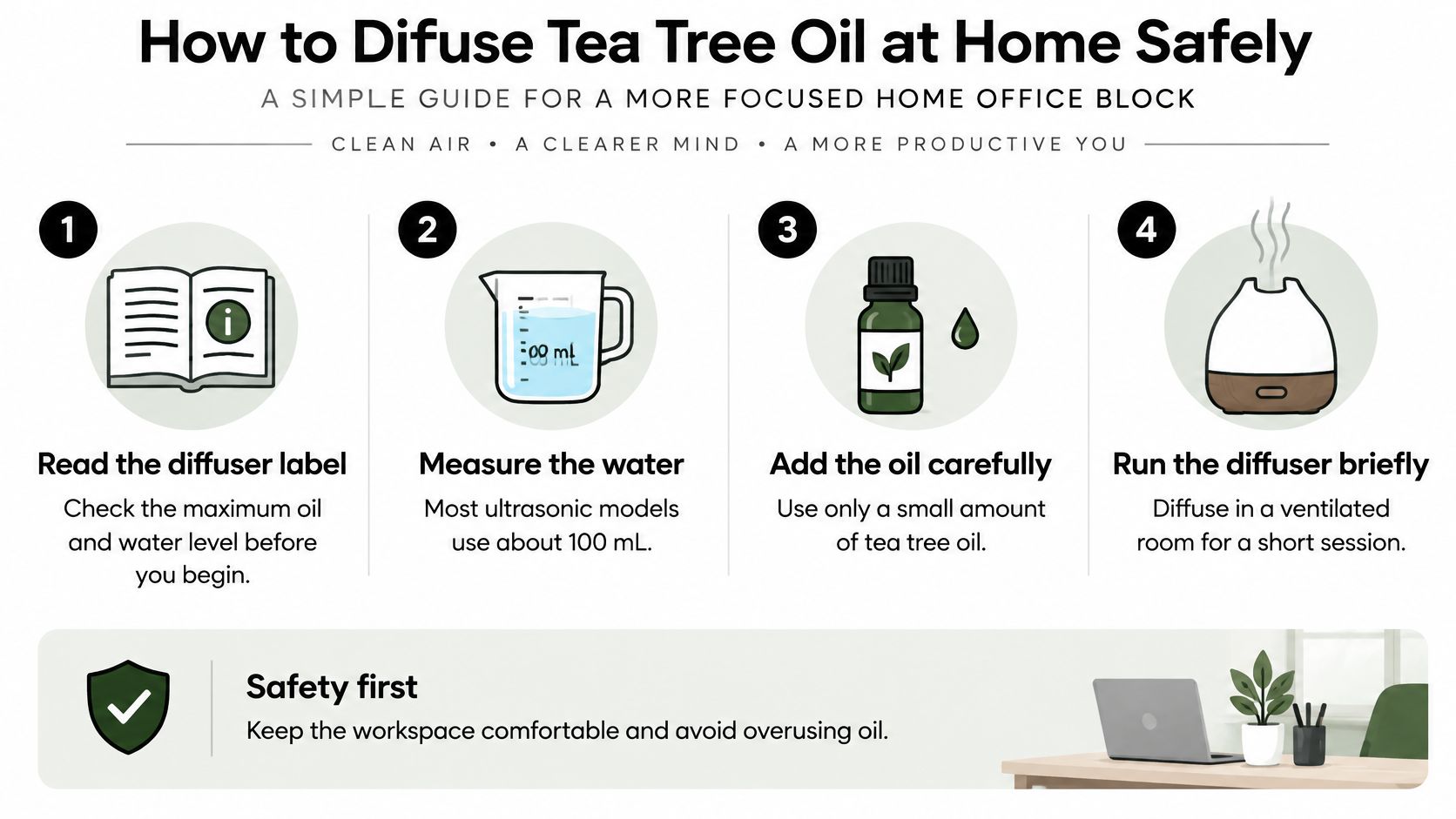
For a practical example, one 60-minute session at 3 drops in a 12-square-metre room is a measured choice for a workday. Running the diffuser all night in a closed bedroom isn't. Aromatic compounds can build up in still air, so shorter sessions with ventilation are a more comfortable habit than leaving a device on continuously.
Tea tree oil's plant origin doesn't remove the need for basic precautions. The ALODERMA Pure Aloe Vera Gel + Tea Tree Oil product page describes a topical formula with up to 90% pure aloe vera by weight and essential oils rather than artificial fragrance. The page also describes fresh organic aloe processed within 12 hours of harvest, with no added water or aloe powder concentrates, and identifies the formula as vegan and cruelty-free. A ready-to-use skincare product is a different choice from putting concentrated oil directly on skin.
After each session, empty the reservoir, rinse it, and let it dry. Cleaning prevents residue from carrying into the next use and keeps old scent from mixing with a different oil.
Using Tea Tree Oil on Blemish-Prone Skin
It's late, you've spotted a mark on your chin, and the dropper is in your hand. The urge to dab oil straight onto the area is understandable, but concentrated oil isn't the shortcut it seems. Choose a finished, lightweight product with a set formula rather than trying to guess the final percentage in a home mix.
Tea tree oil may appeal if you like a fresh scent and a clean-feeling, non-greasy finish, but the evidence for blemish-prone skin is modest. A small amount of evidence suggests topical use may help, and more research is needed, according to the National Center for Complementary and Integrative Health. That's a reason to keep expectations measured, not a promise that it will change your skin.
A cautious first-use routine
- Cleanse and pat dry. Start with skin that's free of makeup and surface residue.
- Read the label. Check that tea tree oil is listed and note the product's instructions and ingredients.
- Patch test a small area. Try the product on the inner forearm and check the area after 24 to 48 hours.
- Apply a thin layer at night. For the first week, use it only on the target area rather than over the whole face.
- Follow with a light moisturizer. Keep the rest of the routine simple so you can spot a reaction.
ALODERMA's Aloe Gel + Tea Tree Oil is one ready-made topical option to compare with other finished products. ALODERMA is a fully vertically integrated aloe vera company: it grows its own organic aloe vera, processes the aloe, and manufactures onsite within 12 hours of harvest. The company says this timing is intended to keep the primary ingredient in every product as bioactive and effective as possible. Its fresh-aloe supply-chain explanation describes aloe processed within that timeline and not made from concentrate or powder, with no water added.
Check the ingredient lists on product pages before buying, and choose a formula that fits your routine. Natural ingredients can still irritate skin, so stop using a product if it burns, stings, or causes spreading redness.
Blends and Diffuser Recipes Worth Trying
On a Sunday evening, you want the living room to feel a little calmer, not like an essential-oil shop. A simple blend can make the scent softer, but more oils don't automatically make a better mix. Start with small amounts and choose a recipe that fits the moment.
| Blend | Ingredients and amounts | Best moment | Watch for |
|---|---|---|---|
| Evening Calm diffuser | 3 drops tea tree + 3 drops lavender in water | Wind-down, 30-minute session | Ventilate the room after use |
| Desk Reset diffuser | 2 drops tea tree + 2 drops peppermint in water | Afternoon focus block, 30 minutes | Peppermint is strong, so keep sessions short |
| T-zone blend | 30 mL aloe gel or jojoba + 3 drops tea tree + 2 drops lavender | Night or morning on a clean face | Patch test first and keep away from the eyes |
| Post-workout rinse-off cleanser | 30 mL cleanser + about 4 drops tea tree | After exercise, washed off fully | Rinse thoroughly and stop if skin stings |
For a lavender note that balances tea tree's sharper aroma, browse ALODERMA's pure lavender essential oil guide.
Use three rules to keep a blend manageable:
- Keep it simple. Use three oils or fewer so you can recognize each scent and adjust one ingredient at a time.
- Keep citrus in the diffuser. Don't put lemon oil in a leave-on skin blend; some citrus oils can increase sensitivity to sunlight.
- Measure each drop. Use the dropper instead of pouring by eye, especially when you're mixing a small amount.
The topical recipe uses 30 mL of carrier with 3 drops of tea tree and 2 drops of lavender, about 0.8% total oil by the same practical drop calculation used for small home mixes. That may suit a limited T-zone spot, not the whole face. The rinse-off cleanser stays near 0.7%, and you should rinse it off fully. If you're uncertain about a product's compatibility with an oil, skip the home mix.
Store homemade blends in dark glass, refrigerate them, and use them within 7 to 10 days. If a blend smells sharp or resinous after months, replace it rather than trying to cover the changed scent with another oil.
Choose Your Routine and Start Small
Choose diffusion if you want a scent in a room, or a finished low-percentage product if you want to use tea tree oil on skin. For a diffuser, buy a clearly labeled oil and begin with 3 drops for a 30-to-60-minute session in a ventilated room. For skincare, choose a finished product that states its ingredients and instructions, then patch test before your first use.
A small routine is easier to assess than a string of new products. Keep a note of the open date and what you used, so you can spot a pattern if the scent or your skin's response changes.
- Write down the open date and percentage on the bottle or jar.
- Start at night, twice a week, for one week.
- Record how your skin and room feel at day 7 and day 14.
- Return to your previous routine at the first sign of irritation.
ALODERMA is one option for the skin route. Browse ingredient lists on aloderma.com and check the Aloe Gel + Tea Tree Oil page for its aloe content and processing timeline before deciding whether the product suits your routine. Small, measured steps make aromatherapy tea tree oil more enjoyable and less stressful.
ALODERMA offers aloe-based skincare, including a ready-to-use Aloe Gel + Tea Tree Oil, alongside ingredient information to help you compare products. Explore the options and build a measured routine at ALODERMA.