







You smooth on a face cream in the morning, and for the first few minutes it seems fine. Then lunchtime hits. Your forehead looks shiny, your cheeks feel coated, and makeup starts sliding instead of sitting nicely. A lot of people respond by using less moisturizer or skipping it entirely.
That usually makes the problem worse.
Skin still needs hydration. The solution is finding a formula that feels light, absorbs well, and supports your skin without leaving that film you keep noticing in the mirror. If you've been searching for the best lightweight moisturizer for face options and getting lost in product labels, texture claims, and ingredient lists, you're not alone.
I see this confusion all the time. Someone says, “I want moisture, but I don't want to feel my moisturizer all day.” That's a smart goal. A good lightweight moisturizer should leave your skin comfortable, not burdened.
The Search for a Moisturizer That Actually Feels Good
A common morning routine goes like this. You cleanse, apply moisturizer, maybe add sunscreen and makeup, then head out the door feeling put together. A few hours later, your face feels like it's wearing too many layers. The product may not be “bad.” It may just be wrong for your skin type, your climate, or the way you build your routine.
This happens often with oily, combination, and easily unsettled skin. Heavy creams can sit on the surface too long. They may feel rich at first but frustrating later, especially if you want your skin to feel fresh.
Lightweight moisturizers work best when they solve two problems at once. They add hydration, and they stay comfortable through the day.
That second part matters more than many people realize.
If you also book treatments or want a more complete plan for skin texture and firmness, professional guidance can help connect home care with in-office support. Some readers may find value in learning how facial routines pair with expert anti-aging care when they want a broader approach.
Why skipping moisturizer backfires
When skin feels greasy, it's tempting to remove moisturizer from the routine. But dehydration and excess surface oil can show up together. Skin can feel slick and still need water.
A lightweight formula gives you a middle ground:
- Hydration without heaviness so your face doesn't feel coated
- Better layering under sunscreen and makeup
- More everyday consistency because a pleasant product is one you'll use
What “feels good” usually means
Users aren't asking for a miracle. They want a moisturizer that:
| What you want | What that usually means |
|---|---|
| Fast absorption | A lighter, water-based texture |
| Less shine | Fewer heavy, greasy-feeling ingredients |
| Fewer clogged-feel days | Non-comedogenic design |
| Less chance of irritation | Gentle, fragrance-free approach |
That's why the search for the best lightweight moisturizer face product isn't really about finding one universal jar. It's about understanding what your skin responds to, then choosing a formula built for that reality.
What Exactly Makes a Moisturizer Lightweight
“Lightweight” isn't just marketing language. It usually describes how the formula is built and how it behaves once it touches the skin.
The simplest way to think about it is this. A rich cream feels closer to heavy cream in the kitchen. A lightweight gel or fluid feels closer to water or skim milk. Both can be useful, but they create very different experiences on the skin.

Texture starts with the base
A technically strong pattern for lightweight facial hydration is a low-ingredient, water-based system with humectants such as hyaluronic acid and glycerin, plus a small number of structurants or emollients. That combination helps hydrate without leaving much residue, as described in this minimalist moisturizer formulation example.
That's why gels, gel-creams, fluids, and light lotions often feel so different from richer creams. Their job is to bring in water and hold comfort on the skin without creating a dense layer.
The feel comes from the ingredient roles
When you read a label, it helps to think in functions instead of buzzwords.
- Humectants pull in water. Hyaluronic acid and glycerin are common examples in lightweight formulas.
- Emollients soften the skin so the finish doesn't feel tight.
- Structurants help give the product body and spreadability.
- Heavier occlusives create more of a seal, which can be useful in some routines but may feel too rich for readers looking for the best lightweight moisturizer face option.
Practical rule: If a moisturizer absorbs quickly, leaves little residue, and still makes your skin feel comfortable an hour later, that's lightweight in a meaningful sense.
Lightweight is also about pore comfort
People often confuse “lightweight” with “oil-free,” but they're not identical. A product can be light in texture and still be a poor fit if it leaves you feeling congested. That's where non-comedogenic design matters. If you want a deeper look at how formulators think about pore-friendly products, this guide to preventing clogged pores with skincare gives useful context.
A lightweight moisturizer should usually offer three sensory signs:
- It spreads easily
- It absorbs without a waxy after-feel
- It layers well with the rest of your routine
Those three clues often tell you more than the front label.
The Farm Fresh Difference in Your Moisturizer
Some moisturizers feel light because they're mostly water with a few supporting ingredients. Others feel light while giving your skin a more active plant-based base. That difference matters if you want hydration that feels gentle and comfortable.
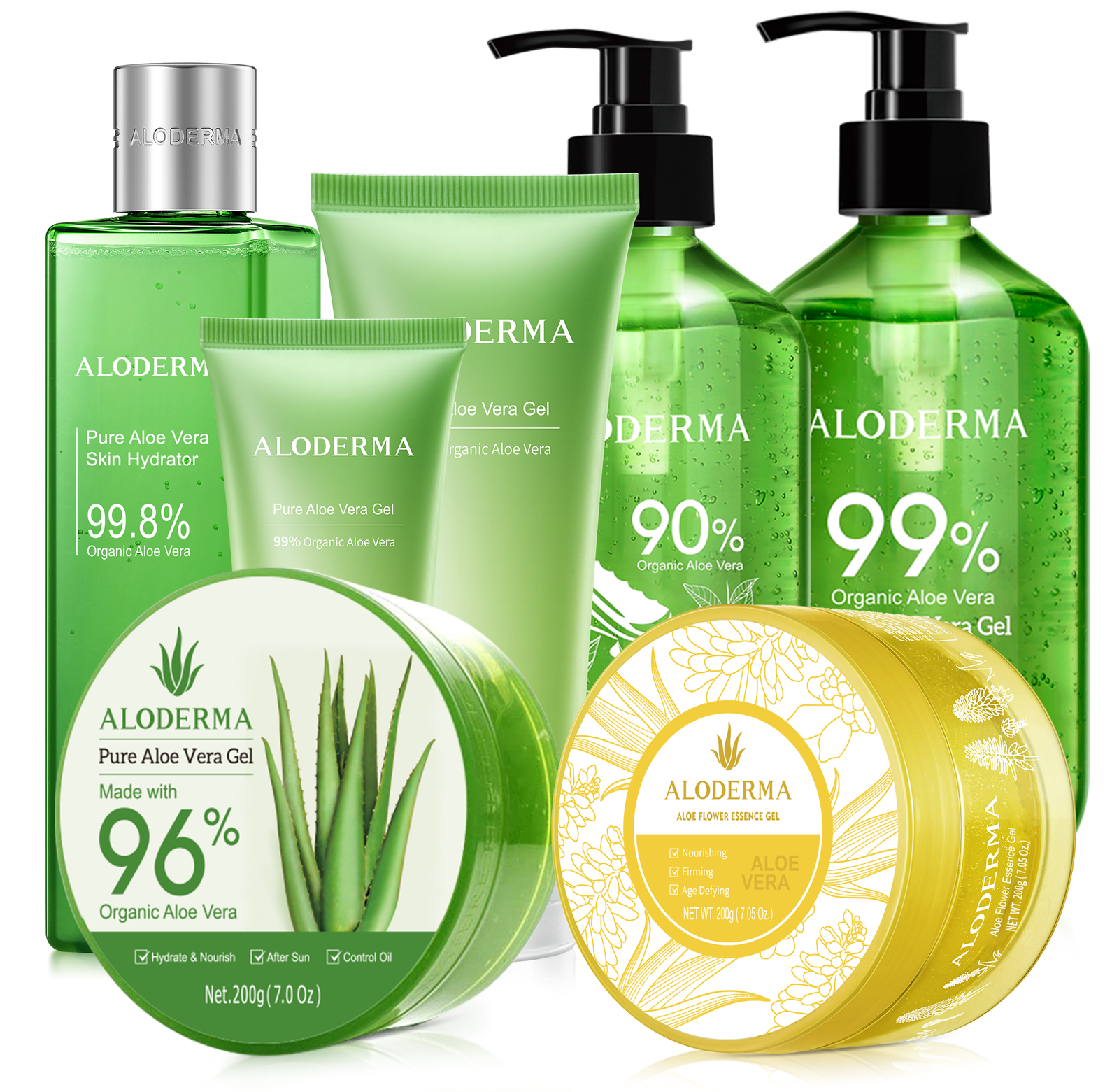
ALODERMA's approach stands out because it is a fully vertically integrated aloe vera company. The company grows its own organic aloe vera, processes that aloe, and manufactures on site within 12 hours of harvest so the primary ingredient used across its products is as fresh and bioactive as possible. That farm-to-skin process is central to how the formulas are positioned.
Why aloe changes the feel
A lot of shoppers compare moisturizers by texture alone. But what creates that texture matters too. Fresh aloe can give a formula a light, fluid feel that doesn't automatically read as oily or heavy.
For readers who want to understand that ingredient better, this article on how to use aloe vera for skin helps connect the plant itself to practical routine choices.
Why freshness matters to ingredient-conscious shoppers
If you've ever tried a product that looked promising on paper but felt flat in use, you've already experienced the gap between an ingredient list and an ingredient story. People don't just ask what's inside. They ask where it came from, how it was handled, and whether the brand controls the process.
That's why vertical integration is more than a business detail. It gives context to the formula.
- Growing the aloe in-house creates traceability
- Processing on site reduces the lag between harvest and manufacturing
- Using aloe as a primary ingredient aligns with the demand for lighter, soothing hydration
Fresh plant-based hydration often feels different from a formula built around plain water and heavier finish agents.
For someone trying to choose the best lightweight moisturizer face product, this can be a useful way to sort options. Don't only ask, “Is it light?” Also ask, “What is providing that light hydration?”
How to Read an Ingredient Label Like a Pro
You pick up a moisturizer that says “lightweight” on the front. Then you turn the bottle around and face a wall of tiny words. That moment can make even a careful shopper feel lost.
A label gets easier once you know what you are trying to spot. Your goal is not to memorize every ingredient. Your goal is to identify the parts of the formula that bring water to the skin, soften the surface, and reduce the chance of irritation.
The American Academy of Dermatology explains that ingredients are listed in order of concentration, with the highest amounts appearing first, which gives you a practical way to judge what is really driving the formula, not just what appears on the marketing copy. You can read their ingredient-label guidance on the AAD's page about how to decode skin care labels.

Start by spotting the hydration team
A lightweight moisturizer usually has a simple job. It should pull water in, hold it near the skin, and leave enough comfort behind that your face does not feel tight an hour later.
Look for ingredient roles more than ingredient hype.
- Humectants such as glycerin and hyaluronic acid attract water. They are often the reason a gel or fluid feels fresh instead of greasy.
- Soothing water-rich bases such as aloe can support that light feel while helping sensitive or heat-stressed skin feel calmer.
- Light emollients smooth the skin surface so hydration does not vanish too quickly. In a good lightweight formula, they support the texture rather than smother it.
This is one reason ALODERMA's farm-grown aloe approach stands out as a useful benchmark. When a brand builds around a fresh, recognizable hydrator instead of relying mainly on heavy finish agents, the formula often makes more sense on the label and on the skin.
Read the top of the list first
The first several ingredients tell you the story fastest. If water, aloe, glycerin, or other humectants appear early, the formula is probably built for hydration with a lighter skin feel. If richer oils, waxes, or multiple butters show up near the top, the finish may feel heavier than the front label suggests.
That does not make those ingredients bad. It changes who the product suits.
A useful way to read it is like a recipe. The first ingredients are the main ingredients. The ones near the end matter too, but they usually play smaller supporting roles.
Watch for mismatch signals
Skin often reacts to the whole formula, not one trendy ingredient. A moisturizer can feel airy at first and still be a poor fit if it is packed with fragrance, dyes, or too many active ingredients at once.
| If you notice this | It may mean |
|---|---|
| Fragrance high on the list or heavy scent claims | More chance of irritation for reactive skin |
| Many actives in one moisturizer | Harder to tell what is helping or bothering your skin |
| Rich oils or butters near the top | A heavier finish than “lightweight” suggests |
| Color additives or decorative extras | More complexity without much hydration benefit |
If your skin gets irritated easily, a shorter, clearer formula can make troubleshooting much easier. This guide to ingredients to avoid in skincare can help you build a personal skip list based on your own reactions.
Keep context in mind
An ingredient label does not work in isolation. Climate, season, skin treatments, and even pregnancy can change what feels comfortable. Someone dealing with tight, water-lacking skin may need a different formula than someone whose skin produces plenty of oil. This explanation of skincare routines for expectant mums is also useful because it breaks down the difference between dry skin and dehydrated skin, which many shoppers confuse when choosing moisturizers.
That distinction matters. Dry skin lacks oil. Dehydrated skin lacks water. A lightweight moisturizer often helps dehydrated skin very well, but dry skin may need more cushioning around that hydration.
Don't panic over unfamiliar names
Chemical-sounding names are normal on cosmetic labels. Many are preservatives, texture agents, or stabilizers that help a formula stay safe and usable. The question is not whether an ingredient sounds natural. The better question is what job it does and whether your skin tolerates it.
Reading labels this way shifts you from guessing to choosing with purpose. You stop shopping only by buzzwords and start recognizing what a formula is built to do.
Choosing Your Perfect Lightweight Moisturizer
The best lightweight moisturizer face choice depends on three things working together. Your skin type. Your tolerance. Your environment.
That's why one person loves a gel and another finds the same product unsatisfying or irritating. A dermatologist source points out that “lightweight” does not automatically mean “best for oily or acne-prone skin” and notes that some lightweight formulas may still bother sensitive skin because of fragrance or active ingredients. You can read that perspective in this dermatologist-guided moisturizer overview.

Match the formula to real life
A better way to choose is to think in profiles.
- If your skin looks shiny by midday and you dislike residue, lean toward a water-based gel or fluid with humectants and a simple finish.
- If your skin is combination, a light lotion or gel-cream often helps because it can hydrate dry areas without making the oilier zones feel overcoated.
- If your skin is easily unsettled, focus on tolerance first. A simpler, fragrance-free formula may matter more than whether the label says “oil-free.”
- If your climate is dry or you spend lots of time in indoor heating or air conditioning, a lightweight moisturizer may still work, but you may need to layer it more thoughtfully.
One example of a lightweight aloe-based option
If you want to compare aloe-based formulas, ALODERMA Aloe Hydrating Face Moisturizer is one option in this category because the brand describes it as a lightweight daily facial moisturizer on its website. That makes it relevant for readers who want a fresh aloe-centered texture rather than a dense cream.
A practical example helps. If your skin feels comfortable with gels in summer but a little tight in winter, you don't necessarily need a totally different routine. You may just need a light moisturizer applied on damp skin, then adjusted with the rest of your layers.
For readers building routines during major life changes, texture and comfort often matter even more. This discussion of skincare routines for expectant mums can be useful because it focuses on reading your skin carefully instead of forcing a one-size-fits-all approach.
Ask yourself these questions before buying
-
Do I want fast absorption or lasting cushion?
Fast absorption usually points to gels, fluids, and very light lotions. -
Does my skin react more to texture or to ingredients?
Some people can handle rich formulas but not fragrance. Others tolerate actives well but hate any greasy finish. -
What happens by the end of the day?
If you feel shiny, coated, or congested, the formula may be too rich. If you feel tight, you may need more support or better layering.
Here's a short visual lesson on how moisturizer texture and routine fit together:
How to Apply and Layer for Maximum Benefit
You wash your face, apply moisturizer, and ten minutes later your skin feels sticky, your sunscreen starts to pill, or your cheeks still feel tight. In many cases, the problem is not the moisturizer itself. It is the order, the amount, or the timing.
Lightweight formulas work best when they are treated like a flexible water layer with a little staying power. If you apply them to bone-dry skin, they can feel less comfortable and harder to spread. If you press them onto slightly damp skin, they usually glide more evenly and help hold that water at the surface, which is part of what makes fresh aloe based formulas feel calm and breathable.
A simple layering order
Use this routine as your baseline:
- Cleanse gently so your skin starts clean, not stripped
- Apply your watery toner, essence, or serum first if you use one
- Smooth on your lightweight moisturizer while skin is still slightly damp
- Apply sunscreen as the final daytime step
If you want a full sequence refresher, this guide on what order skincare products should be applied is helpful.
How much to use
A lightweight moisturizer is a bit like a thin blanket. Too little leaves gaps. Too much can bunch up.
Start with a small amount, spread it across the face, and give it a moment to settle. Then check how your skin feels. If your forehead feels comfortable but the areas around the mouth still feel tight, add a little more only where you need it.
That approach works especially well with light aloe-forward textures. They are often designed to layer cleanly, so you can build comfort without turning your face into a slippery surface.
If your moisturizer pills under sunscreen, the cause is often too much product, too little wait time, or two formulas that do not sit well together.
Why daytime layering matters
During the day, your moisturizer has one main job. It should support hydration without fighting your sunscreen.
The American Academy of Dermatology recommends using a broad-spectrum, water-resistant sunscreen with SPF 30 or higher for daily sun protection, and it also notes that acne-prone skin often does better with products labeled oil-free or non-comedogenic, which can make layering feel lighter and more comfortable under sunscreen (AAD sunscreen guidance).
A good lightweight moisturizer face formula should help the next step sit better. It should not leave a heavy film that makes sunscreen slide around. It should not dry down so tightly that sunscreen catches and rolls. A fresh, clean formula, such as one built around aloe as a water-rich base, often fits well here because it hydrates first and leaves less residue behind.
Common application mistakes
- Rubbing hard instead of smoothing or pressing can cause rolling
- Layering too quickly can trap tackiness between steps
- Using too much of both moisturizer and sunscreen can create slip and pilling
- Pairing two rich formulas together can feel heavy even if each product is good on its own
If you wear makeup, let your moisturizer sit briefly before sunscreen, then let sunscreen set before foundation. Small pauses make a big difference. Your routine should feel like light layers of fabric, not a stack of wet products competing for space on your skin.
Frequently Asked Questions About Lightweight Moisturizers
Can I use a lightweight moisturizer in winter
Yes, many people can. The key is not the season alone. It's how your skin feels in that season. If your face gets tighter in cold weather, keep the lightweight texture but apply it on damp skin and consider adjusting the rest of your routine around it.
Some people need a richer night product in colder months. Others do fine with the same lightweight moisturizer year-round.
Is oil-free the same as lightweight
No. Oil-free tells you something about the absence of certain oils. Lightweight describes the overall feel and finish. A product can be oil-free and still feel sticky, or contain some emollients and still feel elegant and breathable.
That's why texture testing matters as much as front-label claims.
Will a lightweight moisturizer hydrate dry patches
It can, depending on why those patches are happening. If the issue is lack of water, a humectant-rich lightweight formula may help a lot. If your skin also needs more cushioning, you may need to adjust the amount, timing, or supporting products.
A lightweight moisturizer isn't automatically “too weak.” It may need to be used more strategically.
How quickly will I know if it's the right moisturizer
You can usually judge the basic fit quickly by feel. Does your skin feel comfortable, balanced, and easy to layer after application? That's a good sign.
Longer-term routine consistency matters too. The right moisturizer is often the one you stop thinking about because your skin feels settled and your routine becomes easy.
Should sensitive skin always choose the simplest formula
Often, simpler is easier to troubleshoot, but “simple” doesn't mean identical for everyone. Some people do well with aloe-focused hydration. Others need to avoid fragrance first and foremost. If your skin reacts unpredictably, introduce one new moisturizer at a time and watch how your skin responds over several uses.
If you want a lightweight moisturizer built around fresh aloe, ALODERMA is worth exploring. The brand centers its formulas on organically grown aloe vera from its own farms, then processes and manufactures on site within 12 hours of harvest. That gives ingredient-conscious shoppers a clear farm-to-skin story, especially if you prefer gentle, lightweight hydration and want to compare textures, ingredient lists, and everyday facial care options directly on the site.