







You're probably here because your hair looks tired, but the bigger clue is your scalp. Maybe your roots feel greasy by day two, your crown looks flat no matter what shampoo you buy, or your scalp just never feels comfortable. A lot of people keep switching masks, serums, and styling products, hoping their hair will finally cooperate. Meanwhile, the scalp gets ignored.
That's why scalp care can feel like such a relief once you understand it. Instead of trying to force shine onto stressed hair, you start with the place your hair grows from. For many people, that shift makes everything else in the routine make more sense.
Why Your Scalp Deserves More Than an Afterthought
A client once described her routine to me like this: volumizing shampoo, smoothing conditioner, weekly mask, leave-in cream, heat protectant, dry shampoo. Her hair still looked dull at the root and rough at the ends. The missing step wasn't another styling product. It was paying attention to the scalp itself.
That's common. People often treat hair like a fabric that needs polishing. But hair wellness starts more like a garden. If the soil is off, the plants won't thrive, no matter how much you mist the leaves.

More shoppers are catching on to that idea. The global therapeutic hair oil market, which specifically targets scalp health, is valued at $3.79 billion in 2025 and projected to reach $8.5 billion by 2030, expanding at a CAGR of 18.1%, according to The Business Research Company's therapeutic hair oil market report. That kind of growth tells you something important. People aren't only chasing shinier strands anymore. They're looking for products that support the scalp first.
Why hair products can miss the real issue
A glossy hair mask can make your lengths feel softer for a day. A silicone serum can make frizz look smoother. But neither one automatically helps a scalp that feels tight, overloaded, or unbalanced.
If this sounds familiar, you're not imagining it:
- Your hair gets oily fast: The scalp may be overproducing oil or reacting poorly to heavy products.
- Your roots feel flat: Product buildup or poor scalp comfort can leave hair looking lifeless from the start.
- Your ends seem dry while your scalp feels greasy: That split experience usually means the scalp and hair lengths need different kinds of care.
Healthy-looking hair usually starts with a comfortable, balanced scalp, not a crowded styling shelf.
If you want a broader medical and cosmetic overview of how the scalp affects hair quality, Chernoff Cosmetic Surgery has a helpful comprehensive guide to scalp wellness that explains the bigger picture in a reader-friendly way.
Scalp oiling fits into this conversation because it's simple. It asks one basic question: what does your scalp need? Not what's trending. Not what worked for someone with a completely different hair texture. Your scalp.
Understanding What a Scalp Oil Actually Does
A scalp oil and a hair oil are not the same thing. That mix-up causes a lot of disappointment.
Hair oil mostly coats the strand. It can make hair look smoother, shinier, and less puffy. Scalp oil is different. It's applied with the scalp in mind first, not just the lengths. Consider the analogy of caring for a potted plant: polishing the leaves makes it look nice. Tending the soil helps the whole plant do better.
Scalp oil supports the scalp environment
When you use the right scalp oil, you're not trying to drown the scalp in grease. You're trying to support balance.
A good scalp oil can help by:
- Softening dryness: Some scalps need comfort and flexibility, especially after frequent washing or weather changes.
- Reducing that coated feeling: The right lightweight oil can help the scalp feel less stressed, not more smothered.
- Improving massage slip: This matters more than people think. A little glide helps you massage without tugging the roots.
- Delivering targeted ingredients: Some oils do more than sit on the surface. Their specific fatty acid profile or botanical content can make them more suitable for certain scalp needs.
Scalp oil is not meant to make your roots heavy
A common point of confusion arises: if your scalp already feels oily, adding a random thick oil can make things worse. However, a thoughtfully chosen scalp oil can behave very differently from a dense, sealing oil.
Here's an easy comparison:
| Product type | Main job | Where it helps most |
|---|---|---|
| Hair oil | Smooths and coats the hair shaft | Mid-lengths and ends |
| Scalp oil | Supports scalp comfort and balance | Directly on the scalp |
| Pre-wash oil treatment | Softens buildup before shampooing | Scalp and sometimes lengths |
Practical rule: If your roots look greasy but your scalp feels unhappy, the answer usually isn't “more product.” It's “better-matched product.”
Men often ask these questions a little differently. They may notice thinning at the hairline, a tighter-feeling scalp, or roots that never seem fresh. If that's your situation, this guide to men's hair growth oil gives helpful context on what people tend to look for in a scalp-focused oil routine.
The garden analogy helps
Your scalp is the soil. Your hair is the plant.
If the soil is too dry, the plant struggles. If the soil is waterlogged and compacted, the plant also struggles. Good scalp care is about creating a comfortable middle ground. Not stripped. Not smothered. Not ignored.
That's why the best scalp oil isn't one universal bottle for everyone. It depends on whether your scalp needs regulation, softness, lightweight hydration, or a break from heavy oils altogether.
Key Ingredients to Look For and What to Be Wary Of
Ingredient lists can feel like a foreign language. You see “natural oils” on the front label and assume all of them must be good for every scalp. That's where many routines go sideways.
A better approach is to read a scalp oil the way you'd read a recipe. Ask what the main ingredients are doing, who they suit, and whether they match your scalp's behavior.

The ingredient with the strongest growth-related support
If your main goal is fuller-looking hair, rosemary oil stands out from the crowd. A peer-reviewed study demonstrated that rosemary oil application produced hair density results comparable to 2% minoxidil over a six-month period, as discussed in this review of rosemary oil for hair growth.
That matters because most oils get praised based on tradition or social media. Rosemary has a clearer benchmark behind it.
A few practical points often get missed:
- It takes patience: This isn't an overnight ingredient.
- Consistency matters: People often give up before a routine has had time to show visible change.
- It's still not for everyone: Some scalps prefer very simple formulas and may react better to less fragrance and fewer essential oils.
Jojoba makes sense for many oily scalps
Jojoba is one of the smartest ingredients for a scalp that gets shiny fast but still doesn't feel balanced. It behaves more like the scalp's own surface oils than many heavier plant oils do, which is why it often feels lighter and cleaner in use.
For a useful side-by-side look at these two common options, Aloderma's article on castor oil and jojoba oil can help you see how texture and scalp feel differ in real life.
Natural doesn't always mean universally friendly
This is the nuance most “best scalp oil” lists skip. Some popular oils can be too rich for certain scalps. A routine that feels nourishing on one person can leave another person's scalp looking shinier, heavier, and less comfortable.
For readers who also use essential oils around the home, this caution overlaps with general usage habits. Wellness Apothecary has a practical guide to essential oil diffuser safety that's worth reading if you tend to assume all essential oils are gentle in every setting.
Ingredients worth a closer look
- Rosemary oil: Best known for its stronger evidence base in density-focused routines.
- Jojoba oil: A smart pick when you want light, sebum-like support instead of a thick coating.
- Simple carrier blends: Often easier for picky scalps than crowded formulas with lots of perfume.
Ingredients and product traits to question
- Very heavy oils: These can leave some scalps feeling trapped and overloaded.
- Strong synthetic fragrance: More scent isn't always better when the scalp is already touchy.
- Build-up prone formulas: If your roots go limp fast, rich texture can work against you.
If an oil leaves your scalp feeling coated instead of comfortable, it may be “nourishing” on paper but wrong for your actual scalp.
The best scalp oil is rarely the trendiest one. It's the one whose ingredient list matches your scalp's texture, oil pattern, and tolerance.
Choosing the Best Scalp Oil for Your Unique Scalp
Two people can use the same oil and have opposite experiences. One wakes up with soft, happy roots. The other feels like they need to shampoo twice. That doesn't mean one of them used it wrong. It means scalp type matters.
If your scalp feels dry
A dry-feeling scalp usually wants comfort, softness, and a little cushion during massage. Richer oils can be particularly helpful in small amounts, especially as a pre-wash treatment instead of an all-day leave-on layer.
Look for formulas that feel nourishing but not waxy. If your lengths are also dry, you can pull a little through the ends before washing. It's like applying hand cream before your skin starts cracking, not after you've overloaded it with ten products.
If your scalp gets oily quickly
Many people panic and avoid oils completely. But oily doesn't always mean “never use oil.” It often means “use the right oil, in the right amount, for the right amount of time.”
Jojoba oil is structurally similar to human sebum, allowing it to help regulate oil production. Its composition of approximately 90% omega-9 fatty acids helps it hydrate without clogging pores, making it ideal for oily or blemish-prone scalps, according to Ella & Eden's explanation of jojoba for scalp health.
A simple way to think about it:
| Scalp feel | Better choice | Why it tends to work |
|---|---|---|
| Greasy by the next day | Jojoba | Feels lighter and closer to natural scalp oils |
| Tight after washing | A slightly richer pre-wash oil | Adds softness before shampoo |
| Fine hair with flat roots | Minimal oil, short contact time | Helps avoid limp roots |
If your scalp feels easily overwhelmed
Some people don't need a heavier oil at all. Their scalp doesn't want sealing. It wants a lighter, water-based feeling first.
That's where aloe-based care can make more sense than a traditional oil. If your scalp often feels like it needs calm, not coating, a fresh aloe gel can be a smart first step. It gives you that light hydration feel without the weight many oils leave behind.
If you're trying to build a gentler routine overall, Aloderma's article on clean beauty hair products is a useful read for spotting formulas that feel simpler and easier to live with.
If your scalp and hair need different things
This happens all the time. Your scalp may be oily while your ends feel dry. In that case, split the routine:
- Use a light scalp-focused oil only at the roots.
- Apply a different hair oil only from mid-length to ends.
- Keep contact time short if your scalp gets weighed down easily.
Your scalp type and your hair type are not always the same. Treating them like one problem usually creates a second one.
The best scalp oil for you is the one that respects your scalp's limits. Sometimes that's rosemary. Sometimes it's jojoba. Sometimes it's not an oil-heavy approach at all.
Your Scalp Care Ritual Step by Step
A good scalp ritual shouldn't feel like a science experiment. It should feel calming, simple, and easy enough to repeat next week.

Before you begin
Start with dry or slightly damp hair. Have a comb, a small towel, and your chosen scalp product nearby. If you're trying something new, check how your skin responds first by following a simple patch testing guide for skincare.
Then keep your first session short. You're learning how your scalp responds, not trying to prove anything.
A simple routine that feels good
-
Part your hair in sections.
Make a center part first, then add a few side sections. This helps you reach the scalp instead of dumping product onto the hair. -
Apply a small amount directly to the scalp.
Less is usually better. Think dotted lines along the parts, not a full soak. -
Massage with your fingertips.
Use the pads of your fingers, not your nails. Small circles feel better and avoid roughness. -
Let it sit.
Short contact time works well for many people, especially if the scalp gets oily fast. -
Shampoo thoroughly.
Focus on lifting residue from the scalp, not scrubbing the lengths too hard.
Make it a ritual, not a chore
The massage matters. Not because you need a perfect technique, but because a few quiet minutes of touch can make scalp care easier to stick with. Warm hands, gentle circles, and a peaceful pace turn a maintenance step into a reset.
Some readers like to watch a visual before trying it themselves. This quick demonstration can help you get the motion and pressure right:
Common mistakes to avoid
- Using too much: More oil doesn't equal better results.
- Scratching instead of massaging: This can leave the scalp feeling more bothered afterward.
- Leaving a heavy formula on too long: Fine or oily roots often prefer a shorter treatment.
- Judging after one use: Scalp routines usually reward consistency, not intensity.
A scalp ritual should leave you feeling refreshed and comfortable, not like you need three rounds of shampoo to recover from it.
The ALODERMA Difference A Calming Aloe Alternative
Some scalps don't want another oil. They want relief from heaviness.
That's where aloe can be such a smart alternative. Instead of adding a dense layer, aloe gives a lighter kind of hydration. For people whose roots flatten easily or who dislike the coated feeling of traditional oils, that can change the whole routine.
Why freshness matters with aloe
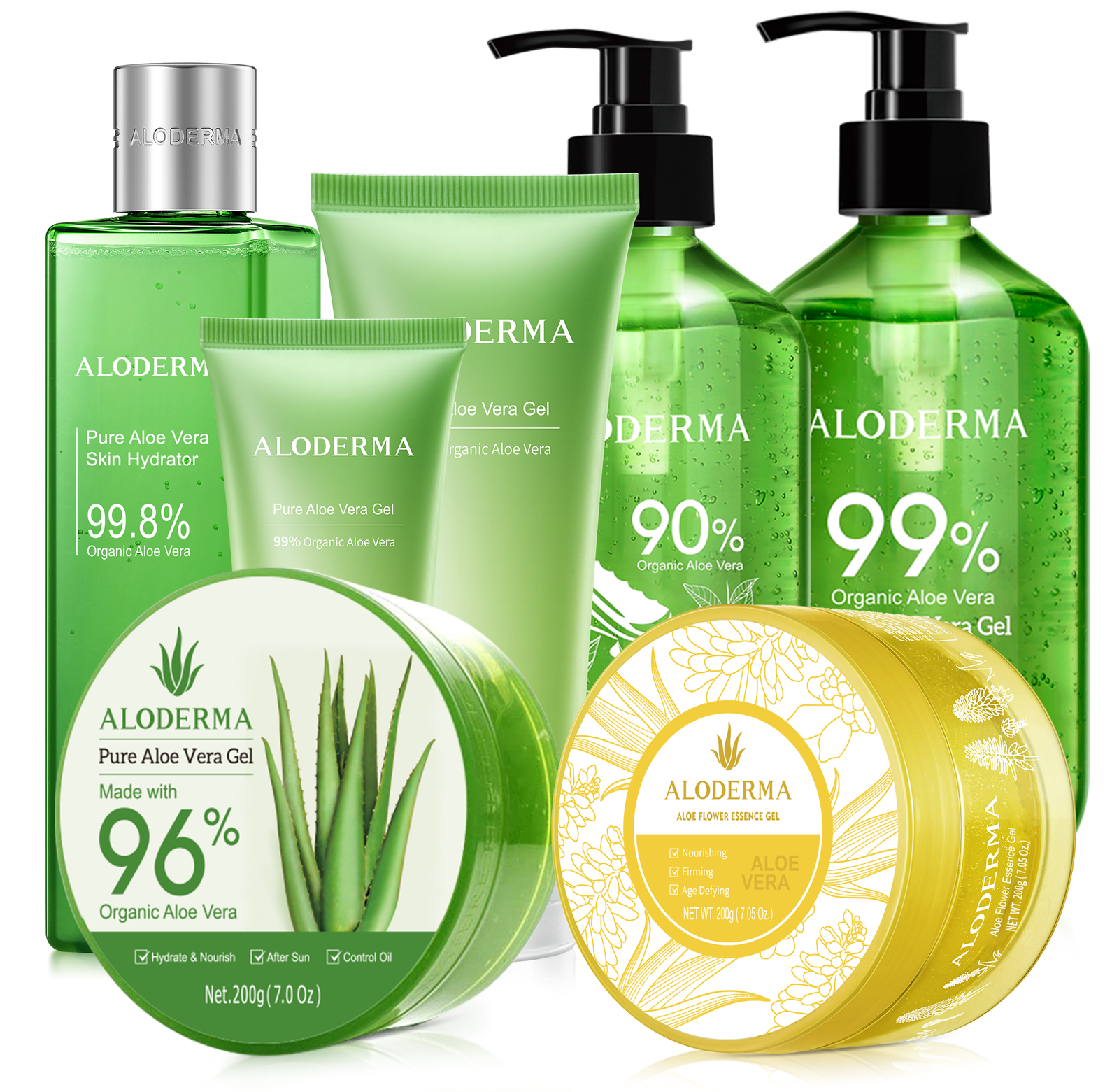
Not all aloe products are created the same way. Aloderma is a fully vertically integrated aloe vera company. It grows all of its own organic aloe vera, then processes the aloe and manufactures onsite within 12 hours of harvest so the primary ingredient in every product is as bioactive and effective as possible, capturing that fresh aloe quality before it degrades. That process is described in Aloderma's article on how quickly aloe vera should be processed after harvest.
That matters if you're ingredient-conscious. Freshly processed aloe feels very different from the idea of aloe as an afterthought tucked low on an ingredient list.
A lighter option when heavy oils don't suit you
If your scalp is the type that says “no thanks” to thick oils, a fresh aloe formula can fit beautifully into your routine:
- Use it on a scalp that feels overloaded: It offers a lighter feel than a rich oil treatment.
- Apply it as a calming first layer: Then decide if you even need oil on top.
- Keep it simple on warm-weather days: When rich textures feel like too much.
For readers who want to browse ingredient-conscious options, Aloderma's Farm Fresh Aloe Vera Gel is a good places to start. Each product page lets you review ingredients directly, which makes it easier to choose based on texture and routine preference.
Frequently Asked Questions About Scalp Oils
How often should I use a scalp oil?
It depends on how your scalp behaves. A drier scalp may like a more regular pre-wash ritual. An oilier scalp often does better with occasional use and shorter contact time. Start small and let your scalp tell you if it feels better, heavier, or unchanged.
Will scalp oil make oily roots worse?
It can, if the formula is too heavy or you use too much. That's why ingredient choice matters. Many scalp oils, including coconut and olive oil, can feed Malassezia yeast, potentially worsening seborrheic dermatitis and dandruff in susceptible individuals. This is why microbiome-safe options like jojoba are often a better fit for some scalps, as noted in Forbes' overview of oils for different hair types.
Should I leave scalp oil on overnight?
You can, but overnight isn't automatically better. If your scalp is fine-haired, oily, or easily weighed down, a shorter pre-wash treatment often feels cleaner and easier to manage. Overnight works best when your scalp prefers richer formulas.
What if my scalp feels uncomfortable with every oil I try?
That's a sign to pause and simplify. You may do better with a lighter aloe-based approach instead of a classic oiling routine.
Do I put scalp oil on my hair too?
Only if your lengths need it. Scalp oil and hair oil serve different purposes. If your roots get oily but your ends are dry, keep the scalp treatment at the scalp and use a separate finishing oil on the ends only.
If your scalp has been asking for something gentler, lighter, and more thoughtful, explore ALODERMA. As a fully vertically integrated aloe vera company, Aloderma grows its own organic aloe vera, processes it onsite within 12 hours of harvest, and builds formulas around fresh, bioactive aloe instead of powdered concentrates. That farm-to-skin approach makes a real difference for people who want clean, comfortable scalp and skin care with transparent ingredients.