







You’re standing in the bathroom on a regular weekday morning. You want to protect your skin, but you also need to get out the door. A rich sunscreen can feel heavy. A matte one can cling to dry patches. Some formulas pill under makeup. Others make oily areas look shinier by lunch. If your skin is sensitive or blemish-prone, the wrong product can feel like a bad trade.
That’s why face lotion with spf has become such an important category. It promises hydration and sun protection in one step. On paper, it sounds like the answer. In real life, though, the details matter. Not every formula feels good, sits well, or gives the protection people think they’re getting.
A lot of confusion starts with simple questions. Is SPF 15 enough for everyday life? Is mineral always better for sensitive skin? If a lotion feels light, is it still protective? And if you’re using aloe-based skincare because your skin gets easily overwhelmed, how do you find a formula that protects without feeling greasy or fussy?
This guide clears that up in plain language. You’ll learn what the numbers mean, how mineral and chemical filters differ, why daily exposure matters even when you’re not at the beach, and how to choose a formula that works for sensitive, oily, and blemish-prone skin.
The Daily Dilemma of Sun Protection
Skipping SPF isn't often a matter of indifference; instead, it occurs because the experience is frustrating. The formula stings near the eyes, leaves a cast, feels sticky under makeup, or turns a calm morning routine into a mess.
If that sounds familiar, you’re not alone. One person uses a tiny dab because anything more feels greasy. Another only applies sunscreen on sunny weekends. Someone with oily skin avoids it before work because they don’t want their face looking slick by noon. Someone with sensitive skin has already tried enough formulas to expect disappointment.
A good face lotion with spf should make daily protection easier, not harder. It should feel like something you’ll consistently use on a Tuesday, not just on vacation.
Where people get stuck
Here’s what usually happens:
- Comfort wins over coverage. People choose the amount that feels nicest, even if it’s too little.
- Skin type dictates habits. Oily and blemish-prone skin often gets less product because heavy formulas feel wrong.
- Cloudy day logic takes over. If the weather looks mild, SPF can seem optional.
- Makeup complicates everything. If a product pills or shifts foundation, it quickly gets dropped.
Daily sun care has to fit real life. If a formula feels unpleasant, most people won’t use enough of it often enough.
That’s why texture, finish, and skin feel matter so much. A face lotion with spf isn’t just about protection on the label. It’s about whether you’ll want it on your face every morning.
If your routine needs a simple reset, these easy-to-follow tips to protect your skin from the sun are a helpful companion to the advice below.
Decoding the Numbers and Letters on Your SPF Bottle
SPF labels can look technical, but the basics are easier than they seem. Think of your sunscreen like a shield. The label tells you how strong that shield is and what kind of rays it can handle.
What SPF actually means
SPF measures protection against UVB rays. These are the rays known for causing visible burning. The higher the SPF, the stronger the UVB shield, but the jump isn’t as dramatic as often assumed.
The American Academy of Dermatology sets SPF 30 as the minimum standard, and that level blocks about 97% of UVB rays. SPF 50 blocks 98%, and SPF 100 blocks 99%, with no product blocking everything, according to Northwestern Medicine’s summary of AAD guidance.
That’s why chasing the biggest number on the shelf isn’t always the smartest move. Past a certain point, the difference gets smaller and smaller.
Why broad spectrum matters
SPF tells only part of the story. You also want broad-spectrum protection. That means the product protects against both:
- UVB rays, which are linked with burning
- UVA rays, which penetrate more and are part of everyday exposure concerns
If SPF is the shield’s strength, broad spectrum means the shield covers more than one angle of attack. Without broad-spectrum protection, you’re not getting a full daily-use product.
Simple shopping rule: Look for broad-spectrum SPF 30 or higher on the front label before you worry about extra claims like glow, blur, or tinted finish.
Why the label and real life can differ
A bottle’s SPF number comes from controlled testing. Real mornings are less controlled. People rush, use too little, miss spots, or spread lotion unevenly. The same AAD guidance notes that individuals often apply only 20% to 50% of the required amount, which is one reason SPF 30 is treated as the practical minimum in daily life.
That’s also why a very elegant formula can still disappoint if it encourages tiny amounts. A face lotion with spf has to be wearable enough for generous application.
Here’s a quick label decoder:
| Label term | What it tells you |
|---|---|
| SPF 30 | A practical daily minimum for UVB protection |
| Broad spectrum | Protection covers UVA and UVB |
| Higher SPF | More UVB blocking, but the gain gets smaller |
| Hydrating lotion | Texture benefit, not proof of enough protection |
A useful mindset is this: don’t shop for the highest number first. Shop for the lowest number you can wear correctly every day, and make sure that number is at least SPF 30 with broad-spectrum coverage.
Mineral Versus Chemical Sunscreen Filters
This is one of the biggest points of confusion in sun care. People often hear “mineral” and assume it’s automatically better, or hear “chemical” and assume it’s harsh. Real products are more nuanced than that.

How mineral filters work
Mineral filters usually include ingredients like zinc oxide or titanium dioxide. In everyday terms, they act more like a protective layer on the skin’s surface. Many people with sensitive skin prefer them because they often feel straightforward and familiar.
Their biggest challenge is cosmetic. Some mineral formulas can look chalky or leave a visible cast, especially if the texture is thick or the particles aren’t well balanced in the formula.
How chemical filters work
Chemical filters absorb UV energy. They tend to feel lighter, spread more easily, and disappear faster on the skin. That’s why many people who wear makeup or dislike heavy textures gravitate toward them.
The trade-off is that some people with reactive skin find certain chemical-heavy formulas less comfortable, especially around the eye area.
Why some formulas use both
This isn’t always an either-or decision. Some face lotions with spf combine filter types to get the best parts of both. As explained in this ingredient breakdown of CeraVe AM Facial Moisturizing Lotion SPF 30, chemical filters such as homosalate and octocrylene can absorb specific UV wavelengths while microfine zinc oxide helps cover the remaining spectrum, creating a more elegant broad-spectrum finish.
That combined approach helps explain why some products feel lighter than old-school mineral sunscreens while still offering a reassuring skin feel.
A side-by-side way to think about it
| Filter type | Often appreciated for | Common concern |
|---|---|---|
| Mineral | Sensitive-skin friendliness, familiar feel | White cast, thicker texture |
| Chemical | Lightweight finish, easy layering | May feel less comfortable for some reactive skin types |
| Hybrid | Balance of comfort and coverage | Depends heavily on formulation quality |
Your best sunscreen filter isn’t the one that wins debates online. It’s the one your skin tolerates and you’ll apply generously every morning.
If swimming, outdoor sports, or ocean activities are part of your routine, it also helps to read practical reef-safe sunscreen tips so you can think beyond facial comfort and consider environmental choices too.
The practical decision
Choose mineral if your skin is easily bothered and you prefer a simple-feeling formula. Choose chemical if you care most about invisible wear and easy layering. Consider hybrid formulas if you want a middle ground.
The ingredient list matters, but so does the finish at 8 a.m., noon, and late afternoon. The right face lotion with spf should feel like part of your routine, not a product you can’t wait to wash off.
Why Incidental Sun Exposure Adds Up
A lot of people treat sunscreen like beach gear. If there’s no pool, no picnic, and no blazing summer sky, they assume they can skip it. That’s where daily protection falls apart.
Sun exposure doesn’t only happen during obvious “sun time.” It happens during the dog walk, the school drop-off, the coffee run, the lunch errand, and the drive home with light hitting one side of your face.

The problem isn’t just whether you apply SPF
It’s also how you apply it. A clinical study published in PLOS One found that people missed 16.6% of the face when using SPF moisturizer, compared with 11.1% when using traditional sunscreen. Around the eyelids, the gap was worse, with 20.9% missed using SPF moisturizer, according to the 2019 facial coverage study.
That matters because incidental exposure tends to hit the same spots over and over. If you regularly miss the corners of the eyes, the hairline, or the sides of the face, those small gaps become part of your normal routine.
Common daily moments that count
People often forget these exposure windows:
- Driving: Light reaches the same side of the face repeatedly.
- Walking between places: Even short trips add up over time.
- Sitting near windows: Everyday indoor light exposure can still matter.
- Outdoor errands: Ten minutes here and fifteen there still count.
Small exposures feel harmless because they don’t look dramatic. Skin doesn’t care whether the light came from a beach chair or a grocery run.
Why face lotion with spf is still useful
This doesn’t mean SPF moisturizers are a bad idea. It means they need a little more care in application. A face lotion with spf is often easier to wear every day than a heavy standalone sunscreen, and consistency is a huge advantage.
What helps is slowing down enough to cover the places people routinely miss:
- Around the nose
- Up to the hairline
- Along the jaw and ears
- Around, but not into, the eye area
That’s the shift that changes sun care from occasional to daily. Instead of thinking, “Do I need sunscreen today?” it helps to ask, “Will my face see daylight today?” If the answer is yes, protection belongs in the morning routine.
Finding Your Perfect SPF Lotion for Sensitive Oily and Blemish-Prone Skin
Many people reach a point of giving up. They understand that SPF matters, but every formula seems to create a new problem. Sensitive skin wants calm, simple products. Oily skin wants weightless texture. Blemish-prone skin wants hydration without the feeling of congestion.

A good face lotion with spf has to do several jobs at once. It needs to protect, moisturize, spread evenly, sit well under makeup, and stay comfortable through the day. If even one of those pieces fails, people start using less than they should or stop using it entirely.
What sensitive skin usually needs
Sensitive skin often does better with formulas that feel uncomplicated. That doesn’t mean every short ingredient list is perfect or every long ingredient list is bad. It means the product should feel steady and predictable on the skin.
Look for these clues:
- Broad-spectrum SPF 30 or higher
- A lotion texture that spreads without tugging
- A finish that doesn’t leave the face feeling tight or overloaded
- A formula that stays comfortable around the eye area
If your skin reacts to too many steps, a face lotion with spf can be especially helpful because it combines hydration and protection in one product.
What oily skin usually needs
Oily skin doesn’t need zero moisture. It needs the right texture. Thick, waxy formulas can feel like a blanket. Very dry-feeling formulas can push you to avoid the proper amount because your face starts feeling strange halfway through application.
This is why aloe-based textures get so much attention. They often feel lighter, fresher, and easier to spread than richer cream bases.
A source provided in the brief notes a major gap in SPF education for oily and blemish-prone skin and reports that 32% of mineral SPF moisturizers containing natural oils increased sebum by 18% over 28 days, while pure aloe-dominant formulas showed a 7% increase, as described in this background piece on non-toxic moisturizers with SPF. That helps explain why an aloe-forward base can feel more compatible for people who dislike greasy residue.
What blemish-prone skin usually needs
Blemish-prone skin often gets trapped between two bad options. One product feels too rich. Another feels so drying that the skin becomes uncomfortable. The sweet spot is a formula that moisturizes lightly, layers well, and doesn’t leave a heavy film.
Here’s a simple way to evaluate a product before committing:
| If this bothers you | Look for this kind of feel |
|---|---|
| Midday shine | Lightweight lotion or fluid texture |
| Pilling under makeup | Smooth spread, quick-set finish |
| Heavy face feel | Aloe-forward hydration rather than dense creaminess |
| Reluctance to reapply | Comfortable wear from the first layer |
If you dread applying your SPF, the formula is probably wrong for you, even if the ingredient story sounds impressive.
It can also help to compare textures and finishes before you buy. If you like reading practical product comparisons, this roundup of best drugstore dupes for Supergoop Unseen Sunscreen SPF 40 is useful for understanding how people weigh texture, slip, and wearability in daily life.
Why aloe makes sense here
Fresh aloe has a naturally light, water-rich feel that fits exactly what these skin types often want. It helps a formula feel hydrating without the cushiony heaviness that can turn SPF into a chore. For someone with oily or reactive skin, that can be the difference between “I’ll use this every day” and “I’ll save this for when I remember.”
If you’re building a routine around balance rather than overload, this guide to the best ingredients for oily skin is worth reading alongside your SPF search.
A quick visual demo can also help if you’re trying to get a sense of texture and application habits in real life.
The best match is the one you’ll wear correctly
People often ask for the single best face lotion with spf. The better question is, best for what skin behavior?
If your skin is sensitive, comfort and simplicity matter. If it’s oily, finish and spread matter. If it’s blemish-prone, heaviness matters. Aloe-based formulas stand out because they often support all three concerns at once with a fresher, less suffocating feel.
That doesn’t mean every aloe product will suit every person. It means aloe is one of the smartest starting points when your skin wants hydration and lightness at the same time.
The ALODERMA Difference Farm-to-Skin Aloe
Aloe can sound familiar to the point of becoming background noise. Lots of brands mention it. Fewer make it the center of how they formulate.
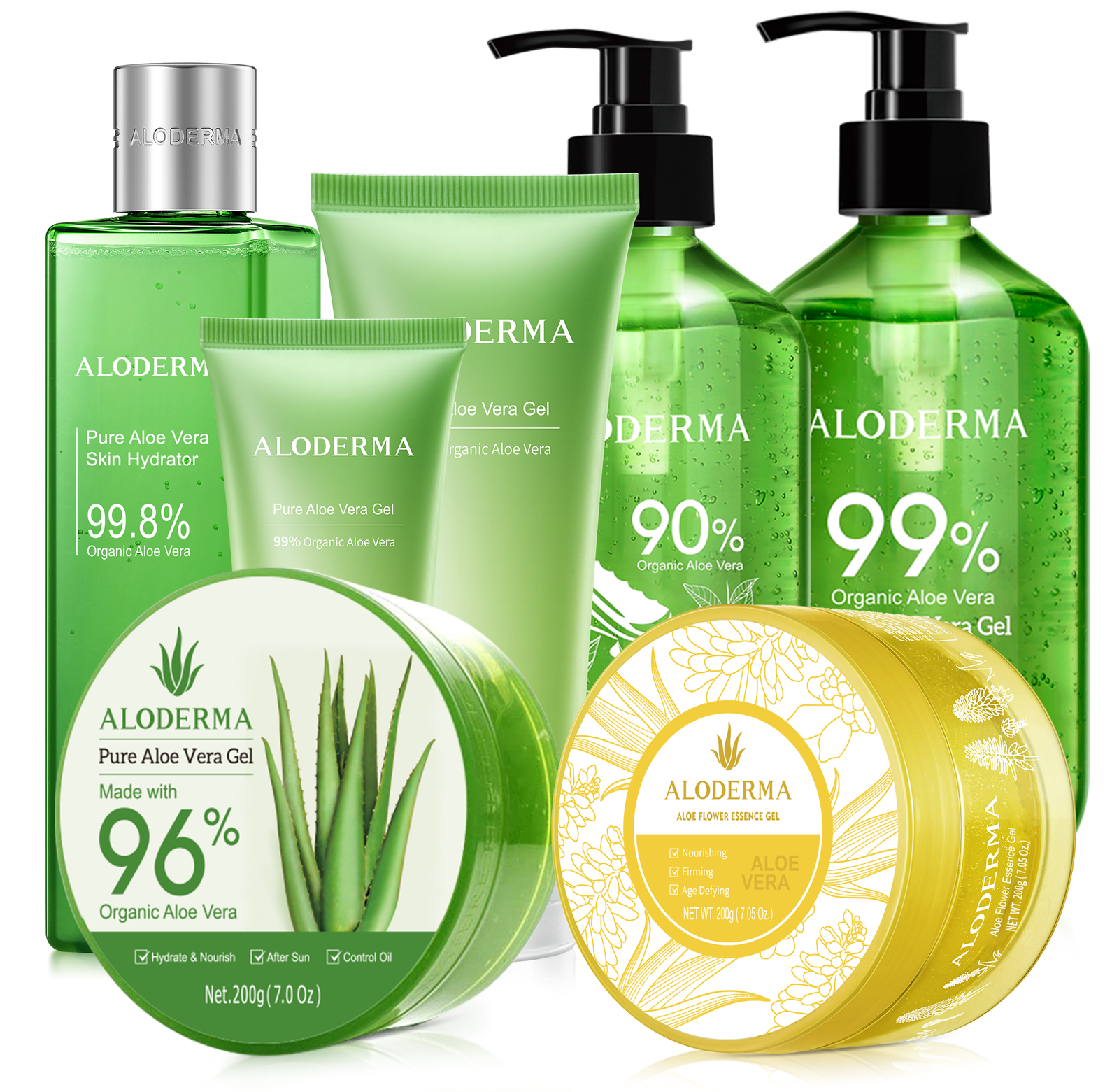
ALODERMA is different because it is a fully vertically integrated aloe vera company. It grows its own organic aloe vera, processes it on-site, and manufactures with that aloe within 12 hours of harvest. That timing matters because freshness helps preserve the plant’s bioactive character, which is exactly what people are looking for when they choose aloe in the first place.
Why that freshness matters
Think about aloe like freshly cut fruit versus something shelf-stable and long removed from its original state. Both may come from the same plant family, but they don’t offer the same feeling. Freshly processed aloe has a lively, clean skin feel that makes it an excellent base for lightweight hydration.
For people who dislike heavy face creams, that matters every morning. A fresh aloe base can help products feel comfortable, breathable, and easy to layer.
Why vertical integration changes trust
When a company controls the farm, harvest, processing, and manufacturing, there are fewer handoffs. That creates a clearer chain from plant to finished product. For ingredient-conscious shoppers, that kind of transparency is reassuring.
It also supports consistency. If aloe is the hero ingredient, you want a brand that treats it like the foundation of the formula, not a token botanical added for label appeal.
A few products worth exploring
If you want to understand the brand’s aloe-first approach, start with a few representative products on the site:
- Pure Aloe Vera Gel for straightforward aloe hydration
- Aloe Firming & Rejuvenating Cream if you prefer a cream texture
- Aloe Nourishing Facial Cleanser for a gentle first step
- Aloe Vera Hydrating Toner if you like light, fresh layers
Fresh aloe isn’t just a nice story. It changes how a product feels on the skin, especially when you want hydration without heaviness.
Why this matters for daily SPF habits
Even if you choose a separate sunscreen or an SPF moisturizer from another category, the skin underneath still benefits from a simple, calm base. That’s where aloe-forward skincare shines. It helps keep the routine light and manageable, which makes it easier to apply your protection properly instead of fighting with too many rich layers.
For sensitive, oily, and blemish-prone skin, that simplicity matters. The more comfortable your skin feels before SPF, the more likely you are to use enough of it and wear it consistently.
Mastering Application for Maximum Protection
The best face lotion with spf can still underperform if you apply it like a regular moisturizer. That’s one of the biggest reasons people feel disappointed by SPF products. The formula may be fine. The amount is often the problem.
Most users apply only 20% to 50% of the amount needed to reach the labeled protection, and the correct amount is 2 milligrams per square centimeter of skin, which is roughly 1/4 teaspoon for the face alone, according to this application explainer on YouTube.
What 1/4 teaspoon looks like in real life
Many people use a pea-sized amount because that’s how they apply serum or moisturizer. For SPF, that usually isn’t enough. Think of sunscreen as paint on a wall. A thin, patchy coat won’t cover the surface properly.
A more useful approach is to measure visually at first until your hand learns the amount.
- For the face: about 1/4 teaspoon
- Spread slowly: don’t rush and miss the edges
- Include often-forgotten areas: hairline, sides of nose, jawline, near the eyes
Where it goes in your routine
Face lotion with spf should usually be the final skincare step before makeup. Put your hydrating products on first, let them settle, then apply your SPF layer evenly so it can sit as intended on the surface.
If your routine gets confusing, this guide on the order skincare products should be applied makes it much easier to keep steps straight.
How to make correct application feel less annoying
The right technique helps:
- Dot first. Place small amounts on forehead, cheeks, nose, and chin.
- Connect the dots. Spread outward instead of dumping a blob in one spot.
- Use two thin passes if needed. Some people find this more comfortable than one thick-feeling layer.
- Give it a moment before makeup. Let the product settle so you don’t disturb the coverage.
Practical rule: If you’re choosing less product because the formula feels too heavy, the answer usually isn’t “use less.” It’s “find a better formula.”
Reapplication matters too
A morning layer is a start, not a magic force field. If you’re outside, sweating, touching your face, or spending a long day in daylight, reapplication matters. The best reapplication strategy is the one you’ll do. Some people prefer another thin layer of lotion. Others use a sunscreen format designed for touch-ups.
What matters most is this: use enough, cover evenly, and treat SPF as a real protective layer, not a symbolic dab.
Embrace the Sun with Confidence and Comfort
Daily sun protection shouldn’t feel like punishment for having skin. It should feel manageable, comfortable, and easy enough to repeat every morning. That’s the primary goal.
A good face lotion with spf earns its place in your routine by solving several problems at once. It hydrates. It protects. It wears well enough that you don’t talk yourself out of using it. Once you understand labels, filter types, and application amount, the whole category becomes much less confusing.
The core ideas to keep
If you want the simplest version of everything above, remember these points:
- Choose broad-spectrum SPF 30 or higher
- Pick the filter style your skin will tolerate
- Use enough product to get the protection on the label
- Pay attention to comfort, especially if your skin is oily or sensitive
- Treat everyday exposure as real exposure
That last point changes everything. The quick walk, the windshield light, the cloudy afternoon errand, the seat by the window. Those ordinary moments are why a pleasant, wearable formula matters so much.
Why texture is part of protection
People often think efficacy and elegance are separate topics. They aren’t. If a formula feels good, you’re more likely to apply the right amount and keep using it. If it feels greasy, chalky, or fussy, you’ll negotiate with it, and your coverage will suffer.
That’s why fresh, aloe-based skincare makes so much sense in this conversation. It supports the kind of light, breathable feel that helps daily routines stick.
Sun protection works best when it becomes automatic, like brushing your teeth or putting on shoes before you leave the house.
The best routine is rarely the most complicated one. It’s the one you’ll keep. When your face lotion with spf feels comfortable, looks good on your skin, and fits your real mornings, protection stops feeling like a burden. It becomes a steady act of care.
If you want skincare built around fresh aloe rather than heavy fillers, explore ALODERMA. The brand grows its own organic aloe vera, processes it on-site, and manufactures within 12 hours of harvest, giving every formula a fresh farm-to-skin foundation. If your skin leans sensitive, oily, or blemish-prone, that aloe-first approach can make daily hydration and sun-ready routines feel far more comfortable.