







You rub in a massage oil hoping for comfort, and five minutes later your skin feels coated. Your hands keep slipping. Your clothes stick. If you use body oil at night, your sheets may get more of the product than your skin does.
That’s the moment many people start looking for something lighter.
Grapeseed massage oil has a different feel. It glides well, then seems to disappear into the skin instead of sitting on top of it. You still get softness, but not that waxy, overdone finish that makes you want a shower right after. For people with oily, sensitive, or blemish-prone skin, that difference can feel huge.
It helps that grapeseed oil fits a modern skincare mindset. People want ingredients that feel elegant, come from a clear origin, and work with the skin instead of smothering it. That’s also why fresh aloe-centered skincare has become so appealing. When a formula respects the skin’s natural balance, you notice it right away.
The Search for a Massage Oil That Feels Like Skin
A lot of massage oils promise nourishment, but the experience can be frustrating. Some are thick that your skin feels sealed off. Others leave a glossy layer that lingers for hours. If your skin already leans oily, that heaviness can feel like too much.
Grapeseed massage oil solves a specific problem. It gives you slip for massage, but it doesn’t feel syrupy or dense. The finish is closer to soft skin than to an oil slick.
Think about three common situations:
- After-shower body massage: You want something that spreads easily over damp arms and legs, but you still want to get dressed soon after.
- Neck and shoulder tension: You need enough glide for a longer hand massage, but not so much that your grip disappears.
- Blemish-prone chest or back: You want comfort and moisture, yet you’re nervous about using a heavy oil in areas that already feel congested.
Grapeseed oil works well in all three because it feels light from the start.
Practical rule: If you avoid oils because they feel greasy, grapeseed massage oil is the first one that changes your mind.
There’s also an emotional side to texture. When skincare feels clean and breathable, you’re more likely to use it consistently. That matters. A beautiful ingredient only helps if it fits real life.
People assume a lighter oil must be less supportive. That isn’t necessarily true. Sometimes lightness is exactly what makes an oil more usable, especially if your skin gets overwhelmed easily. The best massage oil doesn’t just nourish. It should also feel comfortable during the hour after you apply it.
Unveiling Grapeseed Oil A Lightweight Wonder
Grapeseed oil starts with something humble. It comes from the seeds left behind after grapes are used for winemaking. That origin matters because it turns what could be discarded into something useful and elegant for skincare.

From vineyard byproduct to skincare staple
That sustainable story is part of its appeal, but it’s not the only reason formulators love it. Grapeseed oil has a long history in beauty and wellness. According to this historical overview of grapeseed oil, its legacy goes back over 6,000 years, rooted in ancient grape cultivation, and global grape growing now spans over 30,000 square miles. The same source notes that ancient Greek physicians recorded praise for its skin benefits.
That gives grapeseed oil a rare combination. It feels modern on the skin, yet it carries a very old botanical history.
Many people hear “seed oil” and think it must feel heavy. Grapeseed oil surprises them. It has a silky, almost quiet texture. There isn’t a strong scent competing with your routine, and there isn’t a thick residue making the skin feel trapped.
Why the texture matters much
Massage oils need a balance that’s harder to find than it sounds. If they absorb too fast, you lose glide. If they stay too long on the surface, the massage feels messy. Grapeseed oil sits in a sweet spot for many users.
Here’s why that matters in daily life:
- For self-massage: You can work it into calves, shoulders, or forearms without feeling drenched afterward.
- For facial massage: A lighter finish reduces that “I need to wash this off” feeling.
- For layering: It pairs more easily with watery skincare than richer oils often do.
Grapeseed oil feels less like a coating and more like a thin silk layer that gradually blends into the skin.
That sensory profile explains why it moved from traditional use into modern body care, massage blends, and facial oils. It also explains why people who dislike oils often tolerate this one well.
A thoughtful choice for ingredient-conscious shoppers
If you care about sustainability, grapeseed oil is easy to appreciate. It makes use of an existing agricultural material rather than relying on a wasteful process. For shoppers who like to know where an ingredient comes from and why it belongs in a formula, that’s a meaningful detail.
The ingredient fits beautifully into simple routines. You don’t need a complicated ritual to benefit from it. A few drops on damp skin. A quick hand massage after a long day. A blend with a water-rich hydrator when your skin needs softness without excess shine.
That simplicity is part of the magic. Grapeseed massage oil doesn’t ask for much. It just does its job with grace.
The Science of a Silky and Balanced Glow
The feel of grapeseed oil isn’t an accident. Its chemistry explains why it behaves differently from thicker oils.
According to this formulation-focused review, grapeseed oil is made up of 58 to 78% linoleic acid, and its extremely low viscosity classifies it as a dry oil. The same source explains that this composition helps reinforce the skin’s lipid barrier and reduce transepidermal water loss.

Linoleic acid and the feel of balance
Linoleic acid is an omega-6 fatty acid. In skincare terms, it helps explain why grapeseed oil can feel nourishing without feeling suffocating.
Think of your skin barrier like a brick wall. The skin cells are the bricks. Lipids are part of the material that helps hold that wall together. When that balance is off, skin may feel rough, tight, shiny, or unsettled. An oil rich in linoleic acid can support that wall without creating a thick blanket on top.
That’s helpful for people who say, “My skin is oily, but it feels dehydrated.” Those two feelings can happen at the same time. Skin can produce noticeable oil while lacking comfortable water balance at the surface.
Why dry oil doesn’t mean drying oil
The phrase dry oil confuses people. It doesn’t mean the oil dries your skin out. It means the finish feels light, fast-absorbing, and non-greasy.
That can make grapeseed massage oil easier to use in routines where you want movement and glide but not residue. You can massage it over the skin, then continue with the rest of your evening without feeling sticky.
If clogged pores are one of your worries, it helps to understand how lightweight textures fit into the bigger picture. This guide on what ingredients clog pores is useful because it shows why texture, formula design, and your own skin behavior all matter.
Vitamin E and botanical protectors
Grapeseed oil also contains Vitamin E and polyphenols, including proanthocyanidins, which are discussed for their protective role in skincare. You can think of them as support players that help the oil do more than just soften the skin.
Their value shows up most clearly in experience:
- After massage: Skin often feels smoother, not just slick.
- In dry indoor air: The skin tends to feel more comfortable and less papery.
- On combination skin: You can get softness without the heavy rebound effect some richer oils create.
Formulator’s view: The best oils don’t just sit on the surface. They improve the way the skin feels an hour later.
That delayed feel matters. Plenty of products feel nice on contact. Fewer still leave the skin feeling calm, flexible, and breathable after the initial slip is gone.
Why professionals reach for it
Massage professionals and formulators look for the same qualities. They want spreadability, control, and a finish that doesn’t overwhelm the skin. Grapeseed oil checks those boxes because of its low-viscosity texture.
In plain language, your hands move easily during application, but the oil doesn’t create endless slip. That makes it useful for body massage, short facial massage, and custom oil blends.
The result is simple. Grapeseed oil feels refined because its structure is refined. The silky finish comes from the chemistry.
Is Grapeseed Oil Your Skin's Perfect Match?
Popularity alone doesn’t make an ingredient right for you. Still, broad market demand can tell us something about how well an ingredient fits modern skincare habits. According to Grand View Research’s grapeseed oil market analysis, the global grapeseed oil market was valued at USD 505.6 million in 2022, and the U.S. held 82.9% revenue share in North America in 2022. That growth is tied in part to cosmetics demand and grapeseed oil’s reputation for moisture retention and use in blemish-prone skincare.
If your skin gets oily by noon
This aspect of grapeseed oil most surprises people.
Many oily-skin shoppers avoid facial oils completely. That’s understandable. If your forehead is shiny by lunch, adding oil sounds backward. But not every oil behaves the same way. Grapeseed oil has a lighter, drier finish that feels more compatible with oily skin than richer alternatives.
It can be appealing if you want:
- a massage oil for jaw tension or facial massage
- a body oil for shoulders, chest, or back that won’t feel heavy
- a finishing layer over a water-based hydrator
If you’ve been comparing light botanical oils, you may also want to read about organic jojoba oil. Jojoba and grapeseed oil are often considered together, but they don’t feel identical on the skin.
If your skin is easily bothered
Sensitive skin often reacts less to one single ingredient than to the total experience of a product. Strong scent, dense texture, too much rubbing, and over-layering can all make skin feel uncomfortable.
Grapeseed massage oil has a few practical advantages here. It’s nearly odorless, spreads easily, and doesn’t demand aggressive rubbing to move across the skin. That gentler application style can make a real difference.
A simple example: if your cheeks get warm and fussy after cleansing, a tiny amount of a lightweight oil may feel better than a thick balm that requires more tugging.
Use less than you think you need at first. With a silky oil, the line between “comfortable” and “too much” can be only a few drops.
If your skin feels dry but hates heavy creams
Some people don’t look dry. They look shiny. Yet their skin feels tight after cleansing or rough around the edges. Grapeseed oil can help soften that feeling without the dense finish of richer occlusive products.
It’s a good match when you want:
| Skin situation | Why grapeseed massage oil can help |
|---|---|
| Tight skin after a shower | It adds softness with a light finish |
| Rough elbows or knees | It spreads quickly for fast spot massage |
| Evening facial massage | It gives glide without a thick bedtime layer |
If you break out easily
This is the biggest question for many readers. No oil is universally perfect for everyone, and skin can be unpredictable. But grapeseed oil is chosen by people who want a more breathable option.
What matters most is how you use it. A small amount on damp skin behaves differently from a heavy, repeated layer on dry skin. So does blending it with a water-based product rather than applying a thick coat by itself.
That’s where technique matters more than hype. The ingredient may be a strong fit, but the method is what turns it into a useful ritual.
The Art of Application Blending Grapeseed Oil with Aloe
The smartest way to use grapeseed massage oil is not to use it alone.
One common gap in skincare advice is the lack of specific blending guidance for carrier oils. According to this overview of grapeseed massage oil use, grapeseed oil is ideal for oily skin because of its high linoleic acid content, listed there as 70 to 76%, and pairing it with a humectant like aloe vera can help offset any potential drying feel from its natural astringency.
Why aloe changes the experience
Aloe and grapeseed oil do different jobs.
Aloe is a humectant, which means it helps the skin hold onto water. Grapeseed oil is an emollient, which means it softens and smooths the skin surface. Put them together, and you get a more balanced result than either one gives alone.
This matters most if your skin falls into one of these categories:
- Oily but dehydrated: You want water and comfort, not a greasy finish.
- Sensitive and reactive: You want a simple blend that feels light.
- Blemish-prone: You want softness without a pore-smothered feeling.
The order also matters. Water-based hydration first, then a small amount of oil, feels more elegant than oil first.
How to use grapeseed massage oil on its own
For body massage, keep it simple.
Warm a small amount between your palms. Apply to slightly damp skin. Start with areas that tend to hold tension, like shoulders, calves, or forearms. Add more only if your hands start dragging.
If you’re trying to relax tight muscles, oil helps your hands move more smoothly, but pressure and pacing matter too. A lighter oil like grapeseed makes it easier to work gradually instead of sliding too fast over the skin.
For self-massage, damp skin plus a small amount of oil feels better than a large amount on fully dry skin.
Simple blend ideas with aloe
You don’t need a lab setup. You can mix a single-use blend in your palm right before application.
A useful general rule is to let aloe lead if your skin gets shiny or congested, and let oil lead slightly more if your skin feels rough or tight.
Here’s a practical way to think about it.
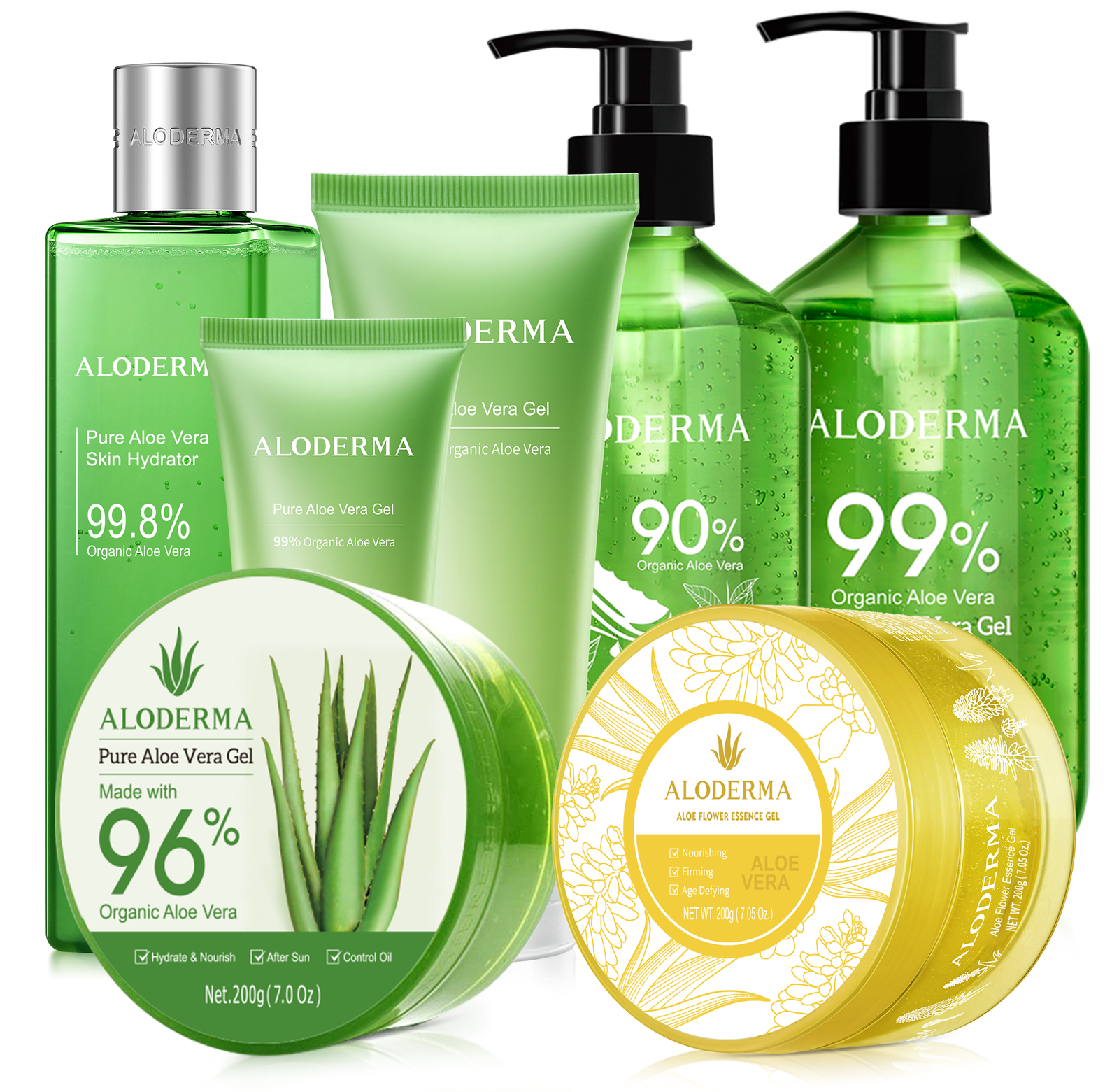
| Skin Goal | Grapeseed Oil Ratio | ALODERMA Product & Ratio | How to Mix & Use |
|---|---|---|---|
| Lightweight hydration for oily skin | Small portion | Pure Aloe Vera Gel as the larger portion | Mix in your palm and press onto damp skin after cleansing |
| Slip for facial massage | Equal portion or slightly less | Aloe Vera Gel as the equal or larger portion | Blend fresh, then massage for a short session and leave a thin layer on |
| Post-shower body softness | Equal portion | Aloe body hydrator or gel as the equal portion | Smooth over arms and legs while skin is still slightly wet |
| Comfort for combination skin | Small to equal portion | Aloe toner or gel as the larger portion | Apply the watery layer first, then seal with the blend where needed |
For a broader look at layering aloe into a routine, this article on how to use aloe vera for skin gives helpful context.
A palm-mix method that keeps things fresh
Instead of pre-mixing a big bottle, try this:
- Dispense your aloe product into your palm.
- Add a few drops of grapeseed massage oil.
- Blend with a fingertip.
- Apply immediately.
This method has two benefits. First, you adjust the feel day by day. Second, you avoid making a large mixture that sits around too long.
That’s especially useful when seasons change. On humid days, you may want mostly aloe with just a touch of oil. In colder weather, your skin may prefer a richer palm mix.
A short demonstration can make the texture idea easier to picture.
Where people go wrong
Most mistakes come from using too much product.
A blend that feels elegant at first can feel overloaded if you keep adding more because your hands enjoy the slip. Stop while the skin feels fresh. If you can see a thick reflective layer sitting on top after several minutes, you probably used more oil than you needed.
Another common mistake is using oil without enough water-based hydration underneath. That can leave skin soft on the surface but thirsty underneath. Aloe helps solve that.
A Buyer's Guide to Freshness and Quality
A beautiful oil can disappoint if it’s old, stored poorly, or processed. Grapeseed oil is a good example. Its light feel is one of its strengths, but that same delicate profile means freshness matters.
According to this storage guidance for grapeseed massage oil, grapeseed oil typically has a 6 to 12 month shelf life after opening and is prone to oxidation from heat and light. The same source recommends storing it in dark glass and keeping it away from sunlight.
What to look for on the label
When shopping, a few words matter more than fancy branding.
Look for:
- Cold-pressed: This usually signals a gentler extraction approach.
- Unrefined: Many shoppers prefer it when they want a more natural ingredient profile.
- Organic: If that matters to your routine, it can align with a cleaner ingredient philosophy.
- Dark packaging: A practical sign that the brand is thinking about freshness.
The bottle itself tells a story. A clear container left on a bright bathroom shelf may be convenient, but it’s not ideal for an oil that dislikes heat and light.
How to tell when grapeseed oil is past its best
Fresh grapeseed oil should feel pleasant and clean. When it starts to turn, people notice the smell first.
Watch for these signs:
- Off smell: Nutty can be normal, but stale or sharp is a warning sign.
- Texture change: If it feels oddly thick or less elegant than before, pay attention.
- Color shift or dullness: Not always dramatic, but worth noting if the oil seems tired.
Freshness isn’t a luxury detail. It changes how an oil feels on your skin.
That idea is easy to understand if you care about ingredient quality in other parts of skincare. Fresh botanical ingredients tend to perform better and feel better.
Storage habits that protect your bottle
You don’t need complicated storage equipment. You need consistency.
A good routine looks like this:
- Keep it cool: Store away from hot windows and steamy radiators.
- Close it fast: Don’t leave the cap open while you finish the rest of your routine.
- Use smaller bottles when possible: Less air exposure can make daily use simpler.
- Avoid bathroom sunlight: Moisture and light aren’t your friends here.
A freshness-focused skincare philosophy becomes useful here. Brands built around fresh ingredient handling understand that timing affects performance. That’s one reason aloe lovers care so much about how quickly a brand processes its harvest.
Patch testing still matters
Even gentle oils deserve a patch test.
Apply a small amount to a discreet area, then wait and watch how your skin responds. This is especially smart if you’re planning to use grapeseed massage oil on the face, chest, or any area that tends to react quickly.
Patch testing isn’t fear-based. It’s respectful of your skin.
Embrace Lightweight Nourishment in Your Routine
Grapeseed massage oil earns its reputation because it solves a real problem. It gives you slip, softness, and a polished skin feel without the heavy aftermath that turns people away from body oils in the first place.
Its appeal comes from more than texture. It carries a long botanical history, comes from a thoughtful byproduct stream, and has a skin-friendly composition that makes sense for people who want comfort without overload. That’s why it works so well for massage, daily body care, and lighter facial rituals.
The most practical takeaway is this: grapeseed oil gets better when you use it with a water-based hydrator. That pairing helps the skin feel both cushioned and fresh. If your skin is oily, sensitive, or blemish-prone, that balance can make all the difference.
You also don’t need a complicated ritual. A small amount on damp skin. A palm-mixed blend with aloe. A cool, dark place to store the bottle. Those simple choices protect both the elegance of the oil and the comfort of your skin.
Freshness matters here. So does restraint. Grapeseed massage oil tends to shine when you use just enough, not when you drown the skin in it.
If you’ve always thought oils were too heavy for you, this may be the exception worth trying. It feels refined, easy, and adaptable. And when that lightweight finish meets the clean hydration of fresh aloe, the routine feels less like a compromise and more like skin at its best.
If you want to build that kind of lightweight routine, explore ALODERMA. ALODERMA is fully vertically integrated, meaning the company grows its own organic aloe vera, processes it on-site, and manufactures promptly after harvest so the aloe in every formula is as bioactive and effective as possible. That farm-to-skin freshness makes it a natural partner for grapeseed oil, especially if you love gentle hydration and clean, comfortable texture.