



You're standing at the bathroom mirror with a serum bottle in one hand and a magnifying glass in the other. The label promises hydration, but the ingredient list reads like a chemistry exam: glycerin, hyaluronic acid, aloe, panthenol, ceramides, squalane. Your skin still feels tight after cleansing, so which ingredient is missing?
The answer usually isn't a single hero ingredient. Hydrating serum ingredients perform different jobs, and the most comfortable formula depends on whether your skin needs more water-binding, better moisture retention, barrier support, or a lighter finish. This guide breaks those roles down so you can read a label with confidence instead of choosing whichever bottle has the biggest “hydration” claim.
What a Hydrating Serum Is Actually Doing on Your Skin
A hydrating serum can perform four separate jobs. Humectants pull water toward the outer skin layer. Occlusive-style ingredients slow evaporation. Barrier-supporting lipids, including ceramides and squalane, help improve comfort and keep the surface supple. Soothers help skin feel less reactive when cleansing, weather, or an active routine leaves it feeling tight.
Most lightweight serums focus heavily on the first job. Glycerin, hyaluronic acid, aloe, and panthenol can make skin feel smoother and more flexible because they help attract or hold water in the stratum corneum. But humectants alone don't necessarily stop that water from leaving. Expert guidance on hydrating serums highlights this common gap, noting that a serum often needs an occlusive or barrier-supporting layer above it for hydration to last in a practical guide to choosing hydrating serums.

Four questions to ask before buying
- Does your skin feel tight immediately after cleansing? Start by looking for water-binding ingredients such as glycerin, hyaluronic acid, aloe, or panthenol.
- Does it feel comfortable at first, then dry later? The formula may need more barrier or occlusive-style support rather than another humectant.
- Does your skin dislike rich creams? A water-based serum followed by a small amount of squalane may feel more comfortable than a heavy balm.
- Does the label bury every useful ingredient near the end? The formula may offer a pleasant texture without much targeted support.
A serum bottle can't do every job equally well. A glycerin-forward formula may excel at water retention, while a ceramide-rich product may feel more protective and cushiony.
Practical rule: A plump feeling tells you that water has reached the surface. It doesn't automatically tell you that your skin can hold on to it.
Read the ingredient list as a map. Water-based ingredients usually appear early, oils and emollients often appear later, and the overall texture gives you another clue. A thin, quick-absorbing serum is usually designed to layer. A silky or milky serum may already include more emollient support. Neither is automatically better. The right choice depends on what happens to your skin after the first pleasant few minutes.
Glycerin and Hyaluronic Acid as the Core Humectants
Glycerin and hyaluronic acid appear in countless hydrating serums because both attract and bind water, but they create different experiences on skin. Glycerin is a small humectant that diffuses into the stratum corneum, while hyaluronic acid is a larger polysaccharide commonly used to form a hydrated surface film, as described in this ingredient comparison of glycerin and hyaluronic acid.
Glycerin has an unusually strong evidence base for everyday hydration. A clinical review reported that a cream containing 3% glycerol increased water content in the stratum corneum compared with placebo and untreated skin, while a double-blind study found that 20% glycerol cream used twice daily for 10 days significantly increased stratum corneum hydration compared with placebo in the British Journal of Dermatology review. The same review summarized research in which glycerol outperformed 10% urea, 10% propylene glycol, and vehicle for stratum-corneum hydration.
That doesn't mean every serum needs a high glycerin concentration. In practice, glycerin can feel slightly tacky when a formula uses a lot of it, especially before moisturizer. A well-balanced formula can soften that sensation with water, aloe, panthenol, lightweight polymers, or a small amount of emollient.
Hyaluronic acid usually wins on the first impression. It can create a quick, smooth, cushioned feel, which is why people often describe HA serums as plumping. A 2021 facial serum study found that topical hyaluronic acid increased hydration by 134% immediately after application and still showed a 55% increase at week 6, with both results reported at p<0.001 in the published facial serum study. At week 6, the study also reported improvements in smoothness, plumping, hydration, fine lines, wrinkles, and overall global assessment.
Glycerin versus hyaluronic acid
| Attribute | Glycerin | Hyaluronic Acid |
|---|---|---|
| Main role | Supports water retention in the outer skin layer | Creates lightweight surface hydration and a plumping feel |
| Skin feel | Can feel slightly tacky in richer formulas | Often feels silky or gel-like |
| Best use | Daily hydration across changing environments | Lightweight layering under moisturizer |
| Formula position | Often works well as a major water-phase ingredient | May appear as sodium hyaluronate or another HA form |
| Practical pairing | Works with aloe, panthenol, ceramides, or squalane | Works with glycerin and a moisturizer |
Direct comparison research summarized by The INKEY List found glycerin outperforming hyaluronic acid, lactic acid, glycolic acid, propylene glycol, sorbitol, and urea for stratum-corneum hydration in its glycerin and HA analysis. That makes glycerin a strong benchmark when your priority is dependable water retention, while HA remains useful when you want a light, immediately cushioned finish. For a closer look at HA's role, read ALODERMA's guide to pure hyaluronic acid.
Ceramides and Squalane for Barrier Repair and Comfort
Humectants attract water. Ceramides and squalane help the skin feel supported after that water arrives. This distinction matters if your face feels tight, rough, or uncomfortable after cleansing even when a glycerin or HA serum initially feels refreshing.
Ceramides are skin-identical lipids that sit between cells in the outer barrier. Think of skin cells as bricks and ceramides as part of the mortar holding the structure together. A formula that names ingredients such as ceramide NP or ceramide AP gives you more useful information than a label that promises a vague botanical blend.
Squalane plays a different role. It's a lightweight emollient that gives the surface slip and softness, so it can make a serum or moisturizer feel more comfortable without the dense finish of a traditional butter. People with oily skin often avoid oils entirely, but a light squalane step can sometimes feel more elegant than a thick cream. The formula and amount still matter, so texture testing is essential.
Why the pairing feels better
A humectant serum can make skin feel refreshed but leave a tight sensation later if the surface lacks enough support. Adding a ceramide cream or a few drops of a squalane-containing product helps reduce that “wet, then tight” cycle by adding lipid and emollient comfort.
Look at the ingredient order as a rough signal, not a guarantee. If ceramides or squalane appear within the first half of the ingredient list, they're more likely to play a meaningful role than if they appear at the very end. You can also explore resources about how to boost downtime recovery with barrier repair when you're comparing barrier-focused product categories.
Label-reading shortcut: Glycerin answers “how does this attract water?” Ceramides and squalane answer “how does this feel after the water arrives?”
For sensitive-feeling skin, choose a simple water-based serum first, then add a modest barrier layer. For oily skin, try a fluid ceramide lotion or a light squalane product rather than automatically reaching for a rich cream. If the result feels greasy, reduce the amount of the finishing product before abandoning barrier support altogether.
Aloe and Panthenol as Soothing Hydration Builders
Aloe and panthenol bring a different character to a serum. They don't just contribute to water binding. They can make a formula feel cool, comfortable, and less stark on the skin, especially after cleansing or exposure to dry air.
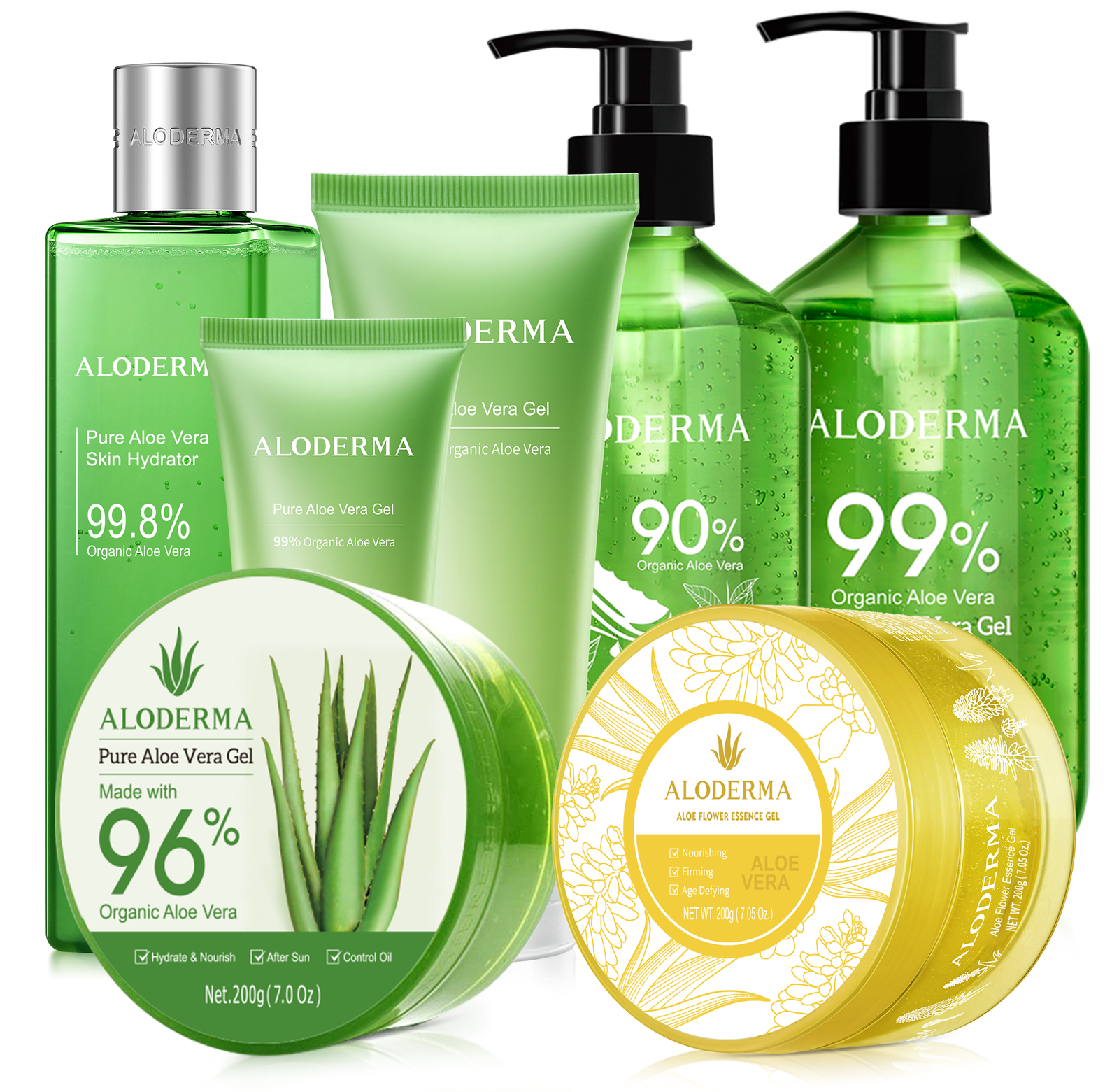
Aloe quality depends heavily on what happens between harvest and formulation. ALODERMA is a fully vertically integrated aloe vera company that grows its own organic aloe vera, processes the aloe vera, and manufactures onsite within 12 hours of harvest. That farm-to-formula timing is designed to keep the primary ingredient in its products as fresh, bioactive, and effective as possible. If you're choosing an aloe-based serum, the handling process matters as much as the word “aloe” on the front label.

Fresh aloe juice can give a serum a fluid, cooling slip, while panthenol adds a soft, conditioned finish. Panthenol is commonly used as a humectant and skin-conditioning ingredient. It complements glycerin or HA because it contributes to hydration without asking the formula to rely on one water-binding material.
What quality can feel like
Aloe serums vary widely. Some are thin and quickly absorbed, while others feel thick because the formula uses a gel network or adds film-formers. A faintly green appearance may come from the botanical material, but color alone can't prove freshness or potency. Packaging, sourcing information, batch details, and the complete INCI list offer better clues.
For readers who want to understand how aloe fits into a gentler routine, ALODERMA's guide to aloe vera for sensitive skin provides useful context. The practical pairing is straightforward: use aloe and panthenol in the water phase, then choose a moisturizer or light emollient according to how your skin feels later in the day.
If your skin prefers minimal layers, an aloe-forward serum with panthenol may be enough under sunscreen in the morning. If your face feels tight by evening, add a barrier-supporting moisturizer rather than applying several extra humectant serums. More water-binding ingredients aren't always the answer.
How Ingredients Work Together and Where They Clash
Ingredient combinations make more sense when you assign each one a job. Glycerin and HA can create layered water binding. Panthenol and niacinamide can support a comfortable, conditioned feel. Squalane and ceramides can add emollient and lipid support after water-based products.
| Ingredient Pair | Effect | Verdict |
|---|---|---|
| Glycerin + hyaluronic acid | Combines dependable water retention with a light surface-plumping feel | Yes, especially under moisturizer |
| Panthenol + niacinamide | Builds a comfortable, water-based support step | Usually yes, if the overall formula suits you |
| Squalane + ceramides | Adds slip and lipid-focused comfort | Yes, adjust the amount for oily skin |
| Strong exfoliating acids + high-molecular-weight HA | May increase pilling or stinging when layered carelessly | Use caution, separate or simplify |
| Pure vitamin C + ceramide-dominant formula | Low-pH products can challenge emulsion compatibility | Check the finished formula, don't assume every pairing works |
| Heavy occlusive emollients + humectant serum in humid weather | Can feel overly sealed and uncomfortable for some users | Use less, especially if the finish feels congested |
Build the layers by texture
Apply the thinnest water-phase product first. A glycerin, HA, aloe, or panthenol serum usually belongs before a cream. Squalane generally works later because it's oil-soluble and adds slip on top of water-based hydration.
A practical morning sequence might look like this:
- Cleanse gently: Leave the skin comfortable, not squeaky.
- Apply one water-based serum: Choose glycerin, HA, aloe, or panthenol according to your main need.
- Add barrier support: Use a ceramide moisturizer if the skin feels tight.
- Finish with sunscreen: Keep the daytime routine consistent and easy to repeat.
Don't stack every active just because the ingredients are individually popular. If a formula pills, feels sticky, or leaves your skin prickly, remove one layer and test the simpler routine for several applications. The best ingredient architecture is the one you can use comfortably and consistently.
A useful yes/no rule: Water phase first, oil phase later. If the skin feels heavy, reduce layers before changing every ingredient.
Matching Ingredients to Sensitive, Oily, or Blemish-Prone Skin
The same hydrating serum can feel soothing on one face and sticky on another. Skin type doesn't tell you everything, but it helps you predict texture, finish, and which supporting ingredients deserve attention.

Sensitive skin
Start with a short ingredient list and a low-fragrance approach. Panthenol, glycerin, ceramide NP, and aloe can make sense when you want hydration without a strongly active feel. Fragrance, parfum, denatured alcohol, and concentrated essential oils deserve extra scrutiny, especially if they appear near the top of the list.
A sensitive-skin serum should spread easily and disappear without a sharp sensation. If it feels hot, strongly scented, or unusually tight as it dries, stop layering and simplify the routine. A fragrance-free aloe serum followed by a plain moisturizer may be more comfortable than a complicated multi-active product.
Oily skin
Oily skin can still lack water at the surface. Choose a fluid humectant formula with glycerin or a lightweight HA format, then judge the finish after it has settled. Squalane isn't automatically unsuitable, but a rich oil layer may feel unnecessary if your moisturizer already provides enough emollience.
Look for aloe leaf juice in a light serum rather than an aloe butter or dense balm. The goal is a clean spread, quick absorption, and no persistent film. If the skin feels shiny or coated, use fewer drops and avoid adding another occlusive layer immediately afterward.
Blemish-prone skin
Blemish-prone routines often include ingredients that can leave skin feeling dry or uncomfortable. A simple humectant base with panthenol can add hydration while keeping the routine manageable. Ceramides may also fit, particularly when the formula is light and doesn't leave a greasy layer.
Check the label for fragrance or parfum near the top, heavy oils that don't suit your skin, and an overloaded active list. Don't assume that “natural” means automatically gentle. Aloe, glycerin, panthenol, and a well-designed barrier step can be more useful than a long list of botanical extracts.
Texture test: A good serum should leave skin flexible after absorption. If you can feel a tight film, tacky residue, or oily coating long after application, the formula may not match your routine even if its ingredient list looks impressive.
Reading Labels and Spotting Genuinely Clean Hydrating Serums
A clean hydrating serum should be judged by the whole formula, not by a single leaf graphic or one familiar ingredient. Start with the INCI list, usually printed on the packaging or product page. Ingredients generally appear in descending order by weight, so the upper portion tells you what forms the main structure of the product.
Look for a sensible combination of water-phase hydrators, barrier-supporting materials, and soothing ingredients. Glycerin, aloe, panthenol, sodium PCA, beta-glucan, urea, polyglutamic acid, and HA can all appear in hydration systems, but a longer list isn't automatically more effective. The formula should also make sense for the skin feel you want.
Use certification thresholds carefully
“Natural” and “organic” aren't interchangeable. The ECOCERT natural-and-organic cosmetics standard requires at least 95% of total ingredients to be of natural origin under the referenced ECOCERT standard. The COSMOS standard states that at least 95% of physically processed agro-ingredients in a certified organic cosmetic must be organic, with a separate finished-product organic-content threshold of 20% for leave-on formulas and 10% for rinse-off products in the COSMOS standard document.
Those thresholds help you compare certification claims with more precision. They don't tell you whether a serum will feel sticky, rich, or comfortable, so pair certification details with the actual ingredient list and packaging.
Three checks you can make today
- Check the source story: Look for clear information about where aloe or other botanical ingredients come from and how quickly they're processed.
- Check the package: Batch or lot details, manufacturing information, expiry guidance, and opaque or airless packaging can help you assess how seriously the brand treats formula handling.
- Check the texture: Rub a small amount between your fingers, then apply it to clean skin. Notice whether it spreads evenly, absorbs at a reasonable pace, and leaves comfort rather than a tight or greasy film.
For a focused review of ingredients that may not suit every routine, use ALODERMA's guide to ingredients to avoid in skincare. The goal isn't to fear every unfamiliar INCI name. It's to understand what you're buying, why each major ingredient is there, and whether the finished product matches your skin's needs.
ALODERMA offers aloe-focused gels, hydrators, serums, creams, masks, and everyday cleansers built around fresh organic aloe processed onsite within 12 hours of harvest. Visit ALODERMA to compare lightweight hydration options and choose a formula whose humectants, soothing ingredients, and barrier support fit your routine.