







You bought a face wash because the label said “gentle,” “clean,” or “made with botanicals.” Then you used it once and your skin felt tight, uncomfortable, or oddly dry for the rest of the day. If that sounds familiar, you're not overreacting, and you're not alone.
A lot of people looking for a natural cleanser for sensitive skin end up stuck in the same loop. They want something simple and plant-based, but many formulas still feel too sharp, too foamy, or too scented. The result is confusion. If it says natural, why doesn't it feel calm on the skin?
That question matters because sensitive skin isn't rare. In a 2019 global survey, 71% of women and 60% of men reported having sensitive skin according to this published survey summary. Gentle cleansing isn't a niche concern. It's an everyday need for a very large group of people trying to avoid harsh ingredients in their routine.
Your Journey to Calm and Comfortable Skin
There's a particular kind of disappointment that comes from washing your face and feeling worse afterward. Your cleanser is supposed to be the safe step. It's only on your skin for a short time, so it seems like it should be easy to get right. But for sensitive skin, cleansing is often where trouble starts.
One reader might try a fresh-smelling gel wash and notice their cheeks feel warm and dry after rinsing. Someone else might choose a trendy foaming cleanser because it feels “extra clean,” then spend the next hour reaching for moisturizer. Another person may switch products every week, hoping the next bottle will finally be different.
Why cleansing can feel confusing
Sensitive skin often reacts to things that other people barely notice. A formula can look beautiful on the shelf and still be a poor fit once it touches your face. Fragrance, strong foaming agents, alcohol, rough particles, and even an unbalanced formula can leave skin feeling unsettled.
That's why a natural cleanser for sensitive skin has to do two jobs at once. It has to remove sunscreen, oil, and daily grime. It also has to do that without making your skin feel stripped.
Sensitive skin usually doesn't want a dramatic cleansing experience. It wants a quiet one.
What comfortable cleansing actually feels like
A good cleanse doesn't leave your face squeaky. It leaves it soft, clean, and normal. That “normal” feeling is more important than many people realize.
Look for these signs after washing:
- No tightness: Your skin shouldn't feel pulled, stiff, or thirsty.
- No lingering sting: Cleansing should feel boring in the best possible way.
- No rush to recover: You shouldn't feel like you need to fix the cleanser with three extra products.
If your face feels calm after washing, that's a strong clue you're moving in the right direction. The rest of this guide will help you understand why some cleansers work better than others, how to read labels without getting overwhelmed, and how to choose a formula that respects sensitive skin instead of challenging it.
Decoding Natural Cleansers for Sensitive Skin
“Natural” sounds simple, but in skincare it can mean very different things. Sometimes it points to plant-based ingredients in a carefully balanced formula. Other times it's little more than a pretty label with a leaf on the packaging.
For sensitive skin, the difference matters.
Natural sounding versus thoughtfully formulated
Think of skincare the way you think about food. A bowl of fresh fruit and oats feels very different from a snack bar that says “made with real fruit” but is mostly additives and sweeteners. Both can use natural language. Only one feels close to the source.
The same idea applies to cleansers. A product can sound natural because it mentions herbs, oils, or flowers on the front. But if the formula relies on aggressive cleansing agents or heavy fragrance, your skin won't care what the marketing says.

Why freshness matters with aloe
Aloe vera is one of the most helpful ingredients people look for in a gentle cleanser because it's known for hydration and comfort. But not all aloe is handled the same way. Formulation quality matters, and ingredient freshness can shape how well a product supports sensitive skin.
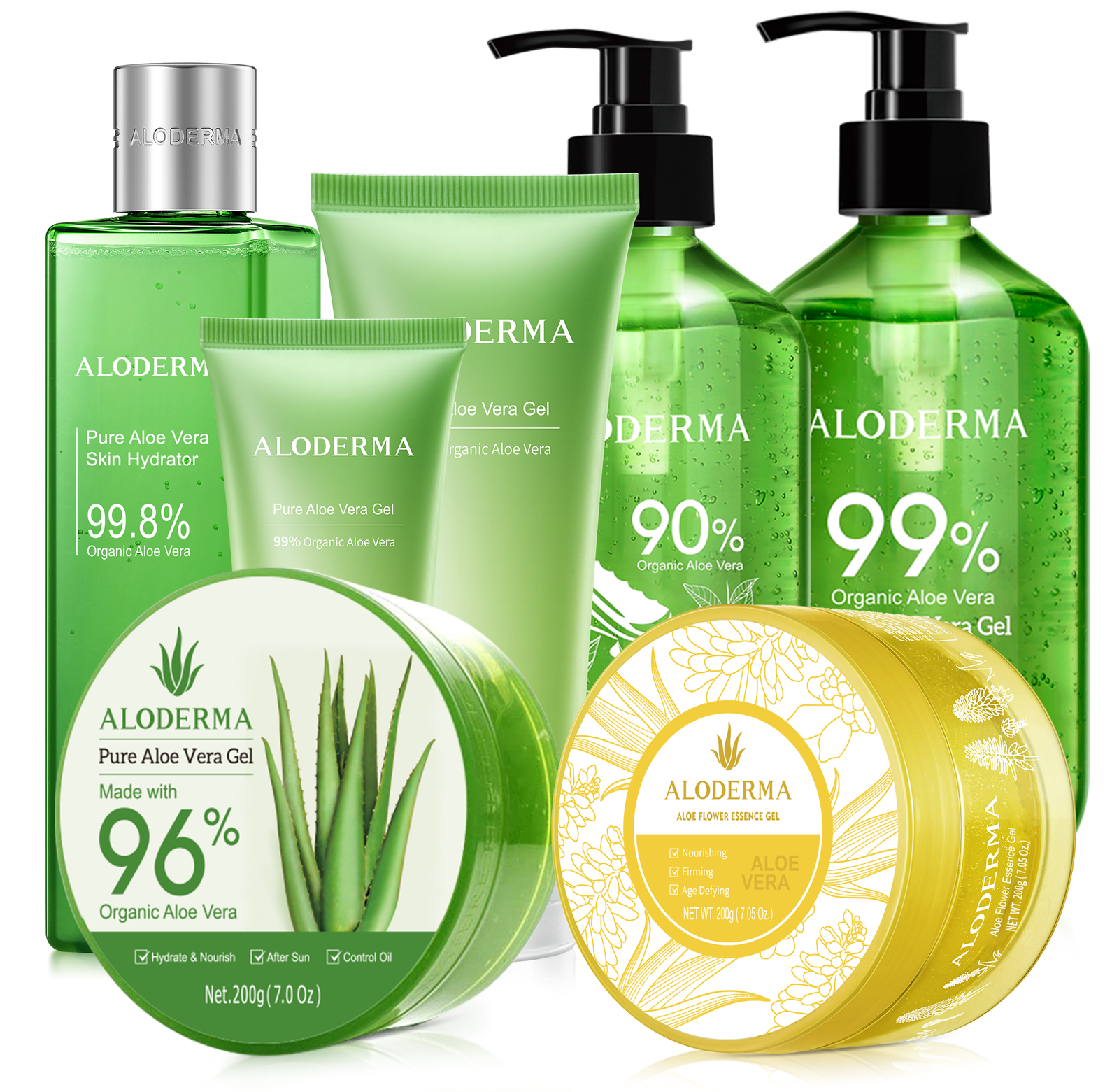
That's one reason the farm-to-bottle approach stands out. Aloderma is a fully vertically integrated aloe vera company. It grows its own organic aloe vera and processes that aloe onsite within 12 hours of harvest, which is meant to preserve the primary ingredient in a more bioactive state. For someone with reactive skin, that detail isn't just interesting. It helps explain why one aloe-based cleanser can feel flat while another feels more supportive and comfortable.
A fresh plant ingredient is a bit like produce from a garden compared with something that sat in storage too long. Both may still be called aloe. They won't always feel the same.
The real goal is balance
Sensitive skin doesn't need a cleanser that feels rustic or homemade. It needs one that's gentle, balanced, and designed with care. That's also why many people do better with professionally made formulas instead of kitchen experiments.
If you're curious about how plant ingredients are used across different kinds of body care, Aloderma's post on arnica massage oil offers another example of how ingredient choice and preparation shape the final experience.
A good natural cleanser should feel less like a deep scrub and more like a soft cotton shirt. It does its job without demanding attention.
Reading Cleanser Ingredient Labels Like a Pro
Ingredient labels can look intimidating at first. Long names, tiny print, and unfamiliar terms make a lot of people give up before they start. But once you know what to scan for, labels become much easier to read.
You don't need to memorize every ingredient. You just need a simple filter.
Start with the first five ingredients
Ingredients are generally listed from higher to lower concentration. That means the top part of the list tells you a lot about the product's character. If the first few ingredients are supportive and gentle, that's a good sign. If they raise questions, trust that instinct.

Here's a practical three-step way to read a cleanser label:
-
Check the first ingredient
If a cleanser highlights aloe on the front, it's reasonable to see whether aloe appears prominently in the ingredient list. This helps you tell whether the star ingredient is central to the formula or just a small add-on.
- Look at the cleansing agents
The cleansing agents tell you how the formula washes the skin. For sensitive skin, milder surfactants are usually the safer direction.
-
Scan for likely triggers
Fragrance, drying alcohols, and overly complicated formulas can be worth a second look if your skin reacts easily.
Know the difference between harsh and mild cleansing
A surfactant is the ingredient that helps loosen oil, sunscreen, and debris so they can rinse away. Some surfactants clean very aggressively. Others take a gentler route.
For sensitive skin, guidance points to disodium cocoyl glutamate as a mild, plant-derived surfactant that is coconut-derived and cleanses effectively while remaining gentle. The same guidance also recommends formulas that are free of alcohol, since alcohol can be especially difficult for reactive skin, as explained in this ingredient guidance on natural face wash.
That matters because many people assume all foam is harsh and all gel cleansers are harsh. That's not always true. What matters is the cleansing system, not just the texture.
A quick label-reading checklist
Use this when you're standing in a store aisle or scrolling a product page:
- First ingredient check: Does the formula lead with something supportive, especially if the front label highlights it?
- Cleansing agent check: Does it use a mild surfactant system rather than something known for a stripped feeling?
- Irritant scan: Is it fragrance-free or at least restrained, and free from alcohol if your skin is reactive?
- Simplicity check: Does the formula feel focused, or does it read like ten ideas competing in one bottle?
Once you start reading labels this way, a cleanser stops being a mystery. It becomes a choice you can evaluate with confidence.
The Best and Worst Ingredients for Your Sensitive Skin
Some cleanser ingredients help sensitive skin feel settled. Others make your face feel like it needs to recover. It helps to think of them as skin allies and potential troublemakers.
The easiest way to shop is not to chase trendy ingredients. It's to understand what role each ingredient plays.
Skin allies and potential troublemakers
Natural skincare educators often recommend cream cleansers over foaming cleansers for sensitive skin because cream formulas are typically gentler and more moisturizing. The same guidance highlights aloe vera as a preferred hydrating ingredient, and notes that both pH and ingredient concentration affect how well a formula works and how likely it is to feel uncomfortable, as outlined in this guide to formulating natural cleansers.
That's why texture tells you something useful. A cream cleanser often acts more like a soft cushion between your hands and your skin. A strong foam can feel satisfying in the moment, but for some people it behaves like over-washing a favorite sweater. It gets the job done, but leaves the material rougher each time.
| Ingredient Guide for Sensitive Skin Cleansers | |
|---|---|
| Skin Allies (Look For) | Potential Troublemakers (Avoid) |
| Aloe vera | Fragrance-heavy formulas |
| Cream cleanser textures | Alcohol in reactive-skin formulas |
| Mild, plant-derived surfactants | Abrasive scrubs |
| Simple, balanced formulas | Strong essential oils for very reactive skin |
| Hydrating support ingredients like glycerin | Sharp DIY acids and rough exfoliating particles |
Why aloe earns a special place
Aloe is popular for good reason. In a cleanser, it can help the formula feel more comfortable and less drying. But aloe isn't magic all by itself. It still depends on the full formula around it.
Fresh sourcing also matters here. When a brand grows its own organic aloe vera and processes it quickly after harvest, that can support a more active, useful aloe ingredient in the final cleanser. That farm-to-bottle detail is easy to overlook, but it can make more sense of why one aloe cleanser feels gentle while another feels ordinary.
If stress tends to show up on your skin, broader wellness habits can help too. Some readers also explore support for rest and balance through resources like this guide to stress relief with reishi.
Ingredients people often underestimate
A few things get overlooked all the time:
- Fragrance: Even when it smells clean or botanical, it can be too much for reactive skin.
- Physical scrub particles: If a cleanser feels gritty, sensitive skin often pays the price.
- Alcohol: In some formulas, it can leave skin feeling extra dry or edgy.
- Pore-clogging concerns: If you're also navigating congestion, it helps to understand which ingredients may be too heavy for your skin. This guide on what ingredients clog pores can help you sort that out.
When your skin is sensitive, “more active” doesn't always mean “more helpful.”
Natural Cleansing Myths You Need to Ignore
The internet gives a lot of skincare advice with a comforting tone and poor guidance. That's especially true when the word “natural” gets involved. Some of the most common tips for natural cleansing sound wholesome but are a bad match for sensitive skin.
Myth one: If it's from the kitchen, it must be safer
Lemon juice, vinegar, and baking soda show up in DIY beauty content all the time. They sound simple, cheap, and earthy. But simple doesn't always mean skin-friendly.
A major gap in online advice is the failure to warn readers that common DIY “natural” ingredients like lemon juice, vinegar, and abrasive scrubs can be counterproductive for sensitive skin, potentially causing discomfort and weakening the skin barrier. Professionally formulated gentle cleansers avoid that kind of guesswork, as described in this discussion of natural face cleanser advice gaps.
The safer alternative is a cleanser designed with balanced pH, measured ingredient levels, and a texture that doesn't scrape the skin.
Myth two: Natural means non-irritating
Poison ivy is natural. So are plenty of strong essential oils. Nature gives us wonderful ingredients, but it also gives us ingredients that aren't right for every face.
For sensitive skin, the question isn't “Is it natural?” The better question is “How is it formulated, and how does my skin respond?” A professionally made cleanser can use plant ingredients in a way that feels far gentler than a homemade mix of “raw” ingredients.
Myth three: Squeaky clean means properly clean
Many people were taught that a tight, super-clean feeling means the cleanser worked. For sensitive skin, that feeling is often a warning sign.
If your skin feels stripped after washing, your cleanser may be taking too much with it. A better cleanse removes what needs to go and leaves your skin feeling soft, not polished down to nothing.
A better rule to follow
- Skip DIY acids: Kitchen shortcuts often create more problems than they solve.
- Be cautious with scrubs: If it feels rough in your hand, it may feel rougher on your face.
- Trust comfort: Calm, balanced skin after cleansing is the goal.
Your Daily Cleansing Routine for Sensitive Skin
Choosing the right cleanser helps, but the way you wash your face matters too. Sensitive skin usually responds best to a routine that feels slow, gentle, and consistent.
This doesn't need to be fancy. It just needs to be kind.
Start with this visual guide if you want a simple routine to follow each day.

A gentle routine that works
-
Patch test first
Before using a new cleanser on your whole face, apply a small amount to a less visible area and give your skin time to respond. This step is easy to skip and worth doing.
-
Use lukewarm water
Hot water can feel relaxing, but sensitive skin often prefers lukewarm water. Think of it as rinsing delicate fabric. Too much heat can make the whole process feel harsher.
-
Massage, don't scrub
Use your fingertips, not a brush, scrub pad, or rough cloth. A small amount of cleanser is usually enough.
Here's a quick demonstration that can help if you want to see a gentle face-washing rhythm in action.
The small details that make a big difference
People often focus on the cleanser and ignore the mechanics. But the little things matter:
- Your towel matters: Pat your face dry with a soft towel. Rubbing adds friction your skin didn't ask for.
- Moisturize right away: Apply your next hydrating step while skin is still slightly damp.
- Keep the routine steady: Constantly switching cleansers makes it hard to learn what your skin likes.
Practical rule: If your cleansing routine feels aggressive, your skin probably experiences it that way too.
If your skin leans oily or looks congested, a lightweight gel cleanser may feel more comfortable. If it tends to feel dry, tight, or easily unsettled, a creamier formula often makes more sense. The right texture should match how your skin feels after cleansing, not just what a label says.
Beyond Cleansing A Simple Routine for Happy Skin
You wash your face, apply a few calming products, and still end up with skin that feels touchy by midday. That usually means the routine around your cleanser needs as much care as the cleanser itself.
Sensitive skin often does better with a short routine that supports the skin barrier instead of giving it too many new variables at once. A good routine works like a quiet room for irritated skin. Fewer inputs make it easier to notice what helps and what causes trouble.
Keep the rest of the routine simple
After cleansing, focus on products that do one job well.
A simple routine might look like this:
- Cleanser: Washes away sunscreen, sweat, or makeup residue without leaving your skin feeling stripped
- Hydrating step: A gentle toner, mist, or serum that adds water back into the skin
- Moisturizer: Helps reduce water loss and keeps skin feeling comfortable through the day

The order matters because each step supports the next. Cleansing clears away residue. Hydration adds back what water alone cannot hold onto. Moisturizer acts more like a soft lid on a pot, helping that hydration stay where your skin needs it.
If aloe is one of the soothing ingredients your skin responds well to, ingredient freshness is worth paying attention to. Aloe is not just a trendy plant extract. Its useful soothing compounds are part of why sensitive skin formulas often include it. That is also why farm-to-bottle handling matters. Processing aloe within 12 hours of harvest helps preserve more of those bioactive compounds, which gives a cleanser or follow-up product a better starting point for calming easily upset skin.
Keep your routine steady for at least a couple of weeks before judging it, unless your skin reacts badly right away. Sensitive skin can be slow to trust new products. Constant swapping makes it hard to tell whether your skin is improving or just recovering from too much change.
If you like learning how ingredients fit into a broader wellness routine, Aloderma's article on organic magnesium oil and how it fits into self-care is a useful related read.
Happy skin usually comes from consistency, not complexity. Cleanse gently, replenish water, seal it in, and let your skin settle into a routine that feels calm day after day.