







You've just washed your face, reached for a clear aloe gel, and paused before spreading it across your cheeks. Is it really a useful skincare step, or is it mostly water in a pretty bottle? The answer depends on more than the word organic. Freshness, processing, the rest of the ingredient list, your skin's needs, and the way you apply the gel all shape the experience.
Organic aloe gel for face care makes the most sense as a lightweight, fresh botanical support step. It can add surface hydration and a comfortable feel, but it isn't a miracle cure or a substitute for every product in your routine. The smarter approach is to understand what's inside the jar, then judge how your own skin responds.
What Organic Aloe Gel for Face Really Means

You pick up a clear aloe gel and see a simple formula in the jar. Its story begins much earlier, with the plant's cultivation, harvest, processing, and certification. Aloe vera has a documented history of topical use, including a record tracing human use to Sumerian clay tablets around 2200 BC. Its cosmetic role expanded much later, especially as modern personal care grew in the late twentieth century and aloe entered creams, lotions, lip balms, shaving products, and face packs. This history of aloe vera in topical cosmetics describes that transition.
The word organic refers to how the agricultural ingredient is grown and handled under a recognized standard. It does not describe every step that follows. Certification alone cannot tell you how quickly the leaf was processed, how much aloe juice remains in the finished gel, or whether fragrance was added. Those answers come from the complete farm-to-bottle record. For a plain-language explanation, see this guide to what USDA Organic means.
Start with the plant
Aloe gel is mostly water. Skincare gel contains approximately 99% water, while the remaining fraction includes compounds such as acemannan, vitamins, enzymes, minerals, amino acids, and sugars, as described in this overview of aloe vera in skincare. Aloe gel resembles fruit juice in one useful respect: the bulk is water, while a small concentrated fraction gives the ingredient much of its character.
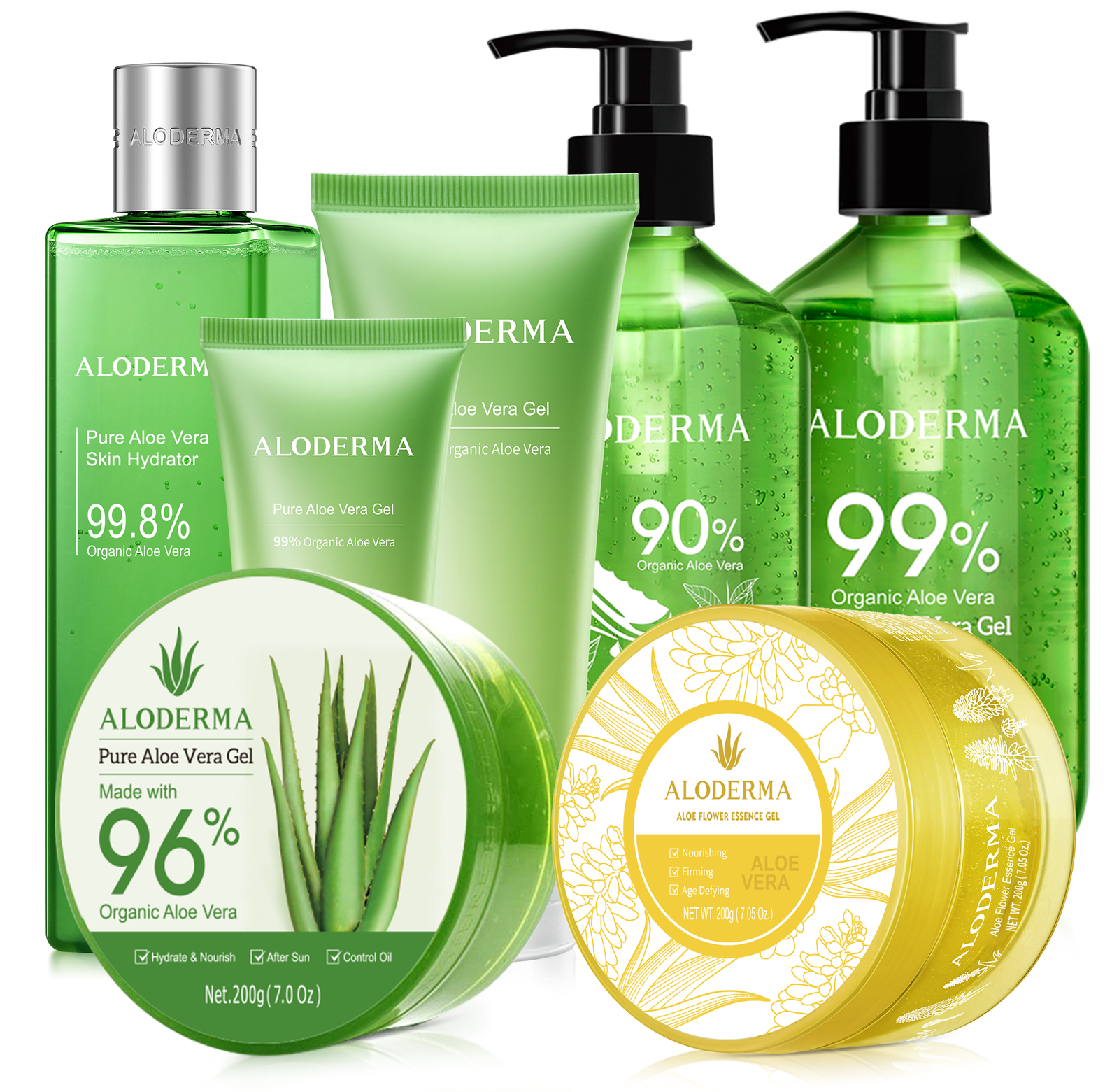
Freshness can influence that character. A company that grows its own organic aloe, controls harvesting, and processes the material onsite can make more direct decisions about the primary ingredient. ALODERMA is a fully vertically integrated aloe vera company. It grows its own organic aloe vera, processes the aloe, and manufactures onsite within 12 hours of harvest, with the stated aim of keeping the primary aloe ingredient as bioactive and effective as possible.
For your routine, read past the green label. Check the ingredient list, look for clear certification details where applicable, and review information about sourcing and processing. These details help you judge whether the gel is a fresh, minimally processed support ingredient that fits your skin, rather than treating organic aloe gel for face care as a miracle solution.
The Science Behind Aloe on Facial Skin
Aloe's cosmetic activity comes mainly from acetylated polysaccharides, including acemannan and aloverose. These large, sugar-based molecules primarily remain at the skin's surface, forming a soft moisture net that helps the surface feel comfortable and hydrated. Aloe functions as a surface-level hydrator rather than a penetrating treatment serum.
A cosmetic chemistry review reports that aloverose typically represents 5 to 20 percent of aloe vera gel's dry matter, depending on climate, processing, and storage, as detailed in this technical aloe vera cosmetics review. This range helps explain why two gels can feel different even when aloe appears prominently on both labels. Growing conditions influence the plant material, while post-harvest handling shapes the finished ingredient.
Why processing changes the experience
Fresh aloe contains a mixture of compounds rather than one isolated active. A peer-reviewed review describes aloe vera as containing 75 potentially active constituents, including vitamins, enzymes, minerals, sugars, lignin, saponins, salicylic acids, and amino acids, according to this review of aloe vera's chemical composition. That complexity gives “aloe” useful context, yet the word alone cannot describe the complete formula.
Manufacturers manage harvest timing, filtration, stabilization, storage, and packaging to preserve aloe's original qualities. The gel also needs to stay safe and pleasant on the skin, so a short ingredient list may include a thickener or pH adjuster. These supporting ingredients do not automatically make a gel less suitable. They help determine its texture, stability, and compatibility with your routine.
Formulator's lens: The word “organic” answers one question about sourcing. It does not answer every question about freshness, concentration, stability, or skin compatibility.
For facial use, aloe's realistic role is surface-level support. It provides a light, water-based layer when you want hydration without a rich finish. A cool feel or quick absorption describes the sensory experience, not deep penetration into the skin. Evaluate the full formula and how your skin responds.
What the Hydration Research Shows
A Corneometer study measured surface hydration after one application of topical aloe vera gel. The readings were higher with aloe vera gel than with deionized water at 30, 90, and 150 minutes. The findings appear in this facial skin hydration study of topical aloe.
This supports aloe's short-term humectant role. After cleansing, a thin layer may help skin feel fresher and less tight for a limited time. The result does not establish that every commercial gel will perform the same way. The finished vehicle, aloe material, concentration, stabilizers, and storage conditions can all change the experience.
The important caveat
The same study reported dehydration effects from multiple applications of the aloe materials. Applying more product, or reapplying it more often, does not guarantee greater hydration. A gel's overall effect depends on its formula, surrounding humidity, the products applied afterward, and the frequency of use.
Use the research as a guide for a measured routine:
- Use a thin layer: Cover the face lightly without leaving a heavy film.
- Layer when needed: If dryness remains, apply a moisturizer that offers stronger protection against water loss.
- Watch the response: Tightness, flaking, stinging, or lasting discomfort signals a need to adjust the routine.
- Avoid automatic reapplication: Frequent use may not improve the result.

Aloe serves as a light hydration step. Its fresh, minimally processed feel can suit a simple routine when skin remains comfortable. For lasting moisture, pair it with a product designed to reduce water loss.
Matching Aloe Gel to Sensitive, Oily, and Blemish-Prone Skin
Aloe feels different depending on what your skin already needs. The same quick-drying texture that feels liberating on an oily complexion may feel incomplete on dry skin. Instead of asking whether aloe is “for all skin types,” compare the texture and routine role with your own experience.
Sensitive skin
If your skin flushes easily or reacts to new products, simplicity usually helps. Look for a gel with a short ingredient list and avoid unnecessary fragrance, strong scent blends, and vivid colorants. Apply it to clean, slightly damp skin, but introduce it gradually rather than replacing every product at once.
Aloe may feel comfortable because it's lightweight and surface-focused. Still, a natural ingredient can cause a reaction in some people, so a patch test remains sensible. If the gel stings immediately or leaves persistent discomfort, rinse it off and stop using it.
Oily skin
Oily skin often wants water without a thick, occlusive finish. A fast-absorbing aloe gel can work as a single lightweight layer when your face feels comfortable after cleansing. If your skin becomes tight later, add a compatible moisturizer rather than repeatedly applying more gel.
The best texture is usually smooth, non-sticky, and easy to spread. A gel that pills under sunscreen or makeup may contain a combination of thickeners or may be applied too heavily.
Blemish-prone skin
For blemish-prone complexions, aloe should be viewed as a support ingredient, not a dedicated treatment. Choose a minimal formula and avoid assuming that a cooling sensation means the product is addressing every concern. Keep targeted products in their proper role, and don't pile multiple new formulas onto the face at the same time.
A good match feels boring in the best way. Your face should feel comfortable, not coated, tingly, or aggressively tight after application.
How to Read an Aloe Gel Label Like a Formulator
Turn the bottle around before you trust the front label. The ingredient list, certification details, packaging information, and brand transparency tell you more than phrases such as “pure,” “clean,” or “natural” by themselves.
Read the INCI list first
Ingredients generally appear in descending order by predominance, with some labeling rules applying to smaller amounts and special ingredients. Aloe barbadensis leaf juice identifies aloe leaf juice in the formula. Xanthan gum can create the gel texture, while citric acid can help adjust pH. Those supporting ingredients aren't automatically a problem. A stable product needs a practical structure.
Separate certification from performance
Certification can verify that a product or ingredient meets a defined standard. It doesn't guarantee that the gel will suit your face, feel elegant, remain fresh after opening, or work as a complete moisturizer.
| Claim | What it verifies | What it does not verify |
|---|---|---|
| Organic certification | Compliance with the named organic standard | That every skin type will tolerate the formula |
| Aloe juice listed first | Aloe appears prominently in the ingredient list | Exact bioactive consistency after processing |
| Natural-origin content | The stated portion comes from natural sources under the relevant calculation | That the product is fragrance-free |
| Short ingredient list | The formula is easy to inspect | That it has no preservation system |
| “Pure aloe” wording | The brand's positioning for the product | That the gel is fresh or suitable for daily facial use |
Check the brand's full ingredient page instead of relying on a product title. A practical explanation of aloe gel purity can help you compare marketing language with the actual formula.
Be cautious with undisclosed fragrance blends, synthetic dyes, and ingredient lists that make the aloe source difficult to identify. Preservatives aren't automatically undesirable, since water-rich products need protection from contamination. The question is whether the brand explains the formula clearly.
A Simple Routine and Patch-Test Plan for Daily Use
Aloe fits most easily between watery products and heavier creams. The aim is a thin, even layer that dries comfortably, not a thick coating that sits on the face or rolls beneath sunscreen.
Morning
- Cleanse gently: Remove overnight residue without leaving your skin tight.
- Use toner if it suits you: This step is optional.
- Apply aloe gel: Smooth a thin layer over the face and let it absorb.
- Add moisturizer if needed: Dry or tight-feeling skin may need a richer layer.
- Finish with SPF: Let previous layers settle so sunscreen spreads evenly.
Evening
Cleanse first, then apply toner if you use one. Follow with aloe gel and finish with moisturizer when your skin needs more lasting comfort. A gel can also work as a brief hydrating mask, but remove it if it begins to feel tight or uncomfortable.

Patch-test plan
Apply a small amount to the inner forearm, then wait 24 to 48 hours before using it broadly. Look for persistent redness, itching, swelling, burning, or other visible changes. The patch-testing guide for skincare offers a simple reference for introducing a new product carefully.
Introduce one new product at a time. That way, if your skin reacts, you'll have a much better chance of identifying the cause.
The Honest Truth About What Aloe Gel Can and Cannot Do
Aloe gel can make skin feel refreshed, lightly hydrated, and comfortable. It may be especially appealing when a heavy cream feels unpleasant, when you want a simple first layer, or when your routine needs a quieter product. Those are useful benefits, but they're narrower than the sweeping promises often attached to aloe.
Aloe usually shouldn't replace a dedicated moisturizer when your skin needs lasting softness. A moisturizer can include ingredients that provide more substantial emollience and help reduce moisture loss, while aloe mainly contributes a water-based surface layer. You may use aloe alone if your skin stays comfortable, or place a moisturizer over it when the gel leaves you feeling dry.
Keep targeted goals separate
Aloe also isn't a universal replacement for a serum or a product chosen for blemish-prone skin. Its evidence for facial anti-aging and blemish outcomes is mixed and often indirect, while thorough human facial-skin trials remain limited, as discussed in this independent overview of aloe vera for the face. That uncertainty is a reason to set modest expectations, not a reason to dismiss the ingredient.
Fragrance, alcohol, or harsh preservation choices can also make a simple botanical formula less comfortable for some users. Read the complete label and pay attention to how your face responds over several uses.
Freshness deserves equal attention. Some manufacturers use organically grown, pesticide-free plants and process aloe quickly after harvest to help preserve bioactivity, as described in this supplier information on fresh aloe processing. Ask whether a brand explains its farming, harvest, processing, and storage practices.
Putting It All Together for a Confident Choice
Choosing an organic aloe gel for face care becomes easier when you stop treating “organic” as the only decision point. A better choice combines certification, freshness, formula simplicity, skin compatibility, and sensible use.
Use this checklist before buying:
- Check freshness information: Look for an expiration date, storage guidance, and clear details about processing.
- Look for certification: Confirm which organization certified the product and what the claim refers to.
- Match the texture to your skin: Oily or blemish-prone skin may prefer a light gel, while dry skin may need cream layered over it.
- Inspect the complete ingredient list: Identify the aloe source, texture agents, pH adjusters, fragrance, and preservation system.
- Patch test first: Give your skin time to show whether the formula suits it.

ALODERMA offers fresh organic aloe gels and complementary cleansers, toners, serums, creams, and masks, with ingredient information available for shoppers comparing a simple aloe step with a fuller routine. Visit ALODERMA to review the product formulas, choose one gel that matches your skin's needs, and start with a patch test before making it part of your daily care.