

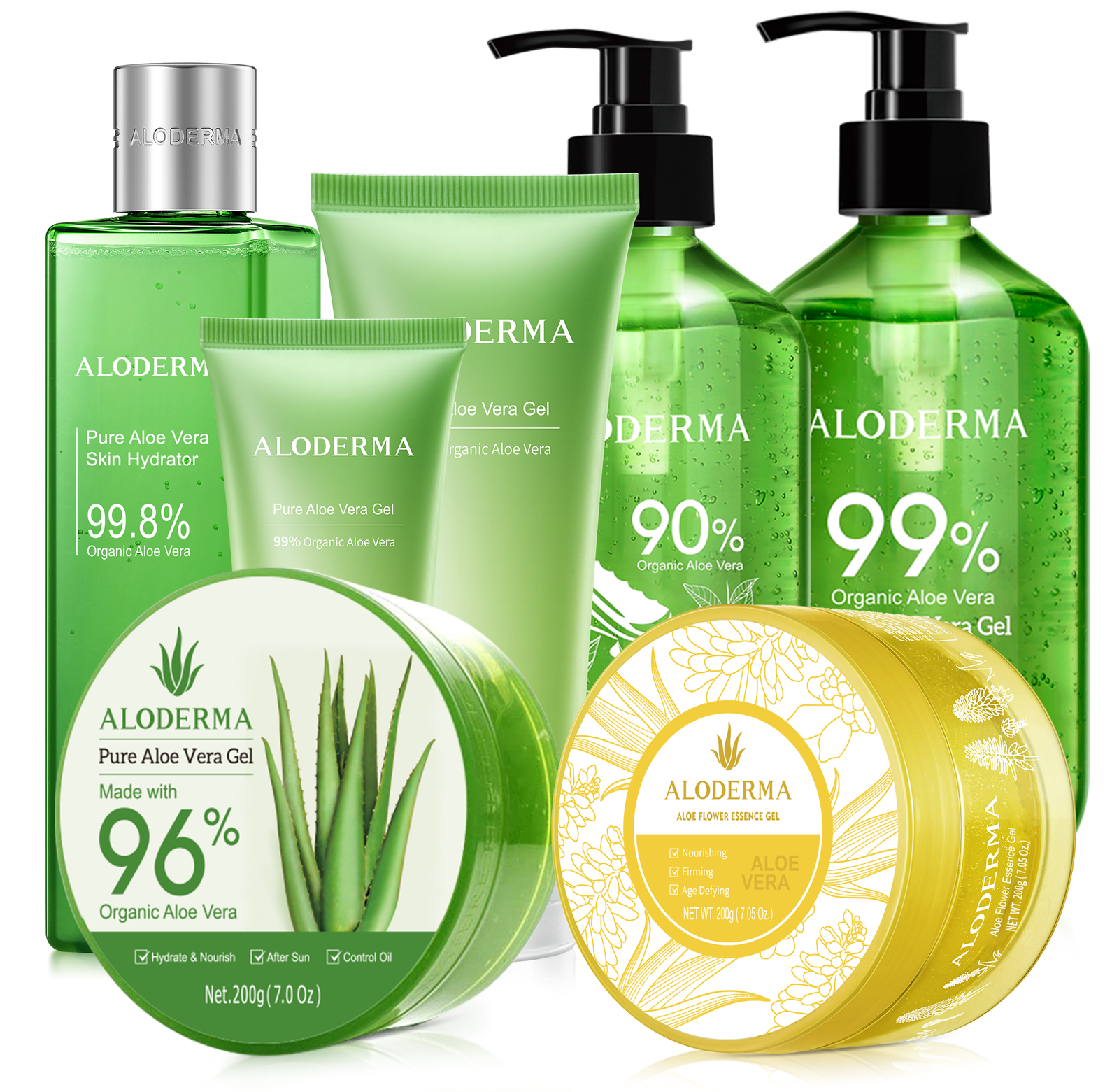


You're standing in front of three face creams, and each jar promises aloe. One lists aloe in large green letters, another says “organic,” and the third shows a fresh leaf beside a short ingredient list. The question behind the choice is simple: what does “aloe” on the label deliver to your skin?
Aloe has a long history in cosmetic formulas. An NCBI and WHO reference on aloe vera notes its use in creams, sun lotions, shaving creams, lip balms, ointments, and face packs. The modern market is expanding too, with one report estimating the global aloe vera market at USD 2.26 billion in 2026, projected to reach USD 3.15 billion by 2031, while cosmetics and personal care represented 47.65% of revenue in 2025 according to Business Research Insights.
Why So Many Shoppers Reach for Organic Aloe Vera Cream for Face
A shopper looking for an organic aloe vera cream for face often wants several things at once: a light texture, comfortable hydration, a plant-based formula, and a label that feels easy to understand. Aloe sounds reassuring because it's familiar, water-rich, and associated with a fresh, clean sensation after cleansing.
That appeal has created a crowded shelf. Two creams may both display an aloe leaf, yet one may use Aloe Barbadensis Leaf Juice as a major part of the formula while another may contain a small amount of extract in a base led by water, oils, and texture agents. The front of the package gives you the theme. The ingredient list tells you the proportion and the construction.
Why the face needs a thoughtful formula
Facial skin often feels uncomfortable when a moisturizer is too heavy, too fragranced, or too slow to absorb. Aloe can fit lightweight daily formulas because controlled human research found that formulations containing 0.10%, 0.25%, and 0.50% freeze-dried Aloe vera extract increased water content in the outermost skin layer. The 0.25% and 0.50% formulas showed a significant single-application effect, while all three concentrations improved hydration after two weeks compared with the vehicle in the published human study.
That study also found no change in transepidermal water loss, or TEWL. In plain language, aloe appeared to act mainly as a humectant, helping the outer layer hold water, rather than functioning as a heavy seal by itself. That distinction matters if you want a cream that feels fresh instead of waxy.
Organic status can also matter to shoppers who want agricultural standards, ingredient traceability, and a closer connection to how a plant was grown. But the word “organic” alone doesn't tell you whether the aloe was processed promptly or whether the finished cream contains a meaningful amount of aloe.
For readers curious about the plant itself, a practical guide on how to care for aloe vera can help explain what healthy leaves look like and why cultivation matters. For a face cream, however, the most useful quality questions begin after harvest.
The useful label question: Is aloe the formula's foundation, or is it simply the ingredient featured on the front of the jar?
How Fresh Aloe Becomes the Cream in Your Hand
Aloe quality starts before the product team chooses a preservative or an emollient. It starts with the leaf, then moves through harvesting, filleting, extraction, stabilization, formulation, and filling. Each stage affects what finally reaches your skin.
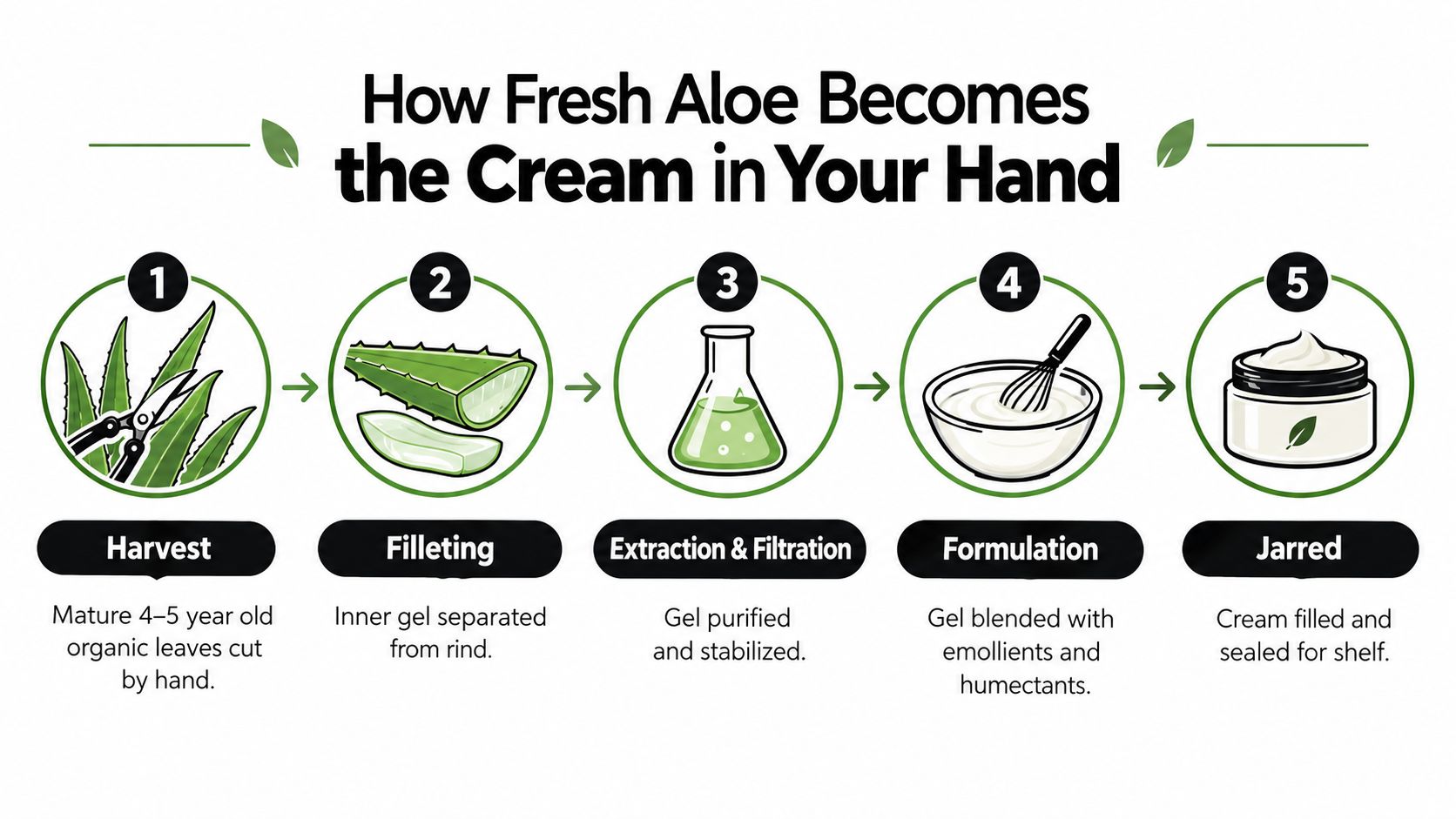
From leaf to usable ingredient
A useful way to read the journey is to ask what happens at each point:
- Harvest: The grower cuts the leaf and moves it into processing. The shorter the gap, the easier it is to preserve the character of the fresh material.
- Filleting: The inner gel is separated from the outer leaf material. This is different from grinding the whole leaf into a general slurry.
- Extraction and filtration: The gel is cleaned, filtered, and stabilized so it can become part of a safe cosmetic formula.
- Formulation: The aloe is combined with humectants, emollients, thickeners, and a preservation system to create a cream that spreads evenly.
- Filling: The finished emulsion is placed into its container and sealed for use.
A powder can still appear prominently on an ingredient list after being reconstituted with water. That doesn't automatically make a product unsuitable, but it does mean “aloe” on the front isn't enough to tell you whether the formula began with fresh juice, extract, or powder.
Why processing time deserves attention
ALODERMA states that it grows its own organic aloe, processes it on-site, and manufactures finished products within 12 hours of harvest. The brand also says its products use at least 65% fresh organic aloe vera juice, with no aloe from concentrate or powder and no added water on its fresh aloe skincare page. Those are specific claims a shopper can compare with the information supplied by other brands.
This is why freshness and processing time are useful quality signals alongside organic certification. A certification can tell you about defined production standards. A harvest-to-processing timeline tells you how the brand handles the plant after it leaves the field.
For a practical application guide, see how to use aloe vera for skin. The right technique still depends on the finished formula, but understanding the plant-to-cream path helps you judge the label before you buy.
Anatomy of a Quality Aloe Face Cream
A face cream is a small system, not a single hero ingredient. Aloe may supply water-binding compounds, while the rest of the formula controls spread, softness, comfort, stability, and how long the skin feels moisturized.
A practical ingredient list often includes these categories:
| Ingredient Category | What It Does | Examples |
|---|---|---|
| Aloe base | Supplies the plant-derived hydration component | Aloe Barbadensis Leaf Juice |
| Humectants | Help attract and hold water at the skin surface | Glycerin, butylene glycol |
| Emollients | Improve slip and leave skin feeling soft | Squalane, coco-caprylate/caprate, isoamyl laurate |
| Cream structure | Gives the product body and a consistent texture | Cetearyl alcohol, plant butters |
| Occlusive support | Helps reduce the quick escape of surface water | Shea butter, richer oils |
| Preservation system | Keeps the water-containing formula stable and usable | The named preservation ingredients on the label |
Start with the aloe position
If aloe is central to the product, look for Aloe Barbadensis Leaf Juice near the beginning of the INCI list. ALODERMA's Aloe Hydrating Cream lists Organic Aloe Barbadensis Leaf Juice at over 65% of the formula, followed by ingredients including butylene glycol, glycerin, coco-caprylate/caprate, isoamyl laurate, cetearyl alcohol, and shea butter on its Aloe Hydrating Cream product page.
That combination illustrates an important point. Aloe can provide a water-rich base, but a cream may need emollients and structural ingredients to feel comfortable and remain uniform. The controlled hydration research cited earlier also supports this formulation logic. Aloe improved outer-layer water content, but it didn't change TEWL, so a well-designed cream can pair aloe with ingredients that improve softness and moisture retention.
Don't confuse richness with quality
A thick cream isn't automatically better, and a watery gel isn't automatically purer. A formula for oily or blemish-prone skin may prioritize quick spread and a lighter finish. A formula for dry-feeling skin may use more butter or emollient support.
The ingredient list helps you see the balance. Glycerin and butylene glycol suggest humectant support. Squalane and lightweight esters suggest slip without relying only on heavy oils. Cetearyl alcohol is a fatty alcohol used for structure and feel, not the same thing as a drying alcohol.
Preservation deserves equal attention. Any formula containing water needs a system that protects it during use. Don't assume that “natural” means self-preserving. Look for a complete ingredient list and clear brand information rather than judging quality by whether a label contains a familiar botanical name.
Reading the Label Like a Formulator
Ingredient lists are written in descending order of concentration for the main part of the formula. That gives you a useful map, although it doesn't reveal every exact percentage. A product that lists water first and aloe much later is built differently from one that lists aloe juice at the top.
Four label checks worth making
1. Identify the aloe name.
“Aloe Barbadensis Leaf Juice” usually indicates juice as the declared cosmetic ingredient. “Aloe Barbadensis Leaf Extract” is a broader term and doesn't, by itself, tell you that the product contains a high level of fresh juice. “Aloe powder” or a reconstituted ingredient may have a different starting point.
2. Check what appears first.
If water is first and aloe is near the end, the product may still have a role in a routine, but aloe probably isn't the formula's main structural ingredient. If aloe juice appears near the top, the product gives you a clearer reason to believe aloe contributes substantially.
3. Look for the complete supporting system.
A short list isn't automatically superior if it leaves out the details needed to understand preservation and texture. Watch for recognizable humectants, emollients, emulsifiers, and preservation ingredients. “Natural flavor” has no clear place in a facial moisturizer, while “parfum” signals a fragrance blend that may not identify every component.
4. Separate marketing language from certification.
“Organic,” “naturally derived,” and “clean” can mean different things depending on the brand and certification program. A claim that a formula is naturally derived doesn't tell you how much aloe it contains.
Verify seals instead of trusting artwork
If a jar displays USDA Organic, ECOCERT, COSMOS, or NSF, look for the certifier's own documentation or database entry. For a plain-language overview of the standards behind one major seal, USDA organic certification requirements can provide useful background, but you should still verify the specific product or operator through the certifier.
ALODERMA's explanation of what USDA Organic means is another starting point for understanding the difference between a farming claim and a certification claim. The strongest label-reading habit is to compare the seal, the ingredient list, the product page, and the brand's processing information.
A useful shopping habit: Save a photo of the ingredient list before buying. You can compare the aloe position, fragrance information, and preservation system without relying on the front label.
Organic Aloe Vera Cream Against Other Natural Moisturizers
Aloe isn't a universal replacement for every plant-based moisturizer. The better choice depends on whether your skin needs more water-binding support, more softness, or a stronger surface seal.
| Moisturizer | Primary Mechanism | Best For Skin Type | Comedogenicity |
|---|---|---|---|
| Aloe vera | Water-binding hydration and a light, fresh feel | Sensitive, oily, combination, or blemish-prone skin | Formula-dependent |
| Shea butter | Rich emollient and occlusive support | Dry-feeling or mature skin | Formula-dependent |
| Coconut oil | Rich oil-based softening | Skin that tolerates heavier oils | Can feel congesting for some users |
| Jojoba | Lightweight emollient with a skin-similar feel | Combination skin | Generally considered low, but individual response varies |
| Hyaluronic acid | Humectant water-binding support | Dehydrated-feeling skin | Usually low, formula-dependent |
Match the texture to the experience you want
Choose an aloe-led cream if you dislike a greasy finish, prefer a water-rich layer after cleansing, or want a moisturizer that can sit comfortably beneath sunscreen. Aloe alone may not provide enough surface protection for skin that feels persistently dry, so a cream with shea butter, squalane, or another emollient may be a more balanced option.
Shea butter suits a richer routine, particularly when the face feels tight after cleansing. Jojoba can work well when the cheeks need softness but the center of the face dislikes a heavy layer. Hyaluronic acid can add humectant support, but it still needs a suitable cream or emollient layer if you want to reduce rapid moisture loss.
Use the finish as a decision tool
Think about climate and daily habits. A lightweight aloe cream may feel more comfortable in warm, humid weather or under makeup. A richer butter-based formula may feel better in cold, dry air. The ingredient list matters more than the label category because two “natural moisturizers” can have completely different oil, water, and texture profiles.
For many shoppers, the most practical choice isn't aloe versus every other ingredient. It's aloe plus the right companion ingredients. That combination can provide a fresh first feel and enough emollient support to keep the finish comfortable.
Building a Simple Daily Routine Around Your Aloe Cream
Aloe cream works best when you give it clean skin and a sensible place in the layering order. You don't need a complicated routine. You need a gentle cleanser, a moisturizer that suits your finish preference, and sunscreen in the morning.
Morning
- Cleanse gently. Use a pH-balanced face wash that removes overnight oil without leaving the face feeling stripped.
- Apply aloe cream. Press a small amount onto slightly damp skin. Humectants can work well when water is available at the surface, but don't leave the face wet enough for the cream to slide around.
- Finish with sunscreen. Moisturizer supports comfort, but it isn't sun protection. Apply your broad-spectrum sunscreen as the final morning skincare step.
Wait about 60 seconds between layers if you're using a serum or another lightweight product. The pause gives each layer time to settle and reduces pilling.
Evening
Cleanse to remove the day, then apply your aloe cream while the face is clean. If your skin feels drier at night, use a slightly more generous layer. If you want more richness during winter, place a small amount of face oil over the cream after it has settled.
A summer routine for oily or combination skin might be cleanser, aloe cream, and sunscreen. A winter routine for dry-feeling skin might be cleanser, hydrating serum if needed, aloe cream, and a face oil. The cream remains the center layer, but the amount and finishing step change with the environment.
Patch test before full-face use
Apply a small amount behind the ear or on the inner forearm and observe the area for 48 hours before applying the product broadly. This matters particularly if the formula contains essential oils, fragrance, or several botanical extracts. Stop using it if you notice persistent redness, burning, itching, or swelling.
For more routine ideas, how to build a skincare routine can help you decide which steps are necessary and which are optional. Keep the routine stable while you evaluate a new moisturizer. Changing several products at once makes it difficult to identify what your skin likes.
Who Should Be Careful With Aloe and Why
“Aloe is gentle for everyone” is too broad. Many people tolerate topical aloe well, but peer-reviewed sources document possible redness, burning, stinging, and allergic contact reactions in some users. The review in the National Library of Medicine discusses the role of compounds such as aloin and barbaloin in less-processed aloe material.
That doesn't mean a properly processed face cream will cause a problem. It means shoppers should distinguish inner-leaf, refined cosmetic formulas from raw whole-leaf material, and should pay attention to the full ingredient list rather than assuming aloe is the only possible trigger.
When to slow down
Patch testing deserves extra attention if you already know you react to plants in the Liliaceae or Compositae families, if you're using retinoids or exfoliating acids, or if your skin is currently unusually sensitive. A reaction may come from the aloe, but it may also come from added essential oils, fragrance, preservatives, or another botanical.
A simple test is enough:
- Apply the product to a small area behind the ear or on the inner forearm.
- Leave the area undisturbed and observe it for 48 hours.
- Don't continue if you develop notable burning, itching, redness, or swelling.
Processing can change tolerability. Filtration and refinement may remove some unwanted compounds found in raw leaf material, while a whole-leaf or poorly refined product may be less predictable. That is one reason a brand's explanation of its processing method matters.
Separate sensible caution from internet myths
Topical cosmetic aloe shouldn't be confused with oral whole-leaf latex products. Those are different uses, different materials, and different safety questions. A face cream also isn't sunscreen, and aloe shouldn't be treated as a complete answer for persistent breakouts or every form of facial discomfort.
The calm approach is straightforward. Check the formula, patch test, introduce one product at a time, and stop if your skin reacts. If your skin is already highly reactive, choose a fragrance-free option with a short, transparent ingredient list or ask a qualified professional for personalized guidance.
Your Final Checklist and a Path Forward
A good organic aloe vera cream for face should answer more than one question. Use this checklist when you are comparing a product page, a jar, or a shelf label. The front of the package can say “aloe” while the ingredient list tells you whether you are looking at a fresh, well-processed cream or a formula built around water, powder, and a small amount of aloe.
Aloe quality signals
- Ingredient identity: Does the list name Aloe Barbadensis Leaf Juice, or does it only mention a vague extract or powder?
- Formula position: Is aloe near the top of the list, rather than appearing as a minor addition?
- Freshness information: Does the brand explain when the aloe is processed after harvest?
- Processing detail: Does it distinguish inner-leaf gel from whole-leaf material and disclose whether the aloe comes from concentrate?
Supporting ingredients
Look for a clear balance of humectants and emollients. Glycerin and butylene glycol can support water binding, while ingredients such as squalane, lightweight esters, cetearyl alcohol, and shea butter can improve softness and cream structure.
Be cautious about demanding a “water-free” formula as a universal rule. Aloe juice is itself water-rich, and the important question is whether the product clearly explains what makes up the base. A transparent formula with recognizable ingredients is more useful than a short list that leaves out the preservation story.
Certification signals
Check whether the product names a credible certification program such as USDA Organic, COSMOS Organic, NSF, or another recognizable third-party seal. Then verify the seal rather than treating a green leaf graphic as proof.
Ask:
- Who certified this product or ingredient?
- Can I find the certification information outside the brand's own marketing page?
Safety signals
Look for clear fragrance and allergen disclosure, usage directions, and patch-test advice. If your skin tends to react easily, a fragrance-free choice may be more practical than a formula built around essential oils.
Brand transparency
A trustworthy product page should make it easy to find the country of cultivation, the processing approach, and the product's complete INCI list. A harvest-to-processing timeline is especially useful because it connects the farm story to a specific handling practice.
Does the brand publish a harvest-to-processing window, as described in the freshness section above? That question tells you more than a front label promise. It shows whether the aloe was handled quickly enough to support a fresher ingredient story, or whether the brand is relying on aloe as a marketing word.
The ingredient deck gives the next clue. Brightening Facial Cream lists 69% organic aloe vera and names squalane, niacinamide, alpha-arbutin, tocopheryl acetate, botanical extracts, and essential oils. That is the kind of listing you can read with confidence because it shows both the aloe content and the supporting actives around it.
Those details help you separate real formulation work from a vague aloe claim. The goal is not to choose the jar with the loudest aloe message. It is to choose a cream that hydrates comfortably, suits your preferred finish, includes enough supporting emollients, and explains how the aloe was handled before it reached the jar.