



You're standing in the skincare aisle, or scrolling late at night with three tabs open, and every essential oil bottle seems to promise the same thing. Natural. Clean. Pure. Botanical. Maybe even “100% pure.” The labels sound reassuring, but they don't always answer the question you care about, which is simple: What am I really buying, and will it be worth putting on my skin?
That confusion makes sense. Essential oils sit at the crossroads of beauty, wellness, and branding, which means the language around them often gets polished faster than the ingredients themselves. If you care about what goes into your routine, label literacy matters. It's the difference between buying a bottle because it sounds wholesome and choosing one because you can verify its quality.
Your Guide to Organic Certified Essential Oils
A common shopping moment goes like this. You pick up a lavender oil with a soft beige label and a leaf icon. Next to it is another bottle with darker glass, a higher price, and a certification seal you vaguely recognize. A third says “therapeutic” and “100% pure,” but gives almost no other details. All three look convincing.
That's where many people stall. They're not looking for perfection. They just want something honest, safe to use correctly, and worth the money. In skincare, that matters even more because a beautiful claim on the front of the bottle doesn't tell you how the plant was grown, what else may be in the bottle, or whether the brand can prove purity.
Your instincts are lining up with a larger shift in personal care. The organic essential oils market is projected to expand by USD 3.60 billion from 2026 to 2030, growing at a CAGR of 8.4%, while organic variants are projected to grow at a higher CAGR of 13.42% through 2031, driven by consumer demand for clean-label personal care, according to Technavio's organic essential oils market analysis.
That growth tells us something useful. More shoppers are asking sharper questions. They want fewer vague promises and more proof.
If you enjoy scent in your daily rituals, that same mindset can apply beyond skincare too. For example, someone exploring a softer home fragrance option might compare an eco-friendly lavender candle scent with the same care they'd use when choosing a facial oil. The habit is the same. Read carefully, look for transparency, and don't assume “natural” means verified.
Practical rule: The front label starts the conversation. The real quality clues are usually on the side panel, the product page, or the testing documents.
When you know what to look for, the noise gets quieter. You stop shopping by mood and start shopping by evidence.
What Organic Certified Really Means
“Organic” and “organic certified” sound close, but they aren't the same thing.
Think of it this way. Saying a plant was grown organically is like a baker telling you they used high-quality flour. It might be true. Organic certified is more like having the recipe, the kitchen inspection, and the receipt all checked by an outside party. One is a claim. The other is a verified standard.

What the certification actually covers
A real organic certification isn't just about the final drop of oil. It relates to how the plant was grown and handled across the supply chain.
- Growing standards matter because certified organic systems prohibit synthetic pesticides, chemical fertilizers, and GMOs.
- Third-party oversight matters because the verification comes from outside the brand's own marketing.
- Supply chain documentation matters because a clean product depends on more than one good sentence on a box.
That's why certification has value for ingredient-conscious shoppers. It gives structure to a word that's often used loosely.
Why this matters in skincare
Skincare buyers usually aren't just shopping for fragrance. They're looking for products that fit a routine without unnecessary extras. If an essential oil is going into a facial mist, cleansing oil, body care formula, or aromatic blend, the quality of the agricultural inputs matters. Certification helps reduce guesswork.
It also helps explain why some brands feel more trustworthy at first glance. They're not just saying “we care.” They're showing that a standard exists and that they've met it.
A good starting point is to learn what a recognized seal is meant to communicate. Aloderma's guide to USDA Organic beauty products offers a useful consumer-facing explanation of how certification supports cleaner ingredient choices in beauty.
Organic is a farming method. Certified organic is a documented, audited version of that method.
A simple filter for shopping
If you're comparing products, ask these three questions:
- Is the word organic backed by a seal or clear certification language?
- Does the brand explain sourcing and testing beyond the front label?
- Can you verify anything yourself, or are you being asked to trust the mood of the packaging?
Those questions quickly separate a soft marketing promise from a stronger standard. That makes it easier because you don't need to memorize every agricultural policy. You just need to know that verifiable quality leaves a paper trail.
Decoding Major Certification Seals
Certification seals can feel like passport stamps. You recognize that they matter, but you may not know what each one tells you. For skincare and essential oils, the most helpful approach is to treat seals as signals, not decorations.
Europe offers a good example of why recognized certifications carry weight in global beauty. Europe led the essential oils market with a 41.26% share in 2025, supported by legal recognition of natural agents and strong demand for aromatherapy, according to Mordor Intelligence's essential oils market report. In markets where standards are taken seriously, seals like ECOCERT become more than packaging. They become part of how buyers judge credibility.
What different seals tell you
Some certifications focus on agricultural standards. Others place more attention on processing rules for cosmetics. That's why one skincare product may carry one seal but not another.
Here's a practical comparison.
| Certification | Governing Body | Key Guarantees | Commonly Found On |
|---|---|---|---|
| USDA Organic | U.S. Department of Agriculture | Organic agricultural standard, third-party verification, clear rules around prohibited synthetic inputs | Raw botanical ingredients, some oils, some beauty products |
| ECOCERT | ECOCERT | Recognized standards used widely in beauty and personal care, with attention to sourcing and processing requirements | Skincare, personal care, plant-based cosmetic formulas |
| EU Organic | European Union framework | Organic agricultural standards recognized in European markets | Agricultural ingredients and some qualifying consumer goods |
Why one product may show one seal and not another
This often trips up shoppers.
An essential oil sold as a single ingredient may fit one certification pathway neatly. A finished moisturizer, serum, or cleanser may need to meet additional cosmetic processing standards, ingredient balancing requirements, or regional labeling rules. That doesn't automatically make one product better than another, but it does mean you should read the seal in context.
For readers who want a brand-side explanation of how one of these standards works in beauty, Aloderma's article on ECOCERT organic certification is a helpful reference.
What to look for on the package
Use the seal as a starting point, then keep going.
- Check the exact wording. “Made with organic ingredients” and “certified organic” don't mean the same thing.
- Look for product-specific detail. A trustworthy brand usually explains which certification applies and why.
- Notice what isn't said. If a label uses earthy design cues but avoids naming any standard, that's useful information too.
A seal should answer a question, not create three new ones.
The best certification labels reduce ambiguity. They help you understand whether the product follows a recognized standard and whether the brand is willing to be precise. Precision is a good sign in skincare. Vague language rarely improves a formula.
How to Read Beyond the Seal of Approval
Certification is important, but it isn't the whole story. A product can use comforting language and still leave out the detail that matters most when you're trying to judge quality for yourself.

Why “100% pure” can mislead shoppers
This is one of the biggest disconnects in the essential oil world. The term “100% pure” is unregulated in the U.S. and can be used on oils containing as little as 5% actual essential oil. The only reliable way to verify chemical purity and detect dilution is with batch-specific GC/MS reports, as explained in this review of organic essential oil purity and GC/MS testing.
That's a startling gap between the label and the truth behind it.
If you've ever bought a bottle that smelled oddly flat, too sweet, or strangely sharp, you've already felt why this matters. Skincare efficacy isn't only about whether an ingredient appears on the label. It's also about whether the ingredient is authentic, correctly handled, and not padded with something else.
GC/MS in plain English
GC/MS stands for Gas Chromatography-Mass Spectrometry. The name sounds technical, but the concept is simple.
This acts as a chemical fingerprint. The test breaks down what's inside the oil and helps show whether the composition matches what that plant should produce. If a brand offers a batch-specific report, it means they're not asking you to trust a generic statement. They're tying proof to the actual lot of oil.
That's far more useful than a dreamy phrase on the front label.
A quick visual overview can help if you're new to the topic.
A shopper's checklist for reading deeper
When you're on a product page or holding a bottle, look for these clues:
- Batch transparency means the brand can connect the oil to a specific production lot.
- Testing access means GC/MS information is available, not hidden behind vague customer service language.
- Clear identity means the label gives enough context to know what plant you're buying and how the brand presents it.
If a brand can explain the oil clearly, it usually respects the customer enough to be clear elsewhere too.
You don't need lab training to become a better buyer. You just need to stop treating “pure” as proof. In essential oils, proof looks like documentation.
The ALODERMA Farm to Skin Approach
You pick up two skincare products. Both sound convincing. One says it uses pure, fresh botanicals. The other explains where the plant was grown, how quickly it was processed, and what role it plays in the formula. That difference matters.
For ingredient-conscious shoppers, "farm to skin" should work like a traceable paper trail, not a mood board. A brand earns trust by showing how an ingredient moves from harvest to finished product.
Aloe vera is a good example because it is sensitive to handling. Research published by the American Journal of Agricultural and Biological Sciences reported that preserving aloe vera gel activity depends on prompt cold processing, and higher heat exposure can reduce that activity. In skincare terms, the trip from field to bottle affects what the ingredient can still offer your skin.
Why vertical integration changes the quality conversation
Brands that control growing, harvesting, processing, and manufacturing can usually give clearer answers about freshness and ingredient handling. That matters more than polished front-label language.
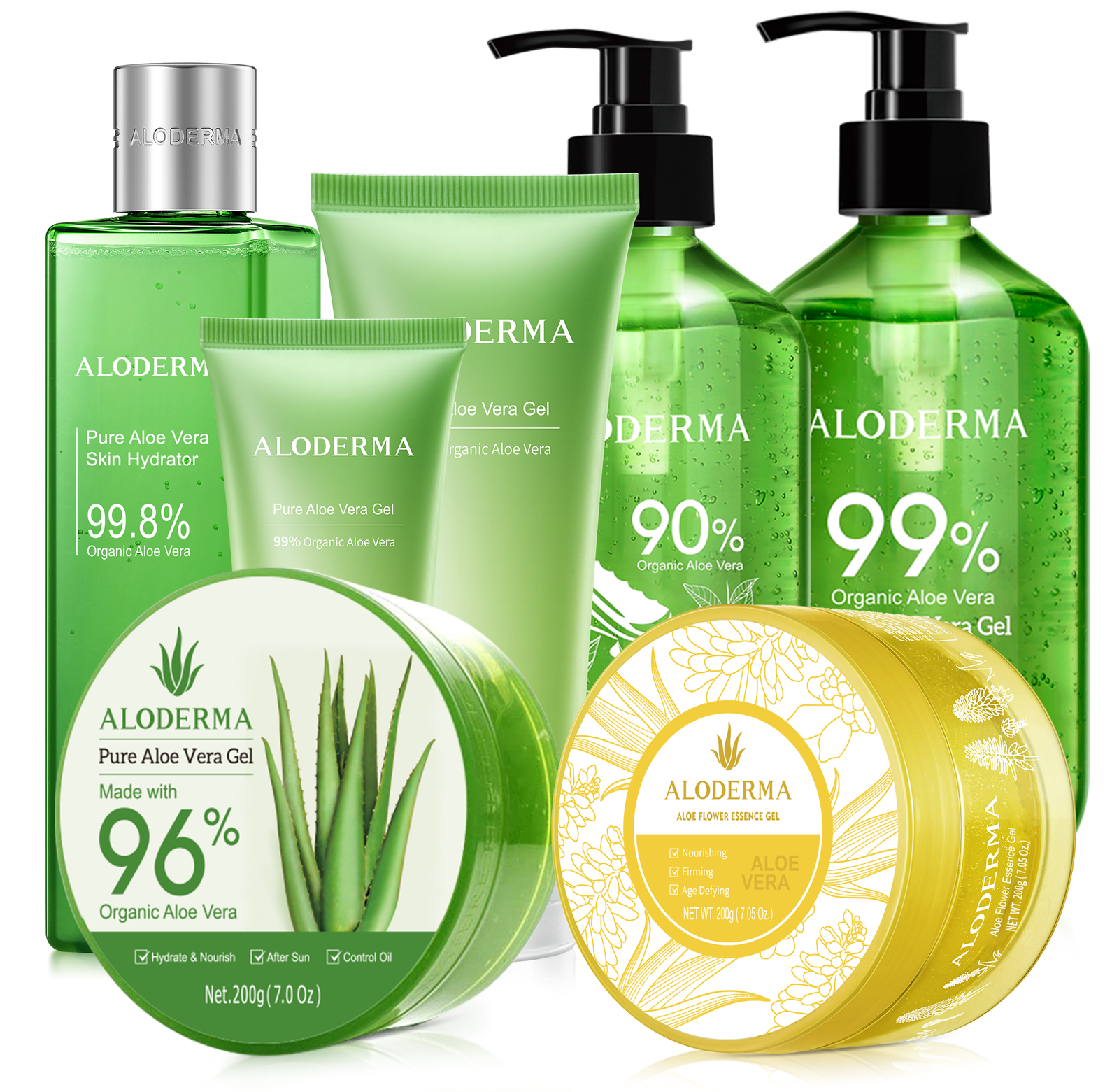
Aloderma is a fully vertically integrated company. We grow all of our own organic aloe vera, and we process our aloe vera and manufacture onsite within 12 hours of harvest to ensure the primary ingredient found in every one of our products is the most bioactive and effective aloe vera possible, as described in Aloderma's overview of its fresh aloe vera processing approach.
That turns "farm to skin" into something you can evaluate. It gives you a real process to compare against vague claims.
What this means for label-literate shoppers
A certification seal tells you one part of the story. The formula tells you the rest.
If a product highlights botanical quality, look at how the brand explains the main plant ingredient. Does it describe sourcing clearly? Does it explain why that ingredient is there, or does it rely on feel-good wording? A good formula reads like a recipe with a purpose. Every ingredient has a job.
You can search ingredients and other relative information on each one of our products and compare how formulas are built around fresh aloe as the primary ingredient. A few examples include the Pure Aloe Vera Gel, the Aloe Firming & Rejuvenating Cream. For a more focused ingredient example, Aloderma's guide to pure lavender essential oil in skincare shows how to connect a familiar essential oil claim to practical consumer questions.
This same reading habit helps outside facial skincare too. If you are comparing aromatic plant products for everyday use, even something like an organic insect repellent bundle is easier to judge when you look past the scent story and ask what the formula is built to do.
The bigger takeaway
Aloe vera and essential oils are different ingredients, but the lesson is the same. Marketing claims such as "100% pure" sound reassuring. Verified handling details are more useful.
What helps your skin is not the romance of the ingredient. It is the quality of the ingredient, the way it was processed, and the way the formula was built around it.
Good skincare starts there.
Tips for Choosing and Using Certified Oils Safely
Once you know how to spot better quality, the next step is using essential oils with care. Even high-quality oils are concentrated. Organic certification doesn't cancel out the need for good habits.
A simple buying checklist
Before you purchase, pause and scan for the details that matter most.
- Look for testing evidence. Batch-specific GC/MS reporting is one of the strongest signs that a brand takes purity seriously.
- Read the full label. Botanical name, origin, and extraction details help you judge whether the product is presented clearly.
- Choose the right context. Some oils are better suited for diffusers, some for body care, and some are best left to experienced formulators.
If you want a practical example centered on a familiar oil, Aloderma's article on pure lavender essential oil offers a useful consumer guide.
Safe use starts with dilution
Proper dilution is not optional for topical use. According to the verified guidance above, 0.5% to 2% in a carrier oil is the appropriate range for topical dilution.
That means essential oils should be treated like seasoning, not a base ingredient. You wouldn't pour a whole bottle of vanilla extract into cake batter and expect balance. Essential oils work similarly. A small amount goes a long way.

Daily habits that protect your skin and your oils
Use this as a practical routine:
- Start with a patch test on a small area when trying a new oil blend.
- Keep bottles tightly closed and away from heat and light.
- Don't assume “natural” means suitable for direct application.
- Be extra careful with citrus oils before sun exposure.
- Skip internal use unless a qualified professional has advised you directly.
For readers who like ready-made plant-based options in everyday life, something like an organic insect repellent bundle can also show how essential oils are used outside facial skincare, while still reminding you to read usage directions carefully.
Respect the concentration. That's what makes essential oils special, and what makes careful use necessary.
When you shop this way, you stop chasing hype. You choose products with clearer standards, use them more thoughtfully, and get more confidence from every bottle you bring home.
If you want skincare built around fresh, organic aloe vera with transparent ingredient details, explore ALODERMA. We're a fully vertically integrated aloe vera company. We grow all of our own organic aloe vera and process our aloe vera and manufacture onsite within 12 hours of harvest to ensure the primary ingredient in every one of our products is as bioactive and effective as possible. You can search ingredients and product information directly on the site and build a routine with formulas designed for everyday, ingredient-conscious care.