







You buy a product that says “gentle.” You use it for two nights. Then your skin feels hot, tight, or just plain unhappy. So you set it aside, buy another one with softer colors on the label and words like “clean” or “natural,” and hope this one will finally be different.
If that cycle sounds familiar, you're not doing skin care wrong. You're dealing with a shopping problem as much as a skin problem. Sensitive skin care brands often use similar language, but they don't all make products the same way, source ingredients the same way, or build formulas with the same priorities.
That matters because this isn't a tiny niche. The global sensitive skin care products market was valued at USD 44.60 billion in 2023 and is projected to reach USD 80.97 billion by 2030 (Grand View Research). A lot of people are trying to find products that feel comfortable on their skin, and a lot of brands are trying to meet that demand.
The good news is that you can shop more calmly once you know what to look for. The right brand usually isn't the one making the loudest promise. It's the one whose choices make sense all the way from ingredient sourcing to formula design to how the product feels on your face day after day.
The Frustrating Search for Comfortable Skin
Sensitive skin shopping often starts with optimism and ends with a half-used bottle in the bathroom cabinet. A cleanser feels fine in the store test. A serum sounds impressive online. A moisturizer gets glowing reviews. Then your own skin says no.
That “no” can show up in simple ways. Your cheeks feel warm after washing. A cream that seemed rich and comforting feels heavy and itchy by lunchtime. A toner makes your skin feel slick at first, then dry an hour later. Many people assume this means they need a stronger product, a more expensive one, or a fully different routine.
Usually, the better answer is simpler. You need a better filter for choosing brands.
Why brand philosophy matters
Sensitive skin care brands aren't just selling formulas. They're selling a process. That process includes how ingredients are grown, how quickly they're processed, what gets added for texture or scent, and whether the brand helps you understand what you're putting on your skin.
A brand can use lovely language on the front label and still make choices that aren't ideal for easily reactive skin. Another brand may look quieter, but use a shorter ingredient list, avoid common troublemakers, and focus on hydration and barrier support.
Practical rule: If a brand makes you work hard to understand where its ingredients come from and why they're included, shop carefully.
A better way to shop
Instead of asking, “Which brand is the most popular?” ask questions like these:
- What is this brand prioritizing. Comfort, scent, trend ingredients, or long-term skin support?
- Can I understand the formula. Not every ingredient needs to be familiar, but the overall logic should be clear.
- Does the brand show real transparency. Sourcing, certifications, and formulation choices all matter.
- Will this fit my actual trigger pattern. Dryness, fragranced products, over-cleansing, or too many actives can all create different reactions.
When you shop this way, the process feels less random. You stop chasing miracle claims and start choosing products that make sense for your skin's day-to-day needs.
What Sensitive Skin Really Means for You
Sensitive skin isn't always a fixed identity. For many people, it's a pattern. Your skin reacts faster, more strongly, or more unpredictably than you'd like when something doesn't suit it.
One of the easiest ways to understand this is to think of your skin like a brick wall. The skin cells are the bricks. The lipids and moisture that hold everything together are the mortar. When that wall is in good shape, it helps keep water in and keeps a lot of outside stressors out. When the wall gets worn down, skin can feel uncomfortable much more easily.

Your skin is communicating, not failing
If your skin stings after cleansing, feels tight after a lightweight gel, or becomes flushed after trying a trendy active, that doesn't mean your skin is “bad.” It means your skin is giving useful feedback.
That shift in mindset helps. Instead of thinking, “Why can't my skin handle anything?” you can ask, “What is my skin trying to tell me about this formula?”
A helpful place to start is learning about common causes of skin sensitivity, including overuse of products, environmental stress, and ingredient mismatch. When you understand the pattern behind your reactions, brands become easier to evaluate.
You're not alone in this
Sensitive skin is common. It's estimated that 60 to 70% of women and 50 to 60% of men report having some degree of sensitive skin (PubMed review).
That matters for two reasons. First, it explains why so many brands now speak the language of comfort, gentleness, and barrier care. Second, it reminds you that sensitivity isn't unusual or dramatic. It's a normal experience for a large number of people.
What confusion often looks like
People get stuck when they treat “sensitive” as one single category. In reality, one person may react most to fragrance. Another may struggle after over-cleansing. Someone else may do well with simple botanical hydration but poorly with formulas packed with strong actives.
A few signs that help you decode your own pattern:
- If rinsing leaves you tight, your cleanser may be too stripping.
- If products feel fine at first but uncomfortable later, look at alcohol-heavy or strongly fragranced formulas.
- If your skin gets overwhelmed by long routines, you may do better with fewer steps and slower product testing.
- If “natural” products don't always work for you, that's normal. Plant-based ingredients can be lovely, but they still need to suit your skin.
Your skin doesn't need you to win a trend. It needs you to notice patterns.
How to Decode Labels and Certifications
Front labels are useful, but they're not enough. Terms like “clean,” “hypoallergenic,” and “dermatologist tested” can point you in a helpful direction, yet they don't replace reading the ingredient list and looking for real transparency.
That's especially important because shoppers clearly care about these signals. In a U.S. survey, 59% of respondents preferred skincare made from natural or organic ingredients, and 68% of consumers want skincare with clean ingredients (Market.us skincare statistics).

What common label terms can and can't tell you
Some words are helpful. Some are incomplete. Most need context.
| Label term | What it may suggest | What to check next |
|---|---|---|
| Hypoallergenic | The brand aims to reduce the chance of reactions | Look for fragrance-free, simple formulas, and a sensible ingredient list |
| Fragrance-free | No added perfume or scent blend | Check whether essential oils or aromatic plant extracts are still present |
| Dermatologist tested | The product has been evaluated in a skin-focused setting | Look for the full formula logic, not just the phrase |
| Clean | The brand is signaling ingredient standards | Find out what the brand itself means by “clean” |
| Organic certification | Ingredients meet specific farming and processing standards | Verify which certification appears and how clearly the brand explains sourcing |
Why certifications matter more than buzzwords
Sensitive skin care brands earn more trust when they give you something verifiable. That's where recognized standards can help. Certifications tied to organic farming and ingredient processing often tell you more than broad lifestyle language ever could.
You can also explore ALODERMA's perspective on clean beauty brands and what transparency should actually look like. Whether you choose an aloe-focused brand, a pharmacy staple, or another minimalist line, the principle stays the same. Look for proof, not just pretty language.
A quick shelf test
When you pick up a product, pause and ask:
- Is the claim specific. “Fragrance-free” is more useful than “pure.”
- Can I identify the support ingredients. Hydrators and barrier-friendly ingredients should make sense together.
- Does the brand explain sourcing. Vague ingredient stories are a warning sign.
- Are certifications visible and meaningful. A real standard tells you more than a soft green label design.
The strongest trust signal is often simple. The more clearly a brand shows how ingredients are grown, processed, and formulated, the easier it is to believe the product was built with care.
Soothing Ingredients to Welcome and Irritants to Avoid
Ingredient lists can feel intimidating until you stop reading them as chemistry homework and start reading them as a story. For sensitive skin, the story you want is simple: support moisture, keep the formula gentle, and avoid ingredients that make your skin work too hard.
Many shoppers fare better with a “welcome” and “avoid” framework, rather than a giant glossary.

Ingredients that often make sensitive skin feel more comfortable
Dermatology-focused guidance for sensitive skin often recommends avoiding alcohol-based formulas, synthetic fragrances, and harsh sulfates, while highlighting ingredients like niacinamide for barrier support (Eneleo's sensitive skin guidance).
Here are the ingredients many people welcome into a gentler routine:
- Aloe vera brings lightweight hydration and a fresh, cooling feel that many people enjoy when skin feels stressed.
- Ceramides help support the skin's protective layer, especially when your skin often feels tight after cleansing.
- Hyaluronic acid helps pull in water, which can make skin feel more comfortable and less papery.
- Niacinamide is commonly used in sensitive-skin formulas because it supports a stronger, more balanced-feeling barrier.
- Oat-based ingredients are often chosen for their soft, comforting feel on easily reactive skin.
- Panthenol and Centella asiatica are also popular in routines that focus on keeping skin calm and hydrated.
Choose products that do one quiet job well. Sensitive skin usually responds better to consistency than intensity.
If you're curious about the plant itself, this guide to aloe vera identification and care gives useful background on what real aloe looks like and why plant quality matters.
A little later in your ingredient-learning journey, it also helps to review broader ingredients to avoid in skincare, especially if you've had repeated trouble with “gentle” products that still didn't feel right.
Here's a quick visual summary before you shop:
Ingredients to approach with caution
Not every skin reacts the same way, but these categories often deserve a closer look:
- Drying alcohols can make a product feel light and fast-absorbing, but they may leave skin feeling stripped later.
- Artificial fragrance is one of the biggest reasons a product smells lovely and feels less lovely.
- Harsh sulfates can make cleansers feel satisfyingly foamy while also taking too much with them.
- Heavy layering of strong actives can overwhelm skin even if each individual product looks harmless.
- Long formulas with many fragrant botanicals may sound farm-fresh and natural, yet still be too busy for reactive skin.
A practical comparison
When you compare two sensitive skin care brands, don't just count how many “good” ingredients you spot. Compare the formula mood.
One formula says: aloe, glycerin, niacinamide, ceramides, and a straightforward preservative system.
Another says: perfume, multiple essential oils, drying alcohol high on the list, and a long cast of trendy extracts.
The first formula usually tells a gentler story.
Why ALODERMA's Farm-to-Skin Model Matters
A brand earns trust when its process matches its promise. That's why farm-to-skin transparency stands out so much in the world of sensitive skin care brands.
Many brands buy ingredients from suppliers, blend them into formulas, and sell the finished product with a clean-looking label. That model isn't automatically bad. But it can leave shoppers with gaps in the story. Where did the hero ingredient come from? How fresh was it? How much control does the brand have over quality?

Why sourcing changes how a product feels
When your skin is sensitive, trust often starts before the formula even reaches the bottle. Freshness, handling, and processing all shape the final experience.
That's why a farm-to-face model is such a strong trust signal. If a brand grows its own aloe, processes it on site, and turns it into finished skin care quickly, you're not just hearing a marketing story. You're hearing how the main ingredient is handled from the field onward.
One example of vertical integration
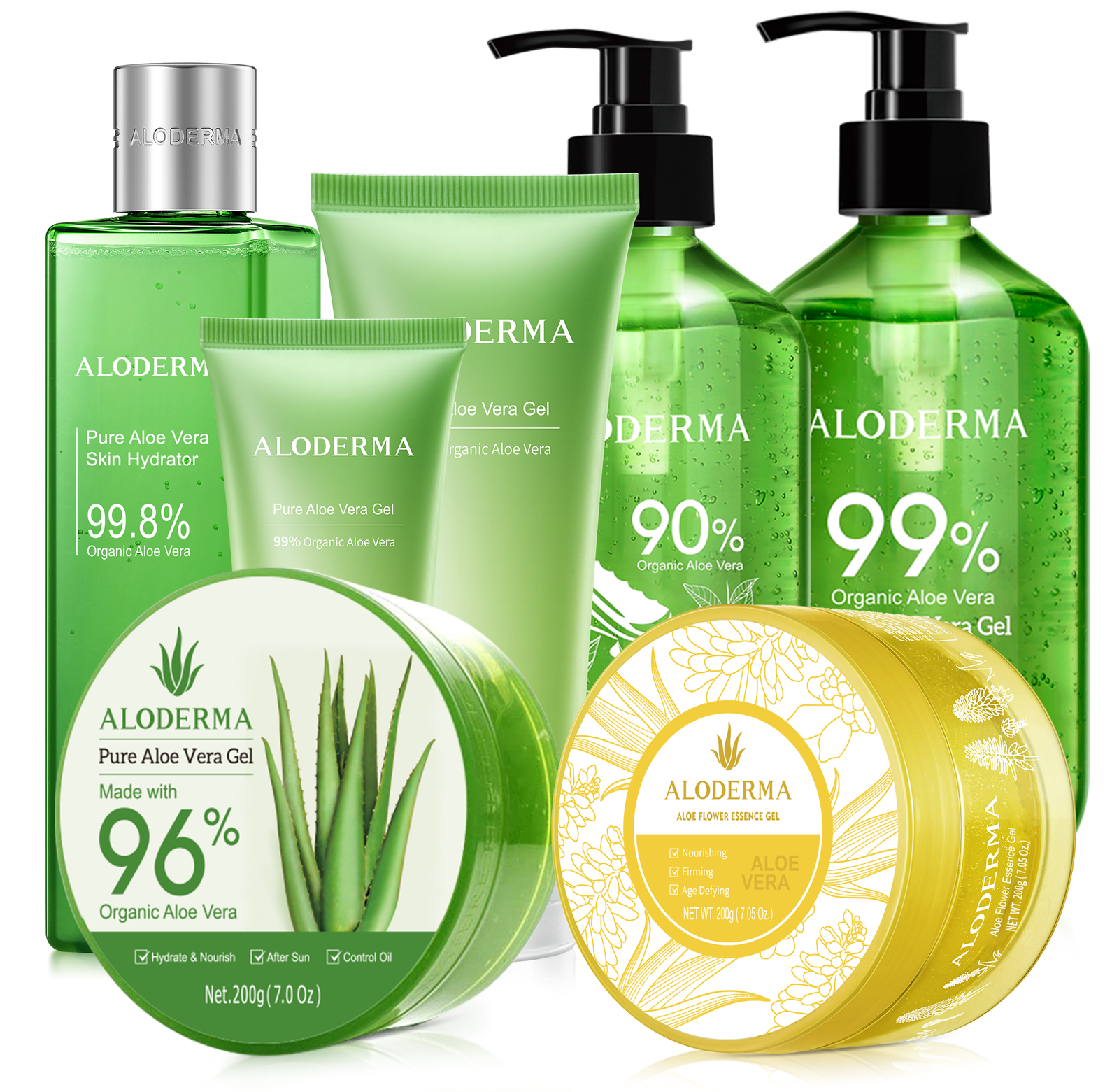
ALODERMA is a fully vertically integrated aloe vera company. It grows its own organic aloe vera, processes that aloe on site, and manufactures on site within 12 hours of harvest, so the primary ingredient found in every product is as fresh and bioactive as possible. For sensitive skin shoppers, that matters because it gives you a clearer line of sight into where the formula starts.
That model also makes it easier to understand why aloe is central rather than decorative. In products such as the Pure Aloe Vera Gel, Aloe Hydrating Toner, and Aloe Hydrating Facial Serum, the aloe story isn't an afterthought. It's the structure of the product.
Fresh ingredient sourcing won't guarantee every product works for every person. It does make the brand easier to trust, because the path from plant to bottle is clearer.
Why this matters when you're choosing a brand
If you're comparing sensitive skin care brands, farm-to-skin transparency can be more useful than a long list of lifestyle claims.
Look for signs like these:
- Direct ingredient control means the brand has tighter oversight over its hero ingredient.
- Organic certifications suggest standards around farming and processing, not just attractive packaging.
- A simple formulation philosophy usually fits sensitive skin better than a brand that chases every trend at once.
- Education alongside products helps you buy with more confidence and less guesswork.
For many readers, this is a key turning point. You stop asking only whether a product is gentle. You start asking whether the brand has built a trustworthy system behind that claim.
Building a Simple and Effective Skincare Routine
When skin is reactive, more products usually don't create more peace. A smaller routine often does. The sweet spot for many people is a basic cleanse, hydrate, and moisturize rhythm that feels easy to repeat.
That kind of routine is especially helpful if your skin is sensitive but also gets shiny, congested, or unsettled by heavy creams. You want enough hydration to feel comfortable, without piling on too many layers at once.
A three-step routine that stays manageable
Start with this:
-
Cleanse gently at night
Choose a cleanser that removes the day without leaving your face squeaky. If your skin feels tight right after washing, that cleanser may be too harsh. -
Hydrate with a lightweight layer
A toner or serum can add water-based comfort before moisturizer. This step is useful when your skin feels thirsty but doesn't enjoy thick products. -
Seal in comfort with moisturizer
Look for a formula that supports your barrier and sits well through the day or night. The right moisturizer should make your skin feel settled, not smothered.
If you want examples built around fresh aloe, products like the Aloe Oil Controlling Cleanser and Aloe Hydrating Lotion fit this kind of routine well because they keep the focus on gentle daily care.
For a broader step-by-step approach, ALODERMA also shares a practical guide on how to build a skincare routine.
How to patch test without overthinking it
Patch testing sounds technical, but it's simple.
- Pick one new product at a time so you know what your skin is responding to.
- Apply a small amount to a discreet area first, such as near the jawline or behind the ear.
- Wait and observe before using it all over your face.
- Keep the rest of your routine steady while you test.
That last step matters most. If you start three products in the same week, you lose the ability to read your skin clearly.
A simple routine is easier to trust because you can tell what's helping and what isn't.
Keep your routine boring in the best way
Sensitive skin often does well with repetition. The goal isn't to impress yourself with a shelf full of products. The goal is to wash your face, hydrate it, moisturize it, and wake up thinking about something other than your skin.
That's what a good routine gives you. Less drama, more comfort.
Begin Your Journey to Calm and Comfortable Skin
Finding the right sensitive skin care brands gets easier when you stop shopping by promise alone. Start with what your skin is telling you. Then read labels with a calmer, sharper eye. Choose brands that show their work through clear sourcing, thoughtful formulation, and real transparency. Finally, test slowly enough that you can trust the answer your skin gives back.
That approach is more grounded than chasing trends. It also feels better emotionally. You don't need a perfect routine or a hundred ingredients. You need a few products that feel steady, understandable, and kind to your skin.
Comfortable skin often comes from small, repeatable decisions. A fragrance-free cleanser instead of a dramatic one. A hydrating toner instead of another strong active. A brand with visible standards instead of vague language. A patch test before a full-face leap.
If your skin has been hard to shop for, take that as a reason to get more selective, not more discouraged. Sensitive skin can teach you to become a smarter shopper. Once you know how to choose, the process feels less like guesswork and more like self-trust.
If you want a place to start, explore ALODERMA for farm-fresh aloe-based skin care and educational resources that can help you build a simpler, more comfortable routine.