







A gentle cleanser removes dirt, oil, and makeup while keeping the skin's natural pH and barrier intact, usually near pH 5.5 with mild surfactants. Soap bars are typically much more alkaline, around pH 8.5 to 11.0, while mild syndet-style cleansers are generally formulated closer to pH 5.5 to 7.0 according to dermatology research.
But if a cleanser leaves your face squeaky, tight, or dry, does that really mean it cleaned better? That familiar post-wash sensation often reflects a formula or technique that removed more than surface grime. The better question is whether your cleanser can lift impurities while leaving the skin comfortable.
The Moment Your Skin Tells You Something
You step out of the shower, reach for your towel, and notice that your cheeks feel pulled tight. Your forehead has that squeaky finish people once associated with cleanliness, while the skin around your nose feels itchy. A few minutes later, moisturizer stings when it touches your face.
Many people read that sensation as proof that the cleanser worked. In practice, it can be a sign that the wash removed too much of the skin's surface oil and disturbed the structure that helps keep water in. A cleanser should remove dirt, makeup, sunscreen, and excess oil, but it shouldn't leave your face feeling like a freshly washed plate.
Gentleness is a formulation goal
A gentle cleanser is a product designed to clean without stripping the skin barrier. Its surfactants lift oily and water-based impurities so they can rinse away, while the finished formula stays near the skin's naturally acidic environment. Healthy skin has a surface pH around 5.5, and high-pH cleansing can increase stratum corneum swelling and alter lipid rigidity, as reviewed in dermatology literature in this PubMed-indexed research.
Think of the barrier as a carefully arranged wall. Skin cells form the structure, and lipids help fill the spaces between them. A harsh wash can loosen that arrangement, while a well-designed cleanser aims to remove daily buildup without unnecessarily disturbing it.
Practical rule: Clean skin should feel fresh and comfortable, not tight, squeaky, or persistently dry.
“Gentle” therefore isn't only a front-label promise. It describes choices made during formulation, including the surfactant system, final pH, rinse behavior, and supporting ingredients. Fragrance-free and sulfate-free labels may be useful clues, but they don't tell the whole story.
Understanding the Science of Skin pH
Your skin's surface carries a thin, slightly acidic film often called the acid mantle. A useful analogy is a lightweight raincoat. It isn't a thick shield, but it helps the surface handle daily exposure while supporting a balanced barrier environment.
Healthy skin has a natural surface pH around 5.5, while traditional soap bars are typically much more alkaline, around pH 8.5 to 11.0 as described in dermatology research. Mild syndet-style cleansers are usually formulated closer to pH 5.5 to 7.0, with some gentle products aiming closer to the skin's natural acidity.
What a high-pH wash can change
The outermost layer of skin is called the stratum corneum. It contains compact cells and lipid structures that help limit water loss. When a highly alkaline cleanser raises the skin's surface pH, several changes can occur:
- The outer cells can swell. Research reviews note that high-pH cleansing can increase stratum corneum swelling.
- Lipids can become less orderly. The same literature describes changes in lipid rigidity, which may affect how well the barrier performs.
- The skin can feel drier afterward. When the barrier is less comfortable and cohesive, water can escape more readily, contributing to tightness.
A paper cut offers an easy comparison. An alkaline product may sting because the skin's protective arrangement is already interrupted. A balanced cleanser won't guarantee that every person feels completely comfortable, but a formula designed near the acid mantle is working toward less disruption rather than adding unnecessary stress.
Clinical evidence supports this barrier-focused approach. In an open-label 30-day study of a soap-free cleansing lotion, 27 participants completed the trial, with hydration rising to 46.07 ± 8.47 and barrier function improving to 9.27 ± 1.83, with p < 0.0001 in the published study. The point isn't that every cleanser will produce identical results, but that mild cleansing can be evaluated through measurable skin outcomes.
What Makes a Cleanser Gentle
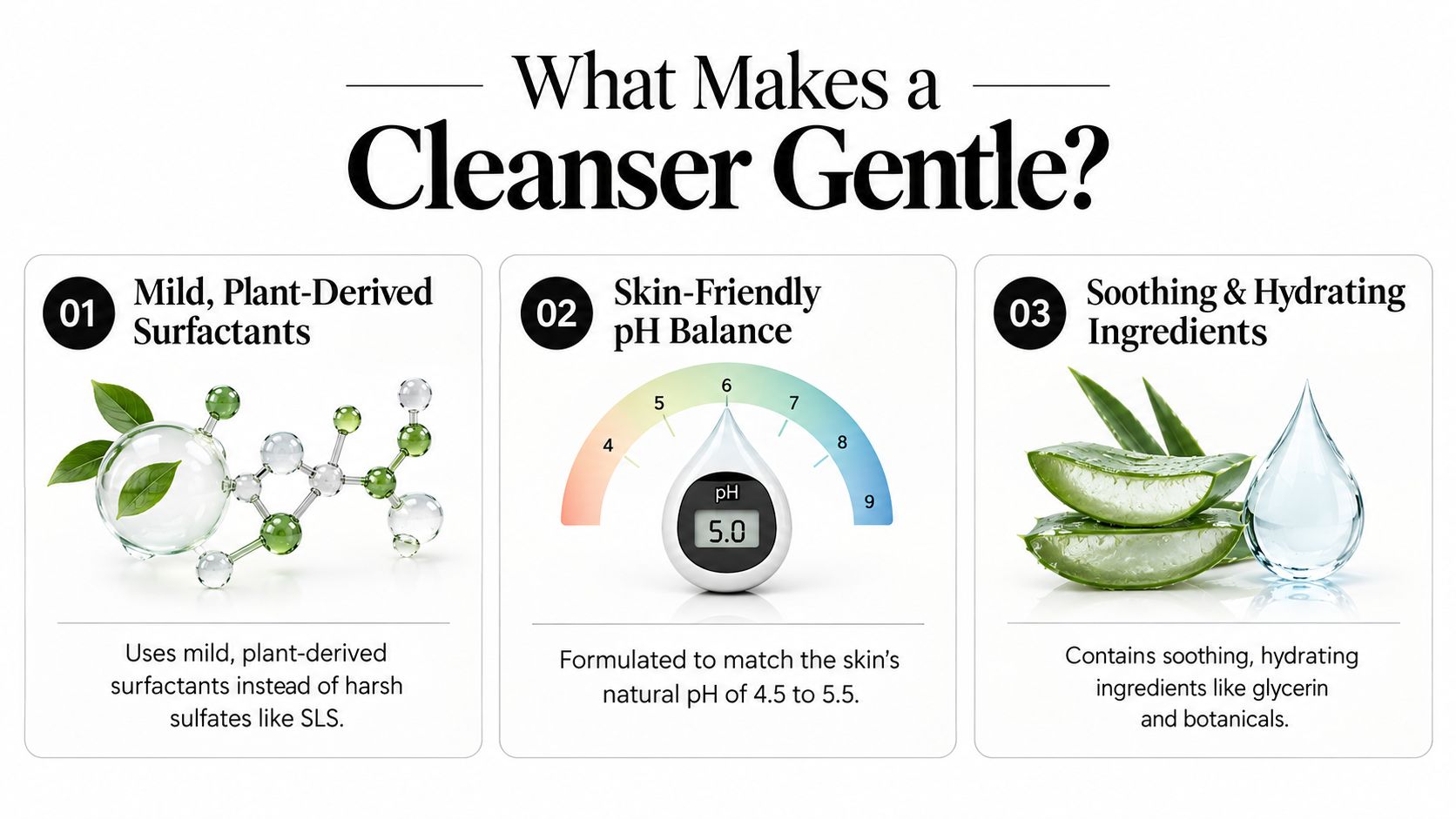
A formula's mildness comes from how several parts work together. pH matters, but it doesn't work alone. Surfactants, supporting ingredients, fragrance choices, and the way the finished product rinses all influence how your skin experiences cleansing.
The surfactant system
Surfactants are the cleansing agents that help water surround and lift oil, dirt, sunscreen, and makeup. Common mild options include coco-glucoside, decyl glucoside, lauryl glucoside, and sodium cocoyl isethionate. Some formulas also combine surfactants, allowing the product to clean effectively without relying on one aggressive detergent.
Expert review emphasizes that mildness depends on the interaction between the surfactant system and the stratum corneum at the formula's final pH. A label that only says “pH-balanced” can't predict tolerability by itself as explained in this formulation review.
The finished pH
A gentle cleanser is often kept around pH 4.5 to 5.5, while independent formulation guidance describes products below pH 6 as generally less disruptive than alkaline soap bars in this cleanser-formulation guide. Formulators test the finished product, then adjust and buffer it so the pH stays within the intended range during production.
The support around cleansing
Glycerin and panthenol can help give a cleanser a more comfortable after-feel. Aloe vera and allantoin are commonly selected for formulas aimed at a soft, soothing experience. Some people also prefer products that leave out added fragrance, essential oils, and denatured alcohol, especially when their skin reacts easily.
Scan labels for:
- Mild surfactants: Coco-glucoside, decyl glucoside, lauryl glucoside, sodium cocoyl isethionate.
- Humectants: Glycerin and panthenol.
- Botanical support: Aloe vera and other carefully selected plant extracts.
- Formula descriptors: Soap-free, syndet-style, sulfate-free, and pH-balanced.
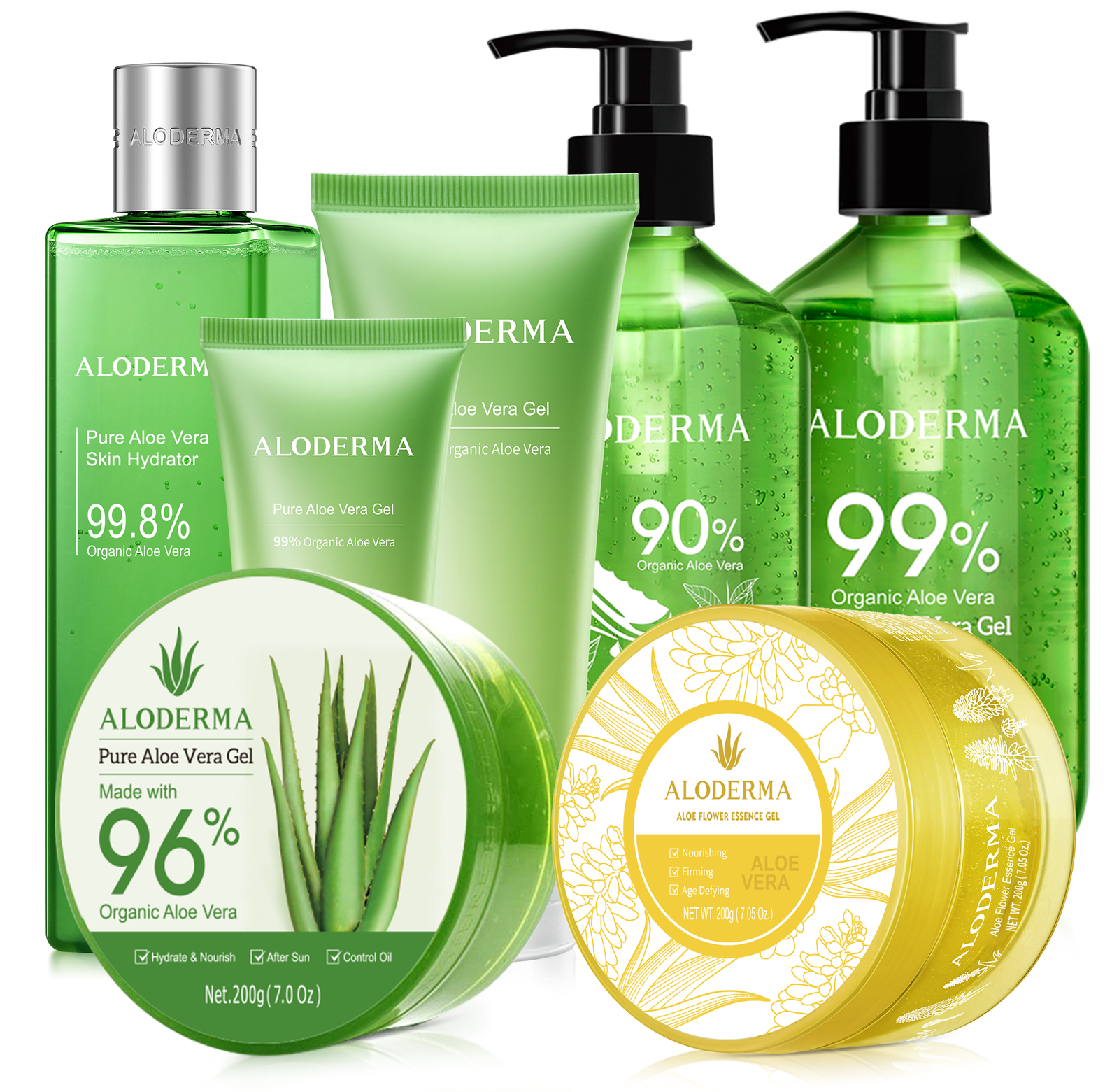
ALODERMA's cleanser range includes the Aloe Hydrating Cleanser, the Aloe Brightening Cleanser, the Aloe Oil Controlling Cleanser and the Aloe Firming & Nourishing Facial Cleanser, giving shoppers several cleanser formats to compare by finish and routine needs.
For readers who need a focused explanation of cleansing around the eyes, Bonna Beauty's cleansing guide offers useful practical context. You can also learn more about the role of sulfates in ALODERMA's sulfate-free cleanser guide.
How to Use a Gentle Cleanser
Even a thoughtfully made cleanser can feel harsh if you use very hot water, scrub vigorously, or wash for too long. Technique controls the amount of friction and exposure your skin receives, so small habits make a noticeable difference to comfort.
Morning cleansing
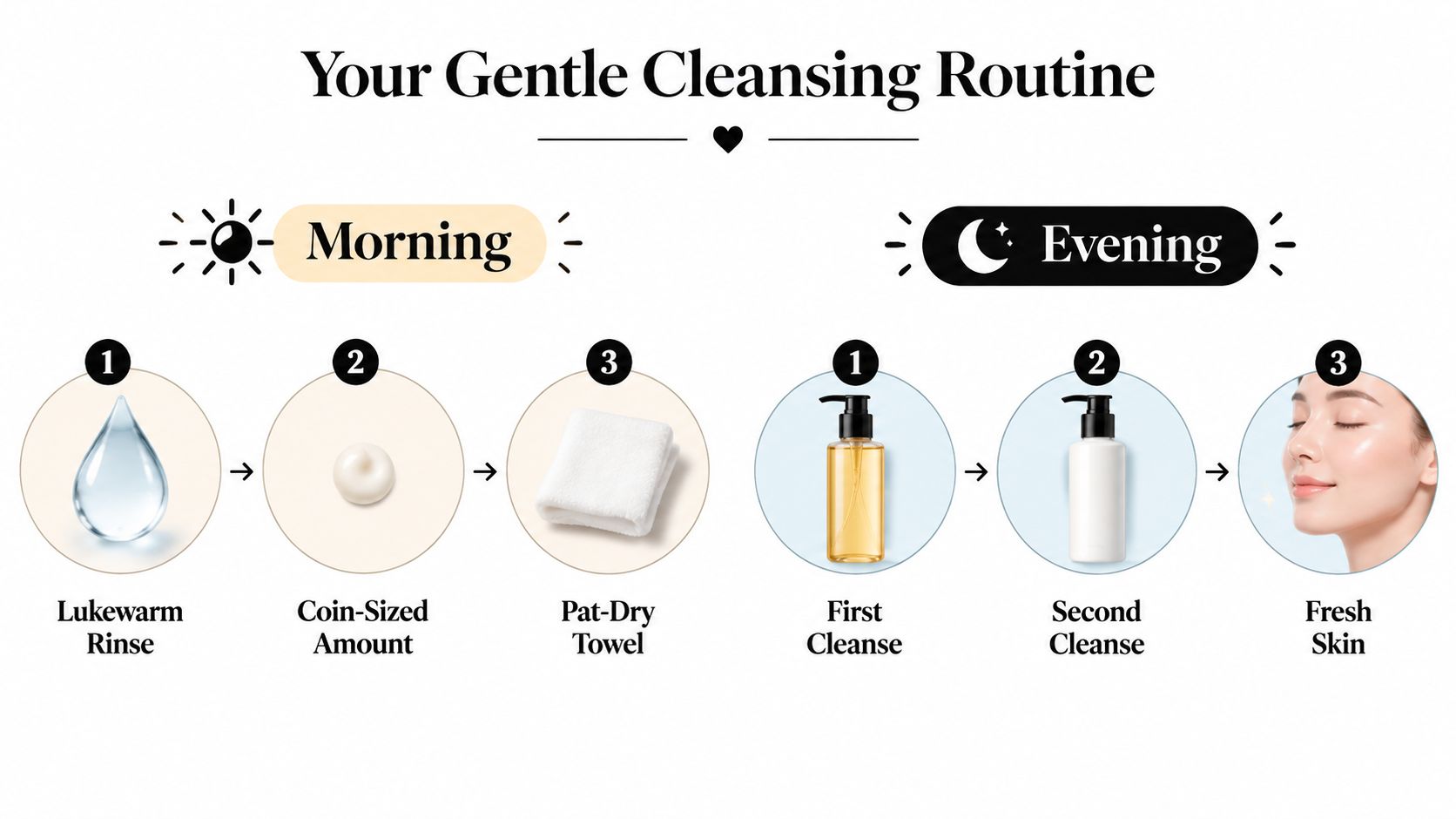
Start with lukewarm water. Apply a coin-sized amount of cleanser to damp fingertips, then spread it across the face with light circular movements. Use your fingertips instead of textured pads, brushes, or rough washcloths, since those tools can add friction that your formula doesn't need.
Massage for roughly 30 to 60 seconds, giving the product enough contact time to loosen overnight oil and residue. Rinse thoroughly, then pat your face with a soft towel. Don't rub until the skin feels completely dry. Leaving it slightly damp makes the next hydrating step easier to apply.
Evening cleansing
Sunscreen, makeup, and the day's accumulated oil may need a two-step routine. Begin with an oil or balm cleanser if you wear long-lasting makeup or water-resistant sunscreen. Follow with a water-based gentle cleanser to remove remaining residue.
The second cleanse should still be light. More pressure doesn't create a better result, and repeated scrubbing can leave the face uncomfortable. If your skin feels tight after this routine, reduce the massage pressure, shorten the contact time, or reconsider whether you need a double cleanse every evening.
A cleanser and toner serve different roles, so this guide to cleanser versus toner can help if you're unsure which step belongs where. For broader bathing ideas, you can also explore Comfort Pure's bath page, especially if you're trying to make your entire washing routine feel less abrasive.
Common Myths About Gentle Cleansers
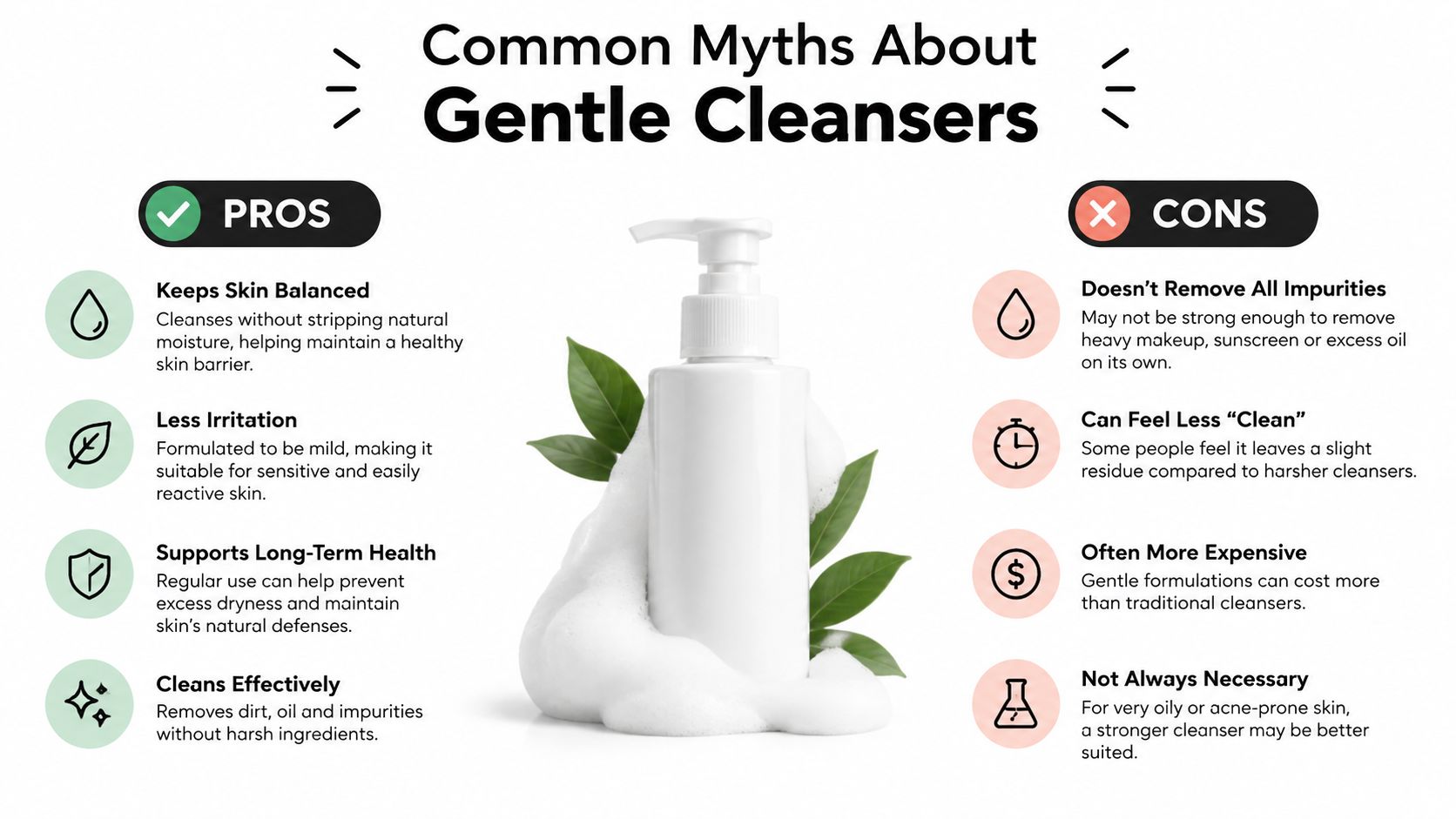
The word “gentle” sometimes makes shoppers picture a product that barely works. That assumption confuses mildness with weakness. A cleanser can be effective while reducing unnecessary stress on the skin.
Myth one, gentle formulas can't handle oil
Mild surfactants can still surround oil and help rinse it away. Coco-glucoside and related cleansing agents are selected for that purpose, and a formula can also include carefully chosen active ingredients. Recent clinical evidence describes a cleanser containing salicylic acid, gluconolactone, and niacinamide that reduced blemish symptoms and improved irritation measures after two weeks, showing that a cleanser can be both targeted and well tolerated in this published study.
Myth two, no foam means no clean
Foam is a visual and sensory effect, not a direct measurement of cleansing power. Surfactants can lift impurities through micellar action even when a formula creates little visible lather. A low-foam cream or milk cleanser can therefore remove surface buildup without producing the dramatic bubbles many people learned to associate with cleanliness.
Myth three, natural automatically means gentle
A plant-derived ingredient still needs a well-designed formula. Botanical extracts and essential oils can be unsuitable for some people, especially when fragrance is a personal trigger. Conversely, a synthetic ingredient can be selected for predictable performance and mildness.
Myth four, double cleansing is always necessary
Double cleansing is a tool, not a rule. It can make sense when makeup or sunscreen remains after a single wash, but adding extra steps to an already clean face can increase exposure and friction. Choose the shortest routine that removes what you applied.
A Real Routine for Sensitive or Blemish-Prone Skin
Consider a familiar pattern. Someone uses a strong foaming soap morning and night because their skin becomes shiny during the day. After several days, the cheeks feel dry, the nose flakes, and small blemishes appear alongside the oiliness. The person responds by washing harder, creating a cycle in which the routine itself becomes part of the discomfort.
A more balanced approach starts with a soap-free, pH-conscious cleanser and a simple schedule. Aloe vera and allantoin may suit someone looking for a soft, hydrating after-feel, while a blemish-focused formula may use selected actives without turning the entire routine into an aggressive treatment.
A simple weekly template
- Days one and two: Use a cream or low-foam cleanser in the evening. In the morning, rinse with lukewarm water if the skin feels comfortable.
- Days three and four: Continue the evening cleanse and add a gentle morning cleanse if overnight oil remains.
- Days five and six: Keep the same cleanser, then apply a hydrating toner and a lightweight serum if those products don't sting.
- Day seven: Review the signals. Look for comfort, less flaking, and a clean feel without tightness. Keep the routine stable rather than adding several new products.
Apply a non-comedogenic sunscreen in the daytime when appropriate for your routine. If makeup or water-resistant sunscreen is difficult to remove, use a first cleanse only when needed, then follow with the mild cleanser.
The ALODERMA face cleansing routine guide can help you organize the order of your steps. The larger lesson is consistency. A comfortable routine that you can repeat is more useful than a complicated routine that leaves your skin feeling raw.
Cleanser Textures and Which One Suits You
Texture changes how a cleanser spreads, rinses, and feels afterward. It doesn't determine mildness by itself, but it can help you choose a product that fits your skin's oil level, makeup habits, and tolerance for residue.
| Format | Best For Skin Type | Texture Feel | How To Use |
|---|---|---|---|
| Gel | Oily or combination | Light and slippery | Massage onto damp skin, then rinse thoroughly |
| Cream or milk | Dry or mature | Cushiony and nourishing | Apply to dry or damp skin according to the label, then remove gently |
| Micellar water | Travel or low-effort evenings | Watery and weightless | Sweep over the face with soft cotton, then rinse if the formula recommends it |
| Balm | First cleanse | Rich and melt-away | Massage over dry skin to loosen makeup and sunscreen, emulsify, then rinse |
| Foam | People who enjoy light lather | Airy and quick-rinsing | Work a small amount between wet hands, apply briefly, and rinse |
Thin gel textures often suit oilier profiles because they rinse cleanly without a rich finish. Cream and milk formulas can feel more comfortable when the face becomes tight after washing, but the right product still needs to rinse without leaving a heavy film.
Micellar water is convenient, though repeated cotton-pad swiping can create friction. Balm cleansers are usually most useful as the first step rather than the only cleanser when makeup or sunscreen is involved. Foam isn't automatically harsh either. A gentle surfactant blend can create a light lather, while a poorly chosen detergent can feel stripping even in a low-foam product.
Listen at rinse-off: If the skin feels balanced immediately and remains comfortable an hour later, the texture and formula may be a good match. If it feels coated, tight, or itchy, reconsider the product or the amount you use.
Choosing Your Next Gentle Cleanser
Use three checks before buying. First, look for a finished pH near the skin's natural acidity, often around 5.5. Second, look for mild surfactants such as decyl glucoside, coco-glucoside, or sodium cocoyl isethionate. Third, consider support ingredients such as glycerin, aloe vera, panthenol, ceramides, or allantoin.
Read the ingredient list rather than relying on one claim. Ingredients near the beginning usually make up more of the formula, although the label order alone can't tell you how mild the complete surfactant system will be. “Soap-free” generally points away from traditional alkaline soap, while “sulfate-free” tells you the formula avoids listed sulfate detergents. “Non-comedogenic” is a useful product descriptor, but individual tolerance still matters.
A practical shopping checklist
- Skin feel: Does your face feel tight after washing, or does it feel oily again quickly?
- Routine timing: Do you need a light morning wash, a richer evening cleanse, or both?
- Makeup and sunscreen: Will one rinse remove your daily products, or will you sometimes need a first cleanse?
- Water conditions: If your water is hard or leaves a film, favor a formula that rinses cleanly and assess the after-feel.
- Personal triggers: Check for fragrance, essential oils, denatured alcohol, or any ingredient you already know your skin dislikes.
For a familiar reference point while comparing labels, you can review Cetaphil Gentle Skin Cleanser 236ml from Vitamin Planet. A different formula may suit you better, so test rather than assume.
Patch test a new cleanser for 48 hours, then judge how your skin feels at rinse-off and again one hour later. If it remains comfortable, introduce it gradually instead of changing your entire routine at once.
Aloe freshness is another factor worth understanding. ALODERMA is a fully vertically integrated aloe vera company that grows its own organic aloe vera, processes the aloe vera, and manufactures onsite within 12 hours of harvest to help ensure the primary ingredient in its products remains as bioactive and effective as possible. The brand also explains that USDA Organic products can contain a limited 5% of approved non-organic substances in its organic beauty guide.
ALODERMA offers aloe-based cleansers and everyday hydration products designed for comfortable, lightweight skincare, including options for sensitive, oily, and blemish-prone routines. Visit ALODERMA to compare cleanser textures and build a simple routine around fresh organic aloe vera.