

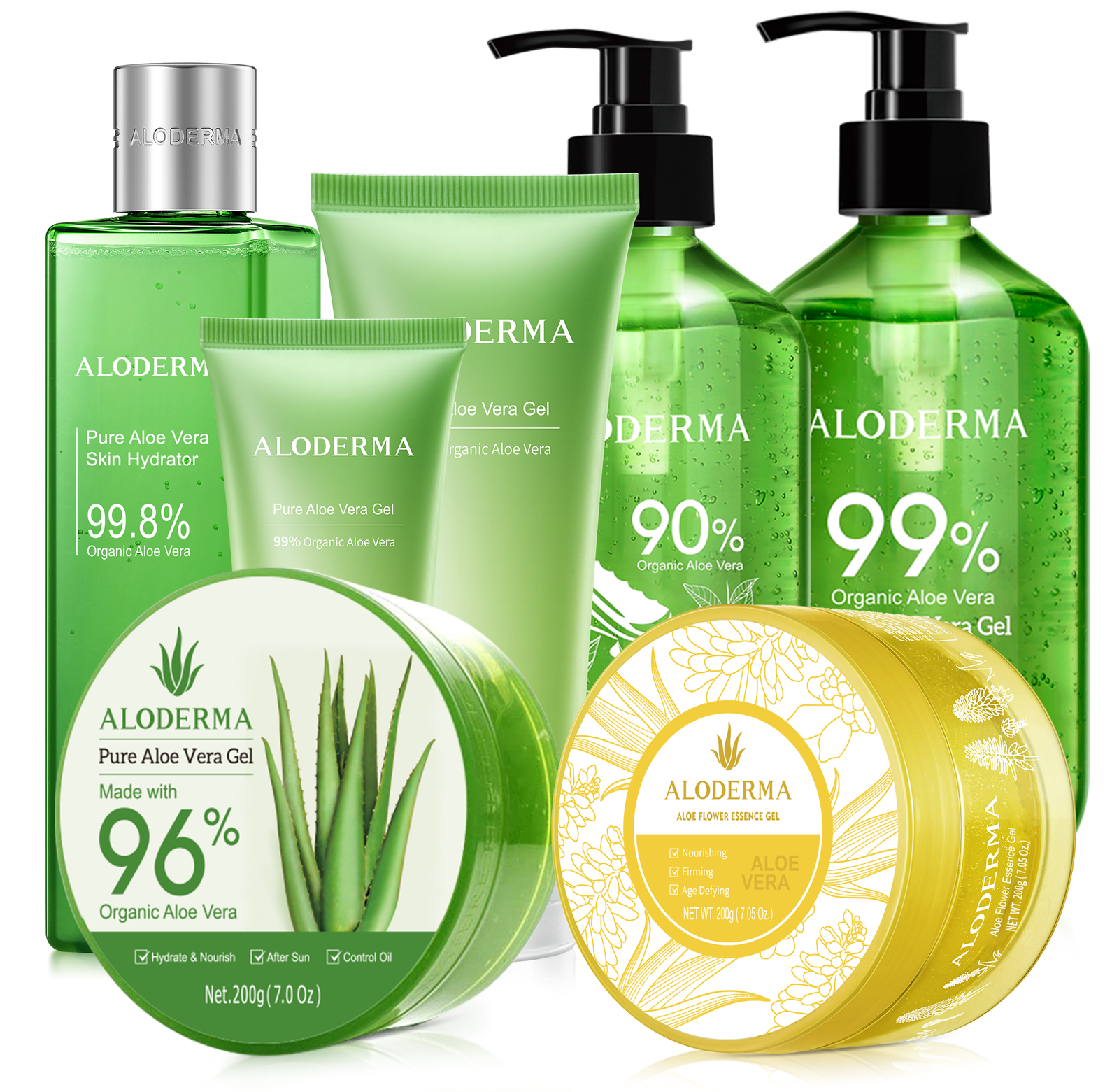


You're probably here because you've picked up a skincare bottle that says natural, organic, or clean, then turned it over and felt even less sure than before. The front label sounds comforting. The ingredient list and tiny certification logos can feel like a puzzle.
That's where ECOCERT organic certification becomes useful. It gives you something firmer than marketing language. Instead of asking a brand to promise that a formula is thoughtful, you're looking for proof that an outside certifier checked how ingredients were grown, handled, documented, and processed.
For skincare, that matters more than is commonly understood. A soothing gel or cream can look simple on a shelf, but its journey starts much earlier, in the field, the harvest, the raw material paperwork, and the manufacturing room. When you understand what ECOCERT verifies, the seal stops being a vague badge and starts feeling practical.
Decoding the Labels in the Skincare Aisle
You know the moment. You're standing in front of a shelf full of green leaves on the packaging, soft earth-toned bottles, and words like “botanical,” “pure,” and “plant-based.” Two products may look equally wholesome, but only one may have gone through real third-party review.
That's why many shoppers start looking for a recognizable certification mark instead of relying on front-label language. A seal like ECOCERT gives you a more useful question to ask: What was independently checked?
Aloe skincare is a good example. If a product highlights aloe vera, it's often assumed the ingredient is fresh, carefully handled, and grown with care. Sometimes that's true. Sometimes the label only tells part of the story. Organic certification helps separate those two situations.
Practical rule: Front-label words can attract your attention, but certification is what helps confirm the claim.
Another place people get confused is the difference between an ingredient being “natural” and a whole product being certified under a defined standard. Those aren't the same thing. A formula can contain plant ingredients and still leave you with unanswered questions about sourcing, traceability, or processing.
If you want a simple starting point, look for brands that explain their farming and manufacturing clearly, then compare that with educational resources on organic skincare products. The more transparent a company is about where its ingredients come from and how they're handled, the easier it is to understand what the certification seal means in real life.
For readers who love aloe-based skincare, this matters because freshness and sourcing change how a product feels. A bottle isn't just a formula. It's the result of decisions made long before it reached your bathroom shelf.
What Is ECOCERT and What Does It Cover
You pick up a bottle of aloe gel, turn it over, and spot the ECOCERT seal. The practical question is simple: what, exactly, has been checked?
ECOCERT is an independent certification body that verifies whether a company's product and production methods meet a defined standard. In plain language, it works like an outside inspector. A brand can say its ingredients are organic or carefully sourced, but ECOCERT reviews records, facilities, raw materials, and handling practices to confirm whether those claims hold up. Since its founding in 1991, ECOCERT has become a major organic certifier working across many countries and industries, according to ECOCERT's certification overview.

More than a skincare label
Many shoppers first notice ECOCERT on beauty products, but the organization's work extends well beyond face creams and cleansers. It certifies standards connected to food, farming, textiles, household products, and other categories where traceability and production rules matter.
That broader scope gives useful context. A seal from a certifier that also audits farms, raw materials, and processing systems carries a different kind of weight than a beauty-only marketing badge. It suggests the label comes from a system built around documentation, inspections, and repeatable rules.
Here is the simplest way to read what ECOCERT covers:
- Cosmetics: Ingredient sourcing, approved processing, manufacturing, and labeling rules
- Food and agriculture: Organic farming and handling practices
- Textiles: Standards related to organic fibers and processing
- Detergents and eco-products: Ingredient and production criteria for household goods
- Selected services and systems: Audited frameworks tied to sourcing or environmental practices
Why that matters in skincare
For skincare, the seal matters because product quality starts long before the formula reaches the mixing tank. It begins with how plants are grown, how raw materials are stored, and how carefully each step is documented.
Aloe is a good example. Two products can both list aloe on the label, yet feel different on the skin because the path from field to bottle was different. One may rely on tightly controlled sourcing and quick processing. Another may use a less transparent chain with more unknowns. Certification does not tell you everything about performance, but it does give you evidence that someone checked the process behind the claim.
That is where a farm-to-skin model makes the label easier to understand. If a company such as ALODERMA grows aloe, harvests it, and turns it into skincare within a controlled production system, the ECOCERT seal connects to something tangible. It is no longer an abstract logo. It points to records, inspections, ingredient traceability, and manufacturing practices that can affect the freshness and purity you notice when you use the product.
What ECOCERT covers in practical terms
In cosmetics, ECOCERT is looking at more than a nice ingredient story on the front of the box. The review covers where ingredients come from and how the finished product is made. That includes sourcing documents, production methods, facility checks, and ongoing audits rather than a one-time label approval.
For a shopper, this changes the meaning of the seal. It helps you read the product as a process, not just a promise.
When you see an ECOCERT seal, you are seeing evidence that the brand's claims were checked against a defined standard, with documentation behind the bottle.
That is especially useful in products like gels, lotions, toners, and creams, where the formula can include many components and several processing steps. The seal helps narrow the gap between what the packaging suggests and what the company can verify.
The ECOCERT Organic Standard for Cosmetics
A skincare label can say “organic aloe” and still leave a lot unsaid. ECOCERT's organic cosmetic standard gives that claim a clearer frame. As noted earlier, the standard sets rules for both the share of ingredients that come from natural origin and the portion of the formula that comes from certified organic agricultural sources.
That distinction matters because shoppers often read one organic ingredient as proof that the whole product is organic. Cosmetic certification works more like a recipe check. One excellent ingredient does not define the entire formula. The standard looks at the full mix, including what supports texture, preservation, and stability.
What “natural origin” actually means
Natural origin in cosmetics does not mean a product went straight from leaf to bottle with no processing. Creams, gels, and serums need ingredients that help them stay safe, stable, and pleasant to use. ECOCERT's standard examines whether those ingredients and processes fit its allowed framework.
For a shopper, three practical ideas help:
- The full formula matters: Certification is based on the product as a whole, not just the headline botanical on the front label.
- Source and processing both matter: An ingredient can begin with a plant, but it still has to be handled in ways the standard accepts.
- Natural origin is not the same as raw: A well-made cosmetic can be processed and still meet the standard.
Aloe makes this easier to understand.
An aloe gel may look simple, but product quality starts long before the bottle is filled. The aloe has to be grown, harvested, documented, and processed in a way that preserves traceability and supports the organic claim. That is why aloe is such a useful case study for the ECOCERT standard. It shows how a certification label connects farming decisions to what ends up on your skin.
A farm-to-skin company such as ALODERMA makes that connection easier to picture in real life. If the brand controls cultivation and turns fresh aloe into skincare within its own production system, the standard becomes more than paperwork. It becomes a checked process that can support freshness, consistency, and ingredient integrity.
What the standard means for the product you use
ECOCERT certification will not tell you whether you prefer a lightweight gel or a richer cream. It does tell you that the organic claim had to clear a defined set of rules.
That has practical value. If you compare two moisturizers with similar marketing, the certified one gives you more than a nice story. It gives you evidence that the formula was evaluated against a specific cosmetic standard, with attention to natural-origin content and certified organic agricultural ingredients.
A good way to read the seal is to ask two separate questions. First, is the claim credible? Second, do I enjoy using the product? ECOCERT helps with the first question. Your skin answers the second.
From Farm to Bottle The ECOCERT Audit Process
An ECOCERT seal becomes much easier to understand when you stop thinking about it as a logo and start thinking about a chain of custody. Someone has to grow the raw material, harvest it, document it, move it, process it, and turn it into a finished product without losing traceability.
That's where a farm-to-skin model makes the process concrete.
What auditors are checking
Under ECOCERT's Greenlife standard, operators must provide certificates of conformity for each batch of certified organic raw material and maintain traceability back to the original supplier, according to the ECOCERT Greenlife standard document.
For shoppers, that sounds technical. In practice, it answers a simple concern: can the company prove where the ingredient came from?
If the answer is yes, the product story gets much more believable. If the answer is vague, the front-label claims don't mean much.
Why vertical integration matters
ALODERMA provides a helpful real-world example. Aloderma is a fully vertically integrated aloe vera company. It grows all of its own organic aloe vera and processes its aloe vera and manufactures onsite within 12 hours of harvest so the primary ingredient found in every product is the most bioactive and effective aloe vera possible.
That kind of model fits naturally with traceability requirements. Instead of relying on a long chain of outside growers, brokers, repackers, and ingredient traders, a vertically integrated company can keep the path from plantation to bottle more direct and easier to verify.
Here's what that looks like from a shopper's perspective:
- In the field: The aloe source is known.
- At harvest: Timing matters because freshness matters.
- During processing: The ingredient doesn't disappear into an opaque commodity stream.
- At bottling: Records can connect the finished product back to the raw material.
For readers who want to compare formulas, you can look at ingredient-focused product pages like the Aloe Vera Gel, Aloe Hydrating Facial Cream, and Aloe Nourishing Cleanser to see how aloe-centered products are positioned and what supporting ingredients appear alongside aloe.
The process isn't only paperwork
Documentation is part of certification, but an audit also connects paperwork to reality. ECOCERT's broader audit model includes recurring on-site inspections, which means a certifier is checking whether the operation matches the records.
A short video makes that farm-to-bottle idea easier to picture:
The strongest certification stories are easy to follow with your eyes. You can see the field, the harvest, the processing, and the final product.
For skincare buyers, that's the main benefit of understanding the audit process. You don't need to memorize standards language. You just need to know whether the brand can connect the plant to the product in a way an outside certifier can verify.
ECOCERT vs USDA Organic EU Organic and COSMOS
You pick up two aloe skincare products. One carries an ECOCERT seal. Another highlights USDA Organic. A third mentions COSMOS. On the shelf, they can look like they are making the same promise. They are not.
These labels answer different questions. Some focus on how agricultural ingredients are grown. Some are built for finished cosmetic formulas. Some function as broader frameworks that approved certifiers apply. Once you separate those roles, the labels become much easier to read.
A practical comparison
| Certification | Primary Focus | Min. Organic Content (Total Product) | Key Feature for Skincare |
|---|---|---|---|
| ECOCERT Organic Cosmetic | Cosmetic formulas with natural-origin and organic requirements | Commonly around 10–20% of the total formula under the cosmetic standard, depending on product type, as noted earlier | Built for cosmetics, with rules that examine ingredient origin, processing, and formula composition |
| USDA Organic | Organic agriculture and food-style organic verification | Varies by applicable product classification | Familiar seal that signals strong organic agricultural standards |
| EU Organic | Organic agricultural production and handling within the EU framework | Depends on applicable product category and framework | More useful for understanding how farm ingredients are regulated than for judging a finished cosmetic formula |
| COSMOS | Harmonized natural and organic cosmetics framework | Varies by COSMOS level | Widely used in beauty and designed for natural and organic cosmetic standards |
A simple way to keep them straight helps. USDA Organic and EU Organic start closer to the farm. ECOCERT Organic Cosmetic and COSMOS stay closer to the finished skincare product in your hand. If your question is, “How was this plant ingredient grown?” one label may help more. If your question is, “How was this cleanser or cream formulated and verified as a cosmetic?” another label may be more useful.
That distinction matters with aloe products. A fresh aloe leaf can be organically grown, but the jar on your bathroom shelf also includes processing, preservation, texture agents, and packaging steps. Cosmetic standards help evaluate that full path. That is one reason ECOCERT often feels more concrete in skincare. It connects the farming story to the formula story.
Aloderma makes that easier to picture because its farm-to-skin model gives a real-world example of what shoppers are trying to verify. If a brand grows aloe, processes it, and turns it into finished skincare within one traceable system, a cosmetic-focused certification speaks to the part you can feel on your skin. You are not only asking whether aloe began as an organic crop. You are asking whether the final gel, cream, or cleanser still reflects careful handling and credible standards.
Where shoppers often get confused
A familiar seal can create false confidence. USDA Organic is widely recognized, and that recognition matters. But in beauty, shoppers often compare it directly with cosmetic certifications without realizing they were built for somewhat different jobs.
COSMOS can cause a second layer of confusion because many people see the name without understanding that it is a harmonized cosmetics framework used across the beauty field. ECOCERT may appear on its own in some contexts, and in others you may see ECOCERT connected with COSMOS certification language. The wording on the pack matters.
If you want a beauty-specific explanation of how one of these systems shows up on personal care products, this guide to USDA organic beauty products gives helpful context.
Why ECOCERT often feels more useful in skincare
For a skincare shopper, the best label is usually the one that answers the key purchase question with the least guesswork. Will this standard help me understand the formula, the ingredient sourcing, and the handling behind the product I am about to use?
ECOCERT often stands out here because it is closely tied to cosmetic evaluation rather than agricultural status alone. That makes it easier to connect the seal to visible product traits such as ingredient transparency, traceability, and the sense that the formula was built around carefully handled raw materials instead of generic marketing language.
Shop for the label that answers your actual question about the product.
For skincare, that question is often simple. Was this formula evaluated under a standard that fits cosmetics and gives me a believable path from plant ingredient to finished bottle? ECOCERT is often persuasive because the answer is specific enough to feel real, especially in aloe-based products where freshness and handling can shape the final product quality.
How to Be a Smart Organic Skincare Shopper
When you're shopping, the simplest move is also the most effective. Turn the product around and look for an actual certification mark before you let the front label do all the talking.
Then ask a few grounded questions:
- Is there third-party certification? A real seal means someone outside the brand reviewed standards and documentation.
- Can the brand explain ingredient sourcing clearly? If the story gets fuzzy when it reaches the farm or raw material supplier, pay attention.
- Does the product page show ingredients and product type clearly? Gels, creams, cleansers, and toners all use aloe differently.
- Is the brand transparent about handling fresh plant ingredients? This matters a lot with aloe-based skincare.
A smart shopper also separates branding from verification. “Botanical” may sound lovely. “Organic” may sound trustworthy. But a certification gives those words structure.
If you want a practical way to keep learning, browsing educational roundups of best organic skincare brands can help you compare how different companies talk about sourcing, standards, and ingredient transparency.
Understanding ECOCERT organic certification provides confidence. You don't have to guess whether a label is meaningful. You know what kinds of checks sit behind it, what kinds of ingredient standards are involved, and why traceability matters.
That's especially useful when you choose aloe skincare. Freshness, cultivation, processing, and documentation all shape the product you apply to your skin.
If you want to explore what a farm-to-skin aloe approach looks like in practice, visit ALODERMA. You can browse ingredient details, compare aloe gels, creams, cleansers, and masks, and see how organic aloe-based skincare fits into a simple daily routine.