







The most popular advice for oily skin is often the least helpful: strip away as much oil as possible. A strong cleanser, an alcohol-heavy toner, a daily scrub, and several drying treatments may create a temporarily matte finish, but that tight, squeaky feeling isn't proof that your routine is working. It may be a sign that you've removed more than surface shine.
An effective oily skin care set treats oil control and hydration as partners, not opposites. The aim isn't to eliminate sebum. It's to remove excess oil, keep pores clear, and support a comfortable skin barrier with lightweight formulas. Fresh aloe vera can play an important role in that balance because it adds a water-light layer of hydration without making the routine feel rich or greasy.
Why Most Oily Skin Routines Fail
Aggressive cleansing creates a frustrating pattern. You wash until your face feels completely bare, apply a strong toner, and enjoy a matte finish for a while. By midday, shine returns faster, so you cleanse again or add another drying product. The routine becomes a cycle of removing, tightening, and reacting instead of a steady system that keeps skin comfortable.
The problem isn't that oily skin needs no cleansing. It needs the right amount of cleansing, with a formula that removes sweat, sunscreen, and excess sebum without leaving the face tight. Independent guidance from the American Academy of Dermatology recommends cleansing oily skin up to twice daily, choosing oil-free and noncomedogenic products, and still using moisturizer. Skipping moisturizer doesn't reduce sebum, so hydration remains part of responsible oil management.
Tight skin isn't the same as balanced skin
Harsh alcohol-based toners and frequent physical scrubs can make the surface feel polished while leaving sensitive areas uncomfortable. If your cheeks sting after washing, your nose becomes flaky, or makeup catches on dry patches while your forehead still shines, your products may be fighting your skin rather than helping it.
A useful comparison is washing a greasy pan with the strongest detergent available. It may remove everything immediately, but your face isn't cookware. Skin needs a clean surface and a functioning barrier, not repeated degreasing.
Practical rule: If your face feels tight soon after cleansing, choose a gentler formula before adding another oil-control active.
A balanced set usually combines a mild cleanser, targeted ingredients used at a sensible frequency, and lightweight hydration. That approach is especially useful for people whose skin is oily but also easily unsettled. The goal is a routine you can repeat comfortably, not a dramatic one that keeps forcing you to repair the aftermath.
What an Oily Skin Care Set Actually Includes
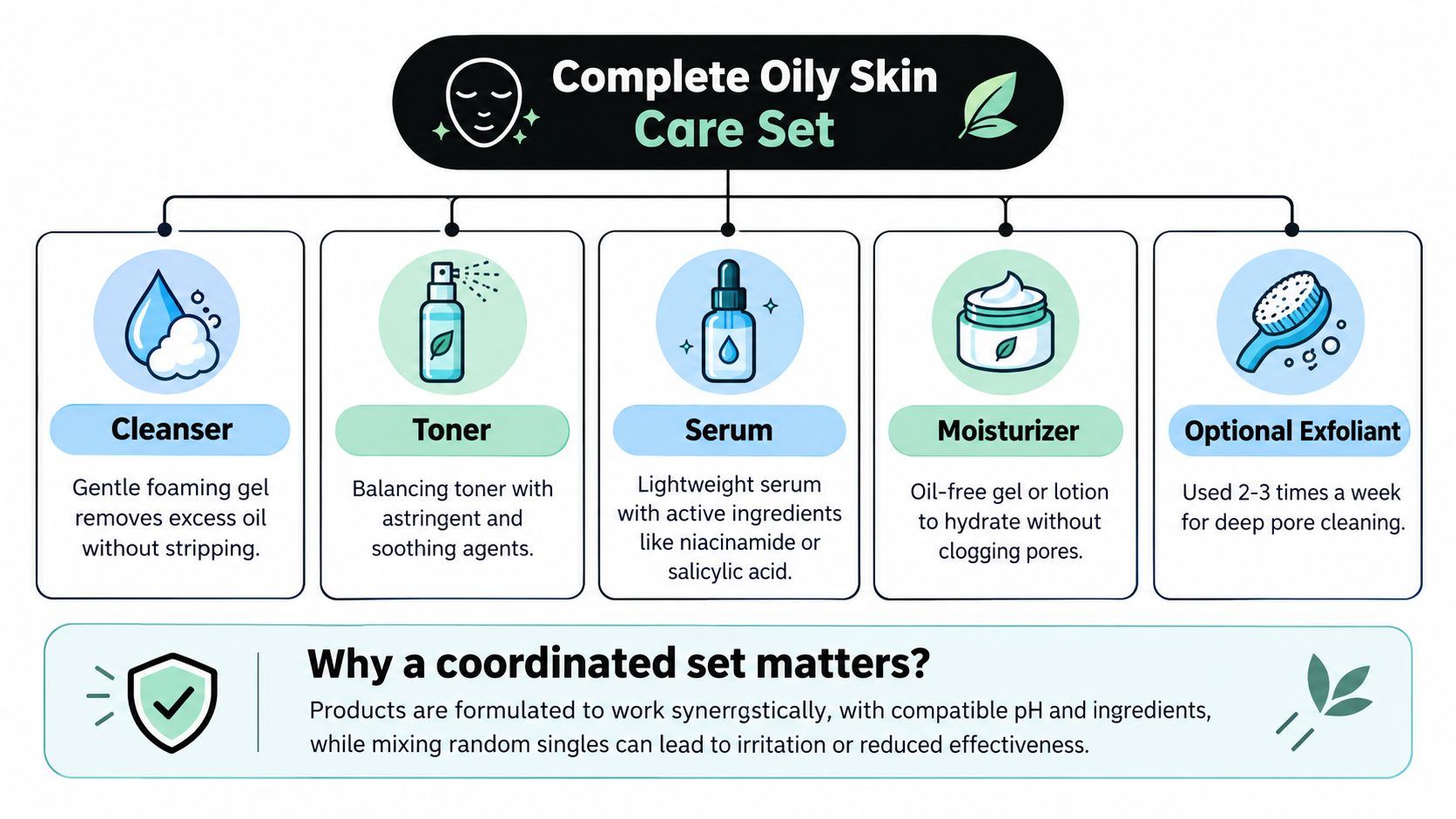
An oily skin care set is more than several products placed in the same box. It should give each step a clear job, with textures and ingredients that complement one another. A cleanser removes the excess, a treatment addresses a specific need, and a moisturizer keeps the finished result from becoming dry or uncomfortable. Adding more ingredients at random doesn't necessarily improve the outcome.
Self-reported oily skin appeared in 25.6% of the overall Chinese study population in a 2006 publication on oily skin features in Chinese women, as documented in this dermatology epidemiology reference. That makes oily skin care a broad, routine category rather than a niche concern.
The core pieces
- Cleanser: Look for a gentle gel or low-foaming formula that lifts surface oil without leaving a tight finish. Salicylic acid can be useful in a cleanser because it supports pore-clearing while the product is rinsed away.
- Toner or treatment: This step should add a specific function, such as light hydration or oil-balancing support. It shouldn't make skin feel drier.
- Serum: A lightweight serum can deliver ingredients such as niacinamide or salicylic acid without adding a heavy layer. Choose one primary purpose rather than stacking several strong formulas.
- Moisturizer: An oil-free gel or light lotion supplies hydration without a dense finish. This step helps the routine feel complete rather than stripped.
- Optional exfoliant: Use a separate exfoliating product cautiously and only when your skin tolerates it. Daily scrubbing isn't a requirement for clean-looking skin.
A coordinated set reduces the guesswork involved in combining unrelated formulas. For readers comparing a home routine with professional options, educational resources about skin care treatments in Florida can also provide useful context before deciding whether everyday products are enough for their goals.
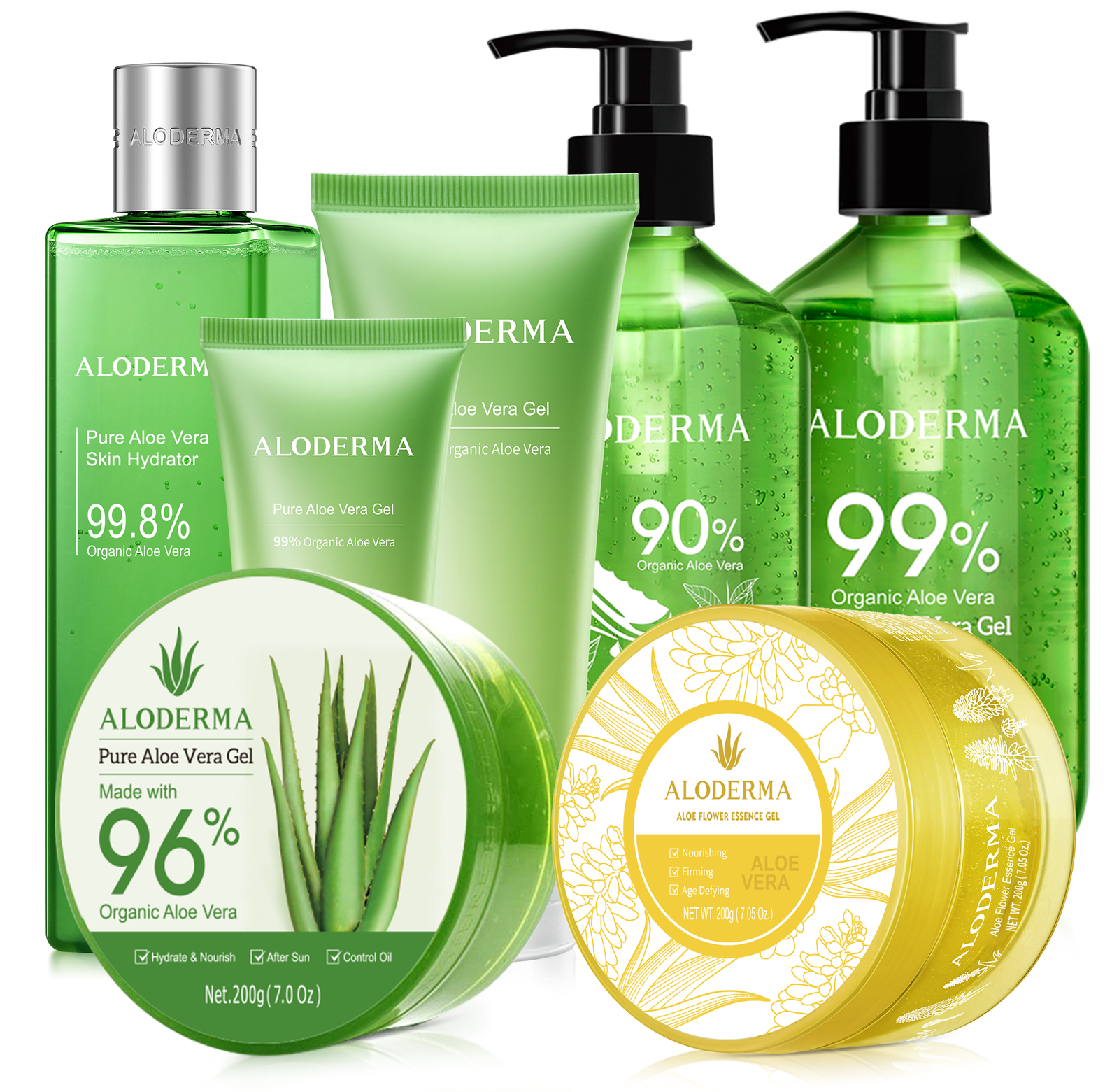
ALODERMA's relevant range includes an Aloe Oil Controlling Set, described as a four-piece collection with an oil-controlling cleanser, oil-controlling facial gel, hydrating toner, and hydrating cream. Its Aloe Hydrating Cleanser is also described as suitable for oily and sensitive skin, which makes that type of product a practical starting point for a balanced routine.
Key Ingredients to Look for and Avoid
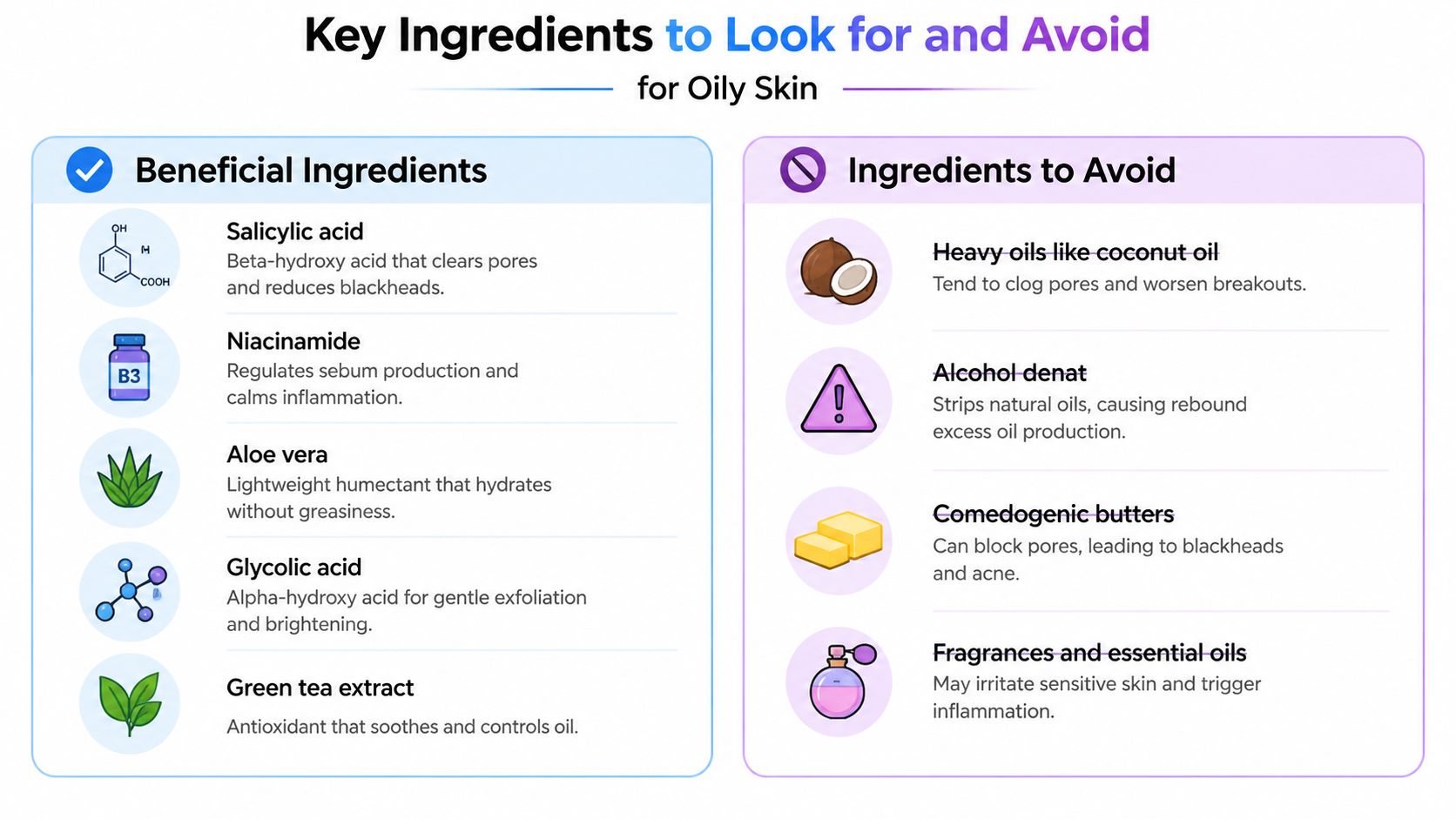
A strong oily-skin routine should leave less shine without leaving skin tight. The useful target is pore support, sebum balance, and lightweight hydration working together. Removing oil too aggressively can make blemish-prone or sensitive skin harder to manage, much like scrubbing a surface so often that its protective coating wears thin.
Salicylic acid, a beta-hydroxy acid, helps loosen buildup around pores. It can suit a cleanser or an occasional leave-on treatment, but placing it in several products may make the routine unnecessarily intense. Niacinamide is commonly used in oil-balancing formulas. Aloe vera acts as a lightweight humectant, helping skin hold water without the heavy feel of a rich cream.
Build around complementary functions
Oily-skin cleansers often combine salicylic acid and niacinamide with soothing plant ingredients such as aloe vera. These combinations show how a formula can address excess oil while remaining more comfortable than an aggressively drying cleanser. For a broader ingredient guide, see ingredients suited to oily skin.
A technically considered cleanser may also use a gentle amino acid cleansing base with salicylic acid, glucuronolactone, and ceramides. A four-week clinical study of this combination in acne-prone, oily skin reported improvements in barrier function, redness, moisture content, and texture, along with fewer acne-related indicators and no reported adverse events. Here, the practical lesson is about formulation balance: pore-focused ingredients can be paired with barrier-supporting components rather than used as a stand-alone degreasing strategy. See the clinical study on the amino acid cleanser for the published details.
Use caution with heavy or harsh choices
Heavy oils, dense butters, alcohol-based toners, and rough physical scrubs may not suit every oily or blemish-prone routine. Reactions vary, but a rich layer that feels pore-clogging or a toner that stings can obscure what is helping. A routine should function like a measured thermostat, adjusting oil and hydration without swinging from greasy to stripped.
ALODERMA's aloe-first approach centers on fresh aloe vera. The company says it grows its own organic aloe, manages cultivation through finished-product manufacturing, and processes products onsite within 12 hours of harvest. Its explanation of fresh aloe skin care provides context for evaluating freshness claims and deciding whether an aloe-focused formula fits your routine.
Your Morning and Evening Routine Step by Step
A routine works best when every product has a place and every active has breathing room. You don't need to use every treatment at every wash. Consistency comes from making the routine easy enough to follow on busy mornings and tired evenings.
Morning sequence
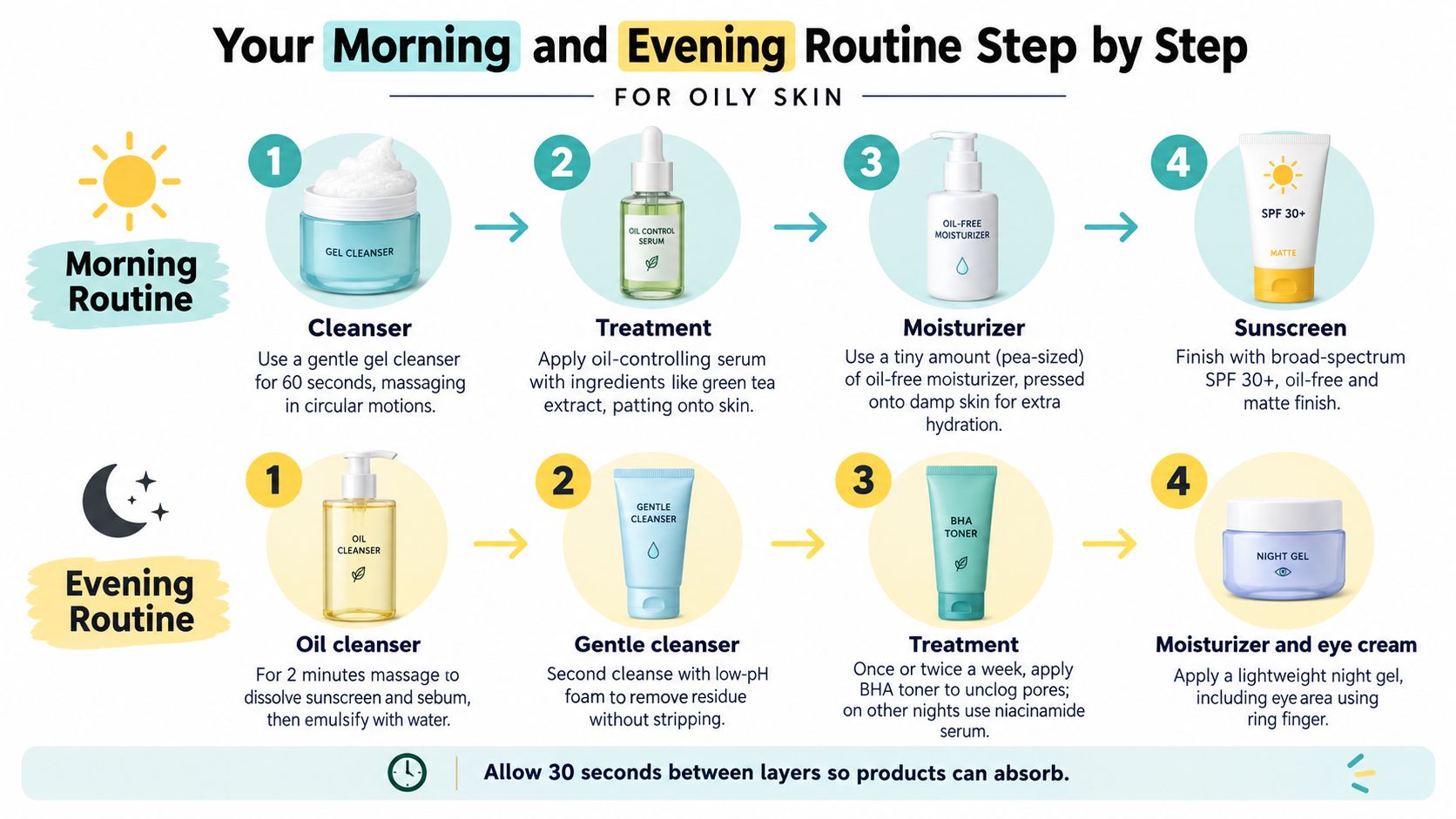
- Cleanse gently. Massage a small amount of gel cleanser over damp skin, then rinse thoroughly. Focus on the forehead, nose, and chin, but don't scrub harder on those areas.
- Apply one treatment. A niacinamide serum or another lightweight oil-balancing formula can sit comfortably under moisturizer. Press it into the skin rather than rubbing repeatedly.
- Moisturize lightly. Use a thin layer of an oil-free gel or lotion. If your skin feels comfortable after cleansing, you may need less product, but don't treat moisturizer as optional.
- Finish with sunscreen. Choose broad-spectrum sunscreen with a texture you can wear consistently. A lightweight, noncomedogenic finish can make daily use easier.
For cleanser-specific guidance, see this practical article about a face cleanser for oily skin. The key is to judge the formula by how your skin feels afterward, not by how strongly it foams.
Evening sequence
Remove sunscreen and makeup thoroughly, then cleanse with a gentle formula. If you use a leave-on salicylic acid product, start on two or three nights per week, rather than applying it every evening. On other nights, use a simpler hydrating or niacinamide step.
Recent routine guidance recommends morning niacinamide, salicylic acid only two to three nights per week, and alternating actives instead of layering them daily, as summarized in this oily skin routine guide. If your face becomes tight, itchy, or unusually sensitive, reduce active use before adding another product.
Allow each layer a short moment to settle. The exact waiting time matters less than applying thin layers and avoiding a crowded routine. This embedded routine demonstration can help you visualize the sequence:
Buying a Set Versus Individual Products
A complete set gives you a ready-made sequence. Individual products give you control. Neither option is automatically right for everyone, so the better choice depends on how much experimentation you want to manage.
A coordinated oily skin care set can reduce ingredient conflicts and make it easier to understand whether a routine suits you. You also avoid buying a cleanser that strips the skin and pairing it with a moisturizer so rich that the finish feels uncomfortable. A set can be especially practical if you're starting from scratch or replacing several products at once.
Buying singles makes sense when you already know that one product works well. For example, you might keep a familiar cleanser, add a targeted serum, and choose a different sunscreen based on texture. The trade-off is that you must evaluate each formula, sequence, and active combination yourself.
| Factor | Complete Set | Individual Products |
|---|---|---|
| Simplicity | Gives you a defined routine | Requires your own sequencing |
| Compatibility | Products are selected to work as a group | You must check for overlapping actives |
| Customization | Less flexible at the start | Easier to tailor each step |
| Testing | Several products arrive together | Easier to introduce one product at a time |
| Routine building | Useful for beginners | Useful for experienced shoppers |
How to judge the value
Read the product descriptions instead of relying only on words such as “purifying” or “deep clean.” Look for a clear cleanser, a lightweight hydration step, transparent ingredient lists, and directions that explain active frequency. A product that promises instant dryness may be less useful than one that supports a comfortable routine you can maintain.
ALODERMA's curated collections can simplify that first purchase by grouping aloe-based cleanser, toner, gel, or cream steps. Its farm-to-finished-product model also gives the brand control over aloe sourcing and processing across the range. For gift shoppers or anyone assembling a first routine, this guide to skincare gift sets for her offers another way to think about coordinated product selection.
Special Considerations for Sensitive and Acne-Prone Skin
Oily skin does not automatically need a stronger routine. Sensitive skin can produce shine while still reacting to repeated acids, rough brushes, or heavily fragranced formulas. Aggressive multi-step degreasing may remove surface oil briefly, then leave the barrier uncomfortable and make it harder to judge which product is causing the reaction.
Start with a calm baseline. If simple products feel comfortable but a strong cleanser causes tightness, stinging, or visible flushing, the routine may be irritating the skin rather than solving excess oil. Add one new product at a time, patch-test a small area, and wait long enough to observe the response before introducing another active.
A gentler response to blemishes
An oily T-zone with dry-feeling cheeks needs different handling across the face. Begin with a mild cleanser, a lightweight aloe-based hydrator, and a noncomedogenic moisturizer. Add salicylic acid gradually, while ceramides and other barrier-supportive ingredients help maintain comfort. Aloe-first sets can work like a softer buffer between cleansing and treatment, giving blemish-prone skin hydration without making every step feel heavy.
As noted earlier, a clinical study examined an amino acid cleanser with salicylic acid, glucuronolactone, and ceramides for acne-prone, oily skin. Its findings support considering both blemish care and barrier comfort when choosing a cleanser, although individual results vary.
A practical routine should feel more like adjusting a thermostat than flipping a switch. If redness or stinging appears, pause the newest active and return to the gentler baseline. This makes it easier to identify the trigger and prevents oil control from taking priority over skin comfort.
Professional guidance can help compare options if home care is not meeting your needs, including a Georgia Plastic acne peel treatment. For daily products, check ingredient transparency and choose mild textures. ALODERMA describes its formulas as naturally derived and highlights ECOCERT and USDA certifications, which may matter to shoppers who consider sourcing and certification alongside how a product feels.
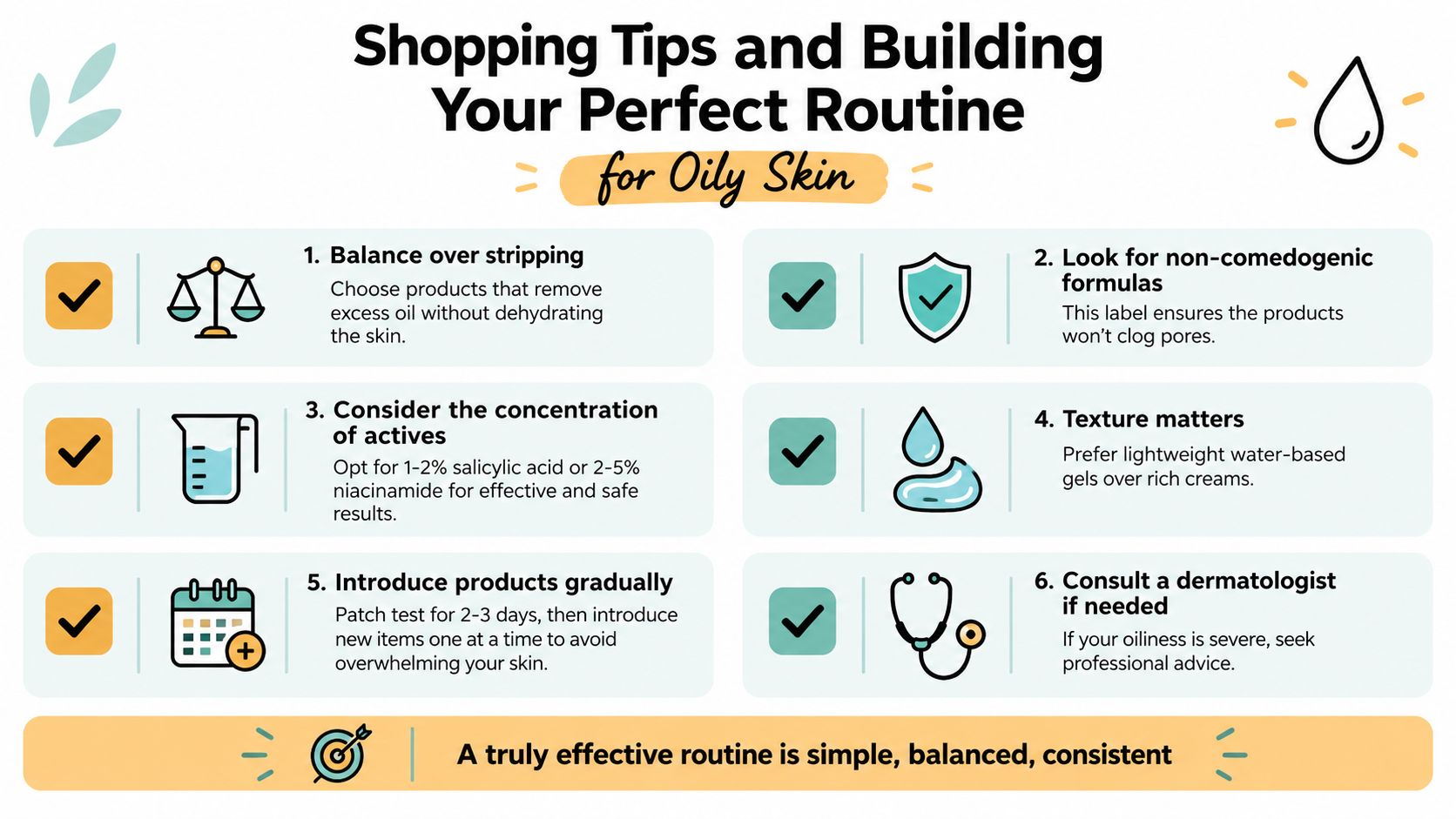
Shopping Tips and Building Your Perfect Routine
The best oily skin care set isn't the one with the most steps. It's the one that removes excess oil without leaving your face uncomfortable, uses actives at a manageable frequency, and makes hydration easy to maintain.
Use this checklist before buying:
- Choose balance over stripping: Look for a cleanser that leaves skin clean and comfortable, not tight.
- Check the finish: Favor lightweight gels and lotions if rich creams feel heavy on your skin.
- Review the ingredient list: Salicylic acid, niacinamide, aloe vera, ceramides, and gentle humectants can support different parts of the routine.
- Avoid unnecessary overlap: Don't buy several leave-on exfoliants because each one promises clearer-looking pores.
- Confirm freshness information: A brand should explain how it sources and processes key botanical ingredients.
- Plan for consistency: A short routine that fits your morning and evening habits is easier to maintain than a complicated one.
ALODERMA states that it is a fully vertically integrated aloe company. It grows its own organic aloe vera, manages cultivation through finished-product manufacturing, and processes and manufactures onsite within 12 hours of harvest to preserve freshness and active components. That farm-to-skin control is relevant when fresh aloe is a central part of an oily-skin routine, because the ingredient's role isn't limited to marketing language. You can also read about how to stick with self-care for practical ideas that make repeatable routines easier.
Start with a coordinated set, use each product as directed, and change only one element when you need to customize. Pay attention to comfort, shine patterns, and how your skin behaves over time rather than chasing an instantly dry finish.
ALODERMA offers aloe-first cleansers, toners, gels, creams, and curated sets designed for lightweight daily care, including options relevant to oily and sensitive skin. Visit ALODERMA to explore the Aloe Oil Controlling Set and build a balanced routine around fresh aloe vera.