





You know that moment in the shower when the bottle finally leaves the caddy, and you turn it around because your skin has been acting up for weeks? The front says organic, but your body is still the one deciding whether that wash feels clean, tight, itchy, or calm by noon. That's why the question isn't whether a bottle sounds natural, it's whether the formula respects your skin barrier, rinses cleanly, and uses ingredients your skin can live with every day.
For shoppers who've cycled through “gentle” washes and still end up uncomfortable, organic shower gel can be a useful category, but only if you read past the marketing. The label matters, yet the surfactant system, fragrance policy, freshness of plant ingredients, and certification standard matter just as much. A well-made formula can feel light, soft, and easy to rinse, while a sloppy one can leave you guessing why a supposedly clean product still feels off.
The Morning You Actually Read the Label
The shower is already steamy, and the bottle is already slick in your hand when you finally read the back label instead of the front. You've tried three body washes in six months, and each one promised a softer, cleaner feel than the last. By lunch, your skin still feels tight, and you're done trusting copy like “pure,” “botanical,” or “for sensitive skin” without checking what's inside.
That's the point where organic shower gel stops being a buzzword and starts being a product decision. You're not shopping for a label mood, you're shopping for a wash that clears dirt without leaving your skin feeling stripped. For many people, especially those with reactive, oily, or blemish-prone skin, the best bottle is the one that feels boring in the best way, predictable, comfortable, and easy to use daily.
What changes the buying decision
A front label can hint at values, but the back label tells you whether the formula is built for real-life use. The most useful questions are simple, and they're the same questions I'd ask if I were standing in the aisle with a sensitive-skin client.
Practical rule: if a body wash makes you hunt for the word “organic” but hides fragrance details and surfactant choices, keep walking.
Freshness also matters more than people think. Botanical ingredients can look beautiful on a package and still be poorly supported by the rest of the formula, which is why this guide keeps coming back to certification, surfactant blend, fragrance transparency, and aloe freshness. If you want a body wash that fits into the rest of a careful routine, you need a framework that works on any shelf, not just one brand story.
What an Organic Shower Gel Actually Is

An organic shower gel is a liquid body cleanser made with plant-based ingredients that have been grown, handled, and verified under organic standards. The word organic doesn't mean one single thing across every market. It usually means the formula, or part of it, has been checked against a specific certification system rather than described as “natural.”
The seals shoppers are most likely to see
In the U.S., USDA Organic is the name many shoppers recognize first, while NSF/ANSI 305 is used for personal-care products with organic content. In Europe, ECOCERT and COSMOS are common reference points for organic and natural cosmetics. Green Seal's GS-44 standard adds another useful layer because it says natural, naturally derived, or biobased products must contain 95% of those components, and that organic claims need documentation aligned with either the USDA National Organic Program or NSF/ANSI 305 (Green Seal GS-44 standard).
That's why a seal matters more than a vague front-of-pack promise. A label can feel earthy and still tell you almost nothing about verified content.
If you're used to reading bedding or home-fabric labels carefully, the same logic applies here. A useful comparison is SouthShore Fine Linens' GOTS buying guide, because it shows how a certification can turn an abstract claim into a concrete standard. Body care works the same way, the claim is only useful when you know what backs it.
What the seal doesn't tell you
Certification tells you something about sourcing and documentation, but not everything about feel. A certified formula can still be scented, can still use preservatives, and can still include surfactants that feel too strong for some skin types. That's why the bottle front is only the starting point, not the verdict.
Inside the Bottle, Water Surfactants and Moisturizers

A shower gel is usually built on water, surfactants, moisturizers, fragrance or essential oils, and stabilizers or preservatives. That structure explains why two organic-looking washes can behave completely differently on the skin. The surfactant system is the cleaning engine, while the rest of the formula controls feel, slip, shelf life, and rinse quality.
Why the surfactant system matters most
A technically solid organic shower gel often uses a mild surfactant blend rather than leaning on one cleanser alone. One evidence-backed example pairs Sodium Coco-Sulfate at 4.5% with Decyl Glucoside at 4.3% to 4.5%, Disodium Cocoyl Glutamate at 1%, and Cocamidopropyl Betaine at 2%, then adjusts to pH 5.5 with citric acid (formulation table). That matters because mild co-surfactants can soften the feel of a harsher detergent base, and a pH around 5.5 sits closer to skin comfort than a more alkaline wash.
The most practical lesson is simple. Organic describes origin, but the surfactant blend and pH determine whether the gel feels welcoming or stripping. That's especially important for people who want to cleanse thoroughly without chasing that squeaky-clean feeling that often comes with discomfort later.
Why moisturizers are still part of cleansing
A good wash doesn't need to pretend it's a lotion, but it does need to leave skin manageable after rinsing. Ingredients like glycerin or glyceryl oleate can help the post-shower feel stay softer and less draggy. A cleanser that rinses clean and still leaves the skin easy to towel off is usually doing more useful work than a bottle full of marketing words.
A gentle body wash isn't just about what it removes. It's also about what it doesn't leave behind.
For shoppers who like a visual system, the back label usually tells the story faster than the front. If water is only one piece of a balanced formula, and the surfactants are mild, you're already reading the bottle the right way.
Ingredients to Welcome and Ingredients to Avoid

A label reader doesn't need a chemistry degree. You just need a short list of ingredients that usually support a calmer wash, and a short list that often makes things harder for reactive skin.
Welcome on the label
- Aloe Vera, because it brings a fresh, lightweight feel that many shoppers find comfortable.
- Glycerin, a classic humectant that helps reduce the dry-after-feel.
- Coco-Glucoside and Coco-Betaine, which are common mild surfactants in gentler body washes.
- Glyceryl Oleate, often used to make cleansing feel less stripping.
- Sodium Cocoyl Glutamate, a mild cleanser that fits well in softer formulas.
- Citric Acid, useful for pH adjustment.
- Xanthan Gum, a thickener that helps texture stay stable.
- Plant-based essential oils in moderation, if you already know your skin tolerates scent well.
Avoid if your skin reacts easily
- Sodium Lauryl Sulfate, a harsher surfactant that can feel too aggressive for some users.
- Sodium Laureth Sulfate and PEG compounds, which many shoppers prefer to skip in a cleaner routine.
- Synthetic fragrance or undisclosed parfum, especially if your skin gets cranky fast.
- Artificial colorants and parabens, which many ingredient-conscious shoppers still avoid.
- Heavy essential-oil blends that smell nice but don't feel nice on reactive skin.
Consumer guidance is useful here because organic doesn't automatically mean irritation-free. Consumer Reports recommends prioritizing fragrance-free formulas, ingredient transparency, and avoiding known irritants like ethoxylated surfactants and artificial colorants rather than assuming organic status alone guarantees comfort (Consumer Reports sustainable body washes). The same source also notes that fragrance disclosure can be incomplete, which is exactly why a bottle that says only “parfum” can leave shoppers guessing.
A good shortcut is to scan in this order, surfactant line first, fragrance line second, preservative line third. If you want a deeper ingredient checklist, this ingredient-avoidance guide from Aloderma is a practical place to compare labels without getting lost in jargon.
Why Fresh Aloe Vera and Farm to Skin Sourcing Matter
Fresh aloe changes the formula before the bottle ever reaches your shower shelf. Once an aloe leaf is cut, its useful compounds do not stay at peak condition forever, so the speed of the supply chain matters in aloe-forward products. A brand that grows its own aloe, processes it on-site, and keeps that window short can keep the raw material fresher-feeling than a brand that buys bulk concentrate after a long shipping chain.
What farm to skin really means
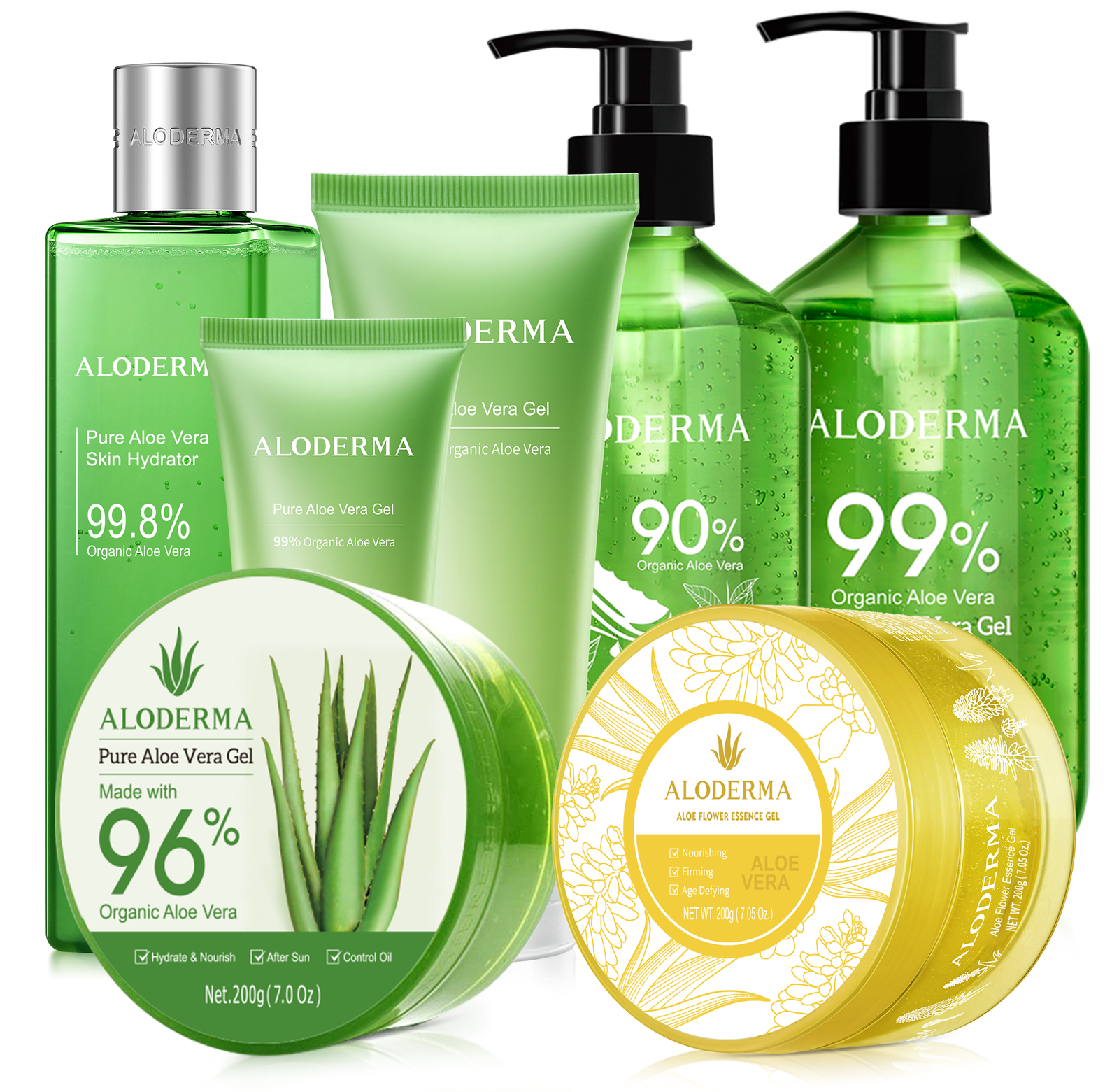
Farm to skin is a plain way of saying the brand controls the path from cultivation to finished product, so the plant does not get diluted across layers of third-party handling. ALODERMA describes itself as a fully vertically integrated aloe vera company, says it grows its own organic aloe vera, and says it processes and manufactures on-site within 12 hours of harvest so the aloe in each formula stays as bioactive as possible.
That matters in a shower gel because aloe is doing real work, not just decorating the label. When aloe sits close to the top of an ingredient list, it can shape the wash's feel, especially if the rest of the formula is built around mild surfactants and humectants. For a closer look at the plant itself, this aloe vera ingredient page is a useful place to start.
Why freshness changes the feel
Fresh aloe often reads as lighter, cleaner, and more coherent in use, especially for people who do not like sticky or heavy body washes. That is part of why freshness signals matter as much as the word organic. If a formula is meant to support the skin barrier, the question is not only whether the ingredients are organic, but whether the aloe is handled in a way that helps it feel calm on skin rather than flat or tired.
The wider market gives that idea some context. Analysts at Mordor Intelligence bath and shower products market report that body wash and shower gel captured 34.22% market share in 2025 and that organic products are projected to grow at 6.22% CAGR through 2031. The same report also says the broader shower gel market was valued at USD 31.37 billion in 2025 and is forecast to reach USD 49.71 billion by 2032 at a 6.8% CAGR, which shows the format itself is still expanding.
If you are building a lower-waste bathroom routine, the room around the bottle matters too. A practical Western Bathroom Renovations eco guide can help you think about how the bathroom environment affects what you buy, how often you reach for it, and how deliberately you choose products.
How to Choose the Right Organic Shower Gel
The easiest way to choose well is to use the same five checks every time you shop. Once you know what to look for, the label starts to read like a simple map instead of a wall of claims, and that helps whether your skin is dry, reactive, oily, or blemish-prone.
The five checks
- Certification first. Look for the certifying body and any stated percentage of certified organic content. Green Seal's GS-44 framework is useful here because it treats natural and organic claims as something that should be documented, not guessed.
- Surfactant and pH second. If the cleanser line is built around mild plant-based surfactants and the formula sits near skin-friendly pH, it is more likely to feel comfortable through daily use.
- Aloe or other actives next. Check whether the botanicals are placed where they can matter in the formula, not buried as a decorative afterthought.
- Fragrance policy. For reactive skin, fragrance-free is usually a stronger signal than “organic” alone. If the product is scented, look for full disclosure of the scent components.
- Brand transparency. If a company controls sourcing, cultivation, and processing, you can usually get a clearer picture of freshness and traceability.
Match the bottle to the skin you have
Sensitive skin usually does best with the plainest label and the clearest fragrance policy. If you want a closer look at that kind of formula, the organic body wash for sensitive skin guide is a useful companion to this checklist. Oily skin often does better with a thorough cleanse that does not leave residue, so a balanced surfactant system matters more than a heavy botanical story. Blemish-prone skin usually benefits from mild cleansing and minimal scent, because the goal is a clean rinse without unnecessary extras.
A useful shortcut is to ask what the wash leaves behind. If a gel rinses clean, feels light, and does not push you toward a heavy body cream to recover comfort, it is usually closer to what the skin wants.
If you want to compare a real product page against this framework, browse ingredient lists and certifications and see whether the freshness signals are clear enough to judge. A shopper can spot the difference between a strong label claim and a formula that reads well under the five checks, especially when the brand explains how its aloe and other ingredients are handled.
Daily Use and Pairing Tips That Make a Real Difference
A good shower routine doesn't need drama. A small amount of gel, warm water, and a clean rinse can do a lot more for comfort than scrubbing harder or reaching for a strongly scented wash.
Keep the routine simple
Use a coin-sized amount on a washcloth, sponge, or in your hands, then build only enough lather to clean the body. Hot water can make skin feel drier, so warm water is usually the more comfortable choice. If you rinse cleanly and pat dry instead of rubbing, the whole shower tends to feel less aggressive.
The next step matters just as much as the wash itself. Apply a body moisturizer within a few minutes while skin still has a little moisture left on it. That timing helps the skin feel more comfortable through the day, especially if your wash is intentionally light and low-residue.
Pair the wash with the rest of the routine
An aloe-forward shower gel pairs naturally with an aloe-forward body lotion or gel, because the two products work in the same comfort lane. For oily or blemish-prone skin, a gentle cleanse followed by a lightweight hydrator usually feels better than stripping the skin and then smothering it later. You don't need a thick cream if your skin doesn't want one.
A simple morning routine might look like this, a quick cleanse, a brief rinse, pat dry, light body hydration, and clothing that doesn't trap you in leftover moisture. At night, the same logic applies, just slower if you've had a long day. The routine you can repeat wins over the one you only follow when you have extra time.
Common Questions About Organic Shower Gels
Is organic shower gel always vegan or cruelty-free? No. Organic refers to ingredient sourcing and farming standards, not animal testing or vegan status, so those claims need to be checked separately.
Is fragrance-free better than scented organic options? For sensitive skin, yes, usually. Fragrance is one of the most common trouble spots, whether it comes from synthetic perfume or essential oils.
How long does it last once opened? Many formulas are built for about 12 months after opening, but the preservative system matters, so check the period-after-opening symbol on the bottle.
Where should I buy one? Direct brand sites like Aloderma make ingredient lists and certifications easier to verify, and major marketplaces like Amazon are another route if you're comparing options quickly.
| Check | What to Look For | Why It Matters |
|---|---|---|
| Certification | USDA Organic, ECOCERT, COSMOS, NSF/ANSI 305, or a documented organic claim | Proves the label is backed by a real standard |
| Surfactant system | Mild plant-based cleansers, balanced blend, pH near 5.5 | Helps the wash feel gentle instead of stripping |
| Fragrance policy | Fragrance-free or fully disclosed essential oils | Reduces guesswork for reactive skin |
| Aloe position | Clear aloe listing with transparent sourcing | Suggests the botanicals are doing real work in the formula |
| Brand transparency | Sourcing, certifications, and ingredient lists are easy to verify | Makes it easier to trust what you're buying |
If you want an organic shower gel that's built around fresh aloe, transparent sourcing, and a formula designed for everyday comfort, take a look at the body care and aloe products at ALODERMA. You'll find ingredient lists, certifications, and bath-and-shower options that fit the same label-reading framework you used here.