

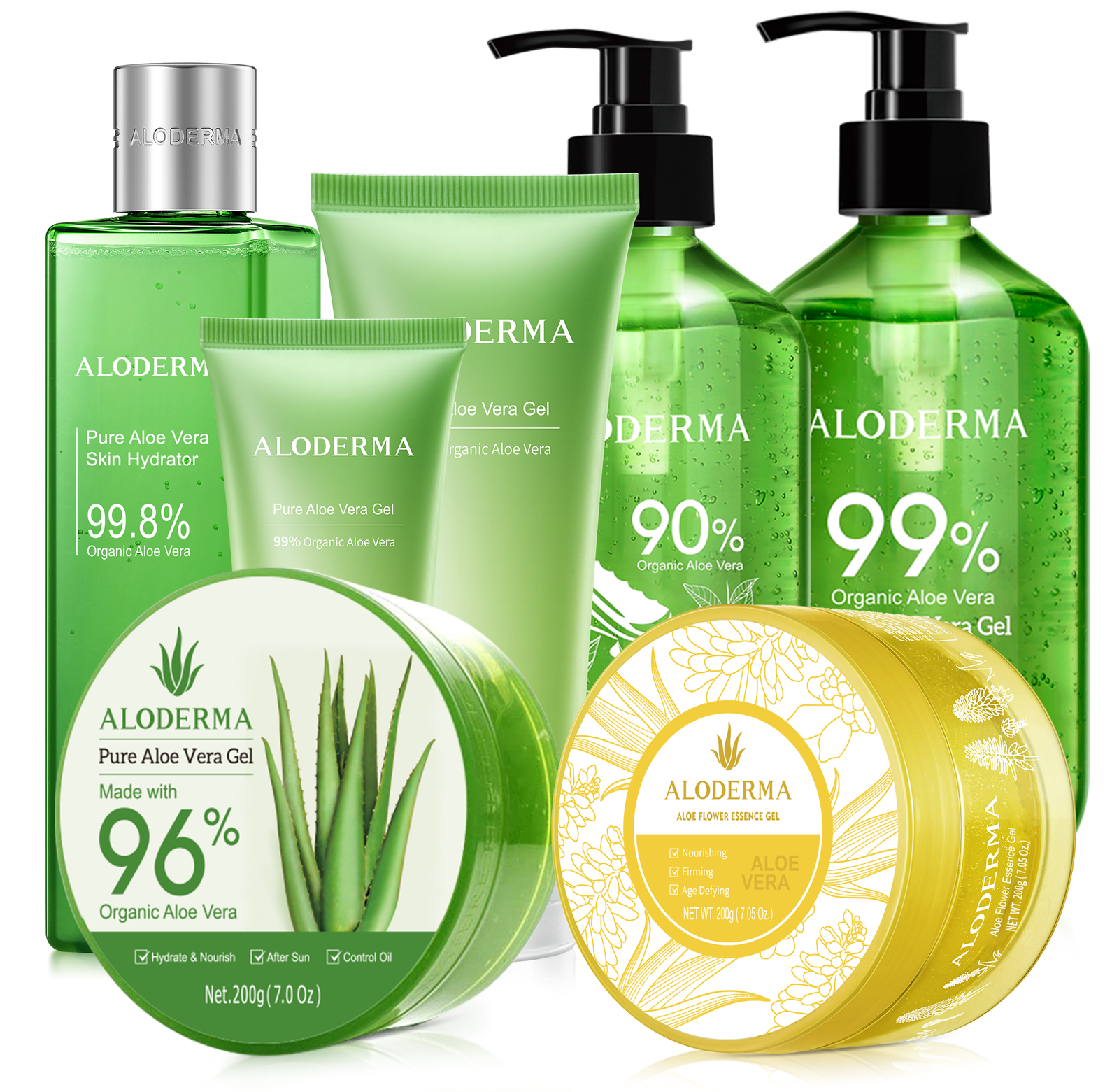


You're standing in front of a shelf of green jars, each one promising aloe vera, hydration, and a calmer-looking complexion. The labels look similar, but the formulas may be built around fresh aloe juice, concentrated extract, reconstituted powder, or a small amount of aloe added mainly for the marketing story.
The useful question isn't whether a product says “aloe.” It's which aloe ingredient appears on the label, how it was processed, what supports it in the formula, and whether the brand can explain the journey from leaf to jar. Once you know how to read those details, choosing a skin cream aloe vera formula becomes much less confusing.
What a Skin Cream Aloe Vera Really Is
A shopper named Maya once picked up two nearly identical aloe creams. Both had green packaging and a leaf on the front. One felt rich and cushiony. The other spread like a thin lotion and left her reaching for more. Neither front label told her why.
A skin cream with aloe vera is usually an emulsion, meaning it combines a water phase and an oil phase with an emulsifier so the product can spread evenly over the skin. Aloe may appear in the water phase as Aloe Barbadensis Leaf Juice, Aloe Barbadensis Leaf Water, or an extract. Oils, butters, fatty alcohols, and emulsifiers give the cream its body and help it leave a comfortable finish rather than behaving like a watery gel.
“Aloe cream” doesn't mean aloe gel has been diluted. It means the gel or juice has been placed into a moisturizing format that may also contain humectants, emollients, and barrier-supporting ingredients. A gel can feel cool and light, while a cream can provide a more enveloping layer for skin that feels rough or tight.
Why the front label can mislead
The large aloe percentage printed on packaging needs context. Cosmetic ingredient lists generally arrange ingredients by weight, but a product may use a concentrated aloe ingredient that has been diluted before formulation, or a powder that contributes a small measured amount after reconstitution. “Aloe” on the front therefore doesn't tell you whether the formula contains fresh juice, extract, or powder.
The ingredient name matters more. Aloe Barbadensis Leaf Juice points you toward a liquid juice ingredient. Aloe Barbadensis Leaf Juice Powder indicates a dehydrated material. Extract can have a different composition and sensory profile depending on the solvent and manufacturing method.
Aloe became part of modern moisturizing cosmetics in the 1970s, when aloe gel extracts began appearing in health foods, beverages, and moisturizing products in the United States and parts of Europe. The category is now commercially significant. One market estimate places the global aloe vera market at USD 2.26 billion in 2026, with cosmetics and personal care representing 47.65% of revenue in 2025, and projects the market to reach USD 3.15 billion by 2031 (Credence Research's aloe vera skin and hair products market overview).
The rest of the label tells you whether that commercial promise has been translated into a thoughtful formula.
How Aloe Vera Works on the Skin Barrier
Aloe vera supports the skin barrier mainly through water-binding compounds, especially polysaccharides, that help hold moisture at the surface. These large carbohydrate molecules can form a hydrated, comfortable film, which may reduce the tight or rough feeling associated with a dry surface. The effect is mainly about hydration, not automatically replacing the barrier's lipid structure.

The compounds behind the feel
Fresh Aloe barbadensis gel contains a mixture of naturally occurring materials. Polysaccharides, including acemannan, are associated with the gel's water-holding character. Glycoproteins and amino acids can contribute to a soft, conditioned feel, while enzymes, minerals, and antioxidant compounds add to the plant's complex profile.
Handling affects that profile. A quick, controlled process may preserve delicate components more effectively than prolonged storage or aggressive heat. Time, oxygen, and processing conditions can alter the original material, so “aloe vera” alone does not describe exactly what reaches the jar.
Aloe works best within a complete moisturizing system. Glycerin and sodium PCA attract water. Squalane, shea butter, and ceramides help reduce water loss and give the cream more cushion. Aloe can add hydration and comfort, while these supporting ingredients address other parts of a dry, stressed surface.
Practical rule: Treat aloe as one part of the barrier formula, not as a substitute for the entire formula.
A clinical trial involving 35 people with chronic kidney disease and very dry skin compared a 30% Aloe vera cream with a 20% urea cream applied twice daily for 4 weeks. Both treatments improved hydration and dry-skin scores, with no significant difference between them (the randomized trial in the National Library of Medicine). The result supports aloe's usefulness for hydration, while showing why a plant-based ingredient is not automatically superior to a conventional moisturizer.
The practical question is whether the ingredient list and processing history support the claims on the front of the jar.
Reading the Label Aloe INCI Names and Supporting Ingredients
INCI names can look intimidating, but you don't need to decode every ingredient at once. Start by finding the aloe name, then inspect the ingredients around it. The label can tell you whether the product is built around a liquid aloe material or a dehydrated one.
| INCI Name | What It Means | Typical Feel on Skin |
|---|---|---|
| Aloe Barbadensis Leaf Juice | Liquid aloe juice used as a water-phase ingredient | Fresh, fluid, hydrating |
| Aloe Barbadensis Leaf Extract | Aloe processed into an extract using a defined extraction method | Depends on the solvent and concentration |
| Aloe Barbadensis Leaf Water | Aloe-derived water ingredient | Light and watery |
| Aloe Barbadensis Leaf Juice Powder | Dehydrated aloe juice reconstituted in the formula | Usually lighter, depending on the base |
Aloe Barbadensis Leaf Juice is the name many shoppers hope to see near the top of a cream's ingredient list. It suggests that liquid aloe juice is a meaningful part of the formula, though the INCI list alone won't reveal whether the juice was freshly processed or made from concentrate.
Aloe Barbadensis Leaf Juice Powder isn't automatically poor quality. Powder is easier to transport and store, but it has gone through dehydration and later reconstitution. A cream made with powder can still be well formulated, yet it shouldn't be confused with one made from fresh liquid juice.
You can find a helpful explanation of the main aloe names in this Aloe Barbadensis ingredient guide.
Look at the supporting cast
Aloe works more comfortably in a formula when other ingredients handle complementary jobs:
- Humectants: Glycerin, sodium PCA, and hyaluronic acid help attract and hold water at the surface.
- Barrier ingredients: Squalane, ceramides, and shea butter add emollience and help create a less evaporative finish.
- Comforting partners: Allantoin, panthenol, bisabolol, and oat can make a formula feel gentler.
- Antioxidant companions: Vitamin E and green tea can support the formula's protective positioning.
Fragrance high on the list deserves caution if your skin reacts easily. Drying alcohols may also feel uncomfortable, particularly in a lightweight formula used over already tight skin. “Aloe vera” without a recognizable INCI name is another reason to keep reading rather than relying on the front panel.
Certifications That Actually Mean Something
A certification seal can be useful, but it doesn't answer every question about an aloe cream. Organic certification generally concerns how agricultural ingredients are grown and how materials are handled through defined processing and supply-chain requirements. It doesn't automatically prove that a cream will suit your skin or that its aloe was processed immediately after harvest.
The distinction between an organic aloe ingredient and an organically certified finished product matters. A brand may use certified organic aloe in a formula whose other ingredients are conventional. That can be a valid choice, but it isn't the same claim as certification for the complete product.
What the main labels tell you
| Certification | Verifies | Does Not Verify |
|---|---|---|
| ECOCERT | Compliance with the certifier's organic or natural cosmetics standard and relevant production controls | That the cream will suit every skin type or that the product is freshly processed |
| USDA Organic | Compliance with USDA organic requirements for the certified claim and supply chain | Efficacy, texture preference, or post-production freshness |
| COSMOS | Organic and natural cosmetic requirements, including defined ingredient and processing criteria | Clinical performance or a guarantee that every botanical compound remains unchanged |
| NSF | Compliance with the specific NSF standard named on the product | Universal product safety, skin compatibility, or freshness |
| “Natural” or “Clean” | A marketing description unless a named third party defines and verifies it | A consistent organic percentage, audit trail, or performance result |
The COSMOS certified raw-material database shows why ingredient-level certification deserves careful reading. An aloe oil macerate listing identifies 100% organic content and 100% total bio content, but that entry describes a raw material, not every finished cream on the shelf.
Read the wording, not only the seal
“Made with organic aloe” is narrower than “organic cream.” “Contains certified organic aloe juice” identifies the aloe input, while a finished-product seal applies to the product under that certifier's rules. A strong shopper checks whether the wording beside the logo matches the scope of the certification.
Audits and chain-of-custody controls can improve confidence in sourcing. They still don't tell you whether the bottle sat in storage for a long period after production. For that, you need harvest, processing, packaging, and batch information from the brand.
Freshness From Harvest to Jar and Why It Matters
Aloe's journey starts with a leaf, not a finished cream. After harvest, the leaf is cut, cleaned, and processed into a material that can be stabilized and formulated. Every handoff introduces time, oxygen, temperature changes, or processing choices that may alter the original gel.
A brand that says “processed within 12 hours of harvest” is making a supply-chain claim. You can ask how the company measures that window, whether it applies to every batch, and whether the finished product uses juice, concentrate, or powder. A certificate of analysis may document batch identity and specifications, but shoppers should still look for a clear explanation of what the time window covers.

Five label clues worth checking
- Material type: “Leaf Juice” and “Leaf Juice Powder” describe different starting materials. Don't treat them as interchangeable.
- Processing language: Terms such as cold processed, freshly harvested, or made from concentrate need supporting detail.
- Packaging: Opaque or airless packaging can help limit light and repeated air exposure, although packaging alone doesn't prove freshness.
- Preservation: A water-rich cream needs a preservation system. Preservatives aren't automatically a red flag, and their presence doesn't tell you whether the aloe was fresh.
- Color and scent: A natural plant scent or pale color may vary by formula. A strong fragrance can mask the product's original character, so check the fragrance ingredients rather than judging by scent alone.
Independent suppliers also describe rapid handling. An ECOCERT-certified aloe gel supplier reports hand harvesting and processing within hours, while L'Oréal describes sending aloe to a nearby plant within 6 hours of harvesting before filtration, stabilization, and pasteurization (Aroma-Zone's organic native aloe vera gel information).
For a plain-language discussion of storage and product life, see this guide to how long aloe vera lasts.
A vertically integrated company can document more of the journey because farming, processing, formulation, and filling remain within one operation. A contract blender may receive a drum of concentrate with less visibility into the field and the time between harvest and processing.
The following video gives shoppers another way to visualize the path from plant material to finished skincare.
Matching an Aloe Cream to Sensitive Oily and Blemish Prone Skin
The right aloe cream depends less on the word “aloe” and more on the texture, supporting ingredients, and your tolerance for fragrance or active ingredients. A rich cream may feel comforting on dry cheeks but heavy across an oily forehead. A gel-cream may suit a shiny T-zone yet leave very dry skin wanting an additional emollient.
Sensitive skin
Choose a short, fragrance-free formula when your skin reacts easily. Oat, allantoin, or madecassoside can complement aloe, but keep the rest of the routine simple.
Morning: gentle cleanser, aloe cream, mineral SPF.
Evening: gentle cleanser, aloe cream.
Patch test the formula before applying it broadly. Botanical ingredients can still bother individual users, and essential oils may be unsuitable for people who prefer the lowest-fragrance routine.
Oily skin
Look for a light gel-cream that absorbs without a heavy film. Niacinamide or zinc PCA may complement aloe in a formula designed for a more balanced finish. Apply a thin layer rather than assuming that more cream will produce more hydration.
Morning: cleanser, lightweight hydrating serum if needed, aloe gel-cream, sunscreen.
Evening: cleanser, serum, aloe gel-cream.
This aloe vera routine for oily skin offers additional context on choosing a lighter format.
Blemish-prone skin
A non-comedogenic aloe cream can fit into a routine that also uses salicylic acid or azelaic acid. Apply the treatment product as directed, then use aloe cream as the moisturizing step, followed by sunscreen in the morning. Introduce changes gradually, especially when combining an exfoliating acid with a botanical formula.
| Skin profile | Texture to consider | Helpful companions | Simple placement |
|---|---|---|---|
| Sensitive | Fragrance-free gel-cream or light cream | Oat, allantoin, panthenol | After cleansing |
| Oily | Featherweight gel-cream | Niacinamide, zinc PCA | After serum |
| Blemish-prone | Non-comedogenic gel-cream | Salicylic acid or azelaic acid | After treatment |

Aloe cream isn't a diagnosis or a replacement for professional care. It's a moisturizer choice, so judge it by comfort, compatibility, and the rest of the formula.
The Farm to Skin Approach Behind a Vertically Integrated Aloe Brand
A cream's supply chain can affect how confidently you evaluate its aloe claim. Vertical integration means one company manages more stages, from cultivation and harvest to processing, formulation, and filling. That continuity can make each batch easier to trace than an ingredient purchased through several intermediaries.
The useful questions are practical: Which farm supplied the leaves? When were they harvested? Where were they processed? Can the brand connect the finished jar to a batch record? A vertically integrated company may be able to document those links because it controls more of the route from field to product.
The label alone cannot answer every processing question. Look for a clear sourcing policy, batch information, and an explanation of how harvest timing is recorded. You can also ask whether the stated process applies to the specific cream you are considering, rather than to the brand's products generally.
What ALODERMA says it controls
ALODERMA states that it grows aloe on its own plantations and manages the process from planting through finished product creation, including onsite processing and manufacturing within 12 hours of harvest, with products using at least 65% fresh organic aloe vera juice and no aloe concentrate, powder, or added water (ALODERMA's fresh aloe skincare process).
Treat those details as claims to verify, not as a substitute for reading the formula. Ask whether the time window runs from leaf cutting to processing or to finished product creation, how the batch is documented, and whether the percentage applies to the cream in your hand. A brand that controls cultivation and manufacturing can offer more direct records, but documentation still matters.

Processing records also help explain normal variation between batches. Liquid aloe may produce differences in a cream's viscosity, color, or natural scent. Those sensory cues do not prove quality, and a uniform appearance does not prove poor sourcing. They give you a starting point for asking how the brand handles testing, storage, and traceability from harvest to jar.
Buyer Checklist Common Label Traps and Quick Answers
Save this checklist before you shop for skin cream aloe vera:
- Aloe placement: Check whether an aloe juice or inner-leaf ingredient appears near the beginning of the INCI list.
- Material type: Identify juice, water, extract, or powder rather than relying on the word aloe alone.
- Certification scope: Look for a named third-party seal and confirm whether it applies to the ingredient or the finished product.
- Formula length: A concise ingredient list can make the product easier to evaluate, though length alone doesn't determine quality.
- Fragrance: Choose fragrance-free if your skin is easily bothered, and inspect essential oils as well as parfum.
- Packaging: Opaque or airless packaging may reduce repeated light and air exposure.
- Freshness statement: Look for a specific harvest-to-processing explanation rather than a vague “farm fresh” phrase.
Three traps that catch careful shoppers
“Aloe scented” may describe a fragrance profile, not a meaningful aloe ingredient. “Made with organic aloe” may mean only the aloe is certified while the cream base follows a different sourcing standard. “Natural” and “clean” can sound reassuring but may lack a consistent third-party definition.
| Certification | What It Verifies | What It Does Not Cover |
|---|---|---|
| ECOCERT | Defined organic or natural cosmetics requirements and production controls | Whether the cream suits your skin or how fresh the aloe was after production |
| USDA Organic | The certified organic claim and its supply-chain requirements | Sensory preference, efficacy, or post-production freshness |
| COSMOS | Organic and natural cosmetic criteria for ingredients and processing | A guarantee of clinical performance or unchanged plant chemistry |
| NSF | Compliance with the named NSF standard | Universal compatibility or freshness |
| Natural or clean claim | The brand's stated positioning unless independently defined | A uniform standard, audited organic content, or performance outcome |
Quick answers
Is aloe cream suitable for sensitive skin? It can be, especially when the formula is fragrance-free and includes compatible supporting ingredients. Patch test first, because even gentle botanical formulas can affect individual users.
Can oily or blemish-prone skin use aloe cream? Yes, a lightweight or non-comedogenic format may fit more comfortably than a rich cream. Layer it after treatment products and before sunscreen in the morning.
How often should you apply it? Follow the product directions and adjust to how your skin feels. Many moisturizers fit naturally after cleansing, but you don't need to apply a thick layer to prove the formula is working.
Where do hyaluronic acid and niacinamide fit? They can appear before aloe cream when supplied in a thinner serum. Aloe cream then adds the moisturizing layer that helps finish the routine.
ALODERMA offers fresh organic aloe skincare, including creams and lightweight hydrators designed for everyday moisturizing and different skin preferences. To compare aloe formats, ingredient lists, and farm-to-skin product details, visit ALODERMA and choose the formula that fits your routine.