

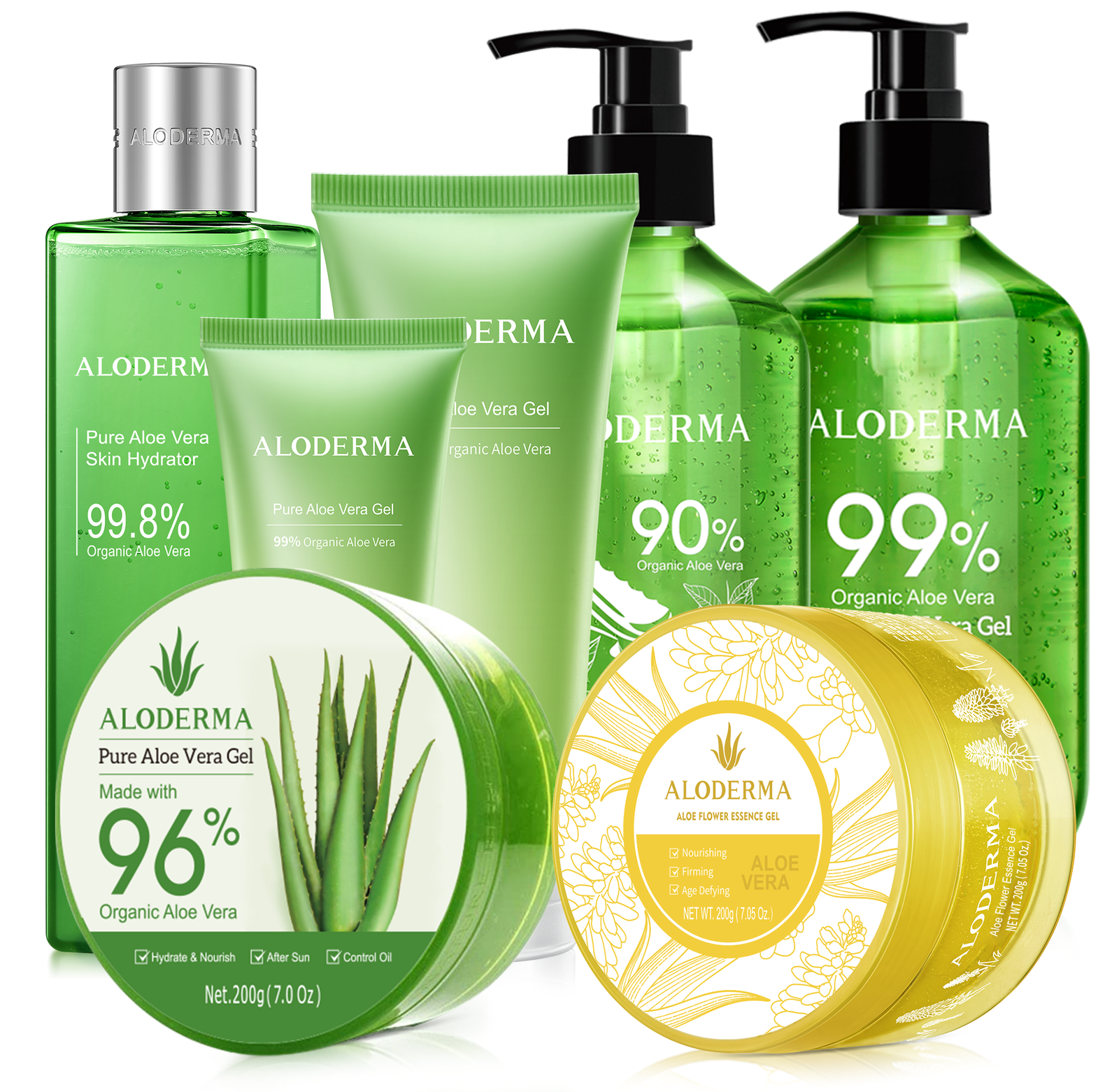


Aloe vera gel is the clear, water-rich substance inside the leaf of the Aloe barbadensis plant, made up of about 98–99% water alongside polysaccharides and smaller amounts of other compounds. But what is aloe vera gel beyond a familiar ingredient on a label, and why can two products bearing that name feel so different?
The answer starts with the leaf, then follows the gel through harvesting and processing. Aloe is a perishable plant material, not a uniform liquid: the way it's separated, stabilized, and formulated affects what ends up in the bottle and how the finished product feels on your skin.
What Aloe Vera Gel Actually Is
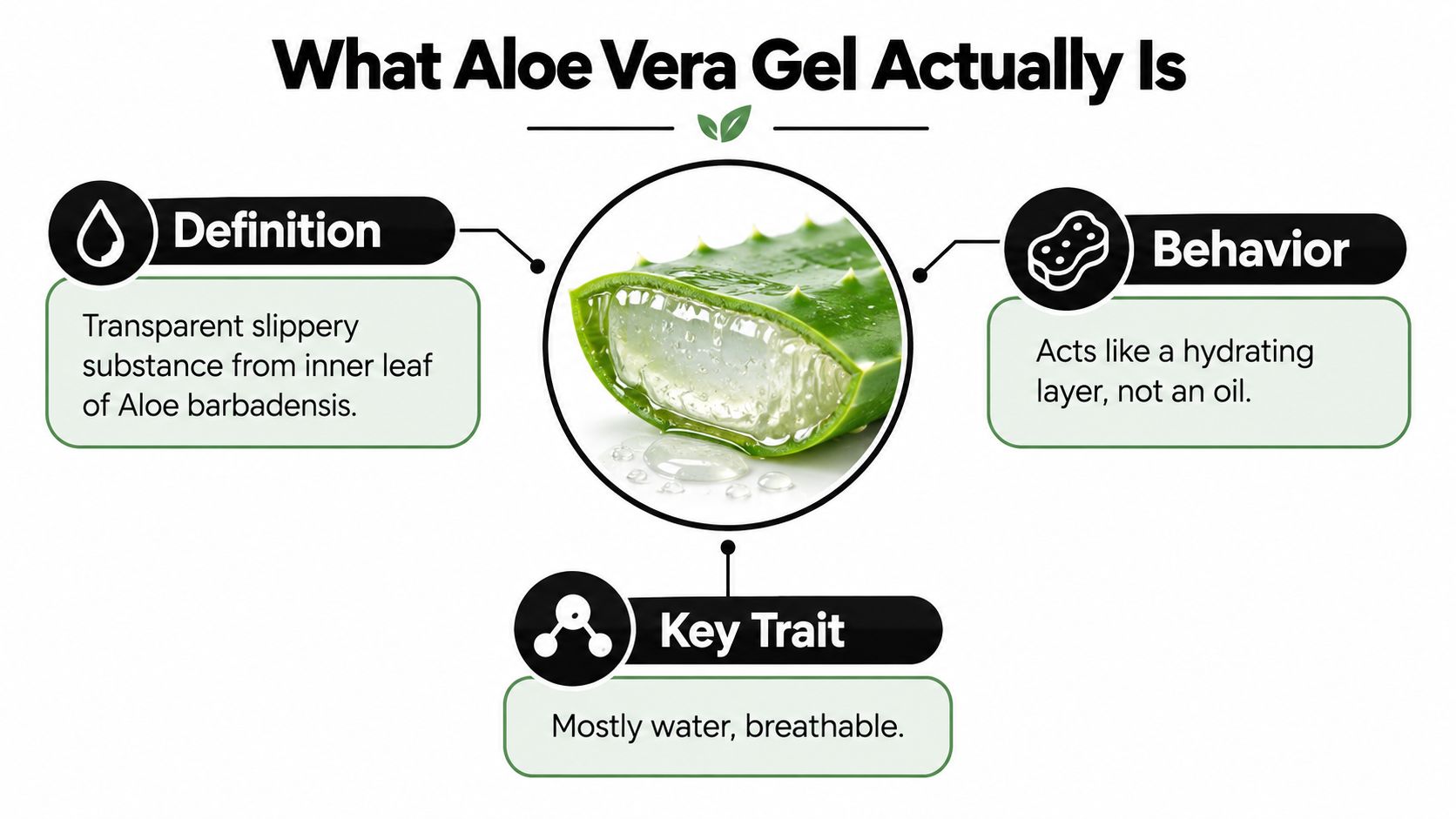
Aloe vera gel is the transparent, slippery mucilage inside the leaf of Aloe barbadensis, also known as Aloe vera. It behaves more like a lightweight hydrating layer than a heavy, oil-rich cream. Fresh gel is roughly 96–99% water by weight, with the remaining portion containing carbohydrate polymers, amino acids, lipids, vitamins, minerals, enzymes, and phenolic compounds, as described in this review of aloe vera gel composition.
Think of the leaf as a water balloon wrapped in a firm, waxy skin. The clear gel is the watery, slippery material inside. Closer to the rind sits a yellow latex, a different plant material with different compounds, including anthraquinones. Inner-leaf gel and yellow latex aren't interchangeable, even though they come from the same leaf. That distinction matters when a product says it uses inner-leaf aloe.
The gel's texture comes partly from polysaccharides, complex carbohydrate molecules that bind water and help make the material feel smooth and slightly thick. Since the gel is mostly water and doesn't contain the structure of an oil-based balm, it tends to leave a light layer rather than a rich, greasy coating.
Why the plant part matters
“Inner-leaf gel” describes where the material comes from, not a guarantee that every finished product has the same composition. Harvesting, separation, processing, and storage all influence the ingredient that reaches the formula. For someone comparing bottles, that means it's useful to look beyond the front label and ask what kind of aloe is used and how the company handles it.
The simplest mental picture is this: the clear inner gel is the water-rich, polysaccharide-containing part; the yellow latex near the rind is chemically distinct. Once you can picture that difference, the ingredient list and processing claims become easier to assess.
A Quick History of Aloe on the Skin
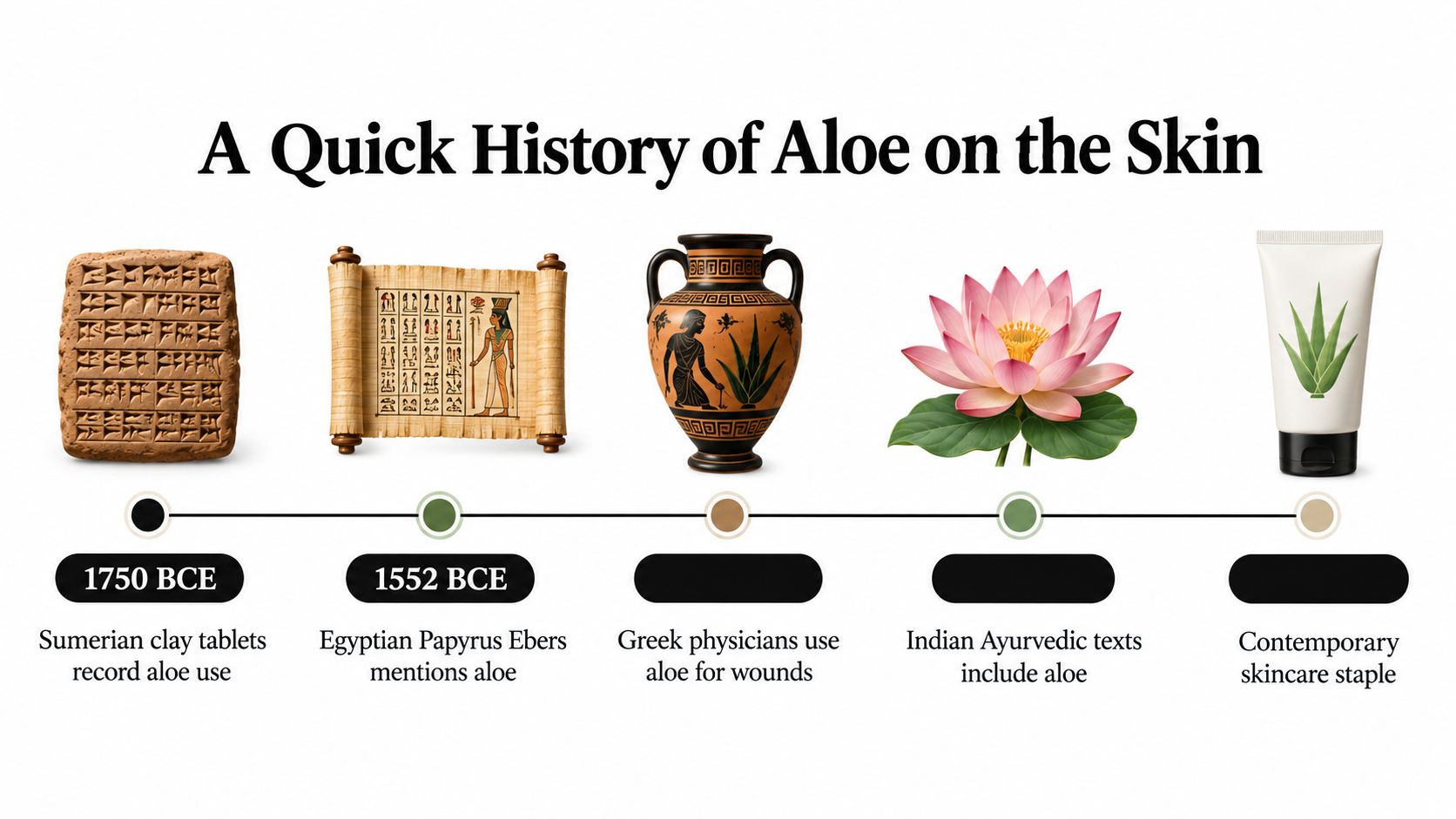
Aloe's long history helps explain why it feels familiar in modern skincare, but tradition and proof of a particular product's performance aren't the same thing. A Sumerian record commonly cited in historical accounts dates to approximately 1750 BCE, and the Egyptian Papyrus Ebers, dated to about 1552 BCE, also mentions aloe. The plant's use was recorded across Egyptian, Greek, Indian, Chinese, and Arab medical traditions, as summarized in this historical overview of aloe.
That history isn't a single, uninterrupted recipe passed unchanged from one generation to the next. Different cultures used aloe in different ways, and historical records don't tell us that every preparation was made from the same part of the plant or processed in the same way. For today's shopper, the useful lesson is that aloe has been recognized across many traditions, while a modern product still needs to be judged by its ingredients and handling.
From historical use to modern products
In the 1930s, reports described aloe gel being used for radiation-related skin injury, including X-ray and radium burns. Those accounts helped prompt laboratory research and commercial interest in aloe preparations. Historical popularity, however, doesn't establish that every aloe product works the same way. A major review noted limitations in some early research, including small samples, weak study designs, and inconsistent results.
For consumers, that distinction is practical. Aloe's long-standing reputation can explain why it appears in so many personal-care products, but it can't tell you whether a particular gel is fresh, well processed, or a good match for your routine. Those questions require attention to the product itself, including its ingredients and how the raw material was handled.
What's Actually Inside the Gel
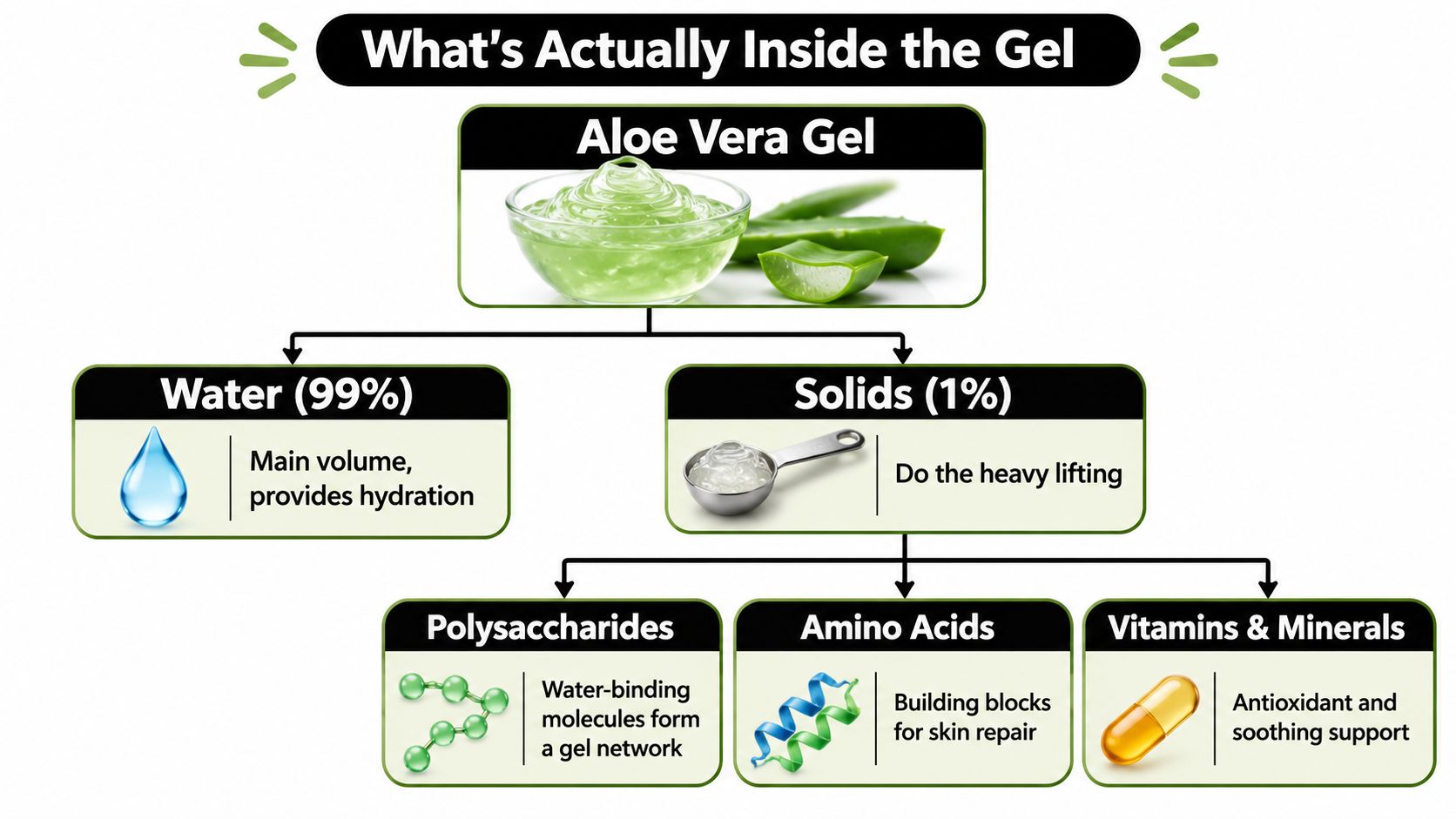
Aloe gel is like a kitchen recipe in which water fills most of the bowl, while a smaller collection of ingredients gives the mixture its texture and character. Its water content is the biggest part by weight. The remaining solids include carbohydrates, amino acids, lipids, vitamins, minerals, enzymes, and phenolic compounds. Reviews have identified many potentially active constituents across aloe gel preparations, but the exact profile can vary with the plant and the way the gel is processed.
The most important texture-building group is the polysaccharides. One signature polysaccharide is acemannan, a partially acetylated glucomannan made mainly from mannose units linked in a β-(1→4) chain, with smaller contributions from glucose and galactose, as described in this technical overview of aloe vera gel. You can think of these long carbohydrate molecules as a loose mesh that holds water, a little like strands in a soft gel dessert.
A recipe that changes from leaf to leaf
That “recipe” isn't fixed. Cultivar, climate, leaf maturity, harvesting, and processing can all affect the gel's composition and the size of its polysaccharide molecules. A bottle labeled aloe gel therefore doesn't, by itself, tell you how much of a particular polysaccharide it contains or whether the ingredient has been handled to preserve its original properties.
Amino acids, minerals, enzymes, and other compounds make up part of the remaining material, but their presence doesn't justify assuming a product will produce a specific result. The formulator's view is more measured: the water explains much of the light feel, and the polysaccharides help explain the gel texture and water-holding behavior. For more about the plant and its ingredient terminology, see ALODERMA's aloe vera ingredient guide.
Fresh Gel vs Powdered vs Commercial Gel
Aloe on an ingredient list can refer to materials made through different routes. Freshly processed inner-leaf gel, aloe powder mixed back into water, and a commercial gel made with aloe as one component aren't automatically equivalent. Each begins with a different supply and processing history, so the label and manufacturer's details matter.
| Form | Typical processing | Polysaccharide integrity | Common label position |
|---|---|---|---|
| Freshly processed inner-leaf gel | Separated from the leaf and stabilized after harvest | Depends on handling, temperature, and time before stabilization | May be listed as aloe leaf juice or gel |
| Reconstituted aloe powder | Dried material is later mixed with water | Depends on the original processing and reconstitution | May appear as aloe powder or a reconstituted aloe ingredient |
| Commercial aloe gel | Aloe is blended into a finished formula, sometimes with other ingredients | Depends on the aloe source and the formula's manufacturing process | Aloe may appear high or low in the ingredient list |
Heat and delays can change what's in the raw material. The National Academies review reports significant changes in aloe polysaccharide molecular weight when aloe extract is heated above 60°C, which can affect viscosity and film-forming behavior. That's why a processing claim is more useful when it describes what the manufacturer does, rather than relying on words like "fresh" without explanation.
Practical rule: Treat “aloe” as the start of your evaluation, not the end. Ask what part of the leaf was used and how the material was stabilized.
If you're comparing gels for use in a personal-care routine, a resource on gel safety from NYC Laser Hair Removal can offer additional context on product use. Focus on the formula in front of you, since an ingredient name alone can't reveal the full manufacturing history.
What Aloe Vera Gel Does on Your Skin
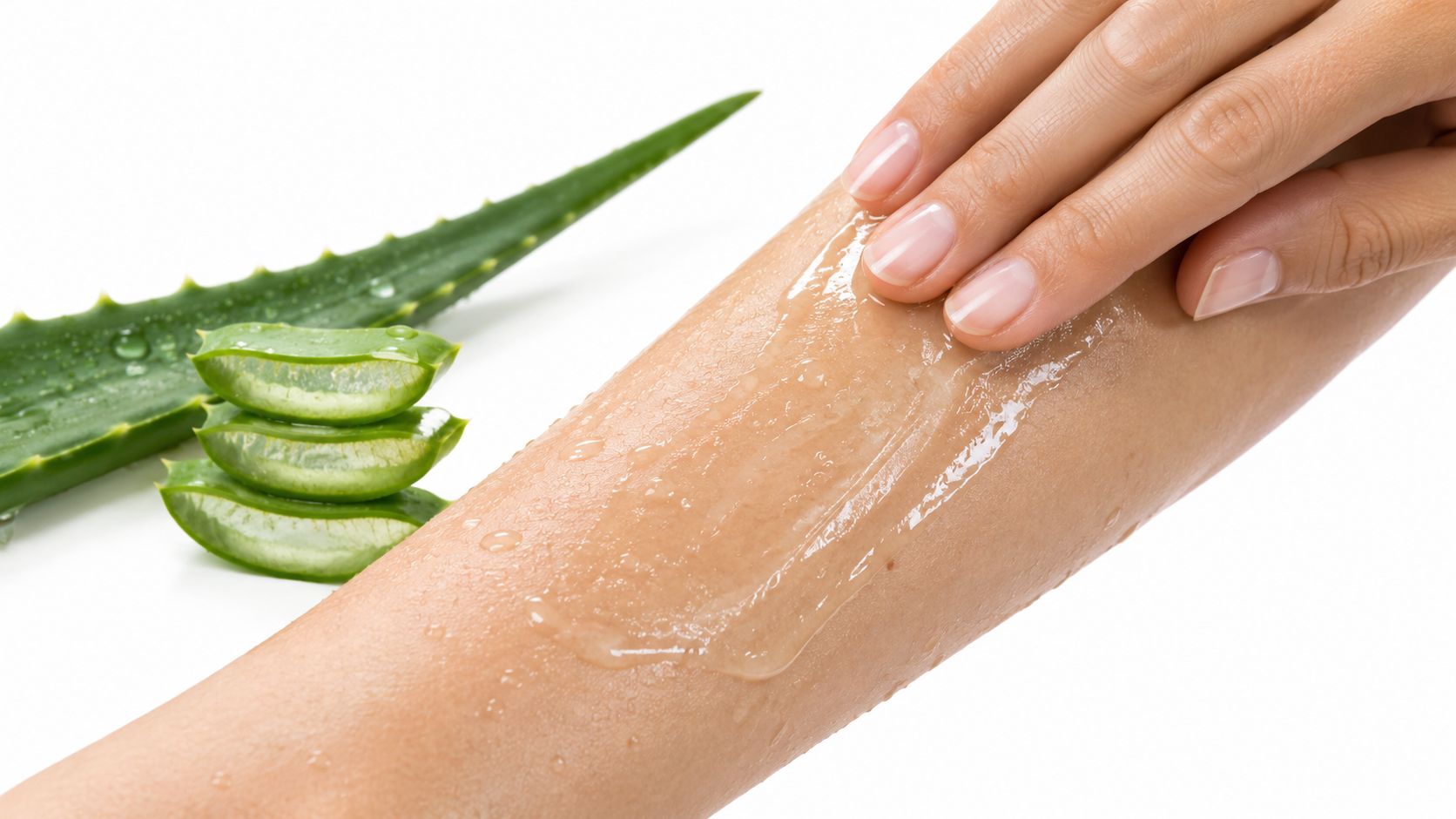
Aloe's familiar cool, slippery feel follows from its water-rich composition and water-binding polysaccharides. On skin, those polymers can form a lightweight, hydrophilic layer, meaning a layer that interacts with water. It's different from an oil-like occlusive layer, which is why aloe is generally described as a hydrating ingredient rather than a rich emollient, as explained in this review of aloe gel's structure and behavior.
That distinction can help when you're building a simple routine. If your skin feels comfortable with a light layer but still needs a richer finish, you might apply an aloe-based formula before a cream. Formulators also pair water-based ingredients with humectants such as glycerin or sodium hyaluronate in some products. The formula as a whole determines the final feel, so two products containing aloe can behave differently.
The gel's composition explains why many people describe it as soothing, but it doesn't mean every product will feel the same on every person. The base, other ingredients, and processing all matter. A fresh-feeling texture isn't proof of a particular biological effect, and a product's marketing language shouldn't be treated as a guarantee.
For another perspective on aloe and skincare claims, you can read ALODERMA's discussion of aloe in skin care.
Here's a look at the gel's texture and application in a visual format.
How to Read an Aloe Label Like a Formulator
“Pure aloe” sounds precise, but that phrase alone doesn't tell you how much aloe a cosmetic contains. The National Institute of Environmental Health Sciences notes that cosmetic law doesn't establish a legally effective minimum aloe concentration. In practice, a product can say it's made with aloe while containing little aloe, so the ingredient list and supporting details deserve a closer look.
Use this checklist when comparing products:
- Check the ingredient order. Ingredients are generally listed in descending order by amount, subject to labeling rules. If water appears before aloe leaf juice, aloe isn't the first-listed ingredient. A first-listed aloe ingredient is a useful clue, but it still doesn't disclose a standardized polysaccharide level.
- Understand inner leaf versus latex. The yellow latex near the rind contains anthraquinones such as aloin. The NIEHS overview of aloe explains why aloin matters particularly in products intended for ingestion and why inner-leaf separation and processing are important. Don't assume that “aloe” alone explains which leaf material a brand used.
- Look for independent certification details. A certification can provide information about how a product or ingredient was assessed, but check the named standard and what it covers. A logo alone doesn't tell you the product's precise aloe content or how quickly it was processed.
- Look for specific processing information. A clear account of harvest timing, temperature management, and quality checks is more informative than an undefined claim of freshness. Ask whether the company explains how it handles the gel after the leaf is cut.
A front-label phrase can catch your eye. The ingredient list and processing details help you decide whether it means what you think it means.
If you're also assembling a simple body-care routine, this stretch mark shea butter routine from Feed Mom & Me gives an example of how a richer shea-based product can fit alongside lighter textures. Keep your own checklist handy: ingredient order, leaf material, certification details, and a specific processing explanation.
ALODERMA's Farm-to-Skin Approach in Practice
Aloe gel is a perishable raw material, so the time between cutting a leaf and processing it can matter. ALODERMA describes itself as a vertically integrated aloe vera company that grows its own organic aloe, processes harvested leaves, and manufactures onsite within 12 hours of harvest. The company says this timing helps preserve the aloe's bioactivity. Its farm-to-face skincare overview explains the approach.
The 12-hour window is a specific supply-chain detail, not proof on its own of a finished product's quality. Heat and handling can affect aloe's polysaccharides, much like warmth can change the texture of a delicate food. Processing time is one detail to weigh alongside a product's ingredients and any available quality testing.
See how the approach appears in formulas
Consider the Aloe Hydrating Hand Cream. Organic aloe leaf juice leads its ingredient list, followed by ingredients including glycerin, diglycerin, butylene glycol, dimethicone, panthenol, and shea butter. Together, these make a cream with a different texture and feel from a simple aloe gel.
ALODERMA describes its Pure Aloe Vera Skin Hydrator as 99.8% organic aloe, with organic aloe leaf juice listed first. For this and other products, compare the aloe form and its place in the ingredient list with the additional ingredients that shape the formula.
Bringing It All Together
Aloe vera gel is the clear inner-leaf material of the plant, mostly water, with polysaccharides and other compounds that give it its characteristic slippery, lightweight feel. Its composition isn't identical from leaf to bottle, because cultivation, harvesting, and processing all influence the raw material.
The shopper's advantage is knowing what to check. Read the ingredient order, distinguish inner-leaf gel from latex-related terminology, look closely at certifications, and favor specific explanations of harvest and processing over broad freshness language. Those details can help you compare products without assuming that every label using the word “aloe” describes the same ingredient.
Explore the product information and educational resources on ALODERMA to put that checklist into practice and compare formulas made with farm-grown aloe.
ALODERMA offers aloe-based gels, hydrators, serums, creams, and other skincare formats, with product details that let you compare ingredients and processing claims. Visit ALODERMA to explore the formulas and find an aloe product that fits the texture and routine you're looking for.