







You're standing at the bathroom sink with skin that feels tight after cleansing. Two jars promise aloe and vitamin E, but one spreads like a watery lotion while the other leaves a rich film. You don't need another reassuring front label. You need to know what's inside, how it should feel, and whether it belongs in your everyday routine.
Why Shoppers Reach for Aloe Vera Cream Vitamin E
The appeal is easy to understand. After a long day in dry indoor air, you want your face to feel soft and comfortable, not coated. After time outdoors, you might prefer something that feels refreshing rather than another heavy layer.
When shoppers search for aloe vera cream vitamin E, they're often looking for that balance. Aloe suggests lightness and freshness. Vitamin E suggests a richer, conditioning element. Yet those names alone can't tell you whether a cream will feel silky, sticky, cushiony, or greasy.
A useful starting point is to separate the experience you want from the promises you're reading.
- Comfort after cleansing: Look for a complete moisturizer, not merely an impressive plant name.
- A lighter finish: Consider the surrounding oils and emollients, not just whether aloe appears.
- A routine you enjoy: Choose a texture you'll genuinely want to apply when you're tired.
A long history isn't a product test
Aloe's documented history extends back nearly 6,000 years, including a Mesopotamian tablet dated approximately 2100 BCE, Egypt's Ebers Papyrus around 1550 BCE, an English reference in 1655, and inclusion in the United States Pharmacopeia in 1820, as summarized in this review of aloe vera's history and topical use.
That history explains aloe's cultural importance. It doesn't establish that every modern cream delivers the same results, or that adding vitamin E automatically improves it.
There's also a personal side to choosing skincare. If beauty shopping has started to feel like chasing someone else's face, the Arizona Valley Acupuncture guide to authentic beauty offers a related perspective on confidence and feeling like yourself. Keep that distinction in mind at the shelf: a moisturizer should serve your comfort, not create another standard you have to meet.
Shopping question: What does the whole formula offer that your current moisturizer doesn't?
A thoughtful daily cream should have an answer you can understand. That answer might be a fresher aloe base, a more comfortable finish, or clearer ingredient information. Printing both ingredients on the lid isn't enough.
How Aloe and Vitamin E Work in One Cream
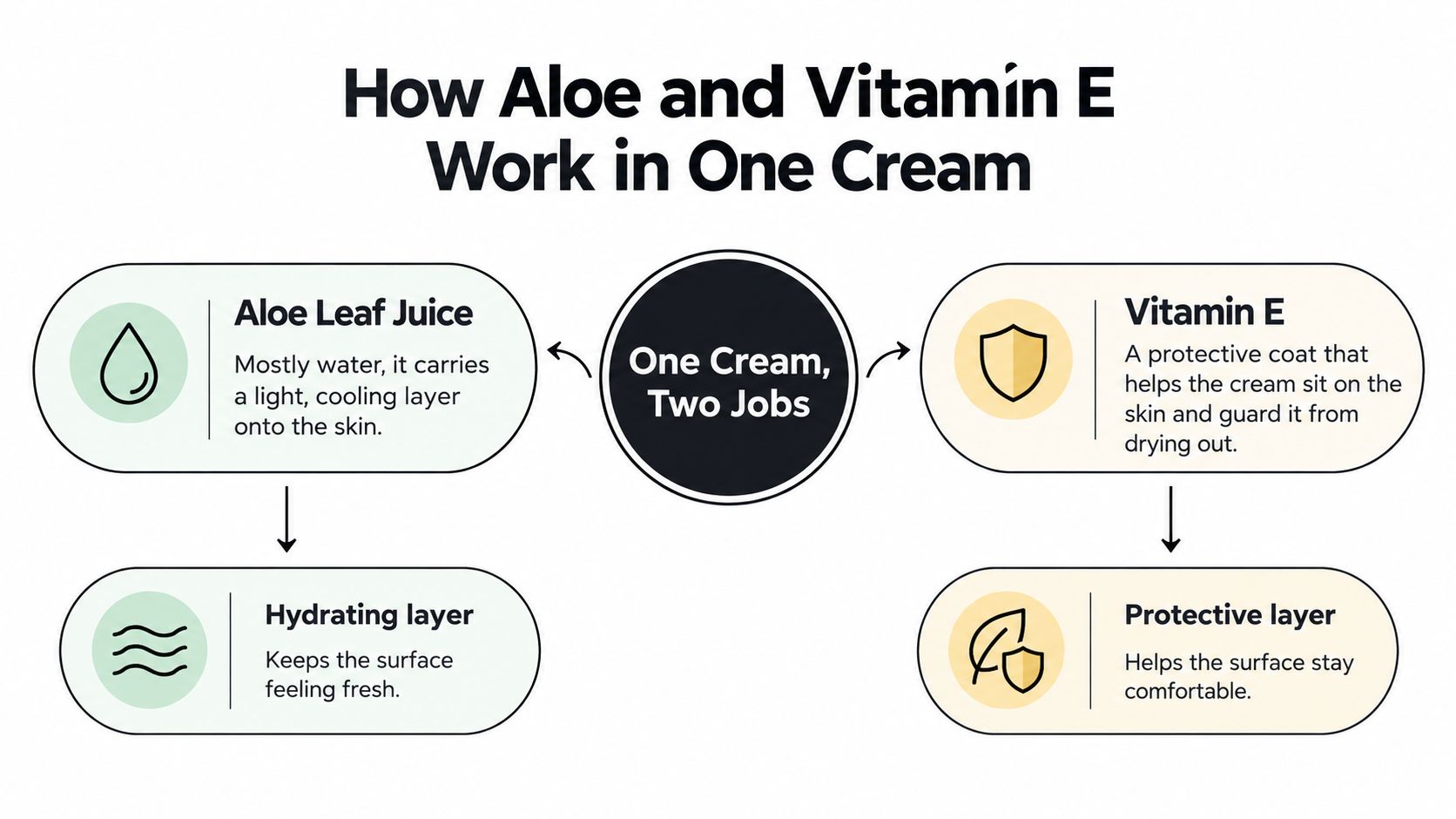
Think of a cream as a drink of water accompanied by a light conditioning coat. That's a simplified comparison, but it helps explain why aloe and vitamin E aren't interchangeable.
Aloe leaf juice belongs to the water-rich side of the formula. Vitamin E belongs to the oil-loving side. A well-designed cream brings those materials together so you can spread them evenly instead of shaking separated water and oil in your palm.
This diagram introduces the two roles. Read the protective layer as the work of the cream's entire oil-and-emollient system, not vitamin E alone.
Find the vitamin E name
On an ingredient list, look for Tocopherol or Tocopheryl Acetate. The acetate form is commonly chosen for cosmetic formulation stability. It isn't a separate promise of better visible results.
Vitamin E is most defensible here as a lipid-phase antioxidant and skin-conditioning ingredient. It can help protect susceptible oils from oxidation, but tocopherol itself can also oxidize. The surrounding antioxidant system and packaging therefore matter.
Dermatology references discuss approximately 0.1%–1.0% as sufficient to raise vitamin E levels in skin, while some commercial products use approximately 1%–5%, depending on its form and formulation, according to Oregon State University's vitamin E and skin-health overview. These are formulation ranges, not instructions to seek the highest concentration.
- Aloe's role: Contribute to the water-rich, hydration-oriented portion.
- Vitamin E's role: Support the lipid portion as an antioxidant and conditioning ingredient.
- The cream base's role: Deliver both in a stable, pleasant texture.
For a closer look at the oil-versus-cream distinction, ALODERMA's guide to choosing vitamin E oil for the face provides a related shopping resource.
Keep topical care in its lane
A cream is one part of personal care, not a substitute for every other kind of support. If you're separately planning meals around a procedure, Georgia Plastic & Reconstructive Surgery's guide to what to eat after surgery addresses that different question; a cosmetic ingredient list doesn't.
The simplest description of this pairing is enough: aloe supplies a water-rich base, while vitamin E supports the oil phase. Neither ingredient needs an exaggerated promise to have a useful place in a moisturizer.
What Concentration Purity and Shelf Life Change
A large percentage on a label can feel reassuring. But percentages only help when you know what the brand is measuring.
Aloe extract, fresh aloe juice, and a finished cream aren't the same material. Comparing their percentages without that distinction is like comparing concentrated juice with a ready-to-drink beverage.
Human findings summarized in this clinical overview of aloe describe increased outer-skin water content with aloe extract concentrations of 0.1%, 0.25%, and 0.5%, with similar effects after two weeks. That doesn't mean every low-concentration product performs identically. It means more aloe isn't automatically better.
Concentration needs context
A high fresh-juice percentage can still be meaningful when the juice forms the cream's base. It tells a different story from a small amount of concentrated extract added to a water-based formula.
Ask what sits behind the number: fresh juice, reconstituted material, or extract. Then ask whether the brand explains the rest of the formula.
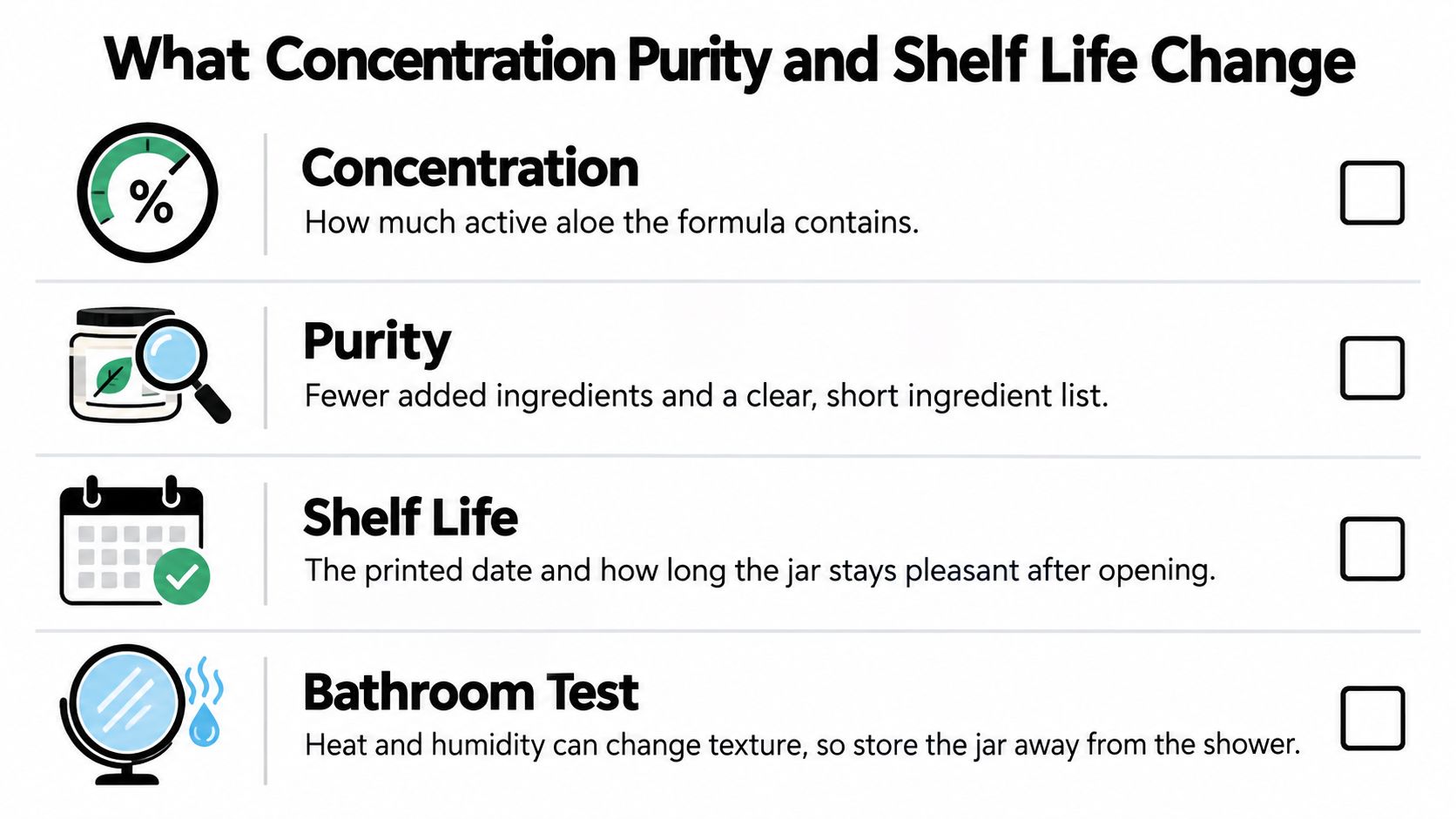
Treat “purity” in this checklist as a prompt for transparency, not a competition for the shortest ingredient list. A necessary preservative isn't an impurity, and fewer ingredients don't guarantee a better cream.
Freshness still needs protection
Don't assume an unpreserved, all-aloe preparation will remain suitable on a bathroom shelf. Refrigeration or freezing also shouldn't be treated as a replacement for a validated storage method and use window. For practical storage questions, consult ALODERMA's explanation of how long aloe vera lasts.
Processing matters too. Look for information about purified inner-leaf material and removal of latex constituents. A cream should also have an appropriate preservative system, stability assessment, and packaging suited to its ingredients.
An air-restricting pump or tube can reduce repeated exposure to air compared with an open jar, but packaging alone doesn't prove shelf life. Follow the manufacturer's storage directions rather than inventing a longer use window.
Before buying, check:
- Aloe position and identity: What material does the brand use?
- Vitamin E form: Is the ingredient named clearly?
- Supporting ingredients: Which oils, fragrance components, and preservatives accompany it?
- Container and timing: Will you finish it within the stated use period?
A pleasant cream has to remain pleasant after opening. That's why preservation and stability deserve as much attention as the headline percentage.
Matching the Cream to Your Skin Comfort
Your face doesn't read marketing categories. It tells you whether a cream feels comfortable when you smile, sit through an afternoon indoors, or apply sunscreen over it.
The same application can feel different from person to person, so use texture as a starting point rather than a verdict.
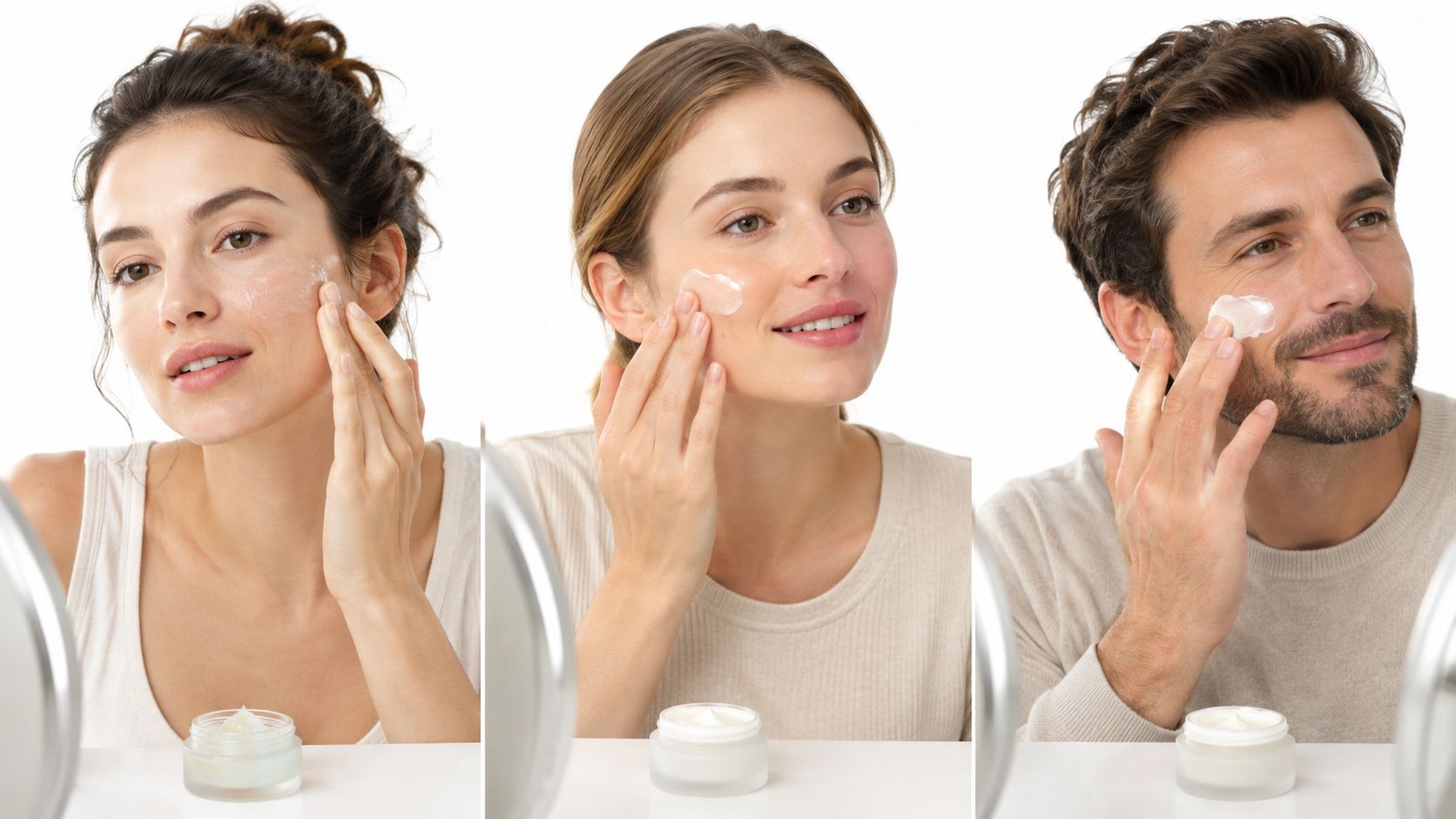
Match the finish to your day
| What you notice | What to look for | What to avoid assuming |
|---|---|---|
| Tightness by afternoon | Aloe alongside emollients such as jojoba | A watery texture will necessarily be enough |
| Discomfort around strong scents | Clear fragrance and essential-oil information | Natural means universally comfortable |
| Shine or a coated feeling | A light, easily spread layer | More cream means more useful hydration |
For dry-feeling skin, the emollient portion may make the difference between brief freshness and lasting comfort. For shiny-feeling skin, try less product before deciding you need a completely different ingredient pairing.
Natural, organic, and vitamin E aren't allergy-proof labels. Reviews of topical vitamin E in dermatology describe generally good tolerance while also documenting occasional unwanted skin reactions. Fragrance and essential oils deserve attention alongside the featured ingredients.
Make the first application small
Try a small area on the inner arm on separate evenings before moving to the whole face. This is a cautious introduction, not a guarantee against a later reaction. Stop if you notice stinging, itching, or persistent redness.
ALODERMA's guide to aloe vera for sensitive skin offers additional context for careful selection. If you're comparing everyday moisturization with care around a cosmetic procedure, Omega Lasers' resource on barrier care following skin resurfacing addresses that separate setting.
Use the video as a companion to your texture check, rather than proof that a particular formula will suit you.
In the evening, cleanse, apply a thin layer, and pause before adding anything else. In the morning, follow with sunscreen and notice whether the combination feels comfortable. Your next-morning comfort is more useful than how luxurious the cream felt during the first swipe.
Reading a Fresh Aloe Cream Label
Open the ingredient list before reading the promises on the front. A concrete example makes the difference between a recognizable ingredient and a meaningful formula easier to see.
The ALODERMA Aloe Firming & Rejuvenating Cream product page states 62% fresh, organic aloe vera and lists Organic Aloe Barbadensis Leaf Juice first, with jojoba oil and vitamin E included in the formula. That gives shoppers both a declared amount and a named aloe material to evaluate.
Here's the product-page view to compare with the label in your hand.
Read beyond the first ingredient
The aloe-first listing supports the brand's description of a fresh-juice base. But don't stop there. The other ingredients explain how that base becomes a cream rather than remaining a thin liquid.
| Ingredient on the label | What to notice |
|---|---|
| Organic Aloe Barbadensis Leaf Juice | The named aloe base |
| Glycerin | Part of the humectant team |
| Jojoba seed oil | An oil contributing conditioning and texture |
| Isoamyl laurate | An emollient in the surrounding formula |
| Coco-caprylate/caprate | Another contributor to spread and feel |
| Tocopheryl Acetate | The specific vitamin E form |
Tocopheryl Acetate appears later in the list. That fits its supporting role rather than suggesting vitamin E makes up the bulk of the cream. The list doesn't disclose its exact concentration, so don't translate its position into a percentage.
The product page describes this ingredient in terms of antioxidant support, environmental protection, and a smoother-looking appearance. Read those as the brand's cosmetic positioning, not a promise that every shopper will see the same change.
Notice what the label can't settle
An ingredient list won't tell you exactly how the cream feels beside your nose or under your usual sunscreen. It also can't establish whether you'll enjoy the finish after an evening in a warm room.
That's where your existing routine helps. If you already enjoy jojoba-containing moisturizers, that familiarity is useful. If scented products tend to bother you, examine the complete list rather than assuming the aloe base answers that concern.
A label can explain the design of a cream. Your own careful trial tells you whether you want to keep using it.
When you open the full formula, distinguish what the brand states, what the ingredient names establish, and what remains unknown. That habit makes product comparison more grounded and less dependent on persuasive packaging.
Choosing DIY Shelf Cream or Fresh Aloe
Stirring aloe gel and the contents of a vitamin E capsule together can feel satisfyingly personal. You chose the ingredients, watched them mix, and avoided a complicated label.
But control over what you add isn't the same as control over stability. A kitchen mixture doesn't automatically have a suitable preservative system, a measured cosmetic vitamin E concentration, or a reliable way to keep the water and oil portions evenly distributed.
Three Ways to Get Aloe Plus Vitamin E
| Option | What you control | Freshness cue | Best fit |
|---|---|---|---|
| Kitchen mixture | Which materials you combine | Your handling and the original materials' storage history | An immediate-use experiment, not a stored daily formula |
| Conventional shelf cream | Which finished formula you purchase | The manufacturer's ingredient and storage information | A convenient, repeatable routine |
| Fresh-aloe cream | Your choice of a documented aloe supply chain | Stated sourcing and harvest-to-processing information | Shoppers who prioritize traceability as well as texture |
If you enjoy DIY, mix only what you intend to use immediately. Don't assume adding vitamin E preserves a water-containing mixture. Avoid guessing a capsule dose for a container you plan to keep by the sink.
A shelf cream offers a different trade-off. You give up control over the recipe in exchange for a finished formula. Still, “aloe” on the front doesn't tell you whether the manufacturer uses fresh juice, reconstituted material, or a small extract addition. Ask rather than assuming.
What the farm-to-formula model adds
ALODERMA describes itself as a fully vertically integrated aloe vera company that grows all of its own organic aloe vera and processes the aloe and manufactures products onsite within 12 hours of harvest, with extraction, filtration, and stabilization inside that window, according to its fresh-aloe sourcing and manufacturing explanation.
The company presents this approach as a way to preserve the primary ingredient's bioactivity and make the aloe in its products as bioactive and effective as possible. That is a defined manufacturing goal, not proof that its cream will outperform every alternative for every person.
The useful distinction is traceability. You can ask where the leaves grew, who processed them, and how the brand connects that process to the finished cream.
For an everyday moisturizer, repeatability matters. Choose the option that gives you enough information to use it confidently, without turning your bathroom into a formulation experiment you never wanted to manage.
Your Next Step with a Daily Aloe Cream
Start with the moisturizer already at home. Turn it around and see whether you can explain its base, its vitamin E form, and the ingredients that shape its finish.
You don't need to memorize every chemical name. You need enough information to connect what you're applying with what you feel afterward.
Make a short decision checklist
- Base: Can you identify the aloe material, rather than only a front-label claim?
- Support: Does the formula name its vitamin E form and disclose any concentration it promotes?
- Fit: Does the texture suit your dry, easily reactive, or shiny-feeling areas?
- Practicality: Can you follow the storage directions and finish the container comfortably?
If freshness is your priority, return to the Aloe Firming & Rejuvenating Cream page discussed earlier and compare its complete formula with your current jar. Look for a meaningful difference, not just a longer list of attractive ingredients.
After your small-area introduction, try a modest, pea-sized layer on clean facial skin during a two-evening personal trial. This is a way to organize your observations, not a clinical test or a guarantee of suitability. Note comfort the next morning before deciding whether to make it your regular after-cleansing step.
Judge comfort rather than drama
Ask whether your face feels less tight, whether the finish stays pleasant, and whether the cream layers comfortably with your usual products. Don't add several unfamiliar products at the same time if you want a clear impression of this one.
Keep the routine manageable: A moisturizer earns its place by being comfortable and easy to use, not by making the most ambitious promise.
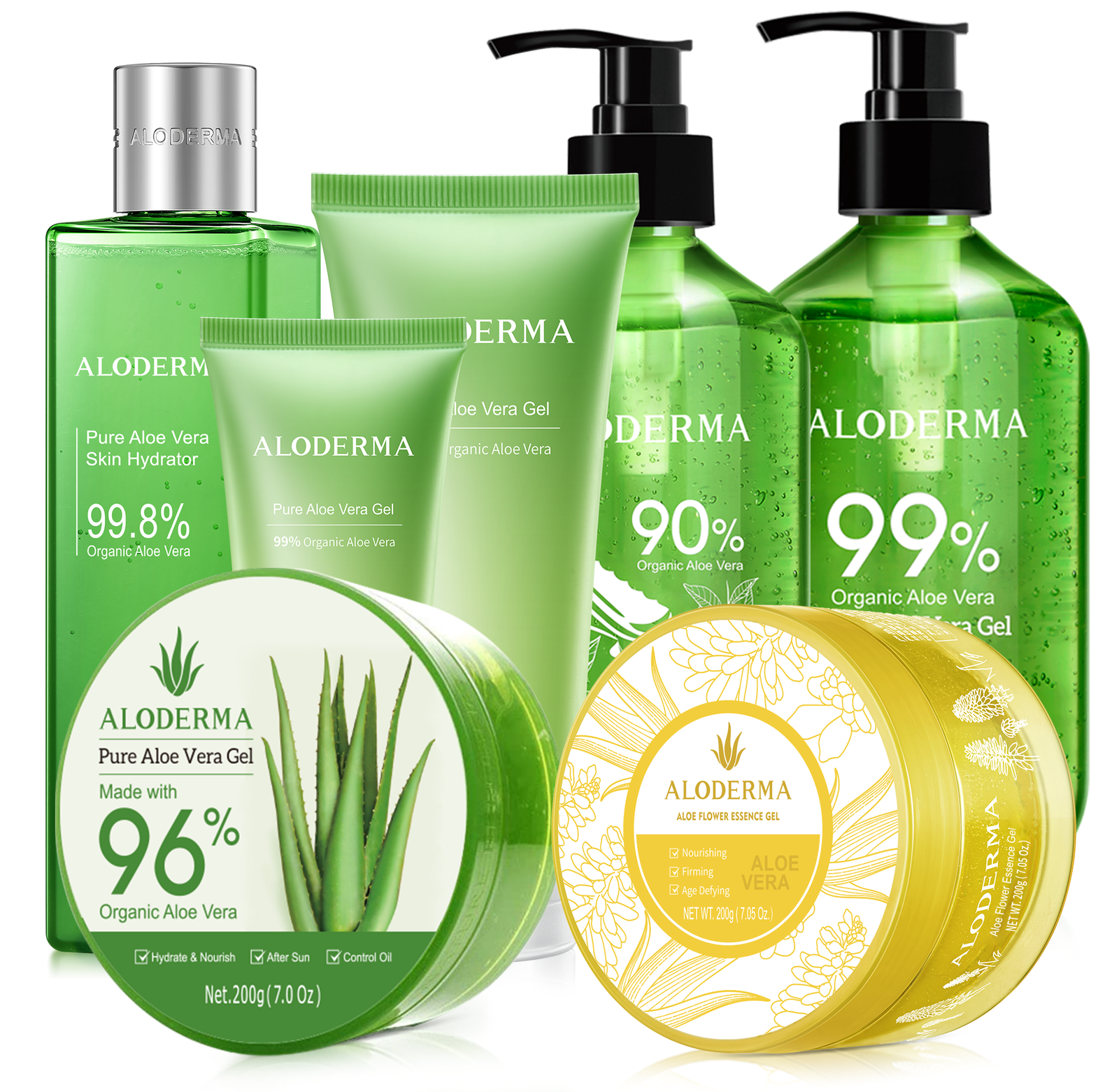
ALODERMA also offers pure gels, hydrators, and sets for shoppers who prefer a different format. On days when a cream feels like too much, consider whether a lighter layer better matches your preferences rather than forcing the same texture into every situation.
The aim is a routine you can understand without second-guessing every application. Choose the option whose label you can explain, whose finish you enjoy, and whose storage requirements fit your life.
ALODERMA offers fresh-aloe creams, gels, and hydrators, including an aloe-and-vitamin-E cream with a clearly named vitamin E form. Visit ALODERMA to compare the full ingredient lists and choose a texture that makes your daily routine feel comfortable rather than complicated.