







You wake up, head to the mirror, and your skin feels off. Maybe it's tight around your cheeks. Maybe it looks blotchy after yesterday's windy walk, a long afternoon outside, or a new serum you were excited to try. Maybe your usual moisturizer suddenly stings, which only makes the whole thing more frustrating.
That moment can send people into fix-it mode fast. More masks. More serums. More “soothing” steps. But skin that feels hot, touchy, or dry often doesn't need more effort. It needs less friction, less layering, and more support.
Calming skin usually starts with a simpler question: is your skin asking to be soothed, or is it asking for its barrier to be left alone long enough to recover? That difference changes everything. It can mean the difference between a routine that feels comforting by tonight and one that keeps the cycle going for another week.
Fresh aloe has a long history here. Aloe vera has been used for skin care and medicinal purposes for millennia, with records reaching back to Mesopotamia around 2200 BCE and mentions in the Egyptian Papyrus Ebers around 1552 BCE, with later use across Greece, Egypt, India, Mexico, Japan, and China, plus an English reference in 1655 and formal listing in the early U.S. pharmacopoeia by the early 1800s as a purgative and skin protectant in a historical aloe vera review. That long history doesn't mean every aloe product is the same. Freshness, concentration, and the rest of the formula matter.
If your skin feels unpredictable, you may find this background on what sensitive skin can look like in daily life helpful too.

Introduction to Calmer Happier Skin
When people say they want to calm the skin, they usually mean one of three things. They want the redness to settle down. They want the stinging to stop. Or they want their face to feel like their own again instead of something they have to manage every hour.
What calm skin really feels like
Calm skin isn't perfectly filtered skin. It's skin that feels comfortable when you cleanse, moisturize, and go outside. It doesn't complain every time you apply a product. It doesn't feel papery after washing or extra shiny because it's overcompensating.
A useful way to think about this is comfort first, appearance second. When skin is comfortable, the look often improves with it.
Calm skin usually comes from reducing stress on the skin, not from stacking more products on top of it.
Why the barrier-first approach matters
A lot of “soothing” advice skips over the main issue. Skin can look reactive because the outer barrier is worn down from too much cleansing, too much exfoliation, too many actives, dry air, heat, wind, or sun exposure. If that's the problem, a soothing ingredient helps most when it's part of a routine that also reduces further stress.
That's why this guide focuses on a barrier-first approach. You'll see how to read what your skin is telling you, what to do the same day things go wrong, which ingredients are useful, and which daily habits keep skin stuck in recovery mode.
Why Skin Becomes Reactive and Uncomfortable
Your skin barrier works a bit like a brick wall. The skin cells are the bricks. The lipids are the mortar that helps hold everything together and keep water from escaping too easily. When that wall is in good shape, skin tends to feel steady. When the mortar gets worn down, skin becomes easier to upset.
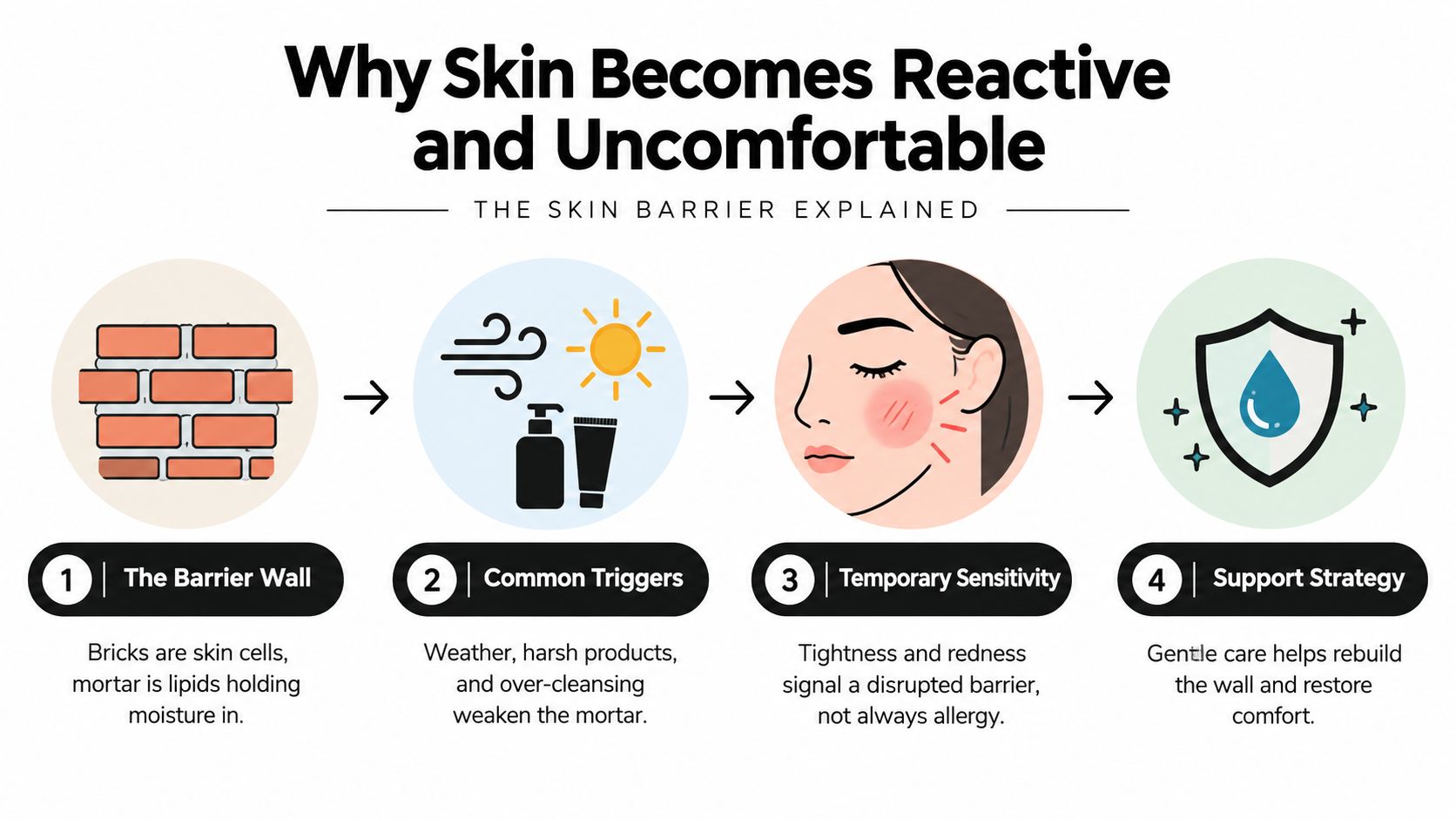
Common routine mistakes that wear skin down
A barrier rarely gets overwhelmed by one dramatic moment alone. More often, it's a pile-up of small things.
- Harsh cleansing: A face wash that leaves your skin squeaky may also leave it stripped.
- Too many actives at once: Exfoliating acids, retinoids, peels, scrubs, and strong brightening products can be too much when layered together.
- Weather shifts: Cold wind outside and dry heated air inside can leave skin feeling rough and tight by evening.
- Over-washing: Cleansing in the morning, after the gym, at night, and after every little oil breakthrough can push skin into a stressed cycle.
A dermatology-oriented discussion published in 2026 notes that excessive or improper use of skincare products can lead to irritation, allergic contact dermatitis, photosensitivity, and barrier disruption, especially when multiple active products are layered together, as described in this peer-reviewed article on skincare routine trends. The takeaway for everyday routines is simple. More products don't always create calmer skin.
What your skin may be trying to tell you
If your face feels tight after cleansing, flushes easily, or stings when you apply products that used to feel fine, that often points to a barrier that wants a break. People get confused here because they assume redness always means they need a stronger treatment or a more targeted serum. Sometimes the opposite is true.
A few clues can help:
| Skin signal | What it often means in daily life |
|---|---|
| Tightness after washing | Cleanser may be too strong or you're washing too often |
| Stinging from basic products | Barrier may be temporarily worn down |
| Blotchiness after wind or heat | Skin is more exposed and less resilient than usual |
| Several products suddenly feel “too active” | Routine overload may be the issue |
The real goal
When skin gets reactive, the first job isn't chasing every visible symptom one by one. The first job is protecting the wall so it can hold water better and feel steady again. That's why learning to calm the skin starts with what you stop doing, not only what you add.
How to Calm the Skin Quickly When Irritation Hits
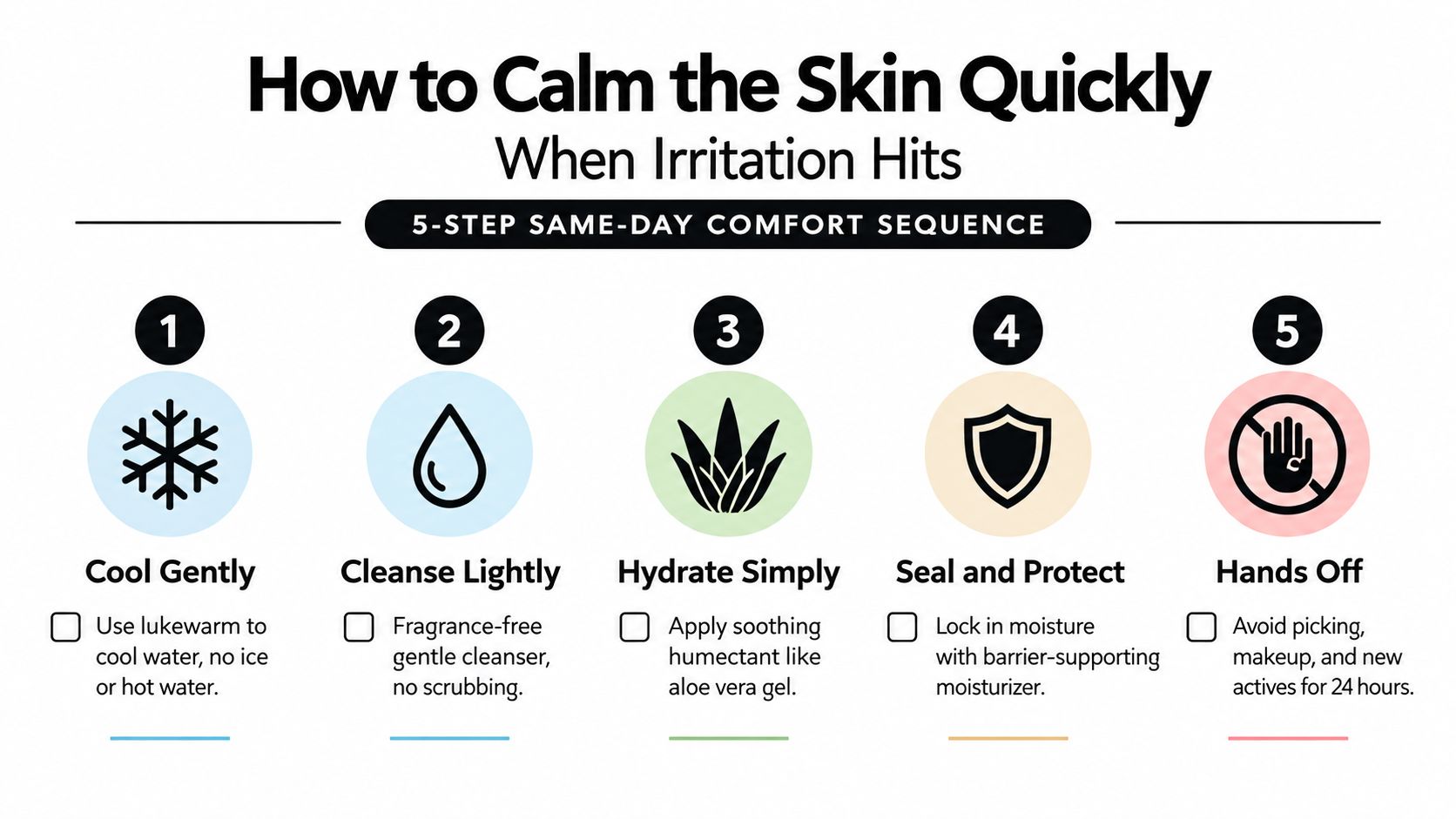
When your skin is already upset, speed matters. Not speed in the sense of adding five rescue products, but speed in removing what's making things worse. A same-day calming routine should feel almost boring. That's usually a good sign.
If you want more examples for those rough skin days, this guide on how to soothe irritated skin is a helpful companion.
Your first 24 hours
Start by taking away the obvious stressors. Skip exfoliants, scrubs, peels, retinoids, strong acids, and any product that usually tingles. If makeup isn't necessary, give your skin a day off.
Then follow this order:
-
Cool the area gently
Use cool or lukewarm water, not ice and not hot water. Hot water can leave skin even drier. Ice can feel too intense on already reactive skin. -
Cleanse only if you need to
If you have sunscreen, sweat, or makeup on, use a very gentle cleanser with your fingertips. Don't use a cleansing brush, washcloth, or scrubby pad. -
Apply simple hydration
Think of this as giving dry soil a drink before doing anything else. Lightweight hydration helps skin feel less tight. -
Follow with a basic moisturizer
A gentle cream or lotion helps reduce water loss and supports comfort. -
Leave it alone
No picking, rubbing, testing new masks, or trying to “speed things up” with stronger treatments.
Practical rule: If your skin is stinging, your routine should get shorter, not longer.
Real-life examples that help
A few common situations make this easier to picture.
- After too much sun: Rinse with cool water, pat dry, apply lightweight hydration, then use a simple moisturizer. Avoid exfoliating “to get rid of roughness.”
- After shaving: Don't follow with strong acids or heavily fragranced products. Keep the routine plain and soft.
- After trying a new product: Stop using the likely trigger first. Don't add three new “repair” products on the same day or you won't know what your skin is reacting to.
What not to do when skin is flaring
People often make skin more uncomfortable by trying to fix it aggressively. These are common traps:
- Don't scrub off flakes: Flaking often means the surface is vulnerable.
- Don't keep patching over discomfort with actives: If a product burns every time, your skin is giving clear feedback.
- Don't wash repeatedly: Re-cleansing because your face feels odd can deepen the cycle.
- Don't assume heavier is always better: Rich formulas can feel smothering on oily or blemish-prone skin. Comfort often comes from the right texture, not the thickest one.
The goal for the day is simple. Lower the noise. Let the skin settle. Then you can decide what supportive ingredients belong in your regular routine.
Soothing Ingredients That Help Skin Feel Comfortable
When people shop for calming products, they often focus on labels like “soothing” or “gentle” without asking a more useful question. How does this ingredient help my skin feel comfortable? Some ingredients pull in water. Some help reduce that dry, tight feeling. Some support the surface so skin feels less reactive during the day.
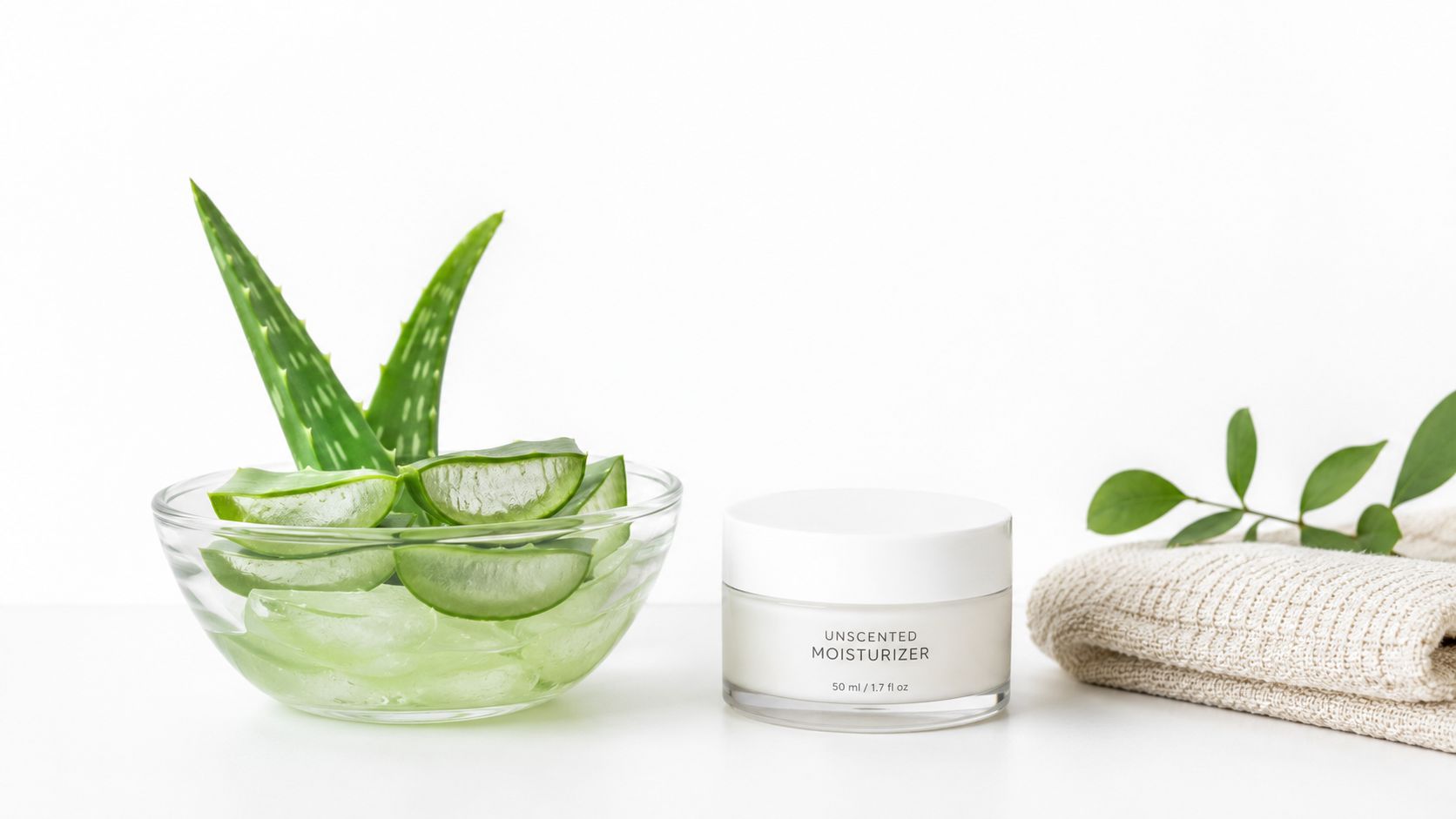
Aloe belongs in this conversation, but the details matter.
Why aloe keeps showing up in calming routines
Clinical evidence on aloe's calming role is mixed, which is useful to know. A review identified 23 aloe clinical studies meeting inclusion criteria, and one randomized study found that 97.5% aloe vera gel significantly reduced UV-induced erythema after 48 hours and performed better than 1% hydrocortisone in a placebo gel, while other controlled studies found aloe gel or cream didn't significantly reduce radiotherapy-induced dermatitis versus control in this review of clinical aloe trials. In plain language, aloe can help visible redness in some situations, but it isn't automatically universal for every kind of skin stress.
Concentration matters too. In a human patch-test study using sodium lauryl sulfate as the irritant, transepidermal water loss and erythema were lower when 100% aloe vera was present, and the authors concluded that aloe vera improved recovery of the skin barrier and redness induced by irritants, with the effect appearing only at high aloe concentration in this skin barrier recovery study. That helps explain why some aloe products feel much more helpful than others.
Freshness changes the picture
Aloe isn't the kind of ingredient where “contains aloe” tells you enough. Fresh aloe vera leaves can begin losing biological activity within 6 hours at room temperature, and a review notes the leaves should be refrigerated within 6 hours or processed on-farm. That same review cites an optimal processing window of within 36 hours of harvest to preserve efficacy in this review on aloe processing and quality.
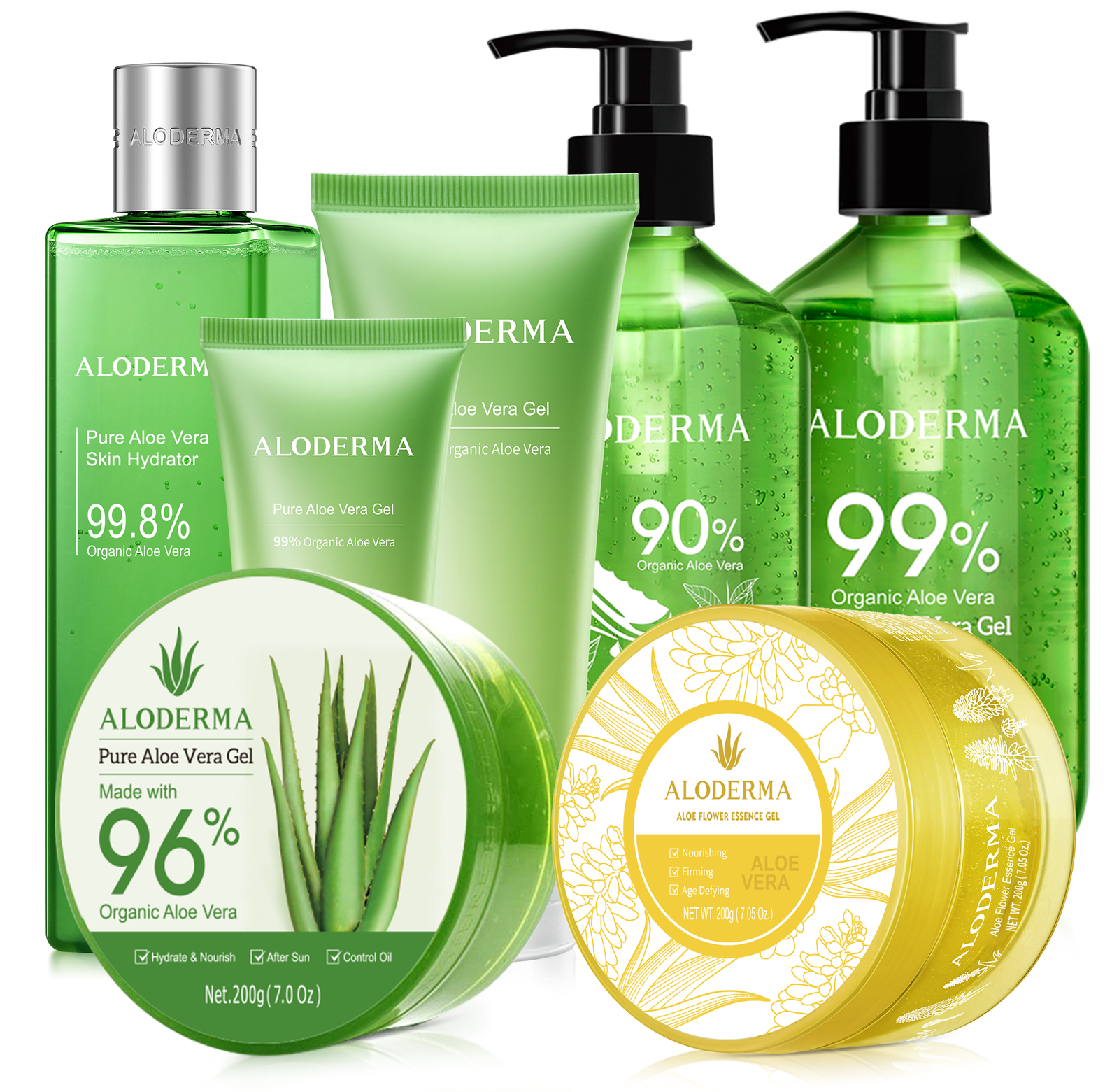
That's one reason a farm-to-formula setup matters. Aloderma is a fully vertically integrated aloe vera company that grows all of its own organic aloe vera and processes its aloe vera and manufactures onsite within 12 hours of harvest, so the primary ingredient in every product is handled while it is still highly bioactive. If you want to compare textures and ingredient lists, browse options such as the Aloe Vera Gel collection, facial toners and mists, and moisturizers and creams.
What else helps skin feel at ease
A calming formula often combines more than one kind of support. Think in categories:
| Ingredient role | What it does for comfort | Example mindset |
|---|---|---|
| Humectant | Draws water to the skin | Helpful when skin feels dry and papery |
| Lightweight hydrator | Adds moisture without heaviness | Useful for oily or blemish-prone skin |
| Barrier-supporting cream | Helps reduce water loss | Good at night or after cleansing |
Aloe can sit in the first two groups depending on the formula. Independent research has also found measurable hydration benefits. One randomized study reported that a cream containing Aloe barbadensis increased hydration units from 28% after 1 hour to 31% after 15 days, while another study concluded freeze-dried Aloe vera extract is effective for improving skin hydration, likely through a humectant mechanism in this study summary on aloe and skin hydration.
A quick visual can make product selection easier:
How to choose without overthinking it
For reactive skin, look for formulas that feel straightforward. Check where aloe appears in the ingredient list. Consider whether the texture matches your skin type. Oily skin often prefers gel creams, essences, or fresh gels. Drier skin may want that first hydrating layer followed by a cream.
If your skin often gets overwhelmed, this guide to aloe vera for sensitive skin helps decode what to look for. Also remember that “plant-based” doesn't automatically mean low-risk. The most comforting product is often the one with the fewest likely triggers and a texture you'll use consistently.
A Gentle Daily Routine That Keeps Skin Calm
A calming routine shouldn't feel like a project. If your skin gets reactive easily, the best routine is often the one you can repeat half-asleep without second-guessing every bottle. Consistency beats complexity.
Morning that feels light
A simple morning routine usually works well in this order:
- Gentle cleanse if needed: If you wake up oily, use a mild cleanser. If your skin feels balanced, some people do well with just lukewarm water.
- Hydrating layer: A toner, mist, or essence can add that first drink of water before moisturizer.
- Light moisturizer: Choose a texture that fits your skin, not a trend.
- Daily sun protection: A comfortable sunscreen matters because an uncomfortable one often gets skipped.
If your skin is oily, think light and breathable. A hydrating gel followed by sunscreen may be enough. If your skin leans drier, add a creamier moisturizer on top of the hydrating step.
Evening that helps skin settle
Night routines are where people often overdo it. Keep the structure plain.
- Remove sunscreen and makeup gently.
- Cleanse without scrubbing.
- Apply hydration while skin is still slightly damp.
- Seal with a moisturizer that feels comforting, not heavy for the sake of being heavy.
Patch testing helps here. Try one new product at a time and give your skin a few days before adding another. When people restart five products at once after a flare, they usually end up confused about what worked and what didn't.
If your skin has been touchy lately, keep your whole routine to the basics for several days before reintroducing any stronger step.
Small choices that support the routine
Your pillowcase can be part of the comfort picture too, especially if friction makes your cheeks feel rough by morning. This cotton vs silk pillowcase guide gives a practical look at how fabric texture affects sleep comfort and skin contact overnight.
A simple decision filter can also keep your routine steady:
- If your skin stings, skip extras
- If it feels tight, increase hydration before increasing treatment products
- If it looks shiny but feels dehydrated, don't assume you need harsher cleansing
- If a product works sometimes but burns during weather changes, pause it and return later
That kind of flexibility helps you calm the skin before things spiral into a week-long reset.
Everyday Habits and Triggers That Can Upset Skin
Some skin irritation doesn't come from a serum at all. It comes from habits you barely notice because they feel normal. A hot shower. Rubbing your face dry with a towel. Washing again at lunch because your forehead feels slick.
The quiet triggers people miss
A few common habits can keep skin stuck in a loop:
- Hot water: It feels relaxing, but your face often prefers lukewarm water.
- Rough drying: Patting with a soft towel is kinder than brisk rubbing.
- Too much cleansing: Oil control can backfire when your skin feels stripped.
- Friction from fabrics: Pillowcases, hats, and workout headbands can all matter if your skin is already sensitive.
Indoor environment matters too. Dry air, dust, and airborne chemicals can make skin feel less comfortable over time. If you're trying to make your home feel gentler overall, this indoor air quality VOC guide offers a useful overview of household irritants that can affect everyday comfort.
Natural isn't always gentle
A lot of shoppers get tripped up. They assume that if a product is botanical-heavy, it has to be calming. But reactive skin often does better with fewer likely triggers, not more exotic extracts.
A simpler formula can be the smarter choice, especially if your skin gets overwhelmed by strong scent or too many layers. Minimalism isn't boring when your skin finally stops complaining.
The routine that helps you calm the skin fastest is often the one that removes unnecessary stimulation.
Try a quick skin comfort audit
Ask yourself these questions tonight:
| Habit | Better swap |
|---|---|
| Very hot cleansing | Lukewarm rinse |
| Scrubbing with towel | Gentle pat dry |
| Many treatment steps nightly | A short routine for several days |
| Frequent product switching | One change at a time |
People usually don't need a complete bathroom overhaul. They need a few calmer choices repeated regularly.
Your Path to Lasting Comfort and When to Get Support
Comfortable skin usually comes back in layers. First the stinging eases. Then the tightness fades. Then you stop thinking about your face every hour. That's progress, even if the mirror doesn't look perfect overnight.
A good two-week check-in is simple:
- Notice how your skin feels after cleansing
- Track whether products sting less
- Watch for fewer “bad skin days” after weather, shaving, or long outdoor time
- Keep your routine steady long enough to learn from it
If your skin does best with lightweight, aloe-forward care, it can help to compare ingredient lists and formats before buying. Aloderma also offers tools that make that easier, including an ingredient dictionary, a skin care quiz, curated sets on its website, and shopping through Amazon. The brand states that its products use at least 95% naturally derived ingredients and that its approach is supported by ECOCERT, USDA, and EU Organic certifications, along with cruelty-free standards.
There's also an important point about expectations. Sometimes a “calming” routine keeps failing because the skin isn't just briefly overwhelmed. If discomfort keeps spreading, stinging doesn't ease after simplifying, or redness stays persistent despite a gentle routine, getting professional advice is a smart next step. Support isn't a last resort. It's part of taking your skin seriously.
Lasting comfort doesn't come from finding the most intense fix. It comes from noticing what your skin tolerates well, choosing hydration that fits your texture preferences, and giving your barrier a routine it can live with.
ALODERMA offers fresh organic aloe vera skincare designed around lightweight hydration and simple daily comfort, from gels and toners to moisturizers, cleansers, and masks. If you want to calm the skin without piling on too many actives, explore the ingredient details, routines, and curated options at ALODERMA.