







Your hair feels clean for about six hours. Then the ends go fluffy, the roots go flat, and somehow your wash day still leaves you reaching for more product.
A lot of people end up here. You shampoo because your hair feels coated. Then your hair feels stripped, so you pile on conditioner, cream, oil, or leave-in to get it back to soft. A day or two later, it's heavy again. That push and pull is exactly why so many people start looking at co wash products.
Co-washing isn't magic, and it isn't a rule you have to follow forever. It's a gentler way to cleanse, especially when your hair seems to hate harsh wash days but still needs regular refreshing. If you've ever thought, “Why does my hair feel dry and overloaded at the same time?” this method can make a lot of sense.
Tired of the Shampoo-Conditioner Cycle
Maya's routine looked fine on paper. Shampoo, rinse, conditioner, mask on weekends, curl cream after. But every wash day ended the same way. Her hair felt rough in the shower, soft for a moment once conditioner hit, then frizzy by evening and puffy by the next morning.
That's a familiar loop, especially if your hair has texture, color processing, dryness through the ends, or just a low tolerance for strong cleansers. You wash because your hair feels dirty. Then the wash itself leaves you chasing softness again.
Co wash products appeal to people in that exact spot. Not because they “replace shampoo forever,” but because they change the goal. Instead of trying to strip everything away and rebuild moisture after, they aim to cleanse while keeping more of your hair's natural softness intact.
If you're still comparing routines, it can also help to look outside the co-wash conversation and discover the best Japanese shampoo when you want a gentler traditional wash option. Sometimes the answer isn't choosing one camp. It's learning what kind of cleanse your hair responds to best.
Hair frustration usually isn't about doing too little. It's often about doing the right thing at the wrong intensity.
The good news is that you don't have to commit to an all-or-nothing routine. You can build something softer, simpler, and more realistic.
What is Co-Washing and How Does It Work
Co-washing means cleansing your hair with a conditioner-based cleanser instead of a traditional shampoo. The method became closely associated with the natural hair movement and the Curly Girl Method because many people with curls, coils, or easily dried-out hair noticed that frequent shampooing left their hair rough, swollen, or harder to manage, as explained by Medical News Today's co-washing overview.

Co-washing treats hair more gently
A delicate sweater needs a gentler wash than a muddy towel. Hair works in a similar way. If your strands are dry, textured, color-treated, or prone to frizz, strong cleansers can remove more oil and surface lubrication than your hair can comfortably spare.
That does not mean shampoo is bad. It means different hair needs different levels of cleansing.
Co-wash products are designed to loosen sweat, light oil, and product residue while keeping more softness in place. They usually rely on a mix of conditioning ingredients and mild cleansing agents, so the hair feels less squeaky and more flexible after rinsing. For many people, that softer finish is the whole point.
What the product is doing on your hair
A co-wash feels different because it cleans in a different way. Instead of giving you that stripped, foamy shampoo feeling, it works more like a cream that helps grime slide off while leaving some cushion behind.
Here's the simple version:
- Mild cleansers loosen buildup: They help lift everyday residue from the scalp and hair.
- Conditioning ingredients add slip: That slip helps you spread the product, detangle, and reduce friction during wash day.
- A light coating stays on the hair: After rinsing, some conditioning agents remain on the strand, which is why hair often feels softer than it does after shampoo.
This is also where an aloe-first formula can make sense. Aloe is mostly water, but it is not plain water. In hair care, it helps give a product a light, hydrated feel, so cleansing can feel fresh instead of heavy. That matters whether co-washing becomes your main wash method or one tool in a routine that also includes low-poo or the occasional clarifying wash.
Why co-washing can seem confusing at first
Many first-time users expect bubbles, instant squeak, and that “super clean” feeling. Co-wash does not usually give you those signals.
So it can feel like nothing is happening, even when the product is doing its job.
The main cleaning action comes from water, product spread, and scalp massage. If shampoo is like using dish soap to cut through grease fast, co-wash is closer to using a creamy face cleanser. It still cleans, but the goal is to remove what you need to remove without making the surface feel stripped afterward.
| What you expect | What co-washing needs |
|---|---|
| Big foam means it's working | Slip, water, and scalp massage do most of the cleansing |
| A little product is enough | Thick, dense, or very dry hair often needs more product |
| Quick rinse in, quick rinse out | Giving it time to spread and lift residue matters |
Practical rule: If you are not spending time massaging your scalp with your fingertips, you are leaving a lot of the cleansing work undone.
Used this way, co-washing is less of a rulebook and more of a setting on your routine. On some wash days, your hair may want a gentle aloe-rich co-wash. Other times, it may need a low-poo or a deeper reset. The goal is not loyalty to one method. The goal is clean hair that still feels like hair you can live in.
Decoding the Ingredient List of Co-Wash Products
The front label can be soothing. “Moisturizing.” “Nourishing.” “Clean.” But the back label tells you whether a product is likely to leave your hair refreshed or coated.
Not all co wash products are built the same way. Some are thoughtfully balanced for gentle cleansing. Others are basically heavy conditioners with a little marketing wrapped around them.
Ingredients worth understanding
Start with the ingredients that usually make a co-wash feel good to use.
Fatty alcohols like cetyl alcohol or cetearyl alcohol sound intimidating, but they aren't the harsh alcohols that make hair feel dry. In this category, they help with slip, softness, and creaminess. They're often part of what gives a co-wash that cushioned, detangling feel.
Conditioning agents such as behentrimonium methosulfate are also common in cream cleansers. Despite the word “sulfate” in the name, this ingredient isn't the same as a strong shampoo sulfate. In co-wash formulas, it helps hair feel smoother and easier to comb through.
If you like ingredient details, some formulation guides note that BTMS-50 is valued for stronger conditioning performance in co-wash style products, especially when paired with aloe-rich bases for a soft, spreadable texture, as discussed by Humblebee & Me's co-wash formulation guide.
Ingredients that can trip you up
The biggest troublemaker for many people is buildup. If your hair starts feeling waxy, limp, overly soft in a bad way, or dull no matter how much you rinse, the ingredient list deserves a closer look.
A key thing to watch is non-water-soluble silicone, often listed as something like dimethicone. A 2025 EWG review of 50 popular co-washes found that 68% contained ingredients like dimethicone, which can cause buildup, and preservatives like phenoxyethanol, contradicting the “natural” and “nourishing” claims on the front of the bottle, as summarized by Natural Hair for Beginners.
That doesn't mean every silicone is automatically bad for every head of hair. It means silicone-heavy co-washes can become frustrating fast, especially if you aren't using a stronger cleanser from time to time.
A quick label-reading shortcut
When you scan a bottle, use this checklist:
- Look for cleansing support: A true co-wash should include more than just standard conditioner ingredients.
- Check for heavy film-formers: If you already know your hair gets coated easily, be careful with dimethicone-heavy formulas.
- Notice how the product describes itself: “Cleansing conditioner” is usually a better sign than a standard rinse-out conditioner being used as a hack.
- Trust your wash-day feel: If your roots never feel refreshed, the formula may be too rich for your hair.
If a product makes detangling easier but leaves your roots feeling coated by day two, that's useful information, not a personal failure.
The smartest shoppers don't hunt for a perfect ingredient list. They look for a formula that matches how their own hair behaves.
Is Co-Washing the Right Choice for Your Hair
Some people try co-washing once and swear they've found their wash-day answer. Others try it and wonder why their hair feels heavier, flatter, or oddly sticky. Both reactions can be true.
The question isn't whether co-washing is “good” or “bad.” What matters is whether it fits your hair texture, styling habits, and how quickly your scalp starts to feel coated.

If your hair is curly or coily
Co wash products often shine in this regard. Curly and coily hair usually doesn't love aggressive cleansing because the hair can feel dry, tangled, and rough very quickly after shampoo.
A co-wash can help keep more softness in the hair while making detangling easier in the shower. If your wash days usually end with knots, halo frizz, or that straw-like feeling on the ends, a cleansing conditioner may feel like a relief.
This is especially helpful if you wear wash-and-gos, twist-outs, braid-outs, or styles that need some moisture left in the hair to look good. Many people in this category do well with regular co-washing plus occasional stronger cleansing when their hair starts to feel coated.
If your hair is fine or straight
You don't need to avoid co-washing. You just need to be more selective.
Fine hair often shows buildup faster. A rich cleanser that makes curls feel juicy can make finer strands look limp by the next day. If your roots flatten easily or your hair already struggles to hold volume, co-washing may work better as an occasional reset between shampoos rather than your only wash method.
A lighter cleansing conditioner, a careful rinse, and less product through the lengths usually makes the difference here.
If your roots get oily fast
Honesty matters. Co-washing may still have a place in your routine, but exclusive co-washing often isn't the easiest fit.
A 2025 survey found that 37% of users reported worsened flakiness after exclusive co-washing, which highlights the risk of trapped sebum when gentle cleansing isn't balanced with regular clarifying, according to The Zoe Report's discussion of co-wash products.
If your roots already feel slick quickly, a flexible routine usually works better than a strict one.
If your hair is color-treated
Color-treated hair often appreciates gentler wash days. Many people in this group like co-washing because it reduces that rough, over-cleansed feeling that can show up after frequent shampooing.
The key is balance. If you use styling creams, dry shampoo, edge products, oils, or texture sprays, your hair still needs a fuller cleanse sometimes. Think of co-washing as your softer option, not your only option.
If your scalp is easily bothered by heavy products
This group often gets conflicting advice. “Use more moisture” can sound appealing, but more moisture isn't always the answer if residue is the actual issue.
A co-wash can feel wonderful on wash day but become frustrating if the formula is too rich or your rinse isn't thorough enough. If your scalp feels better with a fresh, clean base, keep co-washing in the mix only if your hair stays light and comfortable afterward.
A simple decision guide
| Your hair pattern or concern | Co-washing may feel like | Best approach |
|---|---|---|
| Curly or coily, dry ends | Softer, easier wash days | Use regularly if hair stays light |
| Fine or easily weighed down | Nice at first, heavy later | Use occasionally, rinse very well |
| Oily roots | Refreshing only briefly | Pair with regular clarifying |
| Color-treated | Gentler than frequent shampoo | Alternate based on product use |
The most realistic mindset
You don't have to join Team Co-Wash or Team Shampoo.
Some weeks your hair needs softness. Other weeks it needs a proper reset. If your workouts changed, the weather shifted, or you layered on more stylers than usual, your routine should be allowed to change too.
A few signs that co-washing might be working for you:
- Your hair feels softer after rinsing: Not coated, just easier to handle.
- Detangling gets easier: You're losing less patience in the shower.
- Your style lasts better: Curls clump nicely instead of puffing out immediately.
And a few signs it may need adjusting:
- Your roots never feel clean enough
- Your hair gets limp faster than usual
- You keep adding products because the hair feels weird, not dry
That last one catches a lot of people. Hair with buildup can feel dull and uncooperative, which gets mistaken for dryness. Then more product goes on, and the cycle keeps going.
Hair can be thirsty, but it can also be coated. Those are not the same problem.
Your Practical Guide to the Co-Washing Method
Trying co-washing for the first time is less about finding the “perfect” bottle and more about using it in a way that effectively cleans your hair.
How to co-wash so it actually works
Start with very wet hair. Not lightly damp. Really wet. Water helps distribute the product and loosen residue before the cleanser even starts working.
Then follow this rhythm:
-
Apply enough product to your scalp first
Focus on the roots before the lengths. That's where oil, sweat, and residue usually collect first. -
Massage with your fingertips
Spend real time here. Small circular motions help lift buildup without rough scrubbing. -
Add more water as you go
This is the part people skip. Water helps the product spread and move through the hair. -
Pull the product through your lengths
The runoff plus a little extra product is usually enough for the rest of your hair. -
Rinse much longer than you think you need to
If the hair still feels filmy, keep rinsing.
If your ends tangle easily or feel puffy after cleansing, pairing wash day with a richer follow-up conditioner can help. If you're trying to keep your routine simple, this guide to a protein-free deep conditioner routine can help you decide when you need extra softness after cleansing.
The buildup part matters
Here's the honest part. Co-washes don't cleanse as strongly as shampoo. Studies of co-wash formulas show they have only 20-30% of the cleansing efficacy of sulfate shampoos, making it necessary for many users to incorporate a clarifying wash every 4-7 washes to prevent residue accumulation, based on the analysis in the NIH-reviewed International Journal of Trichology article.
That doesn't mean co-washing fails. It means it works best inside a routine that has room for a deeper cleanse when your hair starts feeling coated.
Watch for these clues:
- Your roots feel waxy: Even right after washing.
- Your hair dries oddly: Flat at the top, puffy at the ends.
- Your products stop performing well: Curl cream suddenly “does nothing.”
A quick visual tutorial can also help if you're a learn-by-watching person:
A sample flexible routine
You don't need a rigid schedule. But many people do well with a pattern like this:
- Co-wash day: After a sweaty week, when hair feels dry but not heavily coated
- Regular conditioner day: If you shampooed and just need softness back
- Clarifying day: When your roots feel heavy, your style won't hold, or nothing is rinsing clean
The best co-washing routine is the one that leaves your hair soft on day one and still manageable on day three.
The ALODERMA Difference Farm-Fresh Aloe for Gentle Hair Care
If the whole point of co-washing is gentleness, the base ingredients matter. A heavy, coating formula can defeat that purpose. A lighter, water-friendly formula with soothing plant ingredients usually makes more sense.
That's why aloe is such a natural fit for this category. Aloe-based hair care can add slip and hydration without making the routine feel greasy or overdone. For people who want softer cleansing, that balance is appealing.
Why fresh aloe stands out
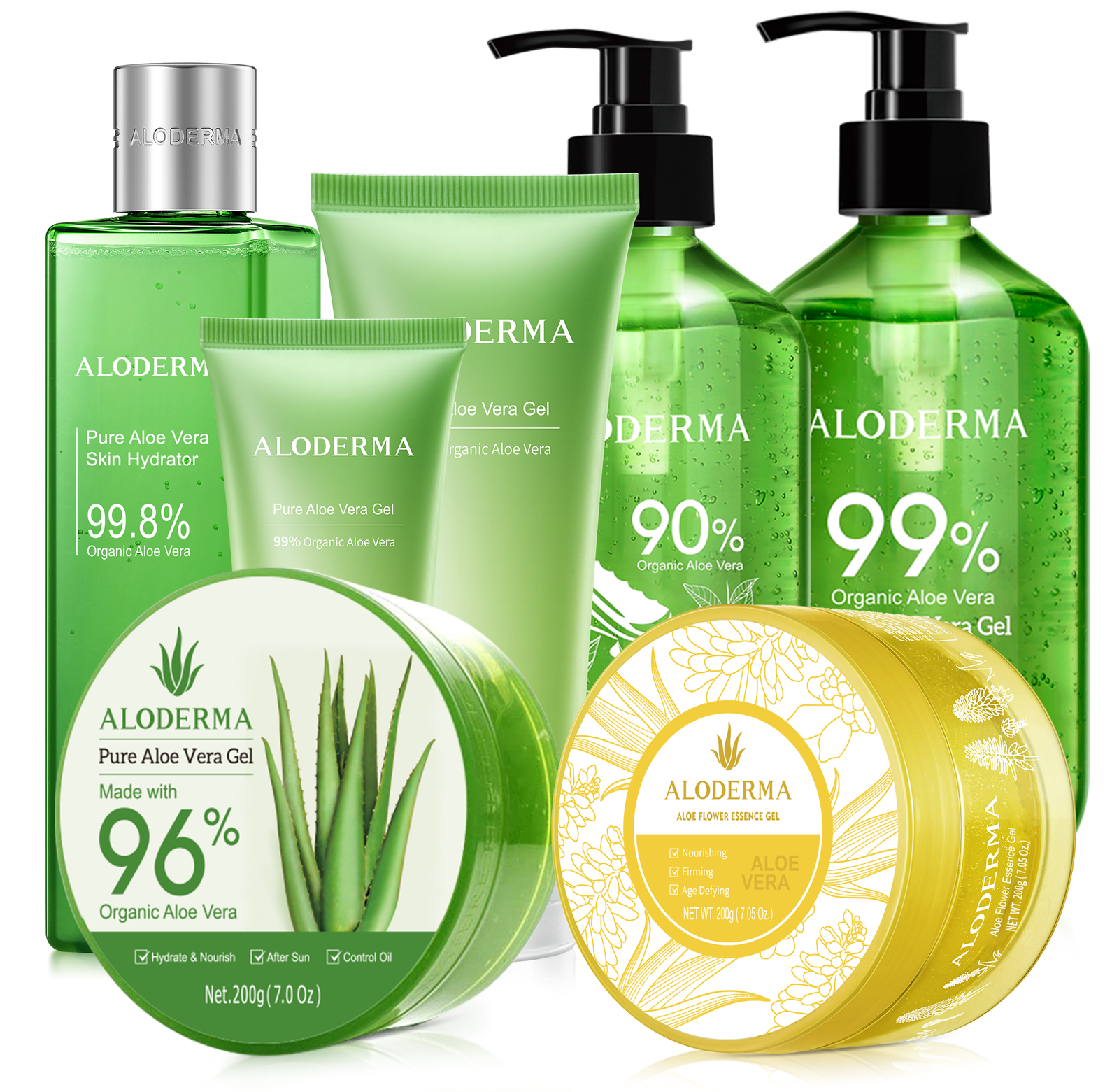
ALODERMA is a fully vertically integrated aloe vera company. They grow all of their own organic aloe vera, process it on-site, and manufacture within 12 hours of harvest so the aloe in each formula stays as bioactive and effective as possible.
That matters because aloe isn't just there for label appeal. In gentle hair care, it can help create that soft, hydrated feel people are often chasing with co-washing in the first place.
If you want a deeper background on why aloe works so well in a hair routine, ALODERMA's article on aloe vera for healthy hair is worth reading.
Where it fits in a real routine
For someone building a flexible cleansing routine, an aloe-first conditioner can serve a few roles. It can help with detangling after a fuller cleanse. It can support a softer midweek wash. It can also make the lengths feel smoother when your hair is prone to roughness after rinsing.
If you're also exploring complementary options for dry ends or shine, you can discover Maximum Health Products' hair collection for another angle on moisture support. It's useful to compare textures and ingredient styles when you're figuring out what your hair likes.
The key idea
The strongest routines usually aren't built around “more product.” They're built around better ingredients and smarter timing.
That's where the aloe-first approach stands out. Instead of forcing your hair through a harsh-cleanse-then-repair cycle, it supports the gentler philosophy many people want from co wash products in the first place.
Building Your Perfect Hair Cleansing Routine
The best routine usually looks less exciting than the internet promises. It's not a perfect seven-step system. It's a pattern you can repeat without your hair fighting you.
For some people, that means co-washing often and clarifying now and then. For others, it means mostly using a gentle shampoo and saving co-wash for dry weeks. Both can be smart.
What matters most is paying attention to response, not rules.
- If your hair feels soft and light, keep going: That's a good sign your current balance is working.
- If it feels coated, reset sooner: You probably need a deeper cleanse, not more leave-in.
- If your ends stay rough, support them differently: Your cleanser may be fine, but your post-wash care may need adjusting.
Hair care is personal in the same way other wellness routines are personal. Some people do better with simple habits and consistency, while others need more adjustment based on season, stress, styling, and daily life. That same flexible mindset shows up in other areas too, like improving gut health with organic tea, where gentler routines often work better than extremes.
If you want one easy place to start, use a cleanser that doesn't make your hair feel punished, and keep a conditioner on hand that supports softness without weighing everything down. A good option for that kind of routine is the ALODERMA Aloe Nourishing Hair Conditioner.
If you want gentler, aloe-first hair care that fits a flexible routine, explore ALODERMA. Their farm-to-formula approach starts with organic aloe vera grown on their own land and processed on-site within 12 hours of harvest, so every product is built around fresh, bioactive aloe designed to support soft, comfortable, manageable hair.