







Trying a new face wash shouldn't feel like a gamble. But if your skin often feels tight, hot, dry, or just uncomfortable after cleansing, you already know how frustrating that cycle can be. You buy something labeled gentle. You use it once or twice. Then your face feels worse than it did before you washed it.
That's why choosing a face soap for sensitive skin isn't really about chasing trendy labels. It's about learning how to read what a product is doing. Once you understand a few basics, especially ingredients, cleanser type, and pH, shopping gets much easier and your routine gets a lot calmer.
Your Guide to Gentle Facial Cleansing
A lot of people think they need a stronger cleanser because their skin feels “dirty” after a day's activities. Then they wash, their face feels squeaky, and they assume that means it worked. For sensitive skin, that feeling is often the warning sign.

Why this topic matters now
Sensitive-skin formulas aren't a tiny niche anymore. Sensitive skin cleansers represent 12.4% of the global face cleansers market, which reached $13.14 billion in 2025, reflecting growing awareness of harsh additives like alcohol and sulfates and a broader move toward barrier-supportive, plant-derived ingredients, according to the face cleansers market report.
That shift makes sense. More shoppers are paying attention to how a cleanser feels after rinsing, not just how much foam it creates. A gentle cleanser should leave your skin feeling clean and comfortable, not stripped.
What most people get wrong
Many people shop by front-label language alone. Words like “natural,” “fresh,” and “for sensitive skin” sound reassuring, but they don't automatically tell you whether the formula will feel good on your face. The better approach is to look one layer deeper.
Think of this article as a filter for the noise. If you've been curious about plant-based care, this primer on understanding aloe vera for face is a useful companion because it explains why aloe is often chosen for comfort-focused routines.
Practical rule: If your face feels tight a few minutes after washing, your cleanser may be removing more than dirt.
What a gentle cleanser should do
A good face soap for sensitive skin usually follows a simple job description:
- Lift away daily buildup without leaving skin feeling pulled
- Respect your skin's surface balance instead of shocking it
- Support comfort with fewer common triggers
- Work consistently so you're not in a constant trial-and-error loop
The goal isn't perfection. The goal is a routine that stops making your skin work so hard.
Why Your Skin Reacts to Certain Soaps
You wash your face, pat it dry, and for a minute everything seems fine. Then your cheeks start to feel tight when you smile, or a faint stinging shows up around your nose. That reaction often has less to do with your skin being “difficult” and more to do with what the cleanser removed along with dirt and oil.
Your skin's outer surface is a very thin protective layer made of skin cells, lipids, and natural moisturizing factors. Its job is simple but demanding. It has to let your skin stay flexible and hydrated while also limiting how much irritation gets in from the outside. When a cleanser is too aggressive, that surface loses some of the materials that keep it comfortable.

What harsh soap does to your skin
Traditional soap can clean well, but facial skin often needs more restraint than that kind of formula gives. A strong cleanser does not only lift away sunscreen, sweat, and makeup residue. It can also pull away some of the lipids and water-binding substances that help skin stay calm after rinsing.
That is why front-label claims can be misleading. A bar or face wash can say “for sensitive skin” or “natural” and still feel harsh in real use. Those words are not tightly regulated in a way that guarantees a low-irritation formula, so your skin ends up reacting to the actual chemistry of the cleanser, not the reassurance on the package.
If you want a clearer baseline for what sensitive skin looks and feels like, that guide can help you separate true sensitivity from irritation caused by the wrong routine.
Why the tight feeling happens
That stretched, squeaky-clean feeling after washing is usually a clue that your cleanser removed too much of your skin's protective surface. People often mistake that sensation for proof that a product is working. In reality, comfortable skin after cleansing is a better sign.
A useful way to picture it is to compare your face to a well-finished wood table. You want to wipe off the dust and spills. You do not want to scrub off the finish every day. Harsh soap can do the skincare version of that, especially if you already have dry or reactive skin.
This is also why fresh, bioactive aloe vera can be helpful in comfort-focused formulas. Aloe is not there to make a cleanser “sound natural.” In a well-made face wash, fresh aloe is used because it supports hydration and helps the skin feel calmer after cleansing, which matters far more than trendy plant wording on the label.
A simple real-life example
If a traditional bar leaves your cheeks smooth for thirty seconds and then tight when you talk or smile, your skin is giving useful feedback. It is telling you the formula may be cleaning past the point of comfort.
People who are comparing treatment-oriented skincare with gentle daily care can see the difference in product categories by browsing Georgia Plastic & Reconstructive Surgery's Obagi collection. Active products have a different job. Your cleanser's job is much narrower. It should remove buildup without making your face feel raw, dry, or overstimulated.
Sensitive skin reactions often start there. Not with a dramatic allergy, but with a cleanser that asks too much from your skin twice a day.
Decoding the Cleanser Ingredient Label
Ingredient lists can look intimidating, but you don't need to memorize chemistry terms to make better choices. You only need to learn how to spot a few common patterns.
One pattern is easy to miss. A product can say “gentle” on the front and still include ingredients that feel too assertive for your skin. Another product may have a plain label and be much easier to live with day after day.
Start with what you want less of
If your skin gets uncomfortable easily, look carefully at ingredients that are often associated with a stripped feeling. Sulfates such as SLS or SLES are common examples people watch for in cleansers. Synthetic fragrance can also be an issue for some shoppers, especially if their skin prefers simpler formulas. Drying alcohols may be worth noting too, depending on where they appear in the ingredient list and how the formula feels in real use.
For a broader ingredient-awareness checklist, Aloderma's guide to ingredients to avoid in skincare is a practical place to compare labels.
What to look for instead
The other half of the label matters just as much. Many people with sensitive skin do better with cleansers built around mild cleansing agents and supportive ingredients that help skin feel comfortable after rinsing.
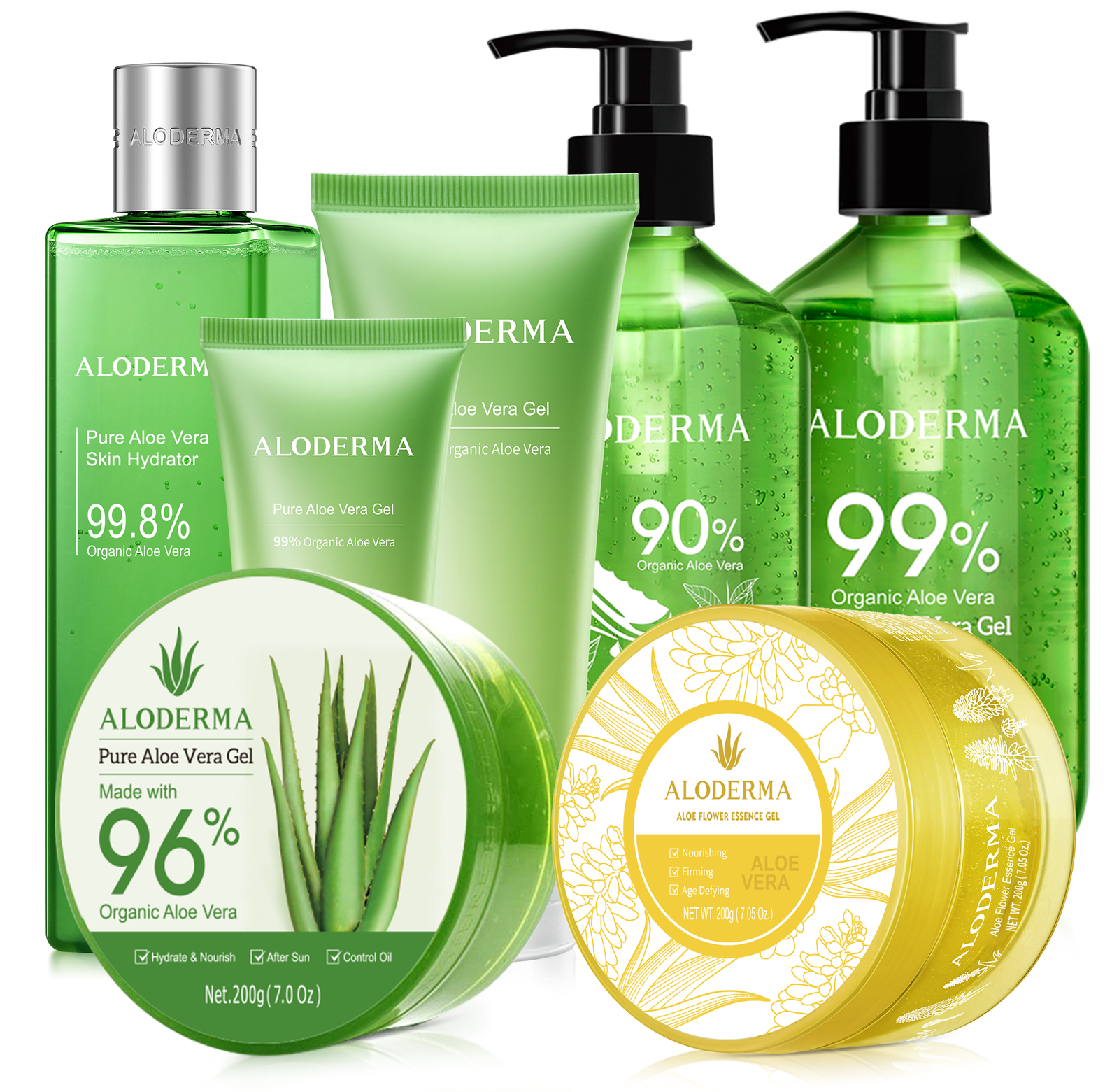
Fresh aloe vera stands out here because it's often chosen for hydration-focused, comfort-first routines. With aloe, freshness matters. ALODERMA is a fully vertically integrated aloe vera company. It grows all of its own organic aloe vera, then processes the aloe and manufactures onsite within 12 hours of harvest so the primary ingredient in every product is as bioactive and effective as possible, as explained in Aloderma's article on how fresh aloe vera is prepared.
That farm-to-skin model matters because aloe gel is vulnerable to air, heat, and delay. In simple terms, fresh aloe is a bit like fresh-cut fruit. The closer it is handled to its source, the more you preserve what made it valuable in the first place.
If you like comparing different professional skincare lines before buying, browsing Georgia Plastic & Reconstructive Surgery's Obagi collection can also help you see how brands position active and supportive ingredients differently across cleanser categories.
Sensitive Skin Cleanser Ingredient Checklist
| Ingredients to Seek | Ingredients to Avoid |
|---|---|
| Aloe vera | SLS and SLES |
| Mild non-stripping surfactants | High-fragrance formulas |
| Simple, minimal-ingredient formulas | Drying alcohols |
| Cream or oil-leaning cleanser textures | Traditional high-pH soap bases |
| Ingredients chosen for hydration and comfort | Essential-oil-heavy formulas if your skin is highly reactive |
How to think like an ingredient detective
Use this quick decision process when you pick up a cleanser:
- Read past the front label: “Natural” and “gentle” don't tell the full story.
- Check the cleanser type: Cream, lotion, oil, and mild gel textures often feel softer than strong-foaming washes.
- Scan the first part of the list: This gives you a better sense of what the formula is built around.
- Notice complexity: If the ingredient list is packed with fragrant extras, your skin may not need all that excitement.
A smart shopping question: “What is this formula built to do after I rinse?” That question often leads to better choices than “Does this label sound calming?”
One more practical note. Product names and formulas can change, so it's worth checking the live ingredient list on product pages before buying.
The Secret Language of pH and Surfactants
You wash your face with something labeled “for sensitive skin,” rinse, and your cheeks still feel tight or warm a minute later. That reaction often has less to do with the calming words on the front of the bottle and more to do with two quiet details in the formula: pH and surfactants.
pH tells you whether a cleanser sits closer to acidic or alkaline. Skin naturally does better in a slightly acidic range, so a high-pH cleanser can push it out of its comfort zone. That shift can leave sensitive skin feeling dry, stingy, or oddly squeaky after washing.

A helpful way to read this is simple. “Soap” and “cleanser” are not interchangeable. Traditional soap is usually more alkaline. Many modern facial cleansers, especially syndets, are formulated closer to skin's preferred pH range. That difference helps explain why two products can both remove oil, yet one leaves your face calm and the other leaves it feeling stripped.
The “squeaky clean” feeling is often misunderstood. It can feel like proof that a cleanser worked. In practice, it often means your cleanser removed more than dirt and sunscreen. Sensitive skin usually prefers a finish that feels comfortable, not overly polished.
Surfactants are the ingredients that lift oil and debris so water can rinse them away. They act a bit like helpers that loosen what is stuck to the skin's surface. You need them. The question is how aggressive they are, and what else the formula includes to soften their impact.
This is why “natural” is not a reliable shortcut. A cleanser can contain plant ingredients and still use a harsh cleansing system. A formula can also use lab-made surfactants and feel much gentler on reactive skin. If you want to get more fluent in label reading, ingredients such as decyl glucoside in skincare cleansers are worth recognizing because they are commonly used in milder formulas.
Fresh, bioactive aloe vera adds another useful layer here. In a well-made cleanser, aloe is not there to magically cancel out a harsh base. It works best as part of a balanced formula that already cleans gently. That distinction matters. Marketing often treats soothing botanicals as the headline, while pH and surfactant choice do much of the essential day-to-day work.
Here is the plain-English version:
- Traditional soap: Usually more alkaline and more likely to feel drying on delicate skin
- Syndet cleanser: Uses synthetic detergent ingredients and is often formulated to be milder and closer to skin's natural pH
- Oil-based cleanser: Cleans with very little foam and can be a good fit for skin that dislikes friction
The JCAD guide to over-the-counter cleansers explains why syndet bars and similar cleansers are often better tolerated than traditional soap by easily irritated skin.
If your skin is highly reactive, a gentle daily cleanser usually does more for comfort than chasing stronger products or rotating in advanced cosmetic skin treatments before your barrier is settled. Start with the basics. Read past the front label, check the cleanser type, and remember that “for sensitive skin” is a marketing claim, not a guarantee.
Building Your Gentle Cleansing Routine
You wash your face before bed, expect relief, and instead your skin feels tight, warm, or strangely shiny by morning. That result does not always mean you chose the “wrong” product. Sometimes the formula is only part of the story. Frequency, water temperature, friction, and what you apply right after cleansing can all decide whether sensitive skin stays calm or gets pushed past its limit.

A good routine should feel predictable. If every wash leaves your skin guessing, the routine is too aggressive, too complicated, or too dependent on front-label promises such as “natural” or “for sensitive skin.” Those phrases can sound reassuring, but your skin responds to the full formula and to how you use it.
Start with a low-risk trial
Patch testing gives you useful information before your whole face has to pay the price. Sensitive skin often reacts like a smoke alarm set a little too close to the stove. A small test helps you catch trouble early.
- Pick a small area: Try the jawline, side of the neck, or inner forearm.
- Use the cleanser the way you plan to use it: A small amount is enough.
- Wait and watch: Look for delayed dryness, itching, flushing, or tightness over the next day or two.
- Test a small part of the face next: If that goes well, move to regular use.
This also helps you separate irritation from coincidence. If your face is already stressed by weather, retinoids, exfoliants, or a long hot shower, a full-face first test can make the cleanser take the blame for everything.
Keep the routine gentle in practice, not just on the label
Technique matters. A mild cleanser can still act harshly if you scrub it in like you are removing paint.
Use lukewarm water. Hot water can loosen oils your skin was trying to keep. Apply cleanser with your fingertips, not with a rough cloth or cleansing brush. Massage briefly, then rinse well. Pat dry with a soft towel instead of rubbing. That small change lowers friction, and friction is a common reason sensitive skin stays red even with a decent cleanser.
One more detail confuses many people. “Clean” does not have to mean squeaky. For sensitive skin, that squeak often means too much oil was removed.
Build around a short, repeatable sequence
For many people, a simple pattern works better than a product-heavy routine:
- Cleanse once or twice daily based on need: Once at night is enough for some people, especially if morning cleansing leaves skin dry.
- Moisturize soon after cleansing: Slightly damp skin holds onto hydration better.
- Add actives carefully: Introduce exfoliants, acne treatments, or anti-aging products one at a time.
- Give the routine time: Constant product switching makes it hard to tell what your skin likes.
Fresh, bioactive aloe vera can fit well here. Its documented soothing and hydrating benefits make sense after cleansing, especially when skin feels reactive. The key is context. Aloe works best in a formula, or in a follow-up product, that supports the barrier instead of asking aloe to rescue an irritating routine.
A practical example
If you want a straightforward option to evaluate, the Aloderma Soothing Facial Cleanser is one example made for sensitive skin. You can also compare it with the Aloe Nourishing & Firming Facial Cleanser if you are deciding between a simpler soothing wash and a cleanser with a slightly different skin-feel.
That comparison matters more than a marketing badge on the bottle. Two products can both say they are gentle while using different surfactant systems, different fragrance choices, and different supporting ingredients. Reading past the headline claim gives you a better chance of choosing a cleanser your skin can live with.
For readers who also like professional treatment context, this overview of advanced cosmetic skin treatments is useful for understanding how cleansing fits into a broader skin-maintenance plan.
A short visual walkthrough can help make routine-building feel less abstract:
Let boring be the goal
Sensitive skin usually improves with repetition, not experimentation. If your routine feels calm, plain, and almost uneventful, that is often a good sign.
Consistency beats intensity.
Your Cleansing Questions Answered
Is face soap the same as a facial cleanser
Not always. People often use the words interchangeably, but traditional soap and a facial cleanser can be very different. A cleanser may be soap-free, lower in pH, and built with milder surfactants. That's why two products can both “wash your face” but leave very different after-feels.
Can a cleanser for sensitive skin still foam
Yes, but the amount and type of foam matter. Foam itself isn't the enemy. A giant fluffy lather doesn't automatically mean a cleanser is bad, but sensitive skin often prefers formulas that don't rely on aggressive cleansing action. In many cases, cream-based, sulfate-free, non-foaming options feel more comfortable.
Is “for sensitive skin” a reliable claim
Not by itself. The term “for sensitive skin” is often an unregulated marketing claim, and many “natural” cleansers can still include plant-based essential oils that trigger reactivity. That's why more shoppers are looking for minimal ingredients and transparent sourcing, as discussed in this article on natural face wash claims and ingredient transparency.
The label can start your evaluation. It shouldn't end it.
Is double cleansing a good idea for sensitive skin
Sometimes, but it depends on what you're removing and how your skin responds. If you wear heavy sunscreen or long-wear makeup, a gentle first cleanse can help. But if your skin already feels dry after washing once, double cleansing may be too much. Your skin's comfort the next morning is a better guide than trend-driven advice.
What's the simplest way to choose better
Use a short filter:
- Check the cleanser type
- Look for mild surfactants
- Be cautious with fragrance and essential oils
- Notice how your skin feels after rinsing
If your face feels calm, soft, and comfortable, you're probably on the right track.
If you want a simpler way to shop for gentle skincare, explore ALODERMA. As a fully vertically integrated aloe vera company, Aloderma grows its own organic aloe vera and processes it onsite within 12 hours of harvest so the aloe used across the line stays as bioactive as possible. That freshness-focused approach can be especially helpful when you're looking past vague “sensitive skin” claims and focusing on what's in the bottle.