





You've washed your face, applied a light serum, and reached for a traditional cream before heading out the door. By lunchtime, your forehead looks shiny, your cheeks feel coated, and the product seems to be sitting on top instead of helping your skin feel comfortable. Switching to a lightweight fresh aloe vera moisturizer can make a routine feel simpler, especially when your skin prefers hydration without a heavy finish.
Aloe isn't a new beauty trend. NCBI and U.S. government references trace its skincare history back about 6,000 years to early Egypt, while modern references describe its use in creams, sun lotions, shaving products, and face packs (NCBI Bookshelf). The useful question isn't whether aloe has a long history. It's whether the finished formula contains meaningful aloe, preserves its valuable components, and matches the way your skin behaves.
Why Your Skin Craves a Fresh Aloe Vera Moisturizer
Maya, a fictional but familiar skincare shopper, starts her morning with a rich cream because her cheeks sometimes feel tight after cleansing. By noon, her T-zone is slick, makeup has separated, and the same cream feels too warm and heavy. She tries a fast-absorbing aloe gel-lotion instead, applying it to slightly damp skin, and notices that her face feels hydrated without the greasy film.
That difference comes down to texture and water management. Aloe vera gel is exceptionally water-rich. A scientific review reports that raw pulp contains about 98.5% water, while the inner gel contains about 99.5% water, with the remaining solids including polysaccharides, vitamins, minerals, enzymes, phenolics, and organic acids (MakingCosmetics). A water-forward base can feel refreshing and light compared with a cream built around dense oils, waxes, fragrance, or a large amount of occlusive material.
Hydration without a coated finish
Aloe works primarily as a humectant, meaning its moisture-binding compounds help hold water at the skin's surface. A controlled skin-bioengineering study found that freeze-dried aloe formulations produced a dose- and time-dependent increase in stratum corneum water content, while transepidermal water loss didn't change, supporting the view that aloe helps hydrate more than it strengthens an occlusive seal (Wiley Online Library).
That makes an aloe moisturizer appealing after cleansing, warm weather, or outdoor exposure. It can give reactive, oily, or blemish-prone skin a comfortable layer without automatically adding the dense finish some traditional creams leave behind.
Practical observation: If your moisturizer feels greasy by midday, your skin may need a lighter formula, not less hydration.
Aloe can also make a routine feel emotionally easier. Instead of bracing for stinging, stickiness, or residue, you get a cool, smooth layer that disappears quickly. The result won't be identical for everyone, but the right formula can support a calmer-feeling baseline while keeping your routine uncomplicated.
What a Fresh Aloe Vera Moisturizer Actually Is
Start with the plant. A fresh aloe moisturizer begins with the inner gel of Aloe Barbadensis, the clear material found inside the leaf after the outer rind and yellow latex are removed. The leaf is harvested, cleaned, filleted, and processed before the gel becomes part of a lotion, cream, or gel product.
The word fresh should describe the handling process, not just the appearance of the package. In practical terms, it means the aloe is processed shortly after harvest rather than made from a powder or concentrate that has traveled through storage, shipping, and later reconstitution. Time, temperature, sanitation, and processing choices all affect what reaches the bottle.
A moisturizer is never aloe alone. Aloe contains a large amount of water, so a usable commercial formula needs a system that controls texture, stability, preservation, and application. Supporting ingredients may include glycerin or sodium hyaluronate for additional water binding, squalane or jojoba esters for a soft finish, and stabilizers that help keep the product uniform.
From leaf to finished product
A formulator evaluates several connected stages:
- Harvest and preparation: Leaves are cleaned and the inner gel is separated from the outer portions.
- Processing: The gel is handled in a way that aims to protect desirable soluble compounds, including polysaccharides.
- Formula construction: Aloe is combined with texture agents, humectants, emollients, pH adjusters, and a preservation system.
- Packaging and use: The finished product must remain stable during storage and repeated contact with the surrounding environment.
Aloe's moisturizing effect is linked to mucopolysaccharides that bind water into the skin (PubMed Central). That doesn't mean a fresh gel can replace every supporting ingredient. In fact, a stable emulsion often helps aloe perform more consistently than aloe by itself.
For a helpful plain-language explanation of aloe's role in skincare, see whether aloe vera is a moisturizer. The key takeaway is simple: freshness concerns how the ingredient gets from the leaf to the formula, while moisturization depends on the complete formula working as a whole.
How Farm-to-Skin Processing Changes the Formula
A conventional aloe supply chain can involve several handoffs. Leaves may be cut, washed, trimmed, and transported to a distant facility, where the material is stabilized for storage, concentrated, powdered, shipped, and later mixed into a cosmetic base. Every additional step creates another opportunity for heat, oxygen, time, or handling to affect the plant material.
That doesn't make every conventional aloe product ineffective. It does mean that “contains aloe” tells you very little by itself. The ingredient's form, position on the label, processing history, and final concentration all matter.
Why processing time matters
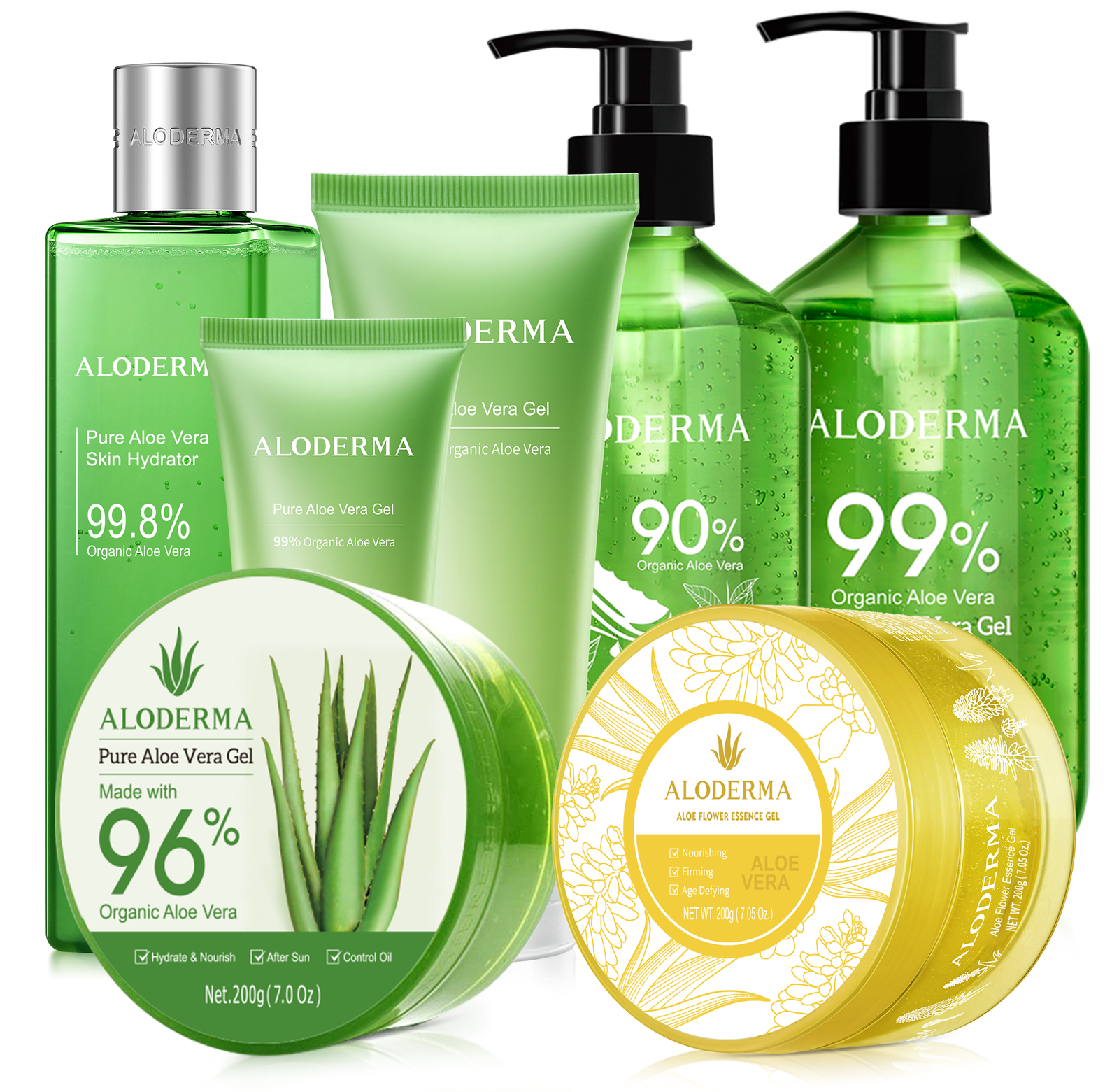
ALODERMA is a fully vertically integrated aloe vera company. It grows all of its own organic aloe vera, processes the aloe, and manufactures onsite within 12 hours of harvest. This farm-to-skin model is designed so the primary ingredient in each product is handled quickly, with the aim of retaining as much of the aloe's natural bioactive profile as possible.
The technical reasoning is straightforward. Aloe's moisture-binding performance is associated with soluble carbohydrates such as acemannan, and independent literature links aloe's hydration behavior to polysaccharide-rich composition (North-West University repository). Faster movement from field to processing can reduce the time available for oxidation and uncontrolled changes before formulation.
A product made with a substantial amount of fresh aloe may also need less sensory masking. Instead of relying on a thick base or strong fragrance to define the experience, the formulator can build around aloe's naturally watery, cooling skin feel. Still, the finished formula requires appropriate preservation because water-rich products can't remain safe through wishful thinking.
For readers who want to explore the broader farm-to-face idea, farm-to-face skincare offers useful brand context. If you're also exploring botanical approaches to a luminous routine, essential oils for a healthy glow can provide background, though essential oils should be treated as optional fragrance materials and patch-tested carefully.
The practical outcome is a product that may feel lighter and more direct. Freshness doesn't guarantee perfection, but a short, controlled route gives the formulator a stronger starting material than a vague aloe claim on a label.
Ingredients to Look for on the Label
Read an aloe moisturizer like a formulator, not like a shopper scanning the front panel. Start with the ingredient list and look for Aloe Barbadensis Leaf Juice, inner fillet, or inner leaf gel near the top. If aloe appears after fragrance, alcohol, or a long list of texture agents, the product may still feel pleasant, but aloe probably isn't doing most of the formula's work.
The next question is what supports the aloe. A good moisturizer usually needs more than one hydration strategy:
- Humectants: Glycerin and sodium hyaluronate help attract and hold water.
- Comfort ingredients: Panthenol, allantoin, oat extract, and bisabolol can support a pleasant experience for easily bothered skin.
- Light emollients: Squalane, jojoba esters, and carefully selected plant oils can soften the finish without making every formula feel dense.
- Formula helpers: Carbomer, pH adjusters, and preservation ingredients keep texture and stability consistent.
Ingredients worth questioning
A high position on the label isn't the only test. If denatured alcohol appears near the top, or if synthetic fragrance dominates the formula, sensitive skin may not enjoy the result. Heavy silicones aren't automatically bad, but they can feel too occlusive for people who dislike a coated finish.
Preservatives deserve a more balanced reading. Aloe-based cosmetics commonly use preservation systems involving ingredients such as potassium sorbate, sodium benzoate, or citric acid (Avena Lab technical document). A verified commercial aloe gel ingredient breakdown also includes carbomer, 1,2-hexanediol, hydroxyacetophenone, and a pH-adjusting base alongside Aloe Barbadensis Leaf Juice (SkinSort ingredient breakdown).
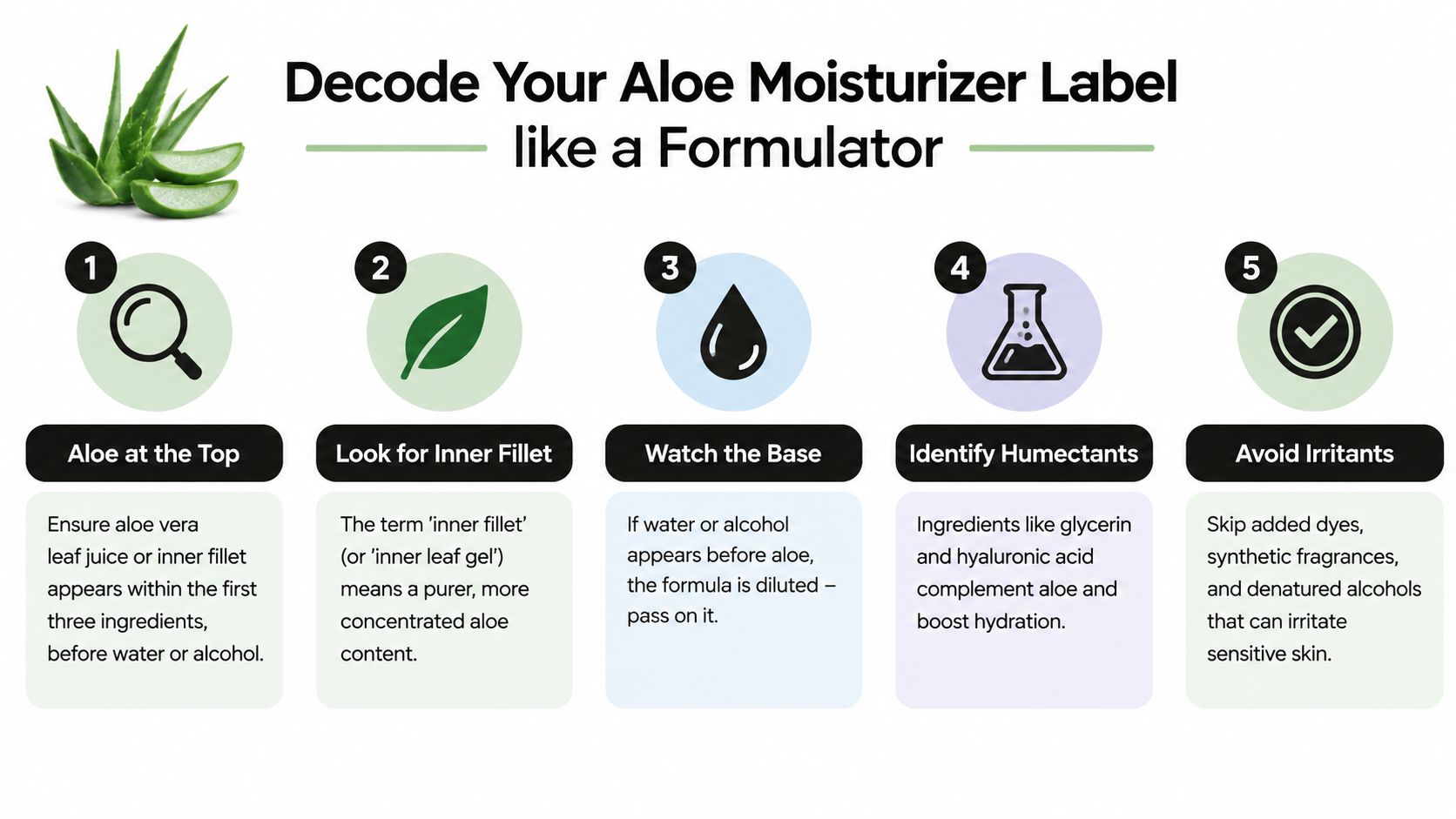
Don't assume the word “aloe” reveals the concentration. Ingredient lists generally place components in descending order until the lower-concentration portion, so the position gives useful context, but it doesn't tell you everything about processing or quality. You can also review isohexadecane in aloe vera moisturizer formulas to see how a technical ingredient can influence spread, slip, and finish.
Fresh Aloe Versus Aloe Blends and Standard Moisturizers
Three products can all display an aloe leaf on the front and feel completely different on your face. One may be aloe-forward and freshly processed. Another may combine reconstituted aloe with water and polymers. A third may be a conventional cream where aloe appears in a small supporting role.
| Formula Type | Aloe Source | Skin Feel | Best For |
|---|---|---|---|
| Fresh aloe-forward moisturizer | Freshly processed leaf juice or inner gel | Watery, light, quick to absorb | Oily, sensitive, or blemish-prone skin that dislikes heaviness |
| Aloe blend | Powder or concentrate combined with water and a cosmetic base | Varies from slippery gel to tacky lotion | Shoppers who want aloe plus a particular texture or price point |
| Standard moisturizer | Aloe used as a minor ingredient | Often richer, creamier, or more occlusive | Dry-feeling skin that prefers oils, waxes, or a substantial finish |
A fresh aloe-forward gel-lotion may disappear under sunscreen or makeup, while a silicone-heavy cream can leave more slip. Neither texture is universally better. A person with tight, dry cheeks may appreciate the cushion of a richer cream, while someone who feels greasy after every application may prefer a lighter aloe base.
Match the formula to the goal
Choose the fresh aloe option when your priority is hydration with minimal weight. Consider an aloe blend when you want aloe alongside a specific texture, emollient, or active system. A standard moisturizer may make more sense when your skin wants a richer, more protective finish and doesn't object to heavier ingredients.
ALODERMA's onsite process, from its own organic aloe fields to manufacturing within 12 hours of harvest, gives its formulas a distinct farm-to-skin starting point. That's relevant when you're comparing a fresh aloe product with a formula built around shipped concentrate, but it still doesn't remove the need to inspect the finished ingredient list.
For readers interested in another botanical oil often discussed in skin-formula conversations, sea buckthorn omega 7 evidence offers additional context. Treat it as a separate ingredient story, not a reason to assume every botanical belongs in every routine.
Building a Routine Around a Fresh Aloe Moisturizer
Keep the first routine deliberately small. Cleanse with a gentle product, use an alcohol-free toner only if you enjoy one, apply a small amount of aloe moisturizer to slightly damp skin, and finish with sunscreen in the morning. This sequence gives the water-binding ingredients a comfortable surface while avoiding unnecessary layers.
A person with oily or blemish-prone skin might use the moisturizer alone after cleansing. Someone with combination skin can apply it across the face and add a richer product only to areas that feel tight. If you use a niacinamide or azelaic acid serum, place it before the aloe moisturizer and introduce only one new product at a time.
Morning and evening examples
Morning: Cleanse, apply the fresh aloe moisturizer, allow it to settle, then use broad-spectrum sunscreen. If makeup pills, reduce the amount rather than adding more rubbing. A thin layer is usually easier to work with than a thick coat.
Evening: Cleanse thoroughly, apply any targeted serum, and finish with aloe moisturizer. During colder weather, add a richer balm or a few drops of facial oil over the areas that need more comfort. Aloe provides water-based hydration, while an oilier finishing layer can help slow evaporation.
Layering rule: Give each product a practical job. Aloe hydrates, a serum targets a specific goal, and sunscreen protects the morning routine from being undone outdoors.
You can often use a fresh aloe moisturizer in place of a separate hydrating serum and lightweight cream. Reapply a small amount over makeup only if the product is designed for that use and doesn't disturb your base. For more ideas on building a simple, whole-routine approach, explore these natural ways to glow.
Try a one-week reset. Keep your cleanser, aloe moisturizer, and sunscreen consistent, pause unnecessary experiments, and record how your skin feels after application, later in the day, and the next morning. You're looking for comfort, manageable shine, and a smoother routine, not an overnight transformation.
Here's a visual guide to the routine in action:
Common Myths About Aloe Skincare
Myth one, all aloe gels feel identical. They don't. Aloe can appear in a watery gel, a thickened clear product, a lotion, or a rich cream. Carbomers, oils, silicones, humectants, and emulsifiers all change spread, absorption, and after-feel.
Myth two, the word aloe guarantees a high aloe content. It doesn't. Check whether Aloe Barbadensis Leaf Juice or inner gel appears near the top, then examine the supporting ingredients. A leaf illustration can't tell you whether aloe is the formula's foundation or a minor addition.
Myth three, aloe can't moisturize oily skin. Aloe's water-binding polysaccharides explain why it can contribute meaningful hydration without requiring a greasy texture (PubMed Central review). Very dry skin may still need an emollient or sealant over it, while oily skin may prefer aloe as the main moisturizing step.
Freshness needs evidence, not slogans
Myth four, natural preservation means a product doesn't need a preservation system. Water-rich aloe products still need protection from contamination during storage and repeated use. Ingredients such as potassium sorbate, sodium benzoate, and citric acid can be part of that system, and their presence isn't automatically a flaw.
Myth five, freshness is only marketing. Freshness becomes meaningful when a brand explains its harvest, processing, temperature control, and manufacturing practices. ALORDERMA's stated model, using its own organic aloe and processing onsite within 12 hours of harvest, gives shoppers a concrete process detail to evaluate rather than asking them to trust a vague freshness claim.
Whole-leaf and inner-leaf products also aren't interchangeable. A well-designed formula should explain which part of the plant it uses and how it's stabilized, especially because the outer leaf and inner gel have different material profiles.
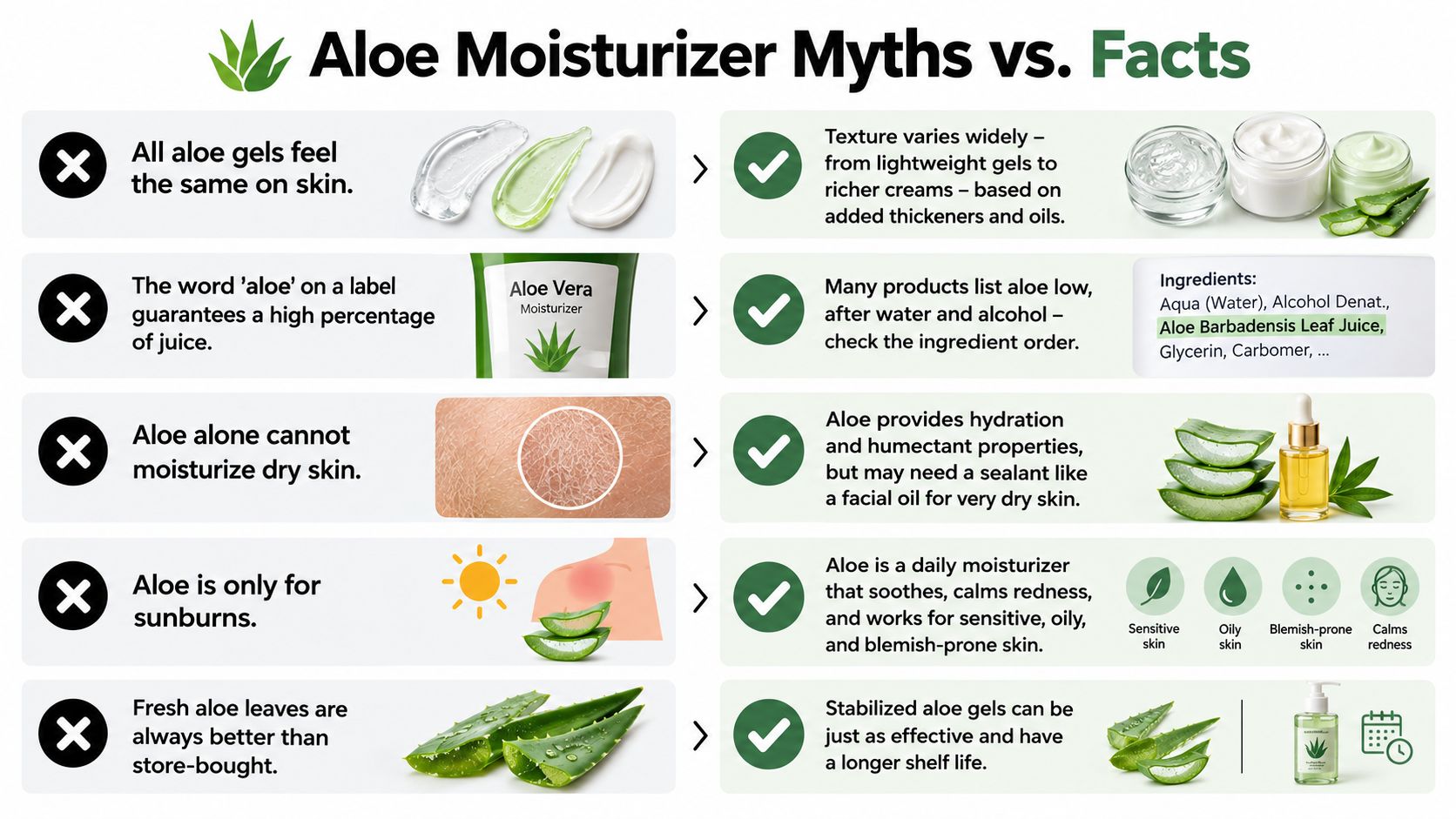
Judge the product by the label, the formula, and your skin's response. A transparent stabilizer list can be more reassuring than a product that says “pure” in large lettering.
Choosing a Fresh Aloe Vera Moisturizer You Will Trust
Your best choice depends on the problem you're trying to solve. If your face feels coated after moisturizer, prioritize a lightweight gel-lotion. If cleansing leaves your cheeks uncomfortable, look for aloe supported by humectants and a modest amount of emollient. If you're sensitive to scent, choose a fragrance-free option or avoid formulas with a noticeable essential-oil blend.
Use this buying checklist before you order:
- Check the ingredient ranking: Look for Aloe Barbadensis Leaf Juice, inner fillet, or inner leaf gel near the top rather than buried after water, alcohol, or fillers.
- Ask how fresh means fresh: A clear harvest-to-processing window is more useful than a front-label promise.
- Inspect the supporting cast: Glycerin, sodium hyaluronate, panthenol, allantoin, oat extract, or squalane can help shape the product's hydration and comfort profile.
- Consider the finish: A fast-absorbing gel may suit oily or blemish-prone skin, while a lotion or cream may feel better on dry areas.
- Patch test patiently: Apply a small amount along the jawline for three nights before covering your entire face.
Process should connect to performance
ALODERMA's vertically integrated approach means the company grows its own organic aloe vera and processes and manufactures it onsite within 12 hours of harvest. That detail matters because rapid handling can help the formulator work with aloe before extended storage and transportation become part of the ingredient's history.
Still, don't buy only for the farm story. Open the product page, read the complete ingredients, consider whether the texture fits your routine, and notice how your skin behaves over several days. Hydration, comfort, oil balance, and the number of new blemishes you notice are more useful personal signals than dramatic packaging language.
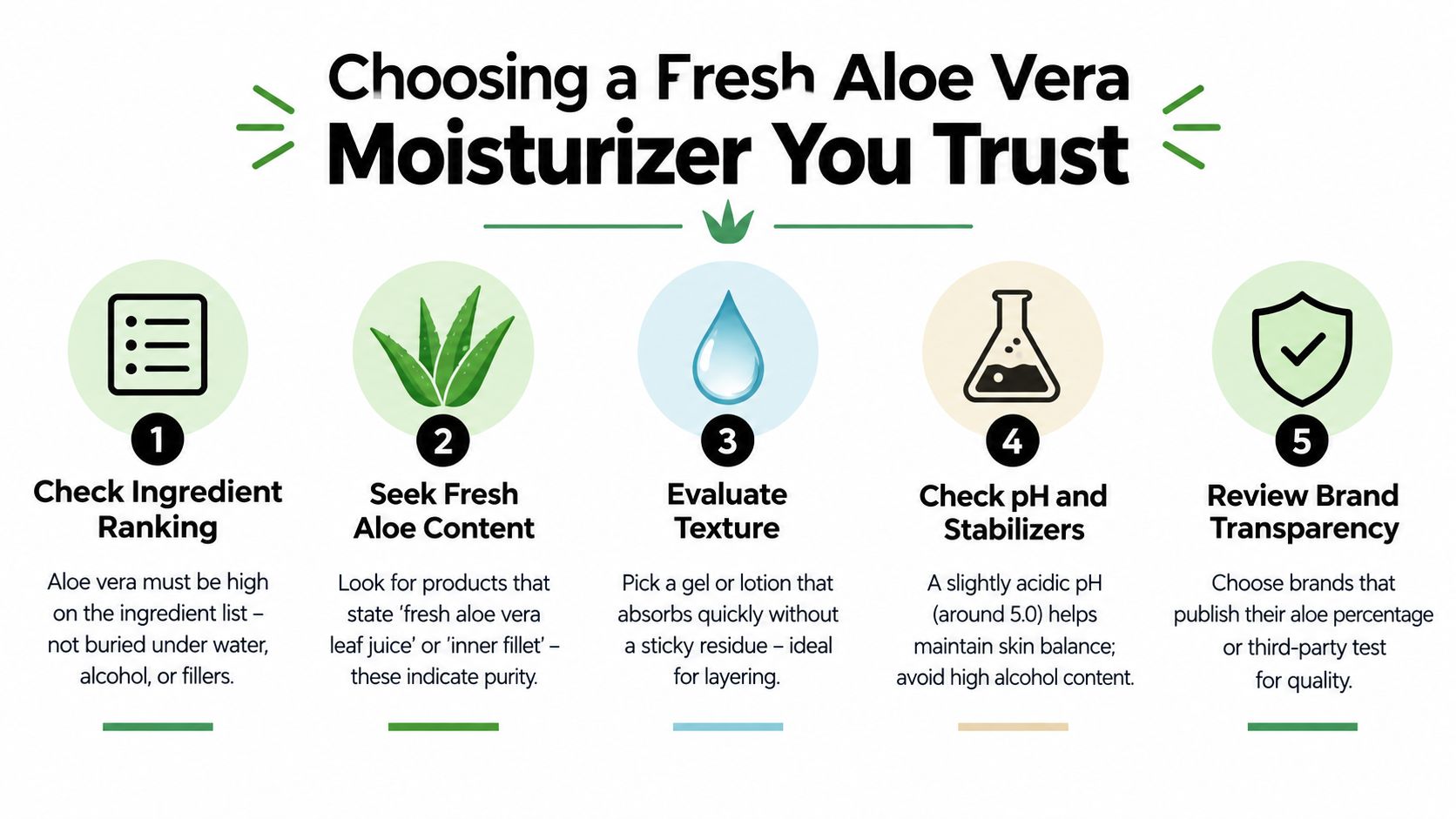
A thoughtful trial doesn't need to overhaul your bathroom shelf. Choose one moisturizer, keep the rest of your routine familiar, patch test, and write down whether your skin feels comfortable shortly after application and later in the day. If the formula leaves you shiny, sticky, or uncomfortable, it may be the wrong texture, even if the aloe source is excellent.
ALODERMA offers fresh organic aloe vera skincare made from aloe grown on its own plantations, processed and manufactured onsite within 12 hours of harvest. Visit ALODERMA to explore lightweight aloe moisturizers and build a simple routine around the texture and hydration your skin prefers.