







You splash your face at 7 a.m., smooth on moisturizer, and head out feeling comfortable. By noon your cheeks feel tight, your forehead looks shiny, or your makeup has started to slide. It's easy to blame yourself, or to assume you bought the wrong jar. Usually the issue isn't effort. It's a mismatch between what your skin needs that day and what your moisturizer does after it absorbs.
Gel vs Cream Moisturizer at a Glance
That midday tightness is exactly where the gel moisturizer vs cream moisturizer choice gets confusing. You picked a gel because it felt fresh in the store, or a cream because thicker seemed stronger. Neither instinct tells you how your skin will feel six hours later, in office air, under sunscreen, or after a second cleanse at night.
Start with the side-by-side view below. Every row describes a typical format, not a guarantee, because two gels can behave very differently and so can two creams.
Gel and cream moisturizers compared on the criteria that matter
| Criterion | Gel moisturizer | Cream moisturizer |
|---|---|---|
| Base | Water-rich, often aloe-led | Emulsion of water and oil phases |
| Typical texture | Light, cool, spreads fast | Thicker, soft, leaves a cushioned layer |
| Main hydration action | Humectants draw water to the surface | Emollients and occlusives slow water loss |
| Residue | Little to none, dries to a thin film | Noticeable, can feel rich |
| Time to absorb | Often under a minute | Often several minutes |
| Best daytime use | Under sunscreen and makeup in heat | Under makeup in cold, dry weather |
How to Read This Table
A gel is built around water. It spreads quickly, feels cool, and usually disappears without a greasy trace, which is why many people love it on busy mornings. A cream blends water with an oil phase, so it can leave a softer, more cushioned layer that you can still feel when you touch your cheek an hour later.
The label tells you the delivery format. It doesn't decide the result. What decides comfort is the mix inside, meaning the humectants that bring water in, the emollients that smooth, and the occlusives that slow water escaping.
First check on any label: Look for the hydration action row first. If you need water drawn in, scan for humectants high in the list. If you lose comfort by afternoon, look for emollients and occlusives that help hold it there.
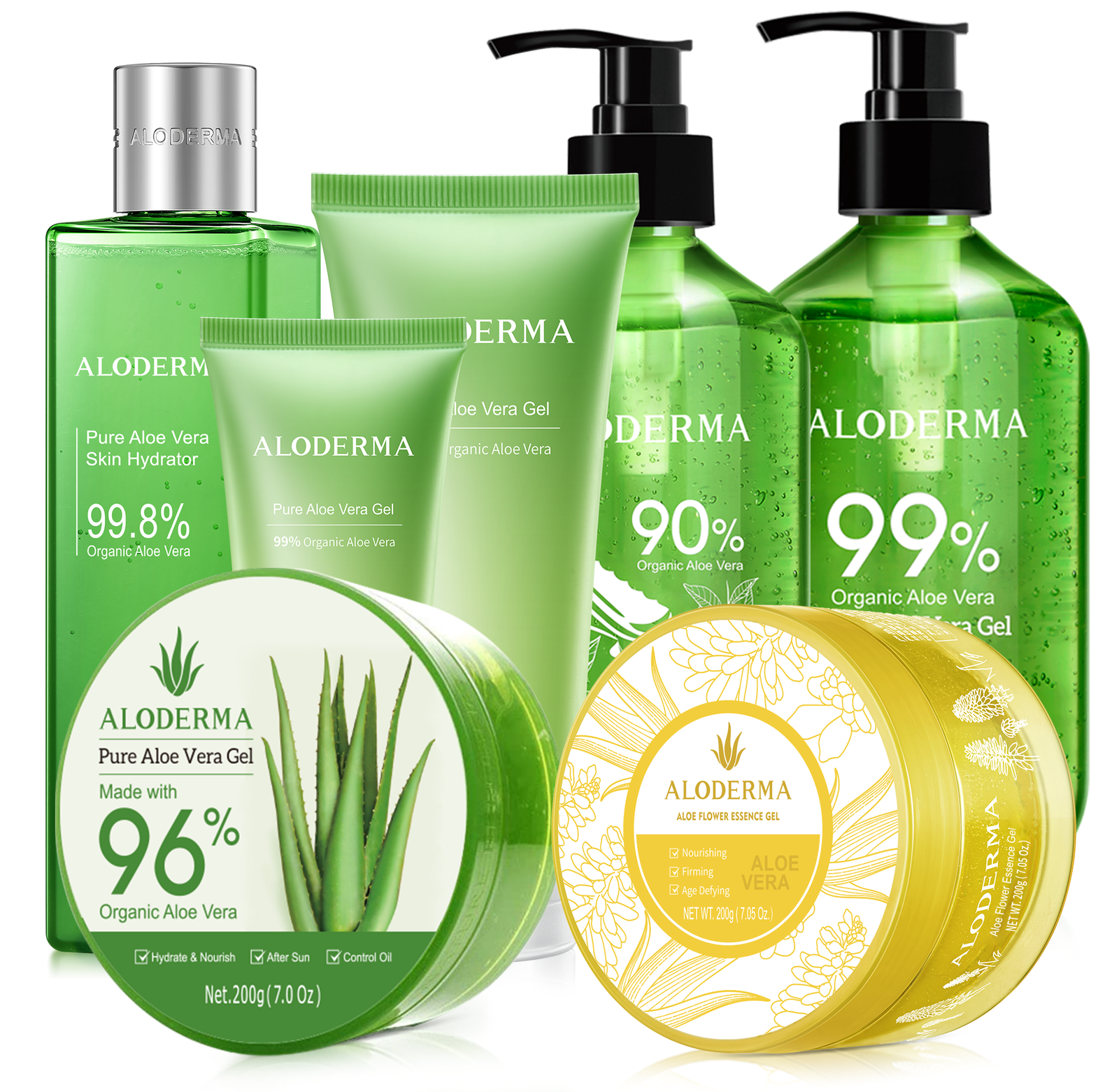
We're ALODERMA, a fully vertically integrated aloe vera company. We grow all of our own organic aloe vera and we process our aloe vera and manufacture onsite within 12 hours of harvest to ensure the primary ingredient found in every one of our products is the most bioactive and effective aloe vera possible. That means our gels start from fresh aloe, not a powder rehydrated later.
Use the table to shortlist two products, one gel and one cream. Then test them against your actual day, not against how they feel on the back of your hand for ten seconds.
What Actually Makes a Moisturizer Hydrate
Texture alone misleads shoppers every day. A thick cream can feel rich and still leave you tight by evening, while a light gel can keep you comfortable for hours. What matters is whether the formula does three jobs in the right balance for your skin right now.
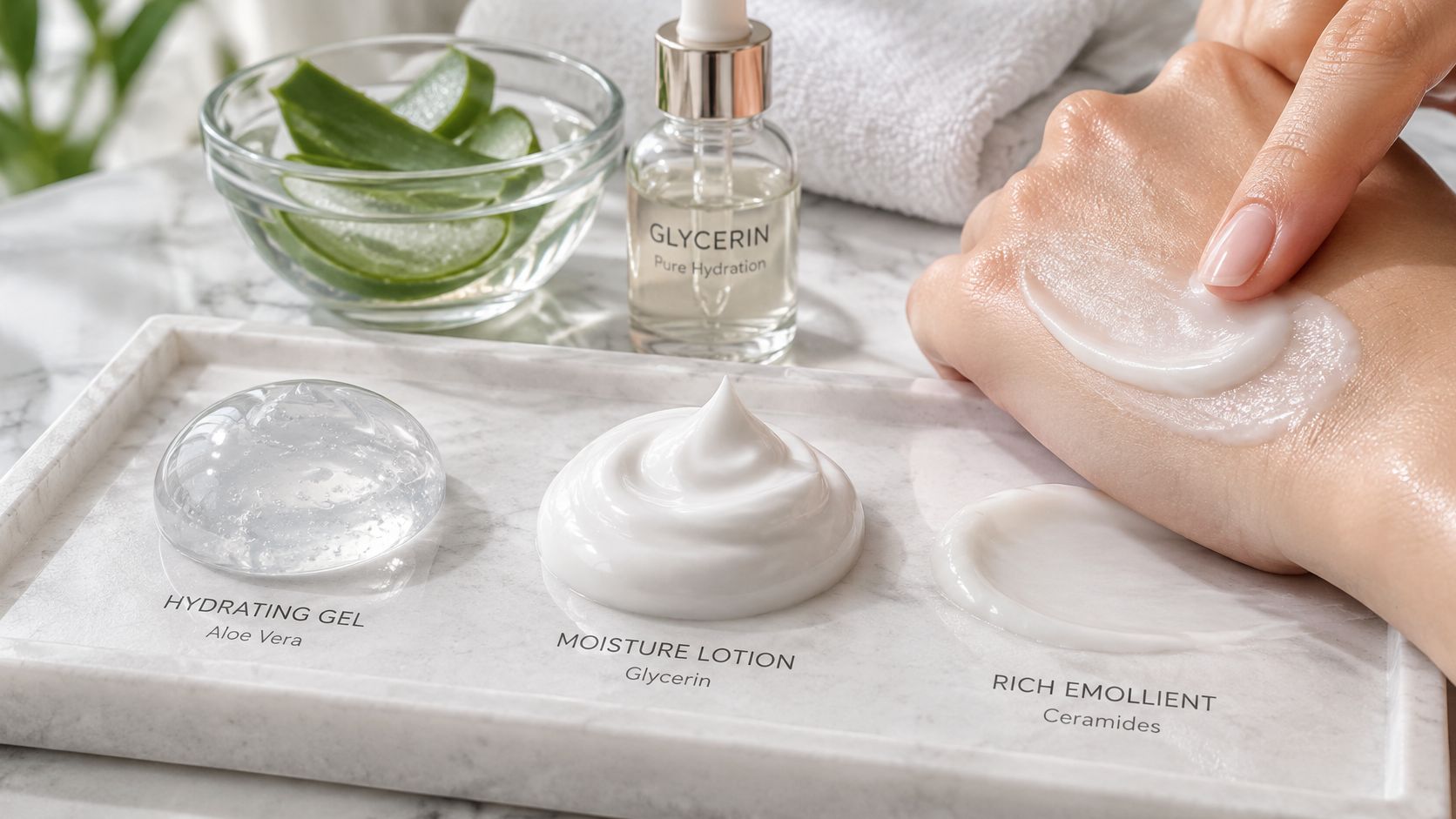
The Three Ingredient Roles
- Humectants pull water in: Ingredients such as glycerin, hyaluronate, and aloe polysaccharides draw water toward the surface and help skin feel plump rather than flat.
- Emollients smooth the surface: Squalane, shea butter, and fatty esters fill in rough edges between surface cells, so skin feels soft when you run a fingertip across it.
- Occlusives slow water loss: Petrolatum, waxes, and similar film formers create a light seal that reduces evaporation, especially in dry air.
A review in the American Journal of Clinical Dermatology explains that performance depends more on this humectant, emollient, and occlusive system than on whether a product is called a gel or a cream. Hydrogels are typically water-rich semisolids that spread easily, cool on contact, and dry into a relatively non-occlusive film. They can give fast surface hydration, but they may offer limited protection against transepidermal water loss when used without film-forming or lipid ingredients.
Creams work differently because they're emulsions. They can carry water-binding humectants together with oil-phase emollients or occlusives, so they can replenish water while also reducing evaporation. That combination is why a cream often feels more protective in wind or heated indoor air.
Consider a common middle case. Say your T-zone gets shiny by lunch but your cheeks feel papery after cleansing. A gel-cream hybrid with humectants and a light, non-greasy film can feel comfortable across both zones, hydrating the center of your face without leaving your cheeks exposed.
This short video shows how those layers work together in a daily routine.
Don't judge a moisturizer by the first minute. A strong moisturized feel on application isn't proof of lasting benefit, and a light feel isn't proof that nothing happened. The better test is how your skin feels hours later, which is why our guide on how to hydrate skin focuses on timing and layering rather than texture alone.
Immediate Hydration Versus Lasting Comfort
The honest answer to which format hydrates longer is that consistency beats format. A 2023 randomized, triple-blind clinical trial compared two water-gel moisturizers with a thick-emulsion cream moisturizer in 110 participants over 8 weeks. All three products produced statistically significant increases in skin moisture at week 8 compared with baseline, and hydration remained higher than at untreated control sites when the products were used consistently.
That changes the shopping question. You're not looking for a winning texture. You're looking for a formula you'll use every morning and night, in the amount your skin needs, without dreading how it feels.
What the First Hours Can Look Like
Early timing can still differ. In a controlled dermatology comparison in the British Journal of Dermatology, 37 volunteers used a gel or a cream twice daily for 4 weeks. During the first 6 hours after application, the gel increased hydration by 10.1 to 13.0 units, compared with 6.0 to 6.2 units for the cream, while the cream reduced transepidermal water loss by approximately 2.9 to 3.1 g/m²/h in that window. After repeated use, the gel's hydration increase remained detectable for more than 12 hours.
Read that as two different strengths. The gel delivered a larger early hydration rise, while the cream temporarily improved water-loss measurements. Neither result means one format repairs everything on its own.
Say Maya works in an air-conditioned office, washes her face at night, and switches to a gel because she loves the clean finish. By 3 p.m. her cheeks feel tight when she smiles. She doesn't need a new brand or a ten-step routine. She needs a richer sealing step at night, and possibly a thin cream layer on her cheeks in the morning while keeping the gel elsewhere.
A Simple Self-Check You Can Repeat
- Apply one format to clean, slightly damp skin at your usual time.
- Check at one hour for residue, shine, and how makeup or sunscreen sits.
- Check at six hours in the same light for tightness, flaking around the nose, or stinging.
- Check the next morning before cleansing for dry patches or an oily film.
Immediate hydration and longer-term barrier condition aren't the same outcome, so don't expect one morning to tell the whole story. You'll usually feel the comfort difference within a day. Judging whether it's the right everyday choice takes several consistent days, not a dramatic change within a week.
Matching Gel or Cream to Your Skin Type
The familiar rule says gel for oily skin and cream for dry skin. It's not useless, but it's too simple to shop by. Guidance from the American Academy of Dermatology on picking a moisturizer describes gels as generally water-based and lighter, while creams usually contain more oil, and it recommends choosing according to skin condition and pore-clogging risk rather than texture alone.
Formula architecture matters more than the label. A gel can contain alcohol or fragrance that stings reactive skin, while a light, carefully made cream can suit oily or breakout-prone skin without feeling heavy.
Skin types, the format to try first and the label to check
| Skin type | Format to try first | Label to check |
|---|---|---|
| Oily | Gel or light gel-cream | Fragrance-free, low or no alcohol |
| Combination | Gel on the T-zone, cream on the cheeks if needed | Humectants high in the list, non-greasy film |
| Dry | Cream with emollients and occlusives | Shea butter, squalane or ceramides |
| Sensitive | Fragrance-free gel or cream with barrier lipids | Short ingredient list, no alcohol |
| Breakout-prone | Oil-free gel or light cream | Noncomedogenic claim backed by testing |
Two Everyday Examples
Say you have oily skin, you chose a gel, and your face still feels tight ten minutes after cleansing. That doesn't mean oily skin shouldn't moisturize, a question we cover in does oily skin need moisturizer. A light gel-cream with humectants high in the list and a non-greasy film often solves that tight-but-shiny feeling better than skipping moisturizer altogether.
Or say you're using strong exfoliating acids or other active serums several nights a week. During that stretch you may want the calmer, more cushioned option at night, then return to a lighter format when your routine settles. Your best choice can change with treatment, season, or a flare of sensitivity, so reassess every few weeks instead of treating it as permanent.
For a richer comparison point, our Aloe Soothing & Moisturizing Cream contains fresh organic aloe vera and is enriched with shea butter and natural beta-glucan. Put its ingredient list beside a gel's list and you'll see the difference in emollients immediately. That side-by-side read teaches you more than the word cream on the front ever will.
Choosing Gel or Cream for Climate and Season
Daniel spends weekdays in a humid city and weekends in a dry mountain town. The gel that feels perfect after his city commute leaves him tight by Saturday afternoon in the mountains. He hasn't changed skin types in four days. His environment changed, and his moisturizer needs changed with it.
Humidity, wind, indoor heating, and air conditioning all affect how quickly water leaves your skin. That's why the same person can need a gel in August, a cream in January, and both during a single workday spent between outdoor heat and a cold office.
Climate and setting, and the format to lean on
| Climate or setting | Lean toward | Why it matters |
|---|---|---|
| Hot and humid summer | Gel | Water-based layer feels cool and avoids heaviness |
| Cold, dry winter | Cream | Heavier film slows water loss in dry air and wind |
| Air-conditioned office | Gel by day, cream at night | Indoor air dries skin during the workday |
| High altitude or desert | Cream, with gel under makeup | Low humidity raises water loss |
| Travel between climates | Keep both formats | Adjust the layer to the place, not the label |
When to Switch and When to Wait
Don't switch because of one bad day. A long flight, a hot shower, or an extra cleanse after a workout can make any moisturizer feel inadequate for an evening. Changing products after every off day leaves you with a crowded shelf and no clear answer.
Change formats when tightness persists after cleansing for several days in the same setting. That's a pattern, not a blip.
Use a three-day test after a climate-driven change. Apply the new format consistently, keep the rest of your routine steady, and notice tightness after cleansing, shine by midday, and comfort before bed. A changed routine should show whether it's helping within a few days.
Travel is the clearest case for keeping both. Pack the gel for humid mornings and the cream for dry hotel air at night, then adjust the amount rather than forcing one product to do every job. Daniel now carries both, uses less cream than he expects, and stops blaming his skin for reacting normally to two very different places.
How to Layer Gel and Cream Without Overloading Skin
You smoothed gel over a damp face, then covered everything with cream, and by noon the sunscreen had shifted and small rolls of product sat along the jaw. That pile-up usually means the second layer was doing a job the first one did not need. A gel puts water-binding humectants on the skin. A cream adds emollients and a light film that slows water loss. The format name matters less than whether you need both jobs today.
A lightweight aloe gel can be followed with a richer cream before the gel fully dries. Use Pure Aloe Vera Gel for that light water layer, then Aloe Brightening Skin Cream when you want a richer finish.
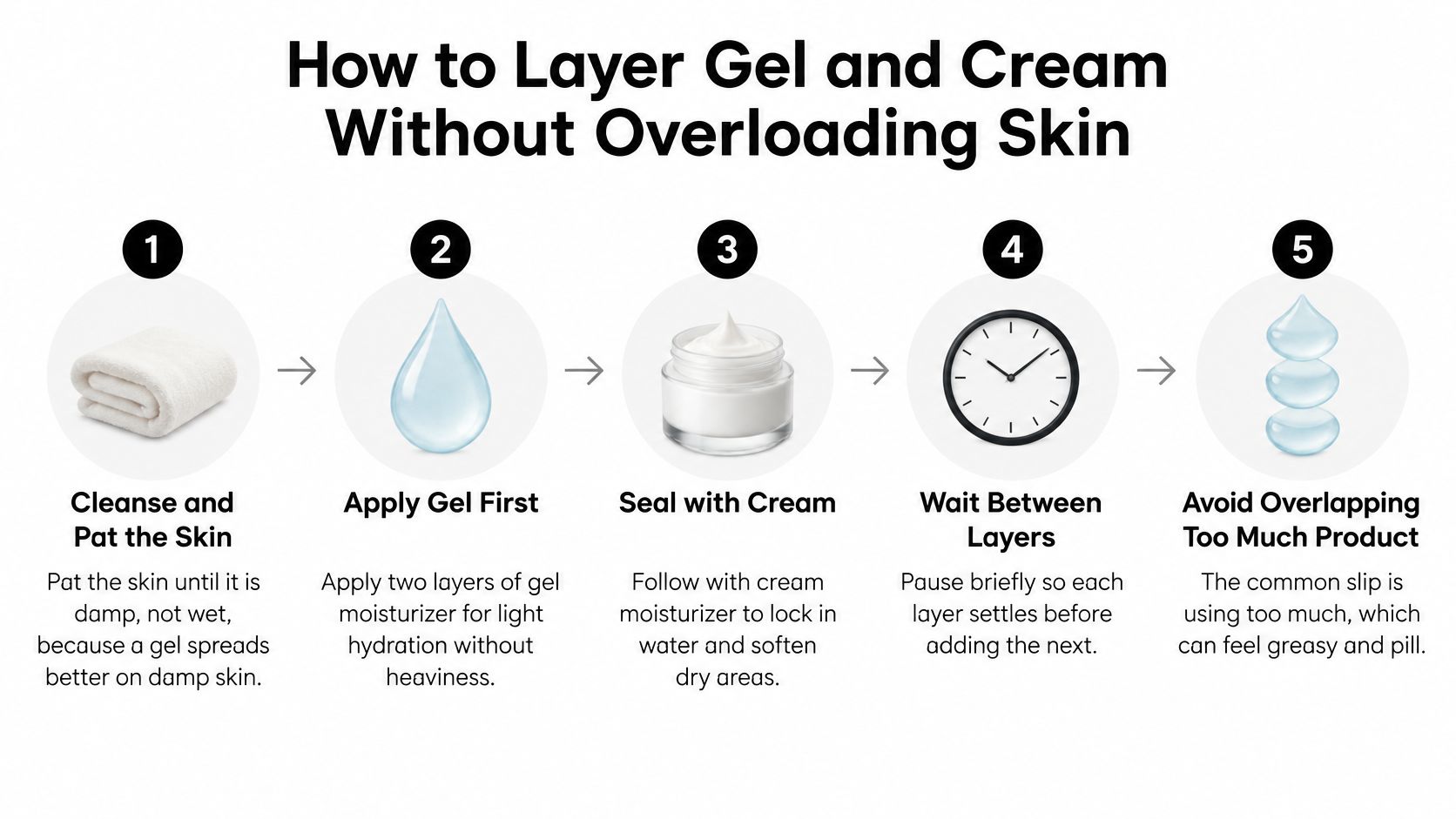
The Layering Routine
- Cleanse and pat until damp, not wet. Gel spreads more evenly on damp skin, so you will not tug it across dry patches.
- Apply two pumps of gel and wait about 60 seconds. Pure Aloe Vera Gel + Tea Tree Oil works as an all-over facial moisturizer used twice a day. Putting gel on dripping skin dilutes the layer and makes it run.
- Check for tightness. Press a clean fingertip to your cheek and notice whether skin feels settled or still pulls when you smile.
- Add cream only where you need it. A pea-sized amount on the cheeks and around the mouth is enough in the morning. Save a full-face layer for night. Coating the whole face before makeup often feels heavy and can slip by noon.
- Press in gently instead of rubbing. Pressing keeps the layers even and cuts pilling, the little rolls that form when products get dragged around.
- Apply sunscreen after the layers set in the morning. A brief pause lets sunscreen spread instead of mixing into wet moisturizer.
If toners or serums are still an open question, the guide on in what order skincare products should be applied lays out the full sequence. The cream can go over the face and neck and be used twice daily, morning and night, when extra hydration or dry conditions call for it. On a comfortable day, stopping after gel is a complete routine.
Watch tightness, shine, pilling, makeup slip, and new clogged pores over the next few mornings. Pilling or congestion calls for less cream, dry zones only, or cream at night. If tightness is still there, use the cream more consistently before you add another product.
Choose the Format Your Skin Needs Today
You wake up to dry indoor air one week and sticky humidity the next, and the moisturizer that felt right last month now sits heavy or disappears by noon. Choose the format that fits today's air, routine, and comfort. That shift makes the gel moisturizer vs cream moisturizer choice less frustrating, because you are not defending a past purchase.
Pros and cons of gel and cream moisturizers
| Format | Pros | Cons |
|---|---|---|
| Gel | Fast, cool, light, little residue; suits daytime use under sunscreen and makeup in heat | Limited protection from water loss on its own; some gels use alcohol or fragrance |
| Cream | Longer-lasting comfort; adds a sealing layer for cold or dry air and evening use | Heavier after-feel; can sit on makeup in heat or on oily skin |
Format does not decide the result. The mix does: humectants pull water in, emollients soften, and occlusives slow loss. A light gel can still feel drying if it lacks a seal in cold air. A cream can feel greasy if the seal is thicker than the day needs. Read the ingredient list for that mix, then test the texture on your skin instead of treating gel or cream as a rule.
Start with the lean that matches your skin and setting, then pick one format for two weeks. Run the one-hour, six-hour, and next-morning checks and write down tightness, shine, and whether makeup still sits. Adjust the amount if tightness or shine persists, instead of replacing everything at once.
ALODERMA grows its own organic aloe and processes leaves onsite within 12 hours of harvest. Every product is made with at least 65% fresh organic aloe vera juice, so the primary ingredient stays fresh aloe rather than a diluted base. Compare ingredient lists on the site for each product you consider and check current prices before buying. Aloe Hydrating Cream is listed at $21.99 USD and Aloe Firming & Rejuvenating Cream is listed at $27.99 USD. Orders of $35 or more get free shipping and handling. Other brands can work well too. The test, not the brand name, should decide what stays on your shelf.
Pick one format today and set the two-week check. Let your own one-hour and next-morning results tell you whether to keep it, layer it, or switch.
Start your two-week test with fresh aloe at the center, whether that means a lightweight gel for humid mornings, a richer cream for dry nights, or both layered where you need them. Compare the ingredient lists, current prices, and formats side by side at ALODERMA, choose the one that fits your skin today, and adjust based on what you feel at one hour, six hours, and the next morning.