





You wash your face, smooth on aloe vera serum, and wait for that fresh, comfortable feeling everyone talks about. Then one of two things happens. Your skin still feels tight after ten minutes, or the serum dries a little tacky and you wonder if you used it wrong.
That confusion is common because aloe vera serum usually isn't the final step. It works better as a light hydration layer on slightly damp skin, then, if your skin needs it, a moisturizer goes on top to help hold that water in. Once you understand that one routine shift, aloe serum makes a lot more sense.
Why Aloe Vera Serum Feels Different From Other Serums
Aloe vera serum often feels lighter than oil-based serums and less slippery than richer cream serums. That difference matters if you want skin that feels hydrated and settled, not coated.
A simple real-life example helps. If your morning routine needs to sit well under sunscreen and makeup, a heavy face oil can feel like too much. Aloe serum usually feels more like a fresh drink of water for the skin. It spreads fast, absorbs quickly, and leaves less residue.
What aloe serum is doing on your skin
Think of aloe vera serum as a hydration-supporting layer, not a blanket. It can help add water to the surface of the skin, but it doesn't always do the job of sealing that hydration in for hours on its own.
That's why so many people say, “I used aloe, but my skin still felt dry.” The serum may have done its part, but the routine stopped one step too early.
Practical rule: If aloe serum makes your skin feel fresh at first but tight later, add moisturizer after it.
A clinical study on aloe-containing cosmetic formulas found that single-application hydration improved only at 0.25% and 0.50%, while after two weeks all tested concentrations, 0.10%, 0.25%, and 0.50%, improved skin hydration versus the vehicle (clinical aloe hydration study). That fits how many people use it. Aloe serum tends to shine with steady use, not just one swipe before bed.
Why freshness changes the feel
Not all aloe formulas are built the same. Some use aloe as a supporting ingredient. Others build the whole formula around it.
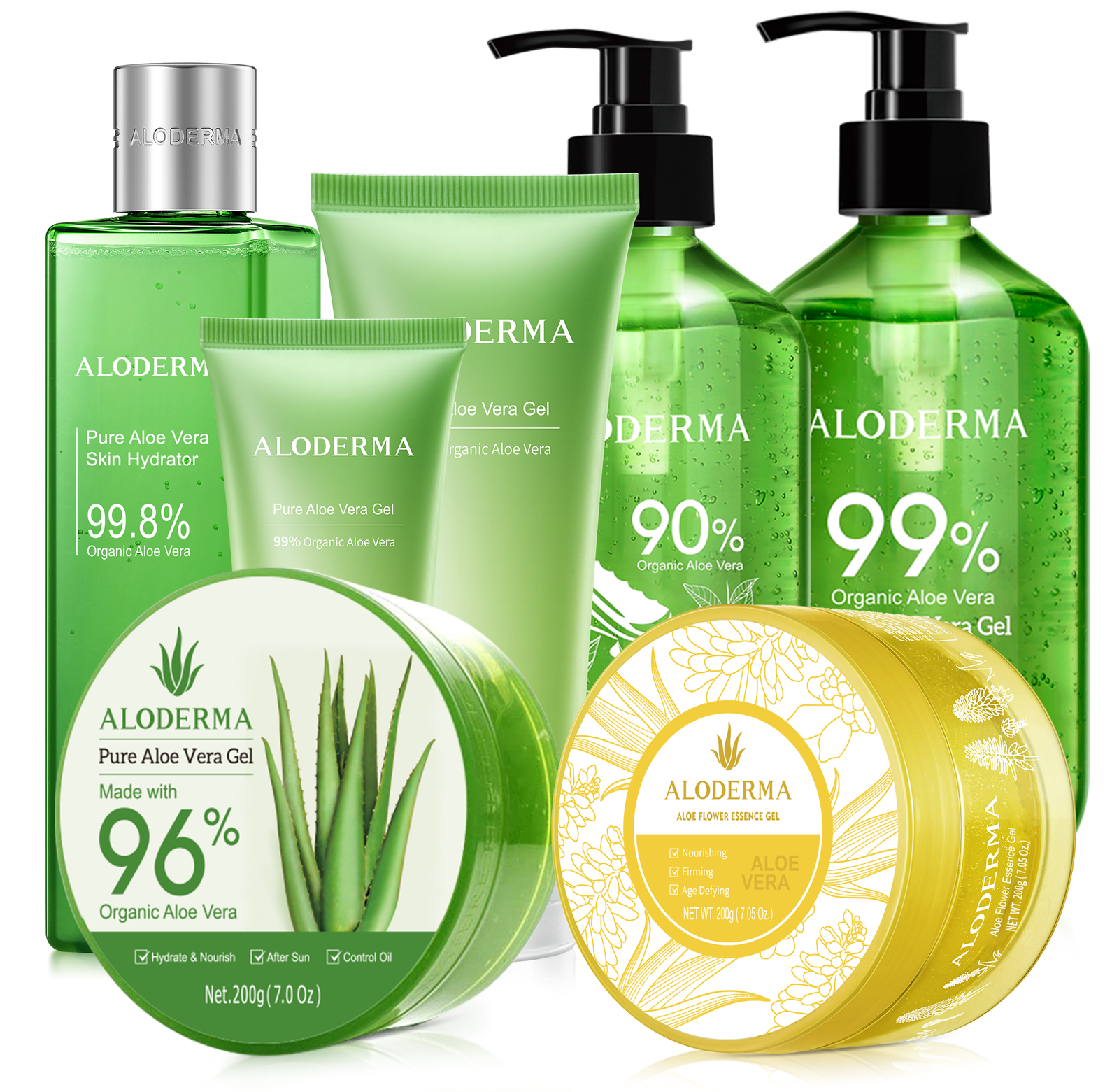
Aloderma is a fully vertically integrated aloe vera company. We grow all of our own organic aloe vera, and we process our aloe vera and manufacture onsite within 12 hours of harvest to ensure the primary ingredient found in every one of our products is the most bioactive and effective aloe vera possible (fresh aloe process at Aloderma). That farm-to-bottle freshness is a big reason aloe-based skincare can feel lightweight and comfortable, especially when you don't want heaviness sitting on the skin.
If you like comparing textures and ingredient styles across lightweight skincare, this guide to buying quality CBD face oils can help you understand how different formula bases change the skin feel. And if you want more background on aloe itself, Aloderma's Miracle of Aloe article is a useful starting point.
When to Use Aloe Vera Serum in Your Daily Routine
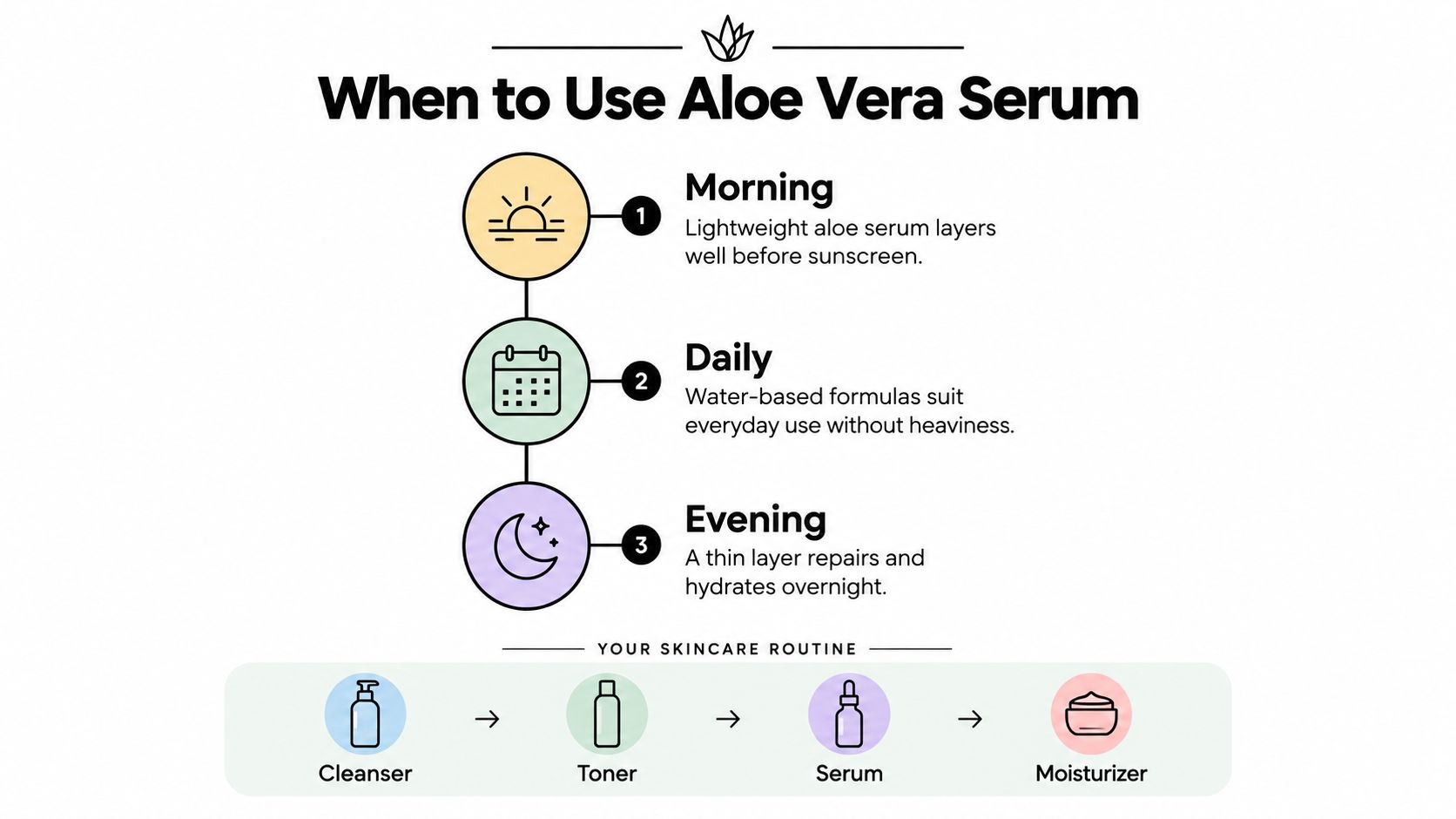
The short answer is simple. Use aloe vera serum after cleansing and before moisturizer. For many people, that can be morning, evening, or both.
Best time of day
Morning use makes sense when you want a light layer that won't feel greasy under sunscreen. Evening use makes sense when your skin feels warm, dehydrated, or overworked from the day.
If you're new to aloe serum, start once daily. That gives you time to notice how your skin feels. If it stays comfortable and balanced, you can decide whether twice daily fits your routine.
Where it goes in order
Aloe works best on clean, slightly damp skin. Professional skincare guidance places aloe early in the routine as a calming base layer, then layers other serums while the skin is still slightly tacky, followed by a moisturizer or occlusive to finish (professional aloe layering guidance).
That means your routine usually looks like this:
-
Cleanser
Wash away sunscreen, sweat, or overnight oil. -
Optional toner or mist
This can leave skin lightly damp, which helps aloe spread evenly. -
Aloe vera serum
Apply before heavier products. -
Moisturizer
Use this if your skin tends to lose hydration quickly. -
Sunscreen in the morning
Keep aloe serum underneath, not on top.
Slightly damp skin is the sweet spot. Wet skin can dilute your serum too much. Fully dry skin can make hydration layers feel less comfortable.
When people reach for it most
You don't need to save aloe serum for special occasions. It works well on ordinary skin days when you want lightweight comfort.
It can be especially appealing:
- After cleansing at night when skin feels stripped
- On warm or humid days when cream-heavy routines feel like too much
- After exfoliation or strong actives when you want a gentler-feeling hydration step
- Before makeup when you want a smoother, less heavy base
If you ever wonder how to use aloe vera serum consistently, think of it as your “between” step. It sits between washing your face and sealing your routine.
How to Apply Aloe Vera Serum for Best Results
Technique matters more than people expect. Aloe serum isn't hard to use, but small changes in how much you apply and when you layer it can change the result.
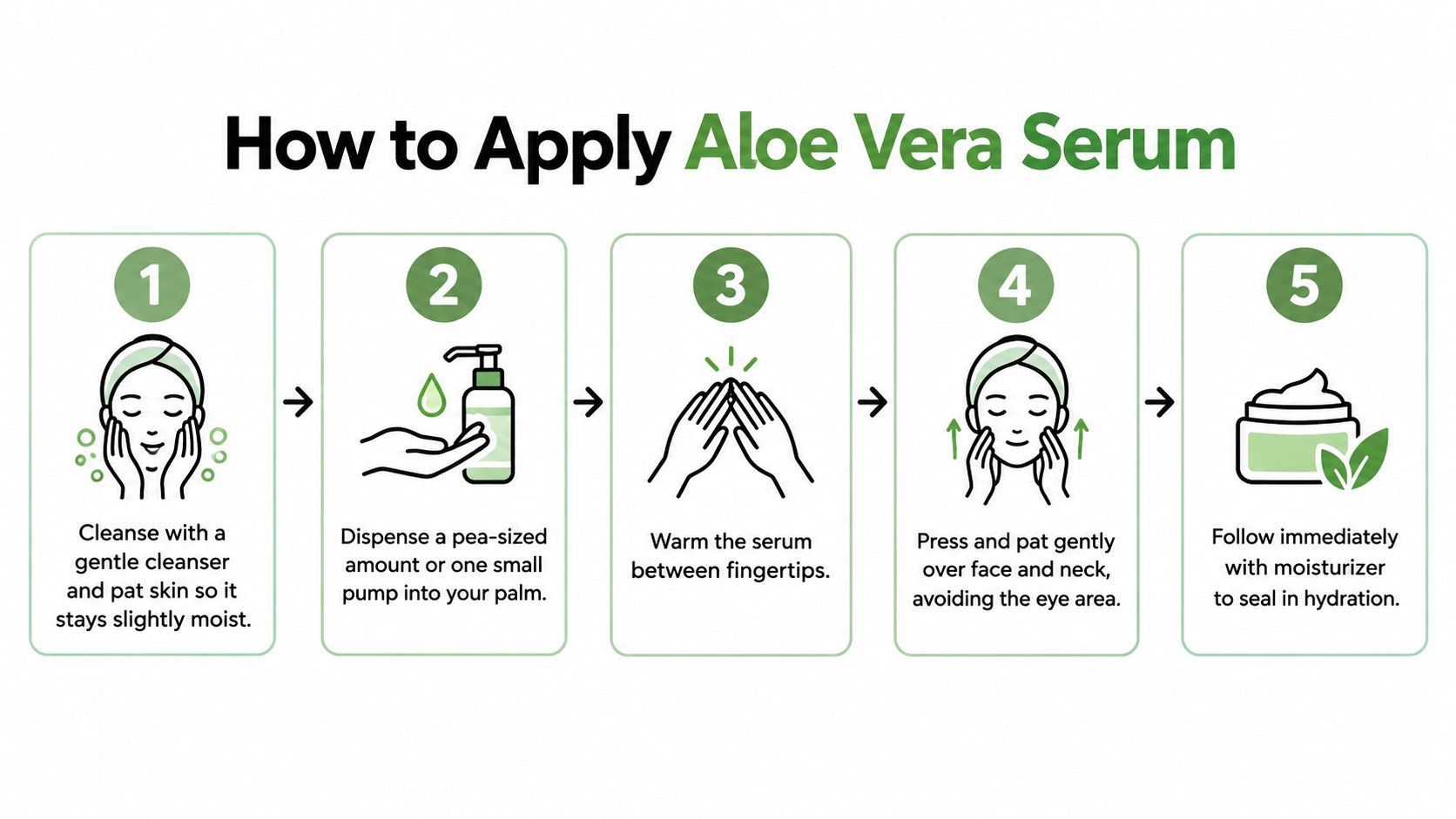
The easiest way to apply it
Follow this order when your skin is freshly cleansed:
-
Pat, don't fully dry
After washing, pat away dripping water but leave your skin slightly moist. -
Use a small amount
A pea-sized amount or one small pump is usually enough for the face. Add a little more if you're taking it down the neck. -
Warm it between your fingertips
This helps the serum spread thinly instead of landing in one sticky spot. -
Press and glide
Press the serum onto cheeks, forehead, chin, and neck. Then smooth it gently. Don't rub hard or tug. -
Wait briefly, then seal if needed
Give it a short pause. If your skin feels lightly tacky, that's a good time for moisturizer.
Here's a visual walkthrough if you like seeing the motions in action.
What the texture should feel like
The goal isn't to make the skin feel wet. The goal is a thin, even layer.
If your face stays slippery for a long time, you probably used too much. If it dries instantly and your skin feels unchanged, you may need to apply it sooner after cleansing or follow with moisturizer more quickly.
Apply enough to lightly coat the skin, not enough to create a thick film.
A rushed morning versus a slower evening
In the morning, keep it simple. Cleanse, apply aloe serum on slightly damp skin, then go straight to moisturizer if you need one, and finish with sunscreen.
At night, you can be a little slower. Press the serum in carefully, bring it down the neck, and pay attention to areas that feel tight after cleansing.
Patch test first
Published review evidence notes that aloe products can sometimes cause contact dermatitis, itching, or burning, and it also points out that repeated applications of some aloe materials could reverse hydration benefit in certain cases. The same review describes mixed but measurable topical performance and reported that 97.5% aloe vera gel reduced UV-induced erythema after 48 hours in a randomized, double-blind study (review of topical aloe effects and reactions).
That's why patch testing is worth doing, especially if your skin reacts easily.
- Choose a small area like the jawline or behind the ear
- Use the product the way you plan to use it rather than applying a huge amount
- Watch how your skin feels before making it a twice-daily habit
Layering Order and What to Pair With Aloe Vera Serum
Most layering confusion comes from treating aloe serum like a moisturizer. It usually makes more sense to treat it like an early, water-based step.
The simplest order to remember
Use products from thinnest to thickest. Aloe serum belongs near the beginning, after cleansing and after any watery toner, but before creamier products.
A good practical order looks like this:
- Cleanser first because skin needs a fresh surface
- Toner or mist next if you use one
- Aloe serum early while skin still has a little surface moisture
- Cream or lotion after if your skin tends to feel tight
- Sunscreen last in the morning
If you already use actives and feel unsure about product order, this guide on how to choose facial products can help you think through texture, purpose, and routine fit. If you want another example of a lightweight hydration layer in a routine, Aloderma's article on pure hyaluronic acid serum is helpful for comparing where humectant-style products usually sit.
What pairs well with aloe serum
Aloe serum usually pairs easily with:
- Toners and mists when you want extra slip
- Niacinamide serums in simple balancing routines
- Vitamin C formulas if your skin already tolerates them
- Sunscreen because aloe textures are often light under daytime layers
A published serum formulation study also showed that aloe serum formulas often rely on aloe as a base plus ingredients like glycerine, licorice extract, sesame oil, lemon oil, and Tween 20 to improve spreadability and feel (aloe serum formulation study). So when a serum feels both light and comfortable, that's often the formula design, not aloe alone.
Do You Need Moisturizer After Aloe Serum
| Skin Situation | Apply Aloe Serum On | Seal With Moisturizer | Why |
|---|---|---|---|
| Skin feels tight after cleansing | Slightly damp skin | Yes | Helps hold hydration longer |
| Oily skin in humid weather | Slightly damp skin | Maybe not always | A light finish may feel comfortable on its own |
| Dry indoor air | Slightly damp skin | Yes | Water-based layers often need backup in dry conditions |
| Before sunscreen in the morning | Clean, lightly damp skin | Usually yes, if skin feels dry | Creates a more comfortable base |
| Post-workout freshen-up | Clean skin or a light rinse | Often a light moisturizer | Keeps the routine simple without heaviness |
A practical rule works well here. If your skin feels fine after aloe alone, you don't always need more. If it feels fresh for five minutes and then starts asking for help, add the sealing step.
Tips for Sensitive Oily and Blemish Prone Skin
Your face can look shiny by noon, react to new products by evening, and still feel dehydrated after cleansing. That mix is exactly why aloe vera serum can be helpful, but only if you use it for the right job.
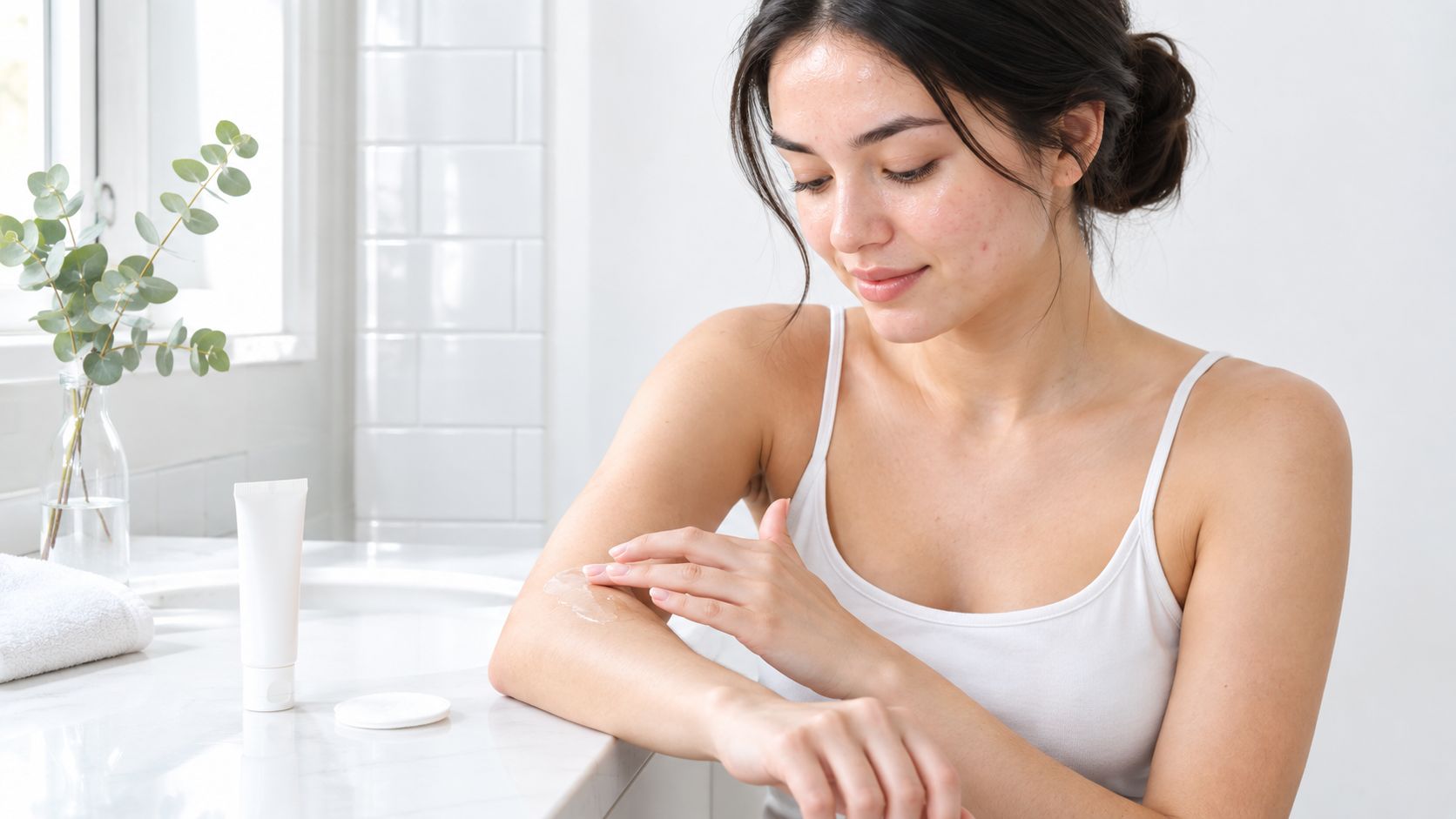
Aloe serum works best here as a light hydration layer on slightly damp skin, not as proof that oily or blemish-prone skin should skip every other step. Oily skin often needs water and comfort more than extra richness. Aloe can supply that light, fresh layer, and then you decide whether your skin also needs a seal on top.
If your skin is sensitive
Sensitive skin usually reacts to the full formula, not the front label. One published serum formulation included 3% aloe vera extract alongside 10% propylene glycol, 12% glycerin, 2.19% D-glucitol, 3% L-ascorbic acid, 2.5% niacinamide, 0.15% carbomer 940, 6.35% rose hydrosol, 0.5% preservative, and 0.15% perfume in a 30 mL serum (anti-aging serum composition study). That is a useful reminder that “aloe serum” can still contain ingredients your skin may or may not like.
Start with once-daily use and patch test first. If your skin tends to sting easily, apply it after a gentle cleanse when skin is still slightly damp, then watch for comfort, redness, or lingering warmth rather than chasing an instant glow.
If you want more routine guidance for reactive skin, Aloderma's guide to aloe vera for sensitive skin gives helpful context.
If your skin is oily
Oily skin often likes aloe serum because the texture is light and quick-spreading. The common mistake is using too much because it disappears fast. Then the finish turns sticky, sunscreen pills, or the face feels coated even though the product started out watery.
A thin layer is usually enough. Spread a small amount over damp skin, give it a moment, and judge the feel after that. If your skin feels comfortable, you may only need a very light lotion or just your next daytime step. If it feels freshly hydrated for a few minutes and then turns tight, that is your sign to add a simple sealing moisturizer.
If your skin is blemish prone
Blemish-prone skin usually does better with routines that stay calm and predictable. Aloe serum can fit nicely because it adds hydration without the dense feel that sometimes makes acne-prone skin feel crowded.
It helps to treat aloe as the water step, not the whole routine. A damp-skin aloe layer works like giving thirsty skin a drink, while the product you apply after it helps keep that hydration from evaporating too quickly. That is often a better match for blemish-prone skin than piling on thick products and hoping for comfort.
For ingredient-conscious shoppers, ALODERMA Aloe Hydrating Serum is one example to compare by reading the ingredient list on the brand's product pages. The practical point is the formula style. ALODERMA uses fresh aloe as the primary ingredient, and the company grows its organic aloe, processes it onsite, and manufactures within 12 hours of harvest. That farm-to-bottle timing helps explain why the aloe feels light and active rather than heavy, which can be especially appealing if your skin is both sensitive and oily.
One last check helps all three skin types. If your skin feels greasy, use less. If it feels tight, seal it better. If it feels calm and balanced, you found the right amount.
Make Your Aloe Vera Serum Habit Stick
You wash your face at night, pat in your aloe serum, and wake up wondering whether it did anything. That usually does not mean the serum failed. It often means the habit is still too loose to show you a clear pattern.
Aloe serum tends to work best when you use it the same way each time. Apply it soon after cleansing, while your skin is still slightly damp, then seal it if your skin loses water easily. The aloe step is the drink. The product after it is the lid on the cup. That routine logic matters more than using a large amount or expecting your serum to replace moisturizer.
Consistency also matters because hydration support often shows up as a trend, not a one-night transformation. One study on aloe-containing formulas found improved hydration over time across tested concentrations after two weeks compared with the vehicle (aloe hydration over two weeks). Give your routine a fair trial before changing three other products at once.
A few simple cues make the habit easier to keep:
- Keep the bottle where you cleanse so you remember to apply it on slightly damp skin
- Use the same amount each time so you can tell whether your skin likes the formula or just got more product
- Check your skin by feel. Comfortable and calm is a better sign than chasing a dramatic instant result
- Adjust the final sealing step based on weather, air conditioning, indoor heat, or that tight feeling that shows up later
- Stick with it for 1 to 2 weeks before judging whether it supports your hydration routine
There is also a texture reason some people stay consistent with aloe more easily than heavier hydrating products. Fresh aloe can feel light, quick, and less crowded on the skin, which is especially helpful if you are oily, sensitive, or both. As noted earlier, ALODERMA processes its organic aloe within 12 hours of harvest, which helps explain why the serum feels bioactive and lightweight rather than waxy or heavy.
A longer review on aloe in dermatology also points back to hydration support as the most realistic expectation, rather than instant cosmetic change (review of aloe in dermatology and hydration).
If your goal is calm, hydrated skin with a light finish, keep the job description simple. Aloe serum is your damp-skin hydration layer. Seal it as needed, repeat the routine, and let the results build.
If you want to build that kind of routine, ALODERMA offers fresh organic aloe skincare with ingredient transparency across serums, gels, creams, cleansers, masks, and sets. You can check the full ingredient lists, compare textures, and choose the products that fit a light, seal-when-needed approach to everyday hydration.